Daizenji Temple (Gojo City, Nara Prefecture) Complete Guide | History and Highlights of the Ancient Temple Associated with Prince Otobe
Daizenji Temple, located in Nakano-cho, Gojo City, Nara Prefecture, is a Shingon Buddhist temple of the Koyasan sect associated with Prince Otobe, a tragic prince of the Nara period. Its quiet atmosphere, surrounded by decaying earthen walls, evokes a sense of its long history. This article comprehensively introduces information you should know before visiting Daizenji Temple, including its historical background, valuable cultural assets, and access information.
What is Daizenji Temple? | Basic Information and Overview
Daizenji Temple is an ancient Shingon Buddhist temple located in the urban area of Gojo City, Nara Prefecture. Its mountain name is Sagasan, and it belongs to the Koyasan Shingon sect. The current head priest is Mr. Hidemitsu Sakuma, and it continues to be carefully preserved as a center of local faith.
Basic Data
- Official Name: Sagayama Daizenji Temple
- Sect: Koyasan Shingon Buddhism
- Principal Image: Standing Statue of Shakyamuni Buddha (Important Cultural Property)
- Address: 245 Nakanomachi, Gojo City, Nara Prefecture 637-0082
- Phone Number: 0747-23-0418
- Corporate Number: 2150005006827
- Visiting Hours: 8:00 AM – 4:00 PM
Daizenji Temple is one of the temples indispensable to the history of Gojo City and is known as a temple with valuable cultural properties within Nara Prefecture.
History of Daizenji Temple | The Tragedy of Prince Otobe and the Origin of its Founding
Since detailed records of the founding of Daizenji Temple do not remain, its origins are not necessarily clear. However, according to the most plausible tradition, the temple was founded to commemorate Prince Osabe, a tragic prince of the Nara period.
Who was Prince Osabe?
Prince Osabe was born as a son of Emperor Kōnin, and his mother was Princess Inoue (daughter of Emperor Shōmu). Initially appointed Crown Prince, in 772 (Hōki 3), his mother, Princess Inoue, was suspected of cursing Emperor Kōnin, and the prince was also deposed as Crown Prince due to his involvement.
Later, on April 27, 775 (Hōki 6), Prince Osabe is said to have been poisoned at the young age of 15. It is believed that Daizenji Temple was founded to appease the spirit of this young prince who met such a tragic end.
Connection to Gojo
There are various theories as to why Prince Otobe had a deep connection to the Gojo area. One theory suggests he may have been confined there after being deposed as Crown Prince, while another suggests that people who wished to mourn the prince chose this location. Gojo City has long been a crucial transportation hub connecting Yamato and Kii provinces, and was also a politically important region.
Changes in the Temple
Since its founding, Daizenji Temple has undergone numerous changes over time. While detailed records are scattered, it is certain that it has continued to attract local faith as a Shingon Buddhist temple. Although the current temple complex is smaller than its former size, it continues to preserve important cultural assets.
Important Cultural Property | The Charm of the Principal Image, the Standing Statue of Shakyamuni Buddha
The greatest cultural asset that Daizenji Temple boasts is its principal image, the standing statue of Shakyamuni Buddha. This statue is designated as a National Important Cultural Property and is the main highlight for visitors to Daizenji Temple.
Seiryoji-style Shakyamuni Buddha Statue
The principal image, a standing statue of Shakyamuni Buddha, is a Buddhist statue in the style known as “Seiryoji-style.” The Seiryoji-style is a style modeled after the standing Shakyamuni Buddha statue preserved at Seiryoji Temple in Saga, Kyoto, and is believed to represent the appearance of Shakyamuni Buddha as he is said to have been transmitted from India to Japan via China.
Date of Creation and Characteristics
- Year of Creation: Ōnin 2 (1468)
- Height: 168 centimeters
- Style: Seiryoji-style
- Material: Wood
This Buddhist statue is a work from the mid-Muromachi period and conveys the high level of skill of the Buddhist sculptors of that time. The expression of the drapery and the serene expression clearly demonstrate the characteristics of the Seiryoji-style, and speak to the high level of Buddhist sculpture in the 15th century.
Regarding Visits
If you wish to view the main image of Buddha, it is recommended that you contact the temple in advance. Viewing times and conditions may be set for the preservation of cultural properties.
Daizenji Temple Grounds and Highlights
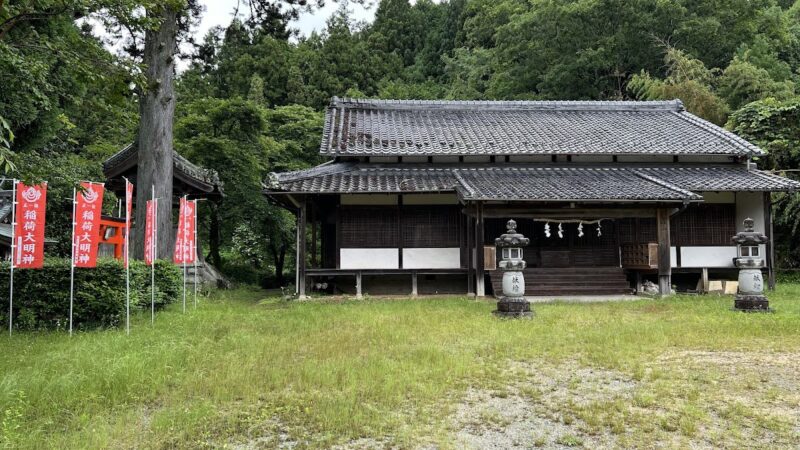
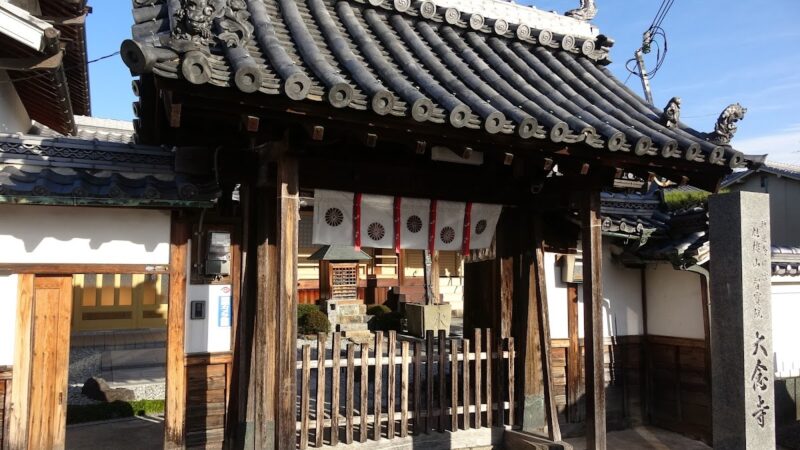
The grounds of Daizenji Temple, while not flashy, are enveloped in a tranquil atmosphere that conveys the weight of history.
The Decaying Earthen Wall
A distinctive feature of Daizenji Temple is the decaying earthen wall surrounding the grounds. Exposed to wind and rain, this partially crumbling wall symbolically represents the temple’s long history and the passage of time. Apart from its cultural value, the wabi-sabi aesthetic emanating from this wall leaves a deep impression on visitors.
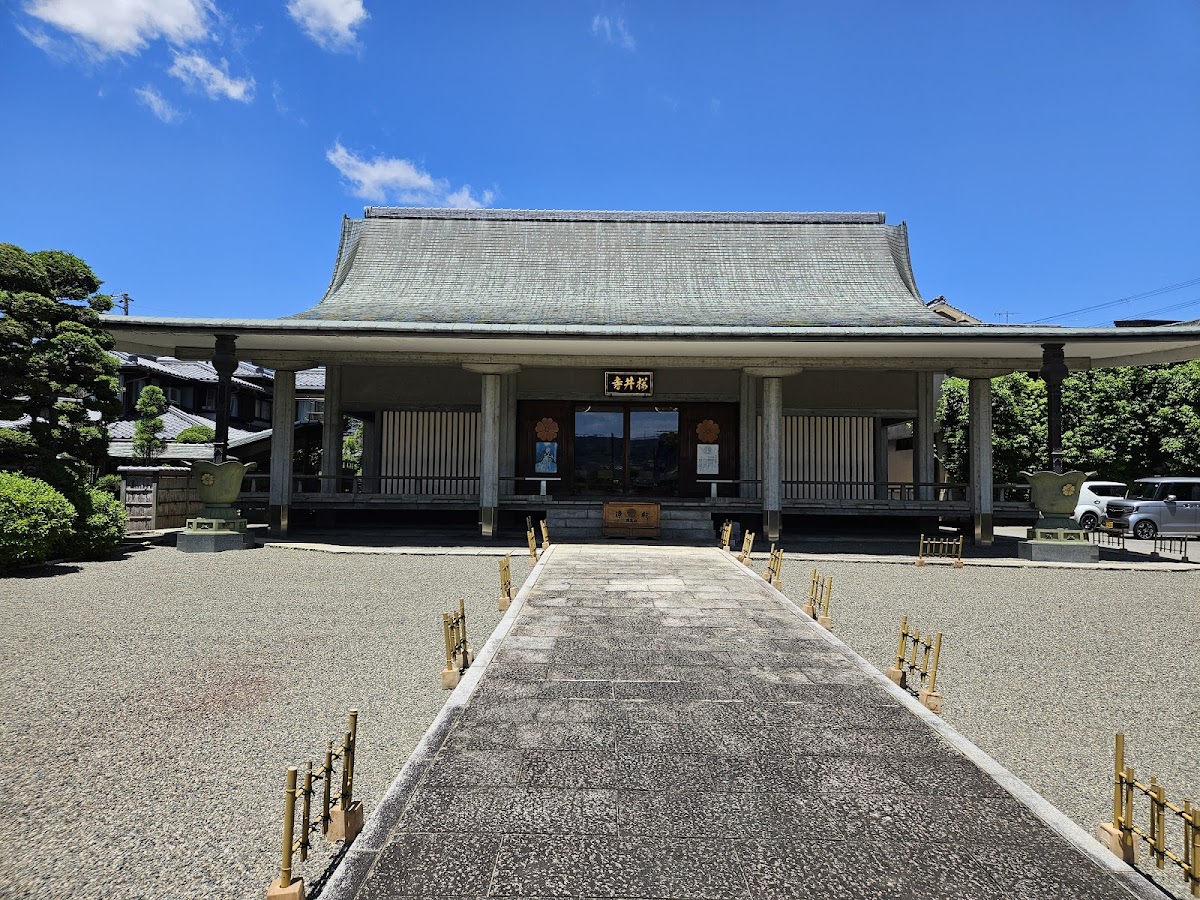
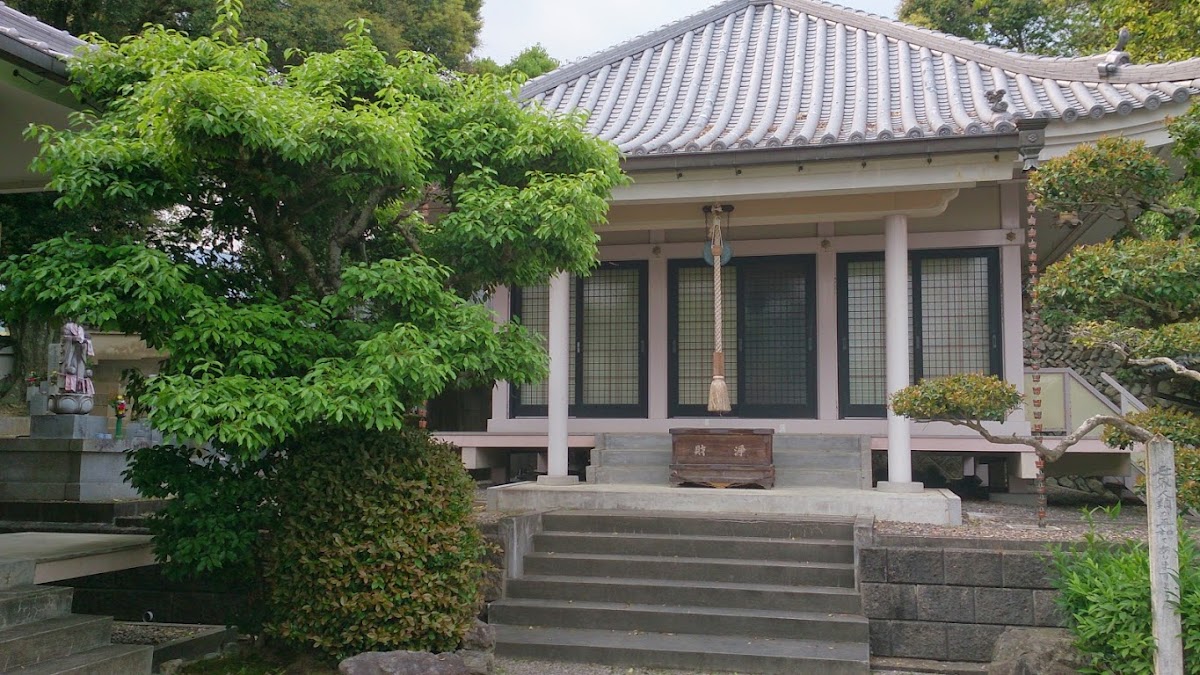
Main Hall
The main hall houses the aforementioned important cultural property, the standing statue of Shakyamuni Buddha. The building itself has a historical presence, making it a suitable space for quiet worship.
Atmosphere of the Temple Grounds
Despite being located in the city center of Gojo, Daizenji Temple offers a quiet environment away from the hustle and bustle. With relatively few tourists, it’s a space where you can slowly reflect on history.
Access Information | How to Get to Daizenji Temple
Daizenji Temple is located in the heart of Gojo City, but access by public transport takes some time.
Access by Train
The nearest station is Gojo Station (Nara Prefecture) on the JR Wakayama Line.
- Walking from Gojo Station: Approximately 26 minutes (approximately 2 kilometers)
- Taxi from Gojo Station: Approximately 5-7 minutes
Walking from the station allows you to enjoy the scenery of Gojo City, but since it’s a bit of a distance, you might want to consider taking a taxi.
Access by Car
- Keinawa Expressway: Approximately 10 minutes from Gojo Kita Interchange
- National Route 24: Towards Gojo city center
Regarding parking, we recommend checking with the temple before your visit.
Nearby Tourist Attractions
Gojo City has many other points of interest.
- Gojo Shinmachi Street: A historical street lined with Edo-period townhouses
- Eizanji Temple: An ancient temple known for its National Treasure, the Octagonal Hall
- Kano Plum Grove: A famous spot for plum blossoms (spring)
- Yoshino River: Clear stream and natural scenery
Visiting these nearby spots in conjunction with your visit to Daizenji Temple will allow you to gain a deeper understanding of Gojo City’s history and culture.
Notes and Manners for Visitors
Please note the following points when visiting Daizenji Temple.
Visiting Hours
- Normal: 8:00 AM – 4:00 PM
- Please avoid visiting outside of visiting hours
- If you wish to view the main image of Buddha, it is advisable to contact us in advance.
Visiting Etiquette
- Please be quiet on the temple grounds and be considerate of other visitors.
- Please take photographs only within permitted areas (especially for Buddha statues, prior confirmation is necessary).
- Do not touch dilapidated parts such as earthen walls.
- Please take all your trash with you.
Contact Information
For inquiries regarding visiting, please call the following number:
Phone: 0747-23-0418
History of Gojo City and the Position of Daizenji Temple
Gojo City is located in the southwestern part of Nara Prefecture and has flourished since ancient times as a transportation hub connecting Yamato and Kii. This region, which developed along the Yoshino River, has played an important role in history.
Historical Importance of Gojo
- Ancient Times: A key point on the road connecting Yamato and Kii
- Medieval Times: One of the Southern Court’s strongholds
- Early Modern Times: Developed as a post town on the Kishu Road
Daizenji Temple, located in Gojo City with this historical background, is positioned as a valuable temple that conveys the tragedy of the imperial family during the Nara period.
Role in the Region
Even today, Daizenji Temple functions as a center of faith in the region and is carefully preserved by the local people. It is characterized more by its character as a temple deeply rooted in the community than as a tourist temple.
Relationship between Daizenji Temple and Shingon Buddhism
Daizenji Temple belongs to the Koyasan Shingon sect. Shingon Buddhism is a major sect of Japanese Buddhism founded by Kobo Daishi Kukai, and is based on the teachings of Esoteric Buddhism.
About the Koyasan Shingon School
The Koyasan Shingon School is a branch of the Shingon sect of Buddhism, with Kongobu-ji Temple on Mount Koya in Wakayama Prefecture as its head temple. Mount Koya, founded by Kukai, remains a sacred site attracting many followers, and boasts approximately 3,600 branch temples throughout Japan.
Shingon Buddhist Faith at Daizen-ji Temple
At Daizen-ji Temple, faith based on the teachings of the Shingon sect is preserved, and religious activities centered on the principal image, Shakyamuni Buddha, are carried out. It is believed that esoteric Buddhist rituals and annual events are also being preserved, albeit on a smaller scale.
Historical Background Surrounding the Tragedy of Prince Otobe
Let’s take a closer look at the tragedy of Prince Otobe, which lies at the heart of the founding legend of Daizen-ji Temple.
Political Situation in the Late Nara Period
The late 8th century, when Prince Otobe lived, was the end of the Nara period, a time of heightened political tension surrounding imperial succession. The enthronement of Emperor Kōnin marked a major turning point, representing a shift in the imperial lineage from the line of Emperor Tenmu to the line of Emperor Tenji.
The Princess Inoue Incident
In 772 (Hōki 3), Princess Inoue, the mother of Prince Otobe, was stripped of her title as Empress for allegedly cursing Emperor Kōnin. As a result, Crown Prince Otobe was also deposed. While the truth of this incident is historically debated, the possibility of a political conspiracy has been suggested.
The Prince’s End
Three years after his dethronement, in 775 (Hōki 6), Prince Otobe died along with his mother, Princess Inoue. Officially, his death was attributed to illness, but poisoning is considered the most likely explanation. His death at the young age of 15 is believed to have caused great shock to the people of the time.
Efforts to Commemorate the Deceased
It is said that temples dedicated to the soul of Prince Otobe, who met a tragic end, were built throughout the country. Daizenji Temple is one such temple, believed to have been founded with the purpose of mourning the prince’s unfulfilled wishes and comforting his spirit.
The Cultural Value of Daizenji Temple
Daizenji Temple possesses significant cultural value due to its principal image, a standing statue of Shakyamuni Buddha, which is a designated Important Cultural Property.
Buddhist Sculpture of the Muromachi Period
The principal image, created in 1468 (Ounin 2), is an excellent example of Buddhist sculpture from the mid-Muromachi period. This period coincided with the turbulent times immediately preceding the Onin War (1467-1477), during which many cultural properties were lost in Kyoto. However, excellent Buddhist statues continued to be created in temples throughout the region.
The Spread of the Seiryoji Style
The Seiryoji style of Shakyamuni Buddha statues spread throughout Japan, centered around Seiryoji Temple in Kyoto. The statue at Daizenji Temple is a valuable historical document demonstrating that this style spread as far as southern Nara Prefecture.
The Importance of Preservation
Currently, Daizenji Temple’s cultural properties are properly preserved and managed. However, as it is a small temple, continued preservation requires local support and administrative cooperation. From the perspective of cultural property protection, Daizenji Temple’s existence is crucial.
Visitor Feedback and Word-of-Mouth Information
Visitors to Daizenji Temple have shared the following impressions:
Quiet Atmosphere
Many visitors appreciate the tranquility and peaceful atmosphere of the temple grounds. The fact that it is rarely crowded with tourists allows for a leisurely visit, which is considered a major attraction.
The Weight of History
Associated with the tragic story of Prince Otobe, it is valued not merely as a tourist spot, but as a place where one can deeply feel history.
Access Challenges
On the one hand, some visitors have pointed out that access by public transport is somewhat inconvenient. Visiting by car is recommended, but you can also enjoy the townscape of Gojo by walking from the station.
Accommodation and Dining near Daizenji Temple
When visiting Daizenji Temple, there are accommodations and restaurants in Gojo city and the surrounding area.
Accommodation
There are several ryokan (traditional Japanese inns) and business hotels in Gojo city. It is also possible to use hotels in the Yoshino or Kashihara areas as a base.
Dining
Gojo city offers local food culture, such as persimmon leaf sushi and river fish dishes from the Yoshino River. Around Shinmachi Street, there are also restaurants utilizing historical buildings.
Daizenji Temple in Every Season
Daizenji Temple can be visited throughout the year, but each season has its own unique charm.
Spring (March-May)
This is the season when the surrounding plum and cherry blossoms bloom, making the entire city of Gojo vibrant. The Kano Plum Grove, in particular, is a nearby famous spot. ### Summer (June-August)
The lush green grounds create a cool and refreshing atmosphere. The clear waters of the Yoshino River are also beautiful during this season.
Autumn (September-November)
During the autumn foliage season, the surrounding mountains change color, creating a beautiful landscape that complements the historical scenery.
Winter (December-February)
With fewer visitors, this is a season for a more peaceful visit. The decaying earthen walls and winter scenery evoke a sense of wabi-sabi (a Japanese aesthetic emphasizing simplicity and transience).
Summary | The Significance of Visiting Daizenji Temple
Daizenji Temple in Gojo City, Nara Prefecture, is a historically significant temple said to have been founded to commemorate the tragic Prince Otobe. The cultural assets, including the principal image of the standing Shakyamuni Buddha (a designated Important Cultural Property), the historical weight emanating from the decaying earthen walls, and the tranquil atmosphere of the temple grounds leave a deep impression on visitors.
Daizenji Temple is not a flashy tourist temple, but that is precisely why it quietly conveys the true essence of Japanese temples. The tragedy of the imperial family during the Nara period, the Buddhist sculptures of the Muromachi period, and the local faith that continues to this day—all these elements coexist in a layered way, making Daizenji a precious place.
When you visit Gojo City, be sure to stop by Daizenji Temple and experience its history and culture. The time you spend quietly praying while reflecting on the unfulfilled wishes of Prince Otobe will be a precious experience that allows you to forget the hustle and bustle of modern life.
Daizenji Temple is open to everyone—history buffs, those interested in Buddhist statues, and those seeking tranquility in a peaceful temple. As a hidden gem in southern Nara Prefecture, we hope that it will continue to be cherished and passed down to many people for generations to come.