Complete Guide to Okufudoji Temple (Sakurai City, Nara Prefecture) | History, Access, and Benefits of the Sacred Site on the Summit of Mt. Makimuku
Okufudoji Temple, nestled on the summit of Mt. Makimuku in Sakurai City, Nara Prefecture, is an ancient Shingon Ritsu sect temple with Fudo Myoo as its principal deity. Located east of Mt. Miwa, at an altitude of 365 meters in the tranquil mountains, this temple is known for its blessings of protection against misfortune, good fortune, and fire prevention. This article provides detailed information you should know before visiting, from the history of Okufudoji Temple to visiting information and nearby attractions.
Basic Information about Okufudoji Temple
Okufudoji Temple is a Shingon Ritsu sect temple located at 728 Tsuji, Sakurai City, Nara Prefecture. Its head temple is Saidaiji Temple, and it enshrines Fudo Myoo as its principal deity.
Location and Contact Information
- Address: 728 Tsuji, Sakurai City, Nara Prefecture
- Phone Number: 0744-42-6975
- Sect: Shingon Ritsu Sect
- Principal Image: Fudo Myoo
- Mountain Name: Makimukuyama
Access Methods
Access by Train
- Approximately 1 hour walk from Kintetsu Osaka Line “Hase-dera Station”
- Approximately 1 hour walk from Kintetsu Osaka Line “Yamato-Asakura Station”
- Approximately 1 hour 15 minutes walk from JR Manyo Mahoroba Line “Miwa Station”
- Also accessible on foot from Kintetsu Osaka Line “Makimuku Station”
Access by Bus
- Approximately 56 minutes walk (mountain path) from Nara Kotsu Bus “Makinouchi” bus stop
Access by Car
- Parking available (It is possible to drive up to near the summit)
- Approximately 30 minutes from the Tenri Interchange on the Meihan Expressway
- Approximately 40 minutes from the Koriyama Interchange on the Nishi-Meihan Expressway
Due to its mountaintop location, access by car is the most convenient. However, the mountain road has some narrow sections, so caution is required when driving.
History and Origins of Okufudoji Temple
History of Founding and Restoration
Okufudoji Temple is a temple built in a unique location on the summit of Mt. Makimuku. While there are no clear records of its founding date, it has long been revered as a sacred site for mountain worship.
During the Meiji era, it temporarily declined due to the anti-Buddhist movement, but it was restored on March 1, 1906 (Meiji 39) by Uemura Sonryu and others. This restoration established its current structure as a branch temple of Saidaiji Temple of the Shingon Ritsu sect.
The Sacred Nature of Makimuku Mountain
Makimuku Mountain, where Okufudoji Temple is located, is a 365-meter-high mountain situated northeast of Mount Miwa. While Mount Miwa is known as a sacred mountain since ancient times, Makimuku Mountain has also been revered as a mountain imbued with spiritual significance.
The place name Makimuku is deeply connected to the Makimuku ruins, an ancient political center, and is a historically important region that has attracted attention as a possible location for Yamatai-koku. The establishment of a temple dedicated to Fudo Myoo in this area is thought to be a result of the fusion of mountain Buddhism and ancient beliefs.
Connection to Hydrotherapy
Interestingly, Okufudoji Temple also has a connection to the history of hydrotherapy in modern Japan. Records show that hydrotherapy was practiced at this temple from the Meiji to Taisho periods. This is a valuable historical fact that reveals a part of folk medicine at that time.
Principal Deity and Beliefs
About Fudo Myoo
The principal deity of Okufudoji Temple is Fudo Myoo (Acala). Fudo Myoo is one of the Myoo (Wisdom Kings) in Esoteric Buddhism and is considered an incarnation of Dainichi Nyorai (Vairocana Buddha).
Characteristics of Fudo Myoo:
- Appearance: Holds a demon-subduing sword (treasure sword) in his right hand and a lasso (kensaku/rope) in his left hand.
- Expression: A wrathful expression symbolizes the power to crush worldly desires.
- Flame: Carries Garuda flames behind him.
- Role: Saves sentient beings and subdues evil.
Benefits
The Fudo Myoo of Okufudoji Temple is believed to offer the following benefits:
- Protection from Evil and Disaster: Protects oneself from worldly desires and disasters.
- Good Fortune: Improves luck and guides one toward a positive direction.
- Fire Prevention: Protects against fire disasters.
- Business Prosperity: Success and prosperity in business.
- Healing from Illness: Restores physical and mental health.
- Family Safety: Family Peace and Tranquility
Fudo Myoo (Acala) is especially believed to symbolize “unwavering resolve,” granting unshakeable mental strength even in difficult situations.
Offering of a Sacred Sword
A distinctive feature of Okufudoji Temple is the offering of a sacred sword, displayed under the eaves. This symbolizes the demon-slaying sword held by Fudo Myoo, and is an impressive offering imbued with the wishes of worshippers. This offering of a sacred sword demonstrates the depth of faith and unique culture of the temple.
Highlights of the Temple Grounds
Main Hall
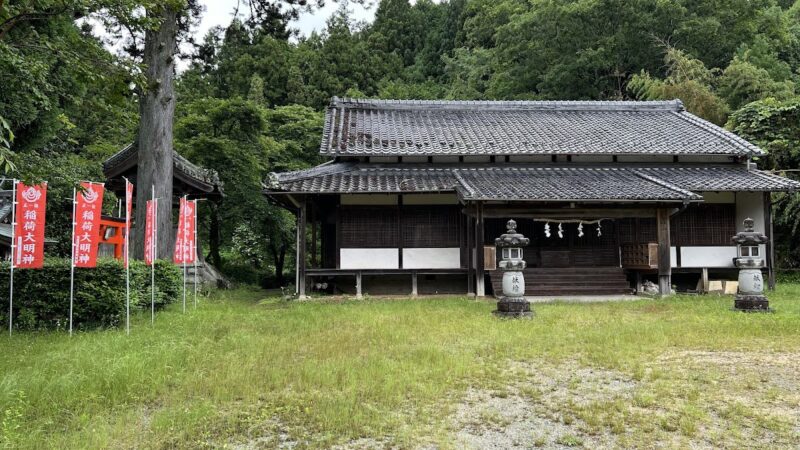
The main hall, built on the summit of Mt. Makimuku, has a simple yet majestic appearance befitting a mountain temple. Located at an altitude of 365 meters, it offers a tranquil environment surrounded by trees for worship.
View
From the summit, a panoramic view of the Yamato Basin unfolds. On clear days, you can see Mount Miwa and other mountains in the Nara Basin, and even distant mountain ranges. This view itself enhances the value of the temple as a sacred site for mountain worship.
Dannodaira (Mount Hakusan)
Around Okufudoji Temple, there are a range of mountains including Dannodaira and Mount Hakusan. Hiking trails are maintained around these mountains, allowing visitors to enjoy nature while visiting the temple.
A Tranquil Environment
Due to its mountaintop location, the temple maintains a tranquil environment far removed from the hustle and bustle of the secular world. The temple grounds, where only the chirping of birds and the sound of the wind can be heard, truly have an atmosphere befitting a “sacred place.” Many visitors come here for meditation and introspection.
Manners and Precautions for Visiting a Temple
Proper Way to Visit a Temple
- Bow at the Temple Gate: Bow before entering the temple grounds.
- Purify at the Water Basin: Purify your hands and mouth (if available).
- Worship at the Main Hall: Offer your donation, clasp your hands together, and pray quietly.
- Bow Upon Exit: Turn back and bow when leaving the temple grounds.
Clothing and Items to Bring
- Clothing: Comfortable clothing and walking shoes are essential as you will be walking on mountain paths.
- Items to Bring: Drinking water, towel, rain gear (depending on the weather).
- Seasonal Precautions: Insect repellent in summer, and warm clothing in winter.
Precautions on Mountain Paths
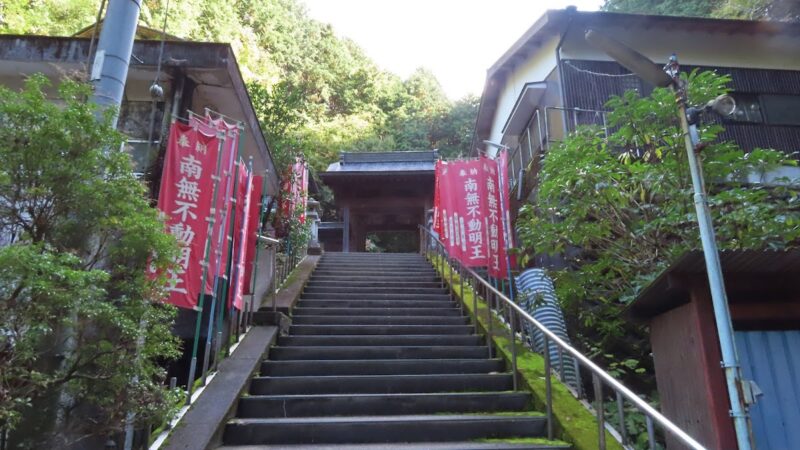
- The path to the summit has steep slopes and narrow sections.
- Be careful as the ground can be slippery in rainy weather and winter.
- If you are not confident in your physical strength, we recommend accessing the temple by car.
- There are areas with weak cell phone reception, so please check the map beforehand.
Visiting Hours
- There are no strict restrictions on visiting hours, but daytime visits are recommended.
- If you are walking the mountain trails, please allow ample time to descend before sunset.
Annual Events and Special Days
Fudo Myoo’s Festival Day
Fudo Myoo’s festival day is the 28th of every month. Visiting on this day is believed to bring special blessings.
Goma Fire Ritual
As a Shingon Ritsu sect temple, a Goma fire ritual is held regularly. The Goma fire ritual is an esoteric Buddhist ceremony in which prayers are offered by burning a fire, believed to burn away worldly desires and grant wishes.
Seasonal Events
- New Year’s: First shrine visit of the year, prayers for the new year
- Setsubun: Prayers for warding off evil
- Obon: Ancestor memorial service
For specific event dates, it is recommended to inquire with the temple in advance.
Nearby Tourist Attractions
The area around Sakurai City, where Okufudoji Temple is located, has many historical and cultural sights.
Mount Miwa and Omiwa Shrine
Mount Miwa, located west of Okufudoji Temple, is the sacred object of worship for Omiwa Shrine, one of Japan’s oldest shrines. Mount Miwa itself is revered as a sacred mountain, and it is possible to climb it.
- Distance: Approximately 15 minutes by car from Okufudoji Temple
- Attractions: Japan’s oldest shrine architecture style, Miwa somen noodles
Hase-dera Temple
Hase-dera Temple, known as the “Temple of Flowers,” is famous for its peonies and autumn leaves. The principal image, a standing statue of the Eleven-Headed Kannon Bodhisattva, is designated a National Treasure.
- Distance: Approximately 20 minutes by car from Okufudoji Temple
- Highlights: Climbing corridor, main hall, seasonal flowers
Makimuku Ruins
The Makimuku Ruins, considered a strong candidate for the site of Yamatai-koku, are the remains of a large settlement from around the 3rd century. A must-see spot for history buffs.
- Distance: Approximately 10 minutes by car from Okufudoji Temple
- Highlights: Makimuku Ruins Exhibition and Experiential Learning Center, where you can touch upon the mysteries of ancient history
Abe Monjuin Temple
Abe Monjuin Temple, counted as one of Japan’s three most important Monju temples, is worshipped as the god of learning. The statue of Monju Bodhisattva riding a lion, created by Kaikei, is a National Treasure.
- Distance: Approximately 15 minutes by car from Okufudoji Temple
- Highlights: National Treasure Monju Bodhisattva statue, cosmos garden
Tanzan Shrine
Tanzan Shrine, located in Tōnomine, is famous for its autumn foliage. Its thirteen-story pagoda is known as the world’s only wooden thirteen-story pagoda.
- Distance: Approximately 30 minutes by car from Okufudoji Temple
- Highlights: Thirteen-story pagoda, autumn foliage, site associated with the Taika Reforms
Special Experiences at Okufudoji Temple
Sutra Copying/Buddhist Image Copying
If you inquire in advance, you may be able to experience sutra copying or Buddhist image copying. Copying sutras in the tranquil mountain temple will be a valuable and calming experience.
Goshuin (Temple Seal)
You can receive a Goshuin at Okufudoji Temple. Since temple staff may not always be present, it is recommended to call ahead to confirm before visiting.
Combining with Mountain Hiking
By combining a visit to Okufudoji Temple with a hike around Mt. Makimuku, you can enjoy both nature and faith. The circular course, including Dannodaira and Mt. Hakusan, is suitable for those with strong legs, but offers a fulfilling day.
Perpetual Memorial Service and Cemetery Information
Okufudoji Temple also accepts consultations regarding perpetual memorial services and cemeteries. Please contact the temple directly for details.
- Perpetual Memorial Service: Entrusting the temple with the memorial services for your ancestors.
- Tree Burial: A burial method that returns to nature.
- Columbarium: A facility for housing cremated remains.
For costs and details, direct consultation with the temple is necessary.
Other Temples Dedicated to Fudo Myoo in Nara Prefecture
There are many other temples dedicated to Fudo Myoo in Nara Prefecture.
Bodaiin Temple
An ancient Shingon Buddhist temple and one of the centers of Fudo Myoo worship.
Kinpusen-ji Temple
Located on Mount Yoshino, this is the head temple of Shugendo (mountain asceticism), and enshrines both Zaō Gongen and Fudo Myoo (Acala).
Murō-ji Temple
Murō-ji Temple, known as “Women’s Kōya,” also has a hall dedicated to Fudo Myoo.
Visiting these temples together will allow you to gain a deeper understanding of the Fudo Myoo faith in Nara.
Model Itinerary for Visiting Okufudoji Temple
Half-Day Course (Morning)
- 9:00 Arrive at Kintetsu Hase-dera Station
- 9:30 Travel to Okufudoji Temple by car
- 10:00 Visit Okufudoji Temple (1 hour)
- 11:00 Descend the mountain and travel to Hase-dera Temple
- 11:30 Visit Hase-dera Temple
- 13:00 Lunch in the surrounding area (e.g., Miwa somen noodles)
Full-Day Course
- 9:00 Arrive at Kintetsu Sakurai Station
- 9:30 Visit Omiwa Shrine
- 11:00 Visit Makimuku Ruins
- 12:00 Lunch
- 13:30 Visit Okufudoji Temple
- 15:00 Visit Tanzan Shrine
- 17:00 Return trip
Hiking Course (For those with strong legs)
- 8:00 Departure from Makimuku Station
- 8:30 Start of climb
- 10:30 Arrival at Okufudoji Temple and worship
- 11:30 Head to Dannodaira/Hakusan
- 14:00 Start of descent
- 16:00 Completion of descent
Reviews and Reputation of Okufudoji Temple
Visitor Voices
“The tranquil atmosphere at the summit is wonderful. I was able to escape from everyday life and calm my mind.”
“The offering of the sacred sword was impressive, and I felt the depth of faith.”
“It’s convenient that you can drive to the summit, but the road is narrow, so you need to drive carefully.”
“The view was wonderful, and I could see the entire Yamato Basin.”
Regarding Photography
Photography is generally permitted within the temple grounds, but there may be restrictions on photographing the interior of the main hall or the principal image. It is recommended to check with the temple before taking pictures.
Summary: The Charm of Okufudoji Temple
Located on the summit of Mt. Makimuku in Sakurai City, Nara Prefecture, Okufudoji Temple is an ancient Shingon Ritsu sect temple with Fudo Myoo (Acala) as its principal deity. Its unique location on a mountaintop at an altitude of 365 meters, its history of restoration during the Meiji era, and its tranquil atmosphere as a sacred site are major attractions of this temple.
It’s a place worth visiting not only for those seeking blessings for protection from evil, good fortune, and fire prevention, but also for hikers, nature lovers, and those interested in ancient history. The surrounding area is dotted with spots where you can experience Nara’s history and culture, such as Mt. Miwa, Hase-dera Temple, and the Makimuku Ruins. Combining a visit to these sites will make for a more fulfilling trip.
A visit to Okufudoji Temple is not merely sightseeing; it’s a precious opportunity to experience a “sacred place” where ancient faith and nature are intertwined. When visiting Nara, be sure to visit this sacred mountaintop site.
Pre-Visit Checklist
- [ ] Check the weather (because it’s a mountain trail)
- [ ] Prepare comfortable clothing and shoes
- [ ] Bring drinking water and a towel
- [ ] Contact the temple in advance (if you want a Goshuin stamp)
- [ ] Research nearby tourist spots
- [ ] Charge your camera and smartphone
- [ ] Download a map app (in case of weak signal)
Okufudoji Temple is a hidden gem in Nara, a special place that offers deep emotion and peace to its visitors.