Fujimoto Shrine (Murakami City, Niigata Prefecture) Complete Guide | History, Highlights, Goshuin (Shrine Seal), and Access Information
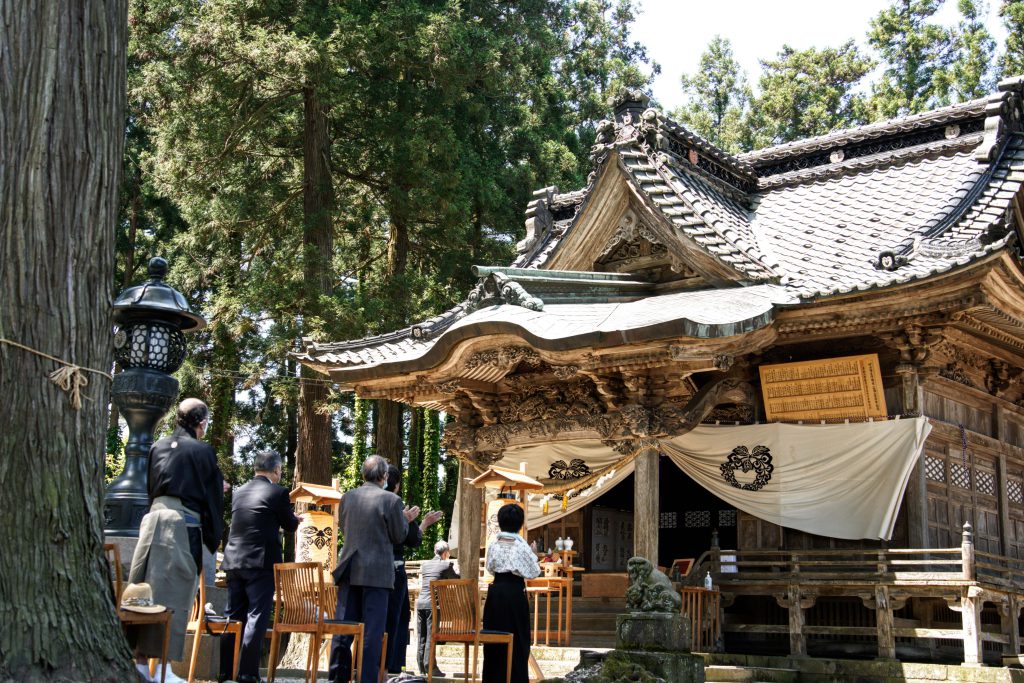
Fujimoto Shrine, located in the castle town of Murakami City, Niigata Prefecture, is a historic shrine dedicated to Naito Nobunari, the half-brother of Tokugawa Ieyasu, and the successive lords of the Murakami Domain. The magnificent shrine building, constructed entirely of zelkova wood, and the exquisite carvings by Ariso Shusai, a renowned craftsman from Murakami, continue to captivate visitors.
This article comprehensively introduces information you should know before visiting Fujimoto Shrine, from its history and architectural highlights to goshuin information and access methods.
History and Origins of Fujimoto Shrine
Founding and Deity
The deity enshrined at Fujimoto Shrine is Naito Nobunari, the founder of the Murakami Domain, known as the half-brother of Tokugawa Ieyasu and one of the Seventeen Retainers of the Tokugawa family. Furthermore, the shrine enshrines the successive lords of the castle: Naito Nobuatsu (10th Lord), Naito Nobuyuki (11th Lord), and Hachiman Daishin (Homuda Daishin).
Naito Nobunari was the son of Tokugawa Ieyasu’s mother, Oda-no-kata, after her divorce from Mizuno Nobumoto and subsequent remarriage to Hisamatsu Toshikatsu. He was Ieyasu’s half-brother, sharing the same mother. He served as a senior retainer of the Tokugawa family and later laid the foundation for the Murakami Domain, earning deep reverence in the region.
Murakami Domain and Fujimoto Shrine
The Murakami Domain was located in the northern part of Niigata Prefecture, with Murakami Castle as its residence. Fujimoto Shrine is located within the San-no-maru (third enclosure) of Murakami Castle and has a history of development under the patronage of the domain lord. During the feudal period, it attracted the faith of the lord and his retainers, playing an important role as the guardian deity of the castle town.
Currently, the entire shrine grounds are included in the National Historic Site “Murakami Castle Ruins”, and its value as a castle ruin is recognized. For this reason, Fujimoto Shrine, unusually for a shrine, also distributes castle stamps.
Former Shrine Rank and Cultural Property Designation
Fujimoto Shrine is a prestigious shrine that was former Prefectural Shrine. Furthermore, the shrine buildings and their auxiliary structures are designated as Murakami City Designated Cultural Properties and Murakami City Historical Landscape Formation Buildings, and their historical and cultural value is highly regarded.
Highlights of the Shrine Architecture
Gongen-zukuri Style, Same as Nikko Toshogu Shrine
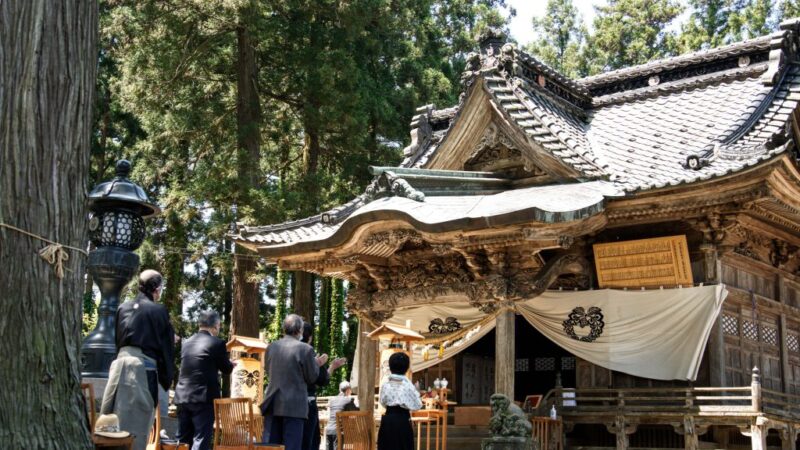
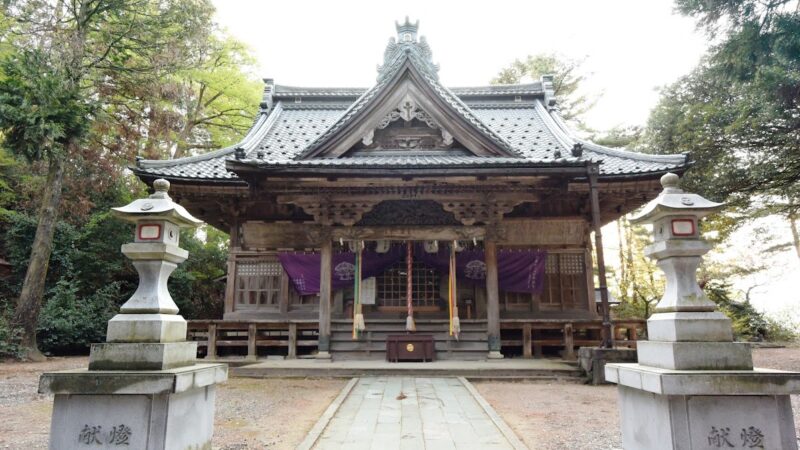
The most distinctive feature of Fujimoto Shrine’s buildings is that they are made entirely of zelkova wood in the Gongen-zukuri style, the same style as Nikko Toshogu Shrine. Gongen-zukuri is a complex shrine building style in which the main hall and worship hall are connected by a stone corridor (ai-no-ma), and it was a style of architecture widely adopted in shrines associated with the Tokugawa family during the Edo period.
Construction of the shrine began in 1849 and it is a masterpiece completed over eight years by the artisans of the time, who poured their skills into its construction. Thanks to the luxurious use of zelkova wood and the meticulous workmanship over a long period, it has maintained its beautiful appearance to this day.
A Masterpiece of Kagobori Carving by Ariso Shusai
Throughout the shrine, there are masterpieces of carving called kagobori by Ariso Shusai, a master craftsman born in Murakami.
Kagobori is an advanced technique that creates three-dimensional expressions by carving openwork into wood. Ariso Shusai was a sculptor who was active in the late Edo period and left numerous works in shrines and temples in the Murakami region. The carvings at Fujimoto Shrine are particularly highly regarded for their exquisite detail and artistic merit.
The designs of dragons, lions, flowers, and birds are delicately carved, and the way the shadows change depending on how the light hits them is captivating to behold. When visiting, we highly recommend taking the time to appreciate the intricate details of the carvings.
Architectural Style Characteristics
The Gongen-zukuri structure, with its integrated main hall, stone chamber, and worship hall, offers the practical advantage of allowing visitors to worship without getting wet even in rainy weather. Furthermore, the intricately combined roof structure creates a highly three-dimensional and majestic impression when viewed from the front.
The shrine, constructed entirely of zelkova wood, showcases the deep color and beautiful grain resulting from the aging process of the wood. Zelkova wood is hard and highly durable, maintaining its structural strength even after more than 170 years.
Goshuin/Gojo-in Information
About Goshuin
Fujimoto Shrine offers standard goshuin (shrine stamps). The goshuin includes the shrine’s name and date of visit in ink, and is stamped with the shrine’s seal. Both pre-printed and handwritten goshuin may be available; please inquire at the shrine office if you have a preference.
The reception hours for receiving Goshuin (temple/shrine stamps) are usually the same as the shrine office’s opening hours, but this may differ during festivals and events. If you want to be sure to receive one, it is recommended to check by phone in advance.
Distribution of Castle Stamps
As mentioned above, the entire grounds of Fujimoto Shrine are included in the nationally designated historical site “Murakami Castle Ruins,” therefore, despite being a shrine, it also distributes castle stamps. This is a rare example nationwide.
Castle stamps are gaining popularity among castle enthusiasts and history buffs, and many people receive them as a memento of their visit to Murakami Castle. The designs incorporate motifs related to Murakami Castle and Fujimoto Shrine, making them valuable collector’s items.
Original Goshuin Notebooks
Fujimoto Shrine may also distribute original Goshuin notebooks. The designs often feature the shrine buildings, carvings, and Murakami Castle, making them ideal souvenirs of your visit. Availability varies depending on the time of year, so please check with the shrine office if you are interested.
About Prayers and Rituals
Year-Round Prayer Requests
Fujimoto Shrine accepts prayers, exorcisms, and prayers for safe childbirth 365 days a year. When you have a significant life event or wish, you can formally visit this historic shrine.
Main types of prayers:
- Exorcism/Protection from Misfortune: Protection from misfortune for those entering their unlucky year
- Prayer for Safe Childbirth: Generally performed on the Day of the Dog in the 5th month of pregnancy
- First Shrine Visit (Omiyamairi): Praying for the healthy growth of the baby
- Shichi-Go-San Visit: Celebrating the growth of children at ages 3, 5, and 7
- Prayer for Success in Exams/Academic Achievement: Praying for academic improvement for students taking exams or other students
- Business Prosperity: Praying for business success
- Traffic Safety: Blessing of cars, etc.
How to Book a Prayer
Fujimoto Shrine accepts reservations for prayers online. You can make a reservation by selecting your desired date, time, and prayer content through the dedicated reservation site (Coubic). Advance reservations are recommended, especially on weekends, auspicious days, and during the Shichi-Go-San season, as congestion is expected.
Same-day reservations are possible, but there may be a waiting time. For those who wish to visit the shrine smoothly, please utilize the reservation system.
Major Festivals and Events Throughout the Year
Fujimoto Shrine holds various festivals and events throughout the year. The main festivals include:
- New Year’s Day Festival: Praying for peace in the new year
- Setsubun Festival: Events such as bean-throwing
- Spring Grand Festival: The grand festival of spring
- Autumn Grand Festival: The grand festival of autumn
- Shichi-Go-San Festival: Late October to November
- Great Purification Ceremony: Twice a year, in June and December
Festival dates may vary from year to year, so please check official information if you wish to participate.
Basic Information
Location and Contact Information
Address: 11-12 Sannomachi, Murakami City, Niigata Prefecture 958-0837
Phone Number: 0254-52-4781
Shrine Office Hours: Usually 9:00 AM – 5:00 PM (may vary depending on the season)
Closed Days: None (Open all year round)
Official Reservation Website: https://coubic.com/fujimotojinja
Visiting Hours and Admission Fee
Visiting the shrine grounds is generally free. However, there may be restrictions on viewing the interior of the shrine buildings or during special periods.
Visiting Hours: Open all day (lighting may be unavailable at night)
Admission Fee: Free
Parking: Available (Limited spaces; use of nearby public parking lots is recommended during busy times)
Access Information
Access by Train
JR Uetsu Main Line “Murakami Station” is the nearest station.
- Walking from Murakami Station: Approximately 15-20 minutes
- Taxi from Murakami Station: Approximately 5 minutes
- Bus from Murakami Station: Get off at “Murakami City Hall” bus stop, then approximately 5 minutes on foot
From Murakami Station, walking through the charming streets of the castle town is also recommended. Along the way, you’ll see samurai residences and townhouses, allowing you to experience Murakami’s history.
Access by Car
Approximately 10 minutes from the Nihonkai Tohoku Expressway “Murakami Senami Onsen IC”.
- From Niigata City: Approximately 1 hour via National Route 7
- From Shibata City: Approximately 40 minutes via National Route 7
Please enter the address “11-12 Sannomachi, Murakami City, Niigata Prefecture” or the phone number “0254-52-4781” into your car navigation system.
Parking Information
Fujimoto Shrine has its own parking lot, but the number of spaces is limited. It is especially likely to be full during festivals, Shichi-Go-San season, and tourist season.
There are also public parking lots and tourist parking lots in the surrounding area, so we recommend using those during busy times. If you are visiting in conjunction with exploring Murakami Castle Ruins and the townhouses, it is more efficient to park your car in a central parking lot and explore on foot.
Nearby Tourist Spots
Murakami Castle Ruins (Gagyuzan Mountain)
Behind Fujimoto Shrine, on Mount Gagyuzan, are the Murakami Castle Ruins. There is a hiking trail to the summit that takes about 20-30 minutes on foot, where you can see remains such as stone walls and baileys. From the mountaintop, a spectacular view unfolds, offering panoramic vistas of Murakami city and the Sea of Japan.
Exploring Samurai Residences and Townhouses
Murakami city boasts numerous samurai residences and townhouses from the Edo period. Samurai residences such as the “Former Takaoka Residence” and the “Wakabayashi Residence,” as well as the townhouses known for their “Townhouse Doll Festival,” preserve the atmosphere of a castle town.
Murakami City Local History Museum (Oshagiri Hall)
This museum offers insights into Murakami’s history and culture. In particular, the magnificent “Oshagiri” floats used in the Murakami Grand Festival are on display, their intricate carvings and decorations a must-see.
Iyoboya Hall (Salmon Museum)
Murakami is known as the “Salmon Town,” and at the Iyoboya Hall, you can learn about salmon ecology and Murakami’s salmon culture. There are also times when you can observe salmon swimming upstream in the Miomote River.
Senami Onsen
Located about a 10-minute drive from Fujimoto Shrine, Senami Onsen is a hot spring resort facing the Sea of Japan. Known for its beautiful sunsets, it boasts numerous hot spring inns. It’s an ideal place to stay after visiting the shrine.
History and Culture of Murakami
Development as a Castle Town
Murakami developed as a strategic point in northern Echigo Province from the medieval to the early modern period. During the Sengoku period, it was ruled by the Honjo clan, and in the Edo period, it flourished as a castle town of a fudai daimyo (hereditary vassal). Besides the Naito clan, other prestigious daimyo such as the Hori, Matsudaira, and Sakakibara clans served as feudal lords.
Tradition of Salmon Culture
Murakami has long been known as a “salmon town” due to its thriving salmon fishing industry. It is said that during the Edo period, it was the first town in the world to successfully hatch and propagate salmon naturally, and there are said to be over 100 types of salmon dishes. Specialties such as “shiohiki salmon” (salt-cured salmon) and “sake-zukuri salmon” (salmon marinated in sake) remain representative flavors of Murakami today. ### Traditional Crafts and Festivals
Murakami boasts a traditional craft called “Murakami Wood Carving and Lacquerware,” where exquisitely carved lacquerware is used to create works of art. Furthermore, the “Murakami Grand Festival,” held in July, features magnificent floats called “Oshagiri” parading through the town, attracting many tourists.
Manners and Points for Visiting Shrines
Basic Shrine Visit Etiquette
Please observe the basic etiquette for visiting shrines and offer your prayers with sincerity.
- Bow before passing through the torii gate: This is a courtesy before entering the sacred area.
- Purify yourself at the water basin: Purify your left hand, then your right hand, then your mouth.
- Walk along the edge of the path: The center is considered the path of the gods.
- Etiquette in front of the main hall: Two bows, two claps, and one bow are the basic rituals.
- Bow after leaving the torii gate: This expresses gratitude to the gods.
Regarding Photography
Photography is generally permitted within the shrine grounds, but please note the following:
- Do not take photos in areas where photography is prohibited, such as inside the main hall.
- Be considerate of other worshippers.
- Refrain from taking photos during religious ceremonies, or obtain permission.
- When posting on social media, be careful not to include other worshippers in your photos.
Regarding Attire
If you are receiving a prayer, avoid overly casual attire; somewhat formal attire is preferable. For regular visits, clean and presentable clothing is acceptable.
Regarding Clothing
If you are receiving a prayer, avoid overly casual clothing; somewhat formal attire is preferable. For regular visits, clean and presentable clothing is acceptable. ## Summary: The Charms of Fujimoto Shrine
Fujimoto Shrine is a shrine with many attractions, including its history as the shrine of Tokugawa Ieyasu’s half-brother, its magnificent Gongen-zukuri style shrine building (similar to Nikko Toshogu Shrine), the artistic beauty of the cage carvings by Ariso Shusai, and its historical setting as the site of Murakami Castle.
When visiting Murakami City, be sure to include a visit to Fujimoto Shrine in your itinerary, along with strolling through the castle town, enjoying salmon cuisine, and visiting the hot springs. The shrine building, where history and art merge, will surely leave a deep impression on visitors.
Since prayers are accepted throughout the year, it is also an ideal place to visit for important life events or when making wishes. You can offer your prayers in peace amidst the carefully crafted shrine building and the tranquil atmosphere of the grounds.
As a historical shrine representing northern Niigata Prefecture, and a valuable place that conveys Murakami’s culture and traditions to the present day, Fujimoto Shrine is a place that many people should visit.