Complete Guide to Wakamiya Hachiman Shrine (Bungo Takada City, Oita Prefecture)
Located along the Katsura River in the heart of Bungo Takada City, Oita Prefecture, Wakamiya Hachiman Shrine is a historic shrine affectionately known locally as “Wakamiya-sama.” Since its founding in the early Heian period, it has flourished as a center of local faith for over a thousand years. This article provides a detailed introduction to Wakamiya Hachiman Shrine, including its history, enshrined deities, traditional events, and seasonal highlights.
History and Origins of Wakamiya Hachiman Shrine
Circumstances of Founding
The history of Wakamiya Hachiman Shrine dates back to the early Heian period. In the first year of Tenchō (824), a divine oracle was given to Sakai Kadonojo, the mother of Kami Unmaro, a resident of Usa District, Buzen Province. It is said that the shrine was founded in December of the second year of Ninju (852) in response to this oracle.
The shrine is positioned as a sub-shrine of Usa Jingu in Kurinawa-go, one of the six villages of the Kunisaki Peninsula, and has developed in close connection with Usa Hachimangu. Due to this history, Wakamiya Hachiman Shrine has played an important role as the center of Hachiman worship in the Bungo Takada region.
Shrine Rank and Historical Changes
Under the Meiji era’s shrine ranking system, Wakamiya Hachiman Shrine was ranked as a prefectural shrine. This indicates the shrine’s status and importance in the region, and it is recognized as a representative shrine of Bungo Takada City.
Throughout its long history, Wakamiya Hachiman Shrine has been revered as a center of local faith and a place where people engaged in agriculture and fishing prayed for abundant harvests and safety at sea. Even today, it remains located in the heart of Bungo Takada City and serves as a spiritual pillar for the local residents.
Deities and Benefits
Main Deity
The main deity of Wakamiya Hachiman Shrine is Emperor Ojin. Emperor Ōjin, widely worshipped as Hachiman-jin, is known as the god of military fortune and victory, and is also revered as the god of industrial development and abundant harvests.
Expected Benefits
The following benefits can be expected at Wakamiya Hachiman Shrine:
- Abundant Harvest: Prayers for a bountiful harvest for those engaged in agriculture
- Safety at Sea: Prayers for the safety of those involved in fishing
- Business Prosperity: Regional commercial development
- Family Safety: Health and peace for the family
- Protection from Evil: Protection from disasters
- Good Fortune in Competitions: Passing exams and business success
Locally, it is particularly known for its blessings of abundant harvests and attracts fervent devotion from those engaged in agriculture.
Traditional Events and Festivals of Wakamiya Hachiman Shrine
Hōran-enya (New Year’s Ritual)
Hōran-enya, held in the New Year, is one of the important traditional events of Wakamiya Hachiman Shrine. This Shinto ritual, which celebrates the New Year and prays for peace and prosperity throughout the year, has become an indispensable annual event for the local residents.
Autumn Grand Festival and River Crossing Ritual (Naked Festival)
What makes Wakamiya Hachiman Shrine famous nationwide is the River Crossing Ritual, commonly known as the “Naked Festival,” held in November (October in the lunar calendar) as part of the Autumn Grand Festival. This festival is counted as one of the Three Great Naked Festivals in Japan and is known as a representative traditional event of Bungo Takada City.
Characteristics of the River Crossing Ritual
In the River Crossing Ritual, men dressed in white carry a portable shrine across the Katsura River. The sight of them carrying the shrine while immersed in the cold river water is magnificent and captivates many spectators.
In recent years, the “Giant Torch” has also been added as a highlight of the festival, and the spectacle of the flames illuminating the night sky is breathtaking. This Giant Torch is attracting attention as a new specialty of Takada’s Naked Festival.
Significance of the Festival
The Naked Festival is not merely a tourist event, but a sacred religious ceremony praying for a bountiful harvest and good health. Participants purify themselves and participate in the rituals while expressing gratitude to the gods and praying for a good harvest next year. It is also an important opportunity to reaffirm community unity and pass on traditions to the next generation.
Highlights of the Shrine Grounds
Approach and Sacred Bridge
The approach to Wakamiya Hachiman Shrine follows the Katsura River and is enveloped in a tranquil atmosphere. A sacred bridge spans the approach, symbolizing the boundary from the secular world to the sacred realm.
A distinctive pair of guardian lion-dogs with cubs are placed along the approach, welcoming worshippers. These lion-dogs are revered as guardians of fertility and child-rearing.
Shrine Gate and Water Basin
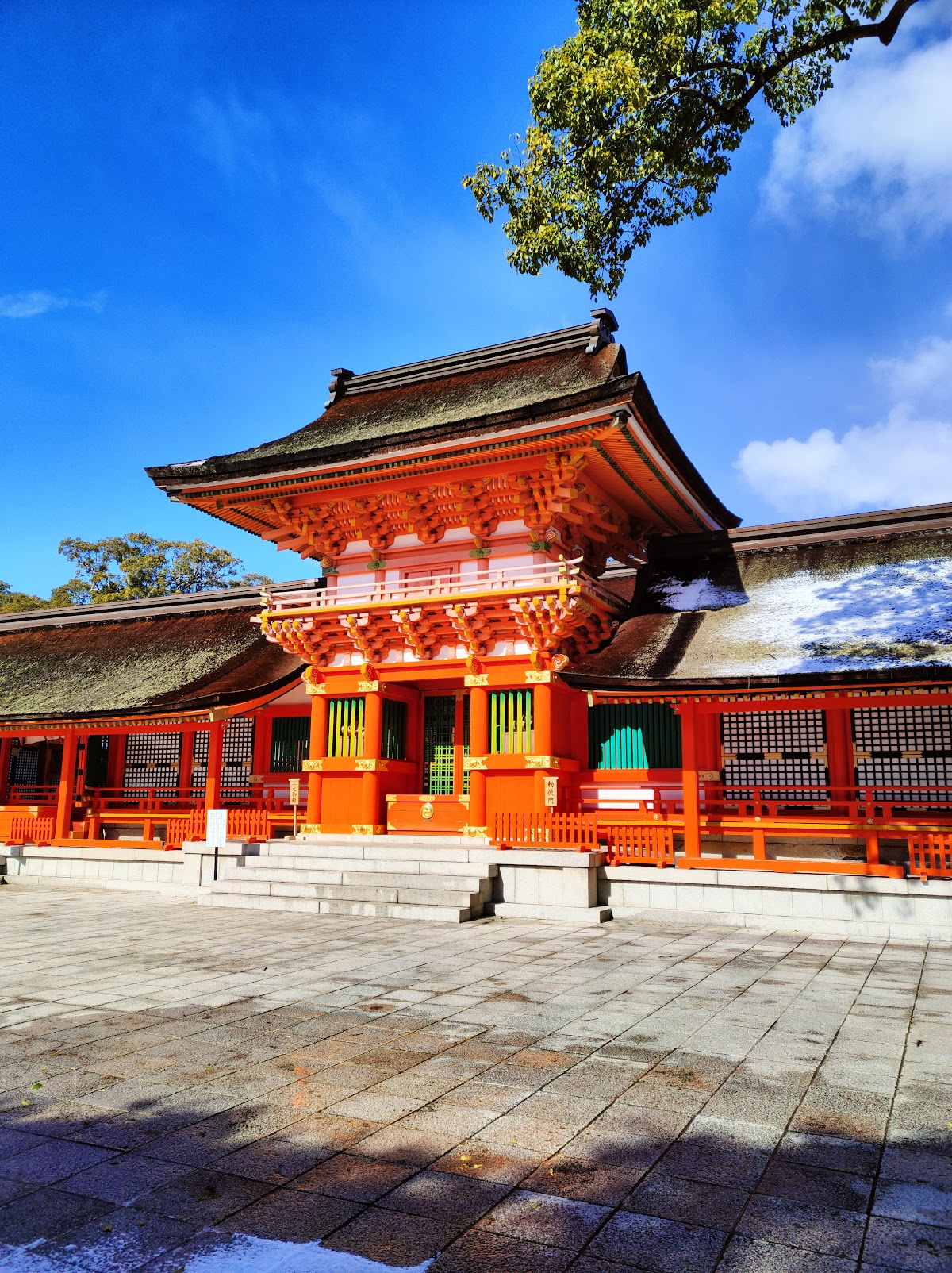
After crossing the sacred bridge, a magnificent shrine gate appears. Passing through this gate leads into an even more sacred space. At the purification fountain, you can cleanse your mind and body before praying, experiencing traditional worship practices.
Worship Hall and Main Shrine
The worship hall is where worshippers offer their prayers, and a solemn atmosphere permeates the area. Beyond it sits the main shrine, where Emperor Ōjin, the principal deity, is enshrined. The architectural style of the shrine buildings exhibits characteristics of traditional Shinto architecture, conveying a sense of historical weight.
Shrines within the Precincts
Wakamiya Hachiman Shrine has several subsidiary shrines within its grounds:
- Gion Shrine: Dedicated to Susanoo-no-Mikoto, worshipped as the god of protection against epidemics.
- Kotohira Shrine: Dedicated to Omononushi-no-Kami, known as the god of maritime safety.
- Miyajidake Shrine: A shrine revered as the god of good fortune.
- Awashima Shrine: Dedicated as the guardian deity of women, and the god of safe childbirth and matchmaking.
Each of these subsidiary shrines offers different blessings, catering to the diverse wishes of worshippers.
A Famous Spot for Hydrangeas
A Path Adorned with 1,800 Hydrangea Plants
Wakamiya Hachiman Shrine is widely known not only for its traditional events but also as a famous spot for hydrangeas. During the rainy season, approximately 1,500 to 1,800 hydrangea bushes of various colors bloom along the approach to the shrine and along the Katsura River.
Best Viewing Period
The best time to see the hydrangeas is usually from mid-June to early July. During this time, hydrangeas of various colors such as blue, purple, pink, and white adorn the approach to the shrine, delighting visitors.
Hydrangeas wet with the rain of the rainy season are especially beautiful, creating a tranquil and atmospheric scene. Worshippers, local residents taking walks, and tourists visiting Showa Town come to enjoy this unique seasonal scenery.
Photo Spot
The hydrangeas along the approach to the shrine are excellent photo spots and are popular on social media. In particular, the scenery of hydrangeas with the Katsura River in the background is a beloved early summer scene in Bungo Takada City, cherished by many photography enthusiasts.
Relationship with Showa Town
Bungo Takada City “Showa Town” Tourism
Wakamiya Hachiman Shrine is located very close to “Showa Town,” a popular tourist spot in Bungo Takada City. Showa Town, which recreates the streetscape of the 1950s, is nationally known as a tourist destination with a charming retro atmosphere.
Appeal as a Tourist Route
Many tourists who visit Showa Town also visit Wakamiya Hachiman Shrine. A popular tourist route involves strolling through the retro shopping street and then spending time at the historic shrine to tranquilize one’s mind, offering a multifaceted experience of Bungo Takada City’s charm.
Its convenient location, approximately a 7-minute walk from the “Showa Town” bus terminal, is another point that makes it easily accessible for tourists.
Access Information
Access by Public Transportation
From JR Usa Station:
- Approximately 15 minutes by bus, get off at “Showa no Machi” bus terminal.
- Approximately 7 minutes on foot from the bus terminal.
Access by Car
Located in the heart of Bungo Takada City, along the Katsura River, it’s easy to find by searching “Wakamiya Hachiman Shrine Bungo Takada City” on your car navigation system. Parking is available nearby, making it convenient for those visiting by car.
Address and Basic Information
- Location: Bungo-Takada City, Oita Prefecture
- Visiting Hours: Grounds are freely accessible (please check the shrine office’s opening hours)
- Admission Fee: Free
Manners and Points for Visiting
Basic Visiting Etiquette
- Bow before the Torii Gate: Bow before entering the sacred area.
- Walk along the edge of the path: The center is considered the path for the gods.
- Purify at the Water Basin: Purify your left hand, right hand, and mouth in that order.
- Worship at the Main Hall: Two bows, two claps, and one bow is the basic ritual.
Recommended Visiting Time
The quiet early morning hours are recommended as you can experience the true sacred atmosphere of the shrine. During hydrangea season, many people visit, so if you want to visit at a leisurely pace, weekday mornings are ideal.
Enjoying the Shrine Throughout the Year
Spring (March-May)
This is a beautiful season of fresh greenery, allowing visitors to enjoy the nature along the Katsura River while visiting the shrine. With the arrival of spring, the trees in the shrine grounds begin to bud, creating an atmosphere full of vitality.
Early Summer (June-July)
This is the most vibrant season of the year, with hydrangeas in full bloom. The harmony between the hydrangeas, wet with rain during the rainy season, and the lush green shrine grounds is beautiful, attracting many visitors.
Autumn (September-November)
The Autumn Grand Festival (Naked Festival) in November is the biggest highlight. Many spectators from within and outside the prefecture come to witness the magnificent sight of the river crossing ritual. Visiting the shrine in the crisp autumn air is also a pleasant experience.
Winter (December-February)
During the New Year period, rituals such as the Horan-enya are held, and the shrine is bustling with visitors for their first shrine visit of the year. The temple grounds, enveloped in silence during winter, offer a solemn atmosphere for deep prayer.
Nearby Tourist Attractions
Showa Town
A tourist area within walking distance that recreates the streetscape of the 1950s. Enjoy the nostalgic atmosphere with retro shopping streets, Showa Roman Warehouses, and traditional candy stores.
Millennium Roman Department Store
A facility handling local products and souvenirs of Bungo Takada City. A popular spot for tourists, serving as a hub for showcasing the region’s charm.
Rokugo Manzan Temples
The Kunisaki Peninsula is home to the Rokugo Manzan Buddhist cultural sphere. Visiting these temples along with Wakamiya Hachiman Shrine allows for a deeper understanding of the region’s history of Shinto-Buddhist syncretism.
Connection to the Community
Center of Local Residents’ Faith
For over a thousand years, Wakamiya Hachiman Shrine has functioned as a spiritual pillar for the residents of Bungo Takada City. The affectionate nickname “Wakamiya-sama” reveals the deep roots the shrine has in the local community.
Inheritance of Tradition
Traditional events, including the Naked Festival, are passed down to the younger generation in the region. Participation in the festivals helps to form a regional identity and strengthens community bonds.
Role as a Tourist Resource
In recent years, Wakamiya Hachiman Shrine has gained attention as an important tourist resource in Bungo Takada City. As a famous spot for hydrangeas and a venue for traditional events, it attracts many tourists and contributes to the revitalization of the local economy.
Points to Note When Visiting
During Festival Periods
During festival periods such as the Autumn Grand Festival and New Year’s celebrations, the shrine receives more visitors and spectators than usual. Due to anticipated parking congestion, using public transportation or arriving early is recommended.
Hydrangea Season
Many people also visit during the peak hydrangea season from June to July. When enjoying photography, please be considerate of other visitors.
Clothing and Belongings
While no special attire is required for visiting the shrine, modest clothing that reflects the sacred nature of the place is desirable. Since it often rains during hydrangea season, we recommend bringing an umbrella or rain gear.
Summary: The Charm of Wakamiya Hachiman Shrine
Wakamiya Hachiman Shrine is a venerable shrine with a history of over a thousand years since its founding in the early Heian period. It flourished as a sub-shrine of Usa Jingu Shrine and developed as a center of local faith.
The Kawawatashi Shinto ritual (Naked Festival), one of Japan’s three major naked festivals, is a traditional event that made this shrine nationally famous, attracting many spectators every November. Furthermore, the approach to the shrine in early summer, adorned with 1,800 hydrangea bushes, is a representative seasonal spectacle of Bungo Takada City.
Its convenient location, close to the center of Bungo Takada City and Showa-no-machi, makes it easy to incorporate into sightseeing routes. History, traditional events, natural beauty, and deep ties to the local community—all these elements harmoniously combine at Wakamiya Hachiman Shrine, making it a must-visit spot when visiting Bungo Takada City.
Receiving blessings for a bountiful harvest and offering quiet prayers in this sacred space steeped in a thousand years of history will be a precious experience that allows you to forget the hustle and bustle of everyday life. Be sure to visit Wakamiya Hachiman Shrine, which displays different expressions with each season.