Ashitaka Shrine (Kurashiki City, Okayama Prefecture) Complete Guide | History, Goshuin (Shrine Seal), and Access Information
Ashitaka Shrine, located in the heart of Kurashiki City, Okayama Prefecture, is a historic shrine listed in the Engishiki Jinmyocho (a list of shrines compiled during the Heian period). Although currently surrounded by urban areas, it was once situated on an island in the Seto Inland Sea and was revered as the “Shrine of Lowering Sails,” protecting safe voyages. This article provides detailed information you should know before visiting Ashitaka Shrine, including its history, enshrined deities, highlights of the grounds, goshuin (shrine seal), and access information.
History and Origins of Ashitaka Shrine
Founding and Status as an Engishiki Shrine
Ashitaka Shrine is said to have been founded during the reign of Emperor Sujin, the 10th emperor, and its history spans over 2000 years. The Ashitaka Shrine is listed as “Ashitaka Shrine, Oda District, Bitchu Province” in the Engishiki Jinmyocho, compiled in 927 during the reign of Emperor Daigo of the Heian period, and is one of the 18 shrines in Bitchu Province, a minor shrine listed in the Engishiki.
Shrines listed in the Engishiki Jinmyocho are historically significant shrines that were granted special status by the imperial court, indicating that Ashitaka Shrine has been an important place of worship since ancient times. Until the late Edo period, it was written as “Ashitaka Shrine,” but it is now written as “Ashitaka Shrine” or “Ashitaka Shrine.”
Faith as the “Shrine of Lowering Sails”
Ashitaka Shrine is located on Mount Ashitaka, a small mountain with an elevation of 67 meters. Although it is now connected to the mainland, it was once an island floating in the Seto Inland Sea (Kibi no Anaumi) called “Kotakejima” or “Sasajima.” At the time, ships navigating this area would always lower their sails and pray at Ashitaka Shrine for safe voyages, earning it the nickname “Shrine of Lowered Sails.”
Located at a crucial point for maritime traffic in the Seto Inland Sea, it is believed that from ancient times to the Middle Ages, many sailors and merchants prayed for safe voyages and offered thanks upon their safe return. This tradition of maritime worship continues today as a prayer for safe travels.
Former Shrine Rank and Historical Changes
Under the modern shrine ranking system of the Meiji era, it was ranked as a prefectural shrine, positioned as a central shrine in the region. It was granted the divine rank of Senior Fourth Rank, indicating the deep reverence it received from the imperial court. During the Edo period, it was widely worshipped as a local tutelary shrine and as a guardian deity of maritime traffic.
Deities and Divine Virtues
Main Deity: Oyamatsumi-no-Mikoto
The main deity of Ashitaka Shrine is Oyamatsumi-no-Mikoto. Oyamatsumi-no-Mikoto is an important deity in Japanese mythology, known as the god of mountains and the sea, and appears in the Kojiki and Nihon Shoki. Born as the child of Izanagi-no-Mikoto and Izanami-no-Mikoto, he has been revered as the god who governs the mountains.
Oyamatsumi-no-Mikoto is worshipped as both a mountain god and a sea god. This reflects the Japanese view of nature, where mountains and seas are closely intertwined, and there was a tradition of worshipping mountain gods as sea gods, especially on the islands of the Seto Inland Sea. Considering that Ashitaka Shrine was located on an island, the choice of this deity is quite natural.
Deities Enshrined: Iwanagahime-no-Mikoto and Konohanasakuya-hime-no-Mikoto
The deities enshrined here are Iwanagahime-no-Mikoto and Konohanasakuya-hime-no-Mikoto. These two goddesses are daughters of Oyamatsumi-no-Mikoto and play important roles in Japanese mythology.
Konohanasakuya-hime-no-Mikoto is worshipped as a symbol of beauty and prosperity, and as a goddess of safe childbirth and child-rearing. Iwanagahime-no-Mikoto, on the other hand, is revered as a goddess of longevity and health. It is believed that by enshrining these sister deities together, one can receive harmonious divine blessings of beauty and longevity, prosperity and health.
Divine Virtues and Faith
The divine virtues of Ashitaka Shrine are diverse:
- Traffic Safety and Maritime Safety: Due to its tradition as the “Shrine of Lowering Sails,” many worshippers still visit today to pray for traffic safety.
- Protection of the Mountains and Blessings of Nature: Prosperity in agriculture and forestry through the divine virtues of Oyamatsumi-no-Mikoto.
- Family Safety and Business Prosperity: Faith as the local tutelary shrine.
- Safe Childbirth and Child-Rearing: Divine virtues of Konohanasakuya-hime-no-Mikoto.
- Health and Longevity: Divine virtues of Iwanaga-hime-no-Mikoto.
Highlights of the Shrine Grounds
Approach and Torii Gate
Since Ashitaka Shrine is located on the summit of Mt. Ashitaka, the approach is a mountain path. A magnificent shrine name marker stands at the entrance, and from there, a stone staircase leads to the shrine. Passing through the torii gate and proceeding along the lush green path, you will be enveloped in a tranquil atmosphere despite being in an urban area. The stone steps leading to the shrine are maintained with a moderate incline, making it accessible even for the elderly if they climb slowly. The path, surrounded by trees, allows visitors to experience the beauty of nature throughout the seasons, especially during the fresh green season and the autumn foliage season.
Main Shrine and Worship Hall
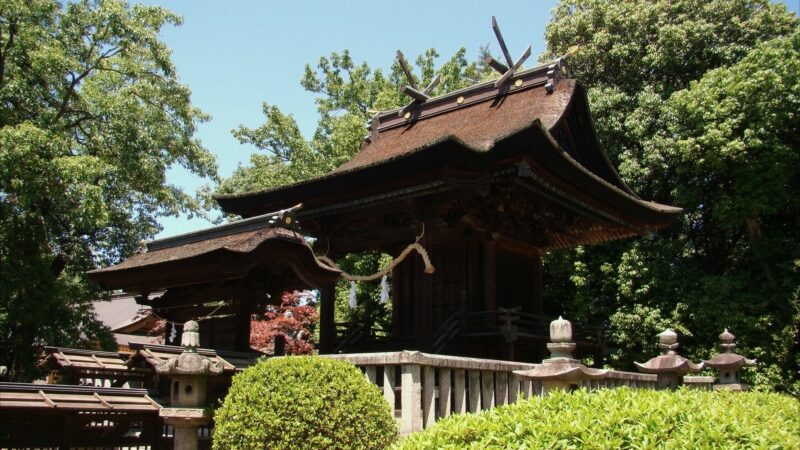
Upon arriving at the shrine grounds at the mountaintop, the main shrine with its cypress bark roof comes into view. Cypress bark roofing is a traditional Japanese roofing technique, using multiple layers of cypress bark, giving the building a sense of the prestige of an ancient shrine. The main shrine is a magnificent building befitting its status as a prefectural shrine, and the detailed carvings and decorations are worth noting.
The worship hall is where worshippers offer their prayers and is kept clean. The arrangement of the worship hall and the main shrine follows the traditional style of shrine architecture.
Subsidiary Shrines and Sumo Ring
In addition to the main shrine, several subsidiary shrines are enshrined within the grounds, each receiving its own devotion. The shrine is also known for having a sumo ring on its grounds. This ring has a history of being used for Shinto rituals and local sumo tournaments, making it a valuable historical relic demonstrating the connection between the shrine and the local community.
View
From the shrine grounds, located at the summit of Mt. Ashitaka, you can enjoy a panoramic view of Kurashiki city. While the Seto Inland Sea once stretched out before us, this change in landscape is now urban, and it speaks volumes about Kurashiki’s history. On clear days, you can see the distant mountains, allowing you to enjoy the scenery along with your visit.
Annual Rituals and Festivals
Ashitaka Shrine holds various Shinto rituals and festivals throughout the year. Main Annual Events:
Major Festivals
- New Year’s Day Festival (January 1st): A festival celebrating the New Year
- Spring Grand Festival: An important spring festival
- Summer Purification Ceremony (June 30th): A Shinto ritual to purify oneself of the impurities accumulated over the past six months
- Autumn Grand Festival: A festival to give thanks for the autumn harvest
- Year-End Purification Ceremony (December 31st): A Shinto ritual to purify oneself of the impurities accumulated over the past year
These festivals are attended by local parishioners and devotees, and traditional Shinto rituals are solemnly performed. The shrine grounds are particularly bustling with many worshippers during the Grand Festivals.
Goshuin (Shrine Seals) and Gifts
About Goshuin
Ashitaka Shrine offers Goshuin. Goshuin serve as proof of worship and are important for establishing a connection with the shrine. They are carefully written at the shrine office. Even those without a Goshuincho (stamp book) may be able to receive a pre-printed Goshuin (stamp).
The Goshuin features the calligraphy of “Ashitaka Shrine” and the shrine’s seal, and is a popular memento of one’s visit.
Amulets and Souvenirs
Ashitaka Shrine offers various amulets and souvenirs. Original amulets are available, and the traffic safety amulet is particularly popular. Inheriting the tradition of the “Shrine of Hanging Sails,” it is chosen by those praying for safe travels and traffic safety.
Other amulets are available for various divine blessings, including family safety, protection from evil, academic success, and safe childbirth.
Distribution Hours
- Distribution Hours: 9:00 AM to 5:00 PM
- Prayer Reception: 9:00 AM to 4:30 PM
If you wish to request a prayer, it is recommended to consult with the shrine office in advance. Especially for prayers related to life events such as Shichi-Go-San (a traditional Japanese rite of passage for children), Hatsumiyamairi (a first shrine visit for newborns), and Yakuyoke (a ritual to ward off evil), it is recommended to make a reservation in advance for a smoother experience.
Access Information
Location
Address: 1033 Sasaoki, Kurashiki City, Okayama Prefecture 710-0834
Phone Number: 086-425-7292
Access by Train
The nearest station is Nishitomii Station on the JR Sanyo Main Line. While it is possible to walk from the station, the distance is considerable, so the following methods are recommended:
- From JR Kurashiki Station: Approximately 10 minutes by taxi
- From Nishitomii Station: Approximately 20 minutes on foot
It is also possible to take a bus from Kurashiki Station, but since the number of buses is limited, it is recommended to check the timetable in advance.
Access by Car
The most convenient way to visit by car is:
- National Route 2: Approximately 500 meters west from Sasaoki Intersection
- Sanyo Expressway: Approximately 15 minutes from Kurashiki Interchange
National Route 2 is elevated near Sasaoki Intersection, so please pay attention to the signs. Ashitakayama is located south of National Route 2, and the shrine can be seen from a distance.
Parking
There is a parking lot for visitors on the shrine grounds. Space is limited, so please be aware of congestion during festivals and New Year’s visits.
Nearby Tourist Attractions
Ashitaka Shrine is close to the center of Kurashiki City, making it easy to visit along with other representative Kurashiki tourist attractions such as the Kurashiki Bikan Historical Quarter and Kurashiki Ivy Square. When sightseeing in Kurashiki, please be sure to visit Ashitaka Shrine.
Manners and Precautions for Visiting a Shrine
Etiquette for Visiting a Shrine
Please observe the basic etiquette for visiting a shrine:
- Bow before passing through the torii gate: This is a courtesy before entering the sacred area.
- Purify yourself at the water basin: Purify your left hand, right hand, and mouth in that order.
- Walk along the edge of the path: The center is considered the path of the gods.
- Etiquette at the main hall: The basic procedure is two bows, two claps, and one bow.
Regarding Attire
There are no specific dress code requirements, but please dress appropriately for a sacred place like a shrine. If you are receiving prayers, it is preferable to wear attire that is not too casual.
Precautions for the Mountain Path
Ashitaka Shrine is located at the summit of a mountain, so you will need to climb stone steps:
- We recommend wearing comfortable shoes for your visit.
- The stone steps can become slippery in rainy weather, so please be careful.
- It’s a good idea to take precautions against insects in the summer.
- Don’t forget to bring water for hydration.
Summary of Ashitaka Shrine’s Charms
Ashitaka Shrine, a shrine listed in the Engishiki (an ancient Japanese legal code) with a history of over 2000 years, has gathered deep faith in the Kurashiki area. Its history of being located on an island in the Seto Inland Sea and protecting safe voyages as the “Shrine of Lowering Sails” has been passed down to modern-day traffic safety worship.
Despite being in an urban area, its location at the summit of Mount Ashitaka maintains a quiet and sacred atmosphere, which is another of its charms. The view from the shrine grounds evokes the historical changes of Kurashiki, allowing visitors to reflect on the region’s history while paying their respects.
Ashitaka Shrine, with Oyamatsumi-no-Mikoto as its principal deity, continues to watch over the blessings of the mountains and sea, and the safety and prosperity of the people. When you visit Kurashiki, why not pay your respects at this historic shrine and experience its long history and divine blessings?
Frequently Asked Questions
Q1: Can I get a Goshuin (shrine stamp) at Ashitaka Shrine every day?
A1: You can generally receive a Goshuin during the shrine office’s opening hours (9:00 AM to 5:00 PM). However, it may not be possible during religious ceremonies or festivals, so if you definitely want to receive one, we recommend calling ahead to confirm.
Q2: Is it possible to visit in a wheelchair?
A2: Ashitaka Shrine is located on a mountaintop, and the approach is made of stone steps, making it difficult to visit in a wheelchair. If you have concerns about your legs or hips, we recommend consulting with the shrine in advance.
Q3: How crowded is it during the New Year’s visit? **
A3: From New Year’s Day to the third day of the year, local parishioners and worshippers visit the shrine, but it is not as crowded as large shrines in urban areas. However, parking is limited, so there may be waiting times during peak hours.
Q4: Is a reservation required for Shichi-Go-San or厄除け (yakuyoke – protection from misfortune) prayers?
A4: Prayers are accepted from 9:00 AM to 4:30 PM, but especially during the Shichi-Go-San season and periods when many people are in their unlucky years, we recommend making a reservation by phone in advance. By making a reservation, you can receive prayers smoothly without waiting.
Q5: What is the origin of the alternative name “Hosage no Miya” (Shrine with Lowered Sails)?
A5: Ashitakayama, where Ashitaka Shrine is located, was once an island in the Seto Inland Sea. Ships navigating this area would always lower their sails to show respect to the shrine and pray for safe voyages, hence the name “Hosage no Miya” (Shrine with Lowered Sails). This tradition has been passed down to modern-day traffic safety beliefs.