Chidai Inari Shrine (Tsuyama City, Okayama Prefecture) Complete Guide | History, Goshuin (Shrine Seal), and Access Information
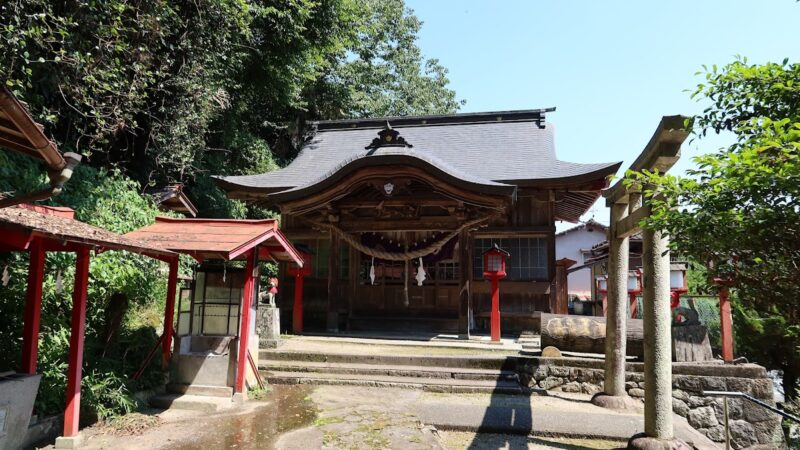
Located in the heart of Tsuyama City, Okayama Prefecture, at the foot of the Tsuyama Castle ruins, Chidai Inari Shrine is a striking shrine with its vibrant vermilion lanterns and red torii gates. Said to have been founded in 934 AD, it once played an important role as the guardian shrine of Tsuyama Castle. This article provides a detailed explanation of everything you need to know before visiting Chidai Inari Shrine, including its history, enshrined deities, highlights within the grounds, cultural properties, goshuin information, and transportation access.
Overview of Chidai Inari Shrine
Chidai Inari Shrine is located in Yamashita, Tsuyama City, Okayama Prefecture. Its former shrine rank was unranked. Although it does not have parishioners, it is one of Tsuyama City’s representative shrines, attracting many worshippers from both within and outside the town.
Located on the slopes of Tsuyama Castle (Tsuruyama Castle), Chiyo Inari Shrine is deeply intertwined with the history of the castle town and has long been a center of local faith. Even today, many worshippers visit seeking blessings for business prosperity, abundant harvests, and family safety.
Shrine Features
The most striking feature of Chiyo Inari Shrine is its vibrant vermilion appearance. The red bridge, red torii gate, giant red lanterns, red paper lanterns, and the bright red roof of the main hall harmonize to create a magnificent atmosphere befitting an Inari shrine. The large red lanterns, in particular, are easily visible from afar and serve as a landmark for the shrine.
History of Chiyo Inari Shrine
Founding and History
While there are various theories regarding the founding date of Chiyo Inari Shrine, it is generally believed to have been established in 934 AD (Shohei 4). Originally, it was a subsidiary shrine of Hachiman Shrine (Tsuruyama Hachimangu Shrine), located in Yamakita Yatsugo, Tsuyama City.
According to the records of Hachiman Shrine, the annual festival was established on September 19th, the 4th year of Shohei (838 AD), during the reign of Emperor Suzaku, and has been continued for a long time. This period corresponds to the mid-Heian period, indicating that Chiyo Inari Shrine is an ancient shrine with a history of over a thousand years.
Relationship with Tsuyama Castle
An essential aspect of understanding the history of Chiyo Inari Shrine is its deep connection with Tsuyama Castle (Tsuruyama Castle). In 1603 (Keicho 8), Mori Tadamasa was appointed to Mimasaka Province and began construction of Tsuyama Castle. Full-scale construction of the castle began in 1604 (Keicho 9) and is believed to have been completed around 1635 (Kanei 12).
Chiyo Inari Shrine was positioned as the guardian shrine of Tsuyama Castle and played the role of the castle’s protector. It is thought that in 1681 (Tenna 1), the shrine was also renovated as part of the castle grounds. Its location on the hillside of Tsuyama Castle truly demonstrates the unity of the castle and the shrine. ### Changes Since the Modern Era
Although Tsuyama Castle was demolished following the Meiji Restoration’s decree abolishing castles, Chiyo Inari Shrine continued to exist as a center of local faith. While it was classified as an unranked shrine under the old system of shrine membership, it continues to attract widespread devotion from ordinary people despite not having a parishioner system.
Currently, Chiyo Inari Shrine is a popular tourist spot in Tsuyama City, often visited in conjunction with sightseeing at the Tsuyama Castle ruins (Tsuruyama Park).
Deities and Benefits
Main Deity
The main deity of Chiyo Inari Shrine is Inari-shin. Inari-shin is a deity widely worshipped throughout Japan, generally referring to Ukanomitama-no-kami. It is known as the god of abundant harvests and business prosperity.
Benefits
The main benefits you can receive at Chiyo Inari Shrine are as follows:
- Business Prosperity: A representative benefit of Inari shrines, attracting many visitors praying for success in business and ventures.
- Abundant Harvest: Also serving as a guardian deity of agriculture, allowing for prayers for a bountiful harvest.
- Family Safety: Protects the health and peaceful life of your family.
- Good Fortune and Prosperity: Believed to bring good luck and prosperity.
- Fulfillment of Wishes: Believed to grant various wishes.
Highlights of the Shrine Grounds
Large Red Lantern
The first thing you’ll notice when visiting Chiyo Inari Shrine is the giant red lantern. This large lantern is a symbol of the shrine and serves as a landmark indicating its location from afar. It is sometimes lit up at night, creating a magical atmosphere.
Vermilion Torii Gates and Bridge
A row of vibrant vermilion torii gates lines the path leading to the shrine grounds. A red bridge spans the path, and together these elements create the characteristic vibrant scenery of an Inari shrine. Especially on sunny days, the contrast between the blue sky and the vermilion is beautiful, making it a popular photo spot.
Main Shrine
The main shrine is characterized by its bright red roof and is built in the Inari style. It has a history of being built as the guardian shrine of Tsuyama Castle and is still carefully maintained today. Red lanterns adorn the front of the main shrine, creating a festive atmosphere.
Subsidiary Shrines
Several subsidiary shrines are also enshrined within the grounds of Chiyo Inari Shrine. These small shrines also attract the faith of local people and embody various wishes.
Cultural Properties and Important Cultural Properties
City-Designated Important Cultural Properties
Chiyo Inari Shrine possesses important cultural properties designated by Tsuyama City. These cultural properties demonstrate the historical value of the shrine and are protected as cultural heritage of Tsuyama City.
For detailed information on specific cultural properties, please refer to the materials of the Tsuyama City Board of Education and the Okayama Prefectural Shrine Association. When visiting the shrine, please pay attention to these cultural properties.
Historical Buildings
The shrine buildings themselves are recognized for their historical value, due to their connection to Tsuyama Castle and their history dating back to the Edo period. Their location on the slopes of Tsuruyama Mountain also contributes to their importance as historical sites that tell the story of Tsuyama’s history.
Annual Events and Festivals
Annual Festival
At Chiyo Inari Shrine, the annual festival has traditionally been held on September 19th. This dates back to September 19th, the 4th year of Shohei (838 AD), the year of the shrine’s founding, making it a festival with a long history. During the annual festival, Shinto rituals are performed, and many worshippers visit.
Hatsuumasai Festival
The Hatsuumasai Festival, a representative festival of Inari shrines, is also held at Chiyo Inari Shrine. Held on the first Horse Day of February, the shrine is bustling with worshippers praying for a bountiful harvest and business prosperity.
New Year’s Events
Many worshippers visit the shrine for their first shrine visit of the new year. The vermilion torii gate and large lanterns create a festive New Year’s atmosphere, and many people pray with their wishes for the new year.
Goshuin (Shrine Seal) Information
Issuance of Goshuin
Chiyo Inari Shrine offers goshuin (shrine seals). Goshuin are popular as proof of worship and as a memento of shrine visits.
Issuance Location
Goshuin can be obtained at the issuance location on the shrine grounds. However, since the shrine priest may not always be present, it is recommended to check in advance if you want to be sure to receive a goshuin.
Amulets and Other Items
In addition to goshuin, amulets and talismans for business prosperity, family safety, etc., are available. Auspicious items typical of Inari shrines are also available.
Access
Location
Address: Yamashita, Tsuyama City, Okayama Prefecture
Chiyo Inari Shrine is located on the hillside of Tsuyama Castle Ruins (Tsuruyama Park). It is easily accessible from the center of Tsuyama City.
Access by Train
From JR Tsuyama Station:
- Approximately 15 minutes on foot
- Head north from Tsuyama Station towards Tsuyama Castle Ruins
- Cross Shiromibashi Bridge and proceed to the shrine from the Tsuruyama Park entrance
Tsuyama Station is the central station of Tsuyama City, served by the JR Kishin Line, JR Inbi Line, and JR Tsuyama Line. It is approximately 1 hour and 10 minutes from Okayama Station via the Tsuyama Line.
Access by Car
From the Chugoku Expressway:
- Approximately 15 minutes from Tsuyama IC
- Approximately 15 minutes from Innosho IC
From both ICs, take National Route 53 and other roads towards Tsuyama city center, and follow the signs for Tsuyama Castle Ruins. ### Parking
For parking at the shrine, you can use the parking lot at Tsuruyama Park. However, congestion is expected during peak tourist seasons such as cherry blossom season, so please consider using public transportation.
Tsuruyama Park Parking:
- Location: Around Tsuyama Castle Ruins (Tsuruyama Park)
- Fee: Paid (may vary depending on the season)
Nearby Tourist Attractions
When visiting Chiyo Inari Shrine, we recommend also visiting nearby tourist attractions:
- Tsuyama Castle Ruins (Tsuruyama Park): One of Japan’s 100 Famous Castles, also famous for its cherry blossoms
- Tsuyama Local History Museum: A museum where you can learn about the history and culture of Tsuyama
- Joto Townscape Preservation District: An important traditional building preservation district where the townscape of the Edo period remains
- Shurakuen: A daimyo garden of the Tsuyama domain, designated as a national scenic spot
Manners and Precautions for Visiting
Etiquette for Visiting
When visiting Chiyo Inari Shrine, follow the general etiquette of a shrine:
- Bow before passing through the torii gate
- Walk away from the center of the approach
- Cleanse your hands and mouth at the water basin
- Two bows, two claps, one bow in front of the main shrine.
Photography
Photography is generally permitted on the shrine grounds, but please refrain from taking photos inside the main shrine or during Shinto rituals, or obtain permission beforehand. Please also be considerate of other worshippers.
Visiting Hours
While the shrine is generally open for worship throughout the day, there may be time restrictions for receiving amulets and goshuin (shrine stamps). If you want to be sure to receive a goshuin, it is recommended to visit during daytime hours.
Chiyo Inari Shrine and the History of Tsuyama
Tsuyama Castle and the Castle Town
To understand the history of Chiyo Inari Shrine, it is important to know the history of Tsuyama Castle and its castle town. Tsuyama Castle is a flatland castle whose construction began in 1603 (Keicho 8) by Mori Tadamasa and was completed in approximately 30 years.
The Mori clan ruled Tsuyama as a daimyo with a domain of 186,000 koku and developed the castle town. Chiyo Inari Shrine grew in importance as a center of local faith alongside the development of this castle town.
Relationship with Tsuruyama Hachimangu Shrine
Chiyo Inari Shrine was originally a subsidiary shrine of Tsuruyama Hachimangu Shrine. A subsidiary shrine is a small shrine attached to the main shrine. Tsuruyama Hachimangu Shrine was located in Yamakita, Tsuyama City, and Chiyo Inari Shrine was under its management.
However, over time, Chiyo Inari Shrine developed as an independent shrine and now attracts many worshippers as a standalone shrine.
As a Center of Popular Faith
Chiyo Inari Shrine does not have parishioners, but for this reason, it has functioned as an open place of worship, not limited to a specific region or family lineage. People from various social strata, such as merchants, artisans, and farmers, have visited the shrine and offered their prayers.
This strong popular faith can still be felt in the atmosphere of the shrine grounds today. The red torii gate, large lanterns, and paper lanterns have been maintained through the faith and donations of many people.
Inari Shrines and Chiyo Inari Shrine in Okayama Prefecture
Representative Inari Shrines in Okayama Prefecture
Okayama Prefecture has many Inari shrines, but among them, Saijo Inari is particularly famous. Saijo Inari is considered one of the three great Inari shrines of Japan, alongside Fushimi Inari in Kyoto and Toyokawa Inari in Aichi. Its official name is Saijo Inariyama Myokyo-ji, and it is a valuable sacred site that preserves the form of syncretism between Shinto and Buddhism.
Chiyo Inari Shrine is not as large as Saijo Inari, but it has its own unique history and characteristics as a center of Inari worship in the Tsuyama region.
Characteristics of Chiyo Inari Shrine
Among the Inari shrines in Okayama Prefecture, Chiyo Inari Shrine stands out for the following:
- Deep connection with Tsuyama Castle: A history of functioning as the guardian shrine of the castle.
- Mid-mountain location: A unique topography on the mid-mountain of Tsuruyama.
- Visual impact: The large lantern and vermilion landscape.
- An open shrine without parishioners: A down-to-earth atmosphere where anyone can visit.
These characteristics make Chiyo Inari Shrine an important cultural heritage and tourist resource for Tsuyama City.
Points to note when visiting Chiyo Inari Shrine
Recommended time to visit
Spring (late March to early April):
This is the time when the cherry blossoms at Tsuyama Castle ruins (Tsuruyama Park) are in full bloom, creating a beautiful contrast between the vermilion of Chiyo Inari Shrine and the pink of the cherry blossoms. However, it can get crowded with tourists.
Autumn (November): The entire Tsuruyama Park is ablaze with autumn colors. The weather is mild, making it ideal for visiting.
Hatsuumasai (February): The Hatsuumasai festival, an important festival of the Inari Shrine, is held. Recommended for those who want to experience traditional events.
Estimated Time Required
While a visit to Chiyo Inari Shrine itself takes about 15-30 minutes, if you also visit Tsuyama Castle Ruins (Tsuruyama Park), allow 1-2 hours.
Clothing and Items to Bring
The shrine is located on the hillside of Tsuruyama, and there are some slopes and stairs. Comfortable walking shoes are recommended. In summer, the sun is strong, so a hat or parasol is useful.
If you wish to receive a Goshuin (shrine stamp), don’t forget to bring your Goshuincho (stamp book).
Summary
Chiyo Inari Shrine is a historic shrine located in Tsuyama City, Okayama Prefecture. Founded in 934 AD, it has been a center of local faith for over a thousand years. It played a vital role as the guardian shrine of Tsuyama Castle, and even today, many worshippers visit seeking blessings for business prosperity, abundant harvests, and family safety.
The vibrant scenery, created by the giant red lanterns, vermilion torii gate, and the red roof of the main hall, possesses the characteristic splendor of an Inari shrine, making it one of Tsuyama City’s representative tourist spots. Visiting it in conjunction with the Tsuyama Castle ruins (Tsuruyama Park) will allow you to gain a deeper understanding of Tsuyama’s history and culture.
Its convenient access is also a major draw, being approximately a 15-minute walk from JR Tsuyama Station, or about 15 minutes by car from the Tsuyama IC or Innosho IC. When visiting Tsuyama, be sure to visit Chiyo Inari Shrine and experience its history and atmosphere.
Frequently Asked Questions (FAQ)
Q1: How do you pronounce Chiyo Inari Shrine? A1: Chiyo Inari Shrine is pronounced “Sendai Inari Jinja.” Please note that it’s “Sendai Inari,” not “Chiyo Inari.”
Q2: Is there parking at Chiyo Inari Shrine?
A2: There is no dedicated parking lot for the shrine, but you can use the parking lot at the nearby Tsuyama Castle Ruins (Tsuruyama Park). However, it can get crowded during cherry blossom season, so please consider using public transportation.
Q3: Can I get a Goshuin (shrine stamp)?
A3: Yes, Chiyo Inari Shrine offers Goshuin. You can get them at the shrine’s office, but since the priests may not always be present, it is recommended to check in advance if you want to be sure to get one.
Q4: What are the visiting hours for Chiyo Inari Shrine?
A4: The shrine itself is generally open for worship all day, but there may be time restrictions for the office and Goshuin reception. It is recommended to visit during daytime hours.
Q5: Can I visit both the Tsuyama Castle ruins and the Chiyo Inari Shrine?
A5: Yes, Chiyo Inari Shrine is located on the hillside of the Tsuyama Castle ruins (Tsuruyama Park), so you can visit both together. You can see both in about 1-2 hours. The cherry blossom season is especially ideal for enjoying both.
Q6: What are the blessings offered at Chiyo Inari Shrine?
A6: The main blessings offered at Chiyo Inari Shrine include business prosperity, abundant harvests, family safety, good fortune, and the fulfillment of wishes. As an Inari shrine, it attracts many visitors praying for business prosperity and success.
Q7: When is the Hatsuumasai Festival held?
A7: The Hatsuumasai Festival is held every year on the first day of the Horse in February. The date of Hatsuumasai varies each year, so it’s recommended to check before visiting.
Q8: How old is the history of Chiyo Inari Shrine?
A8: Chiyo Inari Shrine is said to have been founded in 934 AD, making it an ancient shrine with a history of over a thousand years. Originally a subsidiary shrine of Tsuruyama Hachimangu Shrine, it played an important role as the guardian shrine of Tsuyama Castle after its construction.