Sueyoshi Shrine (Okinawa Prefecture) Complete Guide | History, Deities, and Visiting Information for the Eight Ryukyu Shrines
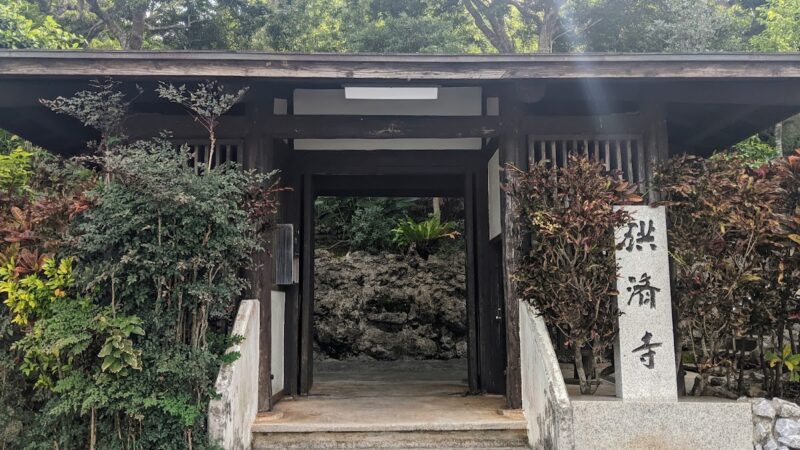
Sueyoshi Shrine, located in Sueyoshi-cho, Shuri, Naha City, Okinawa Prefecture, is a venerable shrine with a history dating back to the Ryukyu Kingdom era. As one of the eight Ryukyu shrines, it received special treatment from the royal government and was also known as “Shadan” or “Shuri Shadan.” Within the shrine grounds, surrounded by the rich natural beauty of Sueyoshi Park, numerous valuable cultural assets remain that convey the history of Ryukyu, including the Sueyoshi Shrine Ruins, designated as a national historical site, and the Todo (stone tile path), a prefecturally designated cultural property.
This article comprehensively introduces information you should know before visiting Sueyoshi Shrine, from its historical background to its enshrined deities, divine virtues, and visiting information.
The History and Origins of Sueyoshi Shrine
The Founding and Abbot Kakuo
Sueyoshi Shrine is believed to have been founded around 1456 (Kōshō 2) during the reign of King Shō Taikyū. It began when Abbot Kakuo, the head priest of Tenkaiji Temple in Shuri, deeply revered Kumano Gongen during his training in Yamato (mainland Japan).
After returning to Japan, Abbot Kakuo was not permitted to make a pilgrimage to Kumano, but one night, Kumano Gongen appeared to him in a dream. According to the message, “If you call out loudly to the mountains north of Shuri, the place that receives a response will have divine power.” When the abbot actually called out, he received a response from the present-day Sueyoshi area, and it is said that the origin of Sueyoshi Shrine lies in the enshrinement of the three Kumano Gongen deities at this sacred site.
Status as one of the Eight Ryukyu Shrines
Sueyoshi Shrine, as one of the Eight Ryukyu Shrines, received special protection from the royal government during the Ryukyu Kingdom era. The Eight Ryukyu Shrines refer to Naminoue Shrine, Okinomiya Shrine, Shikina Shrine, Futenma Shrine, Sueyoshi Shrine, Asato Hachiman Shrine, Ameku Shrine, and Kin Shrine, all of which played a central role in Ryukyuan faith under the protection of the royal government.
Sueyoshi Shrine was particularly affectionately known as “Shadan,” and due to its location north of Shuri Castle, it is said that many members of the royal family and samurai class visited it. Even after the abolition of the feudal system in the Meiji era, it was maintained as an object of local faith, and many worshippers still visit it today.
History of War Damage and Restoration
The shrine buildings of Sueyoshi Shrine suffered significant damage during the Battle of Okinawa. However, through post-war reconstruction efforts, the main hall was restored in 1972 (Showa 47). The current main hall is a designated tangible cultural property of Okinawa Prefecture and is a valuable building that conveys the characteristics of Ryukyuan architecture to the present day. The stone staircase, known as the “Tōdō,” is also protected as a prefectural designated cultural property. Its unique structure, built from stacked Ryukyu limestone, speaks to the high level of stonemasonry during the Ryukyu Kingdom era.
Deities and Divine Virtues
Main Deities: Kumano Sanjo Gongen
The main deities of Sueyoshi Shrine are the Kumano Sanjo Gongen. Specifically, the following three deities are enshrined:
- Izanami-no-Mikoto: Goddess of creation
- Hayatama-no-Mikoto: Deity of Kumano Hayatama Taisha Shrine
- Kotosaka-no-Mikoto: Deity of Kumano Hongū Taisha Shrine
These deities were invited from the Kumano Sanzan shrines in Kii Province (present-day Wakayama Prefecture) and symbolize cultural exchange between Ryukyu and mainland Japan.
Deities Enshrined Separately
In addition to the main deity, the following deities are enshrined separately at Sueyoshi Shrine:
- Dososhin: Guardian deity of the land
- Okitsuhiko-no-Mikoto: God of the sea
- Okitsuhime-no-Mikoto: Goddess of the sea
- Ubusunagami: Guardian deity of the land
These deities are enshrined in a way that blends Ryukyuan beliefs with Shinto introduced from mainland Japan, demonstrating the diversity of beliefs at Sueyoshi Shrine.
Divine Virtues
The divine virtues of Sueyoshi Shrine are numerous, but the following benefits are particularly attributed to it:
- Family Safety: Protecting the health and peace of the family
- Protection from Evil and Disaster: Protecting oneself from various calamities
- Matchmaking: Forging good relationships
- Childbearing and Safe Childbirth: Through the divine virtue of Izanami-no-Mikoto
- Maritime Safety: Protection from Okitsuhiko-no-Mikoto and Okitsuhime-no-Mikoto
- Business Prosperity: Success and prosperity in business
As a shrine with a long history of spiritual power dating back to the Ryukyu Kingdom era, it attracts many worshippers not only from the local area but also from outside the prefecture.
Highlights of the Shrine Grounds
Main Hall (Prefectural Designated Tangible Cultural Property)
The main hall, restored in 1972, is built in the Sangensha Nagare-zukuri style. Its traditional structure, featuring a tiled roof and a portico, showcases a unique style that fuses Ryukyuan architecture with mainland Japanese shrine architecture.
The main shrine building is designated as a tangible cultural property of Okinawa Prefecture and is a valuable resource for understanding shrine architecture from the Ryukyu Kingdom era.
Staircase (Prefectural Designated Cultural Property)
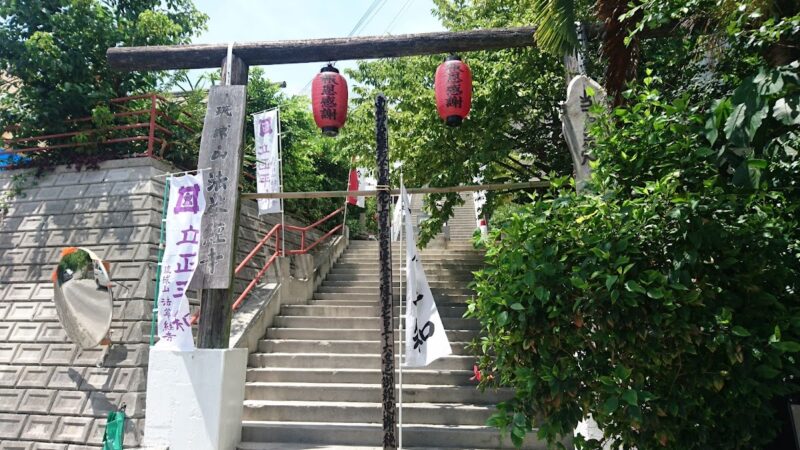
The staircase, known as the “Handō,” leading from the approach to the main shrine, is a structure constructed by quarrying and stacking Ryukyu limestone. Protected as a prefectural designated cultural property, it showcases the high level of stonemasonry skills of the Ryukyu Kingdom era.
In front of the staircase is a stone bridge with an arch structure, another valuable relic demonstrating unique Ryukyuan architectural techniques. The construction technique, involving carefully stacking cut stones, exhibits characteristics of Ryukyuan stone architecture, similar to the walls of Shuri Castle.
Sueyoshi Shrine Ruins (National Historic Site)
The entire grounds of Sueyoshi Shrine are designated as a national historic site. Its location north of Shuri Castle, on the cliff of Sueyoshi, is thought to have been chosen based on the principles of feng shui from the Ryukyu Kingdom era, and its historical value as a sacred site is recognized.
Sacred Sites “Ibe”
Around the main shrine are scattered sacred sites unique to the Ryukyu Islands, known as “Ibe.” Like Utaki (sacred groves), Ibe are places of worship in Ryukyu’s indigenous beliefs, believed to be places where gods descend. At Sueyoshi Shrine, one can observe a unique form of worship where Shinto and Ryukyu’s indigenous beliefs coexist.
Worship Hall
Located in front of the main shrine, the worship hall is where worshippers offer their prayers. Simple yet solemn, it provides a quiet space for prayer. From the worship hall, one can see the main shrine and appreciate the beauty of Ryukyu architecture up close.
Natural Environment within Sueyoshi Park
Sueyoshi Park, where Sueyoshi Shrine is located, is a valuable place within Naha City that retains abundant nature. Subtropical vegetation spreads throughout, and giant trees such as banyan and akagi cover the approach to the shrine.
Walking paths are maintained within the park, allowing visitors to enjoy a forest bath while visiting the shrine. Located on a small hill, the shrine grounds offer panoramic views of Naha city, providing a peaceful escape from the hustle and bustle of the city.
The soothing sounds of birdsong and rustling trees create a calming environment for worship amidst nature.
Annual Festival and Other Events
Sueyoshi Shrine holds various festivals and events throughout the year.
Annual Festival
The annual festival at Sueyoshi Shrine is the most important annual event for the shrine. Following the traditions of the eight Ryukyu shrines, it is conducted solemnly. Local people gather, offering kagura (sacred dance) and performing rituals, praying for a bountiful harvest and peace in the community.
New Year’s Events
The shrine is bustling with worshippers for the first shrine visit of the new year. Many people visit to pray for safety and well-being throughout the year, making it a central place of worship in the region as one of the eight Ryukyu shrines.
Other Festivals
Seasonal festivals and monthly ceremonies are held regularly, serving as a spiritual anchor for the local community.
Visiting Information and Access
Basic Information
- Official Name: Sueyoshi-gu Shrine
- Address: 1-8 Sueyoshi-cho, Shuri, Naha City, Okinawa Prefecture
- Former Shrine Rank: Unranked Shrine
- Location: Within Sueyoshi Park
- Parking: Sueyoshi Park parking available (free)
Access Methods
Using Public Transportation
- Get off at “Gibo Station” or “Shimin Byoin-mae Station” on the Yui Rail (Okinawa Urban Monorail), then walk for approximately 15-20 minutes.
- Take the Naha Bus and get off at the “Sueyoshi-gu-mae” bus stop, then walk for approximately 5 minutes.
Using a Car
- Approximately 30 minutes by car from Naha Airport
- Approximately 5 minutes by car from Shuri Castle
- Accessible via Prefectural Road 29 from National Route 330
- Car Navigation Setting: Search for “Sueyoshi Park” or address
Visiting Hours
While the shrine grounds are generally open for worship during the day, the office hours may be limited. If you definitely wish to receive a Goshuin (shrine stamp), it is recommended to check in advance.
Goshuin Information
Sueyoshi Shrine offers Goshuin. As one of the eight Ryukyu shrines, it attracts many visitors on Goshuin pilgrimages. It is recommended to check the Goshuin reception hours and availability before visiting.
Visiting the other eight Ryukyu shrines, such as Naminoue Shrine, Futenma Shrine, Shikina Shrine, and Ameku Shrine, as part of the “Ryukyu Eight Shrines Pilgrimage” is also popular.
Points to Note When Visiting the Shrine
- As the shrine grounds are surrounded by a rich natural environment, we recommend wearing comfortable shoes.
- The stone steps (Tatedo) are a historical structure, so please ascend and descend with care.
- The sun is strong in the summer, so please bring a hat and water.
- Insect repellent is also recommended.
- To maintain a peaceful environment, please refrain from speaking loudly.
Relationship with the Eight Ryukyu Shrines
Sueyoshi Shrine is one of the Eight Ryukyu Shrines and has deep ties to the other seven. The Eight Ryukyu Shrines are a group of shrines that received special protection from the royal government during the Ryukyu Kingdom era, and each has its own unique history and beliefs.
List of the Eight Ryukyu Shrines
- Naminoue-gu (Naminoue Shrine): Wakasa, Naha City, the head shrine of the eight Ryukyu shrines
- Okino-gu (Okinoyama Shrine): Ogiyama, Naha City, the god of safe voyages
- Shikina-gu (Shikina Shrine): Hantagawa, Naha City, deeply revered by the Ryukyu royal family
- Futenma-gu (Futenma Shrine): Futenma, Ginowan City, a cave serves as the sacred object
- Sueyoshi-gu (Sueyoshi Shrine): Sueyoshi-cho, Shuri, Naha City, enshrines Kumano Gongen
- Asato Hachiman-gu (Asato Hachiman Shrine): Asato, Naha City, enshrines Hachiman-sama
- Ameku-gu (Ameku Shrine): Tomari, Naha City, enshrines Tenpi
- Kinbu Shrine (Kingu): Kinbu, Kinbu Town, dedicated to Kumano Gongen
A pilgrimage to the eight Ryukyu shrines offers a journey to deeply understand Ryukyu’s history and culture. Each shrine has a different enshrined deity and history, preserving the unique forms of Ryukyuan belief.
Sueyoshi Shrine and Ryukyuan Culture
The Tradition of Shinto-Buddhist Syncretism
The founding of Sueyoshi Shrine involved Abbot Tsuruo of Tenkaiji Temple, and it strongly retains the tradition of Shinto-Buddhist syncretism, where Shinto and Buddhism are fused. This is a characteristic of Ryukyuan religious culture and has a unique form that differs from the Shinto-Buddhist syncretism of mainland Japan.
Although the Meiji-era separation of Shinto and Buddhism had an impact on Ryukyu, traces of this history still remain at Sueyoshi Shrine.
Feng Shui Thought and Location
The location of Sueyoshi Shrine may have been chosen based on the Feng Shui thought of the Ryukyu Kingdom era. Located north of Shuri Castle, on a small hill, its location is thought to be influenced by the flow of earth’s energy known as “dragon veins.”
In the Ryukyu Kingdom, the principles of Feng Shui, introduced from China, were highly valued and greatly influenced the placement of important buildings, including Shuri Castle. It is presumed that Sueyoshi Shrine was built as part of this, in a location that met the conditions for a sacred site.
Ryukyu Stone Architecture Techniques
The Ryukyu stone architecture techniques seen in the stone steps and bridges are a unique Ryukyuan architectural style, also common to the stone walls of Shuri Castle and the stone bridges of Shikinaen Garden. The skillful processing of Ryukyu limestone, a local stone, to create strong and beautiful structures demonstrates the high skill level of Ryukyuan craftsmen.
Nearby Tourist Attractions
When visiting Sueyoshi Shrine, you can also visit nearby tourist attractions.
Shuri Castle Park
Shuri Castle Park, located about 5 minutes away by car, is the site of the Ryukyu Kingdom’s royal castle. Although the main hall was destroyed in a fire in 2019, restoration work is underway, and the castle walls and gates are open to visitors. It’s an essential spot for learning about Ryukyu history.
Shikinaen Garden
Shikinaen Garden, built as a villa for the Ryukyu royal family, is a beautiful garden designated as a National Special Place of Scenic Beauty. It’s a space where Ryukyu’s unique garden style and Chinese-influenced architecture harmonize, and it’s also registered as a World Heritage Site.
Tamaudun Mausoleum
The mausoleum where successive kings of the Ryukyu Kingdom are buried is also registered as a World Heritage Site. It’s a valuable cultural asset that demonstrates Ryukyu’s unique burial system, and it’s located close to Shuri Castle.
Kinjo-cho Stone Pavement Road
This stone pavement road from the Ryukyu Kingdom era continues from Shuri Castle, retaining a strong sense of the past. Red-tiled houses line both sides, allowing you to enjoy a landscape that feels like a step back in time.
Summary: The Significance of Visiting Sueyoshi Shrine
Sueyoshi Shrine is one of the eight major shrines of the Ryukyu Kingdom, boasting a long history dating back to the Ryukyu Kingdom era. As a shrine dedicated to Kumano Gongen, it received protection from the royal government and has been passed down to the present day as a center of local faith.
Located within Sueyoshi Park in Sueyoshi-cho, Shuri, Naha City, Okinawa Prefecture, amidst a rich natural environment, visitors can see valuable cultural assets up close, including the nationally designated historical site of Sueyoshi Shrine Ruins and the prefecturally designated cultural properties of the main hall and stone steps. Many deities are enshrined here, including the Kumano Sanjo Gongen (Izanami-no-Mikoto, Hayatamao-no-Mikoto, and Kotoshikao-no-Mikoto), as well as Tsuchioya-no-Kami, Okitsuhiko-no-Mikoto, Okitsuhime-no-Mikoto, and Ubusuna-no-Kami. It is believed to offer various divine blessings, including family safety, protection from evil, matchmaking, and safe childbirth.
A sacred space surrounded by abundant nature, blending Ryukyu history and culture with Shinto and indigenous Ryukyu beliefs. A visit to Sueyoshi Shrine will be a valuable opportunity to experience Okinawa’s spiritual culture. Visiting it along with the other eight Ryukyu shrines—Naminoue Shrine, Futenma Shrine, Shikina Shrine, and Ameku Shrine—will allow you to gain a deeper understanding of the Ryukyuan world of faith.
Despite its convenient location within Naha city, Sueyoshi Shrine offers a tranquil and sacred space where you can pray in peace. It is a shrine you should definitely visit when you come to Okinawa.