Amekugu Shrine (Okinawa Prefecture) Complete Guide | History, Deities, Benefits, and Access Information for the Eight Ryukyu Shrines
What is Amekugu Shrine? | A Shrine Flourishing as One of the Eight Ryukyu Shrines
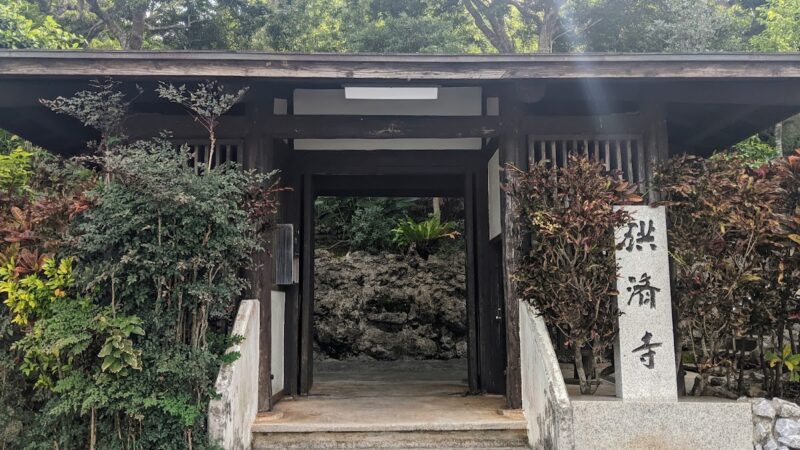
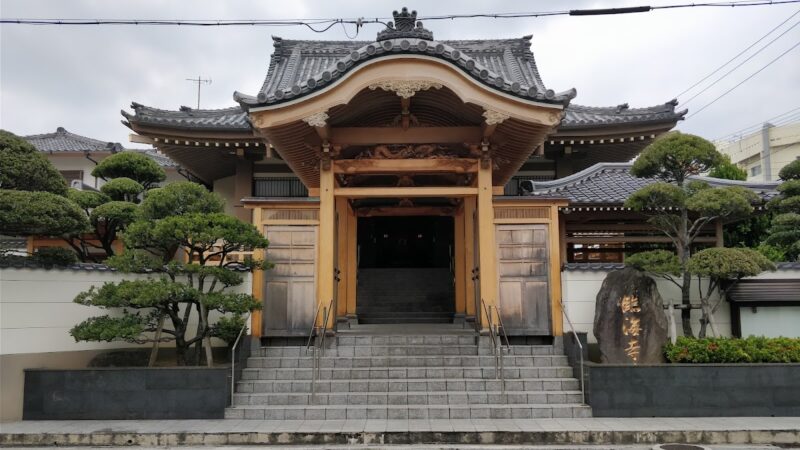
Amekugu Shrine is a shrine located in Tomari, Naha City, Okinawa Prefecture, and is known as one of the “Eight Ryukyu Shrines” that have existed since the Ryukyu Kingdom era. It is situated on the slope of a small hill near Tomari Port, and is characterized by its unique location between Okinawa Prefectural Tomari High School and Seigenji Temple.
Although it was classified as an unranked shrine under the modern shrine ranking system of the Meiji era, it received special reverence from the royal government during the Ryukyu Kingdom era, and even today it attracts deep faith from local residents and tourists. It boasts a unique architectural style with a three-tiered underground structure, unlike other shrines, and is attracting attention as a hidden power spot where Okinawan history and culture are fused.
The History of Ameku Shrine | The Founding Legend Recorded in the Ryukyu Kingdom Chronicles
The Founding During the Chenghua Era and the Legend of Mekaru no Ojiko
Ameku Shrine is said to have been founded during the Chenghua era (1465-1487). This period coincided with the reigns of Kings Sho En, Sho Sen’i, and Sho Shin of the Ryukyu Kingdom, a time of cultural and political development.
The “Ameku-san Daigongen Engi” (Legend of Ameku-san Daigongen) in the “Ameku-san Shogenji” section of the “Ryukyu Kingdom Chronicles, Volume 11: Engi of the Esoteric Temples,” compiled in the 52nd year of the Kangxi era (1713, the 3rd year of the Shotoku era in the Japanese calendar), contains a mysterious legend concerning the founding of Ameku Shrine.
In ancient times, a man named Mekaru no Ojiko lived in seclusion in Mekaru Village. One evening, as Ojiko was walking through Amekuno, he encountered a noble woman descending from the mountaintop, accompanied by a dignified monk. Midway up the mountain, there was a small cave from which well water flowed.
When Ojiko asked the monk who the woman was, the monk replied, “I live on the mountainside, but the woman lives in the forest on the mountaintop; she is not someone worth mentioning.” As Ojiko watched, puzzled, the woman vanished as she entered the cave.
It is said that this mysterious event prompted Ojiko to receive a divine oracle, leading him to build a shrine in this place dedicated to Kumano Gongen and Benzaiten. This legend strongly reflects the unique Ryukyuan religious view, a fusion of nature worship, Buddhism, and Shintoism.
Ameku Shrine during the Ryukyu Kingdom Era
During the Ryukyu Kingdom era, Ameku Shrine was one of the eight Ryukyu shrines and received protection from the royal government. The eight Ryukyu shrines refer to the eight shrines of Naminoue-gu, Okinomiya, Shikina-gu, Futenma-gu, Sueyoshi-gu, Asato Hachiman-gu, Ameku Shrine, and Kin-gu, a group of shrines particularly valued by the Ryukyu royal government.
At Ameku Shrine, envoys from the royal government would visit and perform rituals, functioning as a place to pray for national peace and abundant harvests. It also attracted the faith of fishermen (uminchu) praying for safe voyages, and due to its location near Tomari Port, it was revered as a guardian deity of maritime traffic.
Reconstruction after War Damage and the Present
During the Battle of Okinawa in 1945, the shrine buildings of Ameku Shrine were destroyed by fire, and many valuable cultural artifacts were lost. After the war, a temporary shrine was built through the efforts of local residents, and the worship of the gods continued.
In 1972 (Showa 47), the year of Okinawa’s return to Japan, the current shrine was rebuilt. This reconstruction adopted a unique architectural style with a three-tiered underground structure, successfully creating a sacred space while effectively utilizing the limited site.
Currently, Ameku Shrine is planning a reconstruction project (rebuilding) with a target completion date of 2028 (Reiwa 10), and the Ameku Shrine Reconstruction Support Association has been established. This project is expected to create a system that can accommodate even more worshippers.
Deities Enshrined | A Polytheistic Shrine Dedicating the Kumano Three Gods and Benzaiten
Ameku Shrine enshrines multiple deities, demonstrating a unique form of worship where Ryukyuan gods and Japanese mainland gods coexist.
Main Deities
Kumano Sanjin (Three Kumano Deities)
- Izanami-no-Mikoto: The goddess of creation in Japanese mythology, presiding over the creation and regeneration of life.
- Hayatamao-no-Mikoto: The main deity of Kumano Hayatama Taisha, god of purification and regeneration.
- Kotosakao-no-Mikoto: God who resolves disputes and brings about reconciliation.
Benzaiten
- The goddess of music, art, learning, and wealth, also worshipped as a water deity.
- In Ryukyu, she was especially revered as a god of maritime safety and business prosperity.
Enshrined Deities
- Tenryu-Omikami
- Amekushin-no-Hime-Okami
- Tomari Ryugu-shin: A deity associated with the Ryugu (Dragon Palace) faith and Tomari Port
- Benten Futaihiko Okami
The combination of these enshrined deities is a result of the fusion of Kumano Gongen faith, Benzaiten faith, and the unique Ryugu faith of Ryukyu, symbolizing the diversity of Ryukyu’s religious culture.
Benefits | Diverse Divine Virtues and Types of Prayers
At Ameku Shrine, various benefits are believed to be associated with the diverse deities enshrined there.
Main Benefits
- Prayer for Health and Recovery from Illness: The divine virtue of Izanami-no-Mikoto, the goddess of life
- Exorcism and Protection from Misfortune: The power of Hayatamao-no-Mikoto, the god of purification
- Family Safety and Good Fortune: Bringing peace and good fortune to the home
- Traffic Safety: As the guardian deity of maritime traffic, car blessings are also performed today
- Prayer for Good Relationships and Matchmaking: Connecting people with good relationships
- Prayer for Success in Exams and Academic Achievement: The divine virtue of Benzaiten for academic success
- Business Prosperity and Increased Financial Fortune: The divine virtue of Benzaiten for wealth and good fortune
- Prayer for Safe Childbirth and Conception: The protection of the god of life creation
- Maritime Safety and Navigation Safety: Protection of the sea due to its location near Tomari Port
Types of Prayers Available
Tenkyu Shrine accepts a variety of prayers for individuals and groups. Life Rituals
- First Shrine Visit (Omiyamairi)
- Shichi-Go-San Ceremony
- Coming-of-Age Ceremony
- Celebrations such as 60th Birthday
- Marriage Ceremony
Daily Prayers
- Exorcism
- Family Safety
- Traffic Safety (Car Purification)
- Safe Travels
- Prayer for Victory
- Prayer for Employment
- Fulfillment of Wishes
- Gratitude for Divine Blessings
- Prayer for Gratitude
Those wishing to receive prayers are advised to contact Tenkyu Shrine by phone in advance.
Highlights of the Shrine Grounds | A Mysterious Space with a Three-Tier Underground Structure
Unique Underground Structure
The most distinctive feature of Tenkyu Shrine is its three-tiered underground structure, which is not found in typical shrines. The shrine buildings, built utilizing the slope, maximize the use of the limited space while creating a sacred environment.
After passing through the large vermilion torii gate, you enter the shrine grounds by descending a staircase. The downward-facing structure seems to embody the founding legend that the gods manifested from a cave.
Torii Gate and Approach
The large vermilion torii gate standing by the roadside is a symbol of Ameku Shrine. Passing through the torii gate and descending the stairs leads to the main shrine. While most shrines require ascending stairs for worship, Ameku Shrine’s descending path gives visitors a unique and intriguing feeling.
Main Shrine and Sanctuary
The current sanctuary was rebuilt in 1972 (Showa 47), and despite being made of concrete, it maintains a sacred atmosphere. The grounds are not particularly large, but despite its location next to the Tomari High School playground, a tranquil atmosphere prevails.
Utaki (Sacred Site)
Within the shrine grounds is an Utaki, a traditional sacred site of Ryukyu. Descending the stairs beside the torii gate leads to this sacred site, reminiscent of the cave mentioned in the founding legend.
Spring Water and Nature
The spring water mentioned in the founding legend still remains as a stream around the shrine grounds, testifying to the fact that this area has been a sacred place blessed with water since ancient times.
Annual Events | Grand Festival and Seasonal Festivals
Grand Festival (Ameku Shrine)
The Grand Festival is held annually at Ameku Shrine. This is the most important festival for the shrine, where gratitude is expressed to the enshrined deity and prayers are offered for the peace and prosperity of the region. Specific dates can be confirmed on the Ameku Shrine’s official website or by telephone.
The Grand Festival in 2021 was held on a reduced scale due to the impact of the COVID-19 pandemic, reflecting the current circumstances.
Other Annual Events
- Hatsumode (First Shrine Visit of the New Year): Bustling with worshippers in the New Year
- Setsubun Festival (Bean-Throwing Festival): Prayers for protection against evil
- Shichi-Go-San (Seven-Five-Three Festival): Prayers for the healthy growth of children in autumn
- Monthly Festival (Ritual held every month)
For a detailed schedule of annual events, please check the official website of Ameku Shrine.
Access Information | How to get to Tomari, Naha City
Address and Map
Address: 3-19-3 Tomari, Naha City, Okinawa Prefecture 900-0012
Ameku Shrine is located in the heart of Naha City, near Tomari Port. You will see the torii gate on the left side after walking up a slope for about 100 meters between Okinawa Prefectural Tomari High School and a convenience store.
Access via Yui Rail (Okinawa Urban Monorail)
Nearest Station: Miebashi Station
- Approximately 15 minutes on foot (about 1 km) north from Miebashi Station
- Approximately 12 minutes from Naha Airport Station to Miebashi Station
The Yui Rail is a major mode of transportation for sightseeing in Okinawa and is convenient for tourists as it provides direct access from Naha Airport.
Access by Bus
If using local buses within Naha City, the nearest stop is Tomari-Takahashi bus stop. It’s about a 5-minute walk from the bus stop.
Access by Car
From central Naha City, head north on National Route 58, and from near the Tomari intersection, head towards Tomari High School. Setting “Okinawa Prefectural Tomari High School” as your destination on your car navigation system will make it easier to find.
Parking: Due to the limited space on the temple grounds, dedicated parking is limited. Please consider using nearby coin-operated parking lots.
Nearby Tourist Attractions
- Tomari Port (Tomarin): Approximately 10 minutes on foot, ferry terminal to the outlying islands
- Naminoue Shrine: Approximately 10 minutes by car, the head shrine of the eight Ryukyu shrines
- Kokusai Street: Approximately 10 minutes by car, Naha’s downtown area
- Shuri Castle: Approximately 20 minutes by car, the ruins of the Ryukyu Kingdom castle, a World Heritage Site
Goshuin (Shrine Seal) and Other Items Offered at Ameku Shrine
Goshuin (Shrine Seal)
Ameku Shrine offers Goshuin. As one of the eight Ryukyu shrines, it is popular among Goshuin collectors. Please receive one as a memento of your visit and as proof of your connection with the gods.
Amulets and Talismans
- Amabie Amulet: A special amulet prayed to for the eradication of disease is available.
- Various Talismans: A variety of talismans are available, including those for traffic safety, academic success, and good health.
Reception Hours of the Amulet Distribution Center
Please contact Tenkyu Shrine directly for reception hours of the distribution center.
Tenkyu Shrine Reconstruction Support Association | Initiatives for the Future
Tenkyu Shrine is proceeding with a reconstruction project to rebuild the shrine buildings, aiming for completion in 2028 (Reiwa 10).
Purpose of the Reconstruction Project
The current shrine buildings are over 50 years old since their reconstruction in 1972 and are showing signs of aging. To safely welcome more worshippers and pass on the faith to future generations, the construction of new shrine buildings is planned.
Ameku Shrine Reconstruction Support Association
The Ameku Shrine Reconstruction Support Association held its inaugural meeting on March 11, 2021, officially establishing itself. The association is currently soliciting donations for the reconstruction project and is actively working to support the future of Ameku Shrine.
Details regarding the reconstruction project and participation in the Support Association can be found on the Ameku Shrine official website.
Contact Information | How to Contact Ameku Shrine
Telephone/Fax Number
You can contact Ameku Shrine by telephone or fax for inquiries regarding prayer requests, questions about visiting the shrine, and inquiries about the Reconstruction Support Association. Specific contact information is available on the Ameku Shrine official website.
Official Website
Amekugu Shrine has multiple official websites:
- Main Official Website (https://www.amekugu.com/)
- Dedicated Website for the Reconstruction Project (https://amekugu.net/)
These websites provide information on the shrine’s history, prayer services, annual events, and the progress of the reconstruction project.
Precautions When Visiting
- The shrine grounds are small, so advance notice is recommended for group visits.
- There are stairs to climb and descend, so please watch your step.
- This is a sacred place, so please pray quietly.
- Photography is permitted, but please be considerate of other visitors.
Amekugu Shrine and the Eight Ryukyu Shrines | Okinawan Shrine Culture
What are the Eight Ryukyu Shrines?
The Eight Ryukyu Shrines are a collective term for eight shrines that were specially protected by the Ryukyu Kingdom during its era. Each has its own unique history and enshrined deities, demonstrating the diversity of Ryukyu’s religious culture.
- Naminoue Shrine (Naha City, head shrine of the eight Ryukyu shrines)
- Okinogu Shrine (Naha City)
- Shikinagu Shrine (Naha City)
- Futenmagu Shrine (Ginowan City)
- Sueyoshigu Shrine (Naha City)
- Asato Hachimangu Shrine (Naha City)
- Amekugu Shrine (Naha City)
- Kingu Shrine (Kin Town)
Characteristics of Ryukyu Shrine Culture
Ryukyu shrines have a unique form of worship that fuses Shinto and Buddhism from mainland Japan with the unique Ryukyuan belief in sacred groves (utaki). Amekugu Shrine is no exception, with the mainland deity Kumano Gongen and the Ryukyuan belief in the Dragon Palace coexisting.
Furthermore, many of the eight Ryukyu shrines are located near the sea, reflecting the Ryukyuan people’s characteristics as a maritime nation. Ameku Shrine is also located near Tomari Port and has functioned as a place of prayer for safe voyages.
Summary | Points to Note When Visiting Ameku Shrine
Ameku Shrine is one of the eight Ryukyu shrines located in Tomari, Naha City, and is a historically significant shrine said to have been founded during the Chenghua era (1465-1487). It enshrines the Kumano Three Gods and Benzaiten, and attracts worshippers seeking various blessings, including health, protection from evil, business prosperity, and maritime safety.
Its most distinctive feature is its unique architectural style with a three-tiered underground structure, embodying the founding legend that the gods manifested from a cave. The shrine buildings, destroyed in the Battle of Okinawa, were rebuilt in 1972, and a new construction project is currently underway, aiming for completion in 2028 (Reiwa 10).
Located approximately 15 minutes on foot from Yui Rail Miebashi Station, and easily accessible from Tomari Port and Kokusai Street, this shrine is a convenient stop during your Naha sightseeing. Why not visit Ameku Shrine, where the history and culture of Ryukyu breathe life into, and receive its divine blessings in a peaceful atmosphere?
For details on prayers, annual events, and construction projects, please check the official Ameku Shrine website.