Abe Oji Shrine (Osaka Prefecture) Complete Guide | History, Goshuin (Shrine Seals), Access, and Benefits Explained in Detail
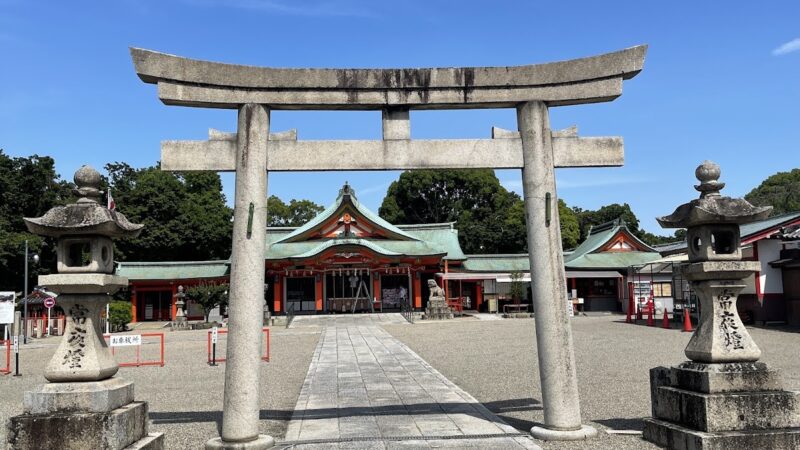
Abe Oji Shrine, quietly nestled in a residential area of Abeno Ward, Osaka City, is a shrine with a long history and prestige dating back to ancient times. It is one of the 99 Kumano Oji shrines established along the Kumano pilgrimage route, and as the only Oji shrine remaining in its original location in Osaka Prefecture, it attracts the faith of the local community. This article provides a detailed explanation of everything you need to know before visiting Abe Oji Shrine, including its history, benefits, visiting information, and access methods.
What is Abe Oji Shrine?
Abe Oji Shrine is a shrine located at 9-4 Abeno Motomachi, Abeno Ward, Osaka City. Formerly known as “Abe Oji,” it was one of the 99 Oji shrines, which are branch shrines of Kumano Shrine. “Oji” refers to a subsidiary shrine of Kumano Taisha in Wakayama Prefecture, a small shrine established along the Kumano Kodo pilgrimage route from Kyoto through Settsu and Izumi to Kumano, for the rest and worship of pilgrims.
During the Heian period, it was called the Fourth Oji Shrine of the Kumano Ninety-Nine Oji (the order changed over time), and it is currently positioned as the Second Oji among the existing Oji shrines. During the heyday of Kumano pilgrimages, many nobles and commoners prayed for safe travels at this site.
History and Origins of Abe Oji Shrine
Origin of Founding
There are two theories regarding the founding of Abe Oji Shrine. One theory is that it was founded by Emperor Nintoku, and the other is that it was founded by the Abe clan, an ancient powerful family that had their base in Abeno since ancient times. The place name Abeno itself is said to originate from this Abe clan, and it is said that Abe-dera, the clan temple of the Abe clan, existed in this area during the Asuka period.
The Abe clan was one of the most powerful local families in ancient Japan, active in both politics and military affairs. Abe Oji Shrine was revered as the tutelary deity of the Abe clan and has long been worshipped as a guardian deity of the region.
Connection with Kobo Daishi Kukai
Records show that in the early Heian period, Kobo Daishi Kukai, under the imperial command of Emperor Junna, performed prayers at this shrine to ward off epidemics. This historical event indicates that Abe Oji Shrine had deep ties with the imperial court from ancient times. Because prayers for the eradication of epidemics were performed here, it is still believed to offer protection against misfortune and blessings for good health.
The Kumano Pilgrimage Route and its Role as an Oji Shrine
From the Heian period to the Kamakura period, pilgrimages to Kumano spread to a wide range of people, from nobles to commoners. Along the Kumano Kaido, the pilgrimage route from Kyoto to the Kumano Sanzan shrines, numerous Oji shrines, known as the Ninety-Nine Oji, were established, serving as resting places and places of prayer for pilgrims.
Abe Oji Shrine functioned as an important relay point on this Kumano Kaido, and many pilgrims stopped there. Currently, as the only surviving Oji shrine of Kumano Gongen in Osaka Prefecture, its historical value is highly regarded.
History since the Modern Era
Even after the Meiji-era separation of Shinto and Buddhism, Abe Oji Shrine continued to attract worshippers as the guardian shrine of the region. Despite suffering damage from war, it was rebuilt and continues to be cherished by local residents as the guardian grove of Abeno.
Deities and Benefits
Deities
The deities enshrined at Abe Oji Shrine are Kumano Gongen (the gods of the Kumano Sanzan shrines). Specifically, the following deities are enshrined here:
- Izanagi-no-Mikoto
- Izanami-no-Mikoto
- Hayatama-no-O-no-Mikoto
- Kotosaka-no-O-no-Mikoto
These deities are believed to possess a wide range of divine virtues, including the creation of the land, matchmaking, and protection from disaster.
Benefits
Abe-Oji Shrine is believed to offer the following benefits:
Protection from Evil and Protection from All Directions Due to the history of Kobo Daishi Kukai performing prayers for the eradication of disease, the shrine is particularly famous for its protection from evil. Many people visit, especially those in their unlucky years or those wishing to avoid misfortune related to direction.
Prayers for Health and Recovery from Illness Due to the history of prayers for the eradication of disease, there is a constant stream of worshippers praying for good health, longevity, and recovery from illness.
Family Safety and Traffic Safety
Due to its history of protecting the safety of pilgrims on their journeys to Kumano, it is believed to offer blessings for traffic safety and safe travel even today.
Matchmaking and Successful Relationships
As the shrine enshrines the divine couple Izanagi-no-Mikoto and Izanami-no-Mikoto, it is also believed to offer blessings for matchmaking and marital harmony.
Business Prosperity and Good Fortune
As a guardian deity of the region, it is also worshipped for its blessings of business prosperity and good fortune.
Highlights of the Shrine Grounds
Main Hall (Former Main Hall)
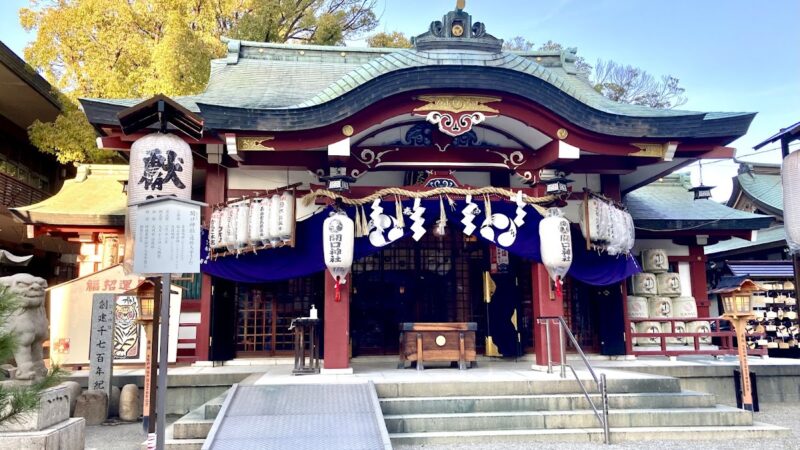
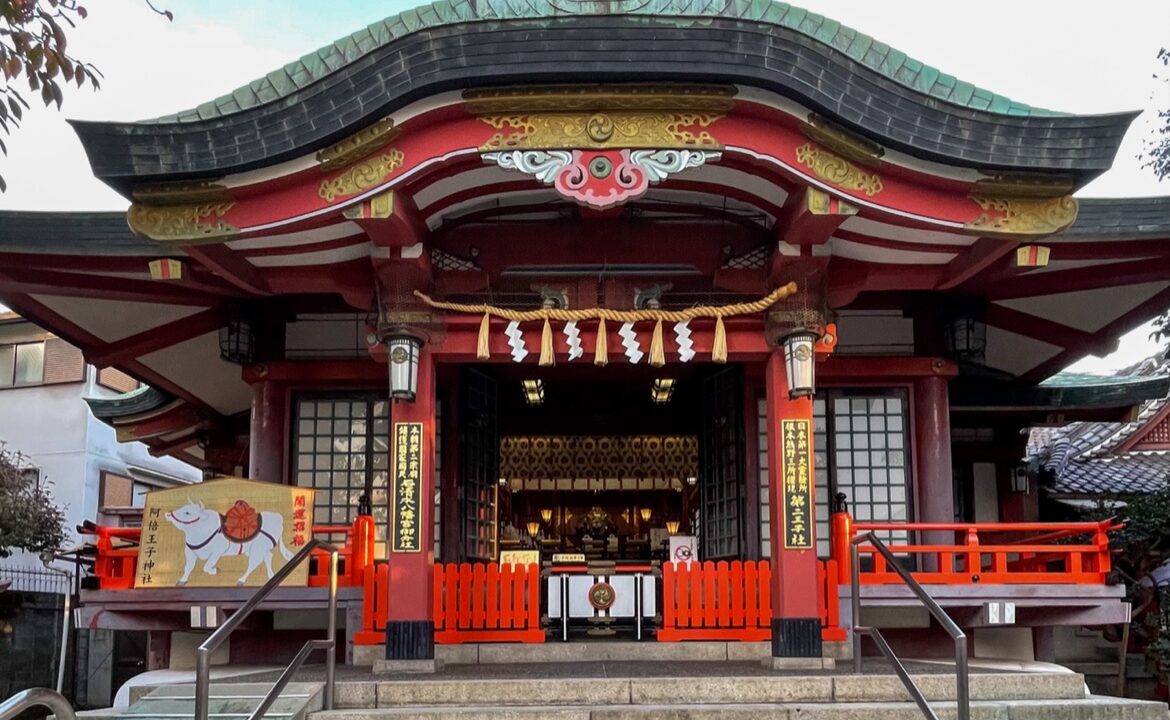
The former main hall of Abe-oji Shrine is located along the Kumano Road in the southern part of the city, standing east-facing on a cut-stone foundation at the southern edge of the shrine grounds. It is a flowing-style building with a copper plate roof, one bay at the front and two bays at the back. The eaves are folded in a single step, forming a sugaruhafu (a type of gable), and it features a distinctive structure with a karahafu (a type of curved gable).
The main structure features boat-shaped brackets, and the side central pillars extend all the way up to the ridge beam, creating a unique design. Despite its simple appearance, this distinctive shrine is highly valued from an architectural history perspective.
Shrine Office
The shrine office handles the issuance of Goshuin (shrine stamps) and the acceptance of various prayer requests. Reception hours are from 9:00 AM to 3:30 PM (open year-round). You can inform the staff at the counter of your request for a prayer. No reservation is required for shrine prayers, making it an easily accessible option.
Subsidiary Shrine Outside the Precincts: Abe no Seimei Shrine
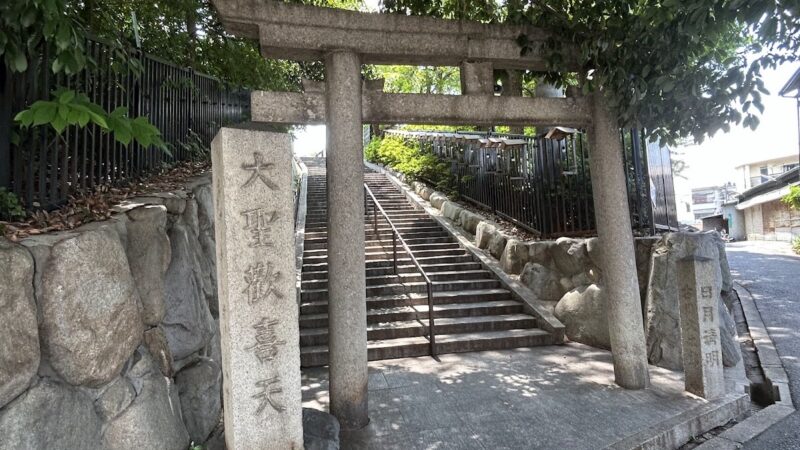
The Abe no Seimei Shrine is a subsidiary shrine located outside the precincts of Abe no Oji Shrine. Abe no Seimei, a renowned Onmyoji (diviner) of the Heian period, is said to have been born in this Abeno area. The Abe no Seimei Shrine is a sacred site associated with Seimei, attracting many visitors.
Abe no Seimei Shrine, along with Abe no Oji Shrine and Kuzunoha Inari Shrine, is known as one of the three major shrines in southern Osaka associated with Abe no Seimei. A fortune-telling corner is also set up, attracting many visitors hoping to benefit from Seimei’s spiritual power.
Goshuin (Shrine Seals) and Items Offered
Goshuin (Shrine Seals)
At Abe Oji Shrine, in addition to the regular goshuin, special goshuin are sometimes offered according to the season and events. Limited-time goshuin, such as the summer festival special goshuin, are particularly popular with visitors.
Goshuin are available at the shrine office from 9:00 AM to 3:30 PM. You can bring your own goshuin book or receive a pre-written goshuin.
Items Offered
Abe Oji Shrine offers the following items:
- Amulets (various types, including those for warding off evil, health, and traffic safety)
- Talismans
- Ema (votive tablets)
- Omikuji (fortune slips)
- Lucky charms
In particular, the amulets for warding off evil and protection from all directions are sought after by many visitors, as they are based on the spiritual power of Kobo Daishi Kukai’s prayers for the eradication of disease.
About Prayers and Visits
Types of Prayers
At Abe Oji Shrine, you can receive the following types of prayers:
- Prayer for Protection from Evil
- Prayer for Protection from All Directions
- Prayer for Family Safety
- Prayer for Business Prosperity
- Prayer for Traffic Safety
- Prayer for Recovery from Illness
- Prayer for Success in Exams
- Prayer for Finding a Good Partner
- Prayer for Safe Childbirth
- First Shrine Visit for a Newborn
- Shichi-Go-San (7-5-3) Ceremony
How to Request a Prayer
No reservation is required for prayers in the shrine. Please inform the shrine office window of your request during reception hours (9:00 AM to 3:30 PM, open all year round). Please inquire at the shrine office regarding the offering fee.
During the period from Setsubun (the day before the beginning of spring) to Risshun (the beginning of spring), the number of visitors receiving prayers for protection from evil and protection from all directions increases significantly. During this period, it is recommended to visit with ample time to spare.
Proper Worship Etiquette
Follow the general etiquette for visiting a shrine:
- Bow before passing through the torii gate
- Purify your hands and mouth at the water basin (temizuya)
- Bow twice, clap twice, and bow once in front of the main hall (haiden)
- Visit the subsidiary shrines within the grounds
- Bow once at the torii gate upon leaving
Annual Events
Abe Oji Shrine holds various events throughout the year:
January
- New Year’s Day Festival (January 1st)
- First Shrine Visit of the Year
February
- Setsubun Festival
- Exorcism Prayer (continues after the beginning of spring)
Summer
- Summer Festival (Special Goshuin stamp available)
Autumn
- Grand Festival
November
- Shichi-Go-San Festival
December
- Year-End Purification Ceremony
For detailed event schedules, please check the official website or contact the shrine office.
Access and Parking Information
Location
9-4 Abenomotomachi, Abeno-ku, Osaka City, Osaka Prefecture 545-0034
Access by Train
Nearest Stations
- 5-minute walk from Higashi-Tenkachaya Station on the Hankai Tramway Uemachi Line
- 15-minute walk from Tennoji Station on the Osaka Metro Midosuji Line
- 12-minute walk from Abeno Station on the Osaka Metro Tanimachi Line
- 15-minute walk from Tennoji Station on the JR and Kintetsu Lines
Higashi-Tenkachaya Station is the closest; a short walk south along the Kumano Kaido road from the station will take you there. While it’s a bit further from Tennoji Station, you can enjoy the scenery of Abeno while walking.
Access by Bus
If using Osaka City Bus:
- Take a bus bound for Sumiyoshi Shako-mae, Asaka, or Orionobashi from Tennoji (Abenobashi) bus stop.
- Get off at the “Oji-cho Oji Jinja-mae” bus stop and walk for about 1 minute.
The bus stop is very close, making bus access convenient.
Access by Car
Approximately 5 minutes from the “Fuminosato Exit” of the Hanshin Expressway Route 14 Matsubara Line.
The roads are relatively narrow as it is located in a residential area. Please enter “Abe Oji Shrine” or the address into your car navigation system.
Parking
There is parking space for visitors on the shrine grounds, but the number of spaces is limited. There are several coin-operated parking lots in the surrounding area, so please use those during busy times. Since the location is easily accessible by public transportation, we recommend using trains and buses whenever possible.
Nearby Tourist Attractions
Abe Seimei Shrine
Located within walking distance as an auxiliary shrine outside the grounds of Abe Oji Shrine. This shrine is considered the birthplace of the Onmyoji (exorcist) Abe no Seimei, and features a fortune-telling corner. It’s a popular spot, often visited in conjunction with Abe no Oji Shrine.
Kuzunoha Inari Shrine
This shrine is dedicated to Kuzunoha-hime, Abe no Seimei’s mother, and is one of the three major shrines associated with Abe no Seimei. Located in Abeno Ward, it can be visited together with other shrines.
Abeno Harukas
This skyscraper boasts the tallest height in Japan and is directly connected to Tennoji Station. From the observation deck, you can enjoy panoramic views of Osaka, as well as shopping and dining. It’s ideal for a stop before or after visiting the shrine.
Tennoji Zoo
This historic zoo, opened in 1915, is within walking distance of Tennoji Station. It’s recommended to visit the zoo along with the shrine if you’re visiting with family.
Shitennoji Temple
Said to have been established by Prince Shotoku, it is the first official Buddhist temple in Japan and a representative tourist attraction in the Tennoji area. Located within walking distance of Abe-oji Shrine, it’s ideal for historical exploration.
Points and Manners for Visiting
Attire
While there are no strict dress code regulations, please dress appropriately and respectfully as it is a sacred place. Formal attire is preferable if you are receiving prayers.
Photography
Photography is generally permitted on the shrine grounds, but please refrain from taking photos inside the main hall or during prayers. Remember to be considerate of other visitors. When posting on social media, please be mindful of privacy by avoiding photos that could identify individuals.
Visiting Hours
While you can visit the shrine grounds during the day, the shrine office is only open from 9:00 AM to 3:30 PM. If you wish to receive a Goshuin (shrine stamp) or prayers, please visit within these hours.
The Charm of Abe-oji Shrine
The greatest charm of Abe-oji Shrine is that, despite being in the midst of the hustle and bustle of the city, you can feel the ancient history and tranquil atmosphere. This shrine possesses historical value as the only remaining Oji shrine in Osaka Prefecture among the Kumano Ninety-Nine Oji shrines, a mystical aura associated with Abe no Seimei, and a warmth that comes from being cherished as a local guardian deity.
Although it is a small shrine nestled in a residential area, it encapsulates Japanese history, and by visiting, you can touch upon the memories of the Kumano pilgrimage route walked by ancient people. Whether you visit seeking protection from misfortune or prayers for good health, or simply for historical exploration, this shrine offers a variety of ways to enjoy it.
When you visit the Tennoji/Abeno area, be sure to stop by Abe Oji Shrine and experience its history and divine blessings. It will quietly speak to us, living in the modern age, about the profound depths of ancient faith and Japanese culture.