Todorokihime-no-Mikoto Shrine (Osaka Prefecture) Complete Guide | History, Goshuin (Shrine Seal), and Access Information
Located in Sawano-cho, Sumiyoshi-ku, Osaka City, Todorokihime-no-Mikoto Shrine is a venerable shrine listed in the Engishiki Jinmyocho (a historical record of shrines). Affectionately known locally as “Wakamatsu-san” or “Wakamatsu Shrine,” this shrine boasts a history connected to Emperor Go-Toba. This guide provides a detailed introduction to this shrine.
Basic Information on Todorokihime-no-Mikoto Shrine
Official Name: Todorokihime-no-Mikoto Shrine
Alternate Names: Wakamatsu Shrine, Wakamatsu-gu
Location: 1-10 Sawanocho, Sumiyoshi-ku, Osaka City, Osaka Prefecture
Former Shrine Rank: Village Shrine
Shikinaisha (Shrine listed in the Engishiki): Todorokihime-no-Mikoto Shrine, Sumiyoshi-gun, Settsu Province
Deities Enshrined: Susanoo-no-Mikoto, Inadahime-no-Mikoto, Todorokihime-no-Mikoto
Currently located at the intersection of Abeno-suji and the Nankai Koya Line, this small shrine maintains a tranquil atmosphere despite being in an urban area.
Deities and Mythological Background
Main Deities: Susanoo-no-Mikoto and Inada-hime-no-Mikoto
The main deities enshrined at our shrine, Susanoo-no-Mikoto and Inada-hime-no-Mikoto, are known as a married couple in Japanese mythology. The myth of Susanoo-no-Mikoto slaying Yamata-no-Orochi and saving Inada-hime, who was destined to be sacrificed, is a story known to all Japanese people.
About Todorokihime-no-Mikoto
There are several theories regarding Todorokihime-no-Mikoto, whose name is also the name of the shrine. One theory suggests she is another name for Inada-hime-no-Mikoto, and that the name “Todorokihime” is the origin of the shrine’s name. Another tradition suggests she is the child of Susanoo-no-Mikoto and Inada-hime-no-Mikoto, demonstrating the deep faith in the shrine since ancient times.
Origin of the Name “Todoroki”
There are several theories regarding the origin of “Todoroki,” the distinctive name of Todorokihime-no-Mikoto Shrine. ### The Todoroki Pond and Todoroki Bridge Theory
Records indicate that until around the Edo period, a pond called “Todoroki Pond” existed within the shrine grounds, and a bridge called “Todoroki” or “Todoroki Bridge” spanned it. The shrine’s historical records also state, “Within the pine forest of the shrine grounds, a bridge called Todoroki spanned Todoroki Pond, where clear spring water flowed,” suggesting that this topographical feature likely contributed to the shrine’s name.
The River Sound Theory
Another theory suggests the name “Todoroki” originated from the roaring sound of a stream flowing through the shrine grounds. It’s conceivable that this area was once abundant in water, and the clear sound of flowing water resonated throughout the area.
The Inadahime Alternate Name Theory
As mentioned above, a mythological interpretation suggests the name derives from the fact that Inadahime was also called “Todorokihime.”
While none of these theories have been definitively proven, they enhance the mystique of this shrine, which boasts a long history as a Shikinaisha (a shrine listed in the Engishiki, an ancient Japanese legal code).
History and Founding
Status as a Shikinaisha Shrine
Totorohime-no-Mikoto Shrine is a Shikinaisha shrine listed in the “Engishiki Jinmyocho,” compiled in 927 AD, as “Totorohime-no-Mikoto Shrine, Sumiyoshi District, Settsu Province.” Being listed in the Engishiki means that it was already a prestigious shrine recognized by the imperial court during the Heian period.
However, the exact founding date is unknown, and it is highly likely that it attracted local devotion even before records were made.
Relationship with Sumiyoshi Taisha Shrine
It is believed to have been an inner sanctuary (outlying subsidiary shrine) of Sumiyoshi Taisha Shrine in ancient times. Sumiyoshi Taisha Shrine is an ancient shrine known as the Ichinomiya (first-ranked shrine) of Settsu Province, and the fact that this shrine was related to it indicates that it played a central role in the faith of this region.
Emperor Go-Toba and Wakamatsu Palace
A noteworthy aspect of this shrine’s history is its deep connection with Emperor Go-Toba. Records show that in 1220 (Jōkyū 2), Emperor Go-Toba established a temporary palace (angū: a temporary palace where the emperor stays while traveling) in this area during his pilgrimage to Kumano, and named it “Wakamatsu Gosho.”
A stone monument marking the “Site of Emperor Go-Toba’s Temporary Palace” stands on the shrine grounds, commemorating this historical fact. Since this event, the shrine has also been called “Wakamatsu-gu” or “Wakamatsu Shrine,” and is affectionately known as “Wakamatsu-san” by locals.
The fact that Emperor Go-Toba stayed in this area just before the Jōkyū War (Jōkyū 3, 1221) is a historically significant event.
Highlights of the Shrine Grounds
Worship Hall and Main Sanctuary
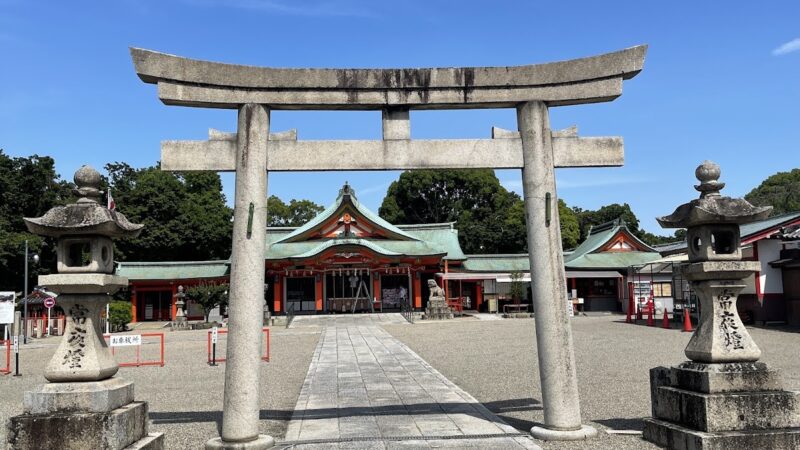
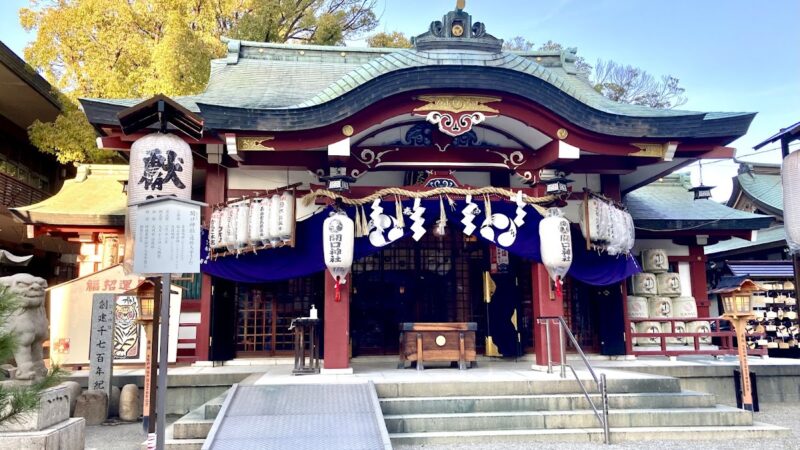
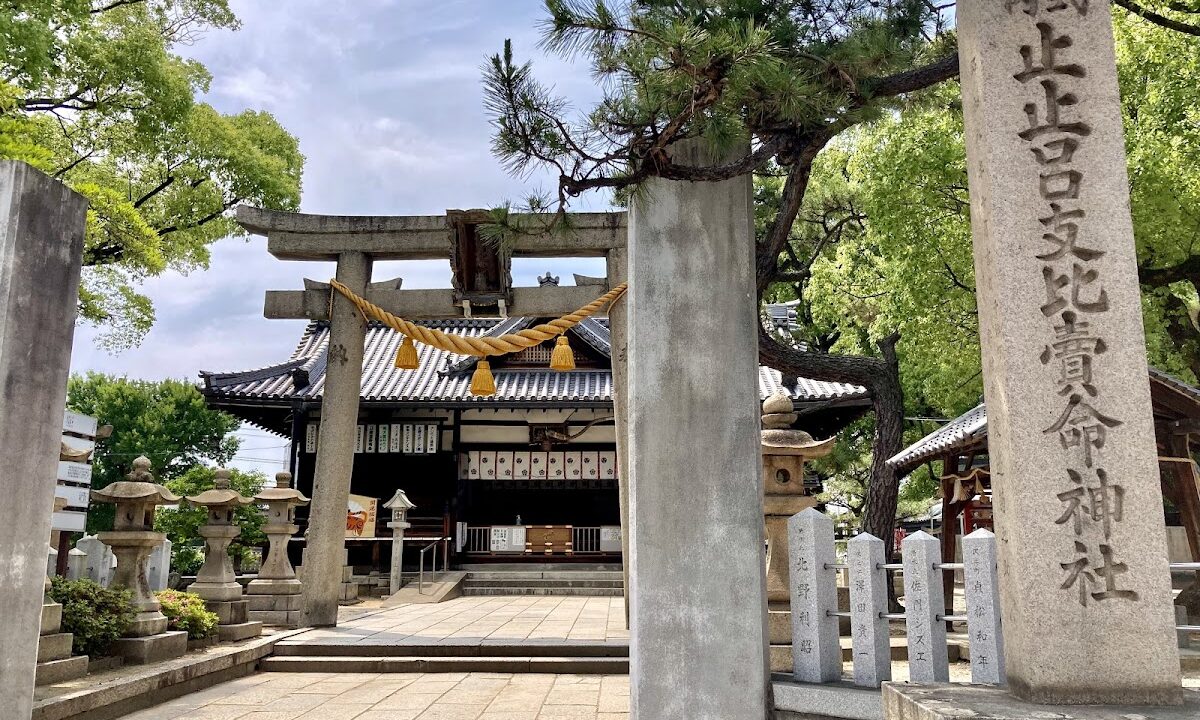
The worship hall, visible from the road and exuding a deep sense of history, welcomes visitors. Despite its urban location, stepping onto the shrine grounds envelops you in silence, creating a sacred atmosphere.
Sacred Water of Wishes
To the right of the main hall is the “Sacred Water of Wishes.” This is a popular spot where it is said that if you write your wish on a water-soluble amulet and float it in the sacred water, your wish will come true. This is thought to be a form of worship related to the history of the Todoroki Pond that once existed on the shrine grounds.
Monument to the Site of Emperor Go-Toba’s Imperial Palace
Within the shrine grounds stands a stone monument indicating that Emperor Go-Toba established an imperial palace here in 1220 (Jokyu 2). This monument is a valuable historical site that speaks to the historical importance of this shrine.
Subsidiary Shrines
The following subsidiary shrines are located within the shrine grounds:
- Arare Matsubara Aragami Shrine: Dedicated to Sanbo Aragami
- Ama no Mizuwake Toyoura no Mikoto Shrine: Known as a Shikinaisha (a shrine listed in the Engishiki), dedicated to Ama no Mizuwake no Mikoto, Okutsuhiko no Mikoto, Okutsuhime no Mikoto, Okuninushi no Mikoto, and Kotoshironushi no Mikoto
These subsidiary shrines also have a long history and attract the faith of the local community.
Goshuin Information
You can receive a Goshuin (temple/shrine stamp) at Totorokihime-no-Mikoto Shrine. Due to its status as a Shikinaisha (a shrine listed in the Engishiki, an ancient Japanese legal text) and its historical connection to Emperor Go-Toba, it is a popular destination for Goshuin collectors.
When requesting a Goshuin, it is recommended to check the shrine office’s opening hours in advance. Since staff may be absent, it’s best to contact them beforehand if you want to be sure to receive a Goshuin.
Benefits and Faith
Main Benefits
Based on the myth of the enshrined deities, Susanoo-no-Mikoto and Inada-hime-no-Mikoto, the following benefits are believed to be offered:
- Protection from Evil and Disaster: Because Susanoo-no-Mikoto defeated Yamata-no-Orochi, he is believed to have the power to ward off disaster.
- Matchmaking and Marital Harmony: As Susanoo-no-Mikoto and Inada-hime-no-Mikoto are a married couple, the shrine is believed to bring good fortune in relationships and marital harmony.
- Family Safety: The shrine protects the safety and prosperity of families.
- Fulfillment of Wishes: It is believed that various wishes will be granted through prayers using the sacred water of the shrine.
As a Guardian Deity of the Community
Affectionately known as “Wakamatsu-san” by locals, the shrine has watched over the lives of the people of the region since ancient times. It continues to attract fervent faith from parishioners and neighboring residents.
Access Methods
Access by Train
Using Nankai Electric Railway:
- Get off at Sawanocho Station on the Nankai Main Line, and walk south for approximately 2 minutes (about 100m).
- Very close to the station, making access very convenient.
Other Lines:
- Approximately 10 minutes on foot from Abikomae Station on the Nankai Koya Line.
- Approximately 8 minutes on foot from Hosoigawa Station on the Hankai Tramway Uemachi Line.
Access by Car
Although located along Abenosuji, there is no dedicated parking lot. Please use nearby coin parking lots if you are coming by car.
Address
1-10 Sawanocho, Sumiyoshi-ku, Osaka City, Osaka Prefecture 558-0031
Nearby Attractions
Sumiyoshi Taisha Shrine
Sumiyoshi Taisha Shrine, the Ichinomiya (first-ranked shrine) of Settsu Province, is located approximately 2km south of our shrine, about a 25-minute walk away. Because Totorohime-no-Mikoto Shrine was once an auxiliary shrine outside the grounds of Sumiyoshi Taisha, visiting both together is highly recommended.
Abiko Kannon (Abikosan Daishokannon-ji Temple)
This nearby Shingon Buddhist temple houses a large Kannon statue, which is rare in Osaka City.
Abeno Harukas Area
Heading north along Abeno-suji Street provides easy access to the Tennoji and Abeno areas, making it a convenient location for combining with sightseeing spots such as Abeno Harukas.
Manners and Points for Visiting a Shrine
Proper Way to Visit a Shrine
- Bow before passing through the torii gate.
- Purify your body and mind at the water basin (left hand → right hand → mouth → left hand in that order).
- Bow twice, clap twice, and bow once in front of the main hall.
- Offer a prayer with the sacred water (optional).
- Visit the subsidiary shrines and smaller shrines within the grounds.
Photography
Photography is generally permitted within the shrine grounds, but please be considerate of other visitors. It is considered good manners to refrain from taking photos inside the main hall or in sacred areas.
Suitable Time for Visiting
The shrine grounds are generally open all day, but the shrine office has limited operating hours. If you wish to receive a goshuin (shrine stamp) or learn about the shrine’s history, it is recommended to visit during daytime hours.
Annual Events
As a shrine with a long history as a Shikinaisha (a shrine listed in the Engishiki), various festivals and events are held throughout the year. For detailed schedules, it is recommended to check with the shrine before visiting. The main annual events include the New Year’s Day Festival, the Spring Grand Festival, and the Autumn Grand Festival, providing valuable opportunities for local people to gather.
The Charm of Totorohime-no-Mikoto Shrine
Status as a Shikinaisha Shrine
The status of a Shikinaisha shrine, listed in the Engishiki Jinmyocho (a list of shrines compiled in the Heian period), conveys a sense of historical weight dating back to the Heian period. While there are many shrines in Osaka City, Shikinaisha shrines hold a special place among them.
A Tranquil Space in the City
Despite its location at a major transportation hub in Osaka City, entering the shrine grounds offers a tranquil atmosphere that makes you forget the hustle and bustle of the city. It is a precious place to escape the busyness of daily life and spend time to calm your mind.
The Historical Romance of Emperor Go-Toba
The fact that Emperor Go-Toba stayed in this area at a turning point in history, just before the Jokyu War, is a fascinating point for history buffs. As the site of the Wakamatsu Imperial Palace, you can feel the breath of history.
A Faith Rooted in the Community
One of the great charms of our shrine is that it has been loved by locals for generations, affectionately known as “Wakamatsu-san.” You can feel the warmth of a shrine that has watched over the lives of the local people for over a thousand years.
Summary
Totorokihime-no-Mikoto Shrine is a valuable cultural asset in Sumiyoshi Ward, Osaka City, possessing both the status of a Shikinaisha (a shrine listed in the Engishiki Jinmyocho) and the history of Wakamatsu Imperial Palace associated with Emperor Go-Toba.
It enshrines Susanoo-no-Mikoto and Inadahime-no-Mikoto, a married couple representative of Japanese mythology, and is believed to offer blessings for protection against evil and for matchmaking. Despite its convenient location just a 2-minute walk from Sawanocho Station on the Nankai Electric Railway, the shrine grounds are enveloped in tranquility, welcoming visitors as an oasis in the city.
There are also many points of interest, such as the sacred water for making wishes and the monument marking the site of Emperor Go-Toba’s temporary palace. When sightseeing in Osaka, we recommend visiting it along with Sumiyoshi Taisha Shrine. A visit to this warm and welcoming shrine, affectionately known as “Wakamatsu-san” by locals, is sure to be a memorable experience.
At Totorohime-no-Mikoto Shrine, where history and faith thrive, immerse yourself in traditional Japanese culture and spend time offering quiet prayers.