Hori Shrine (Osaka Prefecture) Complete Guide | A Thorough Explanation of History, Deities, Highlights of the Grounds, Festivals, and Access
Hori Shrine, located in Nagai-Higashi, Sumiyoshi-ku, Osaka City, is a historic shrine affectionately known as “Nagai no Miya” by the local people. Situated in a quiet residential area south of Nagai Park, this shrine has long served as the tutelary deity of the former Hori Village and Maehori Village, attracting the protection and faith of the community. This article will introduce the charm of Hori Shrine in its entirety, from its history and enshrined deities to its highlights, annual festivals, and access methods.
History of Hori Shrine
Origin of its Founding and Legends from the Muromachi Period
The founding date of Hori Shrine is unknown, but according to local legends, it dates back to the Muromachi period (Ashikaga period). At that time, a man named Suō-no-kami (a certain governor of Suō Province) built a castle on the site where the current Hori Shrine stands, and it is said that he enshrined Susanoo-no-Mikoto as its guardian deity.
This area was a rural farming region with fields and farms until the Meiji era, and was called Horimura. It is believed that the shrine, originally dedicated to the guardian deity of the castle, eventually developed into the tutelary deity of the entire region. While no clear remains of the castle from the Muromachi period exist, this legend is an important element in understanding the region’s history.
Changes from the Edo to Meiji Periods
During the Edo period, it was worshipped as Gozu Tennō-sha (Gozu Tennō Shrine). Gozu Tennō was a syncretic deity of Shinto and Buddhism widely worshipped as a god who wards off epidemics, and before the Meiji-era separation of Shinto and Buddhism, he was identified with Susanoo-no-Mikoto.
With the arrival of the Meiji era, the policy of separating Shinto and Buddhism led to a reorganization of shrine names and enshrined deities. Hori Shrine was no exception, and it underwent a transformation from a Gozu Tenno Shrine to a formally recognized shrine. In 1872 (Meiji 5), it was elevated to the rank of a village shrine, officially recognized as a local shrine.
Renaming and Consolidation in 1911 (Meiji 44)
On April 21, 1911 (Meiji 44), the shrine underwent a significant turning point. Its name was changed from its previous name to “Hori Shrine,” a Man’yōgana (ancient Japanese phonetic script) representation of the village name. By writing the place name “Hori” in a Man’yōgana style as “Hori,” the shrine’s name was elevated to a more dignified status.
During this period, a nationwide policy of shrine consolidation was underway, and Hori Shrine also consolidated surrounding small shrines. This further strengthened its role as a center of local faith. While records of the details of the consolidated shrines are limited, it is certain that multiple local faiths were consolidated at Hori Shrine.
From the Post-War Era to the Present
During the Great Osaka Air Raid of 1945, Sumiyoshi Ward suffered significant damage, but fortunately, Hori Shrine escaped destruction. After the post-war reconstruction period, the surrounding area developed into a residential area, and the former rural landscape disappeared. However, Hori Shrine continues to exist as a spiritual pillar of the community.
Today, it is a place of worship for many, serving as a place for praying for victory in sporting events at Nagai Park, a place of daily prayer for local residents, and a power spot for those seeking peace of mind.
Deities and Divine Virtues
Main Deity: Susanoo-no-Mikoto
The main deity of Hori Shrine is Susanoo-no-Mikoto. In Japanese mythology, he is known as the younger brother of Amaterasu-Omikami, and while known for his fierce nature, he is also a heroic god who slayed the Yamata-no-Orochi (eight-headed serpent).
The divine virtues of Hayasusano-Mikoto are wide-ranging:
- Protection from evil and disaster: With the power of a fierce god, he purifies and dispels all calamities.
- Expulsion from disease: Due to his history of syncretism with Gozu Tenno, he grants blessings for healing from disease and illness.
- Matchmaking: From the myth of his marriage to Kushinadahime-no-Mikoto in Izumo Province, he grants blessings for successful relationships.
- Business prosperity: From his aspect as a god of agriculture, he grants development and prosperity in business.
- Good fortune in competition: From his bravery in slaying the great serpent, he grants success in competitions and sports.
Enshrined deity: Ōnamuchi-no-Mikoto
Ōnamuchi-no-Mikoto is enshrined together with Hayasusano-Mikoto. Ōnamuchi-no-Mikoto is another name for Ōkuninushi-no-Mikoto and is considered a descendant of Hayasusano-Mikoto. He is also known as the principal deity of Izumo Taisha Shrine.
Divine Virtues of Ōnamuchi-no-Mikoto:
- National Development and Good Fortune: As the god of nation-building, he helps in the development of new businesses and life.
- Matchmaking and Marital Harmony: From myths such as the White Rabbit of Inaba, he helps in the formation of bonds between people.
- Business Prosperity and Abundant Harvests: As the guardian deity of agriculture and industry, he brings economic prosperity.
- Medical Care and Healing: As a god who, along with Sukunahikona-no-Mikoto, pioneered the path of medicine, he is a god of good health.
Role as a Guardian Deity
Hori Shrine is the tutelary deity of the area encompassing the former Hori Village and former Maehori Village, and the area from the present-day Nagai Park to the eastern part of Nagai. A tutelary deity is a god that protects people born in that land throughout their lives and has functioned as the spiritual center of the local community.
Local people visit Hori Shrine at various milestones in their lives. The custom of reporting important life events to the local guardian deity and praying for protection, such as a baby’s first shrine visit, Shichi-Go-San (a traditional rite of passage for children), exorcism, and marriage announcements, continues to this day.
Highlights of the Shrine Grounds
Shrine Building and Worship Hall
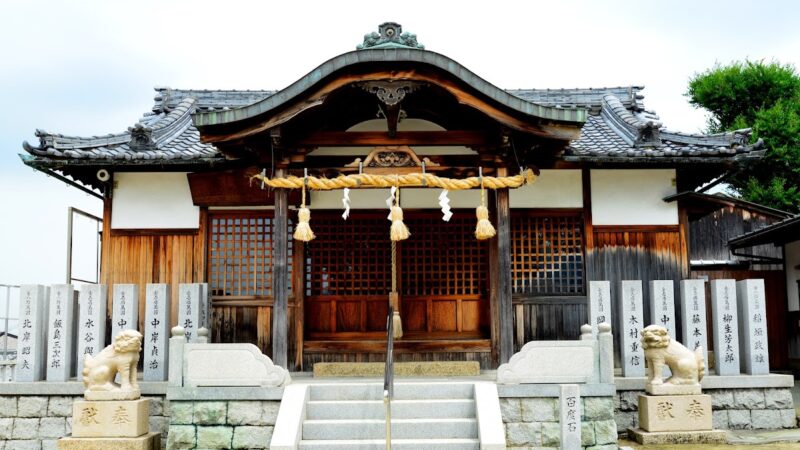
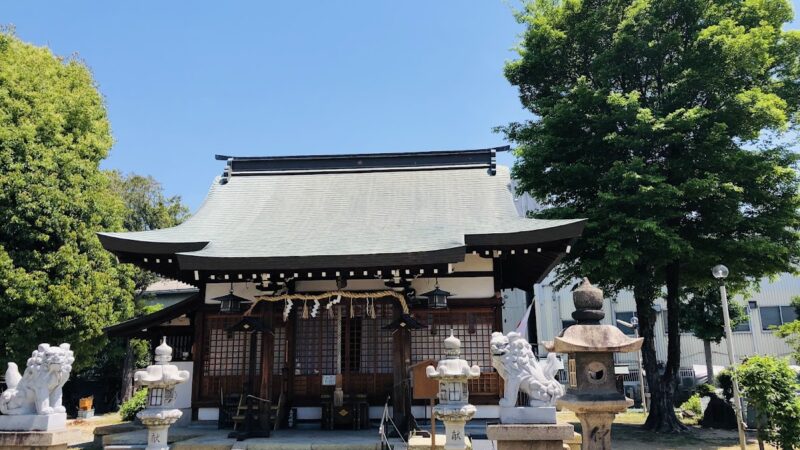
The shrine buildings of Hori Shrine maintain a tranquil atmosphere despite being located in a residential area. The main hall is built in the traditional shrine architectural style, and the worship hall is maintained as a place for worshippers to offer prayers.
A donation box and a bell rope are placed in front of the shrine building, and worshippers pray using the two bows, two claps, and one bow ritual. The main hall, where the enshrined deity is located, is behind the worship hall. The buildings are regularly maintained, preserving a clean and solemn atmosphere.
The Sacred Camphor Tree
The most striking feature of the shrine grounds is the large camphor tree, estimated to be several hundred years old. This magnificent camphor tree is a living witness to the long history of Hori Shrine, and its majestic presence leaves a deep impression on visitors.
Camphor trees have been considered sacred trees since ancient times and are often planted as sacred trees at shrines. The large camphor tree at Hori Shrine has a trunk circumference of several meters, and its branches and leaves spread widely across the sky. In the season of fresh greenery, its vibrant green is beautiful; in summer, it provides cool shade; and in autumn, it displays calming colors.
Many worshippers stop before this large camphor tree, finding peace of mind by touching its vitality. The presence of this sacred tree is undoubtedly one of the reasons why Hori Shrine is known as a power spot.
Power Stones
Several power stones are lined up on the shrine grounds. Power stones are stones used by young men to test their strength from the Edo period to the Meiji period. They competed to show off their strength by lifting these stones at village festivals and on the shrine grounds.
Some of the strength stones at Hori Shrine have the names and dates of the people who lifted them inscribed on them, making them valuable folk artifacts that convey the state of the local community at the time. Their weights vary, from tens of kilograms to over 100 kilograms.
Although it is no longer possible to actually lift them, these strength stones are carefully preserved as important symbols of the region’s history and culture.
Ema Hall and Votive Ema
Within the shrine grounds is the Ema Hall, where votive tablets (ema) offered by worshippers are hung. These tablets bear various wishes, such as academic success, business prosperity, family safety, and recovery from illness, reflecting the deep faith of the local people.
Especially during exam season and the beginning of the year, many votive tablets are offered, filling the Ema Hall with the wishes of worshippers. Furthermore, many people offer votive tablets as a thank-you after their wishes have been granted, demonstrating the deep connection between the shrine and the local residents.
Water Basin and Stone Lanterns
A water basin (temizuya) is located along the approach to the shrine, where worshippers purify themselves before proceeding to the main hall. The water basin is made of stone and is always filled with pure water.
Several stone lanterns are placed throughout the shrine grounds; these were donated by parishioners and devotees. The names of the donors and the year of donation are inscribed on the lanterns, telling the story of the faith and contributions of the local people to the shrine.
Shrine Office and Gift Shop
The shrine office is located within the grounds, where goshuin (shrine stamps) are issued and prayer requests are accepted. The goshuin of Hori Shrine is written in a simple yet powerful calligraphy style, and many people receive it as a memento of their visit.
The gift shop also distributes amulets and talismans. Various types of amulets are available, including those for traffic safety, family safety, and academic success, catering to the needs of worshippers.
Community Cats on the Shrine Grounds
Hori Shrine is known for its community cats. These cats are properly managed by local residents, further enhancing the peaceful atmosphere of the shrine grounds.
For cat-loving visitors, it’s a heartwarming place where they can enjoy both shrine visits and interaction with cats. However, since cats are wild animals, it’s important to observe them quietly without trying to touch them.
Subsidiary Shrines
In addition to the main shrine, Hori Shrine has several subsidiary shrines. These subsidiary shrines are either small shrines that were consolidated during the Meiji-era shrine consolidation policy or reflect specific local beliefs.
Each subsidiary shrine enshrines a different deity, and visitors come seeking specific blessings. It is believed that visiting these subsidiary shrines in addition to the main shrine will bring more multifaceted blessings.
For detailed information on the composition of the subsidiary shrines, it is recommended to visit the site or inquire at the shrine office. Subsidiary shrines provide important clues to understanding the history and evolution of local beliefs.
Annual Festivals and Events
New Year’s Day Festival (January 1st)
The New Year’s Day Festival, the first festival of the new year, is held in the early morning of January 1st. Many parishioners and local residents attend this festival, praying for peace and prosperity in the new year, welcoming the start of the year together with the gods.
From New Year’s Day to the third day, the shrine grounds are bustling with worshippers making their first shrine visit of the year. Many people visit with wishes for the new year, such as family safety, business prosperity, and academic success.
Setsubun Festival (around February 3rd)
On Setsubun, the Setsubun Festival is held to pray for protection from evil and good fortune. This festival is held to ward off the misfortunes of the year and invite good fortune, drawing on the divine power of Susanoo-no-Mikoto to ward off evil.
Sometimes, bean-throwing ceremonies are held, and participants prepare for the new season with the chant of “Demons out, good fortune in!”
Spring Grand Festival
In spring, the Spring Grand Festival is held to pray for a bountiful harvest and the prosperity of the region. During this festival, Shinto rituals such as the recitation of prayers by Shinto priests and the offering of sacred branches are performed solemnly.
Representatives of the parishioners and local community attend, praying for the peace and development of the entire region. After the festival, a celebratory feast (naorai) is sometimes held, providing an opportunity for participants to deepen their camaraderie.
Summer Purification Ceremony (June 30th)
The Summer Purification Ceremony, which cleanses away the sins and impurities accumulated over the past six months, is held on June 30th. Sometimes, a ritual of passing through a ring of reeds is performed, where worshippers purify their minds and bodies and pray for good health and protection from illness for the remaining half of the year. The Great Purification Prayer is recited, and a ritual is performed in which sins and impurities are transferred to paper effigies (hitogata) for purification. This is a traditional Shinto purification ritual that has been practiced since ancient times.
Autumn Grand Festival
The Autumn Grand Festival, held to give thanks for the autumn harvest and to pray for the prosperity of the community, is one of the most important annual festivals at Hori Shrine. In the fruitful autumn season, gratitude is offered to the gods, and prayers are made for a bountiful harvest in the coming year.
During the Grand Festival, various festive events such as a portable shrine procession and lion dances are held, enveloping the entire community in a festive atmosphere. Children also participate, making it a valuable opportunity to pass on the region’s traditional culture to the next generation.
Shichi-Go-San Pilgrimage (November)
In November, many families visit the shrine for Shichi-Go-San pilgrimages to give thanks for their children’s growth and to pray for their continued healthy development. At Hori Shrine, prayers are offered for children aged 3, 5, and 7, and the shrine grounds are adorned with children in their finest attire.
Year-End Purification Ceremony (December 31st)
As the culmination of the year, the Year-End Purification Ceremony is held on December 31st. This is an important Shinto ritual to cleanse away the sins and impurities of the past year and welcome the new year with a refreshed heart.
After the purification ceremony, many worshippers remain on the shrine grounds, preparing to welcome the new year while listening to the New Year’s Eve bells.
Monthly Festivals and Daily Rituals
Monthly festivals are held on the 1st and 15th of each month, where Shinto priests offer their daily gratitude to the gods. Prayers are also offered as needed in response to requests from individuals and companies.
Prayers are offered for various purposes, including protection from evil, family safety, business prosperity, traffic safety, and recovery from illness, supporting the daily religious lives of the local community.
Relationship with Nagai Park
Hori Shrine is located on the south side of Nagai Park and, as its nickname “Nagai no Miya” (Nagai Shrine) suggests, has deep ties to the Nagai area. Nagai Park is one of Osaka City’s leading comprehensive parks, boasting a vast facility including an athletics stadium (Yanmar Stadium Nagai), a ball game field (Kincho Stadium), and a botanical garden.
Sports and Shrines
Nagai Park hosts numerous sporting events, including home games for the J.League soccer team Cerezo Osaka and track and field competitions. Hori Shrine is known as a place for praying for victory in these sporting events, and athletes and team officials sometimes visit the shrine before matches.
The divine virtue of Susanoo-no-Mikoto, who grants good fortune in competitions, attracts the faith of people wishing for victory in sports. Local youth sports clubs also sometimes visit Hori Shrine to pray for victory before competitions.
Center of the Community
Just as Nagai Park is a recreational area for local residents, Hori Shrine functions as the spiritual center of the community. Many local residents visit the shrine on a daily basis, some stopping by after enjoying exercise in the park, others during their walks.
The proximity of the shrine and the park allows faith to blend seamlessly into nature and people’s lives, creating a unique local culture where modern urban life and traditional beliefs harmonize.
Access and Transportation Information
Access by Train
From Osaka Metro Midosuji Line “Nagai Station”
- Approximately 10-13 minute walk from Exit 3
- Walk towards the south side of Nagai Park
- Pay attention to the signs as it is located in a residential area.
From JR Hanwa Line “Nagai Station”
- Approximately 10-15 minute walk from the East Exit
- Head south via Nagai Park
- The route through the park allows you to enjoy the seasonal scenery.
From Osaka Metro Midosuji Line “Nagai Park Station”
- Approximately 10-13 minute walk
- This route also goes through a residential area to the shrine.
Access by Bus
Osaka City Bus routes are also available. The nearest bus stops are “Nagai Higashi” or “Nagai Park Minamiguchi,” which are a few minutes’ walk away. Please check the Osaka City Bus official website for bus timetables and routes.
Access by Car
From the Hanshin Expressway
- Approximately 10 minutes from the Komagawa exit of the Hanshin Expressway Route 14 Matsubara Line
- Many roads around Nagai Park are one-way, so using a car navigation system is recommended.
Parking
- Since there is limited parking for the shrine, we recommend using the paid parking lot at Nagai Park.
- The Nagai Park underground parking lot and nearby coin-operated parking lots are available.
- During festivals, congestion is expected, so using public transportation is preferable.
Address and Contact Information
Address: 1-14-17 Nagai-Higashi, Sumiyoshi-ku, Osaka City, Osaka Prefecture 558-0004
While worship is generally free, it is recommended to contact the shrine in advance if you wish to request prayers. It is advisable to check the hours for receiving Goshuin (shrine stamps) and details of festivals before visiting.
Manners and Etiquette for Worship
How to Pass Through the Torii Gate
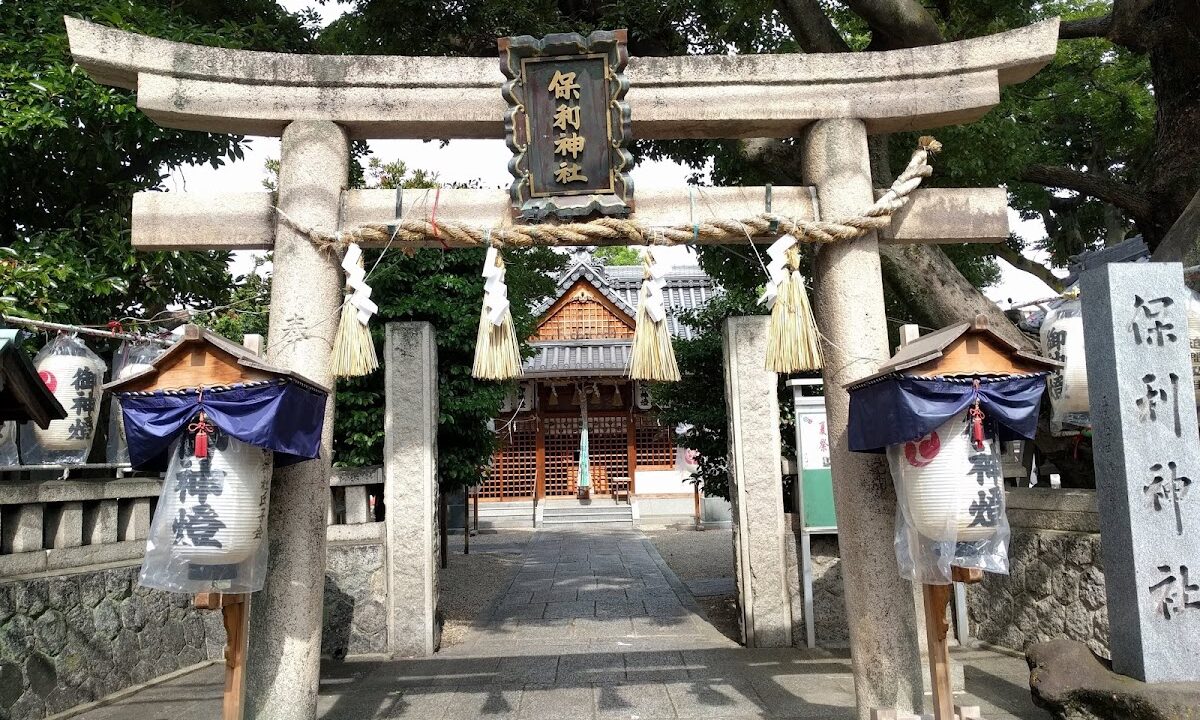
The torii gate, the entrance to the shrine, is the boundary separating the secular world from the sacred realm. When passing through the torii gate, bow slightly before entering. Since the center of the path is considered the path of the gods, it is polite for worshippers to walk along the sides.
Proper Ritual for Washing Your Hands
The proper ritual for washing your hands at the water basin is as follows:
- Take the ladle with your right hand, scoop up water, and wash your left hand.
- Switch the ladle to your left hand and wash your right hand.
- Take the ladle back into your right hand, receive water in your left hand, and rinse your mouth (do not put your mouth directly on the ladle).
- Wash your left hand once more.
- Stand the ladle upright and rinse the handle with the remaining water.
- Return the ladle to its original position.
Proper Ritual for Worship
The basic ritual for worshiping at the main hall is “two bows, two claps, one bow”:
- Place your offering in the offering box.
- Ring the bell (if there is a bell rope).
- Bow deeply twice (two bows).
- Bring both hands together at chest height, then slightly lower your right hand and clap twice (two claps).
- While keeping your hands together, silently recite your wish.
- Finally, bow deeply once (one bow).
Manners when receiving a Goshuin (temple/shrine stamp)
A Goshuin is proof of your visit, not a stamp rally. Always complete your prayers before receiving a Goshuin. Prepare your Goshuin book, show the open page, and politely request a stamp.
The offering fee for a Goshuin is the amount specified if applicable; otherwise, it is generally 300-500 yen. Wait quietly while the stamp is being written, and express your gratitude when you receive it.
The Charm of Hori Shrine and its Reputation as a Power Spot
A Quiet Space in the City
Despite its location in a residential area of Osaka City, the grounds of Hori Shrine are surprisingly quiet and enveloped in a peaceful atmosphere. Passing through the torii gate, the hustle and bustle of the city fades away, and you experience a不思議な (mysterious) feeling of calm.
This tranquil space is the perfect place to escape the stresses of daily life and reset your mind. For busy modern people, a place where you can find such peace of mind is invaluable.
The Energy of the Sacred Tree
The ancient camphor tree, hundreds of years old, emits life force accumulated over many years, and many visitors feel its energy. By touching the tree or taking deep breaths beneath it, you can experience the power of nature.
The effects of tree therapy (forest bathing) are scientifically recognized, and it is believed that the phytoncides and other components emitted by the ancient camphor tree contribute to the relaxation of mind and body.
The Power of Faith Rooted in the Community
The greatest charm of Hori Shrine is that it is a place of faith deeply rooted in the community. Unlike touristy shrines, it is imbued with the daily faith and lives of the local people.
Many people feel that these genuine places of worship possess a true spiritual energy that cannot be obtained through mere formalities. Because these places are the culmination of the prayers of the local people, they resonate deeply with visitors.
Visitor Feedback
Here are some comments from people who have actually visited Hori Shrine:
- “It was enveloped in such a sacred atmosphere that it was hard to believe it was located in a residential area.”
- “Standing in front of the large camphor tree, my mind naturally calmed down, and I felt more positive.”
- “Seeing the stray cats relaxing peacefully brought me peace of mind.”
- “There were many elements that evoked a sense of history, such as the power stone and the ema hall, which I found very interesting.”
- “It has become a habit for me to stop by after exercising at Nagai Park.”
Nearby Attractions to Visit
Nagai Park
If you visit Hori Shrine, be sure to also take a stroll through Nagai Park. This vast 65-hectare site includes an athletics stadium, ball game fields, a botanical garden, and a natural history museum, offering enjoyment for the whole day.
Nagai Botanical Garden, in particular, is a beautiful garden where you can enjoy flowers of all seasons, including a rose garden, a hydrangea garden, and a herb garden. At the Natural History Museum, you can learn about Osaka’s nature and history.
Sumiyoshi Taisha Shrine
Located about 2 kilometers north of Hori Shrine, Sumiyoshi Taisha Shrine is the head shrine of approximately 2,300 Sumiyoshi shrines nationwide. With its National Treasure main hall and the famous arched bridge (Taiko Bridge), it is a representative Osaka shrine with many attractions.
Visiting Sumiyoshi Taisha Shrine in conjunction with Hori Shrine will allow you to gain a deeper understanding of Osaka’s shrine culture.
Abiko Kannon (Abikosan Daishokannon-ji Temple)
Abiko Kannon, located near Abiko Station (one stop from Nagai Station on the Midosuji Line), is also a popular spot. Known as a Kannon for warding off evil, it is bustling with many worshippers on the 18th of each month, its festival day.
Local Gourmet Spots
There are many delicious restaurants around Nagai. Enjoying the local food culture after visiting the shrine is highly recommended. There are also cafes and restaurants within Nagai Park where you can relax.
Summary: Finding Peace of Mind at Hori Shrine
Hori Shrine, located in Nagai-Higashi, Sumiyoshi-ku, Osaka City, is a shrine steeped in history and tradition. Its founding legend dates back to the Muromachi period, its powerful enshrined deities, Susanoo-no-Mikoto and Oonamuchi-no-Mikoto, its centuries-old camphor tree, its power stone and ema hall, and its warm, community-rooted atmosphere of faith are all major attractions of this shrine.
Affectionately known as “Nagai no Miya” by the local people, Hori Shrine has been a part of people’s lives in various ways, from daily visits to life-changing ceremonies. Visiting it in conjunction with sports and recreation in Nagai Park makes it a valuable place to refresh both mind and body.
Whether you’re visiting Osaka or already living there, I highly recommend visiting Hori Shrine. In its tranquil grounds, far removed from the hustle and bustle of the city, you can feel the vitality of the sacred tree and find inner peace. Enveloped in a warm atmosphere woven from the region’s history, culture, and the prayers of its people, Hori Shrine is a place that reminds us, living in the modern age, of something truly important.