Kusasa Shrine (Osaka Prefecture) Complete Guide | History, Deities, Access, and Goshuin Information
Kusasa Shrine, located in Shukuno, Nose-cho, Toyono-gun, Osaka Prefecture, is a historic shrine listed in the Engishiki (ancient Japanese legal code), said to have been founded in 713 AD. It enshrines Kamo Wakeikazuchi-no-kami, the same deity as Kamigamo Shrine in Kyoto, and has been a revered shrine in the region since the Nara period.
This article comprehensively introduces all the information you need to know before visiting Kusasa Shrine, including its detailed history, enshrined deities, highlights within the grounds, goshuin information, and access methods.
Basic Information about Kusasa Shrine
Location: 274-1 Shukuno, Nose-cho, Toyono-gun, Osaka Prefecture
Shrine Rank: Engishiki-listed shrine (minor shrine), former village shrine
Main Deity: Kamo Wakeikazuchi no Kami
Enshrined Deities: Sarutahiko no Mikoto, Hayasusanoo no Mikoto, Otoshi no Kami, Emperor Ojin
Founding: Traditionally believed to be in 713 AD
Annual Festival: Second Sunday of October
Parking: Available (several spaces in front of the shrine grounds)
Kusasa Shrine is located in Nose-cho, in the northern part of Osaka Prefecture, near the border with Hyogo Prefecture. Situated on the foothills north of the Ojiji River, southwest of Shukuno, Nose-cho, Toyono-gun, it is a tranquil shrine surrounded by lush greenery.
History of Kusasa Shrine
Founding and Ancient Origins
Kusasa Shrine is said to have been founded in the 6th year of the Wado era (713 AD). This year was during the reign of Empress Genmei and is a historically significant period, being the year after the completion of the Kojiki (Records of Ancient Matters).
The origin of the shrine’s name, “Kusasa,” can be traced back to the Nihon Shoki (Chronicles of Japan). The entry for the 14th year of Emperor Yuryaku’s reign (around 470 AD) mentions a place name, “Kusamura,” and records that a “Niehajibe” (a group of earthworkers) was established in this area. This “Kusamura” is thought to correspond to the area around present-day Shukuno in Nose Town, and the name “Kusasa” is believed to originate from this ancient place name.
Deep Relationship with the Haji Clan
An essential aspect of the history of Kusasa Shrine is its relationship with the Haji clan, an ancient powerful family. According to the *Nihon Shoki* (Chronicles of Japan), the “Nietsuchi-be” (a group of officials responsible for offering pottery and tableware) was established in this area during the reign of Emperor Yūryaku. The Nietsuchi-be was a family of the Haji clan, who were responsible for presenting pottery and tableware to the imperial court.
The ancestral deity of the Haji clan was Amenohohi-no-Mikoto, and it has been suggested that the original deity enshrined at Kusasa Shrine may have been Amenohohi-no-Mikoto. The change to the current principal deity, Kamo Wakeikazuchi-no-Kami, is presumed to have occurred later, when the Kamo faith spread.
Status as a Shikinaisha (Shrine Listed in the Engishiki)
Kusasa Shrine is a Shikinaisha listed in the *Engishiki Jinmyōchō* (a list of shrines compiled in 927 AD) during the Heian period. It is recorded as a Shikinaisha belonging to Toshima District, Settsu Province, indicating that it was a historically significant shrine recognized by the imperial court since ancient times.
Shikinaisha are shrines listed in the Engishiki, a compilation of laws and regulations from the Heian period. A total of 2,861 shrines nationwide (492 major shrines and 2,369 minor shrines) were designated. While Kusasa Shrine is classified as a “minor shrine,” this classification reflects its size, and its historical value is extremely high.
Changes from the Medieval to the Early Modern Period
Detailed records of Kusasa Shrine from the medieval period onward are limited, but it continued to attract worshippers as the local tutelary deity. It was formerly known as “Kusasa Myojin” and “Sukuno Daimyojin,” suggesting its close connection to the lives of local residents.
The current shrine building was constructed in the mid-Edo period and is a valuable cultural asset that preserves the architectural style of that time. Under the modern shrine ranking system of the Meiji era, it was ranked as a “Gōsha” (village shrine), positioning it as a central shrine in the region.
About the Enshrined Deity
Main Deity: Kamo Wakeikazuchi no Kami
The main deity enshrined at Kusasa Shrine is Kamo Wakeikazuchi no Kami. This deity is widely known as the enshrined deity of Kamigamo Shrine (Kamo Wakeikazuchi Shrine) in Kyoto and is worshipped as the god of thunder and water.
As the name suggests, Kamo Wakeikazuchi no Kami means “the god who divides (separates) thunder,” and is a powerful deity who controls the power of thunder. In agricultural societies, thunder was revered as a source of beneficial rain, and also attracted worship as a god of protection against misfortune and evil.
Regarding the circumstances under which Kamo Wakeikazuchi no Kami came to be enshrined at Kusasa Shrine, it is believed that when Kamo worship spread throughout Japan after the Heian period, the deity was invited to this area.
Enshrined Deities
In addition to the main deity Kamo Wakeikazuchi no Kami, the following four deities are enshrined in the auxiliary shrines at Kusasa Shrine.
Sarutahiko-no-Mikoto
Known as the god of opening paths, he is worshipped as the guardian deity of beginnings and directions.
Hayasusa-no-Mikoto
Another name for Susanoo-no-Mikoto, he is revered as the god of protection against misfortune and disease.
Ootoshi-no-Kami
The god of grain and fertility, he is considered the guardian deity of agriculture.
Emperor Ojin
The 15th Emperor, he is worshipped as Hachiman-shin, the god of military fortune and national protection.
With these five deities enshrined together, Kusasa Shrine is a shrine with diverse divine blessings, including protection against misfortune, protection against misfortune, abundant harvests, and business prosperity.
Highlights of the Shrine Grounds
Main Hall and Worship Hall
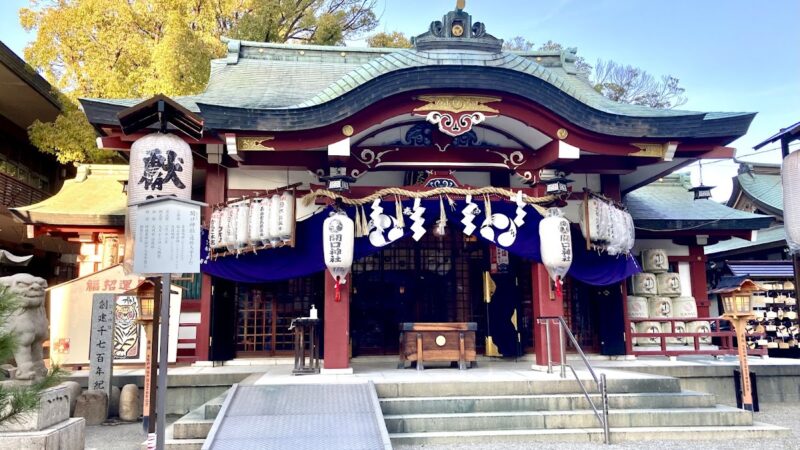
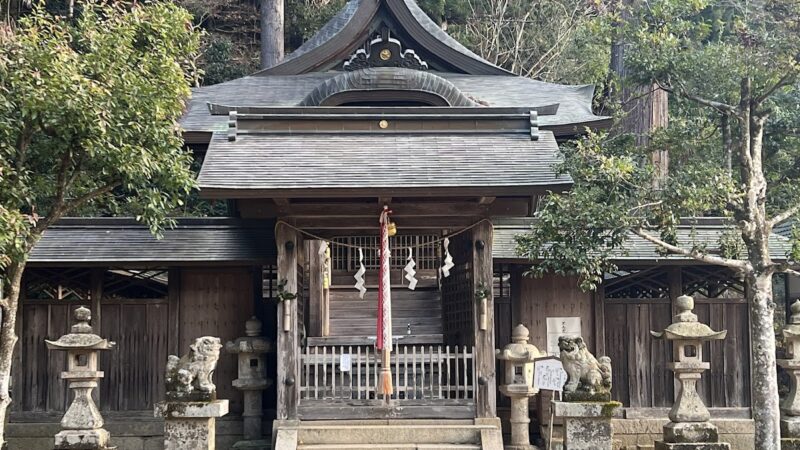
The shrine buildings of Kusasa Shrine date back to the mid-Edo period, and while simple, they exude a sense of dignity. The main hall is a one-bay nagare-zukuri style building, characterized by its cypress bark roof. The worship hall is a hip-and-gable roof style building, quietly welcoming visitors.
The shrine is surrounded by forest, and especially in autumn, the ginkgo trees on the grounds turn golden, creating a beautiful scene of fallen leaves covering the ground. Kusasa Shrine is a popular spot for photography enthusiasts during this time.
Natural Environment of the Shrine Grounds
The grounds of Kusasa Shrine are surrounded by the rich nature of Nose. Located north of the Oji River, at the foot of the mountains, you can experience the changing seasons.
In spring, the fresh greenery is beautiful; in summer, it is enveloped in deep green; in autumn, the leaves change color and the ginkgo leaves turn yellow; and in winter, a serene and dignified atmosphere prevails. The tranquil environment, far removed from the hustle and bustle of the city, is ideal for a peaceful and calm visit.
Stone Steps and Torii Gate
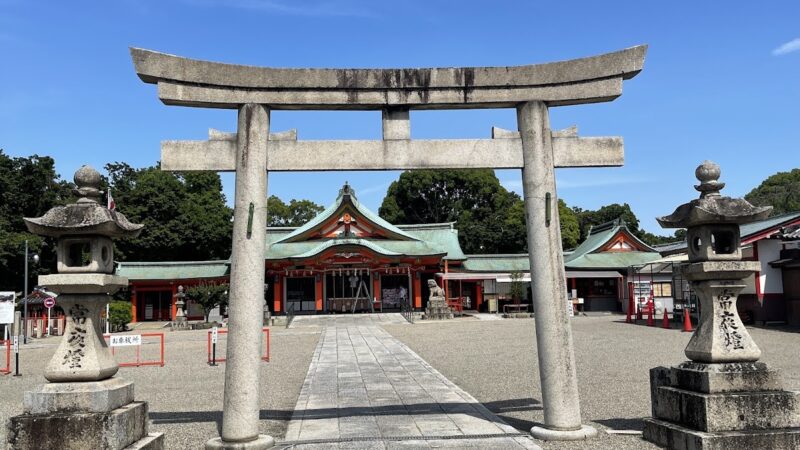
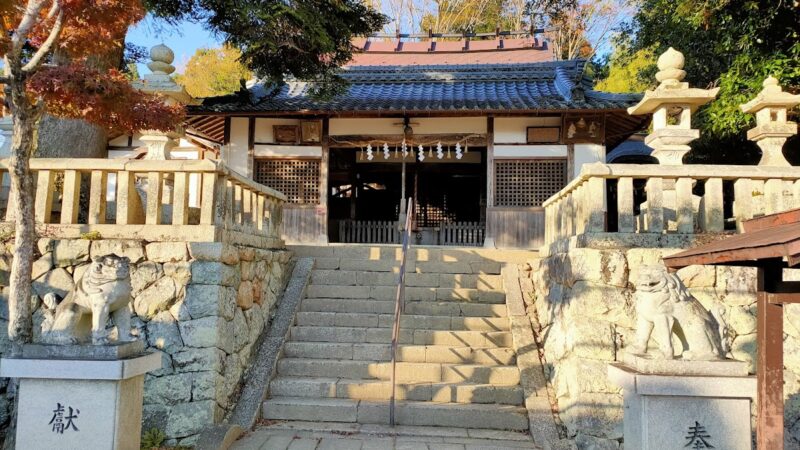
A torii gate is located a short distance from Prefectural Road 54, and from there, stone steps lead up to the shrine. These steps exude a sense of history, bearing the marks of countless worshippers who have walked them over the years.
Annual Festivals and Events
Annual Festival (Autumn Grand Festival)
The annual festival of Kusasa Shrine is held every year on the second Sunday of October. It is an important festival where local parishioners and devotees gather to pray for a bountiful harvest and the safety of the community.
Summer Festival
The summer festival is held every year in mid-August. Though small in scale, it is a warm and community-based festival, serving as a place for local people to interact.
Other Festivals
On New Year’s Day, the Saitansai (New Year’s Day Festival) is held to pray for safety and prosperity in the new year. Furthermore, various Shinto rituals are performed throughout the year, including the Setsubun Festival and the Spring Festival.
Goshuin (Shrine Seal) and Goshuincho (Shrine Seal Book) Information
Goshuin (shrine seals) are available at Kusasa Shrine. However, since there may not always be a resident priest, it is recommended to check in advance.
The goshuin features the calligraphy of “Kusasa Shrine” and the shrine’s seal. It is a simple yet elegant goshuin that reflects the status of a shrine listed in the Engishiki (an ancient Japanese legal code).
When requesting a goshuin, please speak to the shrine office after completing your prayers. If the priest is absent, they may be serving at a nearby shrine, so it is advisable to check with the Osaka Prefectural Shrine Association or the Nose Town Tourism Association for information.
Access Method
Access by Train and Bus
Nearest Station: Nose Railway Myoken Line “Myokenguchi Station”
From Myokenguchi Station, take a local bus or taxi.
- Take the Hankyu Bus bound for “Nose-cho Shukuno” and get off at the “Nakashukuno” bus stop. It’s about a 3-minute walk from there.
- By taxi, it’s about a 10-minute ride from Myokenguchi Station.
Example of access from Osaka city:
- From Osaka Umeda Station, take the Hankyu Takarazuka Line to Kawanishi-Noseguchi Station (approx. 30 minutes).
- Transfer to the Nose Railway at Kawanishi-Noseguchi Station and go to Myokenguchi Station (approx. 20 minutes).
- From Myokenguchi Station, take a bus or taxi.
Access by car
From Osaka city:
Take the Hanshin Expressway Ikeda Line and the Chugoku Expressway, and exit at Kawanishi IC. It’s about a 30-minute drive via Prefectural Road 4 and Prefectural Road 54.
From Kobe:
After exiting the Chugoku Expressway at Kawanishi IC, follow the same route.
From Kyoto:
Take the Kyoto Jukan Expressway or Shin-Meishin Expressway to Kawanishi IC, or head north on National Route 173.
For car navigation: Search for “274-1 Shukuno, Nose-cho, Toyono-gun, Osaka Prefecture” or “Kusasa Shrine”.
There are a few parking spaces in front of the shrine grounds. Parking is free, but it may be crowded during festivals.
Nearby Tourist Attractions
Noma Shrine
Like Kusasa Shrine, this is a Shikinaisha (a shrine listed in the Engishiki, an ancient Japanese legal text) located in Nose-cho, about a 10-minute drive away. This is also a historical shrine, and visiting both is recommended.
Nose Myokenzan
Accessible by cable car from Myokenguchi Station, Nose Myokenzan is known as a sacred site for the worship of the North Star. From the observation deck, you can enjoy a panoramic view of the Osaka Plain, and it’s also a popular hiking spot.
Nose Onsen (Hot Springs)
A hot spring facility you’ll want to visit after your shrine visit. Enjoy a relaxing time while admiring the nature of Nose.
Nose Roadside Station (Kurino-sato)
You can purchase products made with chestnuts, a specialty of Nose Town, as well as fresh local vegetables. There’s also a restaurant where you can enjoy the flavors of Nose.
Points to Note When Visiting Kusasa Shrine
Best Time to Visit
Kusasa Shrine can be visited throughout the year, but the following times are especially recommended:
Autumn (October-November): This is the time of the annual festival, and the ginkgo leaves are beautifully golden. The shrine grounds, dyed golden by fallen leaves, have a particularly special atmosphere.
Spring (April-May): The fresh greenery is beautiful, and you can visit in refreshing air.
Summer (August): This is the time of the summer festival, and you can feel the lively atmosphere of the region.
Points to Note When Visiting the Shrine
- The shrine is located in a quiet area near a residential neighborhood, so please be considerate of noise levels.
- The shrine grounds are rich in nature, so insect repellent is recommended (especially in summer).
- If you wish to receive a Goshuin (shrine stamp), it is recommended to check in advance whether it is available.
- Parking is limited, so consider using public transportation during festivals.
Regarding Photography
Photography is generally permitted on the shrine grounds, but please be discreet in sacred areas such as inside the main hall. Beautiful photos can be taken, especially during the autumn ginkgo season, but please be considerate of other visitors.
Divine Virtues and Faith of Kusasa Shrine
Kusasa Shrine is believed to possess diverse divine virtues through its five deities, including the main deity, Kamo Wakeikazuchi no Kami.
Main Divine Virtues
Protection from Misfortune and Misfortune: Through the power of Kamo Wakeikazuchi-no-kami and Sarutahiko-no-mikoto, the divine virtue of warding off disasters and guiding one toward a positive direction.
Abundant Harvest and Business Prosperity: Through the blessings of Ootoshi-no-kami, prayers are offered for the prosperity of agriculture and commerce.
Good Fortune and Prosperity: Increased luck through the powerful energy of the Thunder God.
Family Safety: As the local guardian deity, the shrine protects the health and safety of the family.
Long-lasting Military Fortune: Improved luck in competitions through the divine virtue of Emperor Ojin (Hachiman-no-kami).
Nose Town and Kusasa Shrine
Nose Town is located at the northernmost tip of Osaka Prefecture and is a naturally rich area known as “Osaka’s Karuizawa.” Although a small town with a population of approximately 10,000, it retains many historical shrines and temples and is known as a place of ancient faith.
Kusasa Shrine has watched over the history of Nose Town for over 1300 years. Throughout its history, from the ancient “Kisa Village” to the modern-day Shukuno district, it has served as a spiritual support for the local residents.
Nose Town is also famous for its chestnuts, and in autumn, you can enjoy a variety of products made with “Nose chestnuts.” Furthermore, the rich natural environment, including Mt. Myoken, is ideal for hiking and nature walks.
Visiting Kusasa Shrine and Shikinaisha Shrines
For those who enjoy visiting shrines, a pilgrimage to Shikinaisha shrines holds special significance. Kusasa Shrine is one of the Shikinaisha shrines in Settsu Province, and many other Shikinaisha shrines are scattered throughout the surrounding area.
Main Shikinaisha Shrines in Settsu Province:
- Noma Shrine (Nose Town)
- Sumiyoshi Taisha (Sumiyoshi Ward, Osaka City)
- Ikusama Shrine (Chuo Ward, Osaka City)
- Ikukunitama Shrine (Tennoji Ward, Osaka City)
Through a pilgrimage to Shikinaisha shrines, you can experience the ancient Japanese faith culture and history.
Summary
Kusasa Shrine is a shrine listed in the Engishiki (an ancient Japanese legal code), said to have been founded in 713 AD (Wado 6), and boasts a history of over 1300 years. It enshrines Kamo Wakeikazuchi-no-kami as its main deity and is known for its divine blessings of protection against misfortune, protection from evil influences, and abundant harvests.
Located in the naturally rich environment of Nose-cho, Toyono-gun, Osaka Prefecture, the shrine grounds, especially beautiful with the golden ginkgo leaves in autumn, are an ideal place for peaceful worship. Its connection to “Kusa Village” mentioned in the Nihon Shoki (Chronicles of Japan) and its deep ties to the Haji clan make it an attractive shrine for those interested in ancient history.
It is relatively easy to access from Myokenguchi Station and is also easily accessible by car. Visiting Nose Myokenzan and other nearby shrines listed in the Engishiki will make for a more fulfilling pilgrimage experience.
Why not escape the hustle and bustle of Osaka and spend some time rejuvenating your mind at this historic shrine? Kusasa Shrine is a hidden gem, a renowned shrine that offers such tranquil moments.