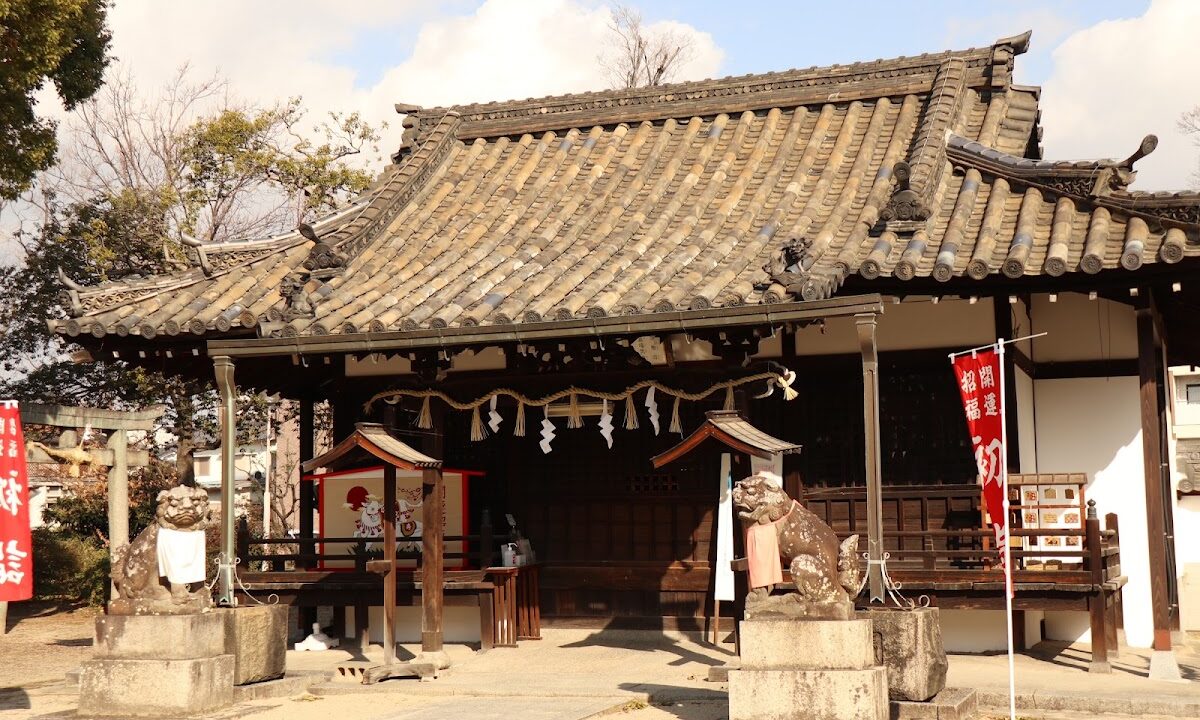
Io Shrine (Ibaraki City, Osaka Prefecture) Complete Guide | History, Goshuin (Shrine Seal), and Access Information
Io Shrine, located in Kuragakiuchi, Ibaraki City, Osaka Prefecture, is a venerable shrine listed in the Engishiki Jinmyocho (a list of shrines compiled in the Heian period). Despite its convenient location within walking distance of JR Senrioka Station, its tranquil grounds are steeped in over a thousand years of history. This article comprehensively introduces information useful for visiting Io Shrine, including its history, enshrined deities, goshuin (shrine seal), highlights of the grounds, access methods, and annual events.
What is Io Shrine? | History and Origins of a Shikinaisha (Shrine Listed in the Engishiki Jinmyocho)
An Ancient Shrine Listed in the Engishiki Jinmyocho
Io Shrine is a shrine listed as “Inoheno Shrine” in the Engishiki Jinmyocho, compiled in the fifth year of the Engi era (927 AD) during the early Heian period. Its official record as a shrine in Shimoshimo District, Settsu Province, confirms its existence over a thousand years ago. A Shikinaisha is a high-ranking shrine officially recognized by the imperial court, and has played an important role as a center of local faith since ancient times.
Origin of the Name “Io”
The name “Io” is believed to be a variation of “Inohe,” meaning “by the well,” referring to a well, spring, or water source. The Shoku Nihongi (Continued Chronicles of Japan), in the April entry of the second year of Tenpyo-Jingo (765 AD), mentions the clan name “Inohe no Muraji,” suggesting that this clan may have worshipped the shrine as their tutelary deity.
In the ancient Miyake-go region (an area spanning present-day Ibaraki and Settsu cities), the shrine was deeply revered as a water deity and spring deity protecting the irrigation water essential for agriculture.
History of the Shrine’s Relocation | From Unobe to its Current Location
Io Shrine was originally located in Unobe, Miyake Village, but it is said to have been relocated to its current location in Kuragakiuchi during the Kyōtoku era (1452-1454). This period falls within the mid-Muromachi period, and it is presumed that the relocation was carried out in conjunction with regional development and changes in the settlement.
Also known as Sansho Myōjin, it has been revered by the local people as the “guardian shrine of Miyake.” Under the modern shrine ranking system, it was classified as a Gosha (village shrine), and as the tutelary deity of the former Miyake Village, it continues to attract worshippers from the area spanning Ibaraki City and Settsu City.
Deities and Benefits
Main Deities
The deities enshrined at Io Shrine are as follows:
- Mizuhanome-no-kami – Goddess of water and agriculture
- Amenokoyane-no-mikoto – God of wisdom and learning
- Emperor Ojin – God of military fortune and national peace
Expected Benefits
The main benefits you can expect at Io Shrine are as follows:
- Agricultural prosperity and abundant harvests – As a water deity, he protects irrigation water
- Business prosperity – Prayers for the development of local industries
- Academic success – The bestowal of wisdom by Amenokoyane-no-mikoto
- Family safety – Protection as a local guardian deity
- Protection from evil and good fortune – Protective Divine Protection as a Guardian Deity of the Region
Especially because it enshrines the water deity, it is believed to be particularly effective for prayers related to water, the source of life.
Highlights of the Shrine Grounds
Main Hall and Worship Hall
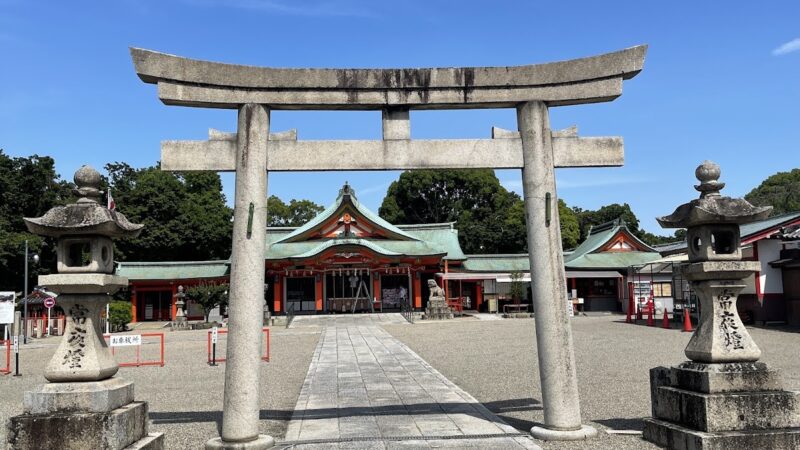
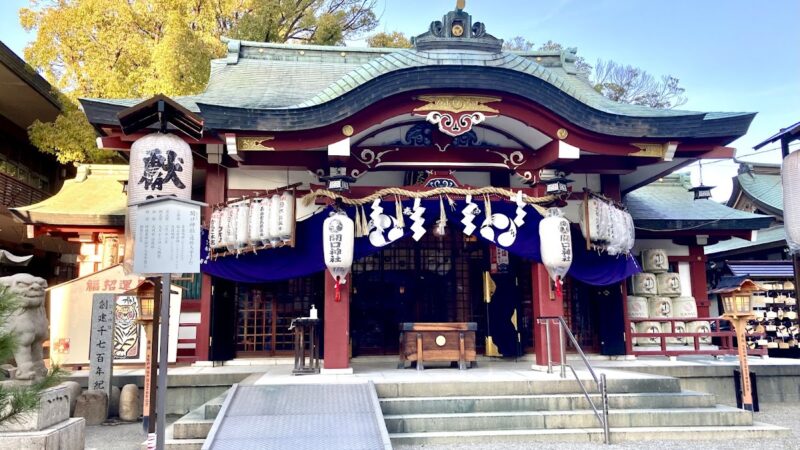
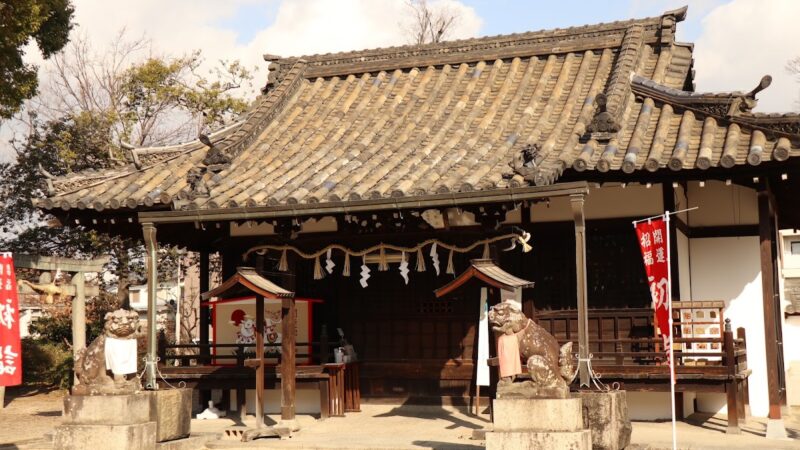
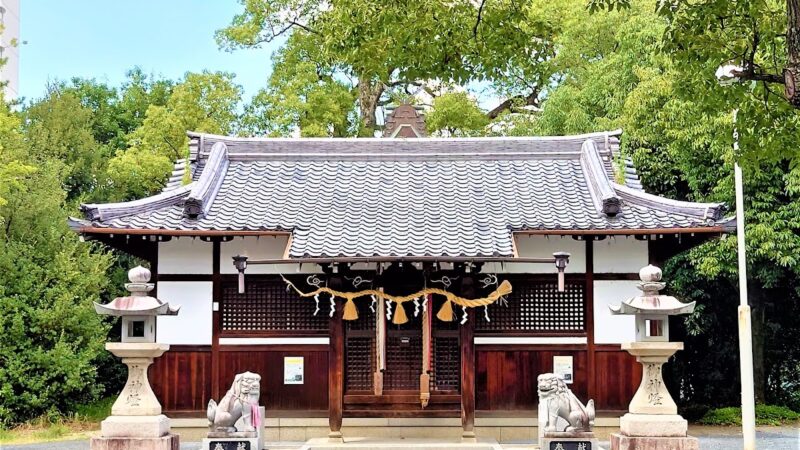
The grounds of Io Shrine are spacious, with the approach to the main hall neatly arranged. The main hall is built in the traditional shrine architectural style, creating a serene atmosphere. Magnificent guardian lion-dogs stand in front of the worship hall, welcoming visitors.
Subsidiary Shrines within the Grounds
Several subsidiary shrines are enshrined within the grounds of Io Shrine, each with its own unique characteristics:
- Benzaiten Shrine – Characterized by its stone statue of Benzaiten, it is worshipped as the goddess of performing arts and wealth.
- Several other subsidiary shrines are located throughout the grounds, accommodating diverse beliefs.
The subsidiary shrines are also carefully maintained, and visitors can pay their respects to them along with the main shrine.
Atmosphere of the Shrine Grounds
The shrine grounds are beautifully cleaned and well-maintained. The spacious grounds are lush with greenery, creating a quiet and peaceful atmosphere despite its urban location. Many visitors comment on the calming and soothing atmosphere, making it a truly peaceful space for worship.
Information on Goshuin (Shrine Seals) and Goshuincho (Shrine Seal Books)
About Goshuin
Goshuin are available at Io Shrine. Many visitors receive them as a memento of their visit and to deepen their connection with the shrine.
Features of the Goshuin:
- Calligraphy reflecting its status as a Shikinaisha (a shrine listed in the Engishiki, an ancient Japanese legal text)
- The shrine’s name, “Io Shrine,” and its red seal
- Date of visit
Receiving Goshuin
Goshuin are available at the shrine office. They are available during the hours when the shrine priests are present, so it is recommended to inquire in advance if you wish to be sure to receive one.
The Shinto priests are kind, and you may have the opportunity to hear about the history and origins of the shrine.
Offering Fee
The offering fee for the Goshuin (shrine stamp) is the same as for most shrines (usually around 300-500 yen). It’s best to have small change ready to avoid needing change.
Access and Parking Information
Basic Information
Location: 3-5-15 Kuragakiuchi, Ibaraki City, Osaka Prefecture 567-0865
Nearest Station: JR Kyoto Line, Senrioka Station
Access by Train
Walking Access from JR Senrioka Station:
- Get off at JR Senrioka Station
- Approximately 10-15 minutes on foot from the station
- Walk through the residential area to the shrine
Senrioka Station is easily accessible, approximately 20 minutes from Osaka Station and 40 minutes from Kyoto Station. The convenient location within walking distance of the station is one of the features of Io Shrine.
Access by Car
Access from Major Roads:
- Approximately 15 minutes from the Ibaraki Interchange on the Meishin Expressway
- Accessible from the Central Ring Road
Parking
Io Shrine has a parking lot for visitors. The parking lot is just a few seconds’ walk from the main shrine, making it easy for the elderly and families with children to visit.
Parking Features:
- Convenient location adjacent to the shrine grounds
- Available during festivals such as Shichi-Go-San and Omiyamairi
- Limited spaces available, so caution is advised during busy times
Surrounding Area Map
Io Shrine is located near the border of Ibaraki City and Settsu City, surrounded by residential areas. There are other shrines and temples nearby, allowing visitors to enjoy shrine hopping.
Annual Events and Festivals
Summer Festival
Io Shrine holds the “Miyake Chinju Io Shrine Summer Festival” every year. Local parishioners and visitors gather for a lively festival. Highlights of the Summer Festival:
- Traditional festivals preserving local traditions
- Food stalls and events
- A place for community interaction
Summer Purification Ceremony
On June 30th, the Summer Purification Ceremony (Nagoshi no Oharae) is held. This Shinto ritual purifies the impurities accumulated over the past six months and prays for good health and protection from illness for the remaining half of the year. Traditional rituals such as passing through a ring of reeds are performed.
Other Annual Events
- New Year’s Visit – The shrine is bustling with many visitors during the first three days of the New Year.
- Setsubun Festival – Events such as bean-throwing.
- Autumn Festival – A festival to give thanks for a bountiful harvest.
- Shichi-Go-San – Many families visit the shrine in November.
- Omiyamairi – Accepted throughout the year.
About Shichi-Go-San and Omiyamairi
Visiting Shichi-Go-San
Io Shrine is a popular place for Shichi-Go-San visits among local families.
Benefits of Shichi-Go-San Visits:
- Just seconds’ walk from the parking lot to the main shrine.
- Spacious grounds, perfect for taking photos.
- Less burdensome for grandparents.
- A calm atmosphere for receiving prayers.
Omiyamairi
Omiyamairi, performed around one month after birth, can also be held at Io Shrine. This is an important ceremony to pray to the local deity for the healthy growth of your baby.
Photography
The shrine grounds offer many photo opportunities, and professional photographers are available for on-site shoots. The spacious grounds and lush greenery make for an ideal backdrop for commemorative photos.
Latest News & Event Information
Events such as Markets
In recent years, Io Shrine has also been hosting local events such as markets. Efforts are underway to revitalize the shrine as a center of the local community, allowing visitors to engage with the shrine in various ways beyond just worship.
Official Social Media
Io Shrine operates an official Instagram account (@io_jinja.official), where the latest news, shrine grounds, and event information are regularly posted. We recommend checking the latest information before your visit.
Official X (formerly Twitter)
Information is also shared on the official X account, allowing you to receive timely updates.
Items Offered and Amulets
Types of Amulets
Io Shrine offers a variety of amulets:
- Exorcism Amulet – An amulet to ward off misfortune and disaster
- Academic Success Amulet – An amulet for success in exams and academic improvement
- Family Safety Amulet – An amulet to protect the peace and safety of the family
- Traffic Safety Amulet – An amulet to protect against traffic accidents
- Business Prosperity Amulet – An amulet to pray for the development of your business
Other Items Offered
- Ema (votive tablet) – A place to write your wish and offer it
- Omikuji (fortune slip) – A message from the gods
- Hama-ya (demon-repelling arrow) – Offered during New Year’s or in unlucky years
Nearby Shrines and Temples
Himorogi Shrine
This shrine is often visited together with Io Shrine. They are within walking distance, and a pilgrimage route visiting both shrines is popular.
Temples and Shrines in the Surrounding Area
Ibaraki City and Settsu City also have many other historical shrines and temples:
- Ibaraki Shrine – The main guardian shrine of Ibaraki City
- Soji-ji Temple – A pilgrimage site of the 33 Kannon temples of the Saigoku Kannon Pilgrimage
- Taishokukan Shrine – A shrine dedicated to Fujiwara no Kamatari
When enjoying a shrine tour, it is also recommended to visit these temples and shrines in conjunction with your visit.
Manners and Points for Visiting a Shrine
Basic Worship Etiquette
- Bow before passing through the torii gate – A courtesy before entering the sacred area
- Purify yourself at the water basin – Purify your left hand, right hand, and mouth in that order
- Walk along the edge of the path – The center is the path for the gods
- Two bows, two claps, one bow – The general worship etiquette at shrines
Attire for Visiting a Shrine
Everyday clothes are fine, but please note the following:
- Aim for clean clothing
- If receiving prayers, slightly more formal attire is desirable
- Formal or semi-formal attire is appropriate for Shichi-Go-San or Omiyamairi (baby’s first shrine visit)
Photography
Photography is generally permitted on the shrine grounds, but please observe the following manners:
- Permission is required to photograph inside the main hall
- Remember to be considerate of other worshippers
- Photography may be discouraged during religious ceremonies
The Charms of Io Shrine | Visitor Testimonials
Quiet and Peaceful Atmosphere
Many visitors comment, “The shrine grounds are beautifully maintained, and it’s very calming,” and “Despite being close to the city, it’s quiet, allowing for a peaceful visit.”
Warm and Friendly Service from the Priests
Visitors appreciate the warm and friendly service from the priests, with comments such as, “The priest came out and explained the shrine’s history in detail,” and “Their kind service made for a wonderful memory.”
Abundant Subsidiary Shrines
Many visitors also comment, “There are many subsidiary shrines, allowing for a thorough visit,” and “The stone Benzaiten statue was particularly impressive.” This shrine offers enjoyment not only at the main shrine but throughout its entire grounds.
Three Recommended Shikinaisha Shrines in Osaka Prefecture
Here are three Shikinaisha shrines in Osaka Prefecture that you might want to visit along with Io Shrine:
1. Sumiyoshi Taisha (Sumiyoshi Ward, Osaka City)
A grand shrine known as the Ichinomiya (first-ranked shrine) of Settsu Province. It is the head shrine of all Sumiyoshi shrines nationwide.
2. Hiraoka Shrine (Higashi-Osaka City)
The Ichinomiya (first-ranked shrine) of Kawachi Province. Also known as Moto-Kasuga, it is considered the original shrine of Kasuga Taisha.
3. Ikusuri Shrine (Chuo-ku, Osaka City)
One of the Ichinomiya of Settsu Province. A city shrine located in the heart of Osaka.
Frequently Asked Questions (FAQ)
Q1: What are the visiting hours for Io Shrine?
The grounds of Io Shrine are generally open all day, but the shrine office is usually open from 9:00 to 17:00. If you wish to receive a Goshuin (shrine stamp) or prayer, it is recommended to visit within these hours. Hours may change on days with events, so it is best to check the official SNS or call in advance.
Q2: Is a reservation required for prayer at Io Shrine?
If you wish to have prayers performed for Shichi-Go-San, Omiyamairi, or Yakuyoke (exorcism), we recommend making a reservation by phone in advance. Especially during the Shichi-Go-San season (November) and the New Year period, congestion is expected, so making a reservation will allow you to receive prayers smoothly. While same-day registration may be possible, there may be a waiting time.
Q3: Does Io Shrine have a parking lot? How many cars can it accommodate?
Io Shrine has a parking lot for visitors. It’s conveniently located just a few seconds’ walk from the main shrine building. However, there is a limited number of parking spaces, so it may be full on days with major events or during the Shichi-Go-San season. In that case, we recommend using nearby coin-operated parking lots or accessing the shrine by public transport (a short walk from JR Senrioka Station).
Q4: Can I get a Goshuin (shrine stamp) at any time?
Goshuin can be given during the hours when the shrine priests are present. Normally, you can get assistance during the shrine office’s opening hours (around 9:00 AM to 5:00 PM), but staff may be absent due to religious ceremonies or other outings. If you want to be sure to receive a Goshuin (shrine stamp), we recommend calling ahead or checking the latest information on the official social media accounts.
Q5: What deities are enshrined at Io Shrine?
Io Shrine enshrines Mizuha-no-me-no-kami (goddess of water), Amenokoyane-no-mikoto (god of wisdom and learning), and Emperor Ojin (god of military fortune). Mizuha-no-me-no-kami, in particular, the goddess of water, has been revered by local people since ancient times as the protector of agricultural irrigation water. She is believed to bring blessings for agricultural prosperity, business success, academic achievement, and family safety.
Q6: How is “Io” in Io Shrine pronounced? What is its origin?
“井於” is pronounced “io.” Originally, it was a variation of the word “井の辺” (inohe), meaning “by the well,” or near a well or spring. It is believed to have originated when the ancient clan “Inohe no Muraji” worshipped it as their tutelary deity, and the history of worshipping it as a god protecting water sources is reflected in the shrine’s name.
Q7: Can I have a wedding ceremony at Io Shrine?
For information on Shinto wedding ceremonies at Io Shrine, we recommend contacting the shrine directly. Many shrines offer Shinto wedding ceremonies, but the facilities and the number of guests they can accommodate vary. Those considering a wedding should start by consulting with the shrine and making an appointment for a visit or consultation.
Q8: What is the most convenient way to access Io Shrine?
The most convenient access is a 10-15 minute walk from JR Senrioka Station. It’s also easily accessible from Osaka Station and Kyoto Station via the JR Kyoto Line without transfers, and its convenient location within walking distance of the station is a major advantage. If you are coming by car, there is a parking lot, but the number of spaces is limited, so using public transportation is recommended. Especially on event days, access by train is the most reliable option.
Summary
Io Shrine is a shrine with a history of over a thousand years, a Shikinaisha (a shrine listed in the Engishiki, an ancient Japanese legal code), and has been cherished by the local people of Ibaraki City, Osaka Prefecture. It boasts many attractions, including its history as an ancient shrine dedicated to the god of water, its beautifully maintained grounds, convenient access, and the warm hospitality of its priests.
Its excellent location within walking distance of JR Senrioka Station makes it easily accessible, yet it offers a quiet and peaceful atmosphere where you can find inner peace. Whether you are collecting Goshuin (shrine stamps), visiting Shikinaisha shrines, families planning Shichi-Go-San or Omiyamairi (baby’s first shrine visit), or simply want to express your gratitude to the gods, this shrine warmly welcomes all visitors.
When visiting the northern Osaka area, be sure to visit Io Shrine. You will be able to feel the history of faith passed down from ancient times and the warm atmosphere rooted in the community. Check their official Instagram (@io_jinja.official) for the latest information, and we recommend visiting on a day when they are holding events such as a market.