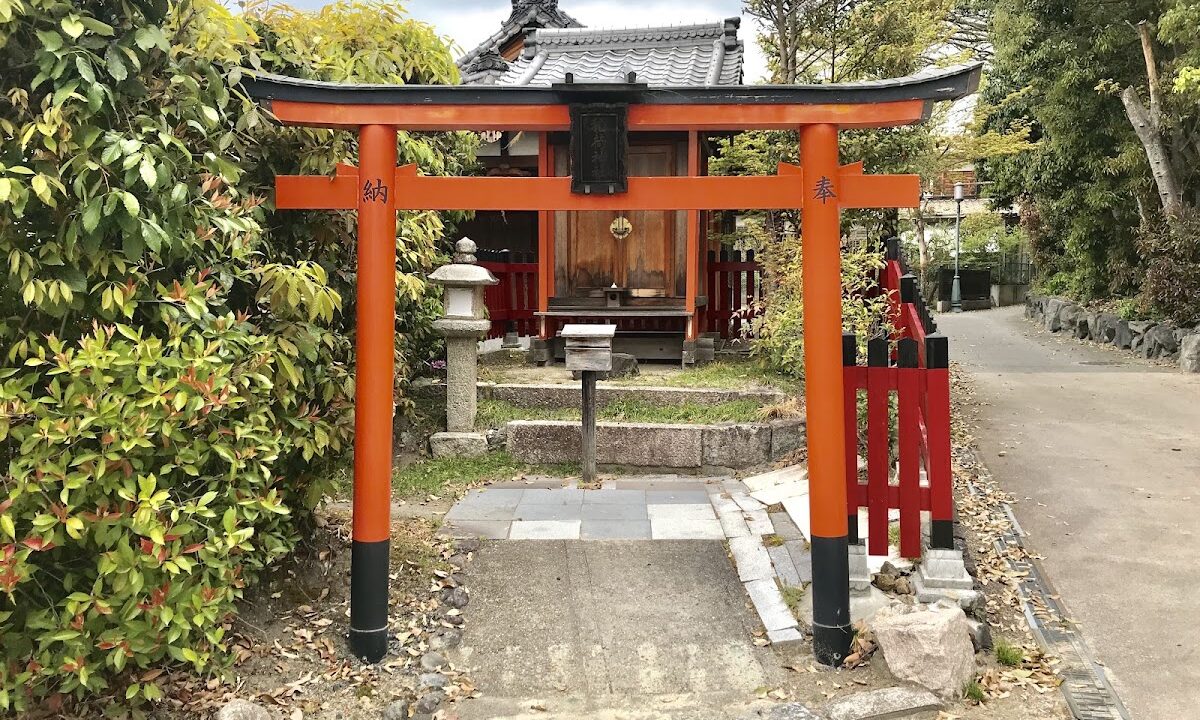
Katano Amatsukami Shrine (Hirakata City, Osaka Prefecture) Complete Guide | Exploring the History of Emperor Keitai’s Kusuba Palace Site and Important Cultural Properties
Located in Kusubaoka, Hirakata City, Osaka Prefecture, Katano Amatsukami Shrine is a shrine deeply rooted in the history of ancient Japan. Known as the traditional site of Emperor Keitai’s Kusuba Palace, and boasting a main hall designated as an Important Cultural Property, this shrine is a must-see for history enthusiasts and shrine visitors alike. This article provides a detailed explanation of Katano Amatsukami Shrine from every angle, including its history, architectural value, visiting information, and access methods.
Basic Information on Katano Tenjin Shrine
Official Name: Katano Tenjin Shrine (Katano Amatsukami no Yashiro)
Location: 2-19-1 Kusubaoka, Hirakata City, Osaka Prefecture 573-1104
Phone Number: 072-857-7332
Former Shrine Rank: Village Shrine
Main Deities: Emperor Kōnin, Amenokoyane-no-Mikoto, Sugawara no Michizane
Cultural Property Designation: The main hall and the main hall of the subsidiary Hachiman Shrine are designated as National Important Cultural Properties; the shrine grounds are designated as an Osaka Prefecture Historic Site (Site of the legendary Kusuba Palace of Emperor Keitai)
While the official name of Katano Tenjin Shrine is pronounced “Katano Amatsukami no Yashiro,” it is also known locally as “Katano Tenjinja.” This shrine is considered one of the most historically valuable shrines in Osaka Prefecture and is highly regarded from the perspective of cultural property preservation.
History and Origins of Katano Tenjin Shrine
Founding in 787 AD and the Suburban Altar
The origins of Katano Tenjin Shrine date back to 787 AD. It is believed that Emperor Kanmu established a suburban altar (kōshidan) in this location south of Nagaoka-kyō, and enshrined his father, Emperor Kōnin.
The suburban altar is a rare form of worship in Japan, modeled after the “suburban altar” ceremony, in which Chinese emperors worshipped the Emperor of Heaven at the Altar of Heaven every winter solstice. While Emperor Kanmu is known for moving the capital to Heian-kyō, this indicates that important rituals were performed at this location during the preceding Nagaoka-kyō period.
The establishment of this suburban altar is thought to have been a deep respect for Emperor Kōnin, Emperor Kanmu’s father, and a political intention to demonstrate the legitimacy of the imperial family. The choice of this location, close to Nagaoka-kyō, may have been influenced not only by geographical convenience but also by its connection to Emperor Keitai, which will be discussed later.
The Legendary Site of Emperor Keitai’s Kuzuha Palace
The grounds of Katano Tenjin Shrine are said to be the site of Emperor Keitai’s Kuzuha Palace, as recorded in the *Nihon Shoki* (Chronicles of Japan). Emperor Keitai was an emperor who was brought from Echizen (present-day Fukui Prefecture) in the early 6th century and is said to have been enthroned at this Kuzuha Palace.
According to the *Nihon Shoki*, Emperor Keitai spent over four years at this site after his enthronement at Kuzuha Palace. Although Emperor Keitai is considered a fifth-generation descendant of Emperor Ojin, he is known as one of the most mysterious figures among the emperors in history because he was brought from a place (Echizen) far removed from the previous imperial lineage.
While there are various theories regarding the exact location of Kuzuha Palace, the grounds of Katano Tenjin Shrine are considered the most likely candidate site and are designated as a historical site by Osaka Prefecture, “The Legendary Site of Emperor Keitai’s Kuzuha Palace.” This historical background makes Katano Tenjin Shrine more than just a local shrine. ### Transition from the Medieval to the Early Modern Period
It is believed that the shrine’s initial function as a suburban altar gradually transformed into a typical Shinto shrine from the mid-Heian period onward. During the Kamakura and Muromachi periods, the current shrine buildings were constructed, and it developed as a center of local faith.
During the Edo period, it was a village shrine, cherished by local residents, and revered as the god of agriculture and learning. In particular, its dedication to Sugawara no Michizane led to its association with Tenjin worship, and the name “Katano Tenjin Shrine” became established.
Architectural Value of the Important Cultural Property
Main Hall (Constructed in 1402)
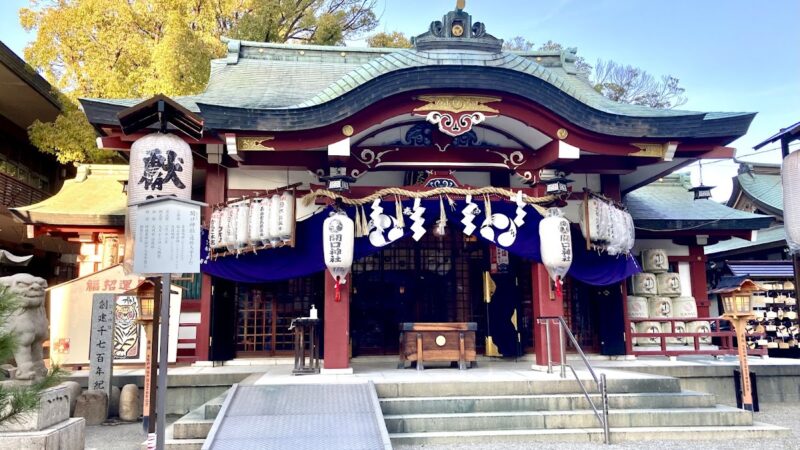
The main hall of Katano Tenjin Shrine, as revealed by a ridge beam inscription, was constructed in 1402 (Oei 9) and is designated as a National Important Cultural Property. It is an extremely valuable surviving example of early Muromachi period shrine architecture.
Architectural Style: Ikkensha Nagare-zukuri (One-Bay Nagare-zukuri Style)
Roof: Hinoki Bark Roofing
Features: While strongly retaining the style of the Muromachi period, it also exhibits architectural techniques from the Kamakura period.
Ikkensha Nagare-zukuri is a style in which the front column span is one ken (approximately 1.8 meters), and the roof slopes downwards towards the front. The exterior of the main hall is simple yet dignified, and the texture of the wood, which has weathered a long history, creates a unique atmosphere.
More than 600 years have passed since its construction, but thanks to appropriate restoration and preservation, the style of that time is still preserved today. In particular, the craftsmanship of Muromachi period artisans can be seen throughout in the woodworking techniques and decorative details.
Subsidiary Hachiman Shrine Main Hall (Around the Oei Era, Early 15th Century)
Also designated as an Important Cultural Property, similar to the main hall, is the main hall of the subsidiary Hachiman Shrine. This structure is also believed to date back to the Oei era (early 15th century), making it a valuable example of a building from roughly the same period as the main shrine.
Architectural Style: One-bay nagare-zukuri style
Features: While similar in style to the main shrine, it possesses unique decorative elements.
It is relatively rare for a subsidiary shrine to be designated as an Important Cultural Property, demonstrating the high historical value of Katano Tenjin Shrine. The Hachiman Shrine main hall is also valued as an architectural work that inherits the style of the Kamakura period (1235-1238) while also possessing characteristics of the Muromachi period.
History of Preservation and Restoration
The main shrine and the subsidiary Hachiman Shrine main hall, both designated as Important Cultural Properties, are preserved through regular restoration work. Since wooden buildings inevitably deteriorate over time, appropriate restorations have been carried out in accordance with the Cultural Properties Protection Law.
In particular, the cypress bark roofing requires replacement every 20-30 years, and traditional techniques are passed down by specialized craftsmen. These restoration efforts not only preserve the buildings but also serve to pass on traditional architectural techniques to future generations.
Highlights of the Shrine Grounds
The Worship Hall and Approach
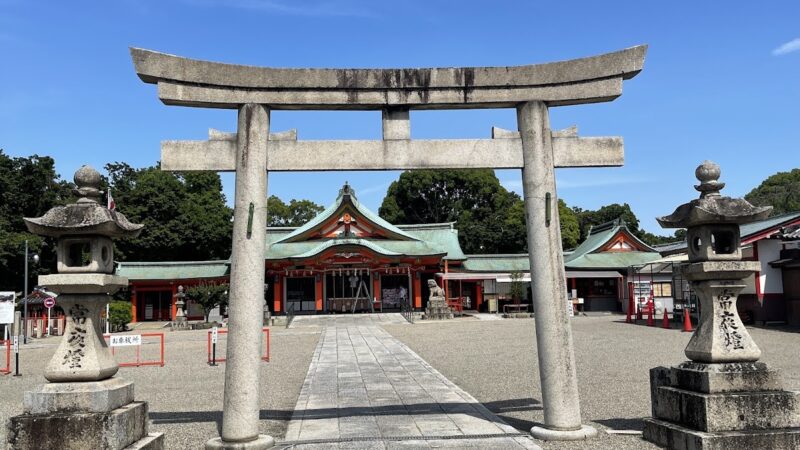
The approach to Katano Tenjin Shrine is located along the road that runs northeast from Keihan Kuzuha Station. Passing through the torii gate, a quiet shrine grounds unfolds, offering a peaceful atmosphere despite its urban location.
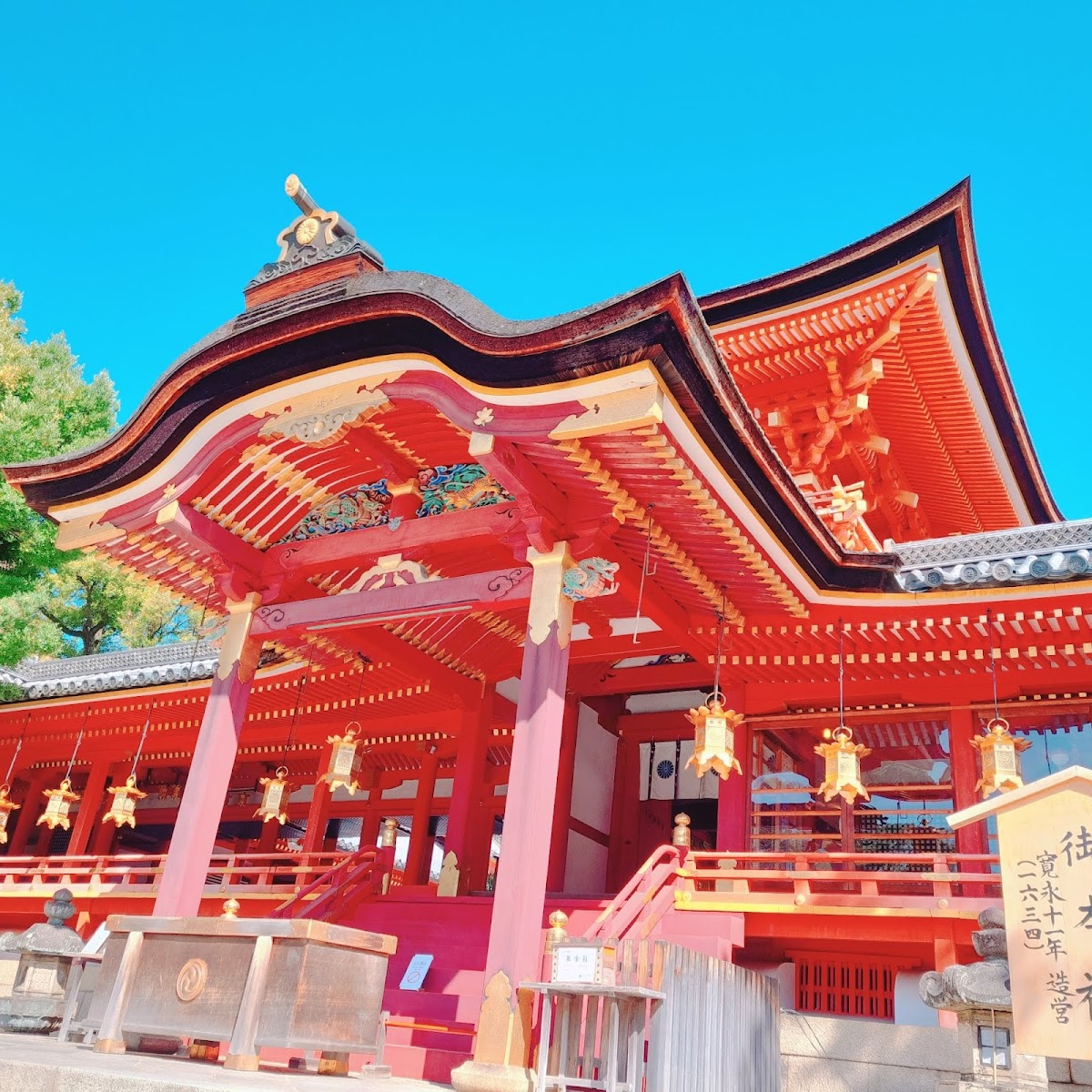
The worship hall is located in front of the main shrine and is where worshippers offer their prayers. The worship hall itself is a historical building, retaining architectural styles from the Edo to Meiji periods, though not as extensive as the main shrine.
Subsidiary Shrines and Auxiliary Shrines
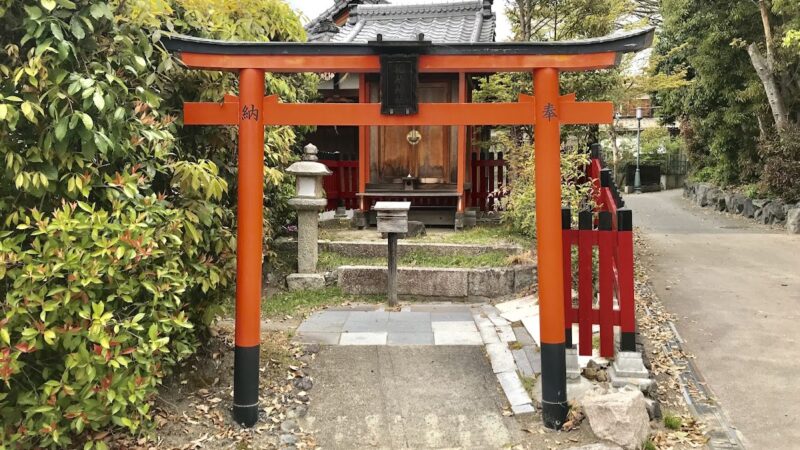
In addition to the main shrine and Hachiman Shrine, several subsidiary shrines are enshrined within the grounds of Katano Tenjin Shrine. These are deeply connected to local beliefs and history, each with its own unique history.
They enshrine deities related to local agriculture and life, and have long been revered by local residents. Visiting these subsidiary shrines allows you to truly appreciate that Katano Tenjin Shrine is not merely a historical building, but a living place of faith.
Stone Monument and Information Board at the Site of Kuzuha Palace
Within the shrine grounds, there is a stone monument and information board indicating the “Site of the Legend of Emperor Keitai’s Kuzuha Palace.” These were installed by the Osaka Prefectural Board of Education and the Hirakata City Board of Education, and they clearly convey the historical background to visitors.
The information board provides a detailed explanation of the circumstances of Emperor Keitai’s enthronement and the historical significance of Kuzuha Palace, making it a must-see for anyone interested in history.
Legends Related to Stars
Many legends related to stars remain at Katano Tenjin Shrine. The place name “Katano” itself is said to originate from “Katanogahara,” a place visited by Heian period aristocrats as the setting for the Tanabata legend, and has a deep connection to the legend of the Milky Way.
Within the shrine grounds and its surroundings, you can see places related to the legend of Orihime and Hikoboshi, as well as traces of star worship. These legends further enhance the mystical atmosphere of Katano Tenjin Shrine.
Deities and Divine Virtues
Emperor Kōnin
Emperor Kōnin, the principal deity, was an emperor of the late Nara period and the father of Emperor Kanmu. Born as the grandson of Emperor Tenji, he was an unusual emperor who ascended to the throne at the advanced age of 62.
Emperor Kōnin’s reign was politically stable, and he is regarded as the emperor who laid the foundation for the later Heian period. At Katano Tenjin Shrine, he is revered as the principal deity because Emperor Kanmu enshrined him to show respect to his father.
Divine Virtues: National peace and security, political stability, family prosperity
Amenokoyane-no-Mikoto
Amenokoyane-no-Mikoto is a god appearing in Japanese mythology, known as the god who recited prayers when Amaterasu-Ōmikami hid in the Heavenly Rock Cave. He is revered as the ancestral deity of the Fujiwara clan and is one of the principal deities of Kasuga Taisha Shrine.
At Katano Tenjin Shrine, he is worshipped as the god of rituals and the power of words, playing an important role in Shinto ceremonies.
Divine Virtues: Good fortune, fulfillment of wishes, power of words
Sugawara no Michizane
Sugawara no Michizane, a scholar and politician of the Heian period, is worshipped as the god of learning at Tenjin shrines throughout Japan. At Katano Tenjin Shrine, he is associated with Tenjin worship and is revered as the god of academic success and passing exams.
Divine Virtues: Academic success, passing exams, improvement in literary arts, protection from evil
Annual Events and Festivals
Katano Tenjin Shrine holds various festivals and events throughout the year.
Grand Festival (October)
The Grand Festival, held every October, is the most important festival at Katano Tenjin Shrine. Traditional Shinto rituals, such as the procession of portable shrines and the dedication of Kagura (sacred dance and music), are performed, with many local residents participating.
New Year’s Visit (January 1st-3rd)
Many worshippers visit the shrine in the new year to pray for good health and safety for their families throughout the year. Special rituals are performed during the New Year’s Day festival.
Tenjin Festival (July)
As the shrine enshrines Sugawara no Michizane, a festival based on Tenjin worship is also held. Many students and those preparing for exams visit to pray for academic success.
Monthly Festival
A monthly festival is held regularly each month, praying for the peace and well-being of parishioners and worshippers.
Goshuin (Shrine Seal) Information
Goshuin (shrine seals) can be obtained at Katano Tenjin Shrine.
Reception Hours: Generally 9:00 AM to 5:00 PM (when the shrine office is open)
Offering Fee: Usually around 300-500 yen
Features: A traditional Goshuin (shrine stamp) with the calligraphy of “Katano Tenjin Shrine” and the shrine’s seal.
Since the shrine priest may not always be present, it is recommended to call ahead to confirm if you wish to receive a Goshuin. Limited edition Goshuin may also be given out during special festivals.
While it is common to bring your own Goshuincho (stamp book), if you do not have one, you may be given a pre-printed Goshuin.
Access and Parking Information
Access by Train
Nearest Station: Keihan Railway “Kuzuha Station”
Travel Time: Approximately 20-30 minutes on foot
Distance: Approximately 1.5 km
From Kuzuha Station to Katano Tenjin Shrine, walk northeast. From the station, head towards Kusubaoka. After passing through the residential area, you’ll see the shrine’s torii gate. Along the way, you’ll also pass the Kusuba-Miya Omotesando Shopping Street, allowing you to enjoy the local atmosphere as you walk.
If walking is difficult, you can take a taxi from Kusuba Station (approximately 5 minutes, 700-1000 yen).
Access by Bus
If using Keihan Bus, take a bus bound for “Kusubaoka” from Kusuba Station. Get off at the nearest bus stop and it’s a few minutes’ walk from there. Since bus service is limited, it’s recommended to check the timetable in advance.
Access by Car
Using the Expressway:
- Approximately 15 minutes from the Meishin Expressway “Oyamazaki IC”
- Approximately 10 minutes from the Daini Keihan Expressway “Hirakata Higashi IC”
Car Navigation Setting:
- Address: 2-19-1 Kusubaoka, Hirakata City, Osaka Prefecture
- Phone Number: 072-857-7332
Parking
Katano Tenjin Shrine has parking spaces for visitors, but the number of spaces is limited (only a few cars). During long holidays and the New Year’s period, congestion is expected, so we recommend using public transportation.
There are few coin-operated parking lots in the surrounding area, so if you are visiting by car, it is important to plan your trip with plenty of time to spare.
Manners and Time Required for Visiting a Shrine
Proper Way to Visit a Shrine
- Bow before passing through the torii gate – As a sign of respect before entering the sacred area.
- Purify yourself at the water basin – Purify your left hand, then your right hand, then your mouth.
- Worship at the main hall – Two bows, two claps, and one bow is the basic ritual.
- Visit the subsidiary shrines within the grounds – If time permits, pay your respects at each shrine as well.
Time Required for Visiting a Shrine
- Normal visit: Approximately 20-30 minutes
- Thorough viewing: 45 minutes to 1 hour
- Detailed appreciation of the important cultural property architecture: 1 hour or more
The shrine grounds are not very large, but if you want to carefully view the important cultural property main hall and subsidiary shrines, and consider the historical background while visiting, you will need about an hour.
Nearby Tourist Attractions
Kuzuha Mall
A large shopping mall directly connected to Keihan Kuzuha Station, where you can enjoy meals and shopping before or after visiting the shrine. It boasts a wide variety of restaurants, cafes, and specialty shops, making it popular with families.
Yodogawa Riverside Park
A short walk from Katano Tenjin Shrine leads to a vast riverside park along the Yodogawa River. It’s a popular spot for locals to enjoy nature, strolls, and picnics.
Hyakusaiji Temple Ruins
Hirakata City is dotted with ancient historical sites, including the ruins of Hyakusaiji Temple. Those interested in history can gain a deeper understanding of the region’s ancient history by visiting these sites in conjunction with Katano Tenjin Shrine.
The Charm and Power Spot Aspects of Katano Tenjin Shrine
Katano Tenjin Shrine is known as a particularly mysterious power spot in Osaka Prefecture. Its appeal lies in the following points:
Layers of History
The most distinctive feature of this shrine is the overlapping of three distinct historical elements: Emperor Keitai’s Kuzuha Palace, Emperor Kanmu’s suburban altar, and the Tenjin faith. The history of faith, spanning from ancient times through the medieval and early modern periods, is condensed into this single location.
A Serene Space in an Urban Area
Despite being located in the urban area of Hirakata City, the shrine grounds maintain a quiet and peaceful atmosphere. The historical weight emanating from the important cultural property, the main hall, and the surrounding trees offer visitors a special experience.
The Mystery and Romance of Emperor Keitai
Emperor Keitai is considered one of the greatest mysteries of ancient Japanese history due to his unusual enthronement, having been invited from Echizen. The legend that this enigmatic emperor ascended to the throne gives Katano Tenjin Shrine a unique mystique.
Legends of Stars and Tanabata
The name Katano originates from “Katanogahara,” a place visited by Heian-era nobles as the setting for the Tanabata legend. The connection to the Milky Way legend and star worship adds a mystical atmosphere to the shrine.
Visitor Voices and Reviews
Visitors to Katano Tenjin Shrine have shared the following comments:
“A venerable shrine with a solid history; a wonderful place to feel the past.”
“The main hall, a designated Important Cultural Property, is well worth seeing. It’s impressive that the Muromachi period architecture still remains.”
“A hidden gem where you can quietly worship away from the hustle and bustle of the city.”
“A precious place where you can feel the historical romance of Emperor Keitai.”
Many visitors highly appreciate the historical value and tranquil environment.
Photography and Cultural Property Protection
Photography for personal records is generally permitted on the grounds of Katano Tenjin Shrine, but please note the following:
- Please do not approach the main hall, a designated Important Cultural Property, too closely from the perspective of cultural property protection.
- Prior permission is required for the use of tripods and commercial photography.
- Please be considerate of other visitors.
- Please refrain from using flash photography to protect the buildings.
Let’s strive to observe proper etiquette when taking photographs in order to pass on cultural properties to future generations.
Summary: The Historical Value and Significance of Visiting Katano Tenjin Shrine
Katano Tenjin Shrine occupies an important position in ancient Japanese history as the site of the legendary Kusuba Palace of Emperor Keitai and the site of the suburban altar established by Emperor Kanmu. The main hall and the main hall of the subsidiary Hachiman Shrine, designated Important Cultural Properties from the Muromachi period, are valuable architectural heritage that conveys over 600 years of history.
This shrine, dedicated to three deities—Emperor Kōnin, Amenokoyane-no-Mikoto, and Sugawara no Michizane—offers a wide range of divine blessings, from national peace and security to academic success. It offers a valuable experience not only for history enthusiasts but for all visitors.
Located in the urban area of Hirakata City, Osaka Prefecture, yet maintaining a tranquil atmosphere, Katano Tenjin Shrine is a place where ancient history and faith still thrive. Its convenient location, within walking distance of Keihan Kuzuha Station, is another attractive feature.
The romance of ancient history, including the enthronement of Emperor Keitai, the history of the rare suburban altar of Emperor Kanmu, and the architectural beauty of its important cultural property—all of these are condensed into one place. Katano Tenjin Shrine is a little-known historical spot that you should definitely visit when you come to Osaka.
Spending time quietly praying while feeling the weight of history will be a special experience away from everyday life. On your next day off, be sure to visit Katano Tenjin Shrine and feel the breath of history that has continued since ancient times.