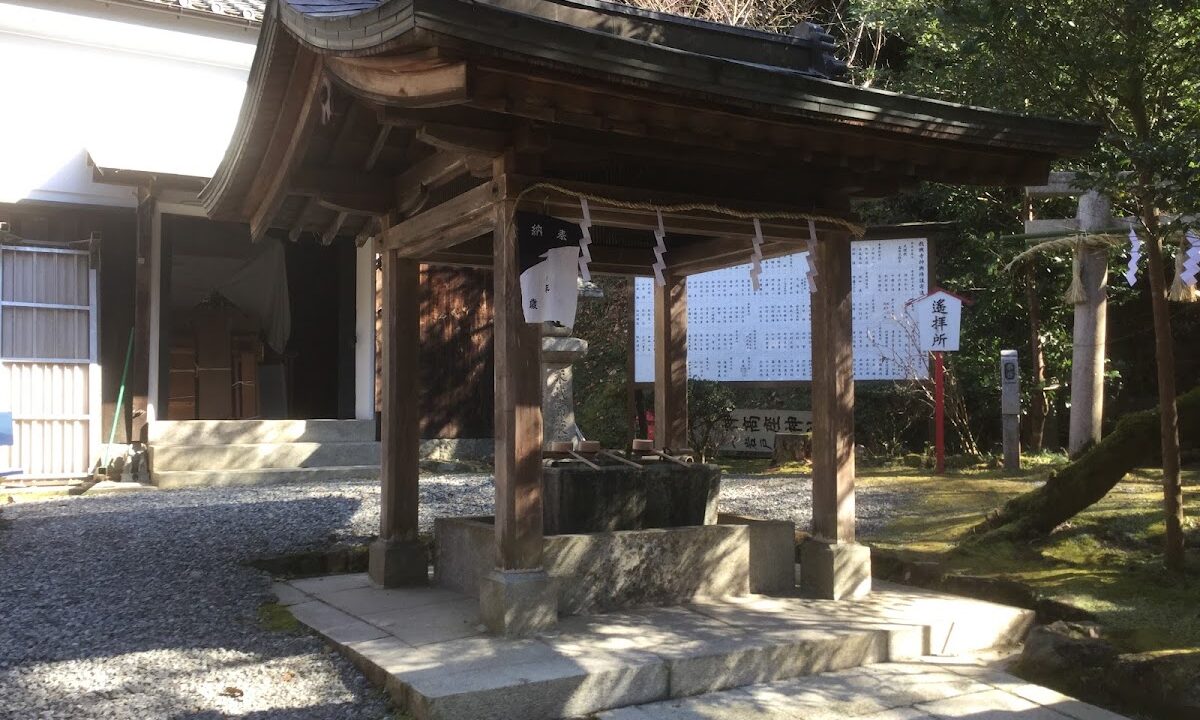
Iwakoro Shrine (Osaka Prefecture) | A Complete Guide to the Alternative Name of Iwafune Shrine and Iwato Shrine in Yao City
In Osaka Prefecture, the name “Iwakoro Shrine” is actually known as a name related to several shrines. This article provides a detailed explanation of the history, enshrined deities, access methods, and highlights of both “Iwakoro Shrine,” an alternative name for Iwafune Shrine in Katano City, and Iwato Shrine, located in Yao City.
What is Iwakoro Shrine? | Two Shrines in Osaka Prefecture
A search for “Iwakoro Shrine” brings up two different shrines in Osaka Prefecture. One is “Iwakoro Shrine,” an alternative name for Iwafune Shrine in Katano City, and the other is Iwato Shrine, located in Yao City. These are completely separate shrines, but both are known as places of worship related to large rocks or caves.
Relationship between Iwafune Shrine (Katano City) and Iwakoro Shrine
Iwafune Shrine in Katano City has also been known as “Iwafune Shrine” and “Iwakoro Shrine.” These are different names referring to the same shrine, and their usage has varied depending on the region and era.
Iwato Shrine (Iwatani Benzaiten) in Yao City
On the other hand, Iwato Shrine, located in Kyōkōji, Yao City, is an independent shrine adjacent to Amaterasu Ōmikami Takakura Shrine. It has been worshipped since ancient times as “Iwatani Benzaiten” and is considered the first cave Benzaiten shrine in Japan.
Iwafune Shrine (Iwasho Shrine/Iwafune Shrine) | A Giant Rock Power Spot in Katano City
Basic Information
Name: Iwafune Shrine
Alternate Names: Iwafune Shrine, Iwasho Shrine
Location: 9-19-1 Kisaichi, Katano City, Osaka Prefecture 576-0033
Deity: Nigihayahi-no-Mikoto
Founding Date: Unknown (Ancient)
Sacred Object and History
The most distinctive feature of Iwafune Shrine is that its sacred object is a giant boat-shaped rock called “Ame-no-Iwafune,” which measures 12 meters in height and 12 meters in width. According to the *Sendai Kuji Hongi* (Ancient Chronicles of Japan), there is a legend that Amateru Kuniteruhiko Ame no Hoakari Kushitama Nigihayahi no Mikoto descended to Takerugamine in Kawachi Province aboard the Heavenly Rock Boat, and this giant rock is believed to be that Rock Boat.
Nigihayahi no Mikoto is known as the ancestral deity of the Mononobe clan, and Iwafune Shrine has deep ties to the Mononobe clan. As the site of his descent, it has long been considered a sacred place and has flourished as a training ground for Shugendo (mountain asceticism).
Cave Pilgrimage | Sacred Site of Shugendo
The greatest attraction of Iwafune Shrine is the “Cave Pilgrimage.” Countless giant rocks are piled up around the Heavenly Rock Boat, the sacred object of worship, and the cave pilgrimage, which winds its way through them, continues to attract many visitors as a training ground for Shugendo.
Important Notes for the Cave Tour:
- Advance registration may be required.
- For safety reasons, comfortable clothing and shoes are essential.
- Physical fitness and caution are required as you will be passing through narrow and dark caves.
- The tour may be canceled in case of rain or bad weather.
- Please follow the shrine’s instructions for safety.
The caves are extremely narrow, and in some places, you may need to crawl. However, the mystical space that awaits you beyond offers a precious experience of truly feeling the presence of a god in this sacred place.
Access Information
Nearest Station/Line:
- Get off at Kisaichi Station on the Keihan Katano Line, approximately 25 minutes on foot.
- Get off at Kawachi-Iwafune Station on the JR Gakken Toshi Line, approximately 20 minutes on foot.
Nearest Bus Stop/Line:
Walking from near Kisaichi Station is the most common route. From the station to the shrine, you will pass through a residential area and head upstream along the Amanogawa River. The rich natural scenery along the way is also a highlight.
Access by Car:
Parking is limited, so we recommend using public transportation. The surrounding roads are narrow and can be particularly congested on weekends.
Highlights and Power Spots
Ama-no-Iwafune (Sacred Object):
This 12-meter-tall giant rock exudes an overwhelming presence, resembling a ship descending from heaven. Even just seeing this massive rock up close evokes a powerful energy.
Milky Way:
The Milky Way, flowing in front of the shrine, is known as the setting for the Tanabata legend, and its pure waters further enhance the sacred atmosphere.
History of Shugendo:
This area flourished as a training ground for Shugendo practitioners from the Heian period, with many ascetics training here. Its history still lives on in the caves.
Legend of Kato Kiyomasa
A legend remains that Kato Kiyomasa attempted to transport this giant rock during the construction of Osaka Castle. However, it is said that even with Kiyomasa’s strength, he was unable to move the sacred rock, the Ama-no-Iwafune. This anecdote is passed down as a testament to the sacredness and powerful spiritual energy of the giant rock.
Iwato Shrine (Iwatani Benzaiten) | Iwatani Benzaiten in Yao City
Basic Information
Name: Iwato Shrine
Alternate Name: Iwatani Benzaiten
Location: 550 Kyokoji, Yao City, Osaka Prefecture 581-0874
Deity: Ichikishima-hime no Mikoto
Founded: Around 800 AD
History and Origin
Iwato Shrine is located adjacent to Amaterasu Omikami Takakura Shrine without a boundary line. Around 800 AD, when Kobo Daishi Kukai visited Kyokoji Temple, he underwent ascetic training at Amaterasu Omikami Takakura Shrine. It is believed that the founding of this Iwato Shrine was due to a divine oracle from Amaterasu Omikami at that time, which led to the establishment of the Benzaiten Shrine.
Since ancient times, it has been known as Japan’s first cave Benzaiten shrine and has attracted many worshippers. The Benzaiten enshrined within the cave was revered as the goddess of performing arts, wealth, and learning.
Separation of Shinto and Buddhism in the Meiji Era and the Present
Due to the Meiji-era decree separating Shinto and Buddhism, the Benzaiten that had been enshrined there was moved to Kyokoji Temple, and instead, Ichikishimahime-no-Mikoto, a Shinto deity, became the enshrined deity. Ichikishimahime-no-Mikoto is a deity that had been syncretized with Benzaiten, so the object of worship has essentially been inherited.
Relationship with Amaterasu Omikami Takakura Shrine
Iwato Shrine has a deep relationship with the adjacent Amaterasu Omikami Takakura Shrine. Amaterasu Omikami Takakura Shrine is known as the only shrine in Japan bearing the name “Amaterasu Omikami,” and is said to have been founded in 479.
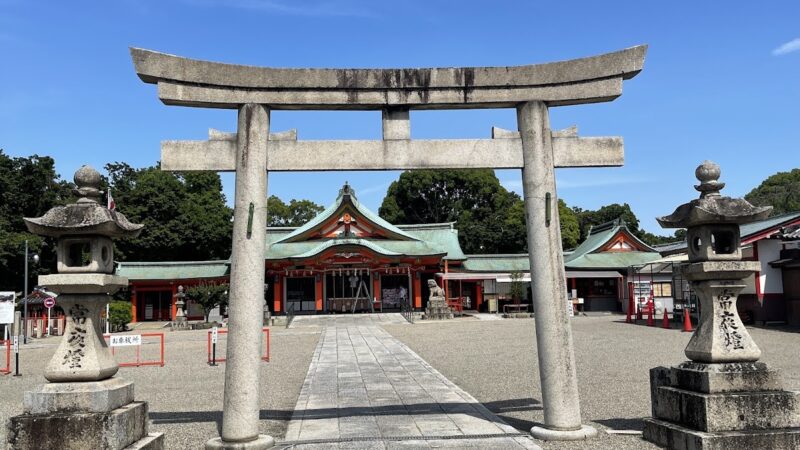
The torii gate bears a plaque inscribed with “Iwato Shrine,” and the two shrines have functioned as a unified place of worship. It is common for worshippers to visit both shrines together.
Deities Enshrined
Amaterasu Omikami Takakura Shrine:
Amaterasu Omikami
Iwato Shrine:
Ichikishima-hime no Mikoto
*Originally dedicated to Benzaiten
Ichikishima-hime no Mikoto is one of the three Munakata goddesses and is worshipped as the goddess of water and performing arts. She is often identified with Benzaiten, and the tradition of Benzaiten worship continues at Iwato Shrine.
Access Information
Nearest Station/Line:
- Get off at Shigi-Yamaguchi Station on the Kintetsu Shigi Line, approximately 20 minutes on foot.
- Get off at Onchi Station on the Kintetsu Osaka Line, approximately 30 minutes on foot.
Nearest Bus Stop/Line:
Get off at Kyokoji bus stop on the Kintetsu Bus, a few minutes on foot.
Located at the foot of Mt. Takayasu, there is a slight uphill climb on foot. The surrounding area is a quiet residential neighborhood harmoniously blended with nature, creating a peaceful atmosphere on the way to the shrine.
Highlights
Cave:
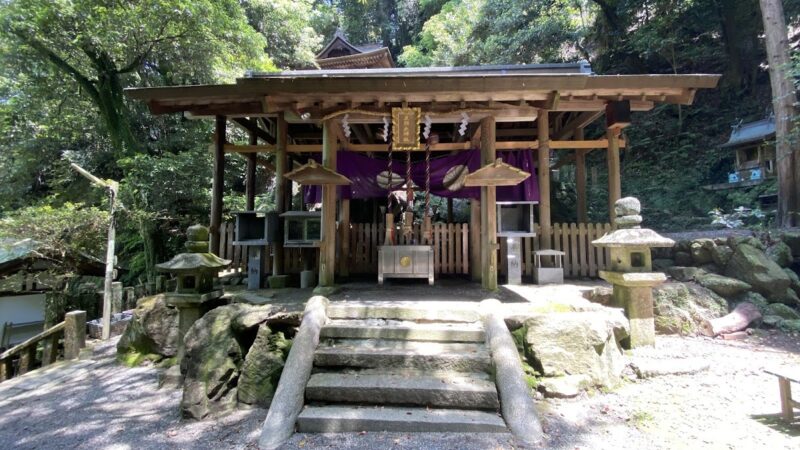
As the name Iwato Shrine suggests, the shrine is built inside a cave. This cave is the origin of the name “Iwatani Benzaiten,” and it is a sacred space utilizing the natural rock formations.
Nature of Mt. Takayasu:
The area around the shrine is surrounded by the rich nature of Mt. Takayasu, allowing visitors to enjoy the scenery of each season. The area is particularly beautiful during the spring when the new leaves appear and in the autumn when the leaves change color, allowing visitors to enjoy nature walks in addition to their pilgrimage.
Relationship with Kyōkōji Temple:
Kyōkōji Temple, located very close by, is an ancient temple said to have been founded by Prince Shōtoku. Before the separation of Shinto and Buddhism, it had a deep connection with Iwato Shrine, and a statue of Benzaiten is still enshrined at Kyōkōji Temple.
Related Shrines and Spots
Shrines Associated with the Mononobe Clan
Nigihayahi-no-Mikoto, the enshrined deity of Iwafune Shrine (Iwasho Shrine), is the ancestral deity of the Mononobe clan. Several shrines associated with the Mononobe clan exist within Osaka Prefecture.
- Ishikiri Tsurugi Shrine (Higashi-Osaka City): Dedicated to Nigihayahi-no-Mikoto
- Hiraoka Shrine (Higashi-Osaka City): The tutelary deity of the Mononobe clan
Sacred Sites of the Ikoma Mountain Range
Both Iwafune Shrine in Katano City and Iwato Shrine in Yao City are located at the foot of the Ikoma Mountain Range. This area has long been known as a sacred site, and many Shugendo (mountain asceticism) training grounds are scattered throughout.
Points and Precautions for Visiting
Precautions for Visiting Iwafune Shrine (Iwasho Shrine)
- Prior Confirmation for Cave Tour: If you wish to tour the caves, please check with the shrine in advance and obtain the necessary procedures.
- Attire: Comfortable clothing and non-slip shoes are essential. Please avoid skirts and heels.
- Weather: The rocky areas are slippery and dangerous in rainy weather, so we recommend visiting on a sunny day.
- Physical Fitness: Cave tours require physical fitness. If you are not confident, please do not push yourself; simply visiting the main hall is sufficient.
- Safety First: Please follow the shrine’s instructions and prioritize your safety.
Points to Note When Visiting Iwato Shrine
- Access: As it is located at the foot of a mountain, please allow ample time for walking.
- Combined Visit with Amaterasu Omikami Takakura Shrine: We recommend visiting the adjacent Amaterasu Omikami Takakura Shrine as well.
- Quiet Environment: As it is close to a residential area, please be considerate and avoid making noise.
Rock-Related Beliefs in Osaka Prefecture
Osaka Prefecture, especially around the Ikoma mountain range, has many places of worship related to giant rocks and caves. This is due to the influence of the Iwakura (rock formation) belief, which has been rooted since ancient times, where rocks are worshipped as vessels for gods or as gods themselves.
The Ama-no-Iwafune of Iwafune Shrine and the cave of Iwato Shrine are both valuable cultural heritage sites that convey this tradition of rock worship to the present day. The colossal rocks were believed to be inhabited by gods, and the caves were considered sacred spaces, attracting the faith of ancient people.
Even today, these massive rocks and caves continue to attract many people as powerful spiritual spots. They are places where one can feel the grandeur of natural formations and the spiritual energy residing within them.
Summary | The Charm of Iwasho Shrine (Osaka Prefecture)
The name “Iwasho Shrine” refers to two different shrines in Osaka Prefecture: Iwafune Shrine (Iwafune Jinja) in Katano City and Iwato Shrine (Iwatani Benzaiten) in Yao City.
Iwafune Shrine (Katano City):
- Dedicated to the 12-meter-tall giant rock “Ama-no-Iwafune”
- A sacred site with a legend of the descent of Nigihayahi-no-Mikoto
- Offers an experience of exploring rock caves as a training ground for Shugendo practitioners
- An ancient shrine associated with the Mononobe clan
Iwato Shrine (Yao City):
- Said to be Japan’s first rock cave Benzaiten
- Legend of its founding by Kobo Daishi Kukai
- A unified place of worship adjacent to Amaterasu Omikami Takakura Shrine
- Dedicates Ichikishimahime-no-Mikoto (originally Benzaiten)
Both shrines convey the ancient belief that natural formations such as giant rocks and rock caves are sacred. When visiting Osaka Prefecture, why not visit these shrines related to rocks and experience the awe felt by ancient people and the spiritual power of nature?
At Iwafune Shrine in Katano City, you can explore mystical rock caves, while at Iwato Shrine in Yao City, you can offer prayers in a tranquil rock cave, experiencing the worship of rocks in different ways. These shrines, where history, nature, and spirituality merge, are unique power spots in Osaka Prefecture and are places we hope many visitors will come to.