Complete Guide to Nunose Shrine (Osaka Prefecture) | A Thorough Explanation of Benefits, History, and Love Fortune Slips
Nunose Shrine, located in Kitashinmachi, Matsubara City, Osaka Prefecture, is a historic shrine with a long history and legends related to cloth. In recent years, it has gained popularity among younger generations through its “love fortune slips” created in collaboration with contemporary artist Hiroko Ichihara. However, its history and cultural heritage are highly valued, so much so that it has been designated a tangible cultural property by Osaka Prefecture.
This article provides a detailed explanation of everything you need to know before visiting Nunose Shrine, including its benefits, history, architectural highlights, worship methods, and access information.
What is Nunose Shrine? | An Ancient Shrine Standing in the “Navel of Osaka”
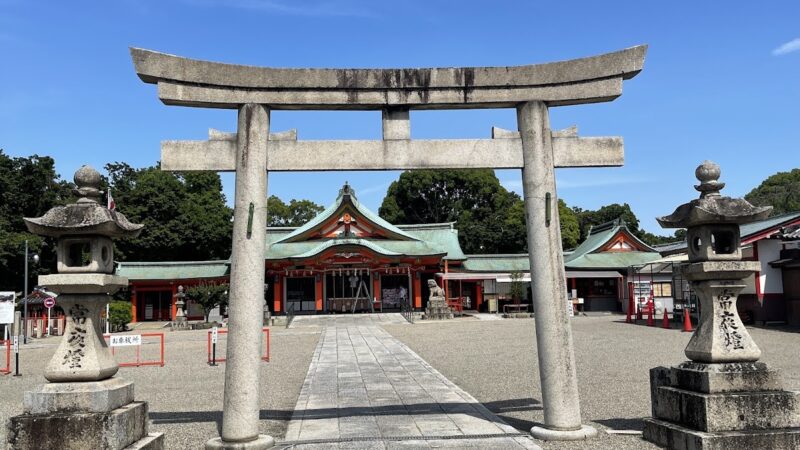
Nunose Shrine is located in Matsubara City, almost in the center of Osaka Prefecture, in an area often called the “navel of Osaka.” Despite its convenient location within walking distance of Nunose Station on the Kintetsu Minami-Osaka Line, the shrine maintains a tranquil atmosphere.
The exact founding date is unknown, but the shrine has long been revered by the local people and has been worshipped as a god of healing from illness, protection from evil, traffic safety, and business prosperity. It has a particularly unique legend related to “cloth” and is also known as a god that wards off poisonous insects.
Basic Information about Nunoshin Shrine
- Location: 2-4-11 Kitashinmachi, Matsubara City, Osaka Prefecture
- Nearest Station: Approximately 5 minutes on foot from Nunoshin Station on the Kintetsu Minami-Osaka Line
- Deities Enshrined: Hayasusa-no-Mikoto, Yaekotoshironushi-no-Mikoto, Takemikazuchi-no-Mikoto
- Shrine Rank: Former Village Shrine
- Cultural Properties: Osaka Prefecture Designated Tangible Cultural Property (Main Hall), Matsubara City Designated Tangible Cultural Property (Nunoshin Eight Views Plaque)
Origin and History of Nunoshin Shrine | The Legend of the White Cloth
Origin of the Name “Nunoshin”
An interesting legend remains regarding the origin of the name of Nunoshin Shrine. The place name “Nunoshin” (meaning “cloth-covered”) is said to have originated from a legend that when Susanoo-no-Mikoto, formerly enshrined on Amamigaoka Hill, was brought to the current location, white cloth was laid out to welcome the deity.
This legend related to “cloth” is considered fundamental to the shrine’s faith and is deeply connected to its blessings of healing illnesses and protection against poisonous insects.
History Dating Back to the Edo Period
The current main hall was built in the early Edo period. During repairs in 1983, a wooden fragment was discovered inscribed with a record of a scripture offering from 1663. This confirms that the shrine has a history of at least 360 years.
Throughout the Edo period, it flourished as a center of local faith, and in the early modern period, it came to be widely revered not only for healing illnesses but also as a deity of protection against misfortune, traffic safety, and business prosperity.
Deities and Blessings | Protected by Three Gods
Hayasusa-no-Mikoto
Hayasusa-no-Mikoto, known in Japanese mythology as the heroic god who slayed the Yamata-no-Orochi (eight-headed serpent), is worshipped as a god of protection against evil, disease, and matchmaking. At Nunoshin Shrine, he is particularly known for his blessings of healing illnesses and protection against poisonous insects, and has been revered since ancient times as a god who protects the health of the local people.
Yaekotoshironushi-no-Mikoto
Affectionately known as Ebisu, he is the god of business prosperity. Known for playing an important role in the myth of the transfer of the land, he is believed to bring blessings of business prosperity, maritime safety, and abundant catches.
Takemikazuchi-no-Mikoto
A god of war, also known as the enshrined deity of Kashima Shrine, he is believed to bring good fortune in victory, improvement in martial arts, and protection from evil. He is also worshipped as a god who calms earthquakes and is revered as a guardian deity against disasters.
Main Blessings Received at Nunoshin Shrine
- Healing from Illness: The most well-known blessing since ancient times
- Protection from Misfortune: Warding off misfortune at life’s turning points
- Traffic Safety: Praying for safety in modern society
- Business Prosperity: Development and prosperity of business
- Extermination of Poisonous Insects: Protection from harmful insects and diseases
- Matchmaking: Success in finding a good partner (also popular in love fortune slips)
Osaka Prefecture Designated Tangible Cultural Property | Architectural Beauty of the Main Hall
The Elegant Appearance of the Ikkensha Nagare-zukuri Style
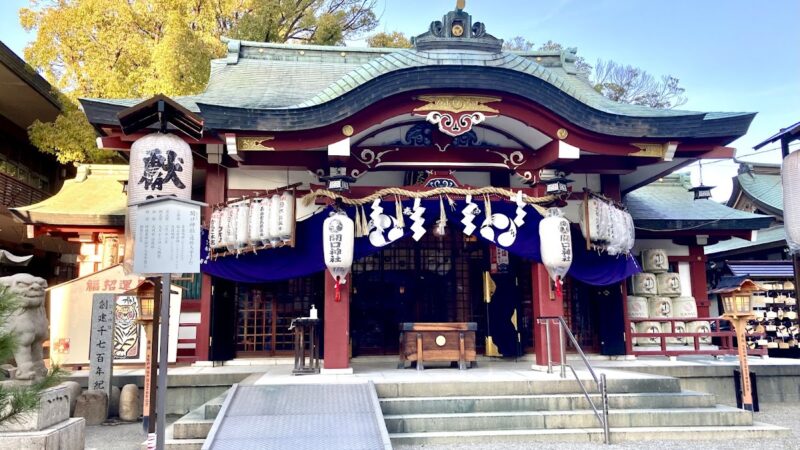
The main hall of Nunoshin Shrine is a valuable building designated as an Osaka Prefecture Designated Tangible Cultural Property. Its architectural style is “Ikkensha Nagare-zukuri,” characterized by its cypress bark roof.
The Nagare-zukuri style is one of the representative styles of Shinto shrine architecture, characterized by its elegant shape with a roof that flows gracefully forward when viewed from the front. A “Ikkensha” (一間社) indicates that the distance between the pillars at the front is one ken (approximately 1.8 meters).
Restoration in 1983
The restoration work carried out in 1983 (Showa 58) restored the main hall to its early Edo period appearance. The current striking, vibrant vermilion color is a result of this restoration. During the restoration, a piece of wood dating back to 1663 (Kanbun 3) was discovered, further enhancing the historical value of the main hall.
Lion Paintings Attributed to Kano Tan’yu
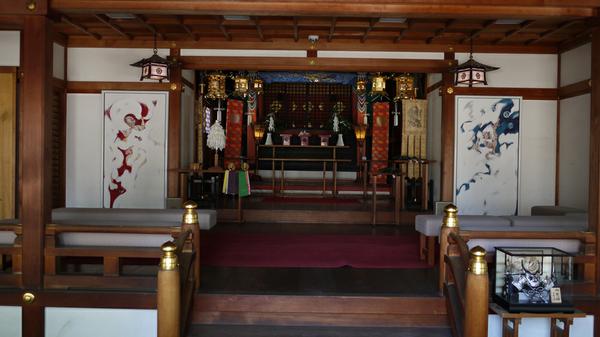
On both sides of the main hall’s structure are paintings of lions (karajishi), attributed to Kano Tan’yu, a leading painter of the Edo period. Kano Tan’yu was a representative painter of the Kano school in the early Edo period and served as an official painter for the Tokugawa shogunate.
This painting of a Chinese lion is a masterful fusion of the powerful brushwork and delicate expression characteristic of the Kano school, and holds high cultural value. When visiting the shrine, please be sure to take notice of this precious painting.
Highlights of the Shrine Grounds | Cultural Properties and Architecture
Worship Hall and Karamon Gate
In front of the main shrine is the worship hall, and beyond that stands a magnificent Karamon gate. Karamon gates are considered highly prestigious gates in shrine architecture, and they speak to the history and status of Nunoshin Shrine.
Guest Hall (Former Ema Hall)
The building currently used as the guest hall was formerly used as an ema hall (votive tablet hall). Numerous votive tablets are stored here, conveying the history of the local people’s faith that has continued since the Edo period.
Subsidiary Shrines
Several subsidiary shrines are enshrined within the grounds, each dedicated to a different deity. It is believed that visiting these shrines along with the main shrine will bring even greater blessings.
Matsubara City Designated Tangible Cultural Property: “Nunoshin Eight Views Plaque”
The “Nunoshin Eight Views Plaque,” designated as a tangible cultural property by Matsubara City, is a valuable cultural asset depicting the beautiful scenery of the Nunoshin area in the past. It is an important resource for understanding the local landscape during the Edo period.
Small Votive Tablets from the Muromachi to Edo Periods
Numerous small votive tablets, believed to have been dedicated from the Muromachi to Edo periods, are stored on the shrine grounds. These are valuable folk materials that convey the faith of the people of that time and are attracting attention from researchers.
Ichihara Hiroko Love Fortune Slip | Fusion of Contemporary Art and Tradition
“Love Fortune Slip” Popular on Social Media
What made Nunoshin Shrine famous was the “Love Fortune Slip,” a collaboration with contemporary artist Ichihara Hiroko. Its unique language and humorous content became a major topic of conversation, especially on social media.
Hiroko Ichihara is an artist known for creating works that capture everyday moments and express them through words, resonating with many.
The Charm of Love Fortune Slips
These fortune slips stand apart from traditional fortune slips, offering modern and approachable language to convey messages about love. Beyond simply predicting good or bad fortune, the act of reading them is enjoyable in itself, making them popular among younger generations.
Love fortune slips can be drawn at the shrine’s office, and many visitors take them home as souvenirs or tie them to the shrine grounds.
Harmony of Tradition and Innovation
Nunoshin Shrine, with its long history and cultural assets, has successfully conveyed the shrine’s appeal to younger generations through collaboration with contemporary art. This initiative is attracting attention from other shrines as a prime example of creating new value while preserving tradition.
Annual Events and Festivals | Community-Based Faith
Grand Festival
The Grand Festival, held every autumn, is the most important festival at Nunoshin Shrine. Local people gather, and the day is the most lively of the year, with a procession of portable shrines and devotional performances.
First Shrine Visit of the Year
Many worshippers visit the shrine for their first shrine visit of the year. The shrine grounds are bustling with local people praying for protection from evil and business prosperity.
Setsubun Festival
The Setsubun Festival is held in February, featuring events such as bean-throwing. This is a popular event at Nunoshin Shrine, known for its blessings of protection from evil, and attracts many worshippers.
Summer Purification Ceremony
At the end of June, the Summer Purification Ceremony (Nagoshi no Oharai) is held, where people are purified of the impurities accumulated over the past six months and pray for good health and protection from illness for the remaining half of the year.
How to Visit and Etiquette | Receiving Blessings Through Proper Etiquette
Basic Visiting Etiquette
- Bow before passing through the torii gate: As a sign of respect before entering the sacred area.
- Purify yourself at the water basin: Purify your left hand, then your right hand, then your mouth.
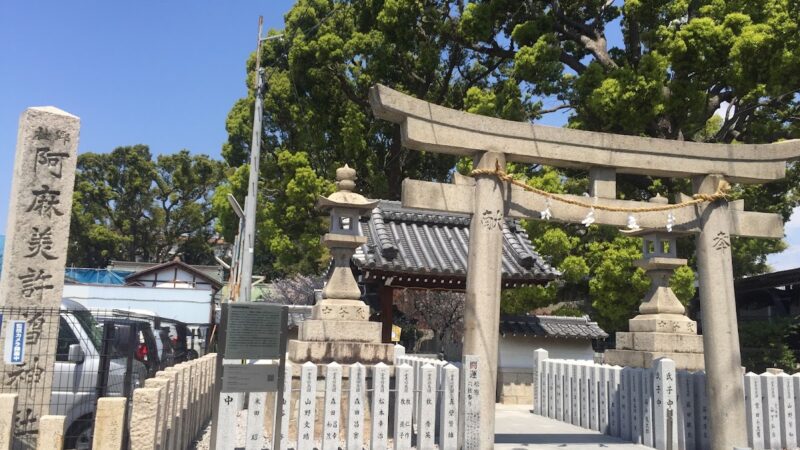
- Walk along the edge of the path: The center is considered the path of the gods.
- Bow twice, clap twice, and bow once in front of the main hall: This is the general etiquette for visiting shrines.
- Quietly recite your wish in your heart: Be specific and humble.
Amulets and Goshuin (Shrine Seals)
Nunoshin Shrine offers various amulets and goshuin (shrine seals). You can choose an amulet according to your purpose, such as recovery from illness, protection from evil, or traffic safety. Goshuin are popular as a memento of your visit, and you can have one written in your goshuincho (shrine seal book).
Photography Etiquette
Photography is generally permitted on the temple grounds, but consideration must be given to the privacy of those inside the main hall and other visitors. In particular, when photographing cultural artifacts such as the lion paintings, please refrain from using flash.
Access Methods | Directions by Train and Car
Access by Train
Approximately 5 minutes on foot from Kintetsu Minami-Osaka Line “Nunose Station”
- Approximately 15 minutes from Osaka Abenobashi Station to Nunose Station
- Exit the station and head north. After passing through the residential area, you will see the shrine.
- There are signs, so even first-time visitors can arrive without getting lost.
Access by Car
- Approximately 10 minutes from Hanshin Expressway Matsubara Line “Matsubara Minami IC”**
- Approximately 15 minutes from Nishimeihan Expressway “Fujiidera IC”**
- There is a parking lot for visitors on the shrine grounds (spaces are limited, so using public transportation is recommended during busy times).
Access from Major Stations in the Surrounding Area
- From Tennoji Station: Approximately 20 minutes on the Kintetsu Minami-Osaka Line
- From Namba Station: Take the Midosuji Subway Line to Tennoji, then transfer to the Kintetsu Line (approximately 30 minutes)
- From Osaka Station: Take the Midosuji Subway Line to Tennoji, then transfer to the Kintetsu Line (approximately 40 minutes).
Nearby Tourist Spots | Enjoy the Charms of Matsubara City
Around Kawachi-Amami Station
The area around Kawachi-Amami Station on the Kintetsu Minami-Osaka Line boasts numerous shopping streets and restaurants, making it convenient for meals and shopping after visiting the shrine.
Oizumi Green Park
Located about 15 minutes away by car, Oizumi Green Park is a vast park where you can enjoy nature throughout the seasons. It’s recommended to visit with family during your pilgrimage.
Shibagaki Shrine
Another ancient shrine located within Matsubara City, this is an interesting spot for history buffs.
Best Time and Season for Visiting
Recommended Seasons
- Spring (March-May): The temple grounds are vibrant with cherry blossoms, and the weather is pleasant.
- Autumn (September-November): The annual festival is held, and the autumn leaves are beautiful.
- New Year’s Visit (January 1st-3rd): The temple is bustling with many visitors praying for the New Year.
Visiting Hours
While the temple grounds are generally open for worship all day, the reception hours for amulets and Goshuin (temple stamps) are generally from 9:00 AM to 5:00 PM. For those who wish to visit in peace and quiet, weekday mornings are recommended.
Reviews and Reputation of Nunoshin Shrine
Visitor Voices
“The love fortune slips were so interesting I drew them many times. It’s wonderful that this old shrine is trying new things.” (Woman in her 20s)
“I’ve been familiar with this local shrine since I was a child. I visit every year for protection against evil.” (Man in his 50s)
“I visited because I heard that the vermilion color of the main hall is beautiful and that it has high cultural value. Kano Tan’yu’s painting of the Chinese lion is a must-see.” (Woman in her 40s)
“It’s close to the station and easy to access. I like the quiet and peaceful atmosphere.” (Man in his 30s)
Frequently Asked Questions (Q&A)
Q: Can I get a Goshuin (shrine stamp) at Nunoshin Shrine?
A: Yes, you can get a Goshuin at the reception area. Reception hours are generally from 9 am to 5 pm, but staff may be absent due to festivals, etc., so it is recommended to check in advance if you want to be sure to get one.
Q: Is there parking available? **
A: There is a parking lot for visitors, but the number of spaces is limited. It can become full during busy times such as New Year’s Day and the annual festival, so we recommend using public transportation.
Q: Can I receive a prayer for warding off evil?
A: Yes, you can receive various prayers, including those for warding off evil. We recommend contacting the shrine in advance to reserve a date and time for the prayer.
Q: Can I draw Ichihara Hiroko’s love fortune slip anytime?
A: You can draw one during the hours the office is open (generally 9:00 AM to 5:00 PM). Because it is popular, it may be temporarily out of stock depending on availability.
Q: Can I have a wedding ceremony here?
A: It is possible to hold a Shinto wedding ceremony here. Please contact the shrine directly for details.
Q: Is it possible to visit with a pet? **
A: While it is often possible to visit shrines carrying small dogs, it is necessary to observe proper etiquette and be considerate of other visitors. Please avoid letting your dog roam freely within the shrine grounds.
Summary | The Charm of Nunoshin Shrine, Where Tradition and Innovation Blend
Nunoshin Shrine in Matsubara City, Osaka Prefecture, is a venerable shrine with a history dating back to the early Edo period and a main hall designated as an Osaka Prefecture tangible cultural property. However, it also possesses a unique modern appeal, thanks to its love fortune-telling slips created in collaboration with Ichihara Hiroko.
With its wide range of blessings including healing from illness, protection from evil, traffic safety, and business prosperity, as well as valuable cultural assets such as the lion painting attributed to Kano Tan’yu, and its approachable love fortune-telling slips, Nunoshin Shrine has diverse attractions, attracting not only locals but also an increasing number of visitors from afar.
It is easily accessible, located about a 5-minute walk from Nunoshin Station on the Kintetsu Minami-Osaka Line, making it a convenient stop from within Osaka City. Cleanse your soul in a historic shrine, receive blessings, and enjoy a collaboration with contemporary art—please visit Nunoshin Shrine for such a special experience.
Nunoshin Shrine, which cherishes tradition while continuously creating new value, will surely continue to be loved and revered by many people for years to come.