Hajinosato Hachiman Shrine (Fujiidera City, Osaka Prefecture) Complete Guide | History and Visiting Information Related to the Haji Clan
Hajinosato Hachiman Shrine, located at 1-chome, Domyoji, Fujiidera City, Osaka Prefecture, is a historical shrine founded in Hajinosato, the base of the ancient Haji clan. It began in the early Edo period with the enshrinement of Hachiman-sama from Konda Hachiman Shrine, and is still carefully preserved today as the local guardian deity. This article provides a detailed introduction to Hajinosato Hachiman Shrine, including its historical background, enshrined deities, access methods, and nearby attractions.
What is Hajinosato Hachiman Shrine?
Hajinosato Hachiman Shrine is located in an area that belonged to Shiki District, Kawachi Province, currently at 1-8-4 Domyoji, Fujiidera City, Osaka Prefecture. The shrine’s name, “Hajinosato,” originates from the fact that this area was the base of the ancient Haji clan.
The Deep Connection Between the Haji Clan and Haniwa
The Haji clan was a clan that flourished from the Kofun period to the Heian period, and was particularly deeply involved in the production of haniwa (clay figures) and the construction of burial mounds. According to the *Nihon Shoki* (Chronicles of Japan), during the reign of Emperor Suinin, Nomi no Sukune devised the haniwa as an alternative to ritual suicide, and it is said that he was granted the surname “Haji” for this achievement.
The area around Fujiidera City is the center of the Furuichi Kofun Group, and it is a historical site where the Haji clan utilized their haniwa-making techniques to participate in the construction of burial mounds. The Haji no Sato ruins have yielded the remains of a haniwa workshop and numerous haniwa fragments, archaeologically proving that this area was a major center of haniwa production.
The History and Founding of Hajiri Hachiman Shrine
Founding in the Early Edo Period
The founding of Hajiri Hachiman Shrine is believed to be in the early Edo period. It is said that the shrine originated from the enshrinement of a divided Hachiman deity from Konda Hachimangu Shrine. Konda Hachimangu Shrine is a representative Hachiman shrine of Kawachi Province, located south of Emperor Ojin’s tomb, and has been revered since ancient times as a god of war and protection of the nation.
Other Hachiman Shrines Founded Around the Same Time
Interestingly, several Hachiman shrines were founded around Fujidera City during the same early Edo period as Hajiri Hachimangu Shrine:
- Kofu Hachimangu Shrine (Kofu 1-chome, Fujidera City)
- Sawada Hachimangu Shrine (Sawada, Fujidera City)
- Komuro Hachimangu Shrine (Komuro, Fujidera City)
- Tsudo Hachimangu Shrine (Tsudo, Fujidera City)
The simultaneous founding of these shrines is thought to be due to the reorganization of villages by the Edo shogunate and the spread of Hachiman worship as the tutelary deity of local communities. Hachiman-jin was worshipped not only as a god of war, but also as a god of agriculture and industrial development, and was widely accepted by people who prayed for the peace and prosperity of their villages.
About the Enshrined Deities
Regarding the enshrined deities of Hajiri Hachiman Shrine, there are no clear records, so the details are unknown. However, given that it is a Hachiman shrine, it is presumed that the following deities are enshrined:
Hachiman-Okami (Emperor Ojin)
Hachiman-Okami, the principal deity of Hachiman shrines, is considered to be a deified version of the 15th Emperor Ojin. He has been worshipped since ancient times as a god of military fortune and a god of national protection.
Hime-Okami
Hime-Okami is often enshrined alongside Hachiman-Okami at Hachiman shrines, and there are various theories regarding her identity, including the Munakata Three Goddesses and Tamayorihime-no-Mikoto.
Empress Jingu
Empress Jingu, the mother of Emperor Ojin, is generally enshrined as an important deity in Hachiman worship.
Considering its history of being a branch shrine of Hachiman-gu Shrine, it is highly probable that these deities are also enshrined at Hajiri Hachiman Shrine.
Current Hajiri Hachiman Shrine
Shrine Grounds
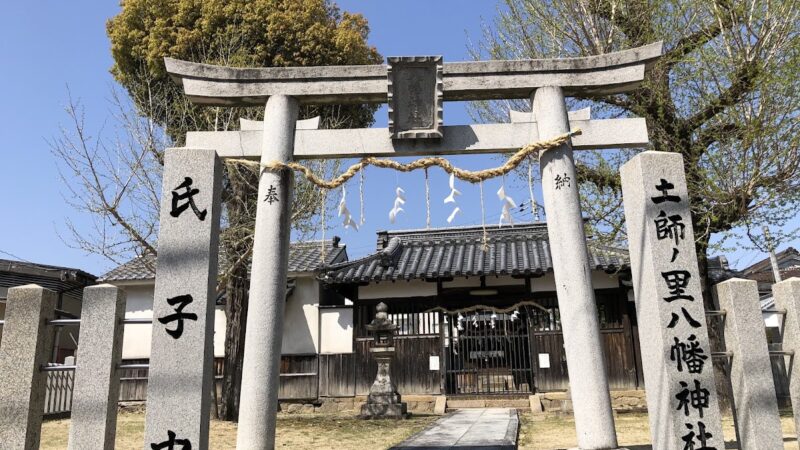
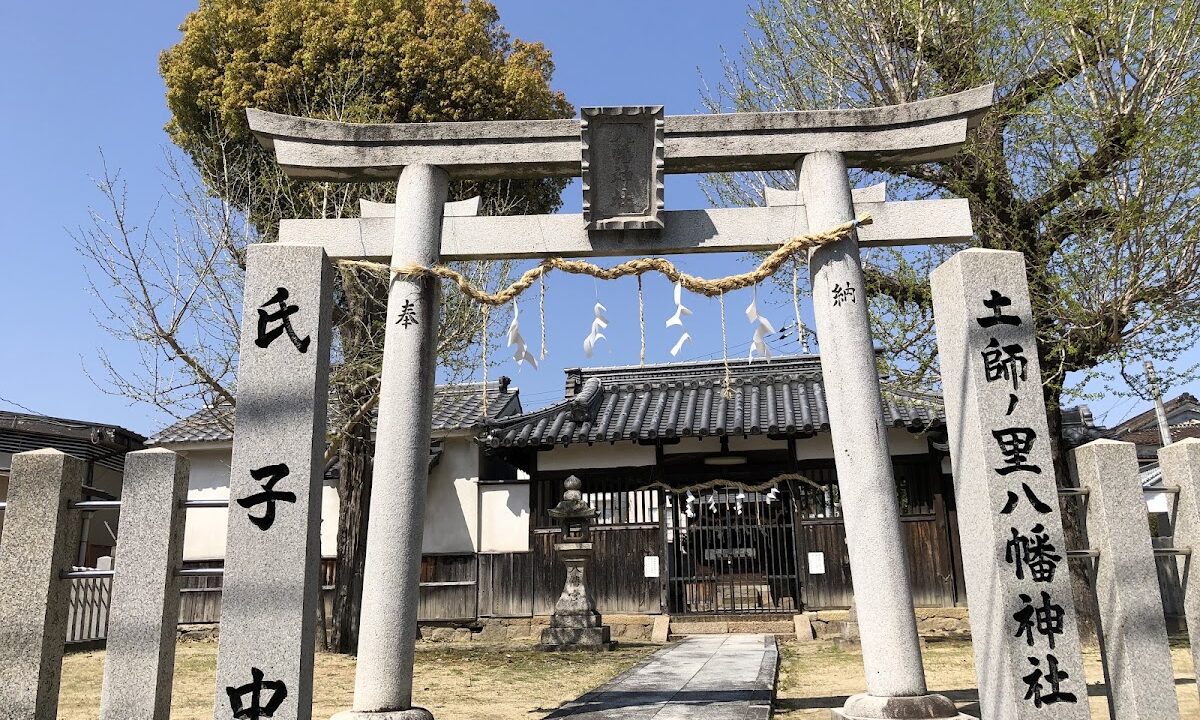
Hajiri Hachiman Shrine is a small shrine quietly nestled in a residential area. It lacks elaborate decorations and a large shrine building, boasting a very simple structure. However, this simplicity reflects its roots as a local guardian deity, conveying a sense of history and how it has been carefully preserved by the local people.
The shrine grounds feature a torii gate and a main hall, exuding a clean and refreshing atmosphere. Away from the hustle and bustle of the city, it provides a peaceful space for worship, offering tranquility to visitors.
Characteristics of the Shrine
The shrine building of Hajiri Hachiman Shrine maintains the style of traditional shrine architecture, but is small in scale and simply constructed. Its understated appearance, devoid of ornamentation, can be said to convey the form of popular faith during the Edo period.
Historical Background of Hajiri Village
Relationship with the Furuichi Kofun Group
Fujiidera City, where Hajiri Hachiman Shrine is located, is situated in the Furuichi area of the World Cultural Heritage site “Mozu-Furuichi Kofun Group.” This region is dotted with numerous large burial mounds, including the Emperor Ojin Mausoleum Kofun (Homuda Gobyoyama Kofun), and was a political and cultural center during the Kofun period.
Hajiri Village Site
The Hajiri Village site is the remains of a settlement dating from the Kofun period to the Asuka period, and the remains of a haniwa (clay figure) production workshop have been discovered. In particular, the excavation of Hajiri Village Tumulus No. 8 yielded lavish burial goods along with artifacts indicating that the deceased was a powerful member of the Haji clan. This archaeological site has yielded a large number of fragments of cylindrical and figurative haniwa (clay figures), confirming that the Haji clan was engaged in haniwa production in this area. Haniwa not only demonstrate the grandeur of the burial mounds but also played an important role in rituals, demonstrating the high level of skill of the Haji clan.
Origin Myths of Sumo and Haniwa
The *Nihon Shoki* (Chronicles of Japan) contains a description of a sumo match between Nomi no Sukune and Taima no Kehaya, which is known as the origin myth of sumo. The same book also records a legend that Nomi no Sukune invented haniwa, making Haji no Sato a historically important area related to the origins of both sumo and haniwa.
Access and Parking Information
Access by Train
The nearest station to Haji no Sato Hachiman Shrine is Haji no Sato Station on the Kintetsu Minami-Osaka Line.
- Approximately 8 minutes on foot from Kintetsu Minami-Osaka Line “Hajinosato Station”
- Exit the station and head northwest towards Domyoji.
- As it is located in a residential area, we recommend using a map app.
Access by Car
- Approximately 10 minutes from Nishimeihan Expressway “Fujiidera IC”
- Approximately 15 minutes from Hanshin Expressway Route 14 Matsubara Line “Miyake Exit”
Parking Information
Important Note: Hajinosato Hachiman Shrine does not have its own parking lot. Also, as the area around the shrine is a residential area, there is very little space for street parking.
If you are visiting by car, we recommend the following:
- Use nearby coin parking: There are coin parking lots around Hajinosato Station and Domyoji Tenmangu Shrine.
- Use public transportation: It is within walking distance from the station, so access by train is the most convenient.
- Visit in conjunction with surrounding facilities: We recommend a plan that involves walking around, starting from facilities with parking, such as Domyoji Tenmangu Shrine.
Hajinosato Hachiman Shrine Data
| Item | Details |
|——|——|
| Official Name | Hajinosato Hachiman Shrine |
| Location | 1-8-4 Domyoji, Fujiidera City, Osaka Prefecture |
| Former Province | Kawachi Province, Shiki District |
| Deity | Hachiman Okami (estimated) |
| Founded | Early Edo period |
| Original Shrine | Konda Hachimangu Shrine |
| Nearest Station | Kintetsu Minami-Osaka Line “Hajinosato Station” approx. 8-minute walk |
| Parking | None |
| Shrine Office | None (unmanned) |
| Goshuin (Shrine Seal) | None |
Places to Visit Alongside the Shrine
When visiting Hajinosato Hachiman Shrine, exploring the surrounding historical sites will allow you to experience the history of Hajinosato more deeply.
Domyoji Tenmangu Shrine
Domyoji Tenmangu Shrine, located approximately 5 minutes on foot, is a historic shrine dedicated to Sugawara no Michizane. It is also known as a famous spot for plum blossoms, with beautiful plums adorning the grounds from February to March each year. It houses numerous national treasures, including the “Relics of Sugawara no Michizane,” and important cultural properties, making it a must-see spot for history buffs.
Konda Hachimangu Shrine
Konda Hachimangu Shrine, the origin of Hajinosato Hachiman Shrine, is a prestigious shrine located south of Emperor Ojin’s mausoleum. It’s about a 20-minute walk from Hajinosato Station, or about a 15-minute walk from Kintetsu Minami-Osaka Line’s Furuichi Station. Revered as the Ichinomiya (first-ranked shrine) of Kawachi Province, it boasts impressive shrine buildings and spacious grounds.
Furuichi Kofun Group
Visiting the Furuichi Kofun Group, a World Cultural Heritage site, is highly recommended. In particular, the Emperor Ojin Mausoleum Kofun (Homuda Gobyoyama Kofun) is the second largest keyhole-shaped burial mound in Japan, and its grandeur is truly awe-inspiring.
Kofu Hachiman Shrine
Kofu Hachiman Shrine, founded around the same time as Hajinosato Hachiman Shrine, is also within walking distance (about 15 minutes). Although small, it’s a deeply rooted local shrine, and visiting both allows for a comparison of the Edo period village shrines.
Sawada Hachiman Shrine
This is an unusual shrine where the Kintetsu Minami-Osaka Line tracks cross the shrine grounds. There’s a level crossing between the torii gate and the shrine building, allowing visitors to watch trains pass by. It is located about a 10-minute walk from Hajinosato Station.
Fujidera City Lifelong Learning Center (Aisel Shura Hall)
This facility features exhibits and materials related to the Hajinosato Ruins and the Furuichi Kofun Group. It is recommended for those who want to learn more about the Haji clan and Haniwa (clay figures).
Points to Note and Manners When Visiting
Understand that it is an unmanned shrine
Hajinosato Hachiman Shrine is an unmanned shrine without a resident priest. There is no shrine office, and Goshuin (shrine stamps) are not issued. Visiting the shrine is free, but please note the following:
- Worship quietly: As it is located in a residential area, consideration for nearby residents is necessary.
- Keep it clean: Please take all your trash with you.
- Photography etiquette: Photography is permitted on the shrine grounds, but please be considerate and avoid including surrounding houses in your photos.
Basic Worship Etiquette
- Bow before passing through the torii gate.
- Purify your hands and mouth if there is a water basin. (There may not be a water basin at Hajiri Hachiman Shrine.)
- Bow twice, clap twice, and bow once in front of the main hall.
- Bow once when leaving the shrine grounds, turning back at the torii gate.
Suitable Time to Visit
As it is located in a residential area, avoid visiting early in the morning or after sunset. Visiting during daylight hours, between 9 AM and 5 PM, is recommended.
A Journey Tracing the History of the Haji Clan
How about a historical walk tracing the footsteps of the Haji clan, starting from Hajiri Hachiman Shrine?
Model Course for Visiting Places Associated with the Haji Clan
Estimated Time: Approximately 3 Hours
- Kintetsu Hajiri Station (Start)
- Hajiri Hachiman Shrine (10 mins)
- Domyoji Tenmangu Shrine (30 mins)
- Domyoji Temple (20 mins)
- Homuda Hachimangu Shrine (40 mins)
- Outer Perimeter of Emperor Ojin’s Mausoleum (Homuda Gobyoyama Kofun) (30 mins)
- Kintetsu Furuichi Station (Goal)
This course allows you to experience the flow of history, from the center of Hajiri village, where the Haji clan was based, to the mausoleum of Emperor Ojin, whom they served.
Learning about Haniwa (clay figures)
In Fujiidera City, replicas of excavated Haniwa and explanatory panels are installed throughout the area. A stroll through the area while learning about the techniques and artistry of the Haniwa produced by the Haji clan will lead to a deeper understanding.
Summary
Although small in scale, Hajiri Hachiman Shrine is a valuable shrine that conveys the history of the ancient Haji clan and the village shrine faith of the Edo period. While not flashy, its simple appearance represents its true essence as a local guardian deity.
The surrounding area is dotted with historically important spots such as the Furuichi Kofun Group (a World Heritage Site) and Domyoji Tenmangu Shrine, making it an excellent location to experience the history of Haji no Sato. Why not quietly pay your respects while tracing the footsteps of the Haji clan, who possessed the techniques of Haniwa production and supported the culture of the Kofun period?
While access by public transport is recommended due to the lack of parking, its convenient location within walking distance of Hajinosato Station makes it easily accessible. When visiting Fujiidera City in Osaka Prefecture, be sure to stop by Hajinosato Hachiman Shrine and reflect on the history of the Haji clan and their Haniwa (clay figures).
Hajinosato Hachiman Shrine, where you can quietly feel the weight of history, is the perfect place to escape the hustle and bustle, find peace of mind, and immerse yourself in historical romance. Though a small shrine, it holds the memories of Hajinosato spanning over a thousand years.