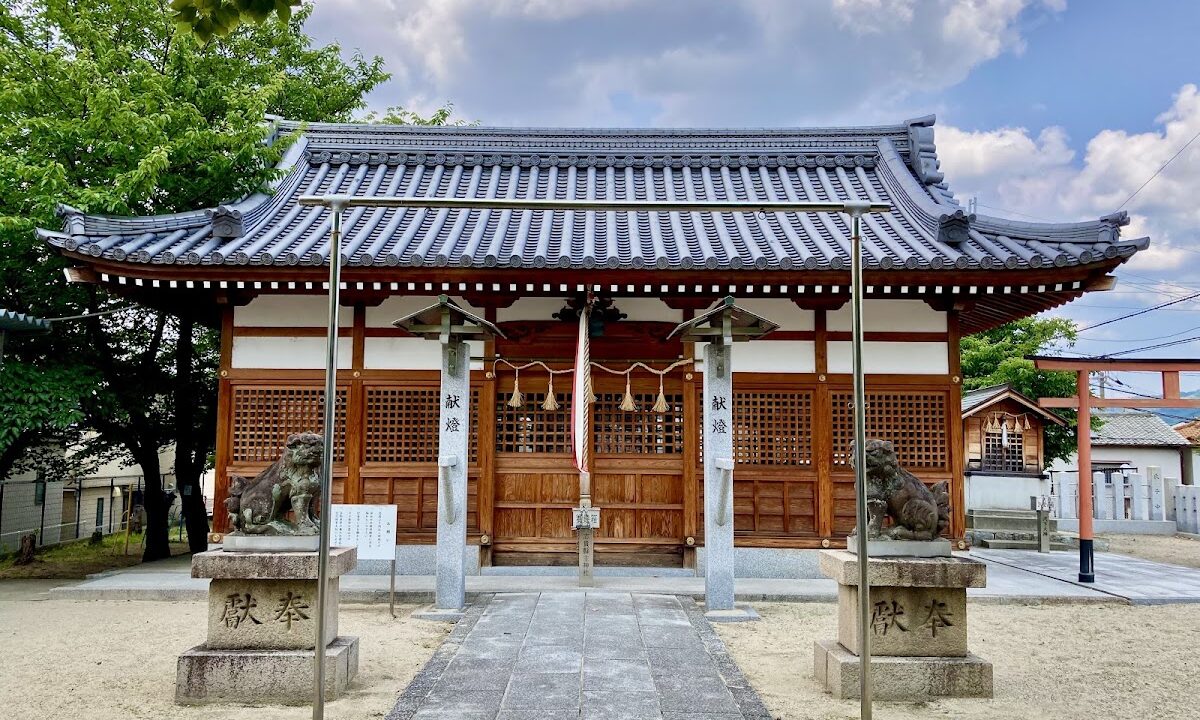
Shiki Agatanushi Shrine (Fujiidera City, Osaka Prefecture) | Complete Guide to the History, Goshuin (Shrine Seal), and Access of the Kawachi Province’s Grand Shrine
Shiki Agatanushi Shrine, located in Sōsha, Fujiidera City, Osaka Prefecture, is a prestigious ancient shrine listed as a major shrine in the Engishiki Jinmyōchō (a list of shrines compiled in the Heian period). Although currently a small shrine, it once flourished as the grand shrine of Kawachi Province and is known as a place of prayer for Kusunoki Masashige. This article provides a thorough explanation of Shiki Agatanushi Shrine, including its detailed history, enshrined deities, highlights of the grounds, goshuin information, and access methods.
Basic Information on Shiki Agatanushi Shrine
Shiki Agatanushi Shrine is a Shikinaisha (shrine listed in the Engishiki) located at 1-6-23 Sōsha, Fujiidera City, Osaka Prefecture. It is approximately a 10-minute walk from Kintetsu Minami-Osaka Line’s “Hajinosato Station” or approximately a 15-minute walk from “Fujiidera Station.” Although it is a small shrine nestled in a residential area, its history dates back to before the Heian period, making it a venerable and ancient shrine.
Shrine Rank and Position
- Engishiki-listed Shrine: Listed in the Engishiki Jinmyocho (Register of Shrines in the Engi Era) as “Shiki Agatanushi Shrine, Shiki District, Kawachi Province, Grand Shrine”
- Kawachi Province Grand Shrine: Serves as a grand shrine where various deities of Kawachi Province are enshrined together
- Former Shrine Rank: Village Shrine (according to the shrine ranking system of the Meiji era)
- Alternative Name: Also called Sosha
The fact that it is listed as a “Grand Shrine” in the Engishiki Jinmyocho indicates that this shrine was treated as a very important shrine during the Heian period.
About the Deity
Main Deity: Kanyaimimi-no-Mikoto
The main deity of Shiki Agatanushi Shrine is Kanyaiimimi-no-Mikoto. Kamiyaimimi-no-Mikoto is a prince of Emperor Jimmu who appears in the Kojiki and Nihon Shoki, and is considered the ancestral deity of the O-uji clan.
The Shinsen Shōjiroku (New Compilation of Family Names), in the section on Kawachi Province, states, “The Shiki no Agatanushi O-no-Ason are descendants of Kamiyaimimi-no-Mikoto,” clearly indicating that the Shiki no Agatanushi clan are descendants of Kamiyaimimi-no-Mikoto. The Shiki no Agatanushi clan was a local powerful family that managed the Shiki no Agatanushi, a territory directly controlled by the imperial court in ancient times, and it is believed that the origin of this shrine lies in the worship of their ancestral deity.
Enshrined Deities
In addition to the main deity, the following deities are enshrined:
- Ise-no-Okami (Amaterasu-Omikami)
- Kasuga-no-Okami (The Four Deities of Kasuga)
- Sumiyoshi-no-Sanbashira-Kami (Sokotsutsuo-no-Mikoto, Nakatsutsuo-no-Mikoto, Omotsutsuo-no-Mikoto)
- Empress Jingu
These enshrined deities reflect the shrine’s character as the principal shrine of Kawachi Province, and are thought to represent the enshrinement of major deities within Kawachi Province. By enshrining deities representative of the Kinai region, such as Ise-no-Okami, Kasuga-no-Okami, and Sumiyoshi-no-Okami, the shrine fulfilled its function as a principal shrine.
History of Shiki-no-Agatanushi Shrine
Founding and Ancient Times
The founding date of Shiki-no-Agatanushi Shrine is unknown, but since it is listed in the Engishiki Jinmyocho (compiled in 927), it is thought to have been founded at the latest by the early Heian period. In reality, it is considered highly likely to date back even earlier, to the Nara period or even earlier.
This area was known as “Shiki-no-agata” in ancient times, and the *Nihon Shoki* (Chronicles of Japan) mentions “Shiki-no-agata” during the reign of Emperor Yūryaku (late 5th century). It is presumed that the Shiki-no-agata-nushi clan, who managed this Shiki-no-agata, enshrined their ancestral deity, Kamiyaimimi-no-mikoto, as their tutelary god, which is the origin of this shrine.
Role as the Chief Shrine of Kawachi Province
Shiki-no-agata-nushi Shrine played an important role as the chief shrine of Kawachi Province. A chief shrine, under the Ritsuryo system, was established to enshrine the deities of various shrines in one place for the provincial governor to perform rituals, rather than having the governor visit each shrine individually.
As the chief shrine of Kawachi Province, it functioned as a place where official rituals were performed by the provincial governor, and where prayers were offered for peace and prosperity throughout the province and for abundant harvests. This is considered one of the reasons why it was listed as a major shrine in the Engishiki Jinmyōchō (Register of Shrines in the Engi Era).
Prosperity in the Middle Ages: Relationship with Kusunoki Masashige
During the Middle Ages, the shrine flourished when Kusunoki Masashige, a military commander of the Nanboku-cho period, made it his place of prayer. Kusunoki Masashige was a military commander based in Kawachi Province, who served Emperor Go-Daigo and contributed to the overthrow of the Kamakura Shogunate.
Due to Masashige’s devout faith in the shrine, it greatly prospered under the influence of the Kusunoki clan. However, with the decline of the Kusunoki clan, the shrine also followed a path of decline. In particular, the shrine buildings were destroyed by fire during the Sengoku period, and its former prosperity was lost.
From the Early Modern to the Modern Period
During the Edo period, it continued to attract worshippers as a local tutelary shrine, albeit on a small scale. Under the Meiji era’s shrine ranking system, it was ranked as a village shrine, but it never fully regained its former status as a main shrine.
Even after the Meiji era, it continued to attract the faith of local residents and has been carefully preserved to this day. The current shrine buildings were rebuilt in the modern era, but the grounds retain the dignified atmosphere of an ancient shrine.
Highlights of the Shrine Grounds
Shrine Buildings and Grounds Layout
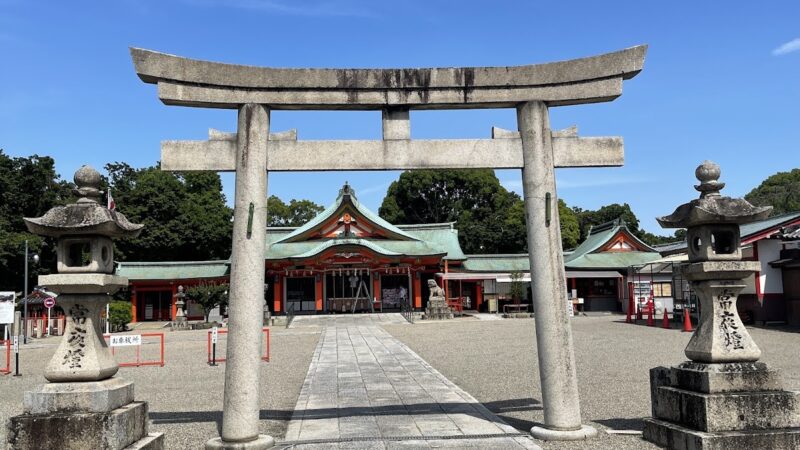
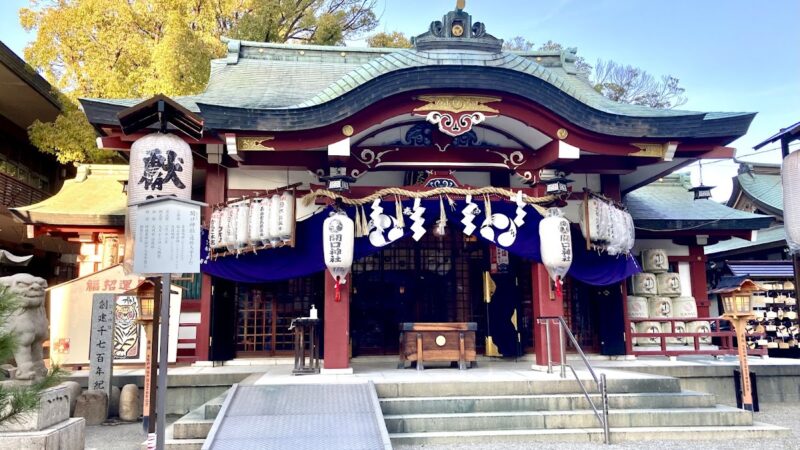
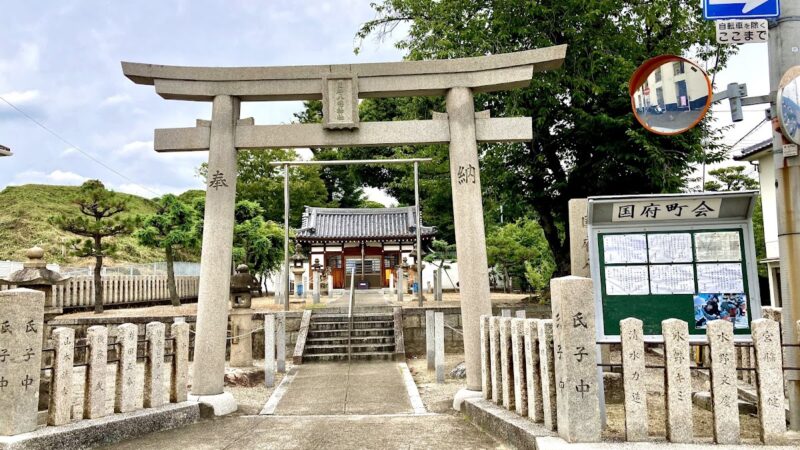
The grounds of Shiki Agatanushi Shrine are not particularly large, but the neatly arranged shrine buildings are impressive. Passing through the torii gate, the worship hall is directly ahead, with the main sanctuary behind it.
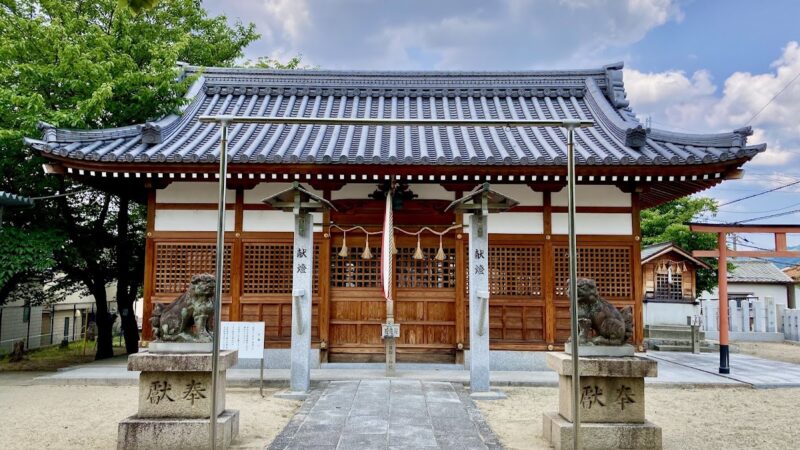
The worship hall is a simple wooden structure, but it is carefully maintained, reflecting the deep faith of the local residents. Komainu (guardian lion-dogs) are placed in front of the worship hall, welcoming visitors.
The main sanctuary is located behind the worship hall and appears to be in the Shinmei-zukuri or Kasuga-zukuri style. Despite its small size, it exudes a sense of formality.
Subsidiary Shrines and Stone Monuments
In addition to the main shrine buildings, several subsidiary shrines and stone monuments can be seen on the grounds. These were donated from the Edo period to the modern era and are valuable historical materials that tell the story of the shrine’s history.
The atmosphere within the shrine grounds is tranquil, maintaining a sacred air despite being located in a residential area. Ancient trees can be seen, creating a landscape that evokes a long history.
Surrounding Historical Environment
Numerous historical relics from ancient to medieval times remain around Shiki-Agatanushi Shrine. Several famous shrines and temples, such as Domyoji Tenmangu Shrine, Konda Hachimangu Shrine, and Kuzui-ji Temple, are scattered nearby, indicating that the area was once the center of the ancient Kawachi Province.
In particular, Fujiidera City is rich in Kofun period ruins and is the center of the Furuichi Kofun Group, where massive burial mounds, including the Emperor Ojin Mausoleum (Konda Gobyoyama Kofun), are concentrated. Shiki-Agatanushi Shrine is situated within this historical context.
Goshuin (Shrine Seal) Information
Shiki-Agatanushi Shrine offers Goshuin, but since there is no resident priest, prior confirmation is necessary. Usually, the priest is also responsible for Goshuin at nearby shrines (such as Domyoji Tenmangu Shrine).
Those wishing to receive a Goshuin (temple/shrine stamp) are advised to contact the Osaka Prefectural Shrine Association or Domyoji Tenmangu Shrine in advance. The Goshuin typically bears the calligraphy of either “Shiki Agatanushi Shrine” or “Kawachi Province Grand Shrine.”
Access and Visiting Information
Access by Train
Nearest Station:
- Approximately 10-minute walk from Kintetsu Minami-Osaka Line “Hajinosato Station”
- Approximately 15-minute walk from Kintetsu Minami-Osaka Line “Fujiidera Station”
The route from Hajinosato Station is the shortest. Exit the station and head west, passing through a residential area to reach the shrine. Since there are few signs along the way, using a map app is recommended.
Access by Car
Location: 1-6-23 Sōsha, Fujiidera City, Osaka Prefecture 583-0005
- Approximately 10 minutes from the Fujiidera IC on the Nishi-Meihan Expressway
- Approximately 15 minutes from the Miyake Exit on the Hanshin Expressway Route 14 Matsubara Line
There are a few parking spaces on the shrine grounds, but these are reserved for worshippers and are limited in number, so the use of public transportation is recommended.
Visiting Hours
While the shrine grounds are generally open for worship, the shrine office has limited opening hours. If you wish to obtain a Goshuin (shrine stamp) or amulet, it is recommended to check in advance.
Cultural Properties and Historical Materials of Shiki Agatanushi Shrine
Listing in the Engishiki Jinmyōchō (List of Shrines in the Engi Era)
The shrine is listed in the Engishiki Jinmyōchō (List of Shrines in the Engi Era) (compiled in 927) as “Shiki Agatanushi Shrine, Ō (Great),” in Shiki District, Kawachi Province. The “Ō” (Great) designation indicates a major shrine, suggesting it was considered important by the imperial court at the time. The number of shrines in Kawachi Province designated as Grand Shrines is limited, which speaks to the high status of Shiki Agatanushi Shrine. Within the same Fujidera City, Haji Shrine, the predecessor of Domyoji Tenmangu Shrine, is also known as a Shikinaisha (shrine listed in the Engishiki).
Description in the Shinsen Shōjiroku
The Shinsen Shōjiroku (compiled in 815) is a family register from the early Heian period, and in its section on Kawachi Province, it states, “Shiki Agatanushi and Ta no Ason are descendants of Kamiyaimimi no Mikoto, the same ancestor.” This confirms that the Shiki Agatanushi clan are descendants of Kamiyaimimi no Mikoto and are of the same lineage as the Ta clan.
This description is an important historical document that serves as evidence that the enshrined deity of this shrine is Kamiyaimimi no Mikoto.
Differences between Shiki Agatanushi Shrine and Shiki Nagayoshi Shrine
There are several shrines in Osaka Prefecture bearing the name “Shiki,” which can lead to confusion. In particular, Shiki Nagayoshi Shrine (Hirano-ku, Osaka City) has a similar name, but it is a different shrine.
Comparison with Shiki Nagayoshi Shrine
Shiki Nagayoshi Shrine:
- Location: 2-8-23 Nagayoshi Nagahara, Hirano-ku, Osaka City, Osaka Prefecture
- Deities: Nagae Sotsuhiko no Mikoto, Kotoshironushi no Mikoto
- Features: Known as the shrine where Sanada Yukimura dedicated his military banner
- Founded: Believed to be in the early Heian period (794)
Shiki Agatanushi Shrine:
- Location: 1-6-23 Sōsha, Fujiidera City, Osaka Prefecture
- Deity: Kamiyaimimi no Mikoto
- Features: The main shrine of Kawachi Province, a major shrine listed in the Engishiki
Both shrines derive their names from the place name “Shiki,” but they are different shrines with different deities and histories. The place name “Shiki” referred to a wide area in ancient Kawachi Province, so the name remains in the names of multiple shrines.
Nearby Tourist Attractions
When visiting Shiki-no-Agatanushi Shrine, we recommend also visiting the nearby historical sites.
Domyoji Tenmangu Shrine
Located about a 15-minute walk away, Domyoji Tenmangu Shrine is a Tenmangu shrine dedicated to Sugawara no Michizane and is known for its beautiful plum blossoms. It houses numerous valuable cultural artifacts, including the national treasure “Relics of Sugawara no Michizane.”
Kuzui-ji Temple
Kuzui-ji Temple, the fifth temple on the Saigoku Thirty-Three Kannon Pilgrimage, is famous for its national treasure, the seated statue of Senju Kannon (Thousand-Armed Kannon). Located about a 5-minute walk from Fujiidera Station, it is bustling with many visitors on the 18th of each month, the day of its public opening.
Furuichi Kofun Group
The Furuichi Kofun Group, part of the World Heritage Site “Mozu-Furuichi Kofun Group,” spreads out in the surrounding area. The Emperor Ojin Mausoleum Kofun (Homuda Gobyoyama Kofun) is the second largest keyhole-shaped burial mound in Japan, testifying to the prosperity of ancient Kawachi.
Fujidera City Lifelong Learning Center (Aisel Shura Hall)
This facility allows you to learn about the history and culture of Fujidera City. The permanent exhibition provides detailed information about the Furuichi Kofun Group and the local history.
Annual Events at Shiki Agatanushi Shrine
At Shiki Agatanushi Shrine, traditional Shinto rituals are performed throughout the year. Due to its small size, there are no large-scale festivals, but the rituals are continued by local residents.
Main Annual Events:
- New Year’s Day Festival: January 1st
- Spring Festival: Spring
- Autumn Festival: Autumn
It is recommended to check the specific dates and details in advance.
Summary: The Charm of Shiki Agatanushi Shrine
Although currently a small shrine, Shiki Agatanushi Shrine is a historic shrine that has played an important role as a major shrine listed in the Engishiki (an ancient Japanese legal code) and as the principal shrine of Kawachi Province. Dedicated to Prince Kamiyaimimi-no-Mikoto, a son of Emperor Jimmu, and founded as the tutelary shrine of the ancient Shiki-no-Agatanushi clan, this shrine offers valuable clues to understanding the origins of ancient Kawachi Province.
Flourishing as a place of prayer for Kusunoki Masashige in the Middle Ages, and then declining due to warfare during the Sengoku period, this shrine continues to attract the faith of local residents, embodying the history of Osaka Prefecture.
When visiting Fujiidera City, be sure to visit this quiet, ancient shrine along with the World Heritage burial mounds, Domyoji Tenmangu Shrine, and Kuzui-ji Temple. Though a small shrine nestled in a residential area, it embodies over a thousand years of history and a continuous tradition of faith dating back to ancient times.
With its status as a major shrine listed in the Engishiki, its role as the principal shrine of Kawachi Province, and its enshrined deity, Kamiyaimimi-no-Mikoto, who is connected to the imperial lineage, Shiki-no-Agatanushi Shrine is a special place among Osaka Prefecture’s shrines, a valuable spot where you can experience ancient Japanese history firsthand. This shrine offers a serene and reflective experience of history, and we hope many people will visit it.