Complete Guide to Kahyō Shrine | History, Goshuin (Shrine Seals), Access, and Highlights
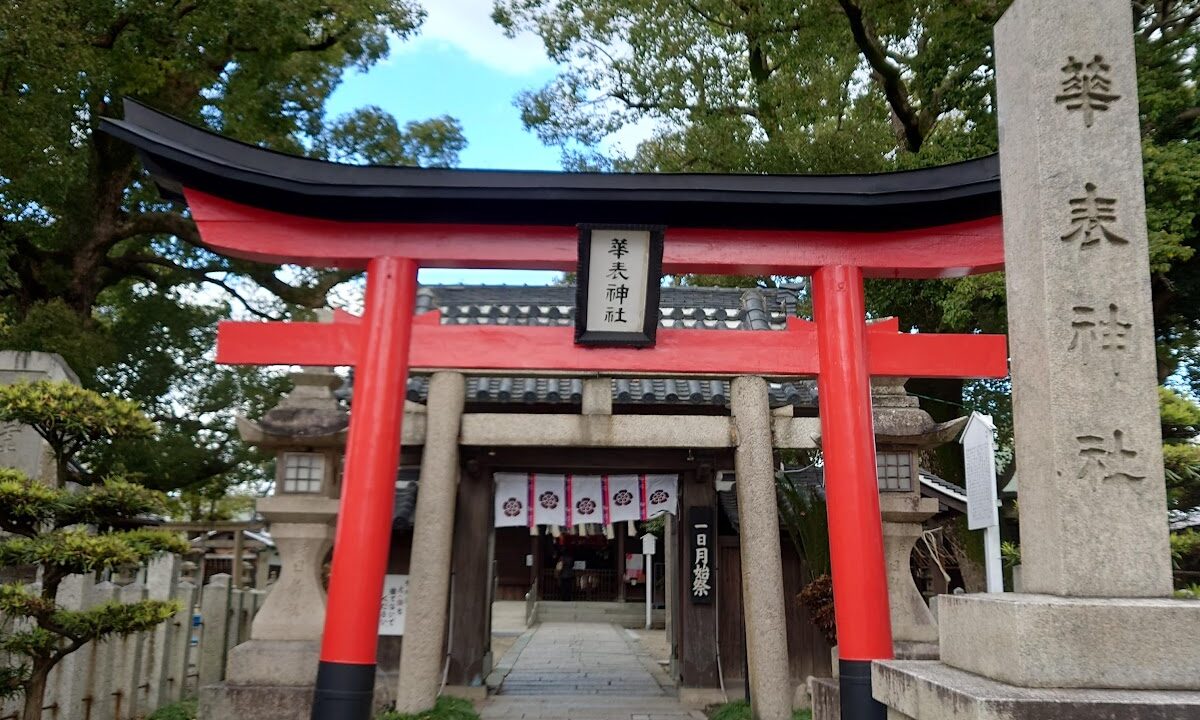
Kahyō Shrine, located in Miyamoto-cho, Kita-ku, Sakai City, Osaka Prefecture, is an ancient shrine with a striking vermilion torii gate and towering camphor trees covering its grounds. The shrine’s name, “Kahyō,” means the torii gate of a shrine, and it remains a venerable shrine deeply intertwined with the local history, attracting many visitors.
This article comprehensively explains everything you need to know before visiting Kahyō Shrine, from its history, enshrined deities, goshuin information, highlights of the grounds, and access methods.
What is Kahyō Shrine? | Meaning and Overview of the Shrine Name
Origin of the Shrine Name “Kahyō”
The name “Kahyō” of Kahyō Shrine originally referred to decorative stone pillars erected in front of palaces, temples, and tombs in China. In Japan, it has been used as an elegant term meaning the “torii” gate standing at the entrance of a shrine.
The unusual naming convention, which incorporates the name of the shrine’s torii gate, speaks to the fact that this shrine has long been considered important as an entrance to a sacred area. Indeed, the vermilion first torii gate of Hanahyo Shrine has a striking presence even from afar, creating an impressive landscape befitting its name.
Basic Information
- Location: 57 Miyamoto-cho, Kita-ku, Sakai City, Osaka Prefecture
- Postal Code: 591-8006
- Phone Number: 072-252-0923
- Former Shrine Rank: Village Shrine
- Nearest Station: Kitahanada Station, Osaka Metro Midosuji Line
History and Origins of Hanahyo Shrine
Legend of Founding
Regarding the founding of Hanahyo Shrine, a legend related to Empress Jingu’s conquest of the Three Kingdoms of Korea is passed down.
According to tradition, in December 367 AD, Empress Jingu, having returned victorious from her conquest of the Three Kingdoms of Korea, safely gave birth to Emperor Ojin (Homudawake no Mikoto) in Tsukushi (present-day Fukuoka Prefecture). The following year, in 368 AD, upon returning to Naniwa-tsu (present-day Osaka), she enshrined Susanoo-no-Mikoto at this location, marking the beginning of the shrine’s history.
This tradition suggests the importance of the Osaka Bay area in ancient times and its role as a hub for exchange with the continent, indicating that the Kahyō Shrine has a long and rich history dating back to antiquity.
As the Principal Shrine of the Seven Villages of Kitahanada-go
From the medieval to the early modern period, the Kahyō Shrine played a central role in local faith as the principal shrine (general guardian shrine) of the seven villages of Kitahanada-go. In this area, where seven monks’ quarters are said to have existed, the Kahyō Shrine flourished as a place to pray for the peace and prosperity of the villages and for abundant harvests.
In modern times, under the Meiji era’s shrine ranking system, it was designated a village shrine, establishing its position as a spiritual pillar of the local community.
Traditions Passed Down to the Present
Even today, traditional festivals are preserved at Hanahyo Shrine. Especially during the autumn grand festival, the “Futon Taiko” (a type of portable shrine) is offered, and the local people come together to enliven the festival. This Futon Taiko is a festival form unique to the southern Osaka region, a traditional event in which elaborately decorated drum floats are carried and paraded through the streets.
Deities Enshrined | Three Gods
Hanahyo Shrine enshrines three gods, each possessing different divine virtues.
Susanoo-no-Mikoto
Susanoo-no-Mikoto, enshrined as the main deity, is one of the most representative gods in Japanese mythology. Known as the younger brother of Amaterasu-Omikami, he is famous for the myth of slaying the Yamata no Orochi (eight-headed serpent).
Divine Virtues:
- Protection from misfortune and disaster
- Extermination of disease
- Matchmaking
- Protection of agriculture
Susanoo-no-Mikoto, possessing both courage and a deep affection, is worshipped as a god who grants the strength to overcome difficulties.
Hondawake-no-Mikoto
Homudawake-no-Mikoto is the divine name of Emperor Ojin, the 15th emperor, and is enshrined as Hachiman-sama in Hachiman shrines throughout Japan. He has a deep connection to his mother, Empress Jingu’s, conquest of the Three Kingdoms of Korea, and is also linked to the founding legend of Kahyo Shrine.
Divine Virtues:
- National peace and security
- Long-lasting military fortune
- Success and advancement
- Prosperity of descendants
Ukanomitama-no-Mikoto
Ukanomitama-no-Mikoto is the god who presides over grains and food, and is widely worshipped as Inari-sama.
Divine Blessings:
- Abundant Harvest
- Business Prosperity
- Industrial Development
- Family Safety
In Kitahanada-go, an agricultural area, it has held an important position as a place of worship for praying for a bountiful harvest.
Highlights of the Shrine Grounds
Impressive Vermilion Torii Gate
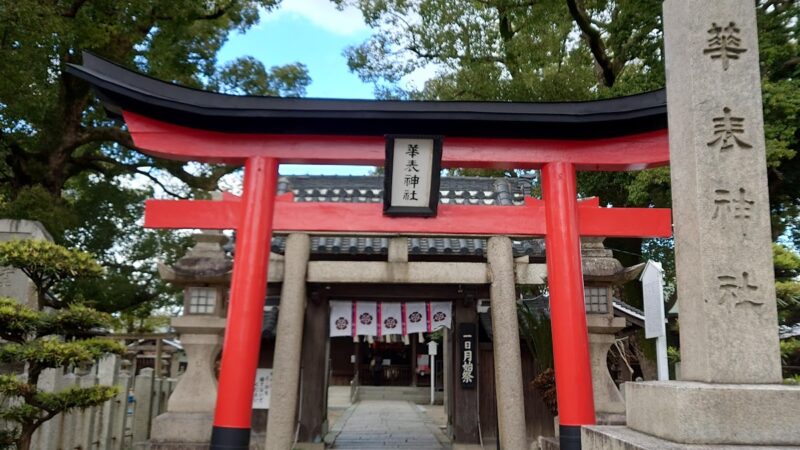
The first thing that catches the eye when visiting Hanahyo Shrine is the first torii gate painted in a vivid vermilion. The striking red color, contrasting with the surrounding greenery, serves as a landmark that announces the shrine’s presence even from afar.
Befitting the shrine’s name, “Hanahyo,” this torii gate is a symbolic presence of the shrine and a popular spot for many visitors to take commemorative photos. Vermilion has the meaning of warding off evil, and as a color symbolizing vitality and energy, it plays an important role in shrine architecture.
Camphor Trees Designated as Protected Trees by Sakai City
Several large camphor trees (kusunoki) grow on the shrine grounds, many of which were designated as protected trees and forests by Sakai City in 1980. These camphor trees, estimated to be several hundred years old, are living witnesses to the long history of Hanahyo Shrine.
Camphor trees have long been considered sacred trees, and their evergreen leaves have been thought to symbolize eternity. In summer, they provide abundant shade, offering visitors a cool and refreshing space. Walking through the shrine grounds, one can experience a rare sense of nature despite being in an urban area.
Komainu and Stone Sculptures
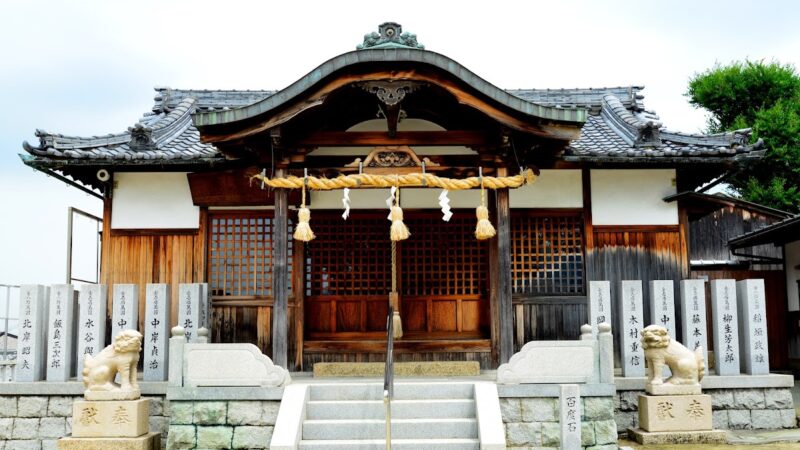
Within the shrine grounds stand guardian lion-dogs (komainu), imbued with a sense of history. Komainu are stone sculptures placed along the approach to the shrine and in front of the main hall, considered sacred beasts that protect the shrine. The komainu at Hanahyo Shrine welcome visitors with their dignified appearance, honed over time.
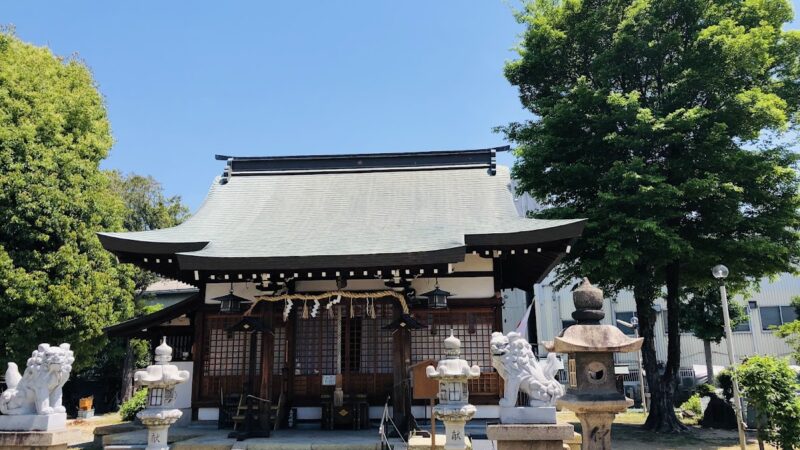
In addition, elements of traditional shrine architecture, such as lanterns and a purification fountain, are placed throughout the grounds, enhancing the atmosphere of worship.
Shrine Office and Main Hall
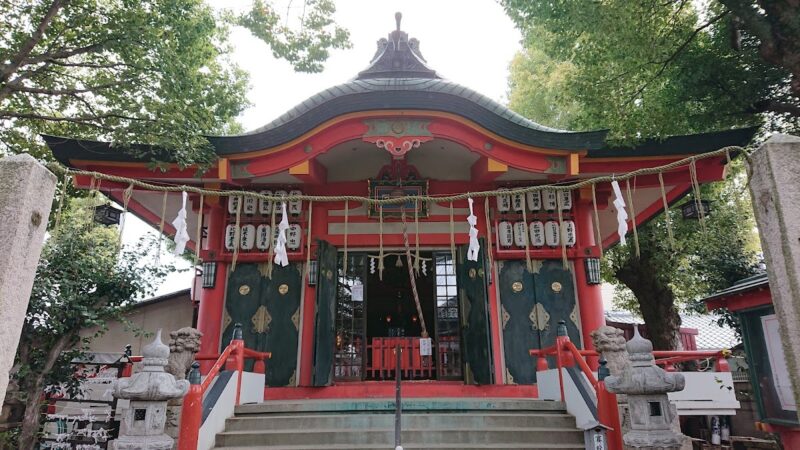
The shrine office is located within the grounds, where goshuin (shrine stamps) are issued and various prayers and blessings are accepted. The main hall is built in the traditional style of shrine architecture, providing a tranquil space for prayer.
Goshuin (Shrine Seal) Information
About the Issuance of Goshuin
Goshuin can be obtained at Hanahyo Shrine. Goshuin are popular among many visitors as proof of worship and as a tangible memento of their connection with the shrine.
Location of Issuance: Shrine Office
Offering Fee: Generally around 300-500 yen (It is recommended to confirm upon visit)
Osaka Metro “Sixty-Six Flowers Goshuin Pilgrimage”
Hanahyo Shrine is one of the shrines included in the “Sixty-Six Flowers Goshuin Pilgrimage” planned by Osaka Metro. This is a pilgrimage to shrines along the Metro lines, including the Midosuji Line, allowing visitors to collect goshuin while visiting shrines around each station.
Taking advantage of its convenient location within walking distance of Kitahanada Station, it is recommended to visit Hanahyo Shrine along with other shrines along the line.
Manners for Receiving a Goshuin (Temple/Shrine Stamp)
When receiving a Goshuin, please observe the following manners:
- Pray First: The Goshuin is proof of your visit. Please complete your prayers at the main hall before visiting the shrine office.
- Prepare Your Goshuincho (Stamp Book): Open your Goshuincho and specify the page you would like the stamp on before handing it over.
- Use Polite Language: Request a Goshuin using polite language, such as “May I have a Goshuin, please?”
- Consider the Time: Visit during the shrine office’s opening hours and avoid visiting just before closing time.
- Express Gratitude: After receiving the stamp, say “Thank you.”
Access Method
Access by Train
Approximately 4-5 minutes on foot from Kitahanada Station on the Osaka Metro Midosuji Line
This is the easiest way to access the shrine.
Directions from Kitahanada Station:
- Exit the ticket gate at Kitahanada Station.
- Exit to ground level via Exit 2.
- Proceed straight northeast from the exit.
- After walking approximately 350 meters, you will see a vermilion torii gate.
Kitahanada Station is on the Midosuji Line and is very convenient as it provides direct access from major Osaka terminals such as Umeda, Namba, and Tennoji.
Access by Car
Using the Hanshin Expressway:
- Approximately 10 minutes from the Sakai Exit on the Sakai Line
- Approximately 15 minutes from the Sanbo Exit on the No. 15 Sakai Line
Parking: There may be parking spaces for visitors on the temple grounds, but the number is limited, so we recommend using public transportation. There are also coin-operated parking lots nearby.
Landmarks in the Area
Miyamoto-cho, Kita-ku, Sakai City is a residential area, but the vermilion torii gate is very noticeable, making it easy to find once you get close. The area around Kitahanada Station has commercial facilities, so you can enjoy shopping and dining before or after your visit to the shrine.
Points and Manners for Visiting a Shrine
Etiquette for Visiting a Shrine
Let’s review the basic etiquette for visiting a shrine.
How to Pass Through a Torii Gate:
- Bow before passing through the torii gate.
- Walk along the edge of the path, as the center is considered the path of the gods.
How to Wash Your Hands:
- Take the ladle with your right hand and wash your left hand.
- Switch the ladle to your left hand and wash your right hand.
- Switch the ladle back to your right hand, receive water in your left hand, and rinse your mouth.
- Wash your left hand once more.
- Hold the ladle upright, let the water flow down the handle, and return it to its original position.
Worship at the Main Hall (Two Bows, Two Claps, One Bow):
- Gently place your offering in the offering box.
- If there is a bell, ring it.
- Bow deeply twice.
- Clasp your hands twice at chest height.
- Pray with your hands clasped together.
- Finally, bow deeply once.
Recommended Visiting Time
Since Hanahyo Shrine is located in a residential area, visiting during the quiet morning hours is recommended. There are fewer visitors in the early morning, allowing you to enjoy a peaceful time accompanied by the sounds of birdsong from the camphor trees on the shrine grounds.
If you wish to receive a Goshuin (shrine stamp), it’s best to check the shrine office’s opening hours in advance. Generally, it’s from 9 AM to around 4 PM, but this varies by shrine, so it’s recommended to confirm by phone.
Photography
Photography is generally permitted on the shrine grounds, but please note the following:
- Refrain from taking photos in sacred areas such as inside the main hall.
- Be considerate of other visitors.
- Photography may be restricted during festivals, etc.
- Avoid using flash.
Annual Events and Festivals
Grand Festival and Futon Taiko
The most important annual event at Hanahyo Shrine is the Autumn Grand Festival. During this festival, the “Futon Taiko,” a traditional local performance, is offered.
Futon Taiko is a unique festival tradition found in southern Osaka and Wakayama prefectures. It involves carrying a drum float made of multiple layers of elaborately embroidered futons (quilts) through the streets. The vibrant decorations and the spirited shouts of the bearers combine to create a festive atmosphere throughout the region.
Other Annual Events
The shrine holds various festivals throughout the year:
- New Year’s Day Festival: Praying for safety in the new year
- Setsubun Festival: Praying for protection from evil and good fortune
- Summer Purification Ceremony: Purifying oneself of the impurities accumulated over the past six months
- Year-End Purification Ceremony: Purifying oneself of the impurities accumulated over the year and preparing for the new year
Nearby Attractions and Tourist Spots
Nearby Shrines and Temples
There are many other historical temples and shrines scattered around the Kita Ward of Sakai City. After visiting Hanahyo Shrine, if you have time, it is recommended to visit the surrounding temples and shrines.
Facilities around Kitahanada Station
The area around Kitahanada Station has commercial facilities and restaurants, which you can visit before or after your visit to the shrine. Aeon Mall Sakai Kitahanada is also nearby, allowing you to enjoy shopping and dining.
Tourist Attractions in Sakai City
Sakai City also has many other attractive tourist attractions:
- Nintoku Emperor’s Mausoleum: Japan’s largest keyhole-shaped burial mound, registered as a World Heritage Site
- Sakai City Museum: A facility where you can learn about Sakai’s history and culture
- Sen no Rikyu Residence Site: A place associated with Sen no Rikyu, the great master of the tea ceremony
- Sakai Traditional Industries Hall: Introducing Sakai’s traditional crafts such as cutlery and incense
It would be a good idea to spend a day experiencing Sakai City’s history and culture in conjunction with your visit to Hanahyo Shrine.
Blessings Received at Hanahyo Shrine
Diverse Blessings from the Three Deities
Because Hanahyo Shrine enshrines three deities, you can receive a variety of blessings.
Protection from Misfortune and Disaster: Through the powerful divine authority of Susanoo-no-Mikoto, you will be protected from various calamities.
Business Prosperity and Abundant Harvest: Through the divine virtues of Uga-no-Mitama-no-Mikoto, you can pray for business prosperity and abundant harvests.
Success and Career Advancement: Through the divine virtues of Homudawake-no-Mikoto (Emperor Ojin), you can pray for success in your work and career advancement.
Family Safety: Through the combined protection of the three deities, you can pray for the health and peace of your family.
Prayers for Life’s Milestones
Kahyo Shrine also accepts prayers for various milestones in life:
- First Shrine Visit (Omiyamairi)
- Shichi-Go-San (7-5-3 Festival)
- Prayer for Protection from Misfortune
- Prayer for Success in Exams
- Prayer for Safety
If you wish to have a prayer performed, it is recommended that you contact the shrine office in advance to make a reservation.
Summary of the Charms of Hanahyo Shrine
Hanahyo Shrine is a shrine where you can worship in a quiet and peaceful atmosphere, while still being easily accessible from Osaka city.
Main Charms of Hanahyo Shrine:
- Impressive Vermilion Torii Gate: A beautiful torii gate that gave the shrine its name.
- Abundant Nature: Lush green grounds created by camphor trees, designated as protected trees by Sakai City.
- Long History: A history said to date back to the time of Empress Jingu.
- Three Deities: Offering a variety of blessings.
- Easy Access: Conveniently located a 5-minute walk from Kitahanada Station.
- Traditional Events: Local festivals such as the Futon Taiko (futon drum) procession.
- Goshuin (Shrine Seal): Participates in the Osaka Metro’s Goshuin pilgrimage.
Despite being in an urban area, Hanahyo Shrine offers a blend of history and nature, making it a place to escape the hustle and bustle of everyday life and find peace of mind. It is beloved not only by locals but also by visitors from afar.
Frequently Asked Questions (FAQ)
This section compiles frequently asked questions from those planning a visit.
Q1: How do you pronounce “Kahyo Shrine”?
A: It is pronounced “Kahyo Jinja.” “Kahyo” is a word of Chinese origin and in Japan is used as an elegant term meaning the torii gate of a shrine.
Q2: When can I get a Goshuin (shrine stamp)?
A: You can receive a Goshuin during the hours the shrine office is open. Generally, this is from 9:00 AM to around 4:00 PM, but due to festivals or the priests’ schedules, they may be absent. Therefore, if you want to be sure to receive a Goshuin, we recommend calling in advance (072-252-0923).
Q3: Is there parking available?
A: There may be parking spaces for visitors, but the number is limited. It is conveniently accessible by public transport, about a 5-minute walk from Kitahanada Station, so we recommend visiting by train. If you come by car, you can also use the nearby coin parking lots.
Q4: How long does it take to visit the shrine?
A: The shrine grounds are not very large, so a visit alone takes about 15-20 minutes. If you want to receive a Goshuin (shrine stamp) or stroll around the grounds, it’s best to allow 30 minutes to an hour.
Q5: Do you accept prayers?
A: Yes, we accept various prayers. We handle a variety of prayers, including those for a baby’s first shrine visit, Shichi-Go-San (a traditional rite of passage for children), protection from evil, and business prosperity. If you wish to have a prayer performed, we recommend contacting the shrine office by phone in advance to discuss the date, time, and content of the prayer.
Q6: When is the annual festival held?
A: The annual festival is held in the autumn, but the specific date may vary from year to year. If you would like to see the Futon Taiko (a type of portable shrine procession), please contact the shrine in advance to confirm the date.
Q7: Please give me detailed directions from Kitahanada Station to Hanahyo Shrine.
A: Exit from Exit 2 of Kitahanada Station and walk straight northeast for approximately 350 meters. As you proceed through the residential area, you will see a vermilion torii gate. It takes about 4-5 minutes on foot. The route is flat and easy to walk, and the torii gate is prominent, so you are unlikely to get lost.
Q8: Do you sell goshuincho (stamp books)?
A: Please check with the shrine office regarding the availability of goshuincho. Even if they don’t sell them, they will write the goshuin in your own goshuincho.
Q9: Is photography allowed on the shrine grounds?
A: Yes, photography is generally permitted on the shrine grounds. However, please refrain from taking photos in sacred areas such as inside the main hall, or in a way that may disturb other worshippers. Photography may also be restricted during festivals.
Q10: I’d like to know more about the history of Hanahyo Shrine.
A: Hanahyo Shrine is said to have originated in 368 AD when Empress Jingu returned from her conquest of the Three Kingdoms of Korea and enshrined Susanoo-no-Mikoto. From the medieval to the early modern period, it was the principal shrine of the seven villages of Kitahanada-go and attracted the faith of the local community. In the Meiji era, it was designated a village shrine and is still cherished today as the guardian shrine of the region. For more details, it would be best to inquire at the shrine office when you visit.
Summary | Recommendation for Visiting Hanahyo Shrine
Hanahyo Shrine is a historic shrine located in Kita-ku, Sakai City, Osaka Prefecture. It is an ancient shrine with an impressive, vibrant vermilion torii gate and giant camphor trees covering the grounds. The name “Hanahyo” means torii gate and has a history said to date back to the time of Empress Jingu.
The enshrined deities are Susanoo-no-Mikoto, Homudawake-no-Mikoto, and Uga-no-Mitama-no-Mikoto, and visitors can receive a variety of blessings, including protection from evil, business prosperity, and success. Conveniently located just a 5-minute walk from Kitahanada Station, and participating in Osaka Metro’s Goshuin (shrine stamp) pilgrimage project, it’s an easily accessible shrine.
During the autumn festival, the traditional Futon Taiko drum is dedicated, preserving the region’s history and culture. Despite being in an urban area, the shrine offers a quiet and peaceful atmosphere, perfect for a serene visit.
Taking a deep breath in the shade of the camphor trees on the shrine grounds will allow you to forget the hustle and bustle of everyday life and feel refreshed. Hanahyo Shrine is open to many, offering a precious opportunity to experience the history of Osaka and Sakai while praying for the blessings of the gods.