Complete Guide to Onouto Shrine | Legend of Emperor Jimmu’s Eastern Expedition, Goshuin (Shrine Seal), and Access Information [Izumi City, Osaka Prefecture]
Onouto Shrine, located in Butsunami-cho, Izumi City, Osaka Prefecture, is a historically significant shrine deeply connected to the legend of Emperor Jimmu’s Eastern Expedition, the myth of Japan’s founding. Listed in the Engishiki Jinmyocho (a list of shrines compiled in the Heian period) as a Shikinaisha (a shrine listed in the Engishiki), and formerly holding the rank of Gosha (a village shrine), this shrine is a precious sacred site that conveys the bond between brothers and the founding myth of Japan.
This article comprehensively explains everything you need to know before visiting Onouto Shrine, including its historical background, the meaning of its name, the enshrined deities, highlights of the grounds, goshuin information, and access methods.
What is Onouto Shrine?
Onouto Shrine is a shrine located at 1740 Butsunami-cho, Izumi City, Osaka Prefecture, and is a Shikinaisha listed in the Engishiki Jinmyocho. The shrine’s name, “Ono,” means “older brother,” and “Uto” means “younger brother.” This name derives from the fact that the shrine enshrines the brothers Hikoitsuse-no-Mikoto (older brother) and Kamuyamato-Iwarehiko-no-Sumeramikoto (younger brother), both of whom were brothers of Emperor Jimmu.
According to legend, during Emperor Jimmu’s eastern expedition, Hikoitsuse-no-Mikoto was wounded by an arrow in a battle against Nagasunehiko and later died in Kii Province. This region has long been a place of worship deeply connected to this myth.
Basic Information
- Location: 1740 Butsunami-cho, Izumi City, Osaka Prefecture
- Reading: Onouto Jinja
- Shrine Rank: Shikinaisha (Shrine listed in the Engishiki), Former Gosha (Village Shrine)
- Annual Festival: Second Sunday of October (Some sources state October 10th)
- Phone Number: 0725-92-0245
Deities Enshrined
Three deities are enshrined at Onouto Shrine.
Main Deity
Hikoitsuse no Mikoto
A prince who was the elder brother of Emperor Jimmu. He played an important role in Jimmu’s eastern expedition, but was wounded by an arrow in a battle against Nagasunehiko, a powerful clan leader of Yamato, and died in Kii Province as a result of that wound, as recorded in the *Nihon Shoki*. He is a heroic figure who supported his younger brother as an elder and laid the foundation for the founding of Japan.
Kamuyamato Iwarehiko no Sumeramikoto
The real name of Emperor Jimmu, the first emperor of Japan. He led an eastward expedition from Hyuga Province (present-day Miyazaki Prefecture) to Yamato (present-day Nara Prefecture), unified Japan, and ascended to the throne as the first emperor. At Oto no Uto Shrine, he is enshrined alongside his brother as his younger brother.
Inishikiirihiko no Mikoto
The son of Emperor Suinin, the 11th emperor. According to the *Nihon Shoki*, he is said to have had 1,000 swords made and dedicated them to Isonokami Shrine, and is also known as a god associated with weapon manufacturing.
History
The history of Oto no Uto Shrine is ancient, and although its founding date is unknown, it is listed in the *Engishiki Jinmyocho* (a list of shrines compiled in the Heian period), confirming that it existed at least before the 10th century.
Records as a Shikinaisha (Shrine Listed in the Engishiki)
The Engishiki Jinmyocho (Register of Shrines in the Engi Era) lists “Two Shrines of Oto-no-Uto, Izumi District, Izumi Province,” indicating that originally there were two shrines. One was called “Kami-no-Miya” (Upper Shrine) and was located in Butsunami-cho, where the current Oto-no-Uto Shrine is situated. The other was “Shimo-no-Miya” (Lower Shrine), located in the Shimo-no-Miya district, within the grounds of the current Izumi City General Sports Center.
It is believed that Kami-no-Miya enshrined Hikogose-no-Mikoto and Isonishikiirihiko-no-Mikoto, while Shimo-no-Miya enshrined Kamu-Yamato-Iwarehiko-no-Mikoto (Emperor Jimmu). This two-shrine configuration represents a unique form of worship, where brother deities are enshrined separately.
Records from the Gangyō Era
Some sources date the founding period to the Gangyō era (877-885). This period corresponds to the mid-Heian period, a time when the imperial court promoted the development of shrines. However, it is unclear whether this refers to the founding of the shrine or to the reconstruction or development of the shrine buildings.
Recorded in the “Honkoku Jinmyocho”
The “Honkoku Jinmyocho,” compiled in the late Heian period, also lists the two deities of Otonotō Shrine, indicating its importance as a shrine in Izumi Province from ancient to medieval times.
Changes Since the Early Modern Period
Throughout the Edo period, it was revered as the local tutelary deity, and under the Meiji era’s shrine ranking system, it was designated a Gosha (village shrine). The lower shrine is said to have been merged with the upper shrine after the Meiji era, and currently, three deities are enshrined in a single shrine in Butsunami-cho.
Connection to the Legend of Emperor Jimmu’s Eastern Expedition
According to shrine tradition, the arrow wound sustained by Hikogose-no-Mikoto in his battle with Nagasunehiko during Emperor Jimmu’s eastern expedition is believed to have affected his passage through this region. Several legends related to Emperor Jimmu’s eastern expedition remain in the Izumi region, and Otonotō Shrine is positioned as one of the central sacred sites.
It is said that Hikogose-no-Mikoto died in Kii Province (present-day Wakayama Prefecture) from injuries sustained during his march to Yamato. However, there is a legend that he passed through Izumi Province on his way, and it is believed that the worship of his brother deities originated in this area.
Shrine Grounds and Cultural Properties
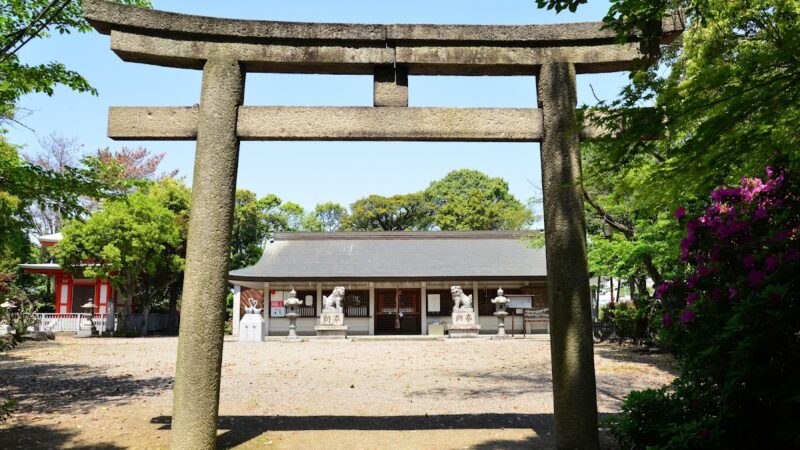
The grounds of Otoko-no-Uto Shrine are situated on a hillside rich in nature, enveloped in a tranquil atmosphere.
Shrine Buildings
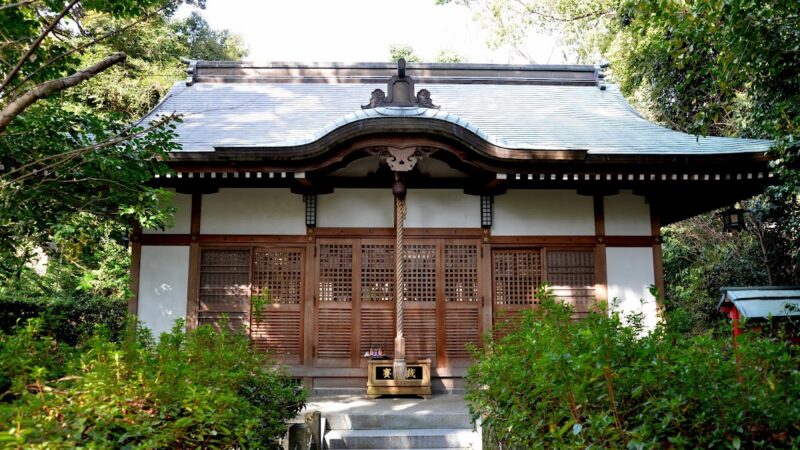
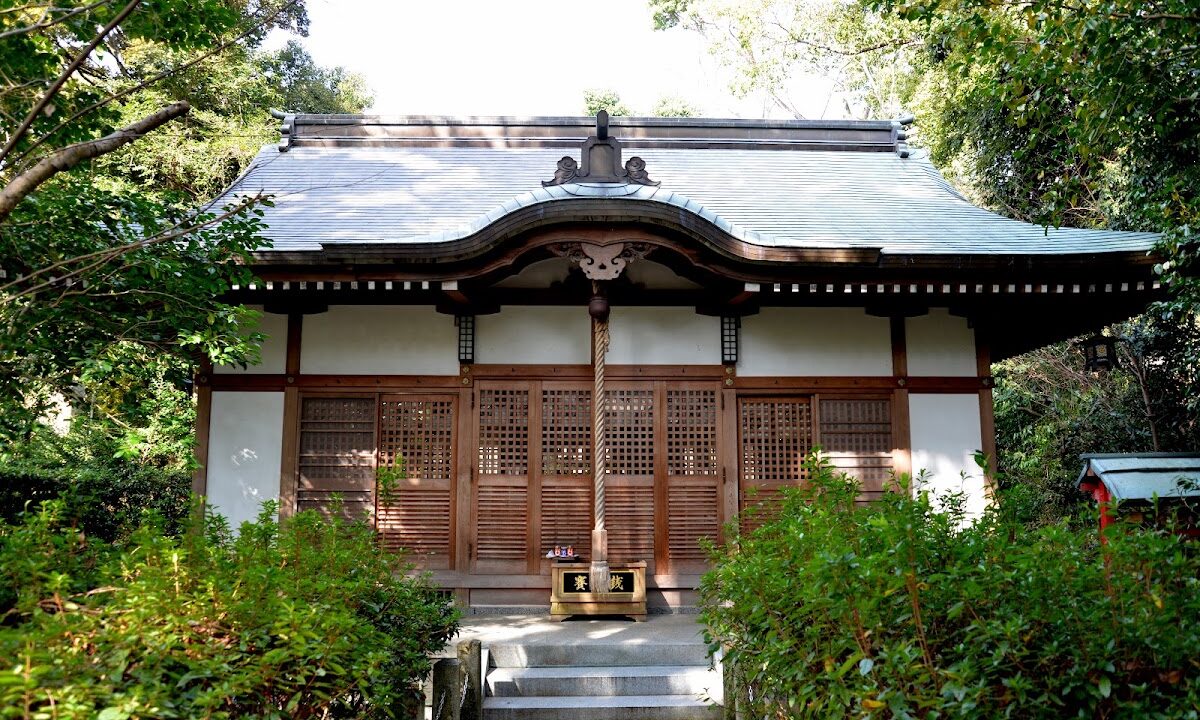
Although the current shrine buildings are relatively small, they possess a structure that reflects the status of a Shikinaisha (a shrine listed in the Engishiki, an ancient Japanese legal code). The main hall is protected by a protective structure, and the worship hall and main hall are integrated into a single structure. While detailed records of the style and construction date of the shrine buildings do not remain, they are carefully maintained by the local parishioners.
Atmosphere of the Shrine Grounds
The shrine grounds are surrounded by trees, and the autumn foliage, in particular, is beautiful, soothing the hearts of visitors. Climbing the stone steps and entering the grounds, a quiet space unfolds, far removed from the hustle and bustle of the city, allowing one to reflect on ancient myths. ### Shimenawa Pillars and Torii Gate
A shimenawa pillar stands at the entrance to the approach, marking the entrance to the sacred area. Passing through the torii gate and climbing the stone steps, the shrine building comes into view.
Stone Monuments and Memorials
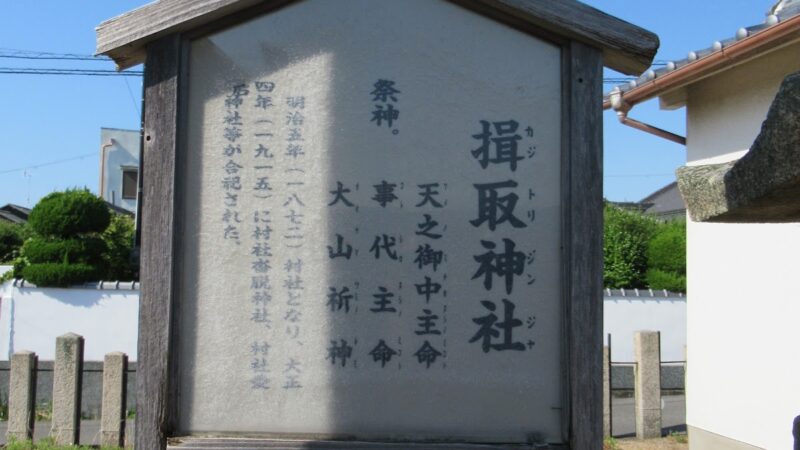
Within the shrine grounds are stone monuments indicating its status as a Shikinaisha (a shrine listed in the Engishiki, an ancient Japanese legal text), and memorials that tell of the region’s history, illustrating the deep history of this shrine.
Goshuin (Shrine Seal) and Goshuincho (Shrine Seal Book)
Goshuin (shrine seals) can be obtained at Otoko-no-Uto Shrine.
About Goshuin
The goshuin features the calligraphy and red seal of “Otoko-no-Uto Shrine.” It also includes a seal indicating its status as a Shikinaisha, making it a valuable item for those visiting shrines.
Goshuin Reception
Goshuin can be obtained at the shrine office, but since there may not always be a resident priest, it is recommended to call ahead to confirm. If a priest is absent, pre-printed goshuin may be available.
Goshuincho (Stamp Book)
Official information regarding the original Goshuincho of Otonotō Shrine is limited. Please inquire at the shrine office during your visit.
Annual Festivals and Events
Otonotō Shrine holds various festivals and events throughout the year.
Autumn Festival (Annual Festival)
The annual festival is held every year on the second Sunday of October (some sources say October 10th). During the Autumn Festival, two portable shrines parade through the town, enveloping the entire community in festive spirit. This traditional festival, preserved by the parishioners, is an important event that strengthens the bonds of the local community.
Other Annual Events
- New Year’s Day Festival: A festival to pray for happiness in the new year.
- Spring Festival: A festival to pray for a bountiful harvest.
- Summer Purification Ceremony: A Shinto ritual to purify oneself of impurities accumulated over the past six months.
Access Information
Otokono Uto Shrine can be accessed by both public transport and car, but there are points to note for each.
Access by Public Transport
By Train and Bus
- Get off at Izumi-Chuo Station on the Senboku Rapid Railway.
- Take the Nankai Bus bound for “Chichioni” or “Makioyama” (approximately 20 minutes).
- Get off at the “Butsunami” bus stop and walk for approximately 5-10 minutes.
Since the number of buses is limited, it is recommended to check the timetable in advance. Especially on holidays, there are fewer buses, so be sure to check the return bus schedule as well.
Access by Car
By Car
- Approximately 20 minutes from the Kishiwada-Izumi Interchange on the Hanwa Expressway
- Via Prefectural Road 39 from National Route 170 (Outer Ring Road)
Parking
While there is parking space at the shrine, it requires driving up a very narrow mountain road. The road is narrow, and passing oncoming vehicles is difficult in some places. Therefore, those who are not confident in their driving skills are advised to use public transportation. Visiting in large vehicles is difficult.
Notes on Access
- As the shrine is located in a mountainous area, comfortable walking shoes are recommended.
- During winter, sunset is early, so please try to visit during daylight hours.
- Cell phone reception may be unstable.
Nearby Attractions
There are numerous historical and cultural points of interest around Otoko-no-Uto Shrine.
Makioyama Shifukuji Temple (4th Temple of the Saigoku Thirty-Three Kannon Pilgrimage)
A historic Tendai sect temple located about 10 minutes by car from Otokoto Shrine. Known as the 4th temple of the Saigoku Thirty-Three Kannon Pilgrimage, its principal image, the Eleven-Faced Thousand-Armed Thousand-Eyed Kannon Bodhisattva, is designated a National Important Cultural Property.
Izumi City Izumi-no-Kuni History Museum
A facility where you can learn about the history and culture of Izumi City. Historical materials from the Izumi region from ancient times to the modern era are on display, helping to understand the historical background of Otokoto Shrine.
Nature of the Shinodayama Hills
The surrounding area is a hilly region rich in nature, with well-maintained hiking trails. You can enjoy historical walks while appreciating the changing seasons.
Benefits of Otokoto Shrine
Otokoto Shrine is believed to offer the following benefits based on the divine nature of its enshrined deity.
Good Fortune and Victory
Emperor Jimmu and Hikogose-no-Mikoto are deities who accomplished the difficult eastern expedition. They are believed to bring courage and success when taking on new challenges.
Harmonious Sibling Relationships and Family Harmony
As brothers are enshrined here, it is believed to deepen the bonds between siblings and bring harmony to the family.
National Peace and Protection of the Homeland
As deities involved in the mythology of Japan’s founding are enshrined here, it is believed to bring peace and security to the nation and the local community.
Long-lasting Military Fortune
As Isonishikiirihiko-no-Mikoto is a deity involved in weapon manufacturing, worshippers also visit to pray for success in martial arts and competitions.
Manners and Etiquette for Worship
Please observe basic manners for visiting a shrine and worship with sincerity.
Basic Etiquette for Worship
- Bow before passing through the torii gate: This is a sign of respect before entering the sacred area.
- Walk along the edge of the path: The center is considered the path of the gods.
- Purify yourself at the water basin: Purify your left hand, then your right hand, then your mouth.
- Etiquette in front of the main hall: Two bows, two claps, and one bow are the basic rituals.
Regarding Photography
Photography is generally permitted within the shrine grounds, but please refrain from taking pictures inside the shrine buildings or during religious ceremonies. Remember to be considerate of other worshippers.
Trivia about Onouto Shrine
How to Pronounce the Shrine Name
“Onouto Shrine” is pronounced “Onouto Jinja.” The pronunciation of “Ono” and “Uto” originates from older Japanese pronunciation.
The Transformation of the Two Shrines
Originally, there were two shrines at Otonotō Shrine. The lower shrine (Shimonomiya) was located where the current Izumi City General Sports Center stands. It was merged with the upper shrine (Kaminomiya) after the Meiji era, but it is still affectionately known as “Kaminomiya-san” in this region.
The Jinmu Expedition Route and Izumi
During Emperor Jinmu’s eastward expedition, he and his entourage traveled by sea and land to reach Yamato. The Izumi region lies along this route, and several legendary sites remain. Otonotō Shrine is one of the most important sacred sites among them.
Three Recommended Shrines in Osaka Prefecture
Here are some shrines in Osaka Prefecture that you might want to visit along with Otonotō Shrine.
Sumiyoshi Taisha (Sumiyoshi Ward, Osaka City)
The head shrine of approximately 2,300 Sumiyoshi shrines nationwide. It is revered as the god of safe voyages and business prosperity.
Otori Taisha Shrine (Sakai City, Nishi Ward)
A prestigious shrine as the Ichinomiya (first-ranked shrine) of Izumi Province. It enshrines Yamato Takeru and is known for its blessings of good fortune and protection from evil.
Izumi Inoue Shrine (Izumi City)
A Shikinaisha (shrine listed in the Engishiki) located in Izumi City, known as the shrine where “Izumi Shimizu,” the origin of the place name Izumi, springs forth.
Frequently Asked Questions (FAQ)
Q1: Can I always get a Goshuin (shrine stamp) at Otoko no Uto Shrine?
A1: You can get a Goshuin at the shrine office, but there may not always be a resident priest. If you want to be sure to get a Goshuin, we recommend calling in advance (0725-92-0245). If the priest is absent, a pre-written Goshuin may be available.
Q2: Is there parking available if I visit by car?
A2: There is parking space at the shrine, but you will need to drive up a very narrow mountain road. Due to the narrow roads and the difficulty of passing oncoming vehicles in some places, we recommend using public transportation if you are not confident in your driving skills or if you are visiting in a large vehicle.
Q3: When is the annual festival of Ono-no-Uto Shrine?
A3: The annual festival is held every year on the second Sunday of October (some sources say October 10th). During the autumn festival, two portable shrines parade through the town, creating a lively atmosphere throughout the area. Please contact the shrine directly for details about the festival.
Q4: What do “Ono” and “Uto” mean?
A4: “Ono” is an archaic word meaning “older brother,” and “Uto” means “younger brother.” The shrine’s name comes from the fact that it enshrines the brothers Hikogose-no-Mikoto (older brother) and Kamu-Yamato-Iwarehiko-no-Mikoto (Emperor Jimmu). It symbolizes the bond between brothers.
Q5: Is it easily accessible by public transport?
A5: It’s about a 20-minute bus ride from Izumi-Chuo Station on the Senboku Rapid Railway, followed by a 5-10 minute walk from the Butsunami bus stop. However, bus service is limited, so it’s recommended to check the timetable in advance. Especially on holidays, there are fewer buses, so be sure to check the return bus schedule as well.
Q6: When was Otokono Uto Shrine founded?
A6: The exact founding date is unknown, but it is listed in the Engishiki Jinmyocho (a list of shrines compiled in the Heian period), confirming its existence at least before the 10th century. Some sources suggest it was founded during the Gangyo era (877-885).
Q7: Where was the Shimonomiya (lower shrine) located?
A7: The other Shimonomiya was located on the grounds of the current Izumi City General Sports Center. After the Meiji era, the deities were merged into the current Ono-no-Uto Shrine (Kaminomiya), and currently, three deities are enshrined in one shrine.
Q8: Is there any appropriate attire for visiting the shrine?
A8: There are no specific dress code requirements, but since the shrine is located in a mountainous area and has stone steps, we recommend wearing comfortable shoes. Don’t forget insect repellent in the summer and warm clothing in the winter.
Q9: What is the Jimmu Expedition?
A9: The Jimmu Expedition is an event in Japanese mythology in which Emperor Jimmu, the first emperor, is said to have led an eastward expedition from Hyuga Province (present-day Miyazaki Prefecture) to Yamato Province (present-day Nara Prefecture), unifying Japan. During this process, his older brother, Hikogose-no-Mikoto, was injured in a battle with Nagasunehiko and later died.
Q10: Are there any other tourist attractions nearby?
A10: Makioyama Shifukuji Temple, the 4th temple of the Saigoku Kannon Pilgrimage, is about a 10-minute drive away. You can also learn about local history at the Izumi City Izumi-no-Kuni History Museum. Hiking trails are also well-maintained in the lush Shinodayama Hills, allowing you to enjoy sightseeing that combines historical and nature walks.
Summary
Otokono-Uto Shrine is a historically important shrine deeply connected to the legend of Emperor Jimmu’s eastern expedition, a myth of Japan’s founding. Its unique form of worship, enshrining brother gods, its status as a Shikinaisha (a shrine listed in the Engishiki), and its lush natural grounds offer visitors a sense of ancient Japanese romance and tranquil healing.
Otokono-Uto Shrine, located relatively close to the city of Izumi City, Osaka Prefecture, possesses a special space that transports you to the age of mythology. While access requires some careful consideration, the experience is all the more rewarding. History buffs, shrine enthusiasts, and those interested in Japanese mythology should definitely consider visiting. When requesting a Goshuin (temple/shrine stamp), please remember to contact the temple in advance. When you visit, please quietly offer your prayers while reflecting on the bond between brothers and the story of Japan’s founding.