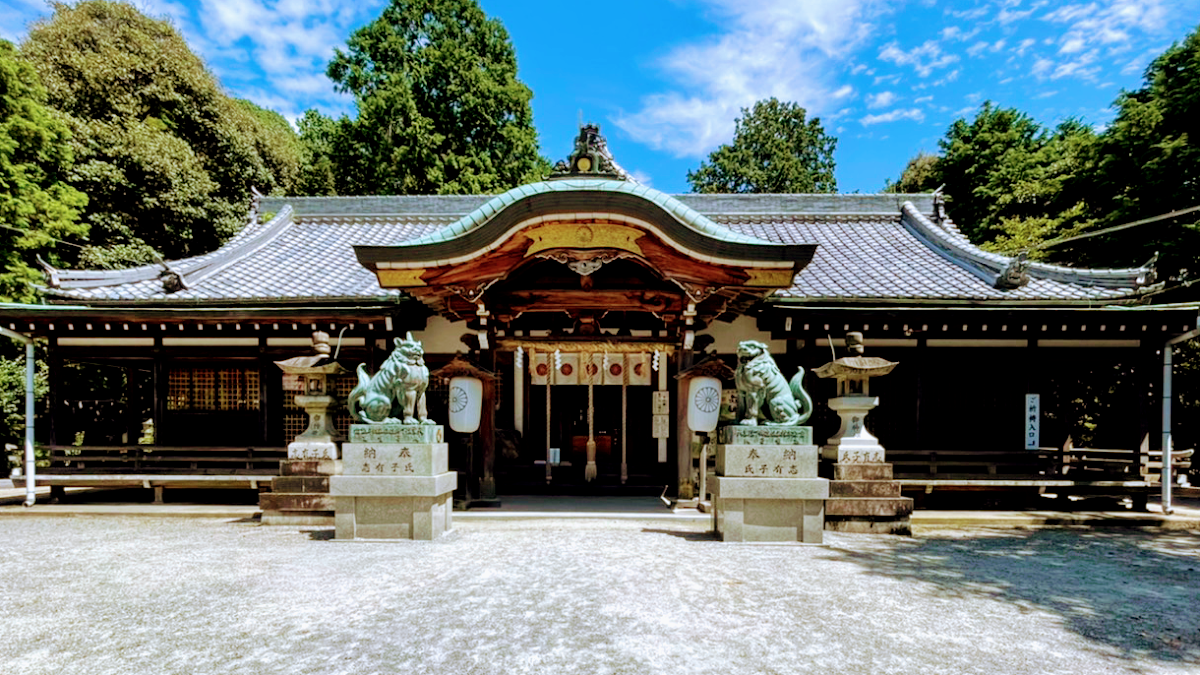
Hine Shrine (Osaka Prefecture) Complete Guide | Japan’s Only Pillow Festival and Blessings for Safe Childbirth and Fertility
Hine Shrine, located in Hineno, Izumisano City, Osaka Prefecture, is nationally known as the only shrine in Japan where the “Pillow Festival” is held. It is a historic shrine, counted as one of the five major shrines of Izumi Province, and attracts many worshippers seeking blessings for safe childbirth, fertility, and peaceful sleep. This article provides detailed information you should know before visiting Hine Shrine, including its history, enshrined deities, highlights of the grounds, festivals, cultural assets, and access methods.
Table of Contents
- Basic Information about Hine Shrine
- History of Hine Shrine
- Main Deity and Divine Virtues
- Highlights of the Shrine Grounds
- Japan’s Only Pillow Festival
- Annual Festivals and Events
- Cultural Properties and Highlights
- Blessings and Prayers
- Access and Transportation
- Points to Note When Visiting
Basic Information about Hine Shrine
Location: 631 Hineno, Izumisano City, Osaka Prefecture 598-0021
Shrine Rank: Shikinaisha (listed in the Engishiki Jinmyocho), Five Shrines of Izumi Province, Former Prefectural Shrine
Main Deity: Ugayafukiaezu-no-Mikoto, Tamayorihime-no-Mikoto
Founding: Details unknown (established since ancient times)
Shrine Buildings: Rebuilt in 1602 by Toyotomi Hideyori
Temporary Shrine (Otabisho): Nagataki, Izumisano City (along the Kumano Kaido Road)
Hine Shrine is a historical shrine listed in the Engishiki Jinmyocho (a list of shrines compiled in the Heian period) as a Shikinaisha (a shrine listed in the Engishiki) in Hine District, Izumi Province. The Five Shrines of Izumi Province refer to Otori Shrine, Izumi Anashi Shrine, Hijiri Shrine, Sekikawa Shrine, and Hine Shrine, and have long been revered in Izumi Province (present-day southern Osaka Prefecture).
History of Hine Shrine
Ancient Establishment
The exact founding date of Hine Shrine is unclear, but its existence as “Hine Shrine, Hine District, Izumi Province” in the Engishiki Jinmyocho (completed in 927) confirms its existence at least by the mid-Heian period. The place name “Hineno” is said to originate from this shrine, and it has long been a central shrine in the region, attracting worshippers.
Changes in the Middle Ages
During the Middle Ages, it flourished as an influential shrine in Izumi Province, but faced great trials during the turbulent Sengoku period. During the Tensho era (1573-1592), it suffered the unfortunate fate of having its shrine buildings destroyed by fire, influenced by Oda Nobunaga’s attack on Negoro-ji Temple and Toyotomi Hideyoshi’s invasion of Kishu Province. This fire resulted in the loss of ancient architecture and many historical records.
Reconstruction by Toyotomi Hideyori
Approximately 20 years after the fire, in Keicho 7 (1602), the shrine buildings were rebuilt by Toyotomi Hideyori. As the young lord of Osaka Castle, Hideyori devoted himself to the restoration of shrines and temples throughout the country, and Hine Shrine was one of those that benefited. The current shrine buildings were constructed at this time and are valuable structures with a history of over 400 years.
Modern Era
After the separation of Shinto and Buddhism and the anti-Buddhist movement of the Meiji era, it was ranked as a prefectural shrine under the modern shrine ranking system. Since the end of World War II, the shrine has been a religious corporation, and to this day, it continues to attract the faith of many people as the guardian deity of the region and as a god of safe childbirth and fertility.
Main Deity and Divine Virtues
Ugayafukiaezu-no-Mikoto
Ugayafukiaezu-no-Mikoto, the main deity of Hine Shrine, is a god who holds an important position in Japanese mythology. He was born in the palace of the sea god and is the father of Emperor Jimmu. His mother was Toyotama-hime-no-Mikoto, and his father was Yamasachihiko (Hikohodemi-no-Mikoto).
The unique name Ugayafukiaezu-no-Mikoto originates from an anecdote about his birth. It is said that his mother goddess was building a birthing hut for him, but he was born before she could finish thatching the roof with cormorant feathers, hence the name.
Tamayorihime-no-Mikoto
Tamayorihime-no-Mikoto, the other principal deity, was the consort of Ugayafukiaezu-no-Mikoto and the mother of Emperor Jimmu. She was the younger sister of Toyotamahime-no-Mikoto and is known as the daughter of the sea god. She raised Ugayafukiaezu-no-Mikoto in her sister’s place, and later married him, giving birth to four princes. The youngest of these was Emperor Jimmu, the first emperor of Japan.
Divine Virtues
The main deities enshrined at Hine Shrine are Ugayafukiaezu-no-Mikoto, the father of Emperor Jimmu, and Tamayorihime-no-Mikoto, the mother. Therefore, the shrine is believed to bestow the following divine virtues:
- Safe Childbirth and Fertility: Because they safely gave birth to and raised the ancestors of the Imperial family.
- Marital Harmony: Because they are enshrined as a married couple.
- Peaceful Sleep: In connection with the Pillow Festival.
- Child Rearing: Because they successfully raised Emperor Jimmu.
- Family Safety: As guardian deities of the home.
Highlights of the Shrine Grounds
Main Hall (Prefectural Designated Cultural Property)
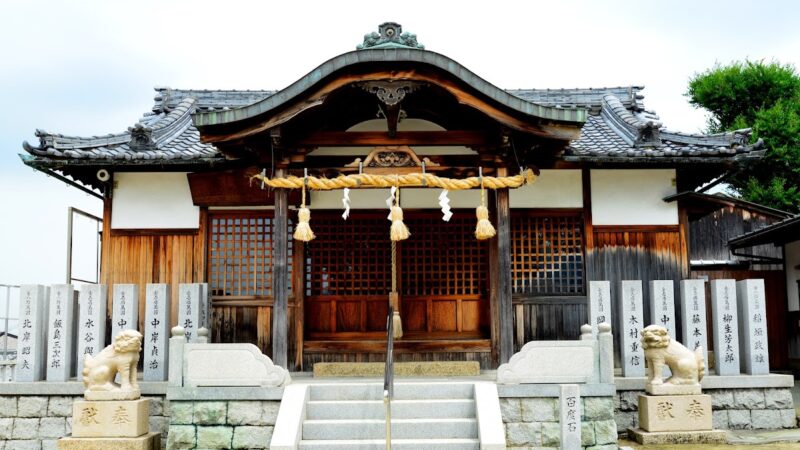
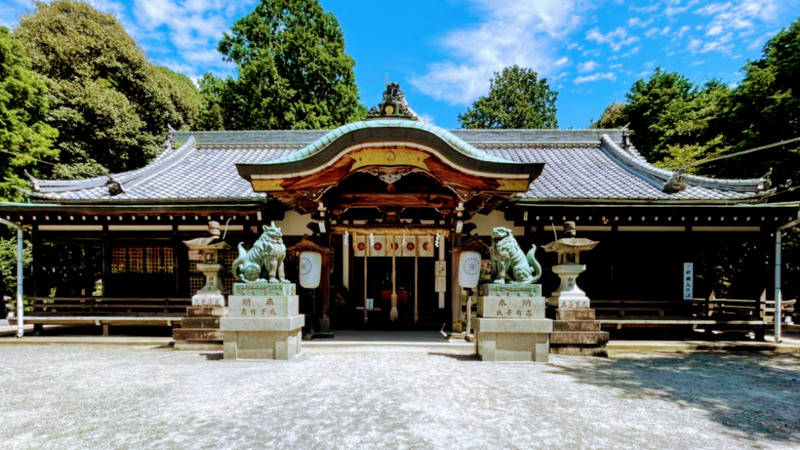
The main hall, rebuilt in 1602 by Toyotomi Hideyori, is constructed in the Kasuga-zukuri architectural style. Kasuga-zukuri is a style exemplified by the Kasuga Taisha Shrine in Nara, characterized by its gabled roof, flat entrance, and the presence of stairs and a portico (gohai) at the front. The main hall of Hine Shrine is known as one of the finest examples of Kasuga-zukuri architecture in Osaka Prefecture and is designated as a tangible cultural property of Osaka Prefecture. Despite being over 400 years old, it has been well-maintained and preserved, retaining much of its original appearance.
Worship Hall
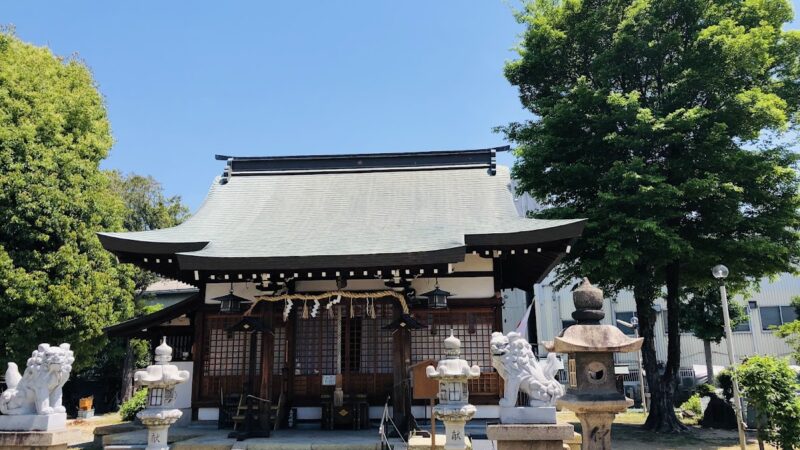
The worship hall, where worshippers offer their prayers, is believed to have been built around the same time as the main hall. Its cypress bark roof and vermilion-painted pillars are beautiful, creating a dignified atmosphere.
Shrine Precincts
In addition to the main hall, several smaller shrines are enshrined within the grounds, each housing a different deity. These shrines reflect the deep faith of the local community.
Shrine Grove
The grounds of Hine Shrine are enveloped in lush greenery, with large trees such as camphor and zelkova standing guard over the sacred area. These shrine groves represent a valuable natural environment in the increasingly urbanized city of Izumisano.
Otabisho (Temporary Shrine)
Hine Shrine has an Otabisho (temporary shrine) located in Nagataki, Izumisano City, separate from the main shrine. Situated along the Kumano Kaido (Kishu Kaido, now the Wakayama-Kaizuka Line), the portable shrine is carried to this Otabisho during the Makura Matsuri (Pillow Festival).
Japan’s Only Makura Matsuri
What is the Makura Matsuri?
The most famous festival at Hine Shrine is the “Makura Matsuri,” held annually on May 5th. This festival is unique to Hine Shrine and is the only one of its kind in Japan. It features a rare format where a large number of pillows are attached to banners and paraded to the Otabisho.
Origin of the Festival
There are several theories about the origin of the Makura Matsuri, but the most widely known is the following legend:
A couple who were unable to have children visited Hine Shrine and offered pillows in prayer for a child, and were subsequently blessed with a child. This story is said to have inspired people to offer pillows as a prayer, and this practice eventually became established as a festival.
Festival Style
At the Makura Festival, banners are erected on long bamboo poles, and dozens of pillows are tied to these banners. Parishioners carry these pillow banners and parade approximately 2 kilometers from the main shrine to the temporary shrine. The sight of the pillows swaying in the wind is unique and leaves a strong impression on onlookers.
The festival also includes a portable shrine procession, making it a grand event with participation from the entire community. In recent years, many spectators have traveled from afar to witness this unusual festival.
Significance in Modern Times
The Makura Festival is not merely a traditional event; it embodies the heartfelt wishes of modern people for safe childbirth, fertility, and peaceful sleep. In today’s society, where the birthrate is declining, it continues to attract the faith of people praying for conception and safe childbirth.
Annual Festivals and Events
January 1st: Saitansai (New Year’s Day Festival)
A festival celebrating the New Year, praying for peace and prosperity throughout the year. The shrine grounds are bustling with many first-time visitors, and the atmosphere is filled with the refreshing spirit of the New Year.
February (Setsubun Festival): Setsubun Festival
Bean-throwing ceremonies are held to ward off evil and pray for good fortune. Local children also participate, creating a lively atmosphere.
May 5th: Makura Matsuri (Spring Festival)
The largest festival at Hine Shrine. As the only festival in Japan using pillows, it attracts many worshippers and tourists.
October: Aki Matsuri (Autumn Festival)
A festival giving thanks for a bountiful harvest. Thanks are given for the autumn harvest, and prayers are offered for a good harvest next year.
December 31st: Toshikoshi Oharae (Year-End Grand Purification Ceremony) / Joyasai (New Year’s Eve Festival)
A grand purification ceremony is held to cleanse away the sins and impurities of the past year. From New Year’s Eve to New Year’s Day, many worshippers visit the shrine to welcome the new year.
Monthly Festival
Monthly festivals are held on the 1st and 15th of each month to pray for daily peace and tranquility.
Cultural Properties and Highlights
Osaka Prefecture Designated Tangible Cultural Property
The main hall of Hine Shrine is designated as an Osaka Prefecture Tangible Cultural Property due to its historical value and the elegance of its architectural style. As a Kasuga-style building from the Keicho period, it is a valuable cultural property that conveys the architectural techniques and aesthetic sensibilities of that time.
Japan Heritage Component Cultural Property
Hine Shrine is recognized as one of the cultural properties that make up the Japan Heritage story, “The Origins and Modernization of Japanese Buddhism ~Sacred Sites and Places of Prayer from Ancient to Modern Times~”. Located along the Kumano Kodo pilgrimage route, it tells the story of a history of faith that has continued since ancient times.
Connection to National Historic Sites
The Hine-sho Ruins are located around Hine Shrine and are designated as a National Historic Site. Hine-sho was a manor that existed from the Heian period to the Muromachi period and was part of the Kujo family’s territory. Hine Shrine is believed to have also served as the guardian shrine of this manor.
Benefits and Prayers
Prayers for Safe Childbirth and Fertility
The most famous benefit of Hine Shrine is prayers for safe childbirth and fertility. Because it enshrines the parents of Emperor Jimmu, it has long been revered as a deity of safe childbirth and fertility.
Couples hoping to conceive and pregnant women praying for a safe delivery visit from all over Japan. Pillows offered at the Pillow Festival are given to those who wish to receive them after the festival, and there is a belief that sleeping with one of these pillows under one will bring blessings of fertility.
Prayers for Peaceful Sleep
Known as a shrine of pillows, it is also believed to grant blessings for peaceful sleep. Those suffering from insomnia or seeking quality sleep visit the shrine.
Marital Harmony and Family Safety
Because the shrine enshrines a married couple of deities, it is believed to bring blessings for marital harmony and family safety. Many couples visit the shrine on their wedding anniversaries.
Groundbreaking Ceremony and Various Prayers
Hine Shrine accepts various prayers, including groundbreaking ceremonies, protection from evil, traffic safety, and business prosperity. Individual prayers can be arranged by contacting the shrine office in advance.
Access and Transportation
Access by Train
Using the JR Hanwa Line
- Get off at “Hineno Station” on the JR Hanwa Line.
- Take the Nankai Bus bound for “Inunaki-yama” from the station.
- Get off at the “Higashi-kami” bus stop and walk for about 1 minute.
Alternatively, it takes about 20 minutes on foot from Hineno Station.
Using the Nankai Electric Railway
Take the Nankai Bus bound for “Inunaki-yama” from “Izumisano Station” on the Nankai Main Line and get off at the “Higashi-kami” bus stop. ### Access by Car
Using the Hanshin Expressway and Hanwa Expressway
- Approximately 10 minutes from the Hanwa Expressway “Kaminogo IC”
- Approximately 20 minutes from Kansai International Airport
While there is parking space for visitors on the shrine grounds, congestion is expected during major festivals such as the Makura Festival, so using public transportation is recommended.
Nearby Tourist Attractions
- Inunaki Mountain: A sacred site of mountain worship known for Shugendo (mountain asceticism)
- Kansai International Airport: One of Japan’s gateways
- Rinku Town: A complex facility where you can enjoy shopping and dining
- Izumisano Fishing Port: Where you can enjoy fresh seafood
We also recommend visiting Izumisano City’s tourist attractions in conjunction with your visit to Hine Shrine.
Points to Note When Visiting
Visiting Hours
Entry to the shrine grounds is generally free, but the shrine office is generally open from 9:00 AM to around 5:00 PM. If you wish to receive a Goshuin (temple/shrine stamp) or amulet, we recommend visiting during these hours.
Attire
While there are no strict dress code regulations, please be mindful that this is a sacred place and dress appropriately for your visit. For formal prayers, a suit or formal attire is recommended.
Photography
Photography is generally permitted within the shrine grounds, but there are areas where photography is restricted, such as inside the main hall. If unsure, please check with the shrine office. Also, please be considerate of other visitors.
Crowds During Festivals
The shrine is extremely crowded during the Makura Festival (May 5th) and the first three days of the New Year. If you wish to visit at a more relaxed pace, it is best to choose a weekday or a day outside of festivals.
Inquiries
For prayer reservations and detailed information, please contact the Hine Shrine office directly. The latest information can also be found on the official website.
Summary
Hine Shrine is a historic shrine located in Hineno, Izumisano City, Osaka Prefecture, and is nationally known for its unique “Pillow Festival.” It is a Shikinaisha (a shrine listed in the Engishiki Jinmyocho, an ancient Japanese legal code) and has long been revered as one of the five major shrines of Izumi Province.
After being destroyed by fire during the Tensho era, the shrine building, rebuilt in 1602 by Toyotomi Hideyori, is a valuable example of Kasuga-zukuri architecture designated as a tangible cultural property of Osaka Prefecture. The main deities enshrined are Ugayafukiaezu-no-Mikoto, the father of Emperor Jimmu, and Tamayorihime-no-Mikoto, the mother, and are believed to grant blessings for safe childbirth, fertility, peaceful sleep, and marital harmony.
The Pillow Festival, held annually on May 5th, is a unique festival where a large number of pillows are attached to banners and paraded to the temporary shrine. It originates from a story of a couple who, unable to conceive, offered pillows as a tribute. Many worshippers from all over Japan visit to witness this unusual festival. Hine Shrine is easily accessible, located about 5 minutes by bus or 20 minutes on foot from Hineno Station on the JR Hanwa Line. It’s also close to Kansai International Airport, making it a convenient stop during a trip to Izumisano City.
With its rich history, tradition, and unique festivals, Hine Shrine is one of Osaka Prefecture’s most representative shrines. It’s a must-visit for those praying for safe childbirth or fertility, as well as anyone interested in traditional Japanese culture. In its tranquil grounds, you can feel the sacred atmosphere of a shrine with over a thousand years of history.