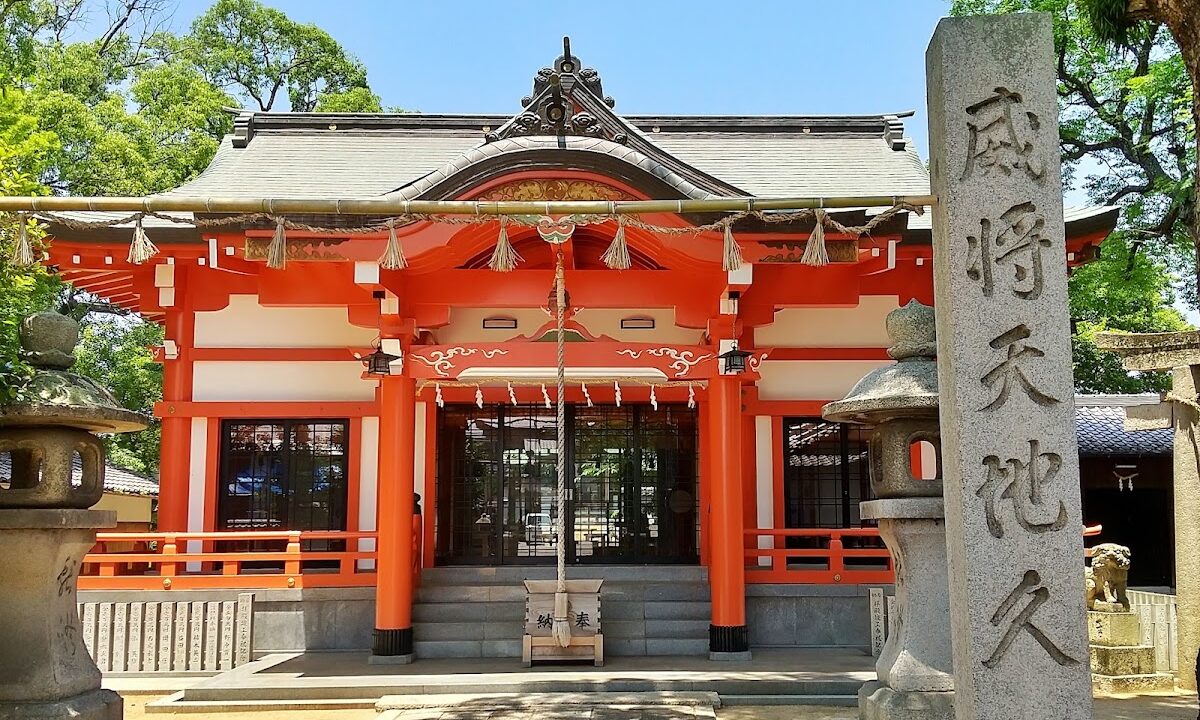
Complete Guide to Rige Shrine (Sennan City, Osaka Prefecture) | History, Goshuin (Shrine Seal), Access, and Highlights Explained in Detail
Rige Shrine, located in Okada, Sennan City, Osaka Prefecture, is a historic shrine that has been revered as the local tutelary deity since ancient times. It enshrines Susanoo-no-Mikoto and was formerly known as “Gofuku Daimyojin,” a venerable shrine also known as the guardian deity of weaving. This article provides a detailed explanation of Rige Shrine’s history, goshuin information, access methods, and highlights within the shrine grounds.
Basic Information about Rige Shrine
Location: 3-25-1 Okada, Sennan City, Osaka Prefecture
Main Deity: Susanoo-no-Mikoto
Former Shrine Rank: Village Shrine
Nearest Station: Approximately 6 minutes on foot from Okadaura Station on the Nankai Main Line
Parking: Available (Free, approximately 10 cars)
Admission Fee: Free
Other Names: Gofuku Daimyojin, Okada no Ebisu-san
Rige Shrine is a shrine beloved by local residents as the guardian deity of the Okada area of Sennan City. Its unusual pronunciation, “Rige Jinja,” is deeply connected to the history of the region.
History and Origins of Rige Shrine
Legend of Founding
The founding of Rige Shrine is ancient, said to date back to the reign of Emperor Nintoku, the 16th emperor. At that time, this area was covered in a deep forest of ancient pine and cedar trees, and it is believed that a shrine was founded in this sacred place with Kureha Daimyojin as the tutelary deity.
The name “Kureha” (呉服) has deep ties to ancient weaving techniques. It reflects the history of weaving techniques being introduced by technicians who came from the Kingdom of Wu (China), indicating that this region has long had strong ties to the textile industry.
Connection with Emperor Go-Toba
A noteworthy event in the history of Satogai Shrine occurred in October of Kennin 1 (1201). Emperor Go-Toba visited this area during his pilgrimage to Kumano. A rare record remains that he was presented with flounder raised in the pond “Karegabuchi” within the shrine grounds.
The presentation of “Okada flounder” is an important historical fact demonstrating that the Satogai Shrine at the time was not merely a small local shrine, but a prestigious shrine with ties to the imperial court. The Wangyuyuyuan (a type of abyssal basin) still remains on the shrine grounds, a valuable historical site that conveys the shrine’s history.
Developments since the Modern Era
Under the Meiji-era shrine ranking system, Satogai Shrine was ranked as a village shrine. As the local tutelary deity, it has continued to attract the faith of the people of the Okada region and has been carefully preserved to this day.
Deities and Benefits
Main Deity: Susanoo-no-Mikoto
The main deity of Satogai Shrine is Susanoo-no-Mikoto. In Japanese mythology, Susanoo-no-Mikoto is known as the younger brother of Amaterasu-Omikami and is an important deity enshrined in many shrines.
Susanoo-no-Mikoto, known for the myth of slaying the Yamata no Orochi (eight-headed serpent), is revered as a god of protection against misfortune and disaster. He also has characteristics as a god of agriculture and navigation, and is believed to offer a variety of blessings.
Main Blessings
The following blessings can be expected at Satogai Shrine:
- Protection from Misfortune and Good Fortune: Exorcism through the divine power of Susanoo-no-Mikoto
- Traffic Safety: Protection for safe travels
- Academic Success: Prayer for academic improvement and passing exams
- Business Prosperity: Particularly affectionately known as “Okada’s Ebisu-san,” he is also worshipped as a god of business
- Protection of Weaving: Following his tradition as the Gofuku Daimyojin (Great God of Weaving), he offers protection for weaving and clothing-related activities.
Highlights of the Shrine Grounds
First Torii Gate and Komainu (Guardian Dogs)
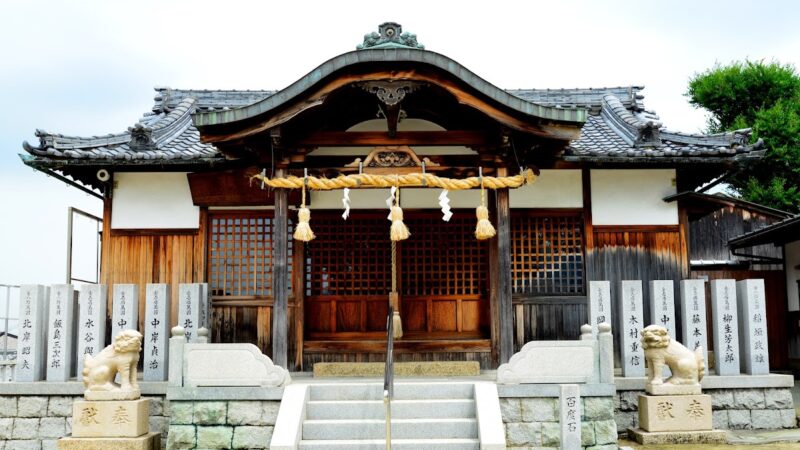
Upon entering the shrine grounds, the first thing you’ll see is the first torii gate. Magnificent guardian lion-dogs (komainu) greet visitors in front of the torii gate. These lion-dogs were recently rebuilt and are kept in beautiful condition.
Worship Hall and Main Shrine
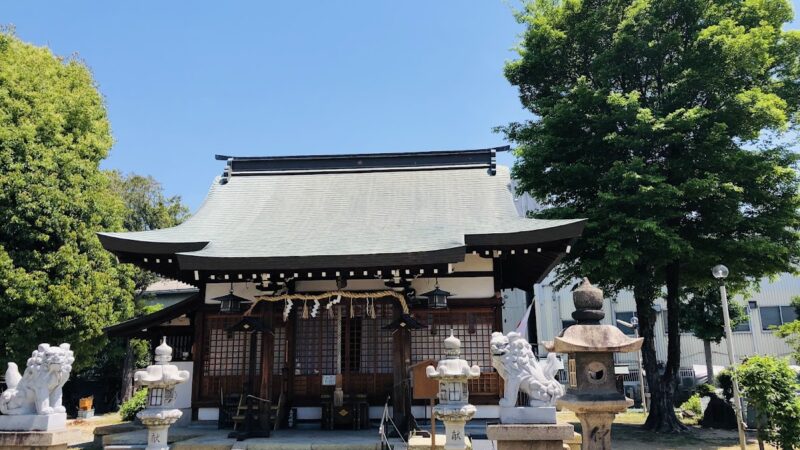
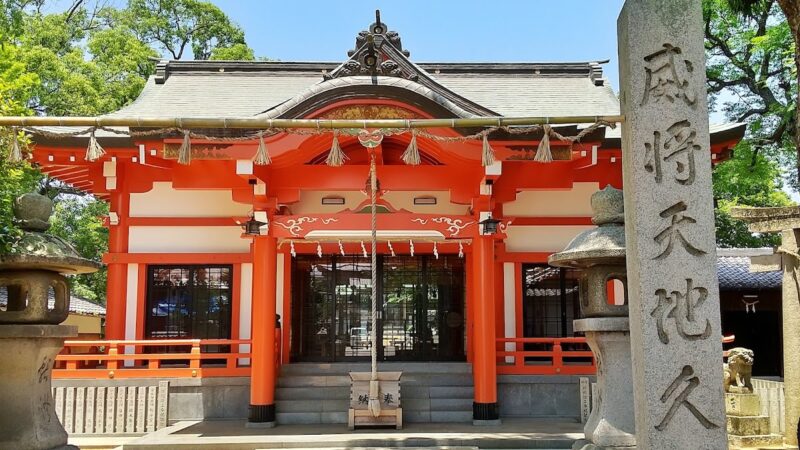
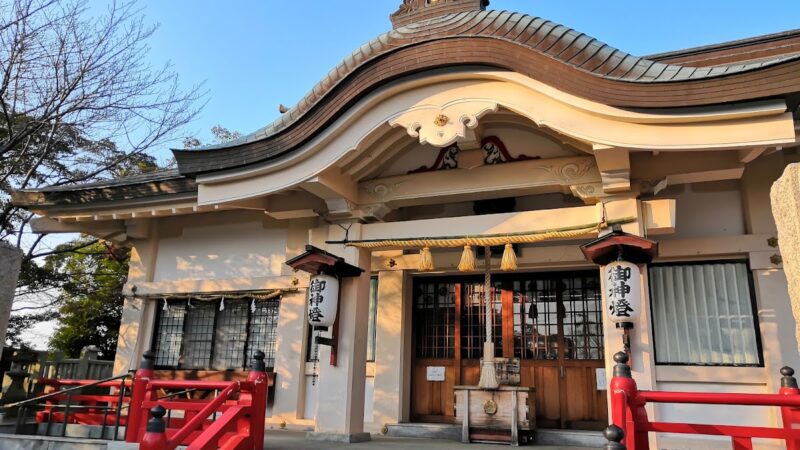
The worship hall is a place where worshippers offer prayers, and the main shrine (honden) sits behind it. The main shrine, dedicated to Susanoo-no-Mikoto, maintains the traditional style of shrine architecture and is carefully preserved by the local people.
Subsidiary Shrines
Several subsidiary shrines are enshrined within the grounds of Satogai Shrine:
Kotohira Shrine
A subsidiary shrine enshrining a divided spirit of Kotohira-gu Shrine. Offers blessings for safe voyages and business prosperity.
Inari Shrine
Enshrines Inari Okami, the deity of business prosperity and abundant harvests.
Sumiyoshi Shrine
Enshrines the three Sumiyoshi deities, known as gods of safe voyages and waka poetry.
Awashima Shrine
This shrine enshrines Awashima-no-Okami, the guardian deity of women and the god of safe childbirth and fertility.
These subsidiary shrines within the grounds tell the story of a history of responding to the diverse religious needs of the local people.
Karegabuchi Pond
The Karegabuchi pond within the shrine grounds is a historical site where it is said that the Okada flounder, presented to Emperor Go-Toba in 1201, was raised. It remains in a corner of the grounds today, a valuable historical relic that conveys the history of the shrine.
The existence of this pond is important evidence that Satogai Shrine was not merely a small local shrine, but a prestigious shrine with ties to the imperial court.
Annual Events and Festivals
Ebessan (Toka Ebisu)
Satogai Shrine, affectionately known as “Okada’s Ebisu-san,” holds its Toka Ebisu (Ebessan) festival every year from January 9th to 11th.
- January 9th: Yoimiya (Eve of the Festival)
- January 10th: Honmiya (Main Festival)
- January 11th: Nokori Fuku (Remaining Fortune)
During this period, many worshippers visit the shrine grounds to pray for business prosperity and family safety. Lucky bamboo branches and other auspicious items are distributed, making it an important annual event in the region.
Other Annual Events
Besides the Toka Ebisu festival, the following annual events are held at Satogai Shrine:
- New Year’s Day Festival (January 1st): A festival celebrating the New Year
- Spring Festival: A festival praying for a bountiful harvest
- Summer Purification Ceremony: A Shinto ritual to purify oneself of the impurities accumulated over the past six months
- Autumn Festival: A festival expressing gratitude for the harvest
- Year-End Purification Ceremony: A Shinto ritual to purify oneself of the impurities accumulated over the past year
Goshuin (Shrine Seal) Information
Goshuin are available at Satogai Shrine. Goshuin are cherished by many visitors as an important way to commemorate one’s connection with the shrine.
Features of the Goshuin
The goshuin at Satogai Shrine features the shrine’s name written in ink and stamped with the shrine’s seal. With its simple yet dignified design, it is a fitting item to keep in your goshuincho (shrine seal book).
Points to Note When Receiving a Goshuin (Shrine Stamp)
- Please receive your Goshuin after completing your prayers.
- Bringing your Goshuincho (stamp book) is recommended.
- You must visit during the shrine office’s opening hours.
- The offering fee is generally around 300 yen (subject to change).
It is recommended to check the Goshuin availability hours and details in advance.
Access Method
Access by Train
Walking from Okadaura Station on the Nankai Main Line
The nearest station to Satogai Shrine is Okadaura Station on the Nankai Main Line. The shrine is easily accessible, approximately a 6-minute walk from the station.
- Exit Okadaura Station and head west.
- Continue straight through the residential area, and you will see the grounds of Satogai Shrine.
- Pass through the first torii gate to enter the shrine grounds.
Okadaura Station is a station where local trains on the Nankai Main Line stop. The shrine is easily accessible from both Namba and Wakayama.
Access by Car
Route from Major Roads
- Approximately 10 minutes from the Sennan Interchange on the Hanwa Expressway
- From National Route 26 towards Sennan city center
The shrine has a free parking lot (approximately 10 spaces), but congestion is expected during festivals such as Toka Ebisu. In such cases, using public transportation is recommended.
Access from Surrounding Areas
- From Osaka City: Approximately 50 minutes to 1 hour via the Nankai Main Line
- From Kansai International Airport: Approximately 30 minutes via the Nankai Airport Line/Main Line
- From Wakayama City: Approximately 40 minutes via the Nankai Main Line
Nearby Tourist Attractions
When visiting Satogai Shrine, exploring the surrounding tourist attractions will allow you to experience the charm of Sennan City more deeply.
Attractions in Sennan City
Sennan Rinku Park
A seaside park located across from Kansai International Airport. A popular spot for viewing beautiful sunsets.
Sennan Long Park
A new leisure facility stretching along the coast. Offers a variety of activities, including glamping and a market.
Okadaura Fishing Port
A fishing port where fresh seafood is landed. Local seafood can be purchased at the morning market.
Nearby Shrines and Temples
Sennan City and the surrounding areas are dotted with other historical shrines and temples. Those who enjoy visiting shrines and temples might also consider visiting these.
Manners and Etiquette for Visiting a Shrine
Basic Worship Etiquette
- When passing through the torii gate: Bow before entering the shrine grounds.
- Purification at the water basin: Purify your left hand, right hand, and mouth in that order.
- Worship at the main hall: Two bows, two claps, and one bow is the basic procedure.
- Behavior within the shrine grounds: Worship quietly and with reverence.
Regarding Photography
Photography is generally permitted within the shrine grounds, but please note the following:
- Refrain from taking photos in areas where photography is prohibited, such as inside the main hall.
- Be considerate of other worshippers.
- Refrain from taking photos during festivals or other times when photography should be avoided.
Summary of the Charms of Satogai Shrine
Satogai Shrine has a long history, said to date back to the time of Emperor Nintoku, and has been revered as the god of weaving, known as Gofuku Daimyojin. With its unique history of presenting Okada flounder to Emperor Go-Toba, this shrine is affectionately known as “Okada’s Ebisu-san” by the local community.
The main deity enshrined here is Susanoo-no-Mikoto, and it offers a variety of blessings, including protection from misfortune, good fortune, traffic safety, and academic success. Within the grounds are several smaller shrines, including Kotohira Shrine, Inari Shrine, Sumiyoshi Shrine, and Awashima Shrine, catering to the diverse wishes of visitors.
Its convenient location, just a 6-minute walk from Okadaura Station on the Nankai Main Line, is another attractive feature. When visiting Sennan City, be sure to stop by Satogai Shrine. Despite its long history, it offers a warm, community-oriented atmosphere where you can pray in peace.
During the Toka Ebisu festival, “Okada’s Ebisu-san” becomes bustling with visitors, allowing you to experience local traditions. You can also receive a Goshuin (shrine stamp), making it a recommended shrine for those who enjoy visiting shrines.
Satogai Shrine stands quietly in Okada, Sennan City. Please visit and experience the atmosphere of this shrine, which has a long history and is supported by the faith of the local people.