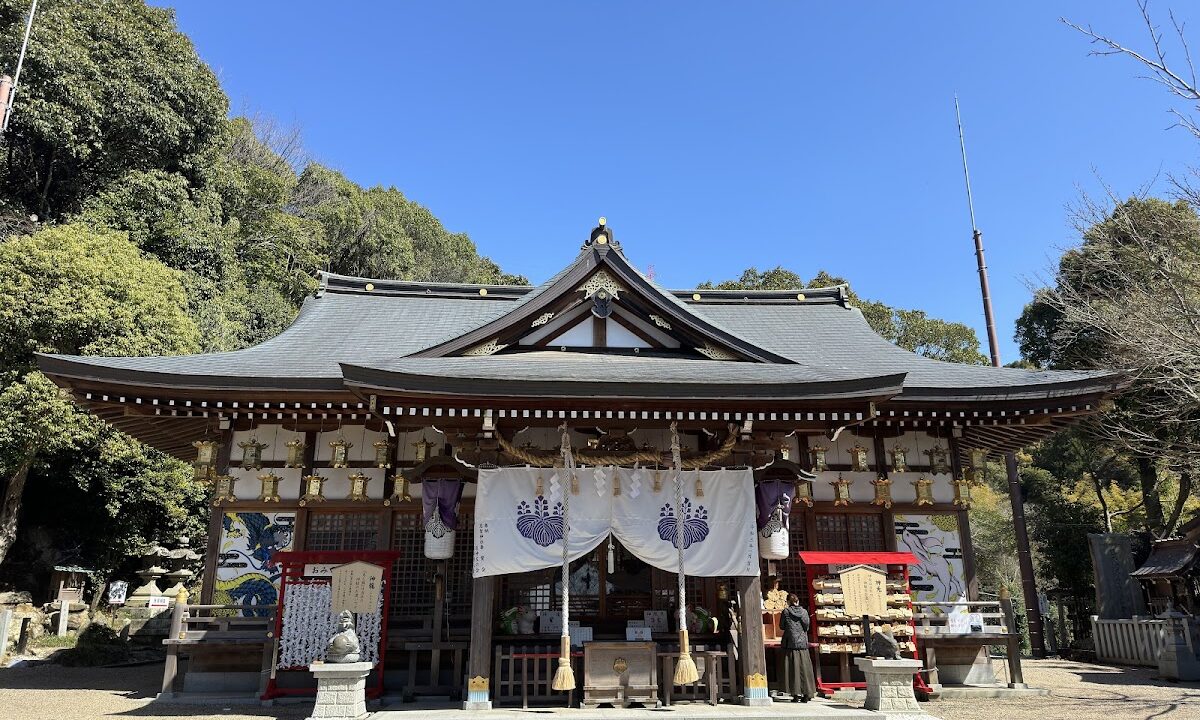
Complete Guide to Onji Shrine (Yao City, Osaka Prefecture) | The Charm of Kawachi Province’s Second-Ranked Shrine with 1500 Years of History
Onji Shrine, located in Onji-nakamachi, Yao City, Osaka Prefecture, is a venerable ancient shrine boasting a history of over 1500 years. As a Shikinaisha (a shrine listed in the Engishiki, an ancient Japanese legal code) and the second-ranked shrine of Kawachi Province, it has long attracted worshippers. It is known for its unique divine messengers, the sacred rabbit (Nade-usagi) and the sacred dragon, and for its blessings of guidance and good fortune.
This article provides detailed information you should know before visiting Onji Shrine, including its history, enshrined deities, highlights within the grounds, access methods, and information on Goshuin (shrine stamps).
What is Onji Shrine?
Onji Shrine is located at 5-10 Onji-nakamachi, Yao City, Osaka Prefecture, on a hill approximately 100 meters above sea level at the western foot of the Ikoma Mountains. Located about a 20-minute walk from Onchi Station on the Kintetsu Osaka Line, the main shrine is situated at the top of 131 stone steps.
Formerly a prefectural shrine, it is a highly prestigious shrine listed in the Engishiki Jinmyocho (a list of shrines compiled in the Heian period) as a Myojin Taisha (a major shrine). It is also said to be the second-ranked shrine of Kawachi Province and has played an important role as the guardian deity of Kawachi Province.
Basic Information about Onchi Shrine
- Location: 5-10 Onchi-nakamachi, Yao City, Osaka Prefecture
- Phone: 072-943-7059
- Nearest Station: Approximately 20 minutes on foot from Onchi Station on the Kintetsu Osaka Line
- Parking: Available (Free)
- Visiting Hours: Grounds are freely accessible (Shrine office is open from approximately 9:00 to 17:00)
History | A 1500-Year Story Continuing from the Reign of Emperor Yuryaku
Onchi Shrine is said to have been founded around 470 AD during the reign of Emperor Yuryaku. As one of the oldest shrines in Japan, it boasts a long history of over 1500 years.
Origin of Founding
According to ancient documents such as “Kawachi Meisho Zue” and “Kawachi Shi,” Onchi Shrine is said to have been established to protect the province of Kawachi. It is said that the shrine was originally located in the mountains of the Ikoma mountain range, and has been revered as a sacred place with miraculous powers since ancient times.
Status as a Shikinaisha (Great Shrine)
In the “Engishiki Jinmyocho” (a list of shrines compiled during the Heian period), Onchi Shrine is listed as “Onchi-ni-imasu Tenmike Shrine, Kawachi Province, Wakae District, Myojin Taisha (Great Shrine).” A Myojin Taisha is a shrine with particularly remarkable miraculous powers and was highly valued by the imperial court. It was one of the highest-ranking shrines in Kawachi Province.
Tradition as the Second-Ranked Shrine of Kawachi Province
Onchi Shrine is traditionally considered the second-ranked shrine of Kawachi Province. While Hiraoka Shrine is often considered the first-ranked shrine of Kawachi Province, Onchi Shrine, with its second-highest rank, has been a center of local faith.
Changes Since the Middle Ages
During the Middle Ages, the shrine buildings were destroyed by fire due to warfare, but they were rebuilt each time, and have continued to this day, supported by the fervent faith of the local people. During the Edo period, it attracted many worshippers as an important shrine along the Higashi-Koya Road.
Deities Enshrined | Gods Who Preside Over Food and Life
Onchi Shrine enshrines two main deities: Ōmiketsuhiko-no-Ōkami and Ōmiketsuhime-no-Ōkami.
Ōmiketsuhiko-no-Ōkami and Ōmiketsuhime-no-Ōkami
These two deities are worshipped as gods who preside over food and the source of life. “Miketsu” refers to food, especially meals offered to the gods, and is believed to bring blessings such as abundant harvests, business prosperity, and family safety.
Enshrined Deities
In addition to the main deities, Amenokoyane-no-Mikoto is also enshrined. Amenokoyane-no-Mikoto is the ancestral deity of the Nakatomi clan (Fujiwara clan) and is known as the god of prayers and wisdom. Because this deity is enshrined here, visitors can also expect blessings for academic success and good fortune.
Highlights of the Shrine Grounds | A Sacred Realm Welcomed by a Divine Rabbit and a Divine Dragon
The grounds of Onchi Shrine boast numerous unique and captivating sights.
131 Stone Steps
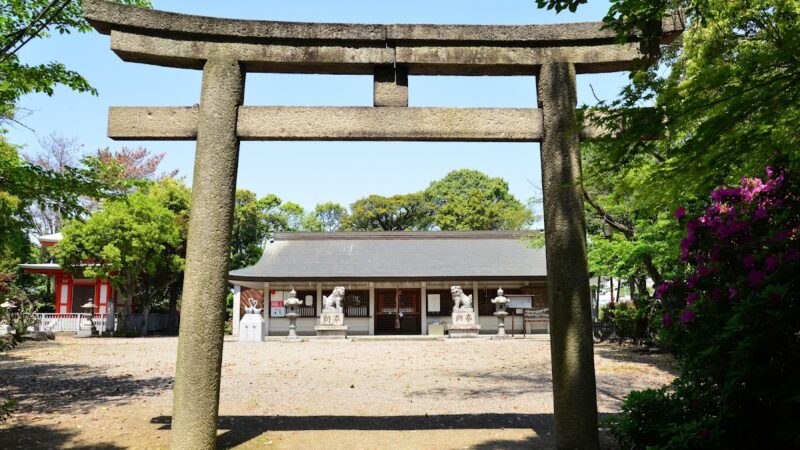
The first thing visitors to Onchi Shrine experience is the 131 stone steps. After passing through the first torii gate, a steep staircase leads to the main hall. Climbing these steps allows one to shift their mindset from the everyday world to a sacred realm.
The slope and steps are quite steep, but the surrounding area is surrounded by trees, making the climb particularly enjoyable during the autumn foliage season.
Divine Rabbit (Nade-Usagi)
To the left of the front of the worship hall, a statue of a divine rabbit (Nade-Usagi) is enshrined. The rabbit is considered one of the divine messengers of Onchi Shrine and is worshipped as a “god of guidance.”
It is believed that stroking the sacred rabbit will remove doubts in life and guide you to the right path. It is especially believed to bring blessings to those who are unsure about their future or life choices, or those starting something new.
Divine Dragon
To the right of the main hall stands a statue of a divine dragon. The dragon is also a divine messenger of Onchi Shrine and is revered as a “god of rising fortune.”
It is believed that stroking the divine dragon brings blessings of increased luck, career advancement, and the fulfillment of wishes. The sight of the rabbit and dragon, two divine messengers, side by side is a unique feature of Onchi Shrine.
Main Hall | Beautiful Oji-zukuri Architecture
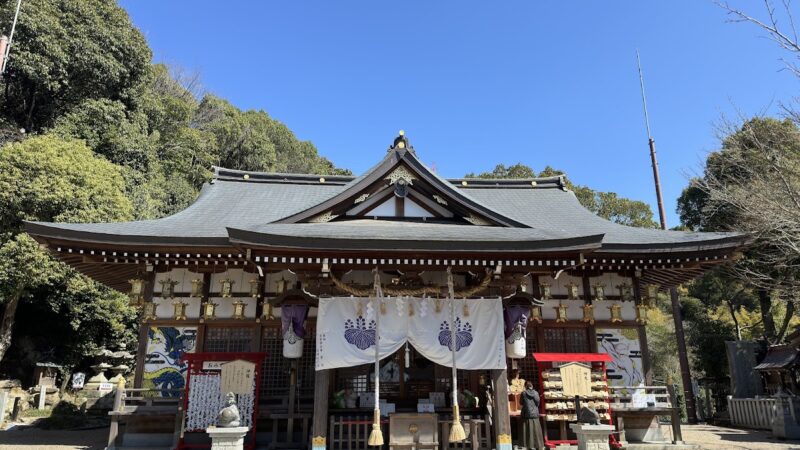
The main hall of Onchi Shrine is built in a unique architectural style called “Oji-zukuri.” Oji-zukuri is a special style of shrine architecture found in the Kawachi region, characterized by its gabled roof.
The main shrine is imposingly built, exuding a dignified atmosphere that reflects its long history. Looking at the main shrine from the worship hall, one feels a sense of purification amidst its solemn beauty.
Worship Hall
The worship hall is where worshippers pray and is located in front of the main shrine. A donation box is placed in front of the worship hall, and worshippers pray here using the two bows, two claps, and one bow ritual.
Seasonal flowers are planted around the worship hall, and the grounds are particularly vibrantly colored during the autumn foliage season.
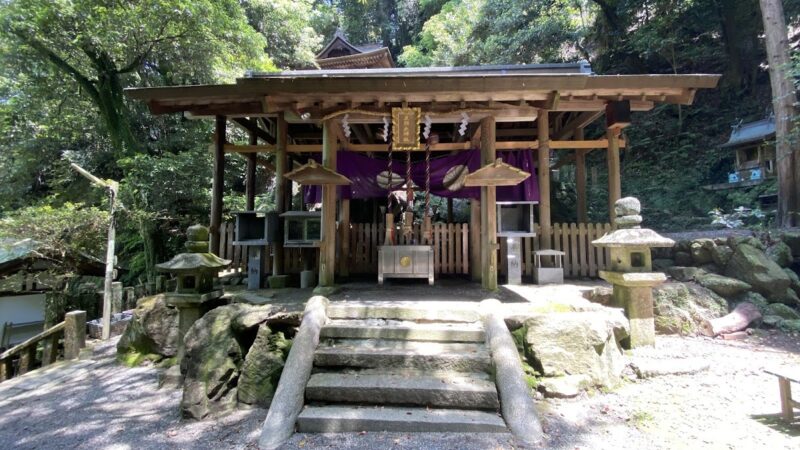
Subsidiary Shrines
Several subsidiary shrines are enshrined within the grounds.
- Hachidai Ryuo Shrine: This shrine enshrines the Eight Great Dragon Kings, worshipped as gods of water and rain.
- Inari Shrine: This shrine is revered as the god of abundant harvests and business prosperity.
- Tenmangu Shrine: This shrine enshrines Sugawara no Michizane, the god of learning.
By visiting these subsidiary shrines along with the main shrine, you can receive even greater blessings.
Cultural Properties | Valuable Heritage that Tells the Story of History
Onchi Shrine retains cultural properties that tell the story of its long history.
Main Shrine (Oji-zukuri Architecture)
The Oji-zukuri architectural style of the main shrine itself is valuable for understanding the history of shrine architecture in the Kawachi region. This style can also be seen at Hiraoka Shrine and Ishikiri Tsurugi Shrine, and is characteristic of shrine architecture in Kawachi Province.
Stone Sculptures
Within the shrine grounds, stone sculptures such as stone lanterns and guardian lion-dogs from the Edo and Meiji periods remain, conveying the state of worship at that time.
Ancient Documents
The shrine possesses ancient documents concerning its founding and history, which are important resources for the study of the history of Kawachi Province.
Divine Blessings at Onchi Shrine
At Onchi Shrine, you can receive various blessings.
Benefits of Guidance (Divine Rabbit)
- Making the right choices at life’s crossroads
- Deciding on a career path
- Success in job hunting/career change
- Guidance to good relationships
Benefits of Rising Fortune (Divine Dragon)
- Increased luck
- Career advancement
- Business success
- Fulfillment of wishes
Benefits of the Main Deity
- Abundant harvest
- Business prosperity
- Family safety
- Health and longevity
- Protection from evil
Benefits of Amenokoyane-no-Mikoto
- Academic success
- Prayer for passing exams
- Good fortune and prosperity
Goshuin (Shrine Seal) and Goshuincho (Shrine Seal Book) Information
At Onchi Shrine, you can receive a Goshuin as a memento of your visit.
Goshuin
Goshuin can be obtained at the shrine office (offering fee: approximately 300-500 yen). The goshuin (temple/shrine stamp) bearing the calligraphy and seal of Onchi Shrine is simple yet exudes a sense of formality.
Please be sure to receive a goshuin as proof of your visit and as a memento of your trip.
Goshuincho (Shrine Stamp Book)
Onchi Shrine also offers original goshuincho. Sometimes, unique goshuincho featuring motifs such as the divine rabbit or divine dragon are available.
Availability and stock of goshuincho vary depending on the time of year, so it is recommended to check in advance.
Annual Events | Onchi Shrine Festivals
Onchi Shrine holds various festivals throughout the year.
Main Annual Events
- New Year’s Day Festival (January 1st): A festival celebrating the New Year
- Setsubun Festival (around February 3rd): A ritual to ward off evil spirits through bean-throwing
- Spring Grand Festival (April): The grand spring festival
- Summer Purification Ceremony (June 30th): A Shinto ritual to cleanse away the sins and impurities accumulated over the past six months
- Autumn Grand Festival (October): The grand autumn festival, the most important festival
- Shichi-Go-San Festival (November): A celebration of children’s growth
- New Year’s Eve Purification Ceremony (December 31st): A Shinto ritual to cleanse away the sins and impurities accumulated over the past year
The Autumn Grand Festival, in particular, is a grand festival attended by many people from the local community.
Access | How to Get to Onchi Shrine
Access by Train
Approximately 20 minutes on foot from Kintetsu Osaka Line “Onchi Station”
- Exit Onchi Station and head east.
- Head south along Higashi-Koya Kaido Road.
- You will see a torii gate to the east; pass through the gate and ascend the approach to the shrine.
Since the path from the station to the shrine is uphill, we recommend wearing comfortable shoes.
Access by Car
From Osaka Outer Ring Road (National Route 170)
- Head east at the “Kakiuchi Minami” intersection.
- Head south along Higashi-Koya Kaido Road.
- Pass through the torii gate to the east and ascend the approach to the shrine.
Parking: The shrine’s parking lot (free) is available. However, there is a limited number of spaces, so it may be crowded on festival days.
Points to Note When Visiting
- The 131 stone steps are steep, so those with mobility issues should exercise caution.
- The steps become slippery in rainy weather, so please be especially careful.
- Remember to stay hydrated in the summer.
- Dress warmly in winter.
Nearby Attractions | Spots to Visit Along with Onchi Shrine
Hiraoka Shrine
Hiraoka Shrine, known as the Ichinomiya (first-ranked shrine) of Kawachi Province, is about a 15-minute drive from Onchi Shrine. It is a prestigious shrine said to be the original shrine of Kasuga Taisha, and visiting both together will give you a deeper understanding of the shrine culture of Kawachi Province.
Ishikiri Tsurugi Shrine
Ishikiri Tsurugi Shrine, affectionately known as the “God of Boils,” is also relatively close to Onchi Shrine. It is a famous shrine for healing boils and other ailments, attracting many visitors.
Historical Spots in Yao City
Besides Onchi Shrine, Yao City has many other historical temples, shrines, and historical sites. If you have time, we recommend taking a stroll around the city.
Best Season for Visiting Onchi Shrine
Spring (March-May)
The fresh greenery is beautiful, and the weather is mild, making it the perfect season for visiting. The trees around the stone steps are budding, and you can visit in refreshing air.
Autumn (October-November)
The autumn foliage season is one of the most beautiful times to visit Onchi Shrine. The leaves on the stone steps and within the shrine grounds change color, making it a perfect photo spot. The Autumn Grand Festival is also held, allowing you to enjoy a lively atmosphere.
New Year’s Visit
From New Year’s Day to the third day of the year, the shrine is bustling with visitors for their first shrine visit of the year. The grounds are filled with local people coming to pray for the new year.
Shrine Etiquette | Customs at Shrines
When visiting Onchi Shrine, please observe the following basic etiquette.
How to Pass Through the Torii Gate
The torii gate is the entrance to the sacred area. Bow before passing through, and walk along the path avoiding the center.
How to Wash Your Hands
- Take the ladle with your right hand and wash your left hand.
- Switch the ladle to your left hand and wash your right hand.
- Switch the ladle back to your right hand, receive water in your left hand, and rinse your mouth.
- Wash your left hand once more.
- Hold the ladle upright, wash the handle, and return it to its original place.
How to Worship
- Gently place your offering in the offering box.
- If there is a bell, ring it.
- Bow twice (bowing deeply twice).
- Clap your hands twice.
- Bow once (bowing deeply once).
Summary | Experience the Charm of Onchi Shrine
Onchi Shrine, as the second-ranked shrine of Kawachi Province with a history of over 1500 years, has long attracted the faith of people. With its unique divine messengers—a sacred rabbit and a divine dragon—131 stone steps leading up to the shrine, and a main hall built in the Oji-zukuri style, this shrine is filled with charms not found in other shrines.
The blessings of guidance and good fortune will be a strong support for those at a crossroads in life or those embarking on new challenges. When you visit Yao City in Osaka Prefecture, be sure to visit Onchi Shrine and experience its history and divine virtues.
Spending time praying at Onchi Shrine, nestled quietly at the foot of the mountain, will be a precious moment that allows you to forget the hustle and bustle of everyday life.