Complete Guide to Kashiwara Kuroda Shrine (Osaka Prefecture) | History, Goshuin (Shrine Seals), Access, and Highlights Explained in Detail
Kashiwara Kuroda Shrine, located in Imamachi, Kashiwara City, Osaka Prefecture, is a shrine that has carved a new history alongside the post-war reconstruction. Originally known as Shiodono Shrine, it enshrined the god of maritime transport and traffic safety, but in the Showa era, it was branched off from Kuroda Shrine in Fujiidera City and adopted its current name. This article thoroughly explains everything you need to know before visiting Kashiwara Kuroda Shrine, from detailed information and historical background to goshuin (shrine seals), access methods, and highlights within the shrine grounds.
Basic Information about Kashiwara Kuroda Shrine
Location and Access
Address: 1-3-13 Imamachi, Kashiwara City, Osaka Prefecture 582-0002
Kashiwara Kuroda Shrine is conveniently located about a 4-minute walk from Kashiwara Station on the JR Yamatoji Line (Kansai Main Line). Easily accessible from Osaka city, the shrine is about a 20-minute ride from Tennoji Station on the Yamatoji Rapid Line to Kashiwara Station. A short walk through a residential area after leaving the station reveals the tranquil shrine.
Origin and Changes of the Shrine’s Name
Kashiwara Kuroda Shrine was originally called “Shiodono Shrine” and affectionately known as “Shoden-san” by locals. It enshrines Shiotsuchi-no-Okina-no-Mikoto as its main deity and was revered by local people as the god of maritime safety and traffic safety.
Although the shrine suffered significant damage during the war in 1945, in the post-war reconstruction process, it received a branch shrine from Hojo Kuroda Shrine in Fujiidera City, its local tutelary shrine, and also enshrined the deity of Kamiichi Kasuga Shrine. Following this restoration, the shrine’s name was changed to “Kashiwabara Kuroda Shrine” in 1969 (Showa 44), and it remains so to this day.
Deities and Divine Virtues
Deities Enshrined
The following eight deities are enshrined at Kashiwabara Kuroda Shrine:
- Amenominakanushi-no-Okami – The primordial deity of the universe
- Amaterasu-Omikami – The ancestral deity of the imperial family, the sun goddess
- Takemikazuchi-no-Mikoto – The god of war, the god of thunder
- Futsunushi-no-Mikoto – The god of swords, the god of war
- Amenokoyane-no-Mikoto – The god of rituals
- Hime-Okami – The goddess
- Shiotsuchi-no-Okina – The god of navigation, the god of salt production
- Yahata-no-Okami – God of Military Fortune
Divine Virtues and Faith
The original principal deity, Shiotsuchi-no-Okina, is known in Japanese mythology as the god of wisdom who guided Emperor Jimmu’s eastern expedition. As a god who presides over maritime safety and navigation, he has long been worshipped as a guardian deity of traffic safety.
Currently, the deities of Kuroda Shrine and Kasuga Shrine are also enshrined here, so the shrine is believed to offer a wide range of divine blessings, including family safety, business prosperity, protection from evil, and traffic safety. In particular, the belief in traffic safety, which dates back to the original Shiodono Shrine era, continues to this day.
History of Kashiwabara Kuroda Shrine
Shiodono Shrine Era
The origins of Kashiwabara Kuroda Shrine date back to the time when Shiotsuchi-no-Okina was enshrined as Shiodono Shrine. While the exact founding date is unknown, it has long been a place of worship for people involved in maritime transport and transportation in the Shiki District of Kawachi Province.
During the era when water transport from Osaka Bay up the Yamato River was thriving, Kashiwara was a crucial transportation hub connecting Kawachi and Yamato. The presence of a shrine dedicated to Shiodono-no-Okina, the god of navigation and salt production, in this area speaks to the importance of local industry and transportation at that time.
War Damage and Reconstruction
In 1945, during World War II, the Shiodono Shrine suffered significant damage. After the chaotic postwar period, the shrine was rebuilt through the efforts of local residents.
During this reconstruction, a branch shrine was received from Hojo Kuroda Shrine in Fujiidera City, which had been revered as the local tutelary shrine. At the same time, the deity of the nearby Kamiichi Kasuga Shrine was also enshrined, resulting in the consolidation of multiple shrines into one.
Name Change in 1969
In 1969, coinciding with the reconstruction of the shrine building and the consolidation of deities, the shrine’s name was changed from “Shiodono Shrine” to “Kashiwara Kuroda Shrine.” This clarifies the connection with Hojo Kuroda Shrine in Fujiidera City and helps the shrine become deeply rooted in the community as a tutelary deity for a new era.
Highlights of the Shrine Grounds
Shrine Building
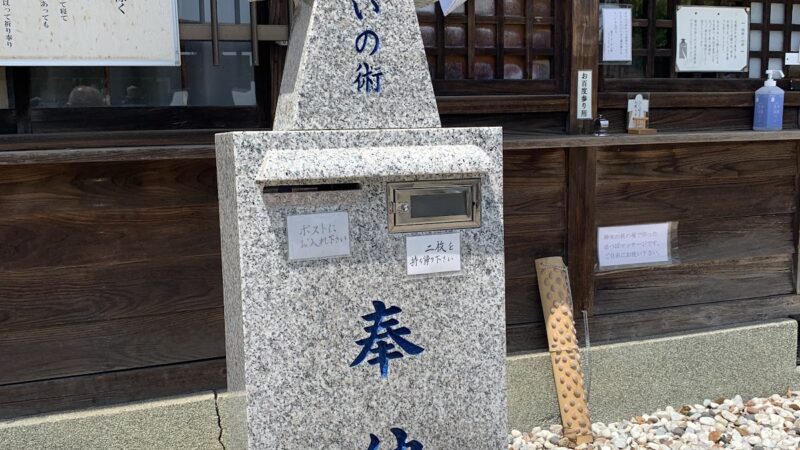
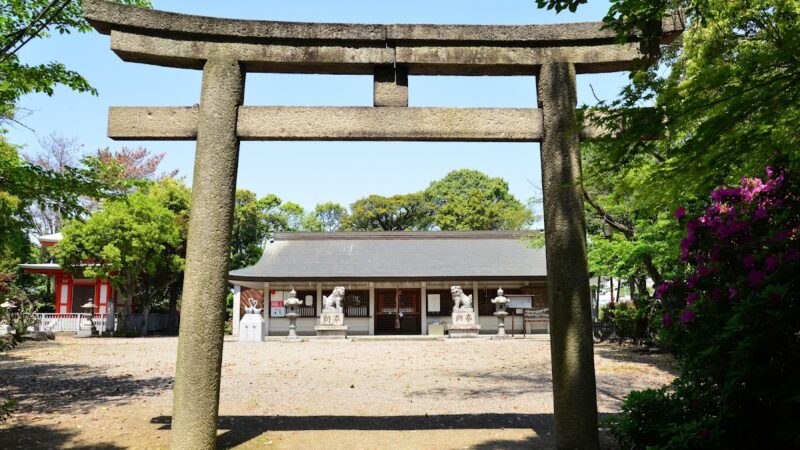
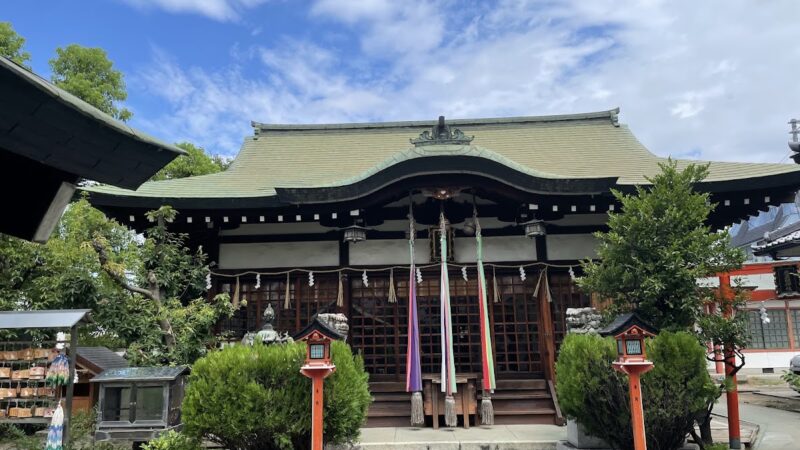
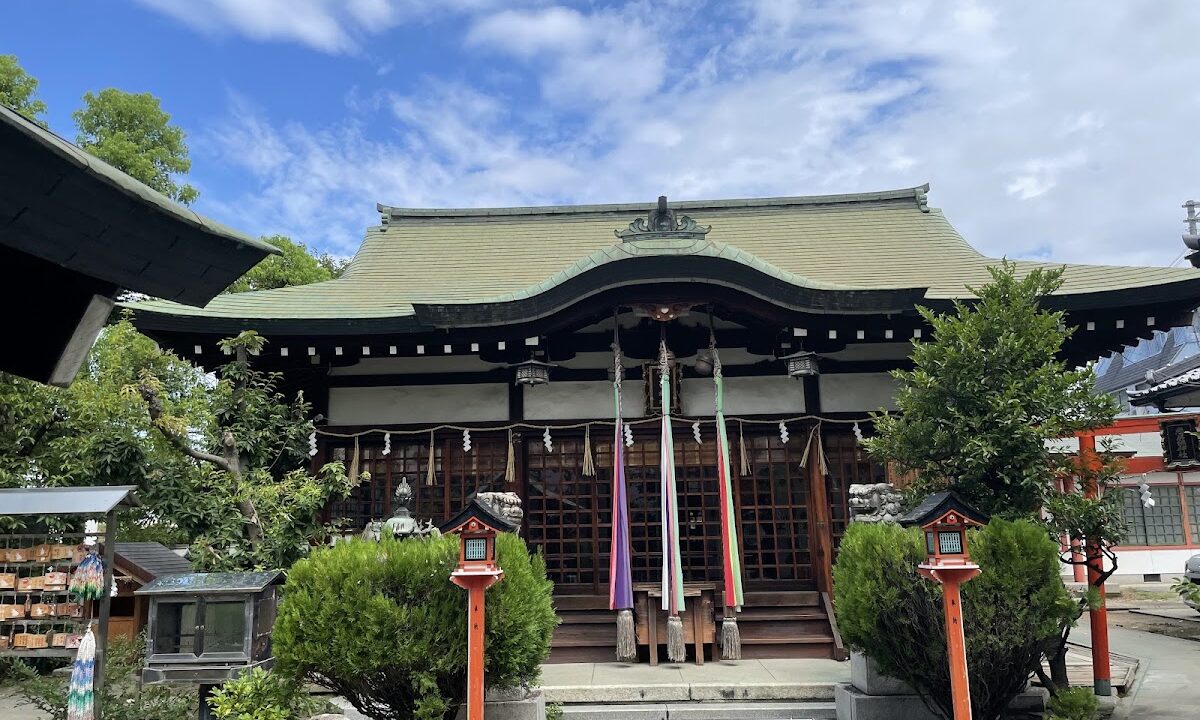
The shrine building, rebuilt in 1969, presents a simple yet dignified presence. Built during the post-war reconstruction period, it has a modern structure different from older shrine architecture, but the well-maintained grounds quietly welcome visitors.
Ishiriki Fudo-son
Within the grounds is a stone statue called “Ishiriki Fudo-son.” This is one of the highlights of the grounds and a popular spot for many visitors to take photographs. This stone structure, dedicated to Fudo Myoo, is still cherished as an object of worship.
Atmosphere of the Shrine Grounds
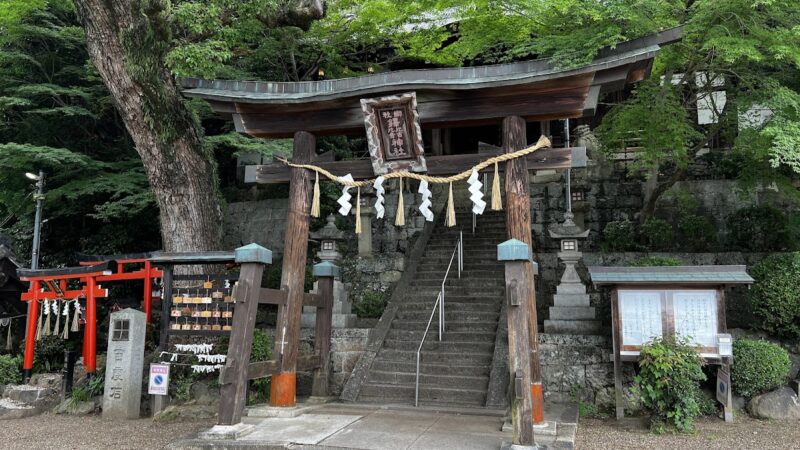
Despite being located in a residential area close to Kashiwara Station, the shrine grounds are enveloped in a tranquil atmosphere. While not a large shrine, the well-maintained grounds convey the cherishment it receives from the local community. The space surrounded by trees offers a tranquil retreat from the hustle and bustle of the city.
Goshuin (Shrine Seal) Information
Issuance of Goshuin
Goshuin are available at Kashiwabara Kuroda Shrine. Many visitors come specifically to receive a goshuin, making it a popular part of shrine pilgrimages.
To receive a goshuin, you must visit during the shrine office’s opening hours. However, as it is a small shrine, the office may not be open all the time. To ensure you receive a goshuin, it is recommended to call ahead or visit on weekends or holidays when religious ceremonies are more likely to be held.
About Goshuincho (Shrine Seal Books)
Official information regarding Kashiwabara Kuroda Shrine’s original goshuincho is limited. If you do not have a goshuincho, it is recommended to prepare one before visiting.
Detailed Access Information
Access by Train
Nearest Station: JR Yamatoji Line (Kansai Main Line) Kashiwara Station
- From Osaka: Approximately 20 minutes by Yamatoji Rapid train from JR Tennoji Station, alight at Kashiwara Station
- From Nara: Approximately 30 minutes by Yamatoji Line train from JR Nara Station, alight at Kashiwara Station
- From Station to Shrine: Approximately 4 minutes on foot (approximately 300 meters)
After leaving Kashiwara Station, proceed through the residential area towards Imamachi, and you will arrive at the shrine relatively quickly. Due to its proximity to the station, access by train is the most convenient.
Access by Car
Access from Major Roads:
- Approximately 5 minutes from the Nishimeihan Expressway “Kashiwara IC”
- From National Route 25 towards Kashiwara city center
Parking: Detailed information regarding the shrine’s dedicated parking lot is limited. Due to the small size of the shrine, parking space may be limited. If you are visiting by car, please consider using a nearby coin-operated parking lot.
Location relative to nearby shrines
Kashiwara Shrine is located approximately 0.5 kilometers from Kashiwara Kuroda Shrine. If you have ample time, visiting both shrines is recommended. There are many other historical shrines and temples scattered throughout Kashiwara City, making it possible to create a shrine-hopping course.
Nearby tourist attractions
Historical sites in Kashiwara City
Kashiwara City has flourished as a transportation hub since ancient times, and many historical legacies remain.
Kashiwara Shrine: A shrine within walking distance of Kashiwara Kuroda Shrine, revered as the local guardian deity.
Tamateyama Park: A park known for its cherry blossoms, it is bustling with many visitors in spring. From the hilltop, you can enjoy a panoramic view of the Osaka Plain.
Kashiwara City Historical Museum: A facility where you can learn about the history and culture of Kashiwara, exhibiting materials from ancient to modern times. ### A Stroll Along the Yamato River
Kashiwara City is located along the Yamato River, making it a pleasant place for a stroll. You can enjoy a leisurely walk while feeling the history of this area, which flourished as a key water transport hub in ancient times.
Food and Shopping
The area around Kashiwara Station is dotted with local restaurants and shops. Enjoying local cuisine before or after visiting the temple is highly recommended.
Manners and Precautions for Visiting a Shrine
Basic Worship Etiquette
- Bow Before Passing Through the Torii Gate – As a sign of respect when entering the sacred area, bow before the torii gate.
- Purify Yourself at the Water Basin – If there is a water basin, purify your hands and mouth before praying.
- Two Bows, Two Claps, One Bow – Follow the general worship etiquette for shrines.
- Worship Quietly – As the shrine is located in a residential area, consideration for the neighbors is important.
Visiting Hours
While you can generally visit the shrine grounds freely during the day, if you wish to receive a Goshuin (shrine stamp) or prayer, you need to check the opening hours of the shrine office.
Photography
Photography is generally permitted on the shrine grounds, but please be considerate of other worshippers. Also, if there are areas where photography is restricted, such as inside the shrine building, please follow the instructions.
Annual Events and Festivals
While detailed information regarding the annual events at Kashiwabara Kuroda Shrine is limited, it is believed that the following festivals are held, similar to those of other shrines:
- New Year’s Day Festival (January 1st) – A festival celebrating the New Year
- Spring Festival – A festival celebrating the arrival of spring
- Autumn Festival – A festival giving thanks for the harvest
- Great Purification Ceremony – A Shinto ritual held in June and December to purify sins and impurities
It is recommended to confirm specific dates and details during your visit.
Relationship with Hojo Kuroda Shrine in Fujiidera City
Connection to the Main Shrine
Kashiwabara Kuroda Shrine was established in 1969 (Showa 44) as a branch shrine of Hojo Kuroda Shrine in Fujiidera City. Hojo Kuroda Shrine is a shrine with a long history as an ancient shrine of Kawachi Province.
During the post-war reconstruction period, Shiodono Shrine began a new chapter in its history by inviting the deity of Hojo Kuroda Shrine, which was revered as the local guardian deity, to its grounds. This branch shrine structure maintains a deep connection between the two shrines to this day.
About the Name of Kuroda Shrine
The place name “Kuroda” is believed to originate from the ancient Jori system (a land division system), and several shrines bearing the name Kuroda exist in the Kawachi region. Kashiwara Kuroda Shrine is also part of this lineage and attracts the faith of the local community.
Role in the Community
Function as a Guardian Deity
Kashiwara Kuroda Shrine serves as the guardian deity of the Imamachi area of Kashiwara City, and is a spiritual center for the local residents. It is used as a place for prayer at important life events such as a baby’s first shrine visit, Shichi-Go-San (a traditional rite of passage for children), and exorcism.
Center of the Community
Although small in scale, the shrine plays a central role in the local community. During festivals, local residents gather, making it a place to pass on traditions to future generations.
Significance in an Urbanizing Landscape
The area around Kashiwara Station has seen significant residential development, yet the shrine remains a valuable space that conveys history and tradition. In today’s increasingly urbanized world, the existence of such shrines plays a crucial role in maintaining the region’s identity.
Summary: The Charm of Kashiwara Kuroda Shrine
Kashiwara Kuroda Shrine is a shrine that has overcome the difficulties of reconstruction after war and carved out a new history. Originally a Shiodono Shrine, it underwent transformations, becoming a branch shrine of Kuroda Shrine and eventually merging the deities of multiple shrines to reach its current form.
Despite its convenient location just a 4-minute walk from the station, this shrine maintains a quiet and peaceful atmosphere and continues to be cherished by the local community. With attractions such as the Ishiriki Fudo-son statue, it’s an attractive spot for visitors seeking Goshuin (shrine stamps).
When visiting Kashiwara City, Osaka Prefecture, be sure to stop by Kashiwara Kuroda Shrine and experience its history and tranquil atmosphere. We await your visit to our shrine, where you can receive various divine blessings, such as traffic safety and family safety.