Complete Guide to Sakaai Shrine (Yao City, Osaka Prefecture) | History, Deities, and Access Information
Sakaai Shrine, located in Kosakaai-cho, Yao City, Osaka Prefecture, is a historically significant shrine listed in the Engishiki Jinmyocho (a list of shrines compiled during the Heian period). Although it was once merged with another shrine during the Meiji era, it was restored in 1957 thanks to the enthusiasm of local residents. This article provides detailed information you should know before visiting Sakaai Shrine, including its history, deities, blessings, highlights of the grounds, and access methods.
Basic Information about Sakaai Shrine
Sakaai Shrine is a quietly situated shrine in a residential area of Yao City, Osaka Prefecture. Despite its convenient location, approximately a 6-minute walk from Kawachi-Yamamoto Station on the Kintetsu Osaka Line, it maintains a tranquil atmosphere.
Location: 2-8-39 Kosakagocho, Yao City, Osaka Prefecture 581-0012
Nearest Station: Approximately 6 minutes on foot from Kawachi-Yamamoto Station on the Kintetsu Osaka Line (approximately 700m west)
Shrine Rank: Shikinaisha (Engishiki Shrine), Former Village Shrine
Deities Enshrined: Ninigi-no-Mikoto, Hikohodemi-no-Mikoto
History and Origins of Sakago Shrine
Traces of Ancient Faith
While the exact founding date of Sakago Shrine is unclear, it is listed in the “Engishiki Jinmyocho” (compiled in 927) as “Sakago Shrine, Wakae District, Kawachi Province, two deities (one deity, Sadaka),” confirming that it is an ancient shrine with a history of at least 1000 years.
The *Nihon Sandai Jitsuroku* (True Records of Three Reigns of Japan) contains a record from 883 AD (Genkei 7) stating that “the Sakai Shrine in Kawachi Province, which held the rank of Senior Sixth Rank, was granted the rank of Junior Fifth Rank, Lower Grade,” indicating that it was a prestigious shrine that received a divine rank from the imperial court. The prevailing theory is that this “Sakai Shrine” refers to the Sakai Shrine.
Connection to the Sakaibe Clan
The name of the shrine and the place name “Sakai” (or “Sakai”) is thought to originate from the “Sakaibe clan” who resided in this area. The Sakaibe clan was one of the clans in the ancient bemin system, and researchers support the theory that they founded this shrine to enshrine their ancestral deity.
Across the Kusune River to the southwest lies the Kosakai archaeological site, a settlement from the Kofun period, indicating that this area was a place of human habitation from ancient times.
Clan Deity Worship in the Early Modern Period
During the Edo period, it was deeply revered by the local residents as the clan deity of Kosakai Village. As the guardian shrine of the village, festivals were held to pray for a bountiful harvest and the safety of the village, making it a central presence in the local community.
Meiji-era merger and Showa-era restoration
Due to the Meiji-era policy of shrine merger, on August 20, 1907 (Meiji 40), Sakai Shrine was merged with Yahagi Shrine, located in Minami-Honmachi, Yao City. This temporarily caused it to lose its function as an independent shrine.
However, due to the strong desire and enthusiasm of local residents to “regain their guardian deity,” it was restored in 1957 (Showa 32) at its current location, the former shrine site. This restoration story is passed down as an episode demonstrating the deep connection between the local people and the shrine.
Deities and Blessings
Ninigi-no-Mikoto
A deity who is the grandson of Amaterasu-Omikami and is known as the protagonist of the Tenson Kōrin myth (descent of the heavenly grandchild). As a god who descended from Takamagahara (the High Plain of Heaven) to the earth (Ashihara no Nakatsukuni) and began the rule of Japan, he is believed to bring blessings of national peace and security, abundant harvests, and good fortune.
Hikohodemi-no-Mikoto
A son of Ninigi-no-Mikoto, he is Yamasachihiko, known from the myth of Umisachihiko and Yamasachihiko. He is a god whose story of visiting the sea god’s palace is the prototype for the Ryugu (Dragon Palace) legend, and is believed to bring blessings of maritime safety, fishing prosperity, and household safety.
Expected Benefits
The following benefits are expected at Sakai Shrine:
- Abundant Harvest and Business Prosperity: Protection of industrial development by the gods who descended from heaven
- Family Safety and Prosperity of Descendants: Protection of family harmony through the lineage of the imperial ancestors
- Good Fortune and Protection from Evil: Protection from disasters by the gods who descended from Takamagahara
- Regional Peace and Security: Role of protecting the region as a local guardian deity
Highlights of the Shrine Grounds
Shrine Building and Torii Gate
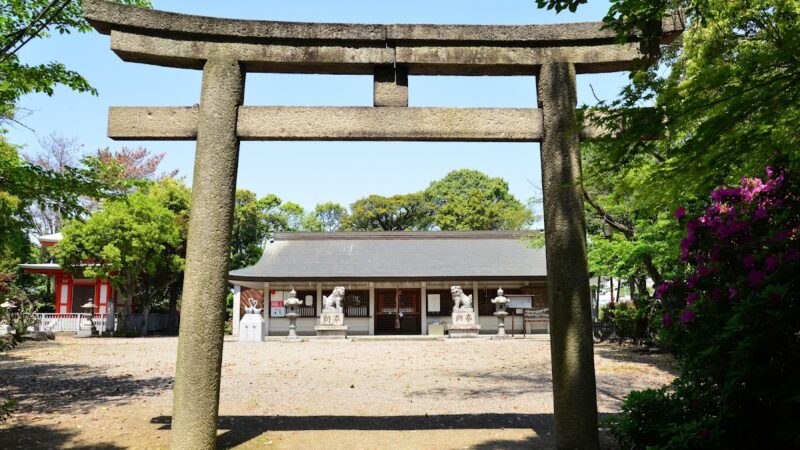
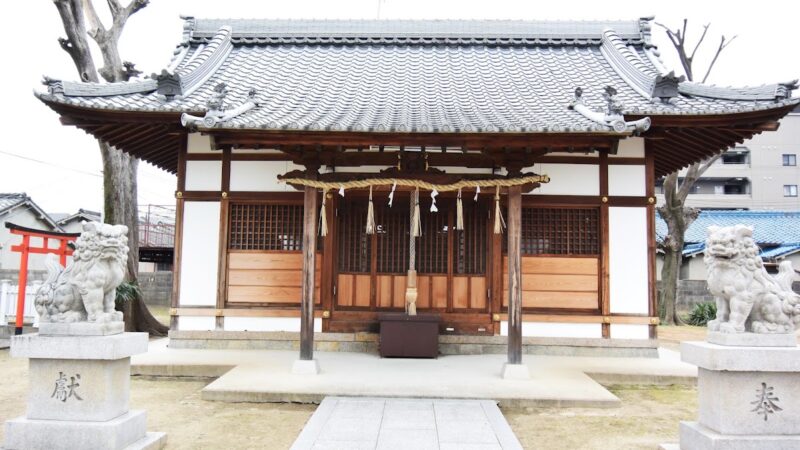
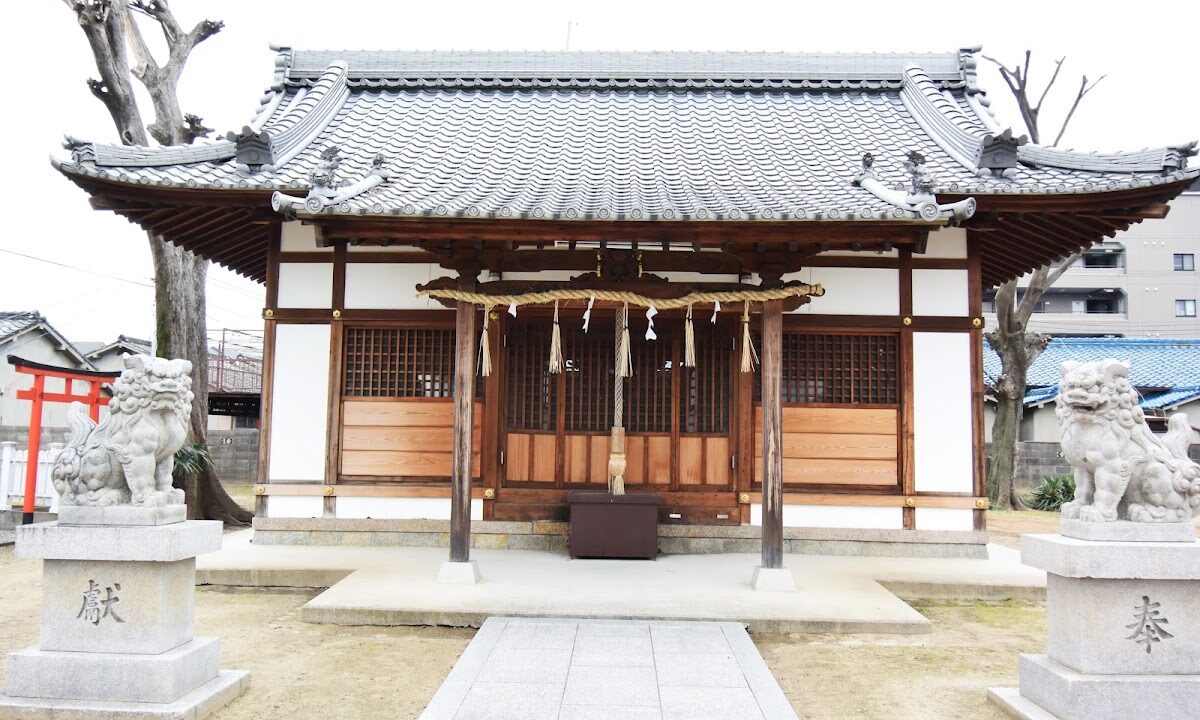
The shrine building, constructed during the reconstruction in 1957, is a relatively new building, but it is a neatly constructed structure that follows the traditional style of shrine architecture. The torii gate was also built around the same time, and despite being located in a residential area, it exudes a dignified atmosphere befitting a sacred place.
Tranquil Shrine Grounds
Despite being located in an urban area with a mix of businesses, shops, and residences, the shrine grounds maintain a quiet and peaceful space. In the rapidly urbanizing city of Yao, this shrine offers a precious place to find peace and tranquility during worship.
Surrounding Historical Environment
Ancient ruins, including the Kosakago Ruins, are scattered around the shrine, making it a great place for historical walks. The scenery along the Kusune River is also charming, allowing visitors to experience local history alongside their shrine visit.
Annual Events and Festivals
As the guardian shrine of the area, Sakago Shrine holds various festivals throughout the year. For detailed festival schedules, it is recommended to check local information beforehand.
Surrounding Historical Environment
Ancient ruins, including the Kosakago Ruins, are scattered around the shrine, making it a great place to enjoy historical walks. The scenery along the Kusune River is also picturesque, allowing visitors to experience local history in conjunction with their shrine visit. Typical annual events at a Shinto shrine include:
- New Year’s Day Festival (January 1st): A festival celebrating the New Year
- Spring Festival: A prayer for a bountiful harvest
- Autumn Festival: A festival giving thanks for the harvest
- Great Purification Ceremony (June and December): A Shinto ritual to cleanse away the sins and impurities accumulated over the past six months
These are some examples, but as this is a small shrine, the scale and implementation may vary from year to year.
Access
Access by Train
The nearest station is Kintetsu Osaka Line “Kawachi-Yamamoto Station”.
- Exit the ticket gate at Kawachi-Yamamoto Station
- Walk west for approximately 6 minutes (approximately 700m)
- The shrine is located in a quiet residential area
It is relatively close to the station and easily accessible.
Access by Car
For detailed parking information, it is recommended to check before your visit. Located in a residential area, surrounding roads may be narrow. Using public transportation is recommended.
Nearby Shrines and Temples
Many other shrines and temples are scattered throughout Yao City:
- Yahagi Shrine (Minami-Honmachi, Yao City): A shrine where Sakai Shrine was formerly enshrined.
- Koma Shrine: A Shikinaisha (shrine listed in the Engishiki) in Yao City.
- Onchi Shrine: An ancient shrine known as the second-ranked shrine of Kawachi Province.
When enjoying a shrine tour, visiting these shrines in conjunction with your own is highly recommended.
Manners and Points for Visiting a Shrine
Basic Worship Etiquette
- Bow before passing through the torii gate: A courtesy when entering the sacred area.
- Avoid walking in the center of the path: The center is the path of the gods.
- Purify yourself at the water basin: Left hand → Right hand → Mouth → Left hand handle
- Etiquette in front of the main hall: Two bows, two claps, one bow is the basic procedure.
Regarding Photography
Photography is generally permitted on the shrine grounds, but please note the following:
- Refrain from taking photos in sacred areas such as inside the main hall.
- Be considerate of other worshippers.
- When posting on social media, be careful about sensitive information such as location details.
Suitable Time for Visiting
While shrines are generally open for worship at any time during the day, visiting in the refreshing morning hours is a particularly refreshing experience. Since the shrine is located in a residential area, consideration for nearby residents is necessary when visiting early in the morning or late at night.
About Goshuin (Shrine Seals)
Information regarding Goshuin at Sakai Shrine is limited. As it is a small shrine, there may not be a resident priest. If you wish to obtain a Goshuin, it is recommended to check the information in advance.
According to some sources, it may be necessary to find and inquire with the contact information of the managing shrine or chief priest.
Historical Background of Yao City and Kawachi Province
History of Wakae District, Kawachi Province
Yao City, where Sakai Shrine is located, belonged to the ancient Wakae District of Kawachi Province. Kawachi Province was an important region deeply involved in the establishment of the Yamato Court and was one of the cultural centers where many burial mounds and ancient temples were built.
Value of Shikinaisha Shrines
Shikinaisha shrines, listed in the Engishiki Jinmyocho (a list of shrines compiled in the Heian period), are prestigious shrines officially recognized by the imperial court during the Heian period. Approximately 3,000 such shrines are listed nationwide, and Sakai Shrine holds historical value as one of them.
The presence of numerous Shikinaisha (shrines listed in the Engishiki, an ancient Japanese legal code) in Kawachi Province indicates that this region has been considered important since ancient times.
Connection to the Community
Role as a Clan Deity
Sakago Shrine, as the clan deity of Kosakago-cho, continues to be revered by local residents. As a shrine protecting the safety and prosperity of the community, it is an integral part of the residents’ lives.
Significance of Reconstruction
The reconstruction in 1957 (Showa 32) was not merely the rebuilding of the shrine, but also represented the restoration of the community’s identity. The significance of rebuilding this spiritual cornerstone of the community at this time, just before the start of the period of rapid economic growth, is considerable.
Nearby Tourist Attractions
Highlights of Yao City
Sightseeing spots in Yao City to visit in conjunction with a visit to Sakai Shrine:
- Kyuhoji Green Space: A vast urban park for relaxation
- Yao City Historical and Folk Museum: A facility where you can learn about the history of the region
- Birthplace of Kawachi Ondo: Yao is the home of Kawachi Ondo
- Former Ueda Family Residence: An Edo-period merchant house
Gourmet Information
Yao City is also known for its local specialties such as “Yao Edamame” (soybeans). There are many restaurants around Kawachi-Yamamoto Station, so you won’t have any trouble finding a meal after your visit.
Summary
Sakai Shrine is a historical shrine located in Yao City, Osaka Prefecture. While it is an ancient shrine listed in the Engishiki Jinmyocho (a list of shrines compiled in the Heian period), it has a unique history, having been consolidated with other shrines during the Meiji era and then restored in the Showa era.
This shrine enshrines Ninigi-no-Mikoto and Hikohohodemi-no-Mikoto, deities who appear in the myth of the descent of the heavenly grandchild, and is believed to bring blessings such as abundant harvests, family safety, and good fortune. Located in a quiet residential area, it’s a peaceful shrine to visit despite being in an urban area.
It’s easily accessible, about a 6-minute walk from Kawachi-Yamamoto Station on the Kintetsu Osaka Line, making it ideal for a visit as part of a historical walk through Yao City. Why not visit Sakago Shrine, which continues to be cherished by residents as the local guardian shrine?
It will be a valuable experience to connect with the history of the region and the feelings of its people in this place of worship that has continued since ancient times.