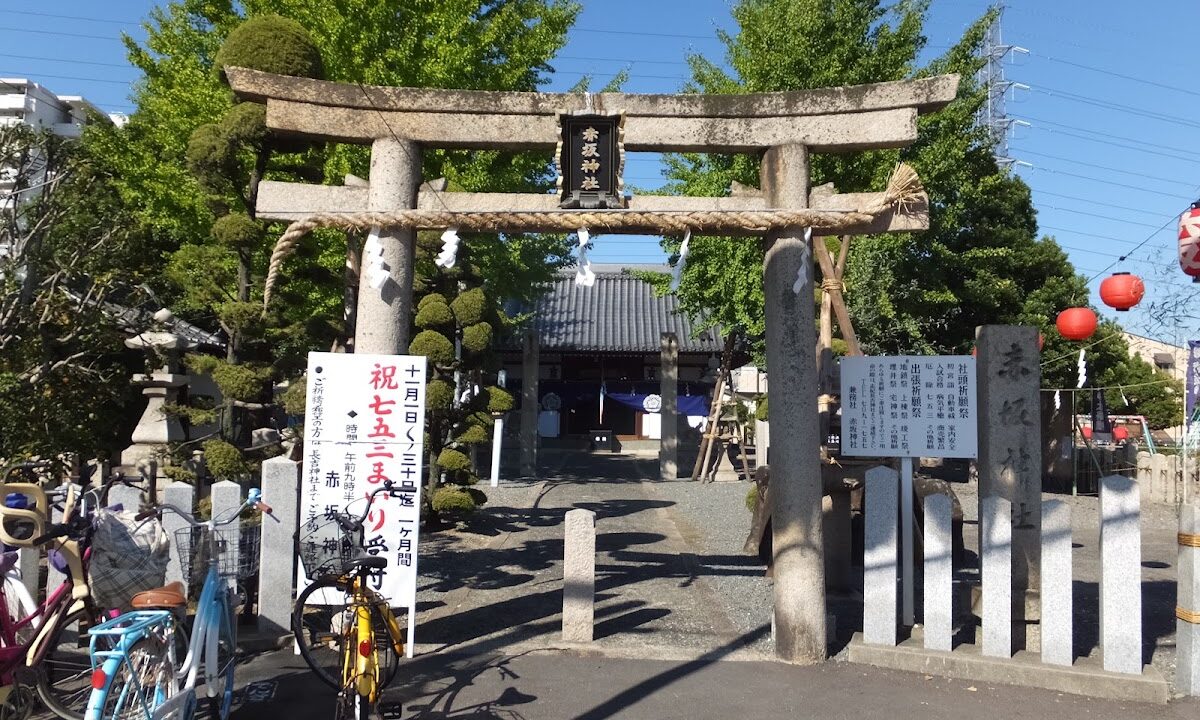
Akasaka Shrine (Osaka Prefecture) Complete Guide | A Thorough Explanation of History, Deities, Access, and Surrounding Area Information
There are several shrines in Osaka Prefecture bearing the name “Akasaka,” each deeply intertwined with the history of the region. This article provides a detailed explanation of the historical shrines around Chihayaakasaka Village, focusing on Akasaka Shrine in Hirano Ward, Osaka City, including their founding history, enshrined deities, origins of place names, and access methods.
Overview of Akasaka Shrine (Hirano Ward, Osaka City)
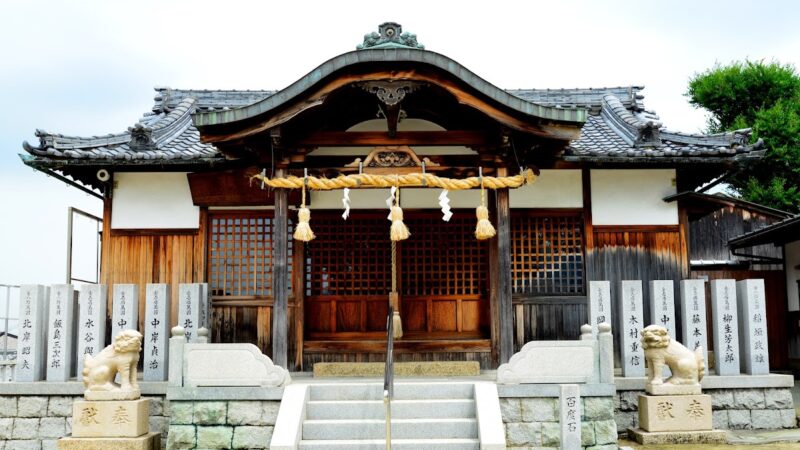
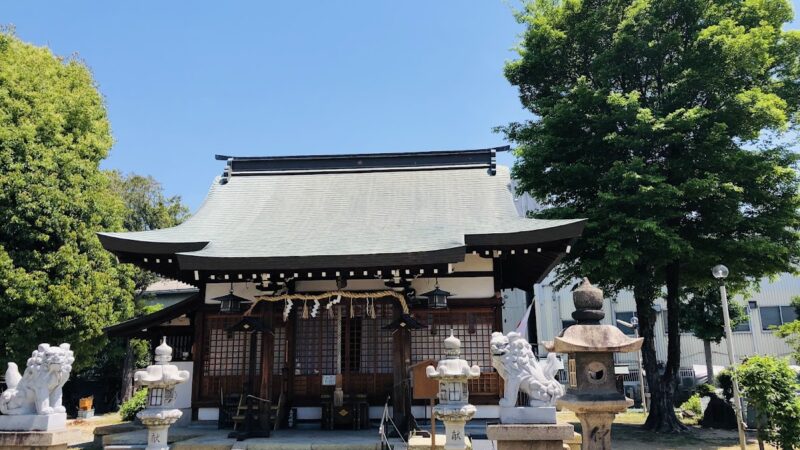
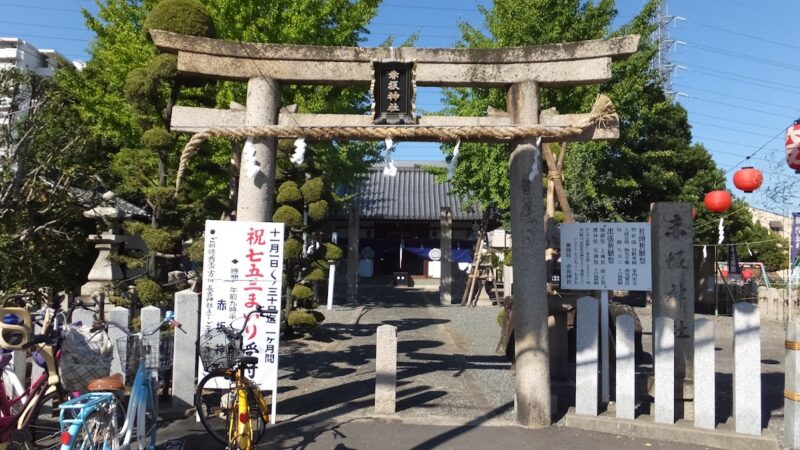
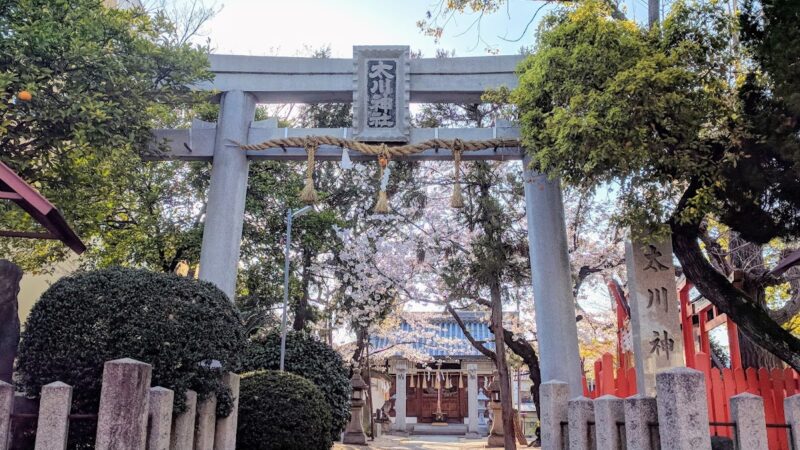
Located in Nagayoshi Rokutan, Hirano Ward, Osaka City, Akasaka Shrine has long been revered as the local guardian deity. The current name was established through a consolidation of shrines during the Meiji era; prior to that, several smaller shrines existed independently.
Location and Access
Location: 1-14-24 Nagayoshi Rokutan, Hirano-ku, Osaka City, Osaka Prefecture
Access:
- Approximately 15 minutes on foot from Nagahara Station on the Tanimachi Subway Line
- Approximately 3 minutes on foot from the Rokutan bus stop on the Osaka City Bus
- By car, approximately 10 minutes from the Hirano exit of the Hanshin Expressway Matsubara Line
Deities Enshrined
The following deities are enshrined at Akasaka Shrine:
- Susanoo-no-Mikoto: Originally the principal deity enshrined in this area, worshipped as a god of protection against misfortune and disease.
- Sugawara no Michizane: Known as the god of learning, he was enshrined here through the consolidation of deities.
These deities were consolidated into one shrine in 1872 (Meiji 5) through the consolidation of shrines, becoming a village shrine and the center of local faith.
History and Origin of Akasaka Shrine
Founding Period and Early Appearance
The exact founding date of Akasaka Shrine is unclear, but it is believed to have initially existed as a small shrine dedicated to Susanoo-no-Mikoto. It is a historical shrine that has attracted the faith of the people of this region since before the Edo period.
Shrine Consolidation in the Meiji Era
In April 1872 (Meiji 5), as part of the Meiji government’s shrine consolidation policy, the following three shrines were consolidated:
- Susanoo-no-Mikoto Shrine: The original main shrine
- Tenman Shrine: A shrine dedicated to Sugawara no Michizane
- Gojinja Shrine: A shrine dedicated to the local guardian deity
This consolidation resulted in the establishment of the name “Akasaka Shrine” and the shrine’s attainment of the status of a village shrine. A village shrine, under the old shrine ranking system, refers to a shrine recognized as the guardian shrine of a village.
The Origin of the Place Name “Rokutan” and its Connection to Kusunoki Masashige
Renaming from Akasaka Village to Rokutan Village
The current place name, Nagayoshi Rokutan in Hirano Ward, has an interesting historical background. This area was originally called “Akasaka Village, Tanboku District.”
In 1331 (Genkō 1), Kusunoki Masashige raised an army against the Kamakura Shogunate, based at “Chihaya Akasaka” at the foot of Mount Kongō. This event changed the fate of Akasaka Village in Hirano Ward, which was far away.
Reason for the Name Change
Because there was a place name with the same name, “Akasaka,” the villagers feared being mistakenly attacked by the Shogunate army, so they devised a plan.
- Remove the vertical line (|) from the character “赤” (aka)
- Remove the character “土” (tsuchi) from the character “坂” (saka)
- This resulted in the creation of the new place name “Rokutan” (六反).
This legend of the place name change is a valuable historical document illustrating the wisdom of the common people during the turbulent medieval period and the far-reaching impact of Kusunoki Masashige’s uprising.
Akasaka-related Shrines around Chihayaakasaka Village
Besides Akasaka Shrine in Hirano Ward, Osaka Prefecture, there are several other important shrines related to “Akasaka.” In particular, many shrines associated with Kusunoki Masashige remain around Chihayaakasaka Village in Minamikawachi District.
Takemikumari Shrine
Location: 357, Oaza Suibun, Chihayaakasaka Village, Minamikawachi District, Osaka Prefecture
Takemikumari Shrine is a prestigious shrine known as the guardian shrine of Mount Kongo and the tutelary deity of the Kusunoki clan. It is affectionately called “Suibun-san” by locals.
Deities Enshrined:
- Main Shrine: Amenominakanushi-no-kami
- Left Shrine: Amenomikumari-no-kami, Mitsuhanome-no-kami
Historical Significance:
Takemizuwake Shrine was devastated by fire during the Nanboku-cho period, but was rebuilt in 1334 by Kusunoki Masashige at the command of Emperor Go-Daigo. The main shrine is designated as an Important Cultural Property and is preserved as a valuable example of medieval shrine architecture.
During the Meiji era, many surrounding village shrines were merged. On November 13, 1908 (Meiji 41), Itamo Shrine (enshrining Susanoo-no-Mikoto, Ōkuninushi-no-Mikoto, Emperor Ōjin, and Emperor Ankan), a village shrine in Itamochi, Kanata Village, was merged, and a wide range of former village shrines were integrated.
Nagi Shrine
Location: 357 Mizuwake, Chihayaakasaka-mura, Minamikawachi-gun, Osaka Prefecture (Subsidiary shrine of Take Mizuwake Shrine)
Nagi Shrine is a subsidiary shrine of Take Mizuwake Shrine, dedicated to Kusunoki Masashige.
History of Founding:
In 1337 (Engen 2), after the death of Kusunoki Masashige, Emperor Go-Daigo enshrined him within the grounds of Take Mizuwake Shrine. Later, Emperor Go-Murakami bestowed the shrine name “Nagi Myojin,” establishing it as a shrine honoring Kusunoki Masashige.
Chihaya Shrine
Location: Chihaya, Chihayaakasaka-mura, Minamikawachi-gun, Osaka Prefecture (within Mount Kongo)
Chihaya Shrine is located on the site of the main keep of Chihaya Castle, built by Kusunoki Masashige.
Founding and Deity:
It is believed that the shrine was founded in 1332 (Genkō 2nd year/Shōkei 1st year) during the early Nanboku-chō period, when Chihaya Castle was built. Hachiman Daibosatsu was enshrined in the castle’s main keep as the castle’s guardian deity.
Origin of the “Benefit of Not Falling”:
Chihaya Castle is known as an impregnable fortress, where Kusunoki Masashige, with only a small force, defended against the large shogunate army during the Genkō War without ever falling. Because of this history, Chihaya Shrine is believed to offer the “benefit of not falling,” and is revered by students taking exams and those seeking employment.
Akasaka Kaminoyama Shrine
Location: Mikanodai, Kawachinagano City, Osaka Prefecture
Deities Enshrined:
- Emperor Ojin
- Empress Jingu
- Emperor Chuai
Akasaka Kaminoyama Shrine, located in Kawachinagano City, was formerly a village shrine and has long been a center of local faith.
Distribution and History of the Place Name “Akasaka” in Osaka Prefecture
Origins of Chihaya Akasaka Village
Chihaya Akasaka Village in Minamikawachi District, Osaka Prefecture, is the only village in Osaka Prefecture and is known as a place associated with Kusunoki Masashige. The village names “Chihaya” and “Akasaka” originate from Chihaya Castle and Akasaka Castle, respectively, built by Kusunoki Masashige.
Shimo Akasaka Castle (Akasaka Castle):
This castle was built in 1331 (Genko 1) when Kusunoki Masashige first raised an army, and it occupies an important position in the history of Chihaya Akasaka Village. Currently, the site is designated as a historical site for a castle, and related shrines and temples are scattered throughout the surrounding area.
Relationship between Akasaka and Akasaka in various locations
While the place names “Akasaka” and “Akasaka” that exist in multiple locations within Osaka Prefecture are not all directly related, the following commonalities can be observed:
- Topographical characteristics: Many are located in hilly or sloped areas.
- Medieval history: Some connection to the activities of Kusunoki Masashige or the Nanboku-cho period (Northern and Southern Courts period).
- Center of faith: A shrine is established as the guardian deity of the region.
Annual events and festivals of Akasaka Shrine
Main annual events
At Akasaka Shrine (Hirano Ward), the following annual events are held as the local guardian deity.
Spring Grand Festival
- Time: Spring (around April)
- Content: Prayers for a bountiful harvest and the safety of the community
Summer Purification Ceremony
- Time: June 30th
- Content: Purification of impurities accumulated over the past six months, and prayers for good health and protection from illness for the remaining half of the year
Autumn Grand Festival
- Time: Autumn (around October)
- Content: Prayers for gratitude for the harvest and for the prosperity of the parishioners
New Year’s Visit
- Time: January 1st-3rd
- Content: Prayers for the New Year, prayers for protection against misfortune
Connections with the Community
Akasaka Shrine, as the tutelary shrine of the Nagayoshi Rokutan area, is closely intertwined with the lives of the local residents. It remains a popular place of worship for many people at important life events such as Shichi-Go-San (a traditional Japanese rite of passage for children), protection against misfortune, and prayers for safe childbirth.
Manners and Etiquette for Visiting a Shrine
Basic Etiquette for Visiting a Shrine
The basic etiquette for visiting a shrine is as follows:
- How to Pass Through the Torii Gate: Bow before passing through. Since the center of the path is considered the path of the gods, walk along the side.
- How to Purify Yourself at the Water Basin:
- Hold the ladle in your right hand and purify your left hand.
- Switch the ladle to your left hand and purify your right hand.
- Switch the ladle back to your right hand, receive water in your left hand, and rinse your mouth.
- Finally, stand the ladle upright to purify the handle.
- Etiquette at the Main Hall:
- Quietly place your offering in the offering box.
- Ring the bell if there is one.
- Perform the two bows, two claps, and one bow (bowing twice, clapping twice, bowing once).
About Goshuin (Shrine Seals)
Some shrines offer Goshuin. Goshuin (temple/shrine stamps) are given as proof of worship, so please receive them at the shrine office after your visit. Bringing your goshuincho (stamp book) is recommended.
Nearby Tourist Spots and Historical Walks
Highlights around Hirano Ward
Hirano-go
Within walking distance of Akasaka Shrine, the historical townscape of Hirano-go, which flourished as a moated settlement in the Middle Ages, remains.
- Kumata Shrine: The main guardian shrine of Hirano-go
- Hirano Moated District: A historical townscape is preserved
Highlights around Chihayaakasaka Village
When visiting Chihayaakasaka Village, we recommend also visiting the following spots.
Mt. Kongo
- A mountain with an elevation of 1,125m, popular as a hiking course.
- Katsuragi Shrine is located near the summit.
Historical Sites Related to Kusunoki Masashige
- Chihaya Castle Ruins
- Shimoakasaka Castle Ruins
- Kusunoki Masashige’s Grave
Terraced Rice Field Landscape
- The terraced rice fields of Shimoakasaka have been selected as one of “Japan’s Top 100 Terraced Rice Fields.”
- Beautiful rural scenery unfolds in every season.
The Shrine Culture of Osaka Prefecture and the Position of Akasaka Shrine
Characteristics of Shrines in Osaka Prefecture
There are over 700 shrines in Osaka Prefecture, each reflecting the history and culture of its region. From large urban areas to rural areas, Osaka Prefecture’s shrines, with their diverse regional characteristics, have the following characteristics:
- God of Commerce: Osaka, known as the “Kitchen of Japan,” has a thriving commercial sector, resulting in numerous shrines dedicated to business prosperity.
- Historical Diversity: Shrines reflecting the history of various eras, from ancient times to the modern period, coexist.
- Community-Oriented: Strong roots in local tutelary deity worship, these shrines function as the center of local communities.
Role as a Village Shrine
Village shrines like Akasaka Shrine were designated as the guardian shrines of villages under the Meiji-era shrine ranking system. Village shrines have historically fulfilled the following roles:
- Spiritual Pillar of the Region: The center of faith for villagers
- Community Gathering Place: A place for community interaction through festivals
- Inheritance of History: A role in passing on local history and traditions to future generations.
Even today, these roles continue to be passed down, albeit in modified forms.
Detailed Access Information to Akasaka Shrine
Access by Public Transportation
Akasaka Shrine, Hirano Ward, Osaka City
- By Subway: Get off at Nagahara Station on the Osaka Metro Tanimachi Line, then walk east for approximately 15 minutes.
- By Bus: Get off at the Rokutan bus stop on the Osaka City Bus, then walk for approximately 3 minutes.
- Travel Time from Nearest Station: Approximately 30 minutes from Osaka (Umeda)
Shrines in Chihaya Akasaka Village
- Takemizuwake Shrine: From Tondabayashi Station on the Kintetsu Nagano Line, take the Kongo Bus and get off at Mizuwake, then walk for approximately 5 minutes.
- Chihaya Shrine: From Tondabayashi Station on the Kintetsu Nagano Line, take the Kongo Bus and get off at Kongo Tozanguchi, then walk for approximately 1 hour (hiking).
Access by Car
Akasaka Shrine, Hirano Ward, Osaka City
- Approximately 10 minutes from the Hirano Exit of the Hanshin Expressway Matsubara Line.
- Parking: Limited space available on the shrine grounds.
Shrines of Chihayaakasaka Village
- Approximately 30 minutes from the Habikino Interchange on the Minami-Hanna Expressway via National Route 170.
- Parking available at each shrine (limited space).
Points to Note and Manners When Visiting
Regarding Attire
While special attire is not required for a normal visit, please consider the following points.
- Please dress neatly.
- If receiving prayers, it is preferable to wear attire that is not too casual.
- Even in summer, please avoid excessive skin exposure.
Regarding Photography
- Photography is generally permitted on the shrine grounds, but there are areas where photography is prohibited, such as inside the main hall.
- Please be considerate of other worshippers.
- Permission is required in advance for commercial use.
Visiting Hours
- While the shrine is generally open for worship 24 hours, the reception hours at the shrine office are limited.
- If you wish to receive a Goshuin (shrine stamp) or amulet, it is recommended to visit during the daytime (around 9:00 to 17:00).
Summary: The Charm and Value of Akasaka Shrine
The Akasaka (Akasaka) shrines in Osaka Prefecture each have their own unique history and characteristics, while supporting local faith.
The Akasaka Shrine in Hirano Ward has an interesting legend that the historical event of Kusunoki Masashige’s uprising influenced even the place name, and it took its current form after the merger of shrines during the Meiji era. This shrine enshrines two deities, Susanoo-no-Mikoto and Sugawara no Michizane, and is cherished by local residents as a god of protection against misfortune and academic success.
Meanwhile, the group of shrines around Chihayaakasaka Village are directly linked to important periods in Japanese history, such as Kusunoki Masashige and the Nanboku-cho period (Northern and Southern Courts period). Each shrine possesses its own unique value, including the main hall of Takemizuwake Shrine, which is designated as an Important Cultural Property; the “unfailing blessing” of Chihaya Shrine; and the commemoration of Kusunoki Masashige at Minami Shrine.
Visiting these shrines is more than just sightseeing or worship; it’s a valuable opportunity to feel the history of Osaka, particularly the wisdom and faith of the people during the turbulent medieval period, and the community bonds that have been passed down to the present day.
Even in today’s increasingly urbanized world, these shrines continue to play an important role as spiritual pillars of the local community and as places to pass on history to future generations. When you visit Osaka, be sure to visit these Akasaka shrines and experience their history and charm.