Complete Guide to Hamukoso Shrine (Higashi-Osaka City, Osaka Prefecture) | History, Deities, and Access Information
Hamukoso Shrine is a historic shrine located in Nagase-cho, Higashi-Osaka City, Osaka Prefecture. Known as a Shikinaisha (a shrine listed in the Engishiki Jinmyocho), it has been a center of worship in this region since ancient times. This article comprehensively introduces detailed information useful for visiting Hamukoso Shrine, including its history, enshrined deities, highlights within the grounds, and access methods.
Basic Information about Hamukoso Shrine
Official Name: Hamukoso Shrine
Location: 1-10-9 Nagase-cho, Higashi-Osaka City, Osaka Prefecture
Affiliation: Association of Shinto Shrines
Former Shrine Rank: Shikinaisha (Shrine listed in the Engishiki)
Nearest Station: Approximately 5 minutes on foot from Nagase Station on the Kintetsu Osaka Line
Phone Number: 072-997-1044
Hamukoso Shrine is a shrine quietly nestled in a residential area of Higashi-Osaka City. Looking at the map, it is located northwest of Nagase Station, in a naturally rich environment surrounded by the Nagase River.
Deities Enshrined at Hamukoso Shrine
The following deities are enshrined at Hamukoso Shrine:
- Amaterasu Omikami
- Izanagi Omikami
- Izanami Omikami
While the current principal deity is Amaterasu Omikami, the history of the shrine and the origin of its name conceal an older form of belief.
The Origin of the Name “Hamukoso” and Snake God Worship
The unique name of the shrine, “Hamukoso,” reflects ancient beliefs. This name is thought to originate from “hamu” (snake), suggesting that a belief in the sacredness of snakes once existed in this area.
In ancient Japan, snakes were revered as water gods and agricultural gods, worshipped as beings that brought fertility and the blessings of water. The name of Hamukoso Shrine is valuable evidence that conveys the remnants of this ancient snake god worship. ## History of Hamukoso Shrine
Listing in the Engishiki Jinmyocho (Register of Shrines in the Engi Era)
Hamukoso Shrine is a Shikinaisha (shrine listed in the Engishiki Jinmyocho), compiled in 927 (Engi 5). The Engishiki Jinmyocho lists “Hamukoso Shrine” as a shrine in Shibukawa District, Kawachi Province, indicating that it was already a prestigious shrine recognized by the imperial court during the Heian period.
In addition to Hamukoso Shrine, 16 other Shikinaisha shrines, including Mito Shrine and Hiraoka Shrine, are listed in Higashi-Osaka City, indicating that this region has been a center of worship since ancient times.
Records from the Medieval to Early Modern Periods
Various historical documents contain the following descriptions of Hamukoso Shrine:
- Shrine Records: Listed as “Kitajakusa Village Shinmei”
- Kawachi Famous Places Illustrated Guide: Also referred to as “Taisha Tenjin”
- Shinmei Study: Referred to as “Taisha Shrine”
These records show that the Hamukoso Shrine was known as “Shinmei Shrine” and “Taisha Shrine” over time, and was cherished by the local people. The place name “Kitajakusa Village” also suggests a connection to snake deity worship.
Merger in the Meiji Era and Post-War Restoration
A major turning point in the history of the Hamukoso Shrine was the Meiji era’s policy of merging shrines.
1907 (Meiji 40): Due to the Meiji government’s policy of reorganizing shrines, the Hamukoso Shrine was merged with “Nagase Shrine” located in the Korizuri district of Higashi-Osaka City. As a result, the Hamukoso Shrine temporarily disappeared.
1976 (Showa 51): Thanks to the enthusiastic efforts of local residents, the shrine was restored to its original location after approximately 70 years. This restoration demonstrates the deep affection and faith that the local people have for the Hamukoso Shrine.
With the post-war restoration, Hamukoso Shrine regained its role as an independent shrine and the center of local faith.
Highlights of the Shrine Grounds
Main Hall and Worship Hall
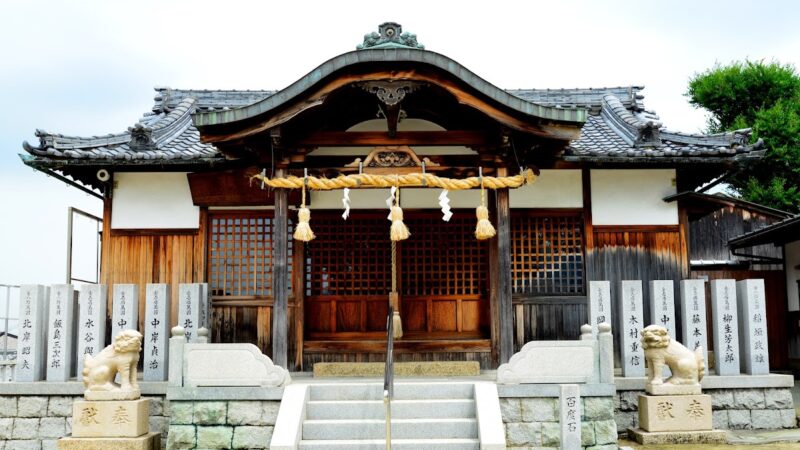
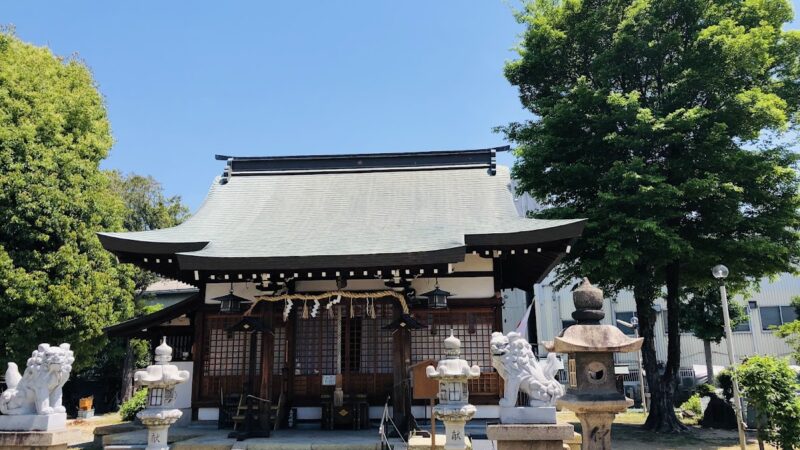
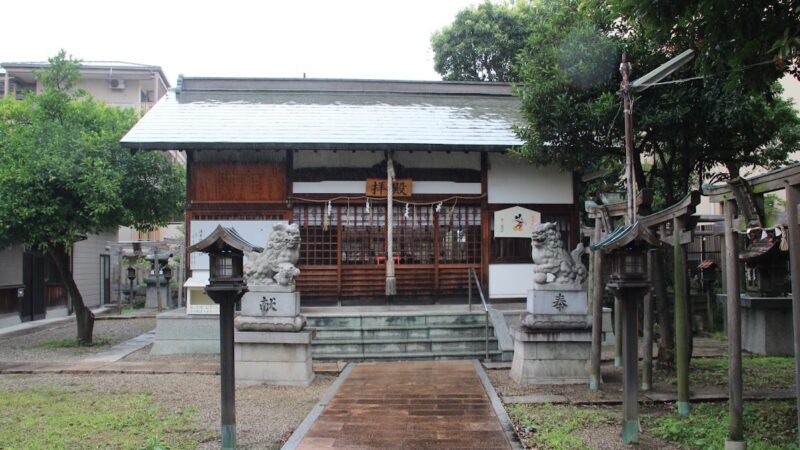
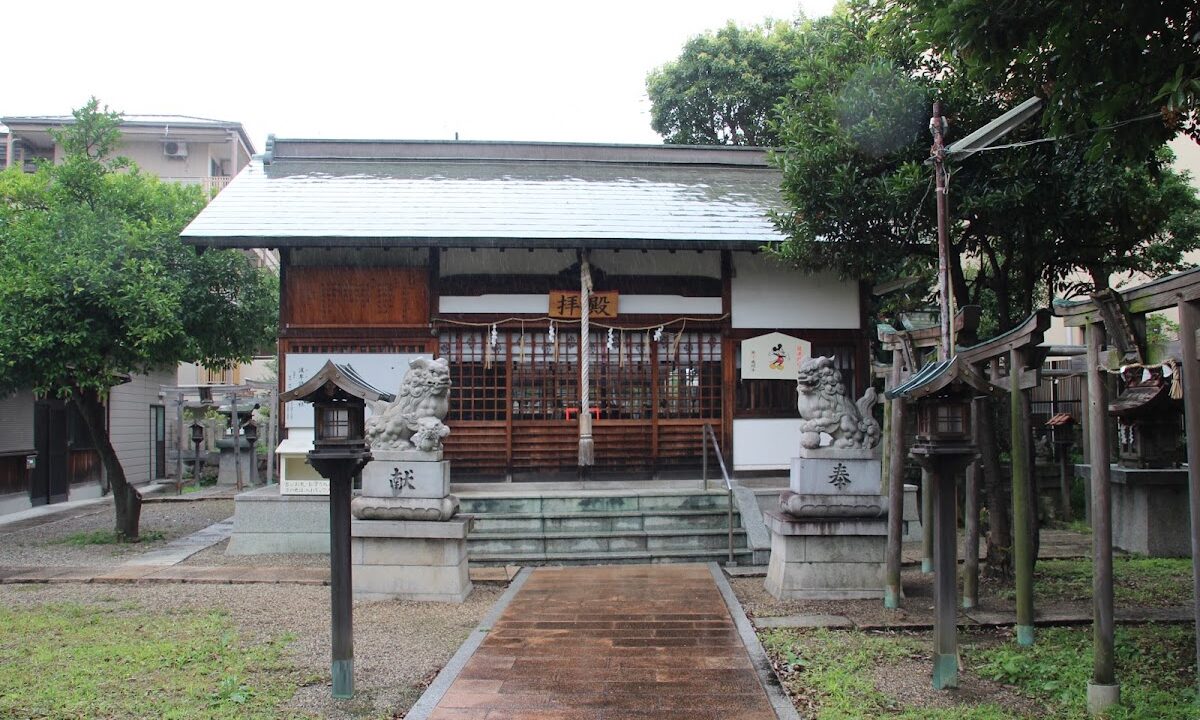
The main hall of Hamukoso Shrine was rebuilt after the shrine’s restoration, but it follows the traditional style of shrine architecture. Although small in scale, it is carefully maintained, reflecting the faith of the local people.
The worship hall has an open design, creating an atmosphere where visitors can easily offer their prayers. Because the entire shrine grounds are compact, a quiet and peaceful worship experience is possible.
Natural Environment of the Shrine Grounds
Despite being located in an urban area, the grounds of Hamukoso Shrine are blessed with a natural environment. From spring to early summer, the shrine grounds are covered in blooming white clover, creating a beautiful scene of butterflies fluttering about.
Visitors can find solace and spiritual refreshment in this tranquil natural environment. This quiet space, far removed from the hustle and bustle of the city, is truly a hidden power spot.
Relationship with the Dragon God
In connection with snake deity worship, the Hamukoso Shrine is also said to have a connection to the Dragon God. The Dragon God is often worshipped as a water deity and an evolved form of the snake, and this is linked to the ancient beliefs of the Hamukoso Shrine.
Visiting the shrine grounds, one can feel a pure atmosphere that naturally evokes a sense of gratitude for the blessings of water and nature.
Goshuin (Shrine Seal) Information
Goshuin are available at the Hamukoso Shrine, but since there is no permanent shrine office, prior confirmation is necessary. If you wish to receive a Goshuin (temple/shrine stamp), we recommend contacting us by phone (072-997-1044) to confirm the available dates and times.
The Goshuin will bear the name of “Hamukoso Shrine” and the date. This prestigious Goshuin, befitting a Shikinaisha (a shrine listed in the Engishiki), will be a valuable record for those visiting shrines.
Access Information
Access by Train
Nearest Station: Kintetsu Osaka Line “Nagase Station”
Travel Time: Approximately 5 minutes on foot
The following route is convenient from Nagase Station to Hamukoso Shrine:
- Exit the north exit of Nagase Station
- Proceed straight northwest
- After passing through the residential area, you will arrive at Hamukoso Shrine
Nagase Station is on the Kintetsu Osaka Line and is accessible in approximately 15 minutes from Osaka Namba Station and approximately 10 minutes from Tsuruhashi Station.
Access by Car
Hamukoso Shrine does not have its own parking lot, so we recommend using public transportation. If you are visiting by car, you will need to use a nearby coin-operated parking lot or a parking lot near Nagase Station and walk to the shrine.
Map and Navigation
Searching for “Hamukoso Shrine” in modern map apps or car navigation systems will show the exact location. You can also search by entering the address: “1-10-9 Nagase-cho, Higashi-Osaka City, Osaka Prefecture.”
Nearby Attractions and Spots
When visiting Hamukoso Shrine, you can also visit nearby shrines, temples, and tourist spots.
Nagase Shrine
Nagase Shrine, where Hamukoso Shrine was formerly enshrined, is located in Korizuri, Higashi-Osaka City. It is within walking distance of Nagase Station and is also a historical shrine that attracts local worshippers. Visiting both Hamukoso Shrine and Nagase Shrine will allow you to understand the historical connection between the two shrines more deeply.
Mito Shrine
This shrine, also listed in the Engishiki Jinmyocho (a list of shrines compiled in the Heian period), is located in Higashi-Osaka City. Like Hamukoso Shrine, it has a long and distinguished history dating back to ancient times, making it a must-see spot when touring the Engishiki shrines of Higashi-Osaka City.
Hiraoka Shrine
Known as the Ichinomiya (first-ranked shrine) of Kawachi Province, Hiraoka Shrine is a major shrine representing Higashi-Osaka City. Also known as the original shrine of Kasuga Taisha, it is a highly prestigious shrine visited by many worshippers. While it’s a bit of a distance from Hamukoso Shrine, it’s an essential stop on a Higashi-Osaka shrine tour.
Around Nagase Station
The area around Nagase Station is home to the Kinki University campus and is a bustling student town. There are many restaurants and cafes, making it convenient for resting or eating after visiting the shrine. A leisurely stroll while enjoying the local atmosphere is also recommended.
Manners and Etiquette for Visiting Shrines
When visiting Hamukoso Shrine, please observe the following basic manners for visiting shrines.
How to Pass Through the Torii Gate
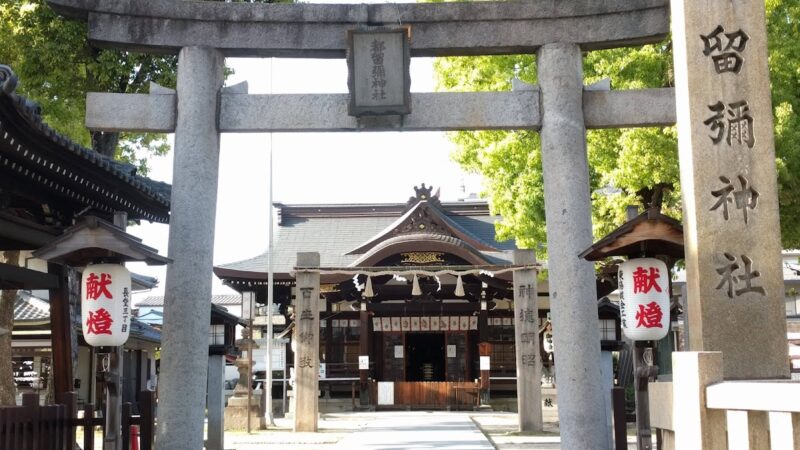
Bow before passing through the torii gate. The torii gate is the entrance to a sacred area, and showing respect is important.
How to Wash Your Hands
- Take the ladle with your right hand and wash your left hand.
- Switch the ladle to your left hand and wash your right hand.
- Switch the ladle back to your right hand, receive water in your left hand, and rinse your mouth.
- Wash your left hand again.
- Hold the ladle upright, wash the handle, and return it to its original position.
Worship at the Main Hall
- Place your offering in the offering box.
- If there is a bell, ring it.
- Worship using the two bows, two claps, and one bow ritual.
Annual Events at Hamukoso Shrine
Hamukoso Shrine holds annual events rooted in the local community. Although small in scale, these are traditional events that the local people cherish and continue to preserve.
Annual Festival
An annual festival is held every autumn, with local residents gathering to celebrate the shrine’s festival. It is recommended to inquire with the shrine in advance for detailed dates.
Seasonal Festivals
Seasonal festivals are also held, such as the New Year’s Day visit, the Setsubun festival, and the summer purification ritual. Although small in scale, it plays a central role in the local community.
Benefits of Hamukoso Shrine
The following are some of the benefits you can expect at Hamukoso Shrine:
Prayer for Family Safety and Health
As the shrine enshrines Amaterasu Omikami, Izanagi Omikami, and Izanami Omikami, many visitors come to pray for the health and safety of their families.
Abundant Harvest and Business Prosperity
Ancient snake deity worship also had characteristics of an agricultural deity, so you can also expect benefits of abundant harvests and business prosperity.
Protection from Evil and Good Fortune
Due to its status as a Shikinaisha (a shrine listed in the Engishiki) and its ancient spiritual power, it is believed to offer protection from evil and good fortune.
About Shikinaisha in Higashi-Osaka City
Higashi-Osaka City has 16 Shikinaisha listed in the Engishiki Jinmyocho (a list of shrines compiled in the Heian period), including Hamukoso Shrine. This is a particularly large number within Osaka Prefecture, indicating that this region has been an important center of religious belief since ancient times.
Shikinaisha in Shibukawa District, Kawachi Province
Shibukawa District in Kawachi Province, to which Hamukoso Shrine belonged, had the following Shikinaisha:
- Hamukoso Shrine
- Mito Shrine
- Okibe Shrine
- Other Shikinaisha
A “Shikinaisha pilgrimage” visiting these shrines would be a fascinating experience for history buffs and shrine enthusiasts.
The Charm and Characteristics of Hamukoso Shrine
A Hidden Power Spot in the City
The greatest charm of Hamukoso Shrine lies in its quiet and peaceful atmosphere despite being located in an urban area. Unlike large-scale tourist shrines, it is a simple, community-oriented shrine, allowing visitors to truly relax.
Traces of Ancient Beliefs
The name “Hamukoso” itself, a trace of snake deity worship, provides valuable clues to understanding Japan’s ancient beliefs. While Amaterasu Omikami is currently the main deity, the history of ancient nature worship still thrives behind it.
The Center of the Local Community
The history of Hamukoso Shrine, which nearly disappeared during the Meiji period but was restored through the enthusiasm of local residents, speaks volumes about its importance to the community. Even today, it is carefully preserved by local people and serves as a spiritual pillar of the community.
Points to Note When Visiting
Please note the following points when visiting Hamakosho Shrine.
About the Shrine Office
Since there is no permanently staffed shrine office, it is recommended to call in advance if you wish to obtain a Goshuin (shrine stamp) or other items.
Visiting Hours
While you can generally visit the shrine grounds freely, it is recommended to refrain from visiting early in the morning or late at night, and instead visit during daylight hours.
Photography on the Shrine Grounds
Photography is permitted, but please be considerate of other visitors and refrain from taking pictures in areas where photography is prohibited, such as inside the main hall.
Respect
As this shrine is located in a residential area, please refrain from loud conversations and noisy behavior, and worship quietly.
History of Hamakosho Shrine and Higashi-Osaka City
The history of Hamakosho Shrine is deeply intertwined with the history of Higashi-Osaka City. The ancient Shibukawa district of Kawachi Province was a region closely connected to the Yamato court and home to many clans.
Ancient Kawachi Region
The Kawachi region was an important area connecting Yamato and Naniwa (present-day Osaka) in ancient times. Many settlements formed around Lake Kawachi (an ancient Osaka Bay extended inland), and agriculture and trade flourished.
The Nagase area, where the Hamukoso Shrine is located, also developed as part of this ancient Kawachi region, benefiting from the blessings of water. The snake deity worship is thought to have originated from a feeling of gratitude for water and agriculture.
Medieval to Early Modern Period
From the medieval period onward, this region, as part of Kawachi Province, was under the control of various forces. During the Sengoku period, it was under the influence of Oda Nobunaga and Toyotomi Hideyoshi, and during the Edo period, it was governed as a direct territory of the shogunate and a territory of hatamoto (direct retainers of the shogun).
Through these changes of era, the Hamukoso Shrine continued to attract the faith of the local people. ### Modernization and the Transformation of Shrines
The modernization of the Meiji era brought about significant changes to the shrine system. The Meiji government’s policy of consolidating shrines nationwide aimed to streamline operations by integrating small shrines, but it also resulted in the loss of local religious centers.
Hamukoso Shrine was no exception; it was merged with Nagase Shrine, but regained its independence after the war. This history serves as a prime example of the importance of regional identity.
Summary
Hamukoso Shrine is a historic shrine located in Higashi-Osaka City, Osaka Prefecture. As an ancient shrine listed in the Engishiki Jinmyocho (a list of shrines compiled in the Heian period), it boasts a history dating back to the Heian period, and its unique name retains traces of ancient snake deity worship.
Its history of being merged during the Meiji era and then restored in the Showa era speaks to the deep faith of the local people. Although small today, it offers peace of mind to visitors as a quiet power spot in the heart of the city.
Its convenient location, just a 5-minute walk from Nagase Station, is a major draw, making it a must-visit shrine when touring the Shikinaisha (shrines listed in the Engishiki) in Higashi-Osaka City or simply visiting other shrines. Why not spend some quiet time in the lush, natural grounds, reflecting on its ancient history?
Through a visit to Hamukoso Shrine, you can gain insight into Japan’s ancient faith, the history of the region, and the forms of faith that continue to be passed down to the present day. For detailed and up-to-date information, it is recommended to inquire by phone beforehand.