Complete Guide to Ekoji Temple (Oda City, Shimane Prefecture) | History and Highlights of a Nichiren Buddhist Temple Associated with the Magistrate of the Iwami Silver Mine
Ekoji Temple, located in Yunotsu-cho, Oda City, Shimane Prefecture, is a Nichiren Buddhist temple deeply connected to the history of the Iwami Silver Mine. Situated in the heart of the hot spring town, this temple is known for its connection to Okubo Iwami-no-kami Nagayasu, the first magistrate of the Iwami Silver Mine in the early Edo period, and for preserving valuable historical heritage. This article comprehensively introduces information you should know before visiting, from the historical background and highlights of Ekoji Temple to access methods.
What is Ekoji Temple?: A Nichiren Buddhist Temple Watching Over the History of Yunotsu
Ekoji Temple is a Nichiren Buddhist temple located in Yunotsu-cho, Oda City, Shimane Prefecture. Located within the historic Yunotsu Onsen hot spring town, it remains a place of worship for the local people and a vital cultural asset that tells the story of the Iwami Silver Mine.
Basic Temple Information
- Sect: Nichiren Buddhism
- Location: Yunotsu, Yunotsu-cho, Oda City, Shimane Prefecture
- Features: Temple associated with the first magistrate of the Iwami Silver Mine, decree prohibiting killing, pre-mortem memorial grave
- Surrounding Environment: Center of Yunotsu Onsen hot spring town
Yunotsu town is home to Yunotsu Port, one of the constituent assets of the World Heritage Site “Iwami Silver Mine Site and its Cultural Landscape,” and Eikoji Temple has played an important role as a spiritual pillar of this historic town.
Deep Connection with Okubo Nagayasu, the First Magistrate of the Iwami Silver Mine
An essential aspect of discussing Eikoji Temple is its historical connection with Okubo Iwami-no-kami Nagayasu, who served as the first magistrate of the Iwami Silver Mine.
About Okubo Nagayasu
Okubo Nagayasu (c. 1545–1613) was a samurai and bureaucrat who was active from the Sengoku period to the early Edo period. He served Tokugawa Ieyasu and demonstrated his skills in mining development and financial management. Nagayasu, who was appointed as the magistrate of the Iwami Silver Mine, is known for his significant contributions to the development of the silver mine and the establishment of its management system.
The Edict Prohibiting the Killing of Living Things
At Eikoji Temple, valuable historical documents related to the “Edict Prohibiting the Killing of Living Things” issued by Okubo Nagayasu remain. This edict prohibited the killing of animals around the Iwami Silver Mine and held significant importance from the perspective of maintaining order and protecting the environment in the mining town at the time.
The Edict Prohibiting the Killing of Living Things was not merely a religious precept, but an administrative measure with multifaceted objectives, including the preservation of the natural environment associated with silver mine development, the management of workers’ health, and the maintenance of public order. This historical document remaining at Eikoji Temple is valuable evidence demonstrating how systematically the Iwami Silver Mine was governed.
Historical Value of the Gyakushu Tomb
Another important cultural asset at Eikoji Temple is the “Gyakushu Tomb.” Gyakushu refers to the Buddhist custom of performing memorial services for oneself while still alive and praying for happiness in the afterlife. A Gyakushu Tomb is an expression of faith, where one builds their own tomb while still alive, hoping for happiness in the next life.
The Gyakushu Tomb at Eikoji Temple is thought to be related to Okubo Nagayasu and his associates, and is a valuable historical document for understanding the forms of faith and views on life and death in the early Edo period. The style of the tombstone and the inscribed characters allow us to glean insights into the social strata and religious practices of the Iwami Silver Mine at that time.
The History of Eikoji Temple: A Journey Alongside the Iwami Silver Mine
While research into the founding date and detailed history of Eikoji Temple continues, it is certain that it played a crucial role as a center of local faith during the prosperous period of the Iwami Silver Mine, from the late 16th to the 17th centuries.
The Prosperity of the Iwami Silver Mine and the Development of the Temple
The Iwami Silver Mine began full-scale development in the first half of the 16th century and reached its peak during the Sengoku period and the early Edo period. At that time, approximately one-third of the world’s silver was produced in Japan, and it is said that the majority of this came from the Iwami Silver Mine.
With the prosperity of this silver mine, Yunotsu Port developed as a silver shipping port, becoming a town that attracted many people. Eikoji Temple functioned as a spiritual center for these mine workers, merchants, and port workers, and played a role in supporting the unity of the local community.
Role as a Nichiren Buddhist Temple
Nichiren Buddhism is a Buddhist sect founded by Nichiren Shonin during the Kamakura period, characterized by its faith centered on chanting the mantra “Namu Myoho Renge Kyo.” Eikoji Temple has spread the teachings of Nichiren Buddhism throughout the region, supporting the religious lives of its people.
During the Edo period, temples were not merely religious institutions, but multi-functional social facilities that played a role in education, welfare, and administration. Eikoji Temple, too, was closely intertwined with the lives of the people of Yunotsu, remaining a central presence in the local community through weddings, funerals, and annual events.
Highlights and Cultural Assets of Eikoji Temple
When visiting Eikoji Temple, please pay attention to the following highlights:
Main Hall and Temple Grounds
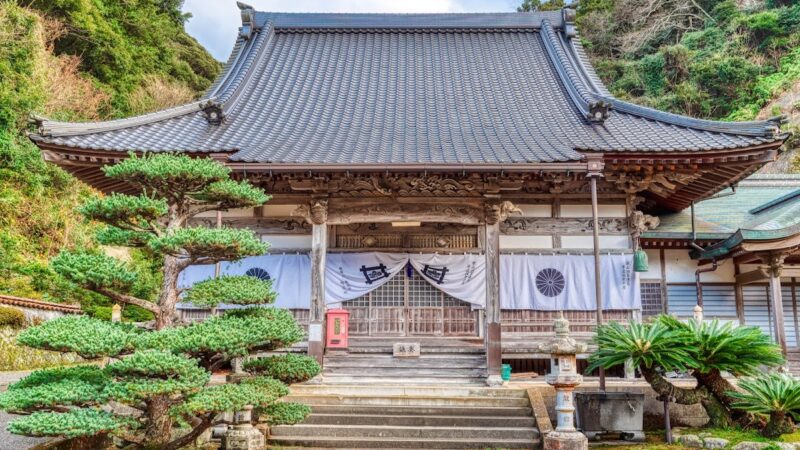
The main hall of Eikoji Temple presents a tranquil appearance that harmonizes with the townscape of Yunotsu. Despite being located in the hot spring town, the temple grounds maintain a peaceful atmosphere, offering peace of mind to visitors.
Historical Stone Structures
Stone structures dating back to the Edo period are scattered throughout the temple grounds, conveying the state of religious belief at that time. In particular, the group of tombstones, including the Gyakushu-bo (pre-mortem tomb), are valuable cultural heritage that tell the history of the Iwami Silver Mine.
Historical Materials Related to the Prohibition of Killing
Historical materials related to the prohibition of killing issued by Okubo Nagayasu are among the most important cultural assets of Eikoji Temple. These materials are indispensable resources for understanding the governance system of the Iwami Silver Mine and the social norms of the time.
Yunotsu Town and the World Heritage Site of Iwami Silver Mine
Yunotsu Town, where Eikoji Temple is located, is an important component of the “Iwami Silver Mine Site and its Cultural Landscape,” which was registered as a World Heritage Site in 2007.
History of Yunotsu Onsen
Yunotsu Onsen is an ancient hot spring said to have been discovered approximately 1300 years ago, and it flourished as a therapeutic hot spring resort for the miners of the Iwami Silver Mine. Even today, two public bathhouses, Motoyu and Yakushiyu, continue to operate, allowing visitors to experience the traditional atmosphere of a hot spring resort.
The Townscape of Yunotsu
The townscape of Yunotsu has been designated as an Important Preservation District for Groups of Traditional Buildings, and buildings from the Edo period to the Taisho period are well-preserved. When visiting Eikoji Temple, we recommend also enjoying a stroll through this historic townscape.
The Integrated Value of the Iwami Silver Mine
The World Heritage Site “Iwami Silver Mine Site and its Cultural Landscape” is valued not only for its mining ruins but also for its comprehensive cultural landscape, including the silver transportation routes, port facilities, and the living spaces of the people. Eikoji Temple occupies an important position within this landscape as a religious facility that supported the spiritual lives of the people.
How to Access Eikoji Temple
Here is information on how to access Eikoji Temple.
Access by Public Transportation
By Train/Bus
- Get off at Yunotsu Station on the JR San’in Main Line.
- Approximately 25 minutes on foot from the station to Yunotsu Onsen town, or by bus or taxi.
- Within walking distance from Yunotsu Onsen town to Eikoji Temple.
By Highway Bus
- Highway buses operated by Iwami Kotsu run from Hiroshima and Osaka.
- Access to Yunotsu Onsen town is possible from the nearest bus stop.
Access by Car
Using the San’in Expressway
- Approximately 30-40 minutes from Gozu IC or Hamada IC via National Route 9.
- Public parking is available in Yunotsu Onsen town.
From Hiroshima
- Head west on National Route 9, via Oda City to Yunotsu.
From Izumo
- Head west on National Route 9, approximately 1 hour 30 minutes.
Parking Information
Public parking is available in Yunotsu Onsen town. Regarding the parking lot for Eikoji Temple, it is recommended to check before your visit. The hot spring town has some narrow streets, so walking is recommended.
Other Temples and Religious Culture in Oda City, Shimane Prefecture
Shimane Prefecture has 1,304 temples, and many historical temples are scattered throughout Oda City. Here are some nearby temples you might want to visit along with Eikoji Temple.
Major Temples in Oda City
Temples in the Iwami Ginzan Area
In Omori-cho, the center of the Iwami Ginzan Silver Mine, there are several temples deeply connected to the history of the silver mine, such as Rakanji Temple, known for its 500 Arhats near the Ryugenji mine shaft. These temples, like Eikoji Temple, have played an important role as spiritual pillars of the mining town.
Characteristics of Shimane Prefecture’s Temple Culture
Temples in Shimane Prefecture have cultivated their own unique Buddhist culture while coexisting with Shinto culture, exemplified by Izumo Taisha Shrine. In the Iwami region in particular, there is a history of diverse Buddhist temples developing in connection with mining development and the shipping industry.
Points to Note and Manners When Visiting Eikoji Temple
When visiting the temple, please observe the following manners.
Manners for Worship
- Act quietly within the temple grounds and be considerate of other worshippers.
- Take photographs only in permitted areas (photography may be prohibited inside the main hall, etc.).
- Remove your shoes before entering the main hall and arrange them neatly.
- Offer your donation respectfully.
Regarding Clothing
- There are no specific dress code regulations, but please avoid revealing clothing.
- Even when visiting in conjunction with strolling through the hot spring town, please dress appropriately for a temple.
Visiting Hours and Admission Fee
For information regarding visiting hours and admission fees for Eikoji Temple, we recommend checking with the Oda City Tourism Association or the Yunotsu Onsen Tourist Information Center in advance. Generally, you can freely visit the temple grounds, but reservations may be required to view special cultural properties.
Tourist Attractions Around Eikoji Temple
Here are some nearby tourist attractions that you can enjoy along with your visit to Eikoji Temple.
Yunotsu Onsen
Located very close to Eikoji Temple, Yunotsu Onsen is a renowned hot spring that received the highest rating in the Japan Hot Spring Association’s natural hot spring evaluation. You can enjoy the free-flowing hot spring water at the two public bathhouses, Motoyu and Yakushiyu.
Pottery Museum
This facility exhibits the history and works of Yunotsu ware, allowing you to learn about the traditional crafts of Yunotsu. It is within walking distance of Eikoji Temple.
Yunotsu Port
Yunotsu Port, a component of the World Heritage Site, was once an important port facility for shipping silver from the Iwami Silver Mine. It still functions as a fishing port today, retaining the atmosphere of a historical port town.
Iwami Silver Mine World Heritage Center
A comprehensive information center for the Iwami Silver Mine, located in Omori-cho, Oda City. Located about 30 minutes by car from Eikoji Temple, this site offers a deep dive into the history of the Iwami Silver Mine.
Ryugenji Mine Shaft
This is a representative mine shaft site of the Iwami Silver Mine and the only mine shaft (mabu) open to the public. It’s a valuable spot where you can see the actual place where silver was mined.
The Significance of Learning the History of Eikoji Temple and the Iwami Silver Mine
Visiting Eikoji Temple has meaning beyond mere sightseeing.
Experiencing the Value of a World Heritage Site
The reason the Iwami Silver Mine was registered as a World Heritage Site is not only due to the excellence of its mining technology, but also because of its environmentally conscious and sustainable development, and the preservation of a cultural landscape where the mine and people’s lives were integrated. Eikoji Temple, as a facility representing the spiritual aspect of this “people’s lives,” is an important place for understanding the value of a World Heritage Site.
Learning About Japan’s Mining History
The Iwami Silver Mine is a symbol of the era when Japan was one of the world’s leading silver-producing countries. The historical materials related to Okubo Nagayasu preserved at Eikoji Temple provide valuable clues to understanding the mining management and governance system of the time.
Inheritance of Local Faith and Culture
Eikoji Temple, still protected by the local people, is a living cultural heritage site where traditional faith and culture have been passed down to the present day. From its presence, we can learn the significance of cultural property preservation and the importance of local communities.
Summary: Experiencing the History and Culture of the Iwami Silver Mine at Eikoji Temple
Located in Yunotsu-cho, Oda City, Shimane Prefecture, Eikoji Temple is a Nichiren Buddhist temple associated with Okubo Nagayasu, the first magistrate of the Iwami Silver Mine, and possesses invaluable historical value. Cultural assets such as the decree prohibiting the killing of living beings and the pre-mortem memorial tomb convey the governance system and the people’s faith during the prosperous period of the Iwami Silver Mine.
Standing within the townscape of Yunotsu, which is part of the World Heritage Site “Iwami Silver Mine Site and its Cultural Landscape,” Eikoji Temple is an important spot that embodies the cultural landscape where the mine and the lives of the people were intertwined. Visiting Iwami Ginzan Silver Mine in conjunction with a therapeutic soak in Yunotsu Onsen and a stroll through its historic townscape will allow you to gain a deeper understanding of its history and culture.
When visiting Shimane Prefecture, be sure to explore not only famous tourist spots like Izumo Taisha Shrine, but also historical temples rooted in the local community, such as Eikoji Temple, and enjoy a journey that allows you to experience Japan’s diverse cultural heritage. The time spent reflecting on history in the tranquil temple grounds will surely become an unforgettable travel memory.