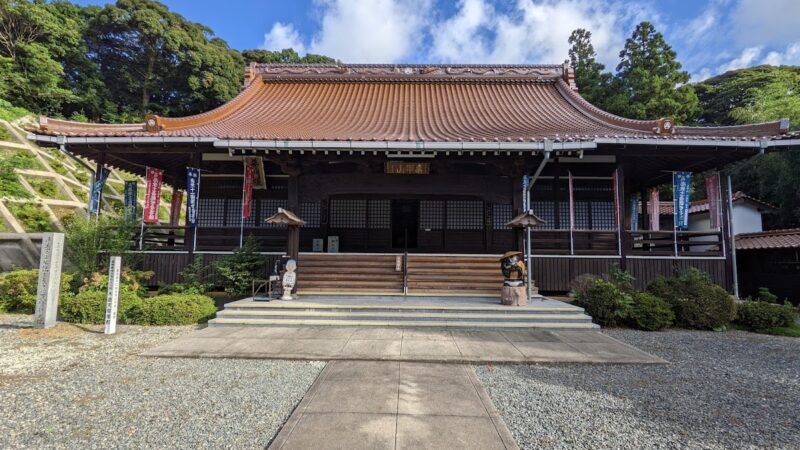
Complete Guide to Tadaji Temple (Hamada City, Shimane Prefecture) | The History of the Hatsuumasai Festival (one of the Three Great Festivals of Iwami) and the Nagarebutsu (floating Buddha)
Located in Ikuyu-cho, Hamada City, Shimane Prefecture, Tadaji Temple is an ancient temple of the Koyasan Shingon sect boasting a history of over 1200 years. As the main prayer site for Iwami Province, it attracts the faith of the local community, and every March, it is bustling with many worshippers during the Hatsuumasai Festival, one of the “Three Great Festivals of Iwami.” This article comprehensively introduces information you should know before visiting Tadaji Temple, including its history, cultural assets, annual events, goshuin (temple stamp) information, and access methods.
History and Origins of Tadaji Temple
Founding and the Disciples and Flowing Buddhas of Kobo Daishi
Tadaji Temple is said to have been founded in Daido 1 (806). The temple is said to have been founded by Ryusei, a senior disciple of Kobo Daishi (Kukai), and developed as an important center for spreading the teachings of Shingon Esoteric Buddhism in the Iwami region.
Its mountain name is Kikkozan, and its temple name is Muryoin, making its official name “Kikkozan Muryoin Tadaji.” The name “Tada” originates from the ancient Indian Sanskrit language and is said to mean “Tathagata.” This name itself reflects the deep history of faith dating back to the early days of Buddhism’s introduction to Japan.
Role as the General Prayer Center of Iwami Province
From the medieval period onward, Tadaji Temple became the General Prayer Center of Iwami Province, the center of faith throughout the Iwami region. It received strong protection from successive feudal lords and flourished as an important temple for praying for regional peace and abundant harvests. Even today, it remains the 22nd temple on the Chugoku Kannon Pilgrimage and the 27th temple on the 108 Kannon Pilgrimage, attracting many pilgrims.
Historical Changes of the Temple Grounds
Tadaji Temple is situated on a small hill, exuding a solemn atmosphere with its lush ancient pine trees. The temple grounds are vast, containing the main hall, Inari shrine, bell tower, and treasure hall. Despite experiencing several fires and wars throughout its long history, it has been preserved by the faith of the local people and continues to exist today.
Principal Image and Major Buddhist Statues
Principal Image: Eleven-Faced Kannon Bodhisattva
The principal image of Tadaji Temple is the Eleven-Faced Kannon Bodhisattva. The Eleven-Faced Kannon, with 11 faces on its head, is worshipped as a Kannon Bodhisattva that watches over and saves sentient beings from all directions. This Kannon statue, enshrined in the main hall, has been believed since ancient times to have miraculous powers for healing illnesses, warding off evil, and ensuring family safety, and many worshippers offer their prayers here. ### Shimane Prefecture Designated Important Cultural Property: Wooden Tenbu Statues (Nagare-butsu)
The most distinctive feature of Tadaji Temple is the group of 59 wooden Tenbu statues housed in a small hall on the temple grounds. These are commonly known as Nagare-butsu (Nagare-butsu) and are designated as an Important Cultural Property of Shimane Prefecture.
Origin and Legend of Nagare-butsu
There is an interesting legend behind the name “Nagare-butsu.” It is said that these statues drifted ashore, were picked up by local people, and dedicated to Tadaji Temple. They came to be called “Nagare-butsu” because of their mystical origin as statues that drifted at sea.
The number 59 is very large, and it is rare nationwide to find such a large number of Tenbu statues housed in one place. Tenbu statues are Buddhist statues representing the various deities who are guardians of Buddhism, including the Four Heavenly Kings, the Twelve Divine Generals, Benzaiten, and Bishamonten.
Cultural Value
These Buddhist statues are estimated to have been created between the Heian and Kamakura periods, making them valuable resources for studying Buddhist art and belief systems of that time. They are in relatively good condition, allowing for detailed observation of each statue’s expression and decoration.
One of the Three Great Festivals of Iwami: Tadaji Temple’s Hatsuumasai Festival
History and Significance of the Hatsuumasai Festival
The Hatsuumasai Festival, held annually in March at Tadaji Temple, is a grand festival considered one of the “Three Great Festivals of Iwami.” Hatsuuma refers to the first Day of the Horse in February (according to the lunar calendar), and is known nationwide as a day to worship Inari, the god of rice. At Tadaji Temple, it is celebrated grandly at the Inari shrine within the temple grounds.
Festival Contents and Highlights
On the day of the Hatsuumasai Festival, a Buddhist service begins at 7:00 AM. Numerous stalls line the temple grounds, and it is bustling with many visitors throughout the day. Various prayers are accepted, and people visit to pray for business prosperity, family safety, and a bountiful harvest.
For locals, the Hatsuumasai festival is an important annual event that heralds the arrival of spring, and many families and groups of friends can be seen visiting. The festival atmosphere is traditional yet warm, and it serves as a place to reaffirm the bonds of the local community.
Information on the Reiwa Hatsuumasai Festival
In recent years, the Hatsuumasai festival has often been held on a Saturday in mid-to-late March, with prayers accepted from the opening ceremony at 7:00 AM until around 5:30 PM. Traffic restrictions may be in place on the day, so using public transportation or arriving early is recommended.
Highlights of the Temple Grounds
Temple Gate
The temple gate standing at the entrance to Tadaji Temple is a dignified structure that symbolizes the temple’s history and prestige. Passing through the temple gate, the path leads to the main hall, and a magnificent landscape unfolds on both sides, lined with ancient pine trees.
Main Hall
The main hall is the central building of Tadaji Temple, and houses the principal image, the Eleven-Faced Kannon Bodhisattva. Chanting and religious services are held inside the hall, allowing worshippers to quietly offer their prayers. The architectural style inherits the traditions of Shingon Buddhist temples, and the details of the decorations are also noteworthy.
Inari Shrine
The Inari Shrine on the temple grounds is the central location of the Hatsuumasai festival. Worshipped as the god of business prosperity and abundant harvests, it is surrounded by numerous donated torii gates. The sight of the rows of vermilion torii gates is a popular spot for photography.
A Thousand-Year-Old Natural Monument
Within the grounds of Tadaji Temple stands a giant cedar tree, estimated to be over 1,000 years old, which is designated as a natural monument. This magnificent cedar tree is a living witness to the history of Tadaji Temple, and its majestic presence deeply impresses visitors. Its trunk circumference is several meters, and looking up at it is awe-inspiring.
Bell Tower and Bell
An old temple bell hangs in the bell tower on the temple grounds. It is rung on New Year’s Eve and during Buddhist ceremonies. Its sound resonates through the surrounding mountains and is believed to have a purifying effect on the mind.
Goshuin (Temple Seal) Information
Types and Designs of Goshuin
Tadaji Temple offers goshuin (temple seals) to visitors. The goshuin features the calligraphy “Kikkozan Tadaji” and the temple’s seal. Special goshuin are also available for pilgrims of the Chugoku Kannon Pilgrimage and the 108 Kannon Pilgrimage.
Goshuin Reception Hours and Location
Goshuin are available at the sutra copying office in the main hall. Normally, we are open from 9:00 AM to around 5:00 PM, but hours may change during memorial services and other events. On major festival days such as the Hatsuumasai (First Horse Day Festival), special goshuin (temple stamps) may be issued, making it a valuable opportunity for collectors.
Bringing Your Goshuincho (Stamp Book)
It is recommended to bring your goshuincho when receiving a goshuin. Original goshuincho from Tadaji Temple may also be available for purchase, making it a nice souvenir.
Annual Events and Visiting Etiquette
Main Annual Events
In addition to the Hatsuumasai, Tadaji Temple holds various other annual events.
- Hatsumode (January 1st-3rd): The temple is bustling with New Year’s visitors.
- Setsubun-e (around February 3rd): Bean-throwing and prayers for warding off evil spirits are held.
- Hatsuuma Taisai (March): The largest annual event.
- Hanamatsuri (April 8th): A memorial service celebrating the birth of Buddha.
- Urabon-e (August): A memorial service for ancestors.
- Joya no Kane (December 31st): The temple bell is rung to mark the end of the year.
Etiquette for Worship
At Tadaji Temple, a Shingon Buddhist temple, the following etiquette for worship is recommended.
- Bow at the temple gate before entering the grounds.
- Cleanse your hands and mouth at the water basin.
- Clasp your hands together and bow in front of the main hall.
- Place your offering in the offering box and ring the bell (if present).
- Clasp your hands together and pray sincerely.
- Bow and leave.
Acceptance of various prayers and memorial services
Tadaji Temple accepts requests for various prayers and memorial services. We accommodate a wide range of wishes, including family safety, business prosperity, traffic safety, academic success, recovery from illness, and protection from evil. If you wish to request a memorial service or prayer, we recommend contacting the temple in advance.
Access and Visiting Information
Location and Contact Information
Address: 1767 Ikuyu-cho, Hamada City, Shimane Prefecture 697-0006
Telephone: Please contact the temple directly.
Access by Car
- From Hamada IC on the San’in Expressway: Approximately 15 minutes
- From National Route 9: Proceed towards Hamada city center and follow the signs towards Ikuyu-cho.
- Parking: There is a parking lot for visitors on the temple grounds (be aware that it can get crowded during major festivals such as the Hatsuumasai festival).
Access by Public Transportation
- From Hamada Station on the JR San’in Main Line: Approximately 15 minutes by taxi, or by bus.
- Iwami Kotsu Bus: Take a bus bound for Ikuyu from Hamada Station, get off at the nearest bus stop, and walk.
If using public transportation, it is recommended to check the timetable in advance as the number of buses is limited.
Visiting Hours and Admission Fee
- Visiting Hours: The temple grounds are generally open for free visits (viewing inside the main hall is only permitted during the daytime).
- Admission Fee: Usually free (separate fees apply for special viewings or the treasure hall).
Nearby Tourist Attractions
When visiting Tadaji Temple, you can also visit other tourist attractions in Hamada City.
- Iwami Tatamigaura: A coastline with uniquely shaped rocks designated as a national natural monument.
- Hamada Castle Ruins: A castle ruin park that is a symbol of Hamada City.
- Shimane Aquarium Aquas: One of the largest aquariums in the Chugoku region.
- Iwami Kagura: Hamada City is known as the home of Iwami Kagura (traditional dance).
Points to Note and Manners When Visiting Tadaji Temple
Clothing and Items to Bring
Please dress appropriately for visiting a temple. Especially if you are participating in a religious service, it is best to wear clothing that is not too flashy. Wear comfortable shoes, and in summer bring a hat or parasol, and in winter bring warm clothing.
Photography
Photography is generally permitted on the temple grounds, but there may be restrictions on photographing the interior of the main hall or the Buddha statues. Please check before taking photos or follow the signs. Please be considerate of other visitors.
Maintaining a Quiet Environment
Tadaji Temple is a place of prayer and spiritual training. Please avoid loud conversations and noise, and pray quietly. Set your mobile phone to silent mode and refrain from making phone calls on the temple grounds.
Cultural Value and Role of Tadaji Temple in the Region
Preservation of Regional Culture
Tadaji Temple has functioned as a center of Buddhist culture in the Iwami region for over 1200 years. Annual events, including the Hatsuumasai festival, play an important role in passing on the region’s traditional culture to future generations.
Educational Value
Cultural assets, including the Nagarebutsu (flowing Buddha statues), serve as valuable teaching materials for regional history and art education. As part of their school curriculum, local children and students sometimes visit the temple for tours.
Value as a Tourism Resource
The Hatsuumasai Festival, one of the three major festivals of Iwami, is an important tourist resource for Hamada City, attracting many tourists from outside the city. This contributes to the revitalization of the local economy.
Center of the Community
Tadaji Temple is not only a religious facility but also a central presence in the local community. Through festivals and memorial services, it provides a place for interaction among local residents and plays a role in strengthening community bonds.
Summary: The Charm of Tadaji Temple and the Significance of Visiting
Tadaji Temple in Hamada City, Shimane Prefecture, is an ancient temple of the Koyasan Shingon sect with a history of over 1200 years, and has served as the main prayer site for Iwami Province. It boasts a wealth of historical, cultural, and natural attractions, including 59 precious floating Buddha statues, the Hatsuumasai Festival (one of the three major festivals of Iwami), and a thousand-year-old cedar tree.
Known as a pilgrimage site for the Chinese Kannon Pilgrimage and the 108 Kannon Pilgrimage, Tadaji Temple welcomes a diverse range of visitors, including pilgrims, tourists interested in history and culture, and those who wish to experience local traditional events.
Visiting Tadaji Temple offers more than just sightseeing. By experiencing the form of faith nurtured over a long history, the culture carefully preserved by the local people, and the beauty of the temple grounds in harmony with nature, you can find peace of mind and new insights.
When visiting Hamada City, be sure to visit Tadaji Temple and experience the depth of its history and culture. Especially during the Hatsuumasai festival, it will be a valuable experience to feel both the excitement of the festival and the weight of tradition simultaneously.