
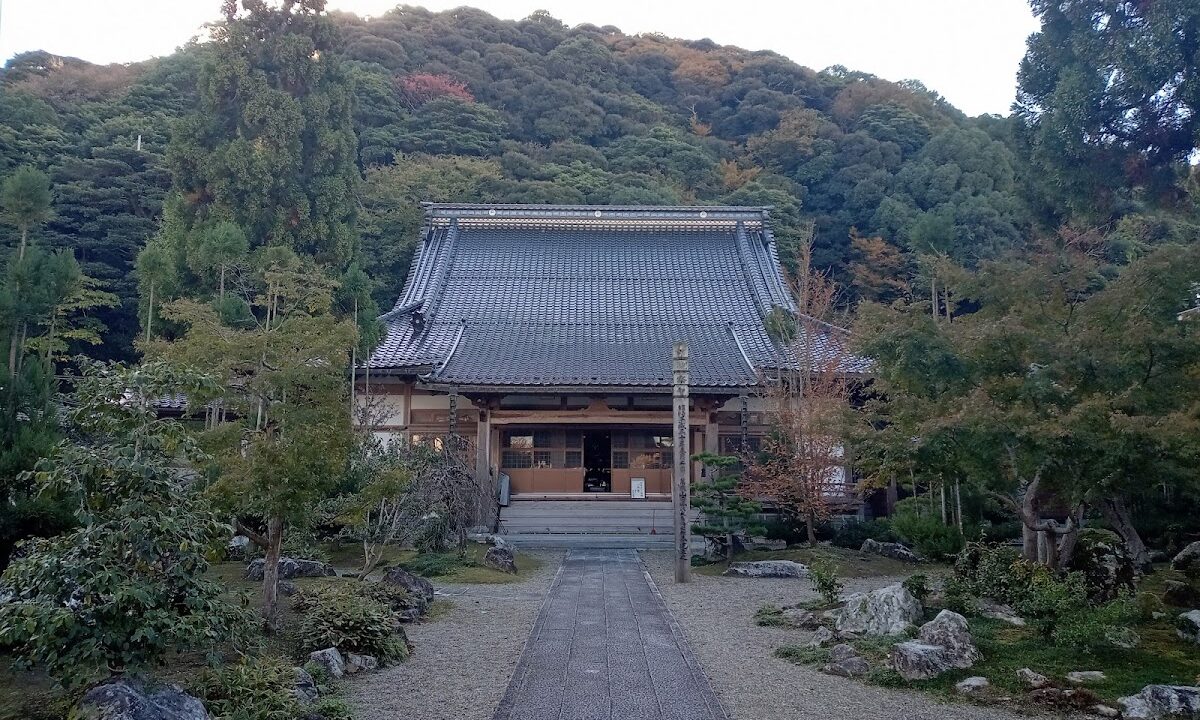
Myogi-ji Temple (Masuda City, Shimane Prefecture) Complete Guide | History, Highlights, and Access Information
Located in Nanao-cho, Masuda City, Shimane Prefecture, Myogi-ji Temple is a historic temple that played an important role from the medieval period through the early modern period and into the Meiji Restoration. It flourished as the family temple of the Masuda clan and witnessed turning points in Japanese history, including serving as the headquarters of the Choshu army during the Sekishu-guchi War. This article provides a detailed explanation of Myogi-ji Temple’s history, highlights, and access information.
Basic Information about Myogi-ji Temple
Temple Name: Banzai-san Myogi-ji Temple
Sect: Soto Zen Buddhism
Location: 1-40 Nanao-machi, Masuda City, Shimane Prefecture
Mountain Name: Banzai-san
Principal Image: Shakyamuni Buddha
Founder: Zoso
Pilgrimage Site: 20th temple of the Chugoku Jizo Pilgrimage
Cultural Property Designation: Myogi-ji Temple grounds attached to Nanao Castle (Shimane Prefecture Designated Historic Site)
Japan Heritage: Part of the “Japan Heritage Site ‘The Eternal History Told by the Volcanoes of Iwami'”
History of Myogi-ji Temple
Founded in the Kamakura Period
The founding of Myogi-ji Temple dates back to the Bun’ei era (1264-1275). Originally founded as Myogi-an, a Rinzai Zen temple, with Zōsō as its founding abbot, Myogi-ji Temple is believed to have held an important position as a Zen Buddhist temple in Iwami Province during the Kamakura period.
As the Masuda Clan’s Family Temple
The Masuda clan, who ruled Iwami Province during the medieval period, had Masuda Nanao Castle as their residence. Myogi-ji Temple, located at the foot of Nanao Castle, played an important role as the Masuda clan’s family temple. In 1394 (Ōei 1), it was renovated by Masuda Kanemi, the 13th head of the Masuda clan, and became one of the Masuda clan’s core religious facilities.
In 1581 (Tenshō 9), it was rebuilt by Masuda Fujikane, the 19th head of the Masuda clan, maintaining a deep connection with the Masuda clan. During the Edo period, it converted to the Sōtō Zen sect, becoming its current sect.
The Sekishu-guchi War and the Choshu Army in the Late Edo Period
A noteworthy aspect of Myogi-ji Temple’s history is its role in the Sekishu-guchi War (Second Choshu Expedition) that took place in 1866 (Keio 2) during the late Edo period.
In this battle, where the Choshu Domain and the Shogunate forces clashed, the Choshu army, led by Murata Zouroku (later Omura Masujiro), used Myogi-ji Temple as its headquarters and a field hospital. It became a crucial stage in a battle that heralded the dawn of modern Japan.
On the second floor of the main hall, the memorial tablets of Choshu samurai who died in this battle are still enshrined. Within the temple grounds are the graves of four Choshu samurai, including Nogi Sanzo, the uncle of General Nogi Maresuke, and the area is maintained as the “Nogi Cemetery.”
Myogi-ji Temple in Modern Times
From the Showa to the Reiwa era, Myogi-ji Temple has been preserved as a center of local faith and as a historical heritage site. Designated as a Shimane Prefecture historical site as “Nanao Castle and Myogi-ji Temple Grounds,” it is also recognized as a component cultural property of a Japan Heritage site.
The current head priest is Reverend Katsunori Nagami, and as a Soto Zen temple, it attracts the faith of the local people.
Highlights of Myogi-ji Temple
Main Hall and Grounds
The main hall of Myogi-ji Temple is a magnificent building that reflects its history dating back to the time of the Masuda clan. Inside the main hall is enshrined the principal image, a statue of Shakyamuni Buddha, and on the second floor are the memorial tablets of Choshu domain samurai who died in the Sekishu-guchi War.
The temple grounds spread out at the foot of Masuda Nanao Castle, conveying the atmosphere of a medieval castle town. This space, designated as a prefectural historical site as “Nanao Castle and Myogi-ji Temple Grounds,” is highly valued for its historical significance.
Myogi-ji Temple Garden
Myogi-ji Temple boasts a beautiful garden where visitors can enjoy flowers throughout the seasons. In spring, the cherry blossoms bloom in profusion, creating a magnificent landscape in combination with the cherry blossom valley on the hillside behind the temple. The garden in front of the main hall has a tranquil atmosphere befitting a Zen Buddhist temple, soothing the hearts of visitors.
The garden has a history dating back to the time of the Masuda clan, and is a space where medieval samurai culture and the spirit of Zen are fused.
Nogi Cemetery (Graves of Choshu Domain Samurai)
The Nogi Cemetery within the temple grounds is a burial ground for Choshu domain samurai who died in the Sekishu-guchi War. In particular, the grave of Nogi Sanzo, the uncle of General Nogi Maresuke, is an important historical site that tells the history of the Meiji Restoration.
Many history enthusiasts visit this place to remember the footsteps of those who sacrificed their lives for the modernization of Japan during the turbulent Bakumatsu period.
Relationship with Masuda Nanao Castle
Myogi-ji Temple is located at the foot of Masuda Nanao Castle, forming a medieval landscape integrated with the castle. Nanao Castle functioned as the residence of the Masuda clan, while Myogi-ji Temple played a role as a religious and cultural center.
Even today, the remains of Nanao Castle remain on the hillside behind the temple. Visiting both Myogi-ji Temple and the castle grounds allows for a deeper understanding of the samurai society of medieval Iwami Province.
Annual Events at Myogi-ji Temple
As a Soto Zen temple, Myogi-ji Temple holds various religious services and events throughout the year. As a center of local faith, events are held with the participation of parishioners and local residents.
It is also designated as the 20th temple on the Chugoku Jizo Pilgrimage, and welcomes pilgrims.
Access Information
Access by Train
From JR Masuda Station:
- Get off at JR San’in Main Line “Masuda Station”
- Approximately 15 minutes on foot from the station
- Approximately 5 minutes by taxi
Access by Car
From the San’in Expressway:
- Approximately 10 minutes from Masuda East Interchange
- Proceed towards Masuda city center, then towards Nanao town
Parking: Parking space available for visitors on the temple grounds
Address
〒698-0041
1-40 Nanao-cho, Masuda City, Shimane Prefecture
Visiting Information
Visiting Hours: Temple grounds are freely accessible (prior contact required for entry into the main hall)
Admission Fee: Free
Inquiries: We recommend contacting us in advance
*Please note that visits may not be possible during memorial services or events. Please check in advance.
Nearby Tourist Attractions
Masuda Nanao Castle Ruins
Located on the hillside behind Myogi-ji Temple, these are the ruins of the Masuda clan’s castle. The remains of this medieval mountain castle are well-preserved, and visiting both Myogi-ji Temple and the castle ruins will deepen your understanding of the Masuda clan’s history during the medieval period.
Iko-ji Temple
A representative temple of Masuda City, it boasts a nationally designated scenic garden said to have been designed by Sesshu. Located about 10 minutes by car from Myogi-ji Temple, it’s a temple worth visiting in conjunction with Myogi-ji.
Manpuku-ji Temple
A temple associated with the Masuda clan, it houses important cultural property buildings. It’s one of the important temples for understanding the history of Masuda City.
Masuda City Historical and Folk Museum
A facility where you can learn about the history and culture of Masuda City. It also exhibits materials related to Myogi-ji Temple and the Masuda clan, making a visit before your main trip a valuable learning experience.
Points to Note When Visiting Myogi-ji Temple
Recommended for History Enthusiasts
Myogi-ji Temple has been involved in important events in Japanese history from the Middle Ages to the end of the Edo period. For those particularly interested in the history of the Meiji Restoration, the site of the Choshu army’s headquarters and the Nogi Cemetery are must-see spots.
Enjoy the Scenery of the Four Seasons
Enjoy the beautiful scenery of each season: cherry blossoms in spring, fresh greenery in summer, autumn leaves in fall, and the tranquility of winter. The cherry blossom season in spring, in particular, offers a magnificent view, especially when combined with the cherry blossom valley on the hillside behind the temple.
Quiet and Peaceful Pilgrimage Environment
You can pilgrimage at your own pace in a calm atmosphere that hasn’t been commercialized for tourists. It’s perfect for those who want to spend time quietly while feeling the history.
A Base for Exploring the History of Masuda City
Starting from Myogi-ji Temple, you can visit historical spots in Masuda City, such as the Masuda Nanao Castle Ruins, Iko-ji Temple, and Manpuku-ji Temple. A plan to fully enjoy the history of Masuda City over a full day is recommended.
About the Soto Zen School
Myogi-ji Temple is a Soto Zen temple. The Soto Zen school is a branch of Zen Buddhism, founded by Zen Master Dogen and spread by Zen Master Keizan. It emphasizes “Shikantaza,” the practice of simply sitting in meditation.
Since the Edo period, it has spread throughout Japan and is now one of the largest Buddhist sects in the country. Myogi-ji Temple, as a temple that transmits the teachings of the Soto Zen school, supports the faith of the local community.
The Masuda Clan and Myogi-ji Temple
The Masuda clan was a samurai family that ruled Iwami Province from the Heian period to the Sengoku period. They are said to be descendants of the Fujiwara clan and expanded their power from their base in Masuda-sho.
For the Masuda clan, Myogi-ji Temple was not merely a family temple, but also functioned as a political and cultural center. Masuda Nanao Castle and Myogi-ji Temple, together, were important facilities supporting the Masuda clan’s system of rule.
Towards the end of the Sengoku period, the Masuda clan came under the control of the Mori clan, but Myogi-ji Temple remains an important historical site that conveys the history of the Masuda clan to this day.
Japan Heritage and Myogi-ji Temple
Myogi-ji Temple is recognized as a component cultural property of the “Japan Heritage ‘The Enduring History Told by the Volcanoes of Iwami’.” This Japan Heritage is a comprehensive story that conveys the unique topography formed by the volcanic activity of the Iwami region and the history and culture that flourished there.
Masuda City, where Myogi-ji Temple is located, was an important base for Iwami Province from the medieval to the early modern period, and Myogi-ji Temple is valued as a cultural property that conveys that history.
Summary
Myogi-ji Temple in Masuda City, Shimane Prefecture, is a venerable Soto Zen temple with a history of nearly 800 years since its founding in the Kamakura period. It flourished as the family temple of the Masuda clan and played an important role in Japanese history, such as serving as the headquarters of the Choshu army during the Sekishu-guchi War at the end of the Edo period.
The beautiful gardens, the Nogi Cemetery, and the integrated landscape with Masuda Nanao Castle allow visitors to experience firsthand the history of Japan from the Middle Ages to the modern era. It’s a historical spot you should definitely visit when you’re in Shimane Prefecture.
Why not reflect on history in the tranquil grounds and soak up the atmosphere of this ancient temple that has witnessed turning points in Japanese history?


