Tenrinji Temple (Matsue City, Shimane Prefecture) Complete Guide | History, Korean Bell, and Access Information
Tenrinji Temple, located in Dogata-cho, Matsue City, Shimane Prefecture, is a Rinzai Zen temple of the Myoshinji school deeply intertwined with the history of the Matsue Domain. It possesses cultural assets of high historical value, including a Korean bell designated as a National Important Cultural Property, and a uniquely structured temple gate. This article provides a detailed overview of Tenrinji Temple, from its founding to the present day, highlights within the temple grounds, and access information.
History and Founding of Tenrinji Temple
Founding of a Prayer Hall by Horio Yoshiharu
The history of Tenrinji Temple dates back to 1611 (Keicho 16). It began when Horio Yoshiharu, known as the founder of Matsue, established Ryushozan Zuioji Temple as a prayer hall on Araiyama, the current site of Tenrinji Temple. Horio Yoshiharu was a samurai who served Toyotomi Hideyoshi. After the Battle of Sekigahara, he became the lord of the Matsue Domain and is known for constructing Matsue Castle.
Relocation and Renaming to Enjo-ji Temple by the Kyogoku Clan
After the Horio clan’s rule, the Kyogoku clan took over the Matsue Domain. The Kyogoku clan relocated Zuiō-ji Temple to the area south of Lake Shinji and renamed it Enjo-ji Temple. This relocation resulted in a temporary period without a temple on the site of Arai-yama.
Founding of Tenrin-ji Temple by Matsudaira Naomasa
In 1639, when Matsudaira Naomasa became the lord of the Matsue Domain, he decided to build a new temple on the former site of Zuiō-ji Temple. Matsudaira Naomasa invited Abbot Tōgu from Shinshu and founded the temple as Jingo-zan Tenrin-ji Temple. This is the direct origin of the current Tenrin-ji Temple. As a temple belonging to the Myoshinji branch of the Rinzai school of Zen Buddhism, it subsequently became an important temple playing a key role in Matsue’s temple district.
Basic Information
Temple Name: Tenrinji Temple
Mountain Name: Jingozan
Sect: Myoshinji branch of the Rinzai school
Principal Image: Shakyamuni Buddha
Founded: Kan’ei 16 (1639)
Founder: Togu Osho
Location: 589 Dogata-cho, Matsue City, Shimane Prefecture
Chief Priest: Oka Tsunemichi
Nationally Designated Important Cultural Property: “Tenrinji Temple’s Bronze Bell”
Origin and History of the Korean Bell
The bronze bell owned by Tenrinji Temple is highly valued as a nationally designated important cultural property. This bell was cast on the Korean Peninsula during the Heian period and is known as the “Korean Bell.”
The arrival of this bell in Japan has an interesting history. When the monk Shūkan of Honganji Temple in Taki-cho traveled to Korea, he brought this bell back to Japan. Initially, it was housed at Jiganji Temple, but in 1609, Horio Yoshiharu, the lord of Matsue Domain, moved it to Matsue Castle. Later, during the time of Matsudaira Naomasa, it was donated to Tenrinji Temple.
Characteristics of Korean Bells
The Korean bell at Tenrinji Temple is known for its intricate and exquisite carvings and the beauty of its tone. Bells made on the Korean Peninsula have unique shapes and acoustic characteristics that differ from Japanese bells.
The following are some of the characteristics of Korean bells:
- Acoustic Characteristics: Compared to Japanese bells, they have a longer resonance and a clearer tone.
- Engraving Technique: The patterns and inscriptions on the surface are exquisite and highly artistic.
- Shape: A unique structure with a projection called an “ontou” (sound tube) at the top of the bell body.
- Historical Value: It has great historical significance as a valuable witness to cultural exchange between Japan and Korea.
This bronze bell can actually be seen on the temple grounds and is one of the main highlights when visiting Tenrinji Temple.
Tenrinji Temple Grounds and Highlights
Unusual Temple Gate Structure
The temple gate of Tenrinji Temple is built in the Yakui-mon style. Yakui-mon gates have supporting pillars behind the main pillars and were used as gates for samurai residences and temples.
The most distinctive feature of the temple gate of Tenrinji Temple is its unusual structure, which includes a stone box-shaped roof. The use of a stone box-shaped roof, rather than the usual wooden ridge on a wooden roof, is noteworthy from an architectural history perspective. This unique structure is valuable as it represents a characteristic of the architectural style of the Matsue region.
Atmosphere of the Main Hall and Temple Grounds
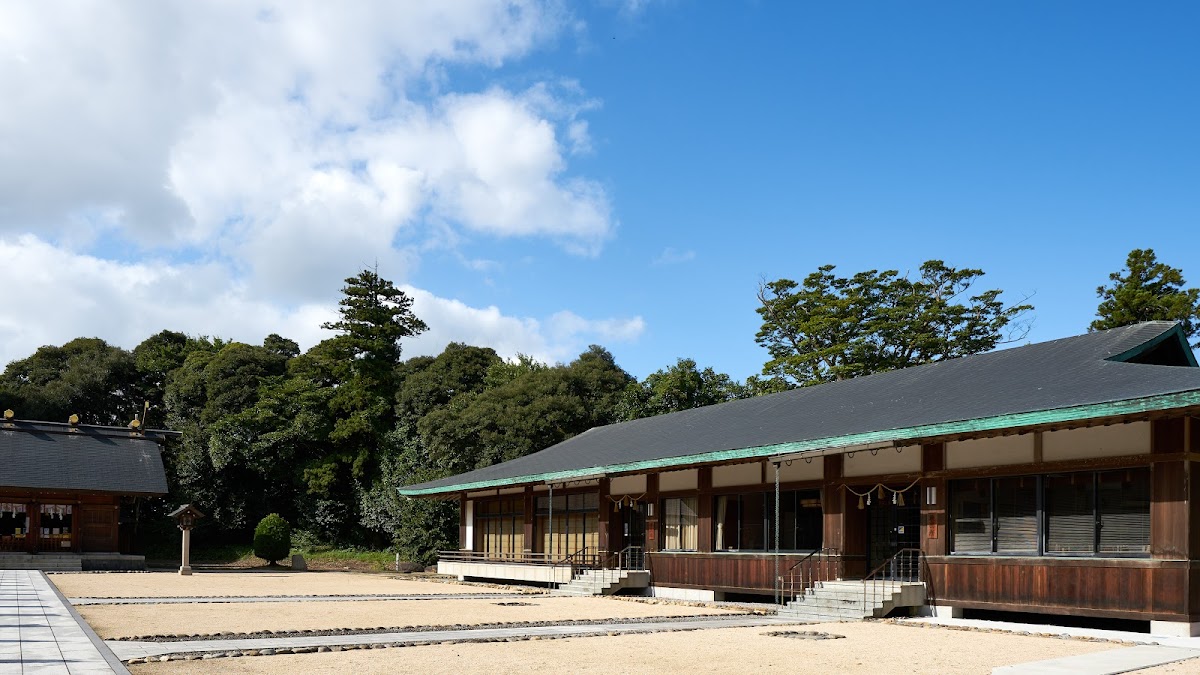
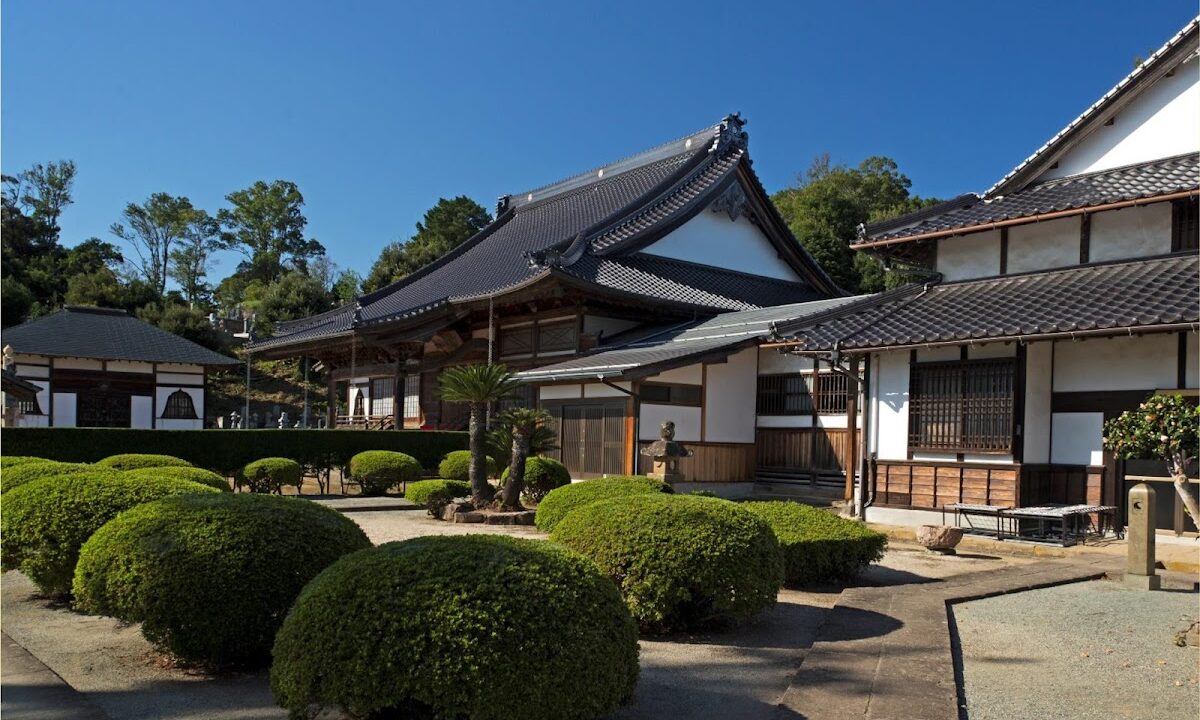
Tenrinji Temple is located in the temple district west of Matsue, at the southern end of the mountain range, near the shore of Lake Shinji. The temple grounds are enveloped in a tranquil atmosphere, maintaining a peaceful environment for worship despite being in an urban area.
The main hall exhibits a simple yet dignified appearance typical of a Rinzai Zen temple, creating a space that evokes the spirit of Zen. The temple grounds also feature a well-maintained garden, where visitors can enjoy the changing seasons.
Position in Matsue’s Temple District
Tenrinji Temple occupies a corner of Matsue’s temple district. Matsue’s temple district is home to many temples, including Gesshoji, Zenkoji, Kazoji, Tokoji, and Fumonin, each deeply connected to the history of the Matsue domain.
Tenrinji Temple is located at the southern end of the temple district and has a geographical feature of being close to Lake Shinji. When visiting as part of a temple district tour, visiting it together with other temples will allow you to gain a deeper understanding of Matsue’s temple culture.
Access and Surrounding Information
Access by Public Transportation
Using the Ichibata Electric Railway
The nearest station is Matsue Shinjiko Onsen Station on the Ichibata Electric Railway Kita-Matsue Line. It’s approximately 0.9km from the station to Tenrinji Temple, taking about 12 minutes on foot. The route offers scenic views along Lake Shinji.
Using Local Buses
It is also possible to use local buses operating within Matsue City. There is a bus route from Matsue Station towards Dogata-cho, and the temple is a few minutes’ walk from the nearest bus stop. Bus timetables can be checked on the Matsue City Transportation Bureau website.
Access by Car
From Matsue Station
It’s approximately a 10-minute drive from Matsue Station. Take National Route 9 towards Dogata-cho.
From the San’in Expressway
It’s approximately 15 minutes from Matsue-Nishi IC and approximately 10 minutes from Matsue-Chuo IC on the San’in Expressway.
Parking
There may be parking spaces within the temple grounds or nearby, but it is recommended to check before visiting. Matsue’s temple district has narrow roads in some places, so driving requires caution.
Nearby Tourist Attractions
There are many Matsue tourist attractions around Tenrinji Temple.
Matsue Castle
Matsue Castle, a national treasure located about 2km from Tenrinji Temple, is a central attraction for Matsue tourism. It is one of the 12 remaining castle keeps and was built by Horio Yoshiharu. The castle has deep ties to the history of Tenrinji Temple.
Gesshoji Temple
Gesshoji Temple, the family temple of the Matsudaira family, is located in Matsue’s temple district, just like Tenrinji Temple. The temple grounds include the tombs of successive Matsudaira lords and notable sights such as a stone sculpture modeled after a large turtle, which is a designated Important Cultural Property.
Lake Shinji
Lake Shinji stretches out very close to Tenrinji Temple. It is the seventh largest lake in Japan and is known for its beautiful sunsets. You can enjoy strolling along the lakeshore or taking a sightseeing boat tour.
Matsue Shinjiko Onsen
Matsue Shinjiko Onsen, the nearest station to the Ichibata Electric Railway, is a hot spring resort located on the shores of Lake Shinji. Day-trip bathing facilities and hot spring inns are scattered throughout the area, allowing you to relax and enjoy the hot springs after sightseeing.
Historical Background of Tenrinji Temple and Matsue
Founding of Matsue and Horio Yoshiharu
To understand the founding of Tenrinji Temple, it is important to know the history of the founding of Matsue. After the Battle of Sekigahara in 1600, Horio Yoshiharu was appointed lord of Matsue, a domain of 240,000 koku in Izumo and Oki. Horio Yoshiharu initially resided at Gassan Tomita Castle, but for reasons of transportation convenience and economic considerations, he decided to build a new castle in Sueji on the shores of Lake Shinji. This is the present-day Matsue Castle. Construction began in 1607 and was completed in 1611.
The predecessor of Tenrinji Temple, Zuioji Temple, was founded in the very year that Matsue Castle was completed. This shows that the construction of temples progressed in parallel with the development of the castle town.
The Matsudaira Clan and Temple Policy
Matsudaira Naomasa, who became the lord of the Matsue Domain in 1639, was a grandson of Tokugawa Ieyasu. The Matsudaira clan ruled the Matsue Domain until the Meiji Restoration.
Matsudaira Naomasa also focused on temple policy, and the founding of Tenrinji Temple was part of this effort. The Matsudaira family established Gesshoji Temple as their family temple, demonstrating their emphasis on Buddhism in their rule. The donation of a Korean bell to Tenrinji Temple is also an example of the Matsudaira family’s protection of cultural properties and support for temples.
Rinzai Zen and Matsue
Tenrinji Temple belongs to the Myoshinji branch of the Rinzai sect, a branch of Japanese Zen Buddhism. The Rinzai sect had strong ties to the samurai class, and many warlords protected Rinzai temples.
In Matsue, Rinzai temples also flourished under the protection of the domain. Besides Tenrinji Temple, Fumon-in Temple is also known as a Rinzai temple. The spirit of Zen resonated with bushido (the way of the samurai), becoming a spiritual pillar for the feudal lords and samurai.
Visiting and Etiquette at Tenrinji Temple
Basic Flow of Visiting
Although Tenrinji Temple is a Rinzai sect temple, general temple visiting etiquette is acceptable.
- Bow at the Temple Gate: Bow before passing through the temple gate.
- Purification at the Water Basin: Purify your hands and mouth.
- Worship at the Main Hall: Join your hands and bow towards the principal image, Shakyamuni Buddha.
- Exploring the Temple Grounds: View cultural artifacts such as the Korean bell.
- Bow at the Temple Gate: Bow again at the temple gate before leaving.
Visiting Hours and Fees
Tenrinji Temple is generally open to visitors, but if you wish to view the interior of the main hall or the Korean bell in detail, it is recommended to contact the temple in advance.
For a general stroll through the temple grounds, you can visit during daylight hours. However, please be aware that temple events and ceremonies may be taking place.
Photography
Photography of the temple grounds and exteriors such as the temple gate is generally permitted, but there may be restrictions on photography inside the main hall or of Buddhist statues. Please check before taking photos or follow the posted guidelines.
A Tour of Tenrinji Temple and Matsue’s Temple District
A Recommended Temple District Tour
Matsue’s temple district is home to many historical temples, all easily accessible on foot. Starting from Tenrinji Temple, you can create the following temple tour route:
Recommended Route
- Tenrinji Temple (Korean Bell and Main Gate)
- Kazoji Temple (Family Temple of Matsue Domain Samurai)
- Zenkoji Temple (Branch Temple of Shinshu Zenkoji Temple)
- Gesshoji Temple (Family Temple of the Matsudaira Family)
- Tokoji Temple (Ancient Temple of the Soto Zen School)
This route can be completed on foot in approximately 2-3 hours, offering a deep understanding of Matsue’s temple culture.
Characteristics of Each Temple
Gesshoji Temple houses the tombs of successive Matsudaira family lords and is an essential temple for understanding the history of the Matsue Domain. Within its grounds is a large turtle, a nationally important cultural property, known as the Juzōhi (Longevity Monument).
Zenkoji Temple was established by Matsudaira Naomasa, who invited the deity from Shinshu (present-day Nagano Prefecture), and was founded around the same time as Tenrinji Temple. It has deep ties to Zenkoji Temple in Shinshu.
Kezoji Temple is the family temple of the Matsue domain samurai, and contains the graves of many samurai. The temple grounds also contain ancient trees hundreds of years old, giving a sense of historical significance.
Annual Events at Tenrinji Temple
Main Annual Events
Tenrinji Temple, a Rinzai Zen temple, holds various Buddhist events throughout the year.
Spring Events
- Spring Equinox Memorial Service (March)
- Flower Festival (Buddha’s Birthday Celebration, April 8th)
Summer Events
- Obon Memorial Service (August)
Autumn Events
- Autumn Equinox Memorial Service (September)
Winter Events
- Enlightenment Ceremony (December 8th, a memorial service commemorating Buddha’s enlightenment)
- New Year’s Eve Bell Ringing (December 31st)
The New Year’s Eve bell ringing offers a rare opportunity to hear the sound of the Korean bell, a nationally designated important cultural property.
About Zen Meditation Sessions
Zen meditation is highly valued in Rinzai Zen temples, and it is possible that Tenrinji Temple also holds Zen meditation sessions. Those interested are advised to contact the temple directly to confirm the schedule.
Points to Note When Visiting Tenrinji Temple
Dress Code and Manners
When visiting the temple, please observe the following points:
- Appropriate Attire: Avoid overly revealing clothing.
- Quietness: Behave quietly on the temple grounds and avoid disturbing other visitors.
- No Smoking: Smoking is prohibited on the temple grounds.
- Pets: Please refrain from bringing pets to the temple, or check in advance.
Contact Information
For inquiries about Tenrinji Temple, please contact the temple directly by phone or obtain information through the Matsue City Tourism Association.
Matsue City Tourism Association
- Provides information on general tourism in Matsue City.
- You can also obtain temple tour brochures.
Seasonal Highlights
Spring (March-May)
During cherry blossom season, the surrounding temple district is adorned with cherry blossoms. Enjoy them along with the cherry blossom trees along Lake Shinji.
Summer (June-August)
The season of fresh greenery envelops the temple grounds in beautiful green. It’s also the perfect season to watch the sunset over Lake Shinji.
Autumn (September-November)
During the autumn foliage season, the temple grounds and surrounding temples are dyed in autumn colors. Mid-November is especially the best time to visit.
Winter (December-February)
The temple grounds, covered in snow, possess a serene beauty. Visiting to hear the New Year’s Eve bell is also recommended.
Tenrinji Temple and Cultural Property Protection
Significance of Nationally Designated Important Cultural Properties
The fact that the Korean bell owned by Tenrinji Temple is a nationally designated Important Cultural Property means that its historical and artistic value has been recognized by the government.
Receiving this designation as an Important Cultural Property allows the temple to receive government subsidies for the preservation and repair of cultural properties, enabling proper preservation and management. Furthermore, widespread recognition of its value as a cultural property ensures its transmission to future generations.
The Role of Cultural Properties in the Region
The Korean bell at Tenrinji Temple is not merely a work of art, but a valuable witness to the history of cultural exchange between Japan and the Korean Peninsula. It also serves as historical documentation, telling the history of the Matsue Domain and the achievements of the Horio and Matsudaira clans.
Preserving and passing on such cultural properties within the region is crucial for establishing regional identity and passing on cultural richness to future generations.
Summary
Tenrinji Temple is a Rinzai Zen temple of the Myoshinji school located in Teramachi, Matsue City, Shimane Prefecture. It originated as Zuioji Temple, founded in 1611 by Horio Yoshiharu, and was established as Tenrinji Temple in 1639 by Matsudaira Naomasa.
The Korean bell, a nationally designated Important Cultural Property, was cast in the Korean Peninsula during the Heian period and is known for its intricate carvings and beautiful sound. The temple’s unique gate, with its stone box-shaped roof, is also a highlight.
Located in a quiet environment near Lake Shinji, about a 12-minute walk from Ichibata Electric Railway Matsue Shinjiko Onsen Station, this temple is ideally situated as part of a tour of Matsue’s temple district. Visiting it along with other nearby attractions such as Matsue Castle and Gesshoji Temple will allow you to gain a deeper understanding of Matsue’s history and culture.
When you visit Matsue, be sure to stop by Tenrinji Temple and experience its historical atmosphere and valuable cultural treasures.