
Complete Guide to Sada Shrine | History, Deities, Benefits, and Access Information for Izumo Province’s Second-Ranked Shrine
Located in Kashima-cho, Matsue City, Shimane Prefecture, Sada Shrine is a prestigious shrine that has long been revered as the second-ranked shrine of Izumo Province. It holds the second-highest rank after Izumo Taisha Shrine and is known as an important shrine that conveys the faith and culture of the Izumo region, with its three main halls designated as a National Important Cultural Property, and the Kamiari Festival held in the tenth month of the lunar calendar.
This article comprehensively introduces information you should know before visiting Sada Shrine, including its history, enshrined deities, benefits, highlights of the grounds, how to worship, and access information.
What is Sada Shrine? | Status and History of Izumo Province’s Second-Ranked Shrine
Historical Status as Izumo Province’s Second-Ranked Shrine
Sada Shrine is an ancient shrine that holds the position of second-ranked in Izumo Province, where Izumo Taisha Shrine is the first-ranked shrine. This shrine is listed as “Sada Mikoshi Shrine” in the Engishiki Jinmyocho (a list of shrines compiled in the Heian period), making it a historically significant shrine known to the imperial court since ancient times.
The shrine’s founding is ancient, dating back to the age of the gods according to shrine tradition. The Izumo Fudoki (a regional gazetteer) mentions “Sada Okami,” indicating a firm foundation of faith at least during the Nara period.
The Birth Myth of Sada Okami
Sada Okami, the enshrined deity of Sada Shrine, is an important god who also appears in the Izumo no Kuni Yusatsu Myth. According to the myth, Sada Okami was born when Kisakahime no Mikoto found a golden bow and arrow on the seashore, subsequently becoming pregnant.
It is also said that the name “Sada” (狭田/早田) was given because the god was born before the mother goddess had thatched the birthing hut. This myth is still cherished and passed down as the origin story of Sata Shrine.
Deities and Blessings | Sata-no-Okami and Enshrined Deities
Main Deity: Sata-no-Okami (Sarutahiko-no-Okami)
The main deity of Sata Shrine is Sata-no-Okami, who is identified with Sarutahiko-no-Okami. Sarutahiko-no-Okami is known as the god who guided the descent of the heavenly grandchild and is worshipped as the god of guidance and the god of opening the way.
Enshrined Deities
The main hall of Sata Shrine has a three-story structure, with multiple deities enshrined in each.
Central Hall (Seichuden)
- Sata-no-Okami (Sarutahiko-no-Okami)
- Izanagi-no-Mikoto
- Izanami-no-Mikoto
- Hayatama-no-O-no-Mikoto
- Kotosaka-no-O-no-Mikoto
North Hall (Right)
- Amaterasu-Omikami
- Ninigi-no-Mikoto, etc.
South Hall (Left)
- Susanoo-no-Mikoto
- The Four Deities of the Secret Teachings, etc.
Benefits of Sata Shrine
Sata Shrine is said to offer a variety of benefits.
- Protection from Misfortune and Eight Directions: Due to Sarutahiko-no-Okami’s divine role as a road-opening deity
- Traffic Safety: Due to his role as a god of roads
- Matchmaking: Because Izanagi-no-Mikoto and Izanami-no-Mikoto are enshrined here
- Protection from Misfortune and Disaster: Through the protection of the gods
- Good Fortune and Prosperity: The guiding power to open the path of life
- Family Safety: Protection as a local guardian deity
It is especially recommended to visit when changing life events or starting something new, and many people visit at milestones such as entering higher education, starting a job, changing jobs, or opening a business.
Main Hall, a National Important Cultural Property | Magnificent Architecture with Three Halls Standing Side by Side
The Pinnacle of Taisha-zukuri Style
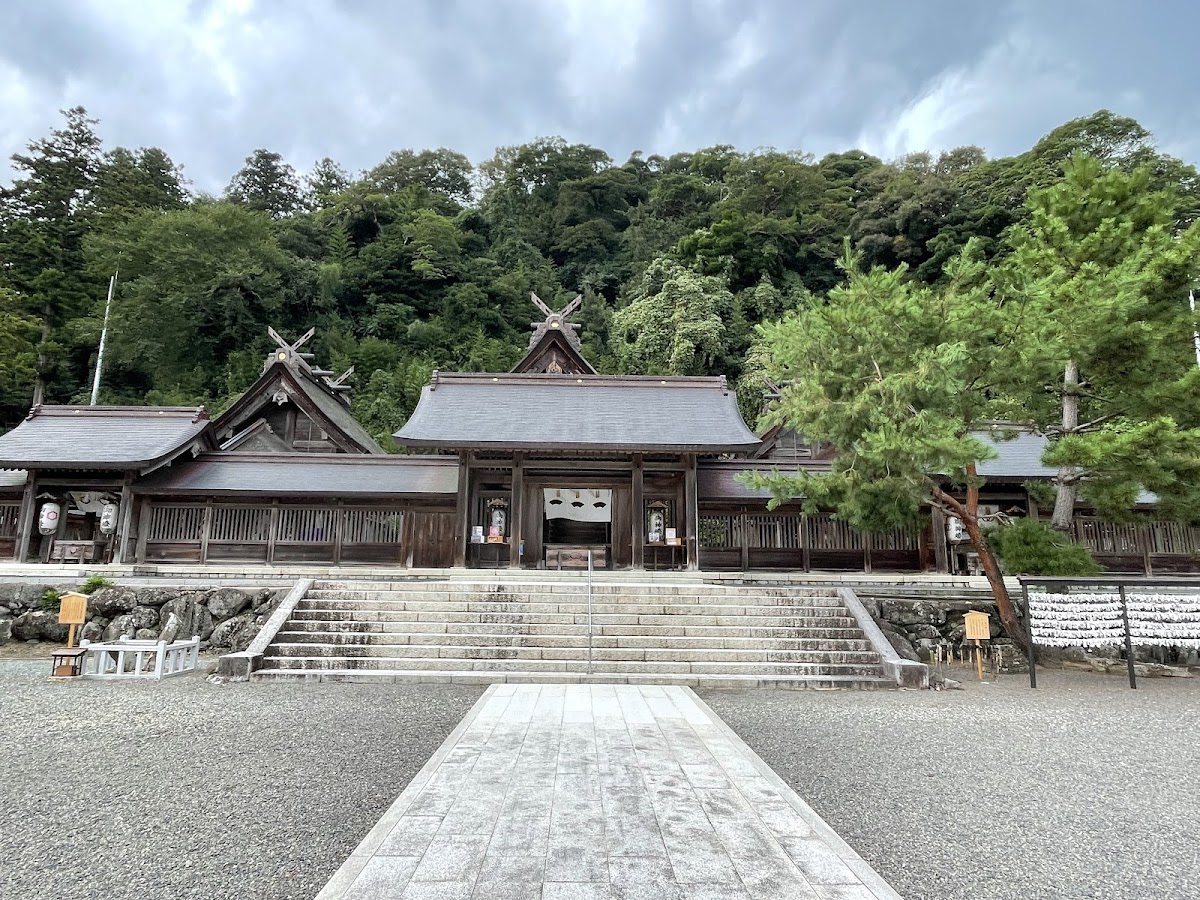
The greatest highlight of Sata Shrine is the main hall, which is designated as a National Important Cultural Property. The “Three Shrines Arranged Side by Side” style, where the three main halls—the Central Hall, the North Hall, and the South Hall—are positioned horizontally, is a rare style even in the Izumo region.
The architectural style is Taisha-zukuri, preserving the same ancient shrine architectural style as Izumo Taisha. The current main hall was rebuilt in Tenpo 12 (1841), giving it a history of over 180 years.
Architectural Features
- Three Shrines Arranged Side by Side: A magnificent arrangement of three shrine buildings side by side
- Taisha-zukuri: An ancient architectural style with a gable roof and gable entrance
- Hiwadabuki: A traditional roof using cypress bark
- Raised Floor Style: A structure built high above the ground
- Chigi and Katsuogi: Characteristic decorations on the roof
The main hall is usually surrounded by a fence, so the interior cannot be seen directly, but its grandeur can be felt even from the exterior.
Highlights of the Shrine Grounds | Exploring the Sacred Space
The Shrine Gate and Worship Hall
As you proceed along the approach to the shrine, you will first be greeted by a magnificent shrine gate. Passing through the gate, you will find the worship hall directly ahead, where you will offer your prayers. The worship hall is also a dignified building, enveloped in a serene atmosphere.
Tanaka Shrine (Subsidiary Shrine)
There are several subsidiary shrines within the grounds, but the most important is Tanaka Shrine. It enshrines Kisakahime-no-Mikoto, the mother goddess of Sada-no-Okami, and is deeply connected to the mythology of Sada Shrine.
Sacred Trees and Nature
The shrine grounds are lined with giant trees, some estimated to be hundreds of years old, creating a solemn atmosphere befitting a sacred place. Especially during the autumn foliage season, the grounds are beautifully colored, attracting many visitors.
Shrine Office and Offerings
The shrine office offers Goshuin (stamped seals), amulets, and talismans. Original amulets from Sata Shrine and talismans for protection against negative directions are popular.
Kamiari Festival | Important Shinto Rituals in the 10th Month of the Lunar Calendar
Kamiari Month in Izumo and Sata Shrine
While the 10th month of the lunar calendar is generally known as “Kannazuki” (month without gods) throughout Japan, in the Izumo region it is called “Kamiarizuki” (month with gods). This is based on the tradition that all the gods of Japan gather in Izumo.
While the Kamiari Festival at Izumo Taisha is famous, Sata Shrine is also an important venue for the Kamiari Festival. There is a tradition that the gods, after completing their divine council at Izumo Taisha, move to Sata Shrine.
Characteristics of Sata Shrine’s Kamiari Festival
Sata Shrine’s Kamiari Festival is held annually around November 20th to 25th (10th month of the lunar calendar). – Kami-mukae Shinji: A ritual to welcome the gods.
- Kami-ari Matsuri: A ritual performed during the period when the gods are present.
- Karasade Shinji: A ritual to send off the gods.
During this period, special rituals are performed, allowing general worshippers to experience a sacred atmosphere.
Annual Events and the Grand Festival
Grand Festival (September 24th and 25th)
The most important festival of Sata Shrine is the Grand Festival, held annually on September 24th and 25th. This festival features traditional rituals such as a portable shrine procession and the dedication of Kagura (sacred dance).
It is particularly known for the dedication of a sacred performing art called Sada Shinno.
Other Major Events
- January 1st: New Year’s Day Festival
- February 3rd: Setsubun Festival
- May 5th: Spring Festival
- November 23rd: Niiname-sai Festival
- December 31st: Great Purification Ceremony
Various Shinto rituals are performed throughout the year, offering enjoyable experiences in each season.
How to Worship and Manners | Worshiping with Correct Etiquette
Basic Worship Etiquette
Worship at Sata Shrine follows the general etiquette for visiting shrines.
- Bow at the Torii Gate: Bow before entering the shrine grounds.
- Purify at the Water Basin: Purify your left hand, right hand, and mouth in that order.
- Walk the Path: Walk along the sides, avoiding the center.
- Worship at the Main Hall: Bow twice, clap twice, and bow once.
- Bow upon Exit: Turn around and bow when leaving the torii gate.
Attire for Visiting the Shrine
There are no specific dress code requirements, but it is desirable to wear clothing that reflects the sacred nature of the place. Avoid revealing or overly flashy clothing.
Photography
Photography is generally permitted within the shrine grounds, but photography inside the main hall or during Shinto rituals may be prohibited. It is advisable to check before taking photos or inquire at the shrine office.
Access Information | How to Get to Sata Shrine
Basic Information
- Address: 73 Sadamiyauchi, Kashima-cho, Matsue City, Shimane Prefecture 690-0331
- Phone Number: 0852-82-0668
- Visiting Hours: Grounds are freely accessible (Shrine office is open from 9:00 to 17:00)
- Admission Fee: Free
- Parking: Available (Free, approximately 50 spaces)
Access by Car
From Matsue City Center
- Head north on National Route 431, approximately 25 minutes
- Approximately 5 minutes from the “Sata Shrine” exit on the Matsue Dandan Road
From Yonago Area
- Approximately 30 minutes from the Matsue-Nishi IC on the San’in Expressway via National Route 431
From Izumo Area
- Head east on National Route 431 for approximately 40 minutes.
When setting your car navigation system, you can search for “Sata Shrine” or the phone number “0852-82-0668”.
Access by Public Transportation
By JR
- From JR San’in Main Line “Matsue Station,” take the Ichibata Bus bound for “Sata Shrine” for approximately 40 minutes and get off at the last stop.
- From JR San’in Main Line “Ibiya Station,” take a taxi for approximately 15 minutes.
Notes on Bus Use
- Since the number of buses is limited, it is recommended to check the timetable in advance.
- You can check the latest timetable on the Ichibata Bus official website.
By Taxi
If you take a taxi from Matsue Station, the journey takes approximately 25 minutes and the fare is around 4,000-5,000 yen.
Nearby Tourist Attractions | Places to Visit Alongside Sata Shrine
Miho Shrine (approx. 15km)
Miho Shrine, one of the Ichinomiya (first-ranked shrines) of Izumo Province, is known as the head shrine of Ebisu. Visiting both Sata Shrine and Miho Shrine is considered a “double pilgrimage” and is believed to bring greater blessings.
Matsue Castle (approx. 20km)
Matsue Castle, designated a National Treasure, is one of the 12 remaining original castle keeps. The view from the keep is magnificent, and it’s a central hub for Matsue sightseeing.
Kaga no Kugedo (approx. 5km)
A scenic coastal spot that appears in the myths of Sata Shrine. You can take a sightseeing boat tour of the caves and experience the world of mythology.
Shimane Winery (approx. 25km)
A winery located near Izumo Taisha Shrine, where you can enjoy wine tasting and meals. It’s a perfect stop during your Izumo sightseeing.
Information on Goshuin (Shrine Seals) at Sata Shrine
Issuance of Goshuin
Sata Shrine offers goshuin at its office.
- Reception Hours: Approximately 9:00 AM to 5:00 PM (subject to change)
- Offering Fee: Approximately 300-500 yen
- Original Goshuin Notebook: Available
Features of the Goshuin
Sata Shrine’s goshuin is characterized by the characters “Izumo no Kuni Ninomiya” (Second Shrine of Izumo Province) and the shrine’s seal. Written in elegant calligraphy, it possesses the dignified style befitting a prestigious shrine in Izumo.
About the Goshuin Notebook
Sata Shrine also offers its own original goshuin notebook. The design features motifs from the main hall and the shrine’s crest, making it a memorable souvenir of your visit.
Points to Note and Advice When Visiting Sata Shrine
Best Time to Visit
Spring (March-May)
- Mild weather, ideal for visiting
- A beautiful season with fresh greenery
Summer (June-August)
- The lush green grounds offer a refreshing atmosphere
- Bring a hat or parasol as the sun is strong
Autumn (September-November)
- The annual festival (September) and the Kamiari Festival (November) are held here
- Beautiful autumn foliage
- The busiest time for visitors
Winter (December-February)
- The snow-covered grounds offer a charming atmosphere
- Fewer visitors, allowing for a peaceful visit
- Don’t forget to dress warmly
Estimated Time Required
- Shrine Grounds Only: 30 minutes to 1 hour
- Thorough Stroll: 1 to 1.5 hours
- Including Surrounding Area Sightseeing: Half a day to a full day
Useful items to bring:
- Goshuincho (stamp book): For those collecting Goshuin (temple/shrine stamps)
- Camera: For photographing beautiful architecture and nature
- Comfortable walking shoes: The shrine grounds have gravel paths
- Drinks: Essential, especially in summer
- Rain gear: Weather can change quickly in this area
Trivia about Sata Shrine | For a deeper understanding
How to pronounce “Sata”
Sata Shrine is pronounced “Sada Jinja,” but locally it’s also called “Sada no Miya.” The enshrined deity, Sata no Okami, is also pronounced “Sada no Okami.”
Relationship with the Izumo no Kuni Fudoki
The Izumo no Kuni Fudoki, compiled during the Nara period, contains descriptions of Sata no Okami and Sata Shrine, indicating its importance since ancient times. The Fudoki is one of the oldest existing local historical documents and a valuable resource for understanding the ancient culture of Izumo.
About the Shrine Crest
The shrine crest of Sata Shrine is a “double tortoise shell with a floral diamond.” This crest signifies high status and is used on the shrine buildings and curtains.
The Custom of “Oimi”
The Izumo region has a unique custom called “Oimi,” where certain actions are refrained from during the month of the gods’ gathering. This tradition is still observed to some extent around Sata Shrine.
Summary | Opening the Path of the Heart Through a Visit to Sata Shrine
Sata Shrine is a shrine with many attractions, including its status as the second-ranked shrine of Izumo Province, its main hall which is a nationally important cultural property, traditional Shinto rituals such as the Kamiari Festival, and the blessings of a god who opens paths.
Because it is not as touristy as Izumo Taisha, one of its attractions is the quiet and solemn atmosphere in which one can worship. Visiting before a turning point in life or a new challenge may allow you to feel the guiding power of Sata-no-Okami.
When visiting the Izumo region, be sure to also visit Sata Shrine and experience the ancient religious culture of Izumo. You’ll surely feel the profound charm of Izumo, the land of the gods.
Located in Matsue City, you can also combine it with other sightseeing routes such as Matsue Castle and Miho Shrine. Why not extend your trip a little from Izumo Taisha and experience the majestic atmosphere of Izumo’s second-ranked shrine?


