
Complete Guide to Miho Shrine | A Thorough Explanation of the History, Blessings, and the Charm of the Double Pilgrimage to the Head Shrine of Ebisu
Located in a port town overlooking Miho Bay at the eastern tip of the Shimane Peninsula, Miho Shrine is the head shrine of over 3,000 shrines nationwide dedicated to Kotoshironushi-no-kami, affectionately known as “Ebisu-sama.” An ancient shrine mentioned in the Izumo Fudoki (ancient provincial gazetteer), it is known for the “Ebisu-Daikoku Double Pilgrimage” (visiting both Miho Shrine and Izumo Taisha Shrine), attracting worshippers from all over Japan seeking blessings for business prosperity, maritime safety, and matchmaking.
This article comprehensively explains everything you need to know before visiting Miho Shrine, including its history, enshrined deities, unique architectural style, worship etiquette, and nearby tourist spots.
About Miho Shrine | Overview of the Head Shrine of Ebisu
Miho Shrine is a shrine located in Mihonoseki-cho, Matsue City, Shimane Prefecture. It is a Shikinaisha (a shrine listed in the Engishiki Jinmyocho, a historically significant shrine) and held the high rank of Kokuhei Chusha (a national shrine of the second rank).
Located on the coast overlooking Miho Bay, it stands in Mihonoseki, a place that has prospered since ancient times through fishing and maritime transport. As the head shrine of all “Ebisu Shrines” scattered throughout Japan, it has attracted fervent devotion, particularly from those involved in the fishing, shipping, and commerce industries.
Basic Information about Miho Shrine
- Location: 608 Mihonoseki, Mihonoseki-cho, Matsue City, Shimane Prefecture
- Deities Enshrined: Mihotsuhime-no-Mikoto, Kotoshironushi-no-Kami
- Shrine Rank: Shikinaisha (Shrine listed in the Engishiki), Former National Shrine of the Second Rank
- Founding: Unknown (Recorded in the Izumo Fudoki (733 AD))
- Main Hall: Nationally Designated Important Cultural Property (Miho-zukuri style)
- Main Divine Blessings: Business prosperity, maritime safety, abundant catches, bountiful harvests, matchmaking, academic success
Deities Enshrined at Miho Shrine | Mihotsuhime-no-Mikoto and Kotoshironushi-no-Kami
Miho Shrine enshrines two deities, each offering different blessings.
Mihotsuhime-no-Mikoto
Mihotsuhime-no-Mikoto, enshrined in the left hall, is the consort of Okuninushi-no-Okami, the principal deity of Izumo Taisha Shrine. She is a goddess who descended from Takamagahara (the High Plain of Heaven) and played a crucial role in connecting heaven and earth through her marriage to Okuninushi-no-Okami.
Main Divine Virtues:
- Abundant harvests
- Safe childbirth and fertility
- Prosperity of descendants
- Marital harmony
- Protection of agriculture
Kotoshironushi-no-Kami | Ebisu-sama
Kotoshironushi-no-Kami, enshrined in the right hall, is the firstborn son of Okuninushi-no-Okami and is widely known as “Ebisu-sama” or “Ebisu-sama.” He played a significant role in the myth of the transfer of the land and is said to have met with a messenger of the Amatsu-kami (heavenly gods) while fishing in Mihonoseki.
Main Divine Blessings:
- Business Prosperity
- Maritime Safety
- Abundant Catch
- Safe Voyages
- Academic Success
- Good Fortune and Virtue
Kotoshironushi-no-kami is known as a god who loves musical instruments, and many musical instrument offerings can be seen on the shrine grounds. Due to its deep connection to music, regular concerts are held on the grounds.
Ebisu and Daikoku Pilgrimage | Relationship with Izumo Taisha
An essential aspect of discussing Miho Shrine is the “Ebisu and Daikoku Pilgrimage” with Izumo Taisha.
What is a Pilgrimage?
Okuninushi-no-kami, the enshrined deity of Izumo Taisha, is known as “Daikoku-sama,” while Kotoshironushi-no-kami of Miho Shrine is known as “Ebisu-sama.” It is believed that visiting both of these parent-child deities brings stronger blessings and a deeper connection.
It has long been said that “visiting only Izumo Taisha Shrine is an incomplete pilgrimage,” and it has been recommended to visit both Izumo Taisha Shrine and Miho Shrine. Especially for those praying for matchmaking or business prosperity, visiting both shrines is an essential custom.
Order of Visiting Both Shrines
Generally, it is recommended to visit Izumo Taisha Shrine first, followed by Miho Shrine, but there are no strict rules. The important thing is to offer heartfelt prayers at both shrines.
Izumo Taisha Shrine and Miho Shrine are about an hour apart by car, making it possible to complete the pilgrimage in one day.
Architecture of Miho Shrine | National Important Cultural Property “Miho-zukuri”
The main hall of Miho Shrine is a historical building constructed in 1813 (Bunka 10) and designated a National Important Cultural Property in 1982.
Characteristics of the Miho-zukuri Style
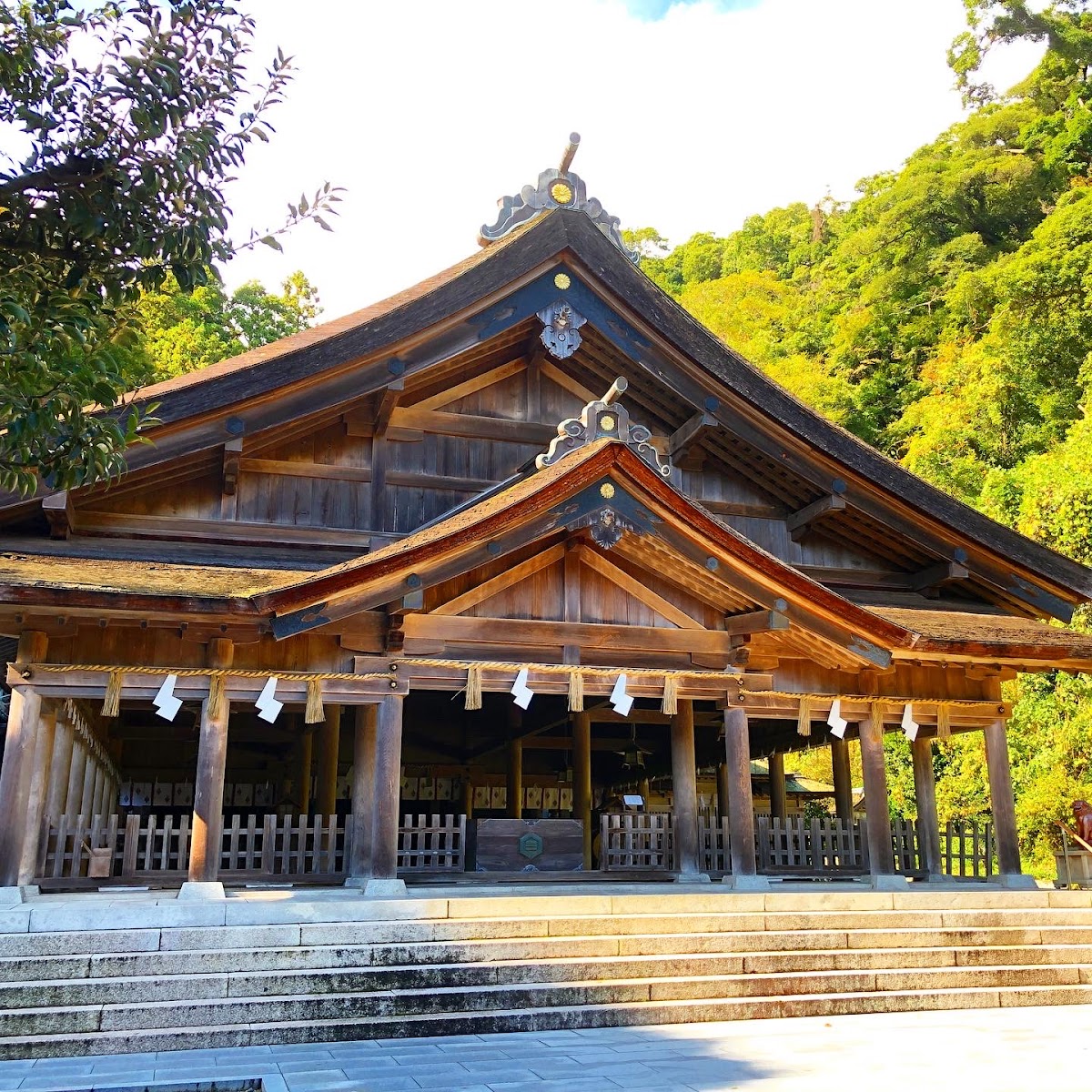
The main shrine is built in a unique architectural style called “Miho-zukuri” or “Hiyoku Taisha-zukuri.” It consists of two shrine buildings built in the Taisha-zukuri style, connected in the center by an “Ainoma” (connecting room).
This style is rare throughout Japan and is a valuable architectural style found only at Miho Shrine. A “Hashikakushi” (covered eaves) is provided across the entire facade, creating an elegant appearance.
Cypress Bark Roof
The roof is covered with cypress bark, and its beautiful condition is maintained through regular re-roofing. The traditional technique of layering cypress bark multiple times conveys the essence of Japanese architecture to this day.
History of Miho Shrine | A Faith Continuing from Ancient Times
The exact founding date of Miho Shrine is unclear, but it is mentioned as “Miho Shrine” in the *Izumo no Kuni Fudoki*, compiled in 733 (Tenpyo 5), making it an ancient shrine with a history of at least 1300 years.
Description in the *Izumo no Kuni Fudoki*
The *Izumo no Kuni Fudoki* mentions the name of Mihotsuhime-no-Mikoto as the origin of Miho-go. This suggests that this area was considered sacred from ancient times.
Listing in the *Engishiki Jinmyocho*
Miho Shrine is also listed in the *Engishiki Jinmyocho*, completed in 927 (Encho 5), indicating that it was already a high-ranking shrine recognized by the imperial court during the Heian period.
Spread of Ebisu Worship
From the medieval period onward, with the development of shipping and commerce, the worship of Kotoshironushi-no-Kami as “Ebisu-sama” spread throughout Japan. Miho Shrine, as the head shrine, is the central hub of Ebisu worship throughout Japan, from Hokkaido to Okinawa.
Annual Events and Festivals of Miho Shrine
Miho Shrine holds various festivals and ceremonies throughout the year.
Main Annual Events
Nanoka Ebisu Festival (April & October)
This important festival, held annually on the 7th of April and October, is a prayer for business prosperity and family safety. It is a representative festival of Miho Shrine, bustling with many worshippers.
Aoshibagaki Ritual (December 3rd)
This ritual originates from the myth of the transfer of the land, based on the story of Kotoshironushi-no-kami building a fence with green brushwood and secluding himself there. It is a valuable ritual designated as an Important Intangible Folk Cultural Property of Japan.
Morotebune Ritual (April 7th)
This ritual, held as part of the Nanoka Ebisu Festival, is a traditional event in which boats are rowed and competed in Miho Bay. The shrine continues to uphold its faith in the sea god.
Daily Morning and Evening Offering Ceremonies
Every morning and evening, offering ceremonies are held to the gods, and general visitors are welcome to observe. This is a valuable opportunity to experience the daily activities of the shrine.
Benefits and Prayers at Miho Shrine
At Miho Shrine, you can receive prayers tailored to various wishes.
Main Benefits
- Business Prosperity: A representative benefit of Ebisu, praying for business development and prosperity.
- Sea Safety and Abundant Catch: Praying for the safety of fishermen and sailors, and for a bountiful catch.
- Matchmaking: Praying for a good match through the divine virtues of Mihotsuhime-no-Mikoto, the consort of Daikoku.
- Abundant Harvest: Praying for a bountiful harvest and abundant food.
- Academic Success: Improving academic performance through the aspect of Kotoshironushi-no-Kami as a god of wisdom.
- Family Safety: Praying for the health and peace of the family.
- Safe Childbirth and Fertility: Praying for safe childbirth and fertility through the divine virtues of Mihotsuhime-no-Mikoto.
About Prayers
While prayers are accepted without prior reservation, advance contact is recommended for groups or special prayers. The offering fee varies depending on the prayer content; please check with the shrine office.
Highlights of Miho Shrine | Guide to Walking the Grounds
Blue Stone Pavement Street
The “Blue Stone Pavement Street,” which extends from the torii gate of Miho Shrine, is characterized by its beautiful stone pavement that turns a light blue when wet. This street retains the nostalgic atmosphere of a port town dating back to the Edo period, lined with old houses and merchant buildings.
Worship Hall and Main Shrine
As you proceed along the approach to the shrine, you will first come across the worship hall. Beyond that is the main shrine, a nationally important cultural property, where you can admire its magnificent Miho-style architecture.
Dedicated Musical Instruments
Because Ebisu (the god of music and dance) is said to be fond of musical instruments, numerous musical instruments donated from all over Japan are displayed on the shrine grounds. Various instruments such as violins, pianos, shamisen, and drums are offered as offerings to the gods.
Subsidiary Shrines
Several subsidiary shrines surround the main shrine, each enshrining a different deity. If you have time, we recommend visiting these subsidiary shrines as well.
Access to Miho Shrine
Miho Shrine is located at the eastern tip of the Shimane Peninsula and is accessible by both public transport and car.
Access by Public Transportation
From JR Matsue Station
- Take the Ichibata Bus bound for “Mihonoseki Terminal” from Matsue Station (approx. 45 minutes)
- Get off at the “Mihonoseki Shrine Entrance” bus stop and walk for about 5 minutes.
From Sakaiminato Station
- Take the Ichibata Bus from Sakaiminato Station for about 25 minutes
- Buses to Mihonoseki are limited, so please check the timetable in advance.
Access by Car
From Matsue
- Approximately 40 minutes from Matsue city center via National Route 431
- Approximately 50 minutes from Matsue-Nishi IC on the San’in Expressway
From Yonago/Sakaiminato
- Approximately 20 minutes from Sakaiminato city center
- Accessible by driving along the coastline of Mihonoseki Bay.
Parking
There is free parking available around the shrine (approx. 30 cars). It can get crowded during peak seasons and festivals, so early arrival is recommended.
Tourist Attractions Around Miho Shrine
When visiting Miho Shrine, exploring the surrounding tourist attractions will allow you to experience the charm of Mihonoseki more deeply.
Mihonoseki Lighthouse
Located about 10 minutes by car from Miho Shrine, this historical lighthouse was built during the Meiji era. It has been selected as one of the “World’s 100 Best Lighthouses” and one of “Japan’s 50 Best Lighthouses,” and offers a spectacular view of the Sea of Japan from its observation deck.
Seki no Gohonmatsu Park
This park offers a panoramic view of Miho Bay, and on a clear day, you can even see Mt. Daisen and the Oki Islands. It is also known as a famous cherry blossom viewing spot.
Mihonoseki Townscape
Around Aoiishidatami Street, the old townscape dating back to the Edo period is preserved. It is a charming port town that retains traces of its former prosperity as a port of call for Kitamae ships.
Butsugoku-ji Temple (Butsugoku-ji)
This ancient temple flourished as the temple associated with Miho Shrine and is an important temple that tells the history of Mihonoseki. ## Mihonoseki’s Gourmet Food | Local Flavors to Enjoy After Visiting the Shrine
Mihonoseki, a fishing port town, boasts fresh seafood.
Squid Dishes
Mihonoseki is famous for its squid, and the white squid, especially from summer to autumn, is exquisite. You can enjoy various squid dishes, such as squid sashimi, squid rice bowls, and dried squid.
Seafood Dishes
Seafood rice bowls and set meals using fresh seafood caught locally are popular. There are several restaurants around Mihonoseki Shrine.
Mihokan
Located directly in front of Mihonoseki Shrine, the long-established inn “Mihokan” is a historical building designated as a National Registered Tangible Cultural Property. You can stay overnight or dine only, and enjoy the seafood of Mihonoseki.
Model Course for Visiting Mihonoseki Shrine
Here is a model course for a one-day sightseeing trip centered around Mihonoseki Shrine.
Half-Day Course (Approx. 3-4 hours)
- Visit to Miho Shrine (60 minutes): Visit the main shrine, stroll around the grounds, and receive a Goshuin (shrine stamp).
- Stroll along Aoi-ishidatami Street (30 minutes): Enjoy the old townscape.
- Lunch in Mihonoseki (60 minutes): Savor local seafood cuisine.
- Mihonoseki Lighthouse (40 minutes): Visit the lighthouse and enjoy the spectacular view.
Full-Day Course (Visiting both Izumo Taisha Shrine and Miho Shrine)
- Visit to Izumo Taisha Shrine (Morning)
- Travel (Approx. 1 hour)
- Lunch in Mihonoseki (Lunch)
- Visit to Miho Shrine (Afternoon)
- Sightseeing around Mihonoseki (Aoi-ishidatami Street, Mihonoseki Lighthouse, etc.)
Goshuin and Amulets from Miho Shrine
Goshuin (Shrine Seal)
At Miho Shrine, in addition to the regular goshuin, seasonal special goshuin are sometimes available. They can be obtained at the shrine office (donation of 300 yen and up).
Amulets and Items Offered
- Ebisu Amulet: An amulet for business prosperity
- Maritime Safety Amulet: A prayer for safe voyages
- Matchmaking Amulet: An amulet for successful relationships
- Academic Achievement Amulet: An amulet for academic success
- Tai Fortune Slip: A popular fortune slip shaped like a鯛 (sea bream), associated with Ebisu.
Etiquette and Manners for Visiting Miho Shrine
Basic Worship Etiquette
- Bow at the Torii Gate: Bow before passing through the torii gate.
- Purify at the Water Basin: Purify your left hand, right hand, and mouth in that order.
- How to Walk the Path: The center is the path for the gods, so walk along the sides.
- Worship at the Main Hall: Two bows, two claps, and one bow is the basic method.
Photography Etiquette
Photography is generally permitted within the shrine grounds, but may be prohibited inside the main hall or during religious ceremonies. Please follow the signs and be considerate of other visitors.
Best Time to Visit Miho Shrine
Spring (March-May)
The Seven-Day Ebisu Festival in April is a highlight. The weather is mild and ideal for sightseeing.
Summer (June-August)
This is the season for delicious seafood from Miho Bay. However, rain gear is necessary during the rainy season.
Autumn (September-November)
The Seven-Day Ebisu Festival in October and the pleasant weather make this the best season for sightseeing. You can also enjoy the autumn foliage.
Winter (December-February)
The Aoshibagaki Ritual on December 3rd is a must-see. The Sea of Japan in winter is rough and offers a different kind of charm. Cold weather gear is essential.
Frequently Asked Questions
What are the visiting hours?
While you can generally visit the shrine grounds freely, the shrine office is usually open from 8:30 AM to 4:30 PM. If you wish to receive prayers or a Goshuin (shrine stamp), please visit within these hours.
How long does it take?
For simply visiting the shrine grounds, about 30 minutes is sufficient. For a more thorough visit, about 1 hour is a good guideline. Including a stroll along the surrounding Aoi-ishidatami Street, it’s advisable to allow 1.5 to 2 hours.
Are pets allowed?
This varies by shrine, but generally, it’s considered good manners to refrain from bringing pets onto the shrine grounds. We recommend checking in advance.
Is it wheelchair accessible?
There are steps on Aoi-ishidatami Street and within the shrine grounds, so it’s not completely wheelchair accessible. If you wish to visit in a wheelchair, we recommend consulting with the shrine in advance.
Summary | Receiving the Blessings of the God of Fortune at Miho Shrine
Miho Shrine is a venerable shrine with a history of over 1300 years, serving as the head shrine of Ebisu. It offers a variety of blessings, including business prosperity, maritime safety, and matchmaking, and is well-known for being visited in conjunction with Izumo Taisha Shrine.
There are many sights to see, including the Miho-zukuri style main hall (a nationally important cultural property), the charming townscape of the Aoi-ishidatami Street, and the spectacular view of Miho Bay. Mihonoseki, where you can also enjoy fresh seafood, is a hidden gem for Shimane tourism.
When visiting Izumo Taisha Shrine, be sure to extend your trip to Miho Shrine and receive the blessings of both Ebisu and Daikoku. Spend a soul-cleansing time at Miho Shrine, enveloped in a sacred atmosphere that has continued since the age of mythology.


