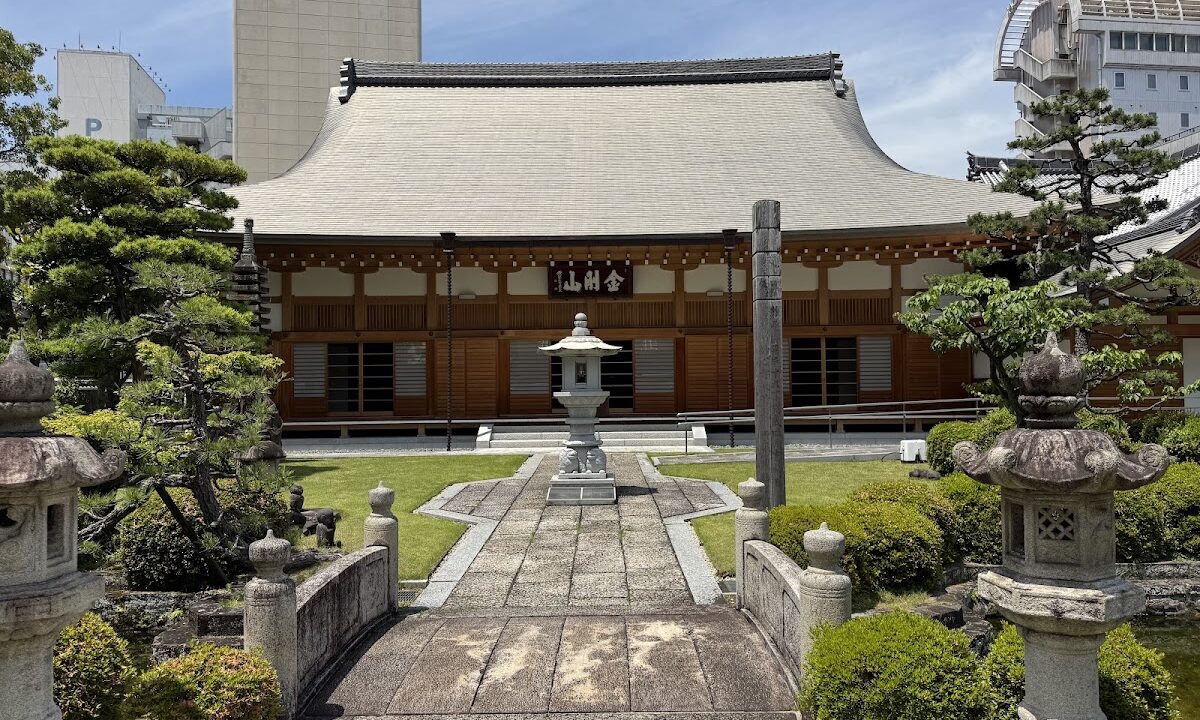
Hōtai-ji Temple (Shizuoka Prefecture) Complete Guide | History, Highlights, and Access Information
Located just a 5-minute walk from JR Shizuoka Station in the heart of Shizuoka City, lies a tranquil Zen temple. Hōtai-ji Temple, founded in 1381 (Eitoku 1) during the early Muromachi period, is a Rinzai Zen temple of the Myōshin-ji school. Its mountain name is Kongōzan, and it is a historic Zen temple with Shakyamuni Buddha as its principal deity.
It was once counted as one of the three most important temples in Suruga Province, and its grounds were praised as the most beautiful in the Tōkai region. During the Edo period, it played an important role in diplomatic history, serving as a resting place for Korean envoys. Even today, Hōtai-ji Temple boasts many attractions, including a beautiful garden designed by Nakane Kinsaku, a child-like Jizō statue, and a rare jacaranda tree. This guide will provide a detailed introduction to the temple’s charms.
History of Hōtai-ji Temple
Founding and First Abbot
The history of Hōtai-ji Temple dates back to 1381 (Eitoku 1). The first abbot was Zen Master Mumon Gensen, said to be a son of Emperor Go-Daigo. Mumon Gensen was a high-ranking monk during the Nanboku-chō period, and was respected by many for his profound knowledge and virtue.
In fact, a temple existed on the site of Hōtai-ji Temple even before that. Originally, there was a Shingon Esoteric Buddhism training hall with seven main buildings on this site. Zen Master Mumon Gensen rebuilt it as a Rinzai Zen temple, marking the beginning of the current Hōtai-ji Temple. With this reconstruction, Hōtai-ji Temple began a new chapter in its history as a Zen training hall.
Relationship with the Imagawa Family
From the Muromachi period to the Sengoku period, the Imagawa family, who ruled Suruga Province, provided generous protection to Hōtai-ji Temple. Under the patronage of the Imagawa family, Hōtai-ji Temple developed into a large temple complex with seven main halls, becoming a place where many monks dedicated themselves to their training. During this period, the temple grounds were far more extensive than they are today, and it is said that the site of the later Shizuoka Station was once part of Hōtai-ji’s grounds.
Status as one of the Three Great Temples of Suruga
Hōtai-ji Temple, along with Rinzai-ji Temple in Sunpu and Seiken-ji Temple in Okitsu, was hailed as one of the “Three Great Temples of Suruga.” The term “Three Great Temples” refers to temples of particularly high status and importance. Due to its beautiful grounds and high status, Hōtai-ji Temple functioned as a central presence among Rinzai Zen temples in Suruga Province.
The beauty of its grounds was particularly famous, even being called “the finest in the Tōkai region.” The seven main halls were neatly arranged, and the meticulously maintained gardens captivated many worshippers and cultural figures.
The Edo Period and the Korean Envoys
With the arrival of the Edo period, Hōtai-ji Temple took on a new role. It was designated as a resting place for the chief envoy, deputy envoy, and accompanying officials of the Korean envoys. The Korean envoys were diplomatic missions dispatched from the Joseon Dynasty to the Edo Shogunate, and they visited Japan 12 times throughout the Edo period.
When the envoys passed through the Tōkaidō road, Hōtai-ji Temple was chosen as a resting place due to its high status and favorable location. The temple grounds were meticulously prepared, and arrangements for hospitality were made to welcome the envoys. This history demonstrates that Hōtai-ji Temple functioned not merely as a religious facility, but also as a stage for diplomacy.
Changes After the Meiji Restoration
Due to the impact of the anti-Buddhist movement after the Meiji Restoration and the wave of modernization, Hōtai-ji Temple also underwent significant changes. In particular, from the late Meiji period to the early Showa period, the construction of Shizuoka Station and the development of the city led to a substantial reduction in the temple’s former vast grounds.
Although affected by war damage during the Showa era, the temple has recovered after the war and reached its current form. While the temple grounds have shrunk, its spirituality and cultural value are still preserved.
Highlights of Hōtai-ji Temple
Main Gate and Main Hall
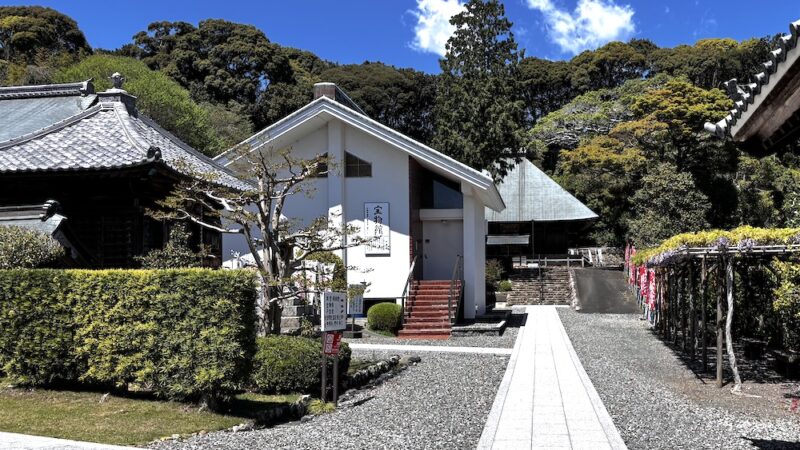
Hōtai-ji Temple’s main gate, despite being located amidst the hustle and bustle of the city center, offers a world of its own the moment you step inside. Passing through the gate, visitors are greeted by the tranquil grounds.
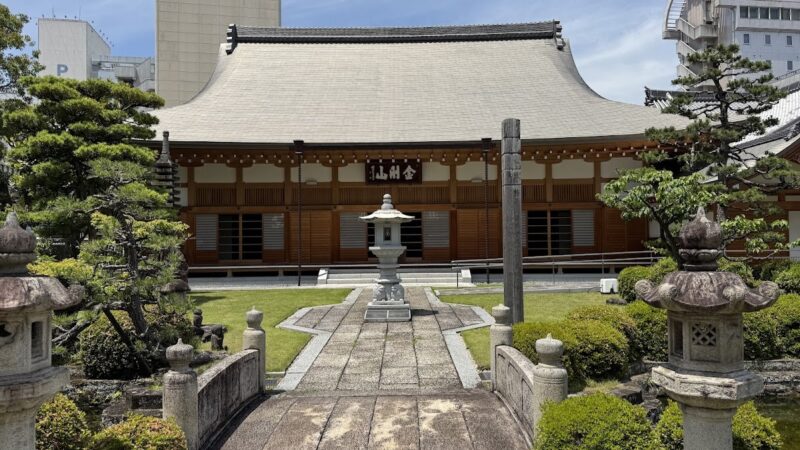
The main hall houses the principal image, a statue of Shakyamuni Buddha, exuding a simple yet solemn atmosphere characteristic of a Zen temple. As a temple of the Myoshin-ji branch of the Rinzai school, it regularly holds Zen meditation sessions and continues to serve as a place of Zen practice in modern times.
Child Jizo
Particularly striking within the grounds of Hōtai-ji Temple is the “Child Jizo” statue, created by stone sculptor Takashi Sugimura. Approximately 40 child-like Jizo statues are scattered throughout the temple grounds, each with a different expression and pose.
Takashi Sugimura is one of Japan’s leading stone sculptors, and his works are filled with warmth and gentleness. The child-like Jizo statues at Hōtai-ji Temple each possess their own unique personality, some smiling, some sitting, some with their hands clasped. Visitors enjoy searching for these adorable Jizo statues as they stroll through the temple grounds.
The child-like Jizo are revered as guardians of children’s growth and safety, and many visitors offer prayers to them.
Nakane Kinsaku’s Garden
The courtyard of Hōtai-ji Temple was designed by Nakane Kinsaku, a renowned landscape architect of the Showa era. Nakane Kinsaku, sometimes called the “Showa-era Kobori Enshū,” left behind numerous famous gardens throughout Japan. The Nakane Garden Research Institute plays a vital role in preserving traditional Japanese garden techniques for the modern age.
The garden of Hōtai-ji Temple is a masterpiece that condenses the aesthetics of dry landscape gardening into a limited space. The meticulously calculated design, from the placement of stones and the way the sand patterns are drawn to the balance of the plants, evokes a sense of tranquility and harmony in the viewer. The fact that Hōtai-ji Temple, one of the three major temples of Suruga Province, had its garden designed by the modern master Kinsaku Nakane, is a magnificent fusion of tradition and modernity.
The garden embodies the spirituality of Zen and functions as a place for zazen and meditation. Many visitors say they find peace of mind by quietly gazing at the garden.
Jacaranda Tree
Within the grounds of Hōtai-ji Temple stands a large jacaranda tree, a rarity in Japan. The jacaranda is a deciduous tree native to South America, and is considered one of the “world’s three most beautiful flowering trees,” producing stunning blossoms.
The jacaranda at Hōtai-ji Temple is at its best from late May to early June each year, just as the rainy season begins. The sight of the beautiful purple flowers blooming profusely on the branches is breathtaking, and many visitors come to see the blossoms during this season. Jacaranda trees are rare in Japan, and it’s a rare find to see such magnificent jacarandas in the heart of Shizuoka City.
The jacaranda’s flower meanings are “honor” and “glory,” making it a fitting flower for the historical and prestigious Hōtai-ji Temple. The blooming period is relatively short, so it’s worth timing your visit accordingly.
Temple Members’ Hall
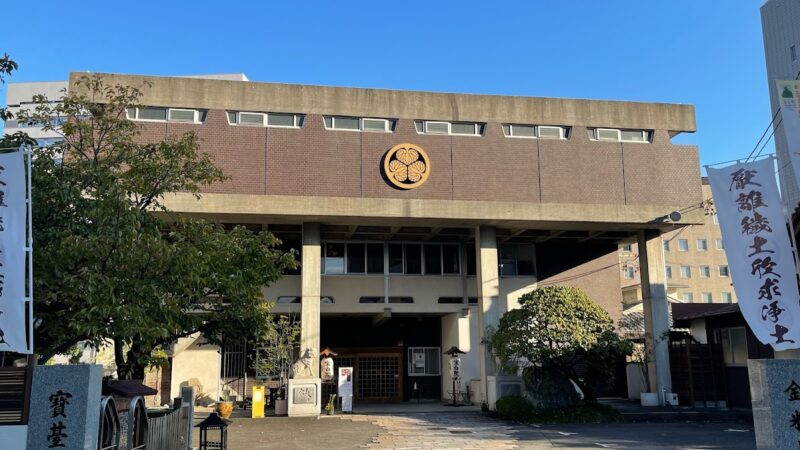
Hōtai-ji Temple has a temple members’ hall attached to it, which is used for memorial services, various events, and Zen meditation sessions. While equipped with modern facilities, it maintains the tranquil atmosphere characteristic of a Zen temple and also functions as a community space for the local area.
The temple members’ hall regularly hosts Zen meditation sessions, sutra copying sessions, and Dharma talks, providing opportunities for the general public to participate. It is a valuable place where many people can experience the teachings of Zen in the heart of the city.
Recommended Time to Visit Hōtai-ji Temple
Spring (March-May)
Spring is a beautiful season as the temple grounds sprout new leaves. The jacaranda trees begin to bloom, especially from late May, making this a particularly recommended time to visit.
Early Summer (June)
The jacaranda blossoms remain in full bloom until early June. Visiting on a sunny day between rainy spells makes the purple flowers stand out even more beautifully against the blue sky. The temple grounds after a rain shower also have a charming, tranquil atmosphere.
Autumn (October-November)
Autumn is the season of autumn leaves. The trees in the temple grounds change color, and Kinsaku Nakane’s garden takes on its autumnal appearance. The contrast between the child-like Jizo statues and the autumn leaves is beautiful, making this an ideal time for photography.
Winter (December-February)
The quiet temple grounds in winter also have their own unique charm. While many visitors come during the New Year’s holiday season, the temple grounds are enveloped in silence on weekdays during winter, allowing you to fully appreciate the atmosphere of a Zen temple.
Basic Information and Access to Hōtai-ji Temple
Basic Information
Official Name: Kongōzan Hōtai-ji Temple
Sect: Rinzai Zen Myōshin-ji School
Principal Image: Shakyamuni Buddha
Founder: Zen Master Mumon Gensen
Established: 1381 (Eitoku 1)
Location: 12-2 Tenma-chō, Aoi-ku, Shizuoka City, Shizuoka Prefecture
Postal Code: 420-0858
Access Method
Access by Train
- Approximately 5 minutes on foot from the North Exit of Shizuoka Station on the JR Tōkaidō Main Line
- Approximately 5 minutes on foot from Shin-Shizuoka Station on the Shizuoka Railway
To reach Hōtai-ji Temple from Shizuoka Station, exit the North Exit and head north along Shichiken-chō Street towards Tenma-chō. Although located in the middle of a bustling downtown area, the temple gate serves as a landmark, making it relatively easy to find.
Access by Car
- Approximately 15 minutes from the Tomei Expressway “Shizuoka IC”
- Approximately 20 minutes from the Shin-Tomei Expressway “Shin-Shizuoka IC”
*Since dedicated parking is limited, we recommend using nearby coin-operated parking lots. There are many parking lots around Shizuoka Station.
Access by Bus
- Take the Shizutetsu Justline bus from Shizuoka Station and get off at the “Nanakencho” bus stop, then a 2-minute walk.
Visiting Hours and Admission Fees
Entry to the temple grounds is generally free, but we recommend checking in advance regarding viewing the interior of the main hall and the gardens. For information on Zen meditation sessions and special events, please contact the temple directly.
Nearby Tourist Attractions
Since Hōtai-ji Temple is located in the center of Shizuoka City, there are many tourist attractions nearby.
Sunpu Castle Park
Sunpu Castle Park, located about a 10-minute walk away, is the site of Sunpu Castle, where Tokugawa Ieyasu spent his later years. The vast park features restored Higashi-Gomon Gate and Tatsumi-yagura Tower, allowing visitors to learn about Shizuoka’s history. ### Shizuoka Sengen Shrine
Located about a 15-minute walk away, Shizuoka Sengen Shrine is a shrine that has long been revered as the principal shrine of Suruga Province. Its magnificent and opulent shrine buildings are designated as a National Important Cultural Property.
Aoba Symbol Road
Aoba Symbol Road, located on the way from Shizuoka Station to Hōtai-ji Temple, is a beautiful promenade lined with zelkova trees. With many cafes and restaurants, it’s perfect for a stroll.
Experiences at Hōtai-ji Temple
Zen Meditation Sessions
Hōtai-ji Temple regularly holds Zen meditation sessions. Beginners are welcome, and participants receive careful instruction on the basics of Zen. It’s a valuable opportunity to escape the hustle and bustle of the city and calm the mind, popular with both locals and tourists.
Sutra Copying Experience
Sutra copying is a practice that calms the mind and enhances concentration. Hōtai-ji Temple sometimes holds sutra copying sessions, where you can experience copying scriptures such as the Heart Sutra by hand.
Goshuin (Temple Seal)
At Hōtai-ji Temple, you can receive a Goshuin. The carefully written Goshuin are sought after by many as a memento of their visit. You can bring your own Goshuincho (stamp book) or purchase one at the temple.
Cultural Value of Hōtai-ji Temple
Hōtai-ji Temple is not merely a tourist attraction, but a living cultural asset with over 600 years of history. It continues to pass on the teachings of Rinzai Zen Buddhism and serves as a spiritual pillar for the local community.
Having left its mark on diplomatic history as a resting place for Korean envoys, and having played a central role in the region’s religious culture as one of the three major temples of Suruga, Hōtai-ji Temple, which still possesses works of art such as Takashi Sugimura’s Warabe Jizo (child Jizo statue) and Kinsaku Nakane’s garden, is a valuable presence that connects the past and the present.
Amidst increasing urbanization, Hōtai-ji Temple, located just 5 minutes from Shizuoka Station, maintains its tranquility and spirituality, making it a spiritual haven for modern people.
Summary
Hōtai-ji Temple is a Zen temple of the Myoshin-ji branch of the Rinzai school, located in the heart of Shizuoka City, preserving over 600 years of history and tradition. Founded by Zen Master Mumon Gensen, son of Emperor Go-Daigo, it flourished as one of the three most prestigious temples in Suruga Province and was even used as a resting place for Korean envoys during the Edo period.
Today, Hōtai-ji Temple is a fascinating temple with many attractions, including a beautiful garden designed by Kinsaku Nakane, 40 child-like Jizo statues by Takashi Sugimura, and a rare jacaranda tree. Its excellent accessibility, just a 5-minute walk from Shizuoka Station, is another major draw.
When visiting Shizuoka, be sure to visit Hōtai-ji Temple and experience its history, culture, and the Zen spirit that flows through its tranquility. Visiting from late May to early June, when the jacaranda trees are in bloom, is especially recommended, but the temple grounds, which display different expressions throughout the seasons, offer new discoveries no matter when you visit.