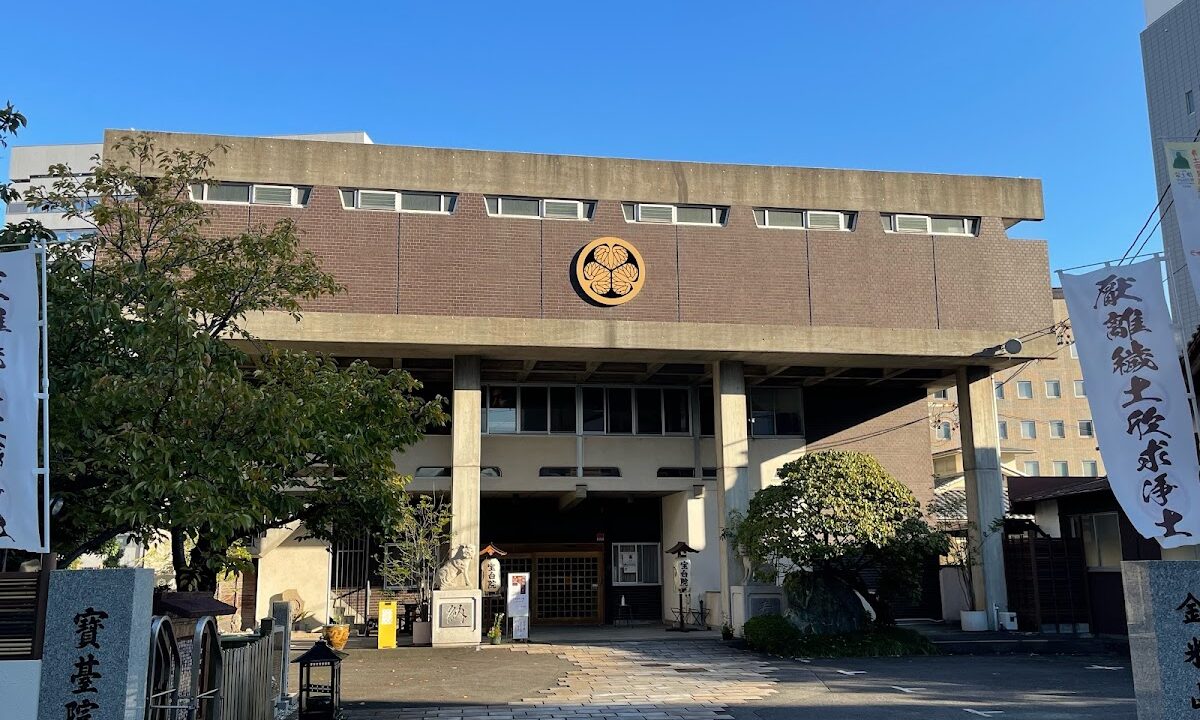
Hōdai-in Temple (Shizuoka Prefecture) Complete Guide | History and Highlights of the Tokugawa Ieyasu’s Family Temple
Located in the heart of Shizuoka City, just a 10-minute walk from Shizuoka Station, is an important temple associated with Tokugawa Ieyasu. Hōdai-in Temple is a Jōdo sect temple with a history spanning over 400 years, serving as the family temple of Saigō-no-Tsubone (Oai-no-kata), Ieyasu’s concubine and the mother of the second shogun, Tokugawa Hidetada, and as the Tokugawa family’s family temple in Sunpu.
What is Hōdai-in Temple? | The Tokugawa Family’s Family Temple in Sunpu
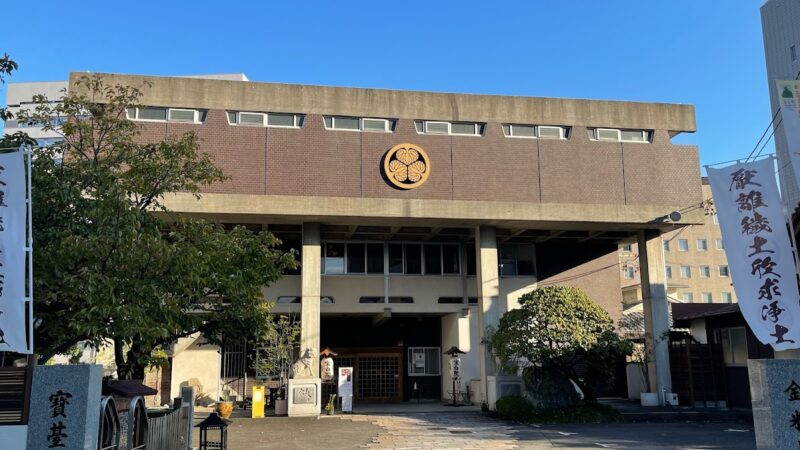
Hōdai-in Temple is a Jōdo sect temple located at 2-13-2 Tokiwa-cho, Aoi-ku, Shizuoka City, Shizuoka Prefecture. Its official name is Kinbeizan Ryūsenji Hōdai-in, with Kinbeizan as its mountain name and Ryūsenji as its temple name. The principal image is Amida Buddha, and the temple is particularly known for housing a standing statue of Amida Buddha, a nationally designated Important Cultural Property, known as the “White Principal Image.”
As the Tokugawa family’s ancestral temple in Sunpu, it maintained a deep connection with the Tokugawa family throughout the Edo period. It is especially important to the Tokugawa family because it houses the tomb of Saigo-no-Tsubone (Oai-no-kata), a concubine of Tokugawa Ieyasu and the mother of the second shogun, Tokugawa Hidetada.
Basic Information
Address: 2-13-2 Tokiwa-cho, Aoi-ku, Shizuoka City, Shizuoka Prefecture 420-0034
Phone Number: 054-252-1090
Sect: Jodo-shu (Pure Land Buddhism)
Mountain Name: Kinbeizan
Temple Name: Ryusenji
Principal Image: Amida Buddha (White Principal Image, Nationally Designated Important Cultural Property)
Opening Hours: Weekdays 9:00-16:00 (Weekends: Visiting by reservation only)
Admission Fee: Adults 500 yen, Children 200 yen
History of Hōdai-in Temple | From Founding to the Present
Founding as Ryusenji Temple
The history of Hōdai-in Temple dates back to Eishō 4 (1507). Its predecessor was Ryusenji Temple, founded by Kanyo Yūsō Shōnin, the 9th head priest of Kamakura’s Kōmyōji Temple. Kanyo Yūshō Shōnin is known as a high-ranking priest who founded the “Ojūya Hōyō” (Ten Nights Buddhist Service) in the Jōdo sect of Kamakura, and this Ryūsenji Temple would later develop into Hōdai-in Temple.
Connection with Saigō no Tsubone
The connection between Hōdai-in Temple and Saigō no Tsubone (Oai no Kata) was the catalyst for its deep ties with the Tokugawa family. Saigō no Tsubone was born in 1552 and served Tokugawa Ieyasu from the age of 27. She managed the kitchen at Hamamatsu Castle during Ieyasu’s most difficult times, including the Battle of Mikatagahara, the Battle of Shitaragahara, and the Battle of Komaki-Nagakute, and is known as a “devoted wife” who was most popular among the Mikawa samurai.
In 1579, Saigō no Tsubone gave birth to Tokugawa Hidetada, who would later become the second shogun, at Hamamatsu Castle. With Hidetada becoming shogun, the status of his mother, Saigo-no-Tsubone, became exceptional. After her death in Edo in 1602 at the age of 61, her remains were buried at Ryusenji Temple in Sunpu.
Development as a Family Temple
Following Saigo-no-Tsubone’s burial, Ryusenji Temple was developed as the Tokugawa family’s family temple. In 1631, the second shogun, Tokugawa Hidetada, built the main hall and changed the temple’s name to “Hōdai-in.” This name “Hōdai-in” originates from Saigo-no-Tsubone’s posthumous Buddhist name, “Hōdai-in-dono Yōyo Kōgaku Daizenjōni.”
Throughout the Edo period, Hōdai-in held an important position as the Tokugawa family’s family temple in Sunpu, alongside Zōjōji Temple in Shiba, Edo. Receiving patronage from the Tokugawa shogunate, it was granted numerous temple lands and high status, and prospered as one of the influential temples in Sunpu Castle town.
The Site of Tokugawa Yoshinobu’s House arrest
During the late Edo period, Hōdai-in Temple once again appeared on the historical stage. In 1867, the 15th Shogun, Tokugawa Yoshinobu, who had restored imperial rule, left Edo the following year, 1868, and moved to Sunpu. At that time, Yoshinobu lived in house arrest at Hōdai-in Temple.
Although Yoshinobu’s period of house arrest was short, the fact that the last Shogun of the Edo Shogunate spent time here added a new chapter to Hōdai-in Temple’s history. Currently, a monument marking “The Site of Tokugawa Yoshinobu’s House arrest” stands on the temple grounds, commemorating this historical fact.
Hōdai-in Temple in Modern Times
After the Meiji Restoration, Hōdai-in Temple lost the patronage of the Tokugawa family, but it has been carefully preserved by the local people as the burial place of Saigo no Tsubone and as a temple associated with the Tokugawa family. The main hall and principal image, which survived the bombing of World War II, still retain their original appearance. In modern times, Hōdai-in Temple is a temple that attracts many worshippers and tourists, serving as an important historical and cultural asset of Shizuoka City and a popular tourist spot.
Highlights of Hōdai-in Temple
White Amida Buddha Standing Statue (Nationally Designated Important Cultural Property)
The greatest highlight of Hōdai-in Temple is the White Amida Buddha Standing Statue enshrined in the main hall. This Buddha statue is designated as a Nationally Designated Important Cultural Property and is known as the guardian deity of Tokugawa Ieyasu.
The name “White Buddha” comes from its unpainted wooden form. Along with the “Black Buddha” enshrined at Shiba Zōjō-ji Temple, it is said to have been carried to the battlefield as Ieyasu’s guardian deity. The statue is approximately 90 centimeters tall, believed to be a work from the Kamakura period, and is characterized by its elegant form and serene expression.
Ieyasu deeply revered this White Buddha and cherished it throughout his life. After Ieyasu’s death, this Buddha statue was enshrined at Hōdai-in Temple in Sunpu, and to this day it continues to watch over worshippers from the center of the main hall.
Main Hall
Built in 1631 by Tokugawa Hidetada, the main hall is a magnificent building with high ceilings. It retains many characteristics of early Edo period temple architecture and is a building of high historical value.
While the interior of the main hall is not usually accessible during regular visits, paying an entrance fee allows entry, enabling visitors to view the white Amida Buddha statue up close. The experience of praying in the tranquil space of the main hall, while feeling its 400-year history, deeply moves visitors.
Grave of Saigo-no-Tsubone
Within the temple grounds lies the grave of Saigo-no-Tsubone (Oai-no-kata), the birth mother of Tokugawa Hidetada. Saigo-no-Tsubone, who died in Edo in 1602, had her remains buried here, and has rested peacefully for over 400 years. The burial site is located behind the main hall, in a quiet and peaceful atmosphere. Imagining Tokugawa Hidetada and other members of the Tokugawa family remembering their mother at this tomb evokes a profound sense of history.
Monument to the Place of Tokugawa Yoshinobu’s House arrest
Within the temple grounds stands a stone monument inscribed with “Place of Tokugawa Yoshinobu’s House arrest.” This monument commemorates the time in 1868 (Keio 4) when the 15th Shogun, Tokugawa Yoshinobu, lived here under house arrest.
As a historical site symbolizing the turbulent era of the end of the Edo Shogunate and the Meiji Restoration, it is a popular spot for history enthusiasts.
Treasure Room
By paying the entrance fee, you can visit the treasure room along with the main hall. The treasure room displays items related to the Tokugawa family and temple treasures, allowing for a deeper understanding of the history of Hōdai-in Temple.
While the exhibits may change depending on the season, the temple houses valuable materials related to Saigo Takamori and the Tokugawa family, making it a must-see for history buffs.
Atmosphere of the Temple Grounds
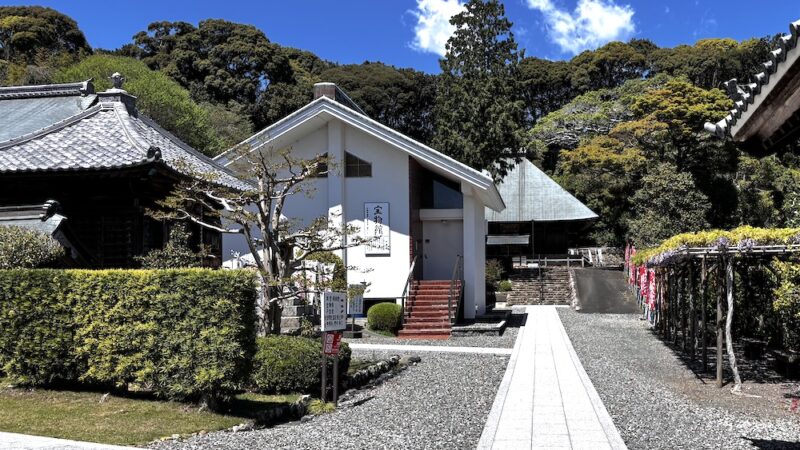
Despite being located in the heart of Shizuoka City, Hōdai-in Temple maintains a quiet and peaceful atmosphere. The well-maintained gardens and historical buildings harmonize to create a space that allows visitors to forget the hustle and bustle of the city.
Especially during the fresh greenery of spring and the vibrant autumn foliage, the trees on the temple grounds display beautiful colors, delighting visitors.
Access Information
Access by Train
Hōdai-in Temple is easily accessible. Located approximately 10 minutes on foot from JR Shizuoka Station, it is a convenient destination for tourists using public transportation.
Walking Route from Shizuoka Station:
- Exit the North Exit of JR Shizuoka Station
- Head north along the main street in front of the station
- Head towards Tokiwa-cho
- You will arrive at Hōdai-in Temple in about 10 minutes.
There are signs along the way, so even first-time visitors can arrive without getting lost.
Access by Car
If you are coming by car, it is about 15 minutes from the Tomei Expressway Shizuoka IC and about 20 minutes from the Shin-Tomei Expressway Shin-Shizuoka IC. However, Hōdai-in Temple does not have its own parking lot, so you will need to use a nearby coin-operated parking lot.
There are several coin-operated parking lots in the center of Shizuoka City, and several parking lots are located within a 5-minute walk from Hōdai-in Temple.
Important Notes for Visitors
Visiting Hours and Fees
Weekdays: 9:00 AM – 4:00 PM (No reservation required)
Weekends: Visitors only with reservations
Admission Fee: Adults 500 yen, Children (Junior high school age and younger) 200 yen
If visiting on weekends, you must make a reservation in advance by phone (054-252-1090). While you can visit on weekdays without a reservation, there may be times when visits are not possible due to religious services, etc. Therefore, if you want to be sure of visiting, it is recommended to check by phone in advance.
Visiting Etiquette
Hōdai-in Temple is a temple where religious activities are still being conducted. Please observe the following manners when visiting the temple:
- Please remain quiet inside the main hall.
- Please take photographs only in designated areas.
- Do not touch the main image or treasures.
- Please refrain from eating or drinking on the temple grounds.
- Please set your mobile phone to silent mode.
Regarding Clothing
There are no specific dress code requirements, but as a general courtesy when visiting temples, it is advisable to avoid overly revealing or flashy clothing.
Tourist Attractions Around Hōdai-in Temple
When visiting Hōdai-in Temple, we recommend also visiting the surrounding tourist attractions.
Sunpu Castle Park
Sunpu Castle Park, located about a 15-minute walk from Hōdai-in Temple, is the site of Sunpu Castle, where Tokugawa Ieyasu spent his later years. The vast park features a reconstructed East Gate and Tatsumi Turret, and attracts many tourists as a place associated with Ieyasu. Visiting it together with Hōdai-in Temple will allow you to gain a deeper understanding of Ieyasu’s relationship with Sunpu.
Shizuoka City Museum of History
Opened in 2023, the Shizuoka City Museum of History is a state-of-the-art museum located next to Sunpu Castle Park. It offers a systematic approach to learning about Shizuoka’s history, and boasts extensive exhibits on Tokugawa Ieyasu and Sunpu. It’s a worthwhile visit for understanding the historical background of Hōdai-in Temple.
Kunozan Tōshō-gū Shrine
Located in Suruga Ward, Shizuoka City, Kunozan Tōshō-gū is one of the Tōshō-gū shrines dedicated to Tokugawa Ieyasu. About a 30-minute drive from Hōdai-in Temple, its magnificent shrine buildings, designated as a National Treasure, are a must-see. It also houses Ieyasu’s tomb, making it a popular stop on a tour of places associated with Ieyasu, along with Hōdai-in Temple.
Shizuoka Sengen Shrine
Located about a 20-minute walk from Hōdai-in Temple, Shizuoka Sengen Shrine is a shrine that has long been revered as the principal shrine of Suruga Province. 26 of its buildings are designated as National Important Cultural Properties, showcasing a magnificent architectural complex.
Hōdai-in Temple and Tokugawa Ieyasu
When discussing Hōdai-in Temple, its deep connection with Tokugawa Ieyasu is indispensable. Ieyasu’s relationship with Hōdai-in Temple is not merely that of a family temple, but is intimately intertwined with Ieyasu’s life itself.
The Bond with Saigō-no-Tsubone
For Ieyasu, Saigō-no-Tsubone (Oai-no-kata) was his companion through his most difficult times. It was Saigō-no-Tsubone who supported Ieyasu when he narrowly escaped with his life back to Hamamatsu Castle after his defeat by Takeda Shingen at the Battle of Mikatagahara. Furthermore, during Ieyasu’s path to becoming the ruler of Japan, including the Battle of Nagashino and the Battle of Komaki-Nagakute, it was Saigō-no-Tsubone who always guarded the kitchens of Hamamatsu Castle and supported the morale of the samurai.
With Saigō-no-Tsubone’s son, Hidetada, becoming the second shogun, Ieyasu’s bloodline was surely passed on to the next generation. For Ieyasu, Saigo-no-Tsubone was a benefactor who laid the foundation for the Tokugawa family, and Hōdai-in Temple, her mausoleum, held special significance.
Faith in the White Buddha
It is said that Ieyasu worshipped the white Buddha statue of Amida Buddha throughout his life, even carrying it with him to the battlefield. For Ieyasu, a devout follower of the Jōdo sect, this Buddha statue was a source of spiritual support and an object of his prayers for peace after death.
The fact that this white Buddha statue was enshrined in Hōdai-in Temple after Ieyasu’s death symbolizes the deep connection between Ieyasu, Saigo-no-Tsubone, and Hōdai-in Temple.
Cultural Properties of Hōdai-in Temple
Nationally Designated Important Cultural Property
The standing white Buddha statue of Amida Buddha, the principal image of Hōdai-in Temple, is designated as a National Important Cultural Property. It retains many characteristics of Kamakura period Buddhist sculpture and is a work of high artistic value.
Other Temple Treasures
The treasure room houses items donated by the Tokugawa family and items associated with Saigo no Tsubone. These are carefully preserved as valuable historical materials that tell the story of Shizuoka City’s history.
Annual Events at Hōdai-in Temple
As a Jōdo sect temple, Hōdai-in Temple holds various Buddhist services and events throughout the year.
The Jūya Buddhist Service
The Jūya Buddhist service, founded by the temple’s founder, Kanyo Yūshō Shōnin, is held annually at Hōdai-in Temple. As an important Jōdo sect event, many believers participate.
Memorial Service for Saigo no Tsubone
On the anniversary of Saigo no Tsubone’s death, a special memorial service is held, bringing together people associated with the Tokugawa family and local believers.
Recommended itinerary for visiting Hōdai-in Temple
Half-day course (Tour of places associated with Tokugawa Ieyasu)
- JR Shizuoka Station (Start)
- Hōdai-in Temple (60 min) – Viewing the White Buddha and strolling around the temple grounds
- Sunpu Castle Park (60 min) – Visiting the East Gate and Tatsumi Turret
- Shizuoka City History Museum (90 min) – Learning about Ieyasu and the history of Sunpu
- Lunch near Shizuoka Station
Full-day course (Tour of historical spots in Shizuoka City)
- JR Shizuoka Station (Start)
- Hōdai-in Temple (60 min)
- Sunpu Castle Park (60 min)
- Shizuoka Sengen Shrine (60 min)
- Lunch
- Kunozan Tōshōgū Shrine (120 min) – By car or bus
- Nihondaira (60 minutes) – By ropeway from Kunozan
Accommodation Information in Shizuoka City
There are many hotels and inns around Hōdai-in Temple, centered around Shizuoka Station. A variety of accommodations are available, from business hotels near Shizuoka Station to hot spring inns in the Nihondaira and Shimizu areas.
For those who want to thoroughly explore the sites associated with Tokugawa Ieyasu, we recommend staying in Shizuoka City and sightseeing over several days.
Frequently Asked Questions
Q1: Is a reservation required to visit Hōdai-in Temple?
A1: You can visit without a reservation on weekdays (Monday to Friday) (9:00 AM to 4:00 PM). However, on Saturdays and Sundays, only those with reservations are allowed to visit, so you need to make a reservation in advance by phone (054-252-1090). Also, even on weekdays, there may be times when you cannot visit due to memorial services, so we recommend checking in advance if you want to be sure to visit.
Q2: Is the white Amida Buddha statue always available for viewing? **
A2: Yes, by paying the entrance fee (500 yen for adults, 200 yen for children), you can view the standing white Amida Buddha statue inside the main hall. However, viewing may not be possible if special religious services are being held.
Q3: Does Hōdai-in have a parking lot?
A3: Hōdai-in does not have its own parking lot. If you are visiting by car, you will need to use a nearby coin-operated parking lot. There are several coin-operated parking lots around Shizuoka Station, and some are about a 5-minute walk from Hōdai-in.
Q4: Is photography allowed?
A4: Photography of the exterior of the temple grounds and gardens is permitted, but there may be restrictions on photography inside the main hall and of the principal image. Please check with the temple staff regarding photography permission during your visit.
Q5: Can I get a Goshuin (temple stamp)?
A5: Yes, you can get a Goshuin at Hōdai-in. Please leave your goshuincho (stamp book) at the reception desk or inform them that you would like to receive a goshuin (stamp).
Q6: How long does it take?
A6: Visiting the main hall and strolling around the temple grounds takes approximately 30 to 60 minutes. If you want to take your time to look around or see the treasure room, it’s best to allow 60 to 90 minutes.
Q7: Are there any guides for foreign tourists?
A7: Basic information is only available in Japanese, but the Shizuoka City Tourism Association may have brochures in foreign languages. We recommend contacting them in advance for details.
Summary
Hōdai-in Temple is an important temple with a history of over 400 years, serving as the family temple of Saigo-no-Tsubone, a concubine of Tokugawa Ieyasu, and as the family temple of the Tokugawa family in Sunpu. It houses numerous valuable cultural artifacts related to the Tokugawa family, including the nationally designated important cultural property, the white standing Amida Buddha statue, making it a must-see spot when visiting Shizuoka City. Located just a 10-minute walk from Shizuoka Station, the temple grounds maintain a quiet and peaceful atmosphere, offering a tranquil escape from the hustle and bustle of the city. Visiting it along with other nearby sites associated with Tokugawa Ieyasu, such as Sunpu Castle Park and Kunozan Toshogu Shrine, will allow you to gain a deeper understanding of Ieyasu’s profound connection to Shizuoka.
History buffs, those planning a trip to Shizuoka, and anyone interested in Tokugawa Ieyasu should definitely visit Hōdai-in Temple and experience its history and culture. Here, you can feel the legacy of the Tokugawa family, passed down through 400 years.