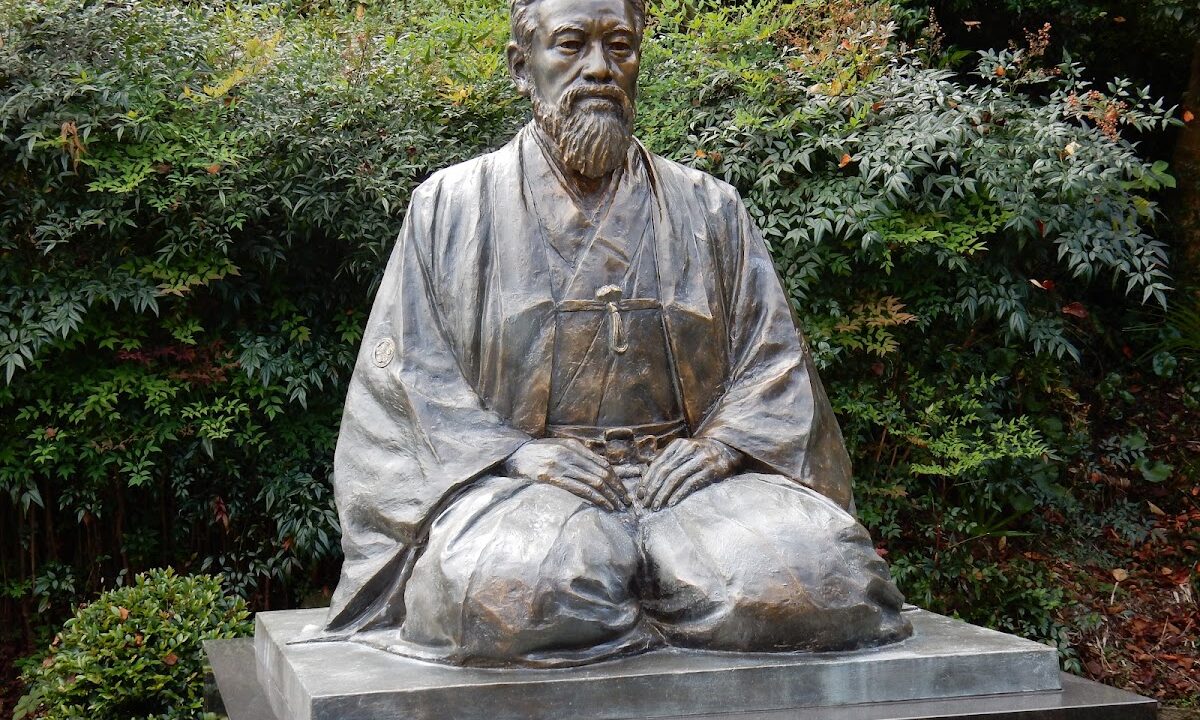
Tesshu Zenji Temple (Shizuoka Prefecture) Complete Guide: Highlights and Visiting Information for the Historic Rinzai Zen Temple Restored by Yamaoka Tesshu
Tesshu Zenji Temple, located in Shimizu Ward, Shizuoka City, is a Rinzai Zen temple of the Myoshinji school with a history spanning over a thousand years and a remarkable destiny. Relocated from the summit of Kunozan Mountain to its current location and restored by Yamaoka Tesshu, a patriot of the late Edo period, this temple welcomes many visitors as one of the seven Kannon pilgrimage sites of Suruga. This article comprehensively introduces information you should know before visiting Tesshu Zenji Temple, including its history, highlights, access methods, and information on temple stamps.
What is Tesshu Zenji Temple?: Basic Information and Overview
Tesshu Zenji Temple (commonly known as Tesshu-ji) is a Rinzai Zen temple of the Myoshinji school located at 2188 Muramatsu, Shimizu Ward, Shizuoka City, Shizuoka Prefecture. Its mountain name is Fudarakusan, its principal image is the Thousand-Armed Kannon Bodhisattva, and it is known as the 22nd temple of the Suruga Thirty-Three Kannon Pilgrimage and the 6th temple of the Suruga Seven Kannon (Abe Seven Kannon) Pilgrimage.
Basic Data
- Official Name: Fudarakusan Tesshu Zenji Temple
- Sect: Rinzai Zen Myoshinji School
- Principal Image: Thousand-Armed Kannon Bodhisattva
- Mountain Name: Fudarakusan
- Location: 2188 Muramatsu, Shimizu-ku, Shizuoka City, Shizuoka Prefecture 424-0926
- Pilgrimage Site: 22nd of the Suruga Thirty-Three Kannon Pilgrimage, 6th of the Suruga Seven Kannon Pilgrimage
- Parking: Free parking available
- Visiting: Currently, visits are not accepted (exterior only)
Located at the northern foot of Mt. Udo (Nihondaira), the temple grounds offer panoramic views of Shimizu Port and Miho no Matsubara, and on clear days, you can enjoy a spectacular view of Mt. Fuji.
The History of Tesshu Zen Temple: The Transition from Kunoji Temple to Tesshu Temple
Founding and the Kunoji Era
The history of Tesshu Zen Temple dates back approximately 1300 years. It is said to have been founded during the reign of Empress Suiko (late 6th to early 7th century) by the provincial lord Kuno Tadahito. Later, the renowned Nara period monk Gyoki (668-749) created and enshrined a statue of the Thousand-Armed Kannon, leading to the temple being called “Fudarakusan Kunoji.”
During this period, Kunoji Temple was located on the summit of Mount Kuno, where the present-day Kunozan Toshogu Shrine stands. The mountain name, Fudarakusan, originates from “Fudaraku Jodo,” the Pure Land where Kannon Bodhisattva resides, indicating that this temple was a center of Kannon worship.
Relocation by Takeda Shingen
In 1568, during the Sengoku period, Takeda Shingen, who invaded Suruga Province, recognized the strategic importance of Kunōzan. To develop Kunōzan as a military base, he relocated Kunōji Temple, which was located on the mountaintop, to its current location at the foot of the mountain (Muramatsu, Shimizu Ward).
This relocation was one of the important policies of the Takeda clan in their rule of Suruga. Kunōzan was a strategic point overlooking Suruga Bay, and later became the site where Tokugawa Ieyasu built the Kunōzan Tōshōgū Shrine. The relocation of Kunōji Temple can be considered one of the historical turning points in this area.
Decline during the Edo Period
After the relocation, Kunōji Temple gradually declined throughout the Edo period. By the end of the Edo period, it had almost lost its function as a temple and was in a state of dilapidation. The wave of anti-Buddhist movement after the Meiji Restoration further damaged temples, and at one point it was almost a ruin.
Restoration by Yamaoka Tesshu
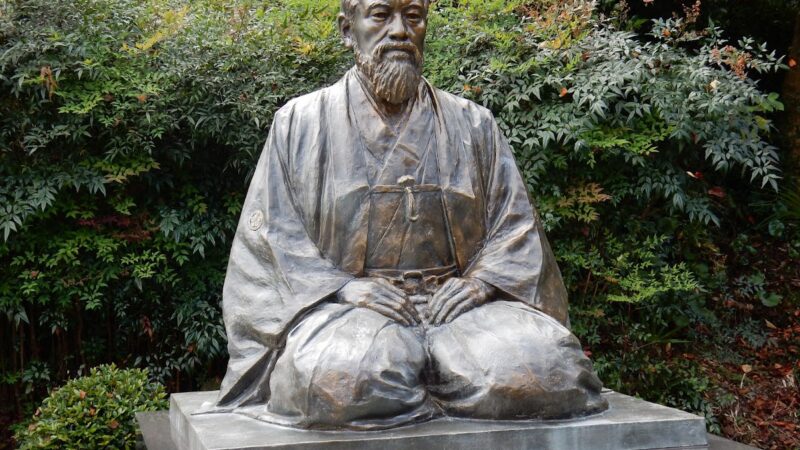
In 1883 (Meiji 16), Yamaoka Tesshu (1836-1888), a former shogunate retainer and one of the “Three Shus” of the late Edo period, embarked on the restoration of the dilapidated Kunōji Temple. Yamaoka Tesshu was known as a master of swordsmanship, Zen, and calligraphy, and played a key role in the bloodless surrender of Edo Castle.
Tesshu rebuilt the temple as a Rinzai Zen temple and renamed it “Tesshūji” (officially Tesshū Zenji), after himself. This gave the temple, with its history of over a thousand years, new life, and it continues to thrive today.
The Deep Connection Between Yamaoka Tesshu and Tesshū Zenji
Who was Yamaoka Tesshu?
Yamaoka Tesshu (1836-1888) was a samurai, politician, and thinker who was active from the late Edo period to the Meiji era. Along with Katsu Kaishu and Takahashi Deishu, he was known as one of the “Three Shus of the Late Edo Period,” excelling particularly in swordsmanship, Zen Buddhism, and calligraphy.
In March 1868 (Keio 4), Tesshu traveled to Sunpu (Shizuoka) as an envoy of Katsu Kaishu to negotiate the bloodless surrender of Edo Castle with Saigo Takamori. This achievement is said to have saved the city of Edo and many lives.
Tesshu’s Connection to Shizuoka
Yamaoka Tesshu had deep ties to Shizuoka. In addition to visiting Sunpu for the negotiations for the bloodless surrender of Edo Castle, he also deepened his relationships with members of the Tokugawa family who had relocated to Shizuoka after the Meiji Restoration.
Behind Tesshu’s efforts to restore Kunoji Temple were his deep devotion to Zen and his strong desire to preserve the historic temple for future generations. Tesshu himself, as a lay practitioner of the Rinzai sect, honed his skills and opened a dojo called “Shunpukan,” pursuing the state of unity between swordsmanship and Zen.
Traces of Tesshu Remain at Tesshu Zen Temple
Tesshu Zen Temple still bears the history of its restoration by Yamaoka Tesshu. The fact that the temple itself bears Tesshu’s name speaks volumes about the magnitude of his achievements. The temple grounds preserve various items and documents related to Tesshu (usually not open to the public), allowing visitors to feel the spirit of a samurai who lived through the turbulent times from the end of the Edo period to the Meiji era.
Highlights and Cultural Assets of Tesshu Zen Temple
Principal Image: Thousand-Armed Kannon Bodhisattva
The principal image of Tesshu Zen Temple is the Thousand-Armed Kannon Bodhisattva. According to tradition, the statue was carved by Gyoki Bodhisattva himself. The Thousand-Armed Kannon, as a compassionate Buddha who saves all sentient beings, has long been revered by ordinary people.
As one of the Seven Kannon of Suruga (Seven Kannon of Abe), this Thousand-Armed Kannon is a central figure in the region’s Kannon worship.
National Treasure “Kunōkyō”
Tesshū Zenji Temple is said to have once housed the “Kunōkyō,” a national treasure sutra that was passed down during the time of Kunōji Temple. The Kunōkyō is a Heian period decorated sutra, a valuable Buddhist art object beautifully adorned with gold and silver paint. While many Kunōkyō sutras are now housed in institutions such as the Tokyo National Museum, it remains an important cultural heritage demonstrating that Tesshū Zenji Temple carries on the traditions of Kunōji Temple.
Temple Grounds and Views
One of the major attractions of Tesshū Zenji Temple is the magnificent views it offers due to its location. Located on a hill approximately 100 meters above sea level at the northern foot of Mt. Udo (Nihondaira), the temple grounds offer the following views:
- Shimizu Port: A panoramic view of Shimizu Port, one of Japan’s leading international trading ports.
- Miho no Matsubara: A scenic spot that is a component of the World Cultural Heritage site “Mt. Fuji.”
- Suruga Bay: The vast ocean and the ships that come and go.
- Mt. Fuji: On clear days, the majestic figure of the sacred Mt. Fuji.
The view at sunset is particularly exceptional; the sight of the setting sun over Suruga Bay and the silhouette of Mt. Fuji captivates visitors.
Temple Architecture and Gardens
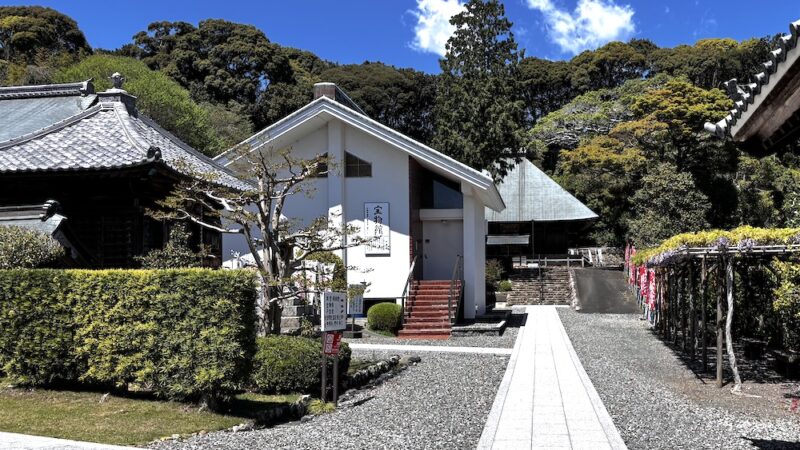
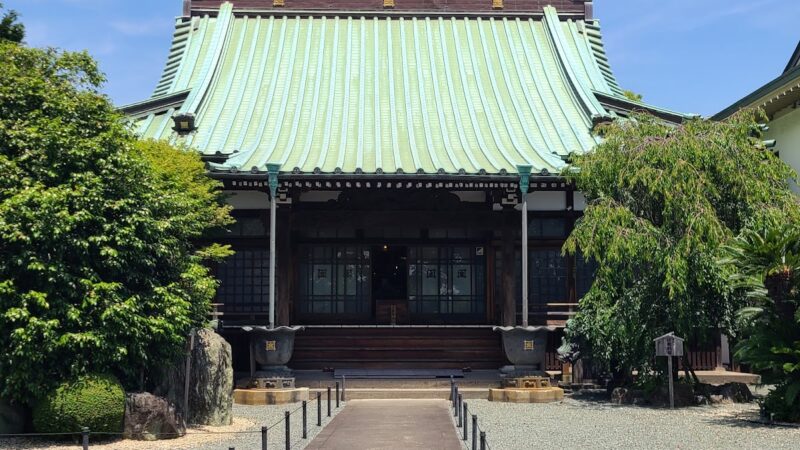
The buildings of Tesshu Zen Temple retain the style from its Meiji-era reconstruction while undergoing appropriate restoration. The simple yet dignified appearance, characteristic of a Rinzai Zen temple, embodies the spirit of Zen.
The temple gardens are also beautifully maintained, displaying different expressions throughout the seasons. In spring, you can enjoy cherry blossoms; in early summer, the fresh greenery; and in autumn, the vibrant autumn leaves—each season offers a different kind of beauty.
Tesshu Zen Temple as one of the Seven Kannon Pilgrimage Sites of Suruga
What are the Seven Kannon of Suruga (Abe Seven Kannon)?
The Seven Kannon of Suruga is a collective term for seven Kannon pilgrimage sites scattered throughout Shizuoka City and its surrounding areas. Also known as the Abe Seven Kannon, they have long been cherished as objects of Kannon worship for ordinary people. Tesshu Zen Temple welcomes pilgrims as the sixth temple on this pilgrimage route.
The seven temples comprising the Suruga Kannon pilgrimage are as follows:
- Temple No. 1: Kenhoji Temple (Kenho, Aoi-ku, Shizuoka City)
- Temple No. 2: Gyokusenji Temple (Hatori, Aoi-ku, Shizuoka City)
- Temple No. 3: Ryugeji Temple (Muramatsu, Shimizu-ku, Shizuoka City)
- Temple No. 4: Seikenji Temple (Okitsu Seikenji-cho, Shimizu-ku, Shizuoka City)
- Temple No. 5: Homyoji Temple (Maruko, Suruga-ku, Shizuoka City)
- Temple No. 6: Tesshu Zenji Temple (Muramatsu, Shimizu-ku, Shizuoka City)
- Temple No. 7: Kanpuzan Ryugeji Temple (Muramatsu, Shimizu-ku, Shizuoka City)
Significance of the Pilgrimage
The Kannon pilgrimage is a uniquely Japanese form of faith, where people rely on the compassion of Kannon Bodhisattva and pray for worldly benefits and rebirth in paradise. It is believed that by visiting the seven sacred sites, one can ward off seven misfortunes and gain seven blessings.
The Suruga Seven Kannon Pilgrimage, including Tesshu Zenji Temple, is a relatively compact pilgrimage route that can be completed within Shizuoka City, making it possible to visit on a weekend. You can receive a Goshuin (temple stamp) at each temple, serving as a memento of your pilgrimage.
Goshuin Information
You can receive a Goshuin at Tesshu Zenji Temple (please check in advance as this may change depending on the season and circumstances).
Goshuin Contents
- Center Ink Writing: “Senju Kannon” or “Fudarakusan”
- Red Seal: Temple’s seal
- Upper Right: “Homage,” “Suruga Seven Kannon No. 6,” etc.
- Lower Left: Temple seal of “Tesshu Zenji”
A Goshuin is proof of your visit and has a religious significance different from a stamp rally. Please receive it with sincerity after your visit.
About Goshuin Books
Goshuin books specifically for the Suruga Seven Kannon Pilgrimage, as well as Goshuin books for pilgrimages within Shizuoka City, are available for purchase. Please inquire directly with Tesshu Zenji Temple regarding their availability of Goshuincho (stamp books).
Access: How to get to Tesshu Zenji Temple
Location
2188 Muramatsu, Shimizu-ku, Shizuoka City, Shizuoka Prefecture 424-0926
Access by Public Transportation
By Train and Bus
- From JR Shimizu Station:
- Take the Shizutetsu Bus “Miho Yamanote Line”
- Get off at the “Tesshu-ji Iriguchi” bus stop and walk for approximately 5 minutes
- Or get off at the “Muramatsu” bus stop and walk for approximately 10 minutes
- From Shizuoka Railway Sakurabashi Station:
- Approximately 30 minutes on foot (approximately 2.5 km)
- Approximately 10 minutes by taxi
- From JR Shizuoka Station:
- Take the Shizutetsu Bus, transfer required
- Approximately 25 minutes by taxi
Since bus services are limited, it is recommended to check the timetable in advance.
Access by Car
From Tomei Expressway
- From Shimizu IC:
- Approximately 15 minutes via National Route 1
- Head towards Udo-yama and follow the signs
- From Shizuoka IC:
- Approximately 25 minutes via National Route 1
Parking
- Free parking available (limited spaces, please be aware of congestion)
- Prior consultation is recommended for parking large buses
Car Navigation Settings
- Address: 2188 Muramatsu, Shimizu-ku, Shizuoka City
- Phone Number: Facility’s phone number (Please check for the latest information before visiting)
Manners and Precautions for Visiting
Regarding Visiting
Currently, Tesshu Zen Temple may not be accepting visitors (exterior viewing only). If you wish to view the interior, it is recommended to contact the temple in advance to confirm.
Attire and Manners for Visiting the Temple
- Attire: Casual attire is acceptable, but please avoid revealing clothing.
- Photography: Photography is generally permitted within the temple grounds, but permission is required to photograph the interior of the main hall or the Buddha statues.
- Quietness: Please be quiet within the temple grounds and be considerate of other visitors.
- Offerings: Please offer what you can afford. The thought is what counts.
Etiquette for Visiting the Temple
- Bow at the temple gate before entering.
- Cleanse your hands and mouth at the water basin (if available).
- Join your hands in prayer before the main hall.
- If you wish to receive a temple stamp, do so after your visit.
- Bow at the temple gate when leaving.
Nearby Tourist Attractions
The area around Tesshu Zenji Temple has many attractive tourist spots in Shimizu Ward, Shizuoka City.
Kunozan Toshogu Shrine
This shrine, dedicated to Tokugawa Ieyasu, stands on the site of Kunoji Temple, the predecessor of Tesshu Zenji Temple. This is a must-see spot with numerous national treasure shrines and important cultural properties, well worth the climb up the 1159 stone steps (or by taking the ropeway).
- Distance: Approximately 15 minutes by car from Tesshu Zenji Temple
- Highlights: National treasure shrines, the tomb of Tokugawa Ieyasu, and the view from Kunozan
Miho no Matsubara
One of the constituent assets of the World Cultural Heritage site “Mount Fuji,” this scenic spot boasts approximately 30,000 pine trees along a 7km coastline. The landscape created by Mount Fuji, the pine grove, and Suruga Bay is one of Japan’s most representative and spectacular views.
- Distance: Approximately 20 minutes by car from Tesshu Zenji Temple
- Highlights: Views of Mount Fuji, Hagoromo Pine Tree, Miho Shrine
Nihondaira
A hilly area at an altitude of 307 meters, this viewpoint offers panoramic views of Mount Fuji, Suruga Bay, and the Southern Alps. You can also access Kunozan Toshogu Shrine via the Nihondaira Ropeway.
- Distance: Approximately 10 minutes by car from Tesshu Zenji Temple
- Highlights: Nihondaira Yume Terrace, 360-degree panoramic view
Ryugeji Temple (Muramatsu, Shimizu Ward)
Located in the same Muramatsu area as Tesshu Zenji Temple, this temple is the third stop on the Suruga Seven Kannon pilgrimage. It features a Kannon Hall and a beautiful garden, making it a convenient stop during the Seven Kannon pilgrimage.
- Distance: Within walking distance of Tesshu Zenji Temple
- Highlights: Kannon Hall, garden, tranquil temple grounds
S-Pulse Dream Plaza
A shopping and entertainment complex facing Shimizu Port. It boasts numerous family-friendly facilities, including the Shimizu Sushi Museum and Chibi Maruko-chan Land.
- Distance: Approximately 20 minutes by car from Tesshu Zen Temple
- Attractions: Ferris wheel, Shimizu Sushi Museum, shopping
Best Season to Visit Tesshu Zen Temple
Spring (March-May)
The temple grounds and surrounding area are beautifully colored during cherry blossom season. The mild climate makes it an ideal time for visiting. The beauty of the fresh greenery is exceptional, and you can enjoy visiting in the refreshing air.
Summer (June-August)
During the rainy season, the greenery becomes lush, creating a tranquil atmosphere. Although it is hot in summer, the temple is relatively well-ventilated due to its elevated location, and the sea breeze from Suruga Bay is pleasant.
Autumn (September-November)
During the autumn foliage season, the temple grounds are dyed in red and yellow, making it one of the most beautiful times. The air is clear on many days, and Mount Fuji is clearly visible, making it ideal for photography.
Winter (December to February)
While Shizuoka has a relatively mild climate, Mount Fuji viewed in the crisp winter air is exceptional. It’s a time when there are fewer visitors, allowing for a peaceful visit.
Typhoon Damage and Recovery Support
In 2024, Typhoon No. 10 caused a landslide that damaged the cemetery of Tesshu Zenji Temple, resulting in the tragic destruction of 51 graves. In response to this disaster, students from Tokai University Shizuoka Shoyo High School and Junior High School, a local school, began fundraising and other support activities.
This support stems from a deep bond between the school and the temple dating back approximately 80 years. During the war, a naval facility occupied the current school site, and Tesshu Zenji Temple played a role in commemorating those involved. This timeless bond culminated in support from the younger generation during a difficult time.
This kind of mutual support within the local community demonstrates that Tesshu Zenji Temple is not merely a tourist spot, but a spiritual haven for the local people.
The Relationship Between Tesshu Zen Temple and Tokugawa Ieyasu
Kunozan, the site of Kunoji Temple (the predecessor of Tesshu Zen Temple), later became the burial place of Tokugawa Ieyasu. Ieyasu died at Sunpu Castle in 1616 and, according to his will, was buried on Kunozan. The following year, Kunozan Toshogu Shrine was founded.
If Kunoji Temple had not been relocated by Takeda Shingen, the history of Kunozan Toshogu Shrine might have been different. In that sense, the history of Tesshu Zen Temple is closely intertwined with the history of Tokugawa Ieyasu and Suruga.
There are numerous historical sites associated with Ieyasu in Shizuoka City, and a “tour of temples and shrines associated with Ieyasu,” including Tesshu Zen Temple, is a popular theme. By visiting Kunozan Toshogu Shrine, Shizuoka Sengen Shrine, and Rinzai-ji Temple together, you can experience the deep connection between Tokugawa Ieyasu and Shizuoka.
Summary: The Charm and Value of Visiting Tesshu Zen Temple
Tesshu Zen Temple (Tesshu Zenji) is a temple with a remarkable history spanning over 1300 years, including its relocation from Kunozan and its restoration by Yamaoka Tesshu. In addition to its historical value, it possesses the following multifaceted charms:
- Historical Significance: The transition from Kunoji to Tesshuji coincides with a crucial turning point in Japanese history.
- Spiritual Value: A place where the Zen spirit of Yamaoka Tesshu still thrives.
- Cultural Assets: Valuable cultural heritage such as the Thousand-Armed Kannon Bodhisattva and the Kuno Sutra.
- Pilgrimage Site: An object of worship as one of the seven Kannon pilgrimage sites of Suruga.
- Scenic Beauty: A spectacular view overlooking Shimizu Port, Miho no Matsubara, and Mount Fuji.
- Community Ties: Deep ties with the local community.
When visiting Shimizu Ward in Shizuoka City, be sure to stop by Tesshu Zen Temple. In the temple grounds steeped in a thousand years of history, you can experience the spirit of Yamaoka Tesshu and Zen philosophy, while enjoying the breathtaking views of Suruga Bay and Mount Fuji—a truly unforgettable experience.
Tesshu Zen Temple, where Shizuoka’s history, culture, and beautiful nature blend seamlessly, offers a charm that can only be truly appreciated by visiting in person. Why not visit this historic temple as part of your Suruga Seven Kannon pilgrimage, or as a destination in Shimizu Ward?