About Nikkozan Rinnoji Taiyuin Temple
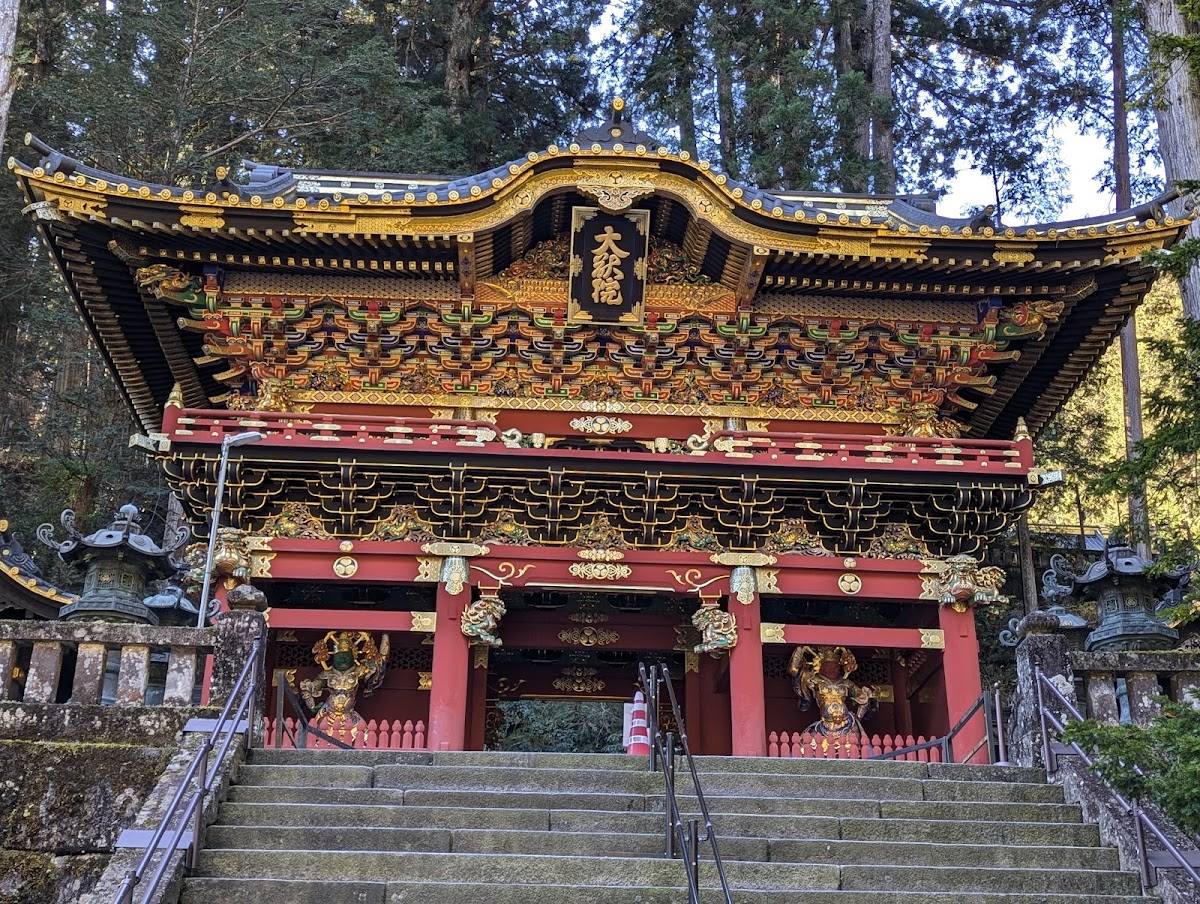
Taiyuin is a mausoleum built in 1653 (Shoo 2) to enshrine the third shogun, Tokugawa Iemitsu. The name “Taiyuin” originates from Iemitsu’s posthumous Buddhist name. In contrast to the Toshogu Shrine, which enshrines his grandfather, Ieyasu, Iemitsu’s will stipulated that it “must not surpass his grandfather,” resulting in a calm color scheme based on gold leaf and black lacquer.
The temple grounds contain 315 buildings, including two National Treasures and 22 Important Cultural Properties. As a valuable collection of cultural assets representing the pinnacle of early Edo period architecture and artistry, it was registered as a component of the World Heritage Site “Shrines and Temples of Nikko” in 1999.
Highlights of the Temple Grounds
Niomon Gate (Important Cultural Property)
This vermilion-lacquered gate stands at the entrance to the temple grounds, with Nio statues on either side welcoming visitors. The imposing Kongo Rikishi statues, over 8 meters tall, were created by a leading Buddhist sculptor of the Edo period.
Nitenmon Gate (Important Cultural Property)
This vermilion-lacquered gate appears after passing through the Niomon Gate. It houses statues of Jikokuten and Komokuten, and the intricate carvings are magnificent. Corridors extend from both sides of the gate, enveloping the entire temple grounds in a solemn atmosphere.
Yashamon Gate (Important Cultural Property)
One of the greatest highlights of Taiyuin Temple, guarded by four Yaksha (Abhamala, Vidhara, Kagithara, and Umaraka) protecting the four directions. Decorated with gold leaf and vibrant colors, the gate is sometimes called “the most beautiful gate in Japan.” Adorned with over 140 peony carvings, it is also known as the “Peony Gate.”
Karamon Gate (National Treasure)
The final gate leading to the main hall. Characterized by its elegant decorations based on white and gold, it is adorned with auspicious motifs such as dragons, cranes, and turtles. In contrast to the Yomeimon Gate of Toshogu Shrine, this is a masterpiece expressing “the beauty of yin.”
Haiden, Ai-no-ma, and Honden (National Treasure)
A Gongen-zukuri architectural style where the Haiden, Ai-no-ma, and Honden are integrated. The interior is solemnly decorated with black lacquer and gold leaf, and the ceiling is adorned with 140 paintings of dragons. The sacred object of Shogun Iemitsu is enshrined in the pagoda at the back of the Honden.
Points to Note During Your Visit
Enjoy the Differences from Toshogu Shrine
- Color: In contrast to the vibrant gold of Toshogu Shrine, Taiyuin Temple features a calm color scheme based on black lacquer.
- Layout: While Toshogu Shrine faces south, Taiyuin Temple faces southwest, in a manner that honors Tokugawa Ieyasu.
- Atmosphere: While Toshogu Shrine embodies “yang,” Taiyuin Temple expresses the beauty of “yin.”
Recommended Visiting Route
- Enter through the Niomon Gate and ascend the stone steps.
- View the Niten statues at the Nitenmon Gate.
- Admire the peony carvings at the Yashamon Gate (approximately 10 minutes).
- Observe the intricate decorations of the Karamon Gate.
- Pray at the Haiden Hall, and if possible, tour the interior (additional fee applies).
- Extend your visit to the Okunoin (Kokamon Gate and Pagoda).
Estimated Time Required
- Standard Visit: 30-40 minutes
- In-depth Viewing: 60-90 minutes
- Including Interior Viewing: 90-120 minutes
Benefits and Faith
Taiyuin Temple, a mausoleum dedicated to Tokugawa Iemitsu, is believed to offer the following benefits:
- Family Safety and Prosperity of Descendants: Due to its construction in the hope of the Tokugawa family’s prosperity
- Academic Success: Because Iemitsu excelled in both literary and martial arts
- Protection from Evil and Good Fortune: The Yaksha and Niten statues within the temple grounds are believed to ward off evil spirits
- Prayer for Longevity: Due to the sacred power of the mausoleum
Visiting Information
Visiting Hours
- April-October: 8:00-17:00 (Last entry 16:30)
- November-March: 8:00-16:00 (Last entry 15:30)
Admission Fee
- Adults: 550 yen
- Elementary and Junior High School Students: 250 yen
- Rinnoji Sanbutsudo & Taiyuin Combined Ticket: Adults 900 yen, Elementary and Junior High School Students 400 yen (Discount)
Interior Viewing (Special Viewing)
Interior viewing of the main hall and connecting room requires a separate fee (Adults 1,000 yen). Advance reservations are recommended.
Access
By Train/Bus
- From Tobu Nikko Station or JR Nikko Station
- Take the Tobu Bus “World Heritage Tour” and get off at “Taiyuin/Futarasan Shrine,” then a 1-minute walk (approx. 7 minutes)
- On foot: approx. 30 minutes (uphill)
By Car
- Approximately 10 minutes from the Nikko IC on the Nikko-Utsunomiya Expressway
- Parking: Rinnoji First Parking Lot (paid, 50 spaces), or use nearby municipal parking lots
Distance from Other Nikko Tourist Attractions
- From Toshogu Shrine: approx. 5-minute walk
- From Futarasan Shrine: approx. 3-minute walk
- From Nikkozan Rinnoji Sanbutsudo: approx. 10-minute walk
Notes for Visitors
- As there are many stone steps on the temple grounds, comfortable walking shoes are recommended.
- The autumn foliage season (late October to mid-November) is crowded, so early morning is recommended.
- Photography is permitted, but photography is prohibited inside the buildings.
- Be careful during winter as roads may be icy.
Nearby Attractions
Nikko Mountain, including Taiyuin Temple, has many World Heritage Sites within walking distance:
- Nikko Toshogu Shrine (5-minute walk)
- Nikko Futarasan Shrine (3-minute walk)
- Rinnoji Sanbutsudo (10-minute walk)
- Takio Shrine (15-minute walk)
A “Nikko World Heritage Tour” visiting the main temples and shrines in one day is recommended.