Jurakuji Temple Complete Guide | History, Goshuin (Temple Seal), and Access Information for the 7th Temple of the Shikoku 88 Temple Pilgrimage
Jurakuji Temple is a Shingon Buddhist temple of the Koyasan sect located in Donari-cho, Awa City, Tokushima Prefecture. It is the 7th temple of the Shikoku 88 Temple Pilgrimage and is beloved by many pilgrims. Its formal name is Komyozan, and it is a historic temple with Amida Buddha as its principal deity.
This article provides detailed information useful for visiting Jurakuji Temple, including its history, legends, highlights, goshuin information, and access methods.
Basic Information about Jurakuji Temple
Temple Name: Jurakuji Temple
Mountain Name: Komyozan
Temple Name: Rengein
Sect: Koyasan Shingon Buddhism
Principal Image: Amida Buddha
Founder: Kobo Daishi (Kukai)
Founded: 815 AD (Kōnin 6)
Pilgrimage Site: 7th Temple of the Shikoku 88 Temple Pilgrimage
Address: 58 Hokyoden, Takao, Donari-cho, Awa City, Tokushima Prefecture 771-1506
Phone Number: 088-695-2150
History and Origin of Jurakuji Temple
Legend of its Founding
It is said that Juraku-ji Temple was founded in 815 AD by Kobo Daishi Kukai. While traveling through Shikoku, Kobo Daishi had a vision of Amida Buddha in this area, and the temple’s origins lie in him carving and enshrining the principal image of Amida Buddha.
Meaning of the Temple Name
The temple name “Juraku” represents the ten kinds of pleasures of the Pure Land in Buddhism. These refer to the ten joys attained by those who attain rebirth in Amida Buddha’s Pure Land, and are described as follows:
- The Joy of the Welcoming of the Holy Assembly: The joy of being welcomed by holy beings
- The Joy of the First Opening of the Lotus Pedestal: The joy of the lotus pedestal opening for the first time
- The Joy of Supernatural Powers: The joy of gaining supernatural powers
- The Joy of the Five Wonderful Realms: The joy of experiencing a wonderful state of being through the five senses
- The Joy of Unfading Pleasure: The joy of happiness that never fades
- The Joy of Forming Connections: The joy of forming connections
- The Joy of the Joint Meeting of the Holy Assembly: The joy of meeting together with holy beings
- The Joy of Seeing the Buddha and Hearing the Dharma: The joy of seeing the Buddha and hearing the Dharma.
- The Joy of Offering to the Buddha as One’s Heart Desires: The joy of offering to the Buddha as one’s heart desires.
- The Joy of Advancing the Buddhist Path: The joy of progressing on the Buddhist path.
It is said that Kobo Daishi named this temple “Juraku-ji” (Ten Joys Temple) to spread the teachings of these ten joys.
Historical Changes
Juraku-ji flourished as a pilgrimage site of the Shikoku Pilgrimage since its founding, but it is said to have been destroyed by fire during the Tensho era (1573-1592) by Chosokabe Motochika. Later, during the Edo period, it was rebuilt under the patronage of the Tokushima domain lord.
The current main hall was rebuilt in 1978 and, while a modern reinforced concrete structure, retains the style of traditional temple architecture.
Principal Image and Benefits
Amida Buddha
The principal image of Juraku-ji Temple is Amida Buddha. It is a hidden Buddha said to have been carved by Kobo Daishi himself, and is usually enshrined in a shrine, making direct viewing impossible.
Amida Buddha is also known as “Amitabha Buddha” and “Amitabha Buddha,” and is worshipped as a Buddha possessing infinite life and radiant light. He is the principal deity of the Western Pure Land, and a compassionate Buddha who is said to enable anyone to attain rebirth in the Pure Land by chanting “Namu Amida Butsu.”
Benefits
The main benefits you can pray for at Jurakuji Temple are as follows:
- Rebirth in Paradise: Praying for rebirth in the Pure Land after death
- Ancestral Memorial Service: Praying for the repose of the souls of those who have passed away
- Fulfillment of Wishes: Fulfillment of various wishes
- Healing from Illness: Recovery from illness
- Family Safety: Safety and happiness of family members
- Traffic Safety: Safe travels
In particular, many worshippers visit to pray for rebirth in paradise and ancestor memorial services, and the temple is cherished as a center of Amida worship.
Highlights of Jurakuji Temple
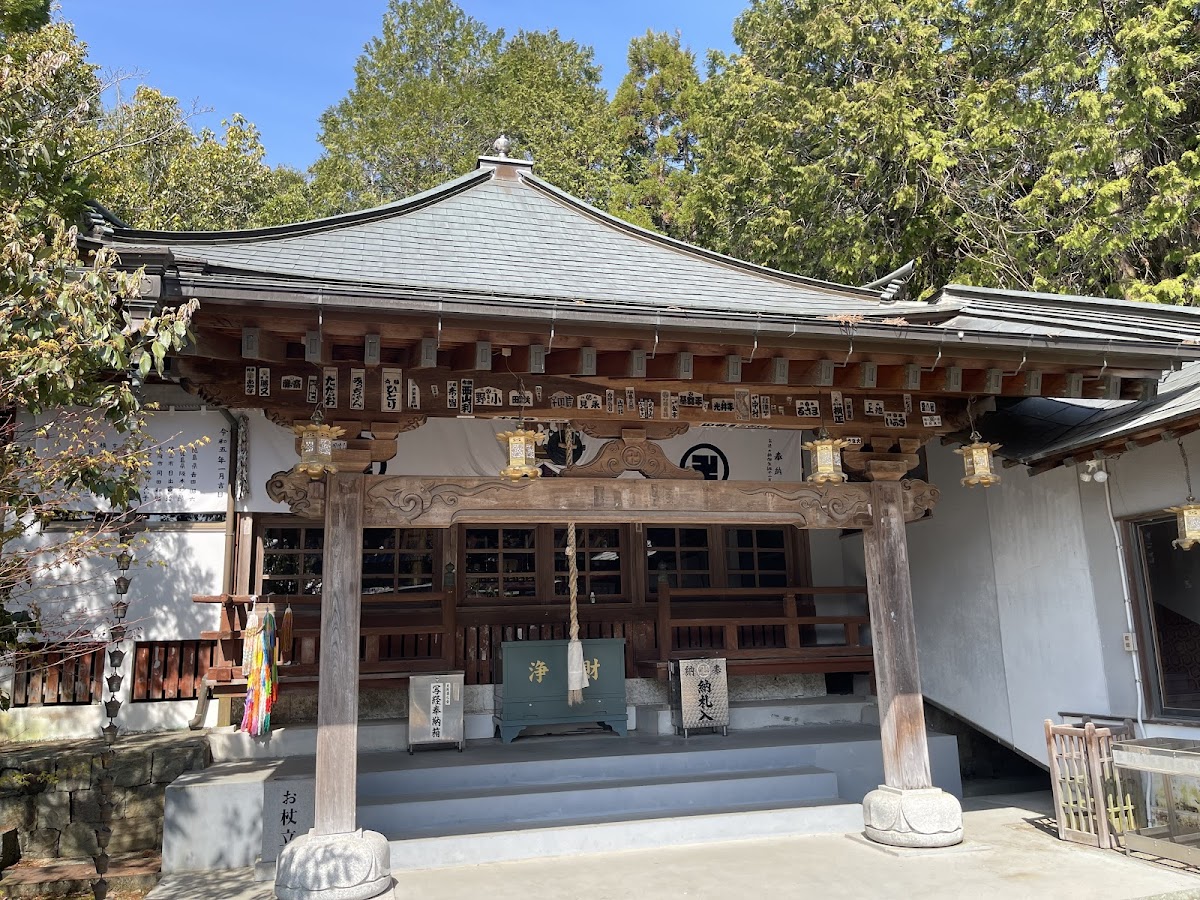
Main Hall
Rebuilt in 1978, the main hall is a magnificent building constructed of reinforced concrete, yet featuring a traditional hip-and-gable roof. Inside, the principal image, Amida Buddha, is enshrined. Pilgrims chant sutras and offer votive slips in front of the main hall.
Inside the main hall, statues of Kobo Daishi and Fudo Myoo are enshrined, allowing visitors to pray in a tranquil atmosphere.
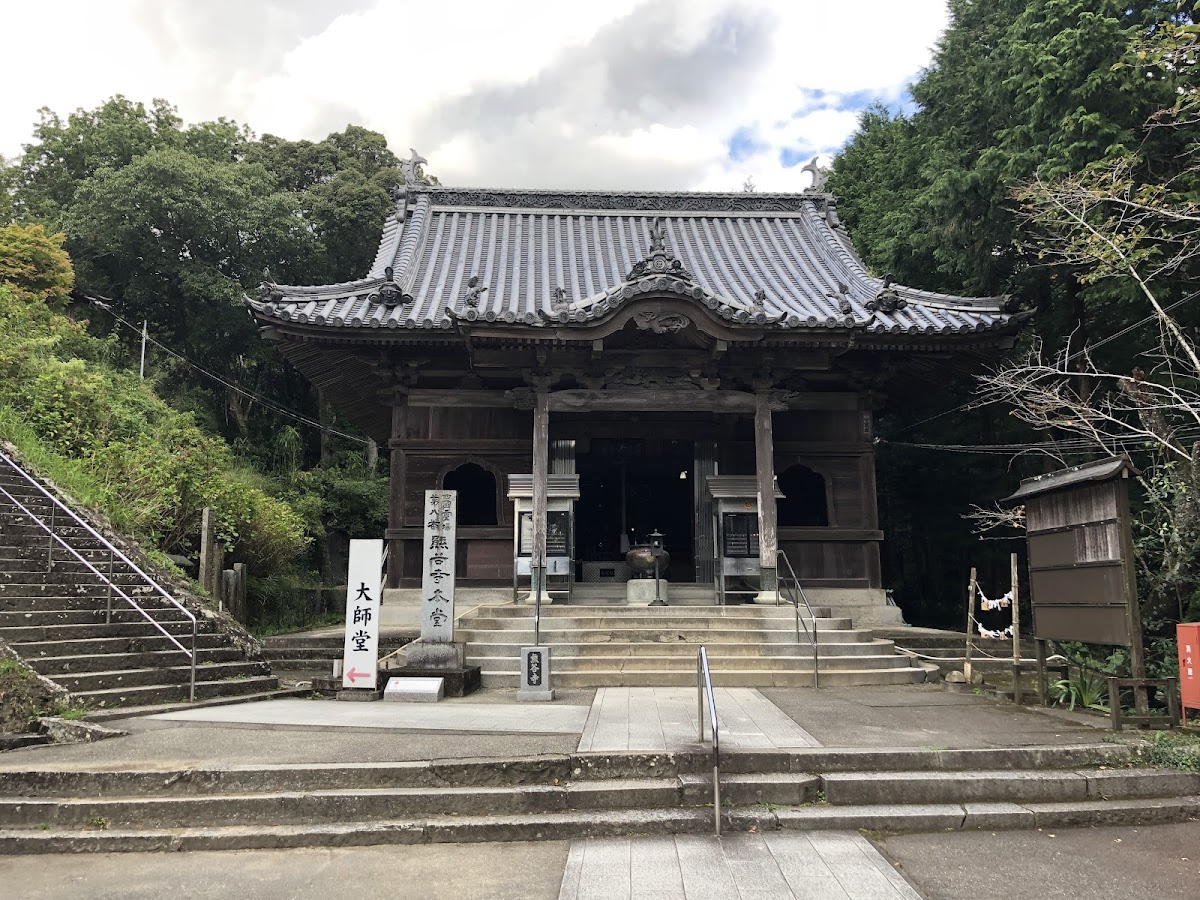
Daishi Hall
Next to the main hall stands the Daishi Hall, which houses a statue of Kobo Daishi. In the Shikoku Pilgrimage, it is customary to pray at both the main hall and the Daishi Hall, and many pilgrims at Juraku-ji Temple also pray at the Daishi Hall.
Although the Daishi Hall is a relatively new building, the interior is enveloped in a solemn atmosphere and is cherished as a place to offer gratitude and prayers to Kobo Daishi.
Bell Tower and Bell
There is a bell tower on the temple grounds, and visitors can ring the bell (though it may not be possible at certain times). The sound of the bell resonates through the quiet surrounding countryside and is said to have a purifying effect on the mind.
Nokyo-sho (Temple Stamp Office)
At the Nokyo-sho (Temple Stamp Office) near the main hall, you can receive a Goshuin (temple stamp). The Goshuin (temple stamp) at Jurakuji Temple features the calligraphy and red seal of “Amida Buddha,” and is cherished by many pilgrims as a memento of their visit.
Atmosphere of the Temple Grounds
Jurakuji Temple’s grounds are situated in a quiet environment surrounded by fields. Its charm lies in the peaceful atmosphere, far removed from the hustle and bustle of the city, allowing for a leisurely visit. You can experience the changing seasons: cherry blossoms in spring, fresh greenery in early summer, and autumn leaves in fall.
The grounds are not particularly large, but they are well-maintained, clean, and have a tranquil atmosphere. Benches are provided, allowing for a short rest after your visit.
About Goshuin and Sutra Copying
Goshuin Reception Hours
Reception Hours: 7:00 AM – 5:00 PM (until 4:30 PM in winter)
You can receive a Goshuin (sutra copying stamp) at the sutra copying office. Since they may not be able to accommodate requests outside of these hours, it is recommended to visit with ample time.
Temple Offering Fee
- Temple Book: 300 yen
- Hanging Scroll: 500 yen
- White Robe: 200 yen
Contents of the Temple Seal
The temple seal of Jurakuji Temple includes the following:
- Ink calligraphy of “Amida Buddha” in the center
- “Homage” and “Komyozan” in the upper right corner
- Date on the left
- Red seal of “Number Seven” and “Jurakuji Temple”
The carefully written temple seal will be a precious memento of your pilgrimage.
Etiquette and Manners for Visiting Temples
We will introduce basic etiquette for visiting temples when touring the 88 temples of the Shikoku Pilgrimage.
Procedure for Visiting the Temple
- Bow at the Temple Gate: Bow at the temple gate and clasp your hands together before entering the temple grounds.
- Purify at the Water Basin: Cleanse your hands and mouth at the water basin.
- Bell Tower: Ring the bell only once upon arrival (do not ring it on your way out).
- Worship at the Main Hall:
- Offer one candle and three incense sticks.
- Place your offering money.
- Place your votive slip in the votive slip box.
- Clasp your hands together and recite a sutra (such as the Heart Sutra).
- Worship at the Daishi Hall: Worship in the same way as at the Main Hall.
- Temple Stamp Office: Receive your temple stamp.
- Bow at the Temple Gate: Bow at the temple gate again when leaving the temple grounds.
Regarding Attire
While the formal attire for pilgrims includes a white robe, straw hat, and walking stick, general visitors can wear their everyday clothes. However, please avoid revealing or flashy clothing and dress appropriately for the temple.
Photography Etiquette
Photography is generally permitted within the temple grounds, but photography inside the main hall or of the principal image may be prohibited. Please be considerate of other visitors, and if unsure, check with the temple office.
Access Methods
Access by Car
From Tokushima Expressway, Donari IC:
- Distance: Approx. 2km
- Travel Time: Approx. 5 minutes
- Via National Route 318
From Temple No. 6, Anrakuji:
- Distance: Approx. 1km
- Travel Time: Approx. 15 minutes on foot, approx. 3 minutes by car
To Temple No. 8, Kumagaiji:
- Distance: Approx. 4km
- Travel Time: Approx. 10 minutes by car
Parking
Regular Cars: Approx. 20 spaces (Free)
Large Buses: Approx. 2 spaces (Free)
There is a parking lot adjacent to the temple grounds, which is free to use. It can get crowded during the pilgrimage season, but there is usually ample space.
Access by Public Transportation
From JR Tokushima Station:
- Take the JR Tokushima Line and get off at “Kamojima Station” (approx. 20 minutes)
- Take a taxi for approx. 15 minutes (approx. 3,000 yen)
Local Bus:
There are Tokushima Bus routes, but the number of buses is limited, so it is recommended to check the timetable in advance.
For Pilgrimage on Foot
From Temple No. 6, Anrakuji: Approx. 1 km, approx. 15 minutes on foot
To Temple No. 8, Kumagaiji: Approx. 4 km, approx. 1 hour on foot
Jurakuji Temple is located between Temple No. 6, Anrakuji, and Temple No. 8, Kumagaiji, and is relatively close. This is an easy section to walk for pilgrims on foot.
Nearby Attractions and Facilities
Temple No. 6, Anrakuji
This is a preliminary temple located approximately 1 km from Jurakuji Temple. This temple, named Onsenzan (Hot Spring Mountain), enshrines Yakushi Nyorai (Medicine Buddha) as its principal deity and has a legend that Kobo Daishi discovered the hot springs here.
Temple No. 8: Kumagai-ji
This is the next temple on the pilgrimage, located about 4km from Juraku-ji. It is one of the largest temples on the Shikoku Pilgrimage, with many points of interest such as the Tahoto pagoda and Niomon gate, making it a temple where you’ll want to spend ample time.
Temple Lodgings and Pilgrim Accommodations
Juraku-ji does not have its own temple lodgings, but there are guesthouses and business hotels for pilgrims in the surrounding area. Accommodations are scattered around Kamojima Station and within Donari-cho.
Dining Options
Since the area around the temple is rural, there aren’t many restaurants, but there are places to eat along National Route 318 and near Kamojima Station. It’s a good idea to check dining options in advance when you’re on your pilgrimage.
Points to Note When Visiting Jurakuji Temple
Recommended Time to Visit
Jurakuji Temple is open year-round, but the best times to visit are:
- Spring (Late March to April): The temple grounds are vibrant with cherry blossoms.
- Autumn (October to November): The autumn foliage is beautiful, and the weather is mild and pleasant for walking.
- Spring and Autumn Equinoxes: Many visitors come to pay respects to their ancestors.
Summers can be very hot, and winters can be quite cold, so be sure to dress appropriately and stay hydrated.
Time Required
For a normal visit, 30-40 minutes is sufficient. Even including time to receive a temple stamp and to relax on the grounds, one hour should be enough for a comfortable visit.
Checklist of Items to Bring
- Pilgrimage Stamp Book (Goshuincho)
- Offering Slips
- Candles and Incense
- Lighter
- Sutra Book
- Prayer Beads
- Offering Money
- Drinks
- Rain Gear (depending on the weather)
Mindset for the Shikoku Pilgrimage
The Shikoku Pilgrimage, visiting the 88 temples, is not merely sightseeing, but also a journey of self-reflection and spiritual practice. When visiting Jurakuji Temple, it is important to have the following mindset.
Two Traveling Together (Dogyo Ninin)
“Two Traveling Together” means that on the pilgrimage, you are always accompanied by Kobo Daishi. Having faith that Kobo Daishi is always watching over you, even when walking alone, is the fundamental spirit of the pilgrimage.
A Heart of Gratitude
When visiting temples, do not forget to express gratitude to the principal image and Kobo Daishi. Furthermore, it is important to be grateful for the kindness and hospitality you receive from the locals you encounter along the way.
Realistic Planning
Especially for those undertaking the pilgrimage on foot, it is crucial to create a realistic plan. Prioritize your physical condition and continue the pilgrimage at your own pace.
Annual Events at Juraku-ji Temple
New Year’s Day Visit
On January 1st, many worshippers visit the temple for their first shrine visit of the year. Many pray for good health and safety for their families in the new year, making the temple busier than usual.
Spring and Autumn Equinox Services
During the equinox period, centered around the spring and autumn equinoxes, memorial services are held for ancestors. At Juraku-ji Temple, whose principal deity is Amida Buddha, this is a time when many worshippers visit, praying for rebirth in paradise.
Kobo Daishi Memorial Service
On March 21st (lunar calendar), the anniversary of Kobo Daishi’s death, the Miekū memorial service is held. This service expresses gratitude and appreciation to Kobo Daishi and is a special day for pilgrims.
Legends and Anecdotes of Jūraku-ji Temple
The Miraculous Powers of Kobo Daishi
Jūraku-ji Temple has many legends related to Kobo Daishi. One such legend tells of Kobo Daishi experiencing the light of Amida Buddha while training in this area, and subsequently building a temple on that spot.
Furthermore, there is a legend that the statue of Amida Buddha carved by Kobo Daishi himself emitted light the moment it was completed, illuminating the surrounding area. This is also the origin of the temple’s mountain name, “Kōmyōzan” (Mount of Light).
A Sacred Site for Rebirth in Paradise
Jurakuji Temple, known for expounding on the ten joys of the Pure Land, has long attracted the faith of those seeking rebirth in paradise. Especially during the Edo period, the belief spread that praying to the main deity of Jurakuji Temple at the time of death would guarantee rebirth in paradise, and records show that many worshippers visited the temple.
Summary
Jurakuji Temple, as the 7th temple of the Shikoku 88 Temple Pilgrimage, is an important sacred site that continues to pass on the teachings of rebirth in paradise. Founded by Kobo Daishi and with Amida Buddha as its principal deity, this temple, nestled in a quiet rural area, soothes the hearts of visitors.
Located between the 6th temple, Anrakuji, and the 8th temple, Kumagaiji, it is easily accessible and a convenient temple for pilgrims, even beginners. The temple grounds are not too large, creating a peaceful atmosphere for worship.
Jurakuji Temple, the 7th temple of the Shikoku 88 Temple Pilgrimage, is an important sacred site that continues to transmit the teachings of rebirth in paradise. The pilgrimage is not simply about visiting temples; it is also a journey of self-reflection and spiritual purification. When visiting Juraku-ji Temple, why not offer your prayers in quiet contemplation, reflecting on the compassion of Amida Buddha and the teachings of the Ten Joys of the Pure Land?
With the spirit of “two traveling together” alongside Kobo Daishi in your heart, enjoy your wonderful pilgrimage.