Sugimori Shrine Complete Guide | Visiting the History of the Three Edo Shrines and the Birthplace of the Lottery
Located in Nihonbashi Horidomecho, Chuo-ku, Tokyo, Sugimori Shrine is a venerable shrine boasting a history of over a thousand years. Said to have been founded during the Heian period, it was one of the “Three Edo Shrines” during the Edo period, attracting the deep faith of the common people of Edo. Even today, it is visited by many worshippers as the Ebisu shrine on the Nihonbashi Seven Lucky Gods pilgrimage, and as a power spot for praying for lottery winnings.
History and Origins of Sugimori Shrine
Founding in the Heian Period and Fujiwara no Hidesato’s Prayer for Victory
According to shrine tradition, the founding of Sugimori Shrine dates back to around 931 AD, during the mid-Heian period. During the time when Taira no Masakado’s rebellion was shaking the Kanto region, Fujiwara no Hidesato (Tawara no Tōta Hidesato), who was ordered by the imperial court to suppress the rebellion, is said to have prayed for victory at this site.
After successfully suppressing Taira no Masakado’s rebellion, Fujiwara no Hidesato is said to have dedicated a silver fox statue as a token of gratitude. This story became the origin of Sugimori Shrine, and it has attracted the faith of people for over a thousand years since then.
Ōta Dōkan’s Prayer for Rain and the Invitation of Fushimi Inari Shrine
In 1466, during the mid-Muromachi period, Ōta Dōkan, known for building Edo Castle, prayed for rain at this shrine for his people suffering from drought. This prayer was miraculous, and rain fell beautifully. As a result, Ōta Dōkan invited the deities of the five shrines of Fushimi Inari Taisha in Yamashiro Province (present-day Kyoto Prefecture) and became a devout follower of Sugimori Shrine.
This event led to Sugimori Shrine becoming known as a shrine of Inari worship, and it also came to be called “Sugimori Inari.”
Prosperity in the Edo Period and the “Three Mori of Edo”
During the Edo period, Sugimori Shrine was positioned as one of the most important shrines in Edo Castle town. Along with Karasumori Shrine (Shinbashi) and Yanagimori Shrine (Kanda), it was known as the “Three Mori of Edo” and attracted the fervent faith of the common people of Edo.
During the Edo period, Sugimori Shrine had a boat landing canal to the west of its grounds, making it a convenient location for water transport. This geographical condition, combined with other factors, contributed to its development as a bustling shrine attracting many worshippers.
The History of the Lottery and the Tomizuka (Lottery Mound)
Sugimori Shrine Flourished as One of the Three Great Tomi of Edo
Sugimori Shrine became particularly famous for the “Lottery (Gomen Tomi)” held on its grounds during the Edo period. The “Tomikuji” (fortune lottery) was an officially sanctioned lottery from the Edo period, considered the prototype of modern lotteries. It was specially permitted by the shogunate for purposes such as raising funds for the repair of temples and shrines.
Sugimori Shrine, along with Yanaka Kanno-ji Temple (present-day Tenno-ji Temple) and Meguro Fudōson (Takisen-ji Temple), was known as one of the “Three Great Fortune Lotteries of Edo,” and its lottery operations were very popular. The Sugimori Shrine lottery, in particular, was extremely popular among the citizens of Edo, and records show that the shrine grounds were filled with participants on the day of the draw.
Chuo Ward Tangible Cultural Property “Tomizuka”
Currently, a stone monument called “Tomizuka” stands on the grounds of Sugimori Shrine, commemorating this lottery operation. This Tomizuka was erected in 1953 and is registered as a Chuo Ward Tangible Cultural Property.
The Tomizuka has a detailed explanation of the lottery inscribed on it, making it a valuable cultural asset that conveys the popular culture of the Edo period to the present day. Even today, Sugimori Shrine continues to attract a steady stream of visitors praying for lottery winnings, and is known as a “power spot for financial luck.”
Deities and Benefits
Main Deity and Enshrined Deities
The deities enshrined at Sugimori Shrine are as follows:
Main Deity:
- Ukanomitama-no-kami
- Izanagi-no-kami
- Izanami-no-kami
- Yamato Takeru-no-mikoto
- Okuninushi-no-kami
- Emperor Ojin
Enshrined Deity:
- Ebisu-no-Okami
Ebisu of the Nihonbashi Seven Lucky Gods
Sugimori Shrine enshrines Ebisu-no-Okami as part of the Nihonbashi Seven Lucky Gods pilgrimage. Ebisu, the god of business prosperity, abundant fishing catches, and bountiful harvests, is particularly revered in Nihonbashi, a bustling commercial district.
The Nihonbashi Seven Lucky Gods pilgrimage visits seven shrines: Koami Shrine (Benzaiten), Chanoki Shrine (Hotei), Suiten-gu Shrine (Benzaiten), Matsushima Shrine (Daikokujin), Suehiro Shrine (Bishamonten), Kasama Inari Shrine (Jurojin), and Sugimori Shrine (Ebisu). Many worshippers visit these shrines during the New Year.
Main Blessings
The blessings that can be received at Sugimori Shrine are diverse.
- Prayer for Increased Financial Luck and Lottery Winnings: As the birthplace of lotteries, it is particularly famous for its blessings of increased financial luck.
- Business Prosperity: Business success through the divine virtues of Ebisu-sama.
- Abundant Harvest: Prayers for a bountiful harvest through Inari worship.
- Protection from Misfortune and Good Fortune: Protection from misfortune stemming from the story of suppressing the rebellion of Taira no Masakado.
- Matchmaking and Marital Harmony: Divine virtues of Izanagi-no-Mikoto and Izanami-no-Mikoto.
Highlights of the Shrine Grounds
Shrine Building and Architectural Style
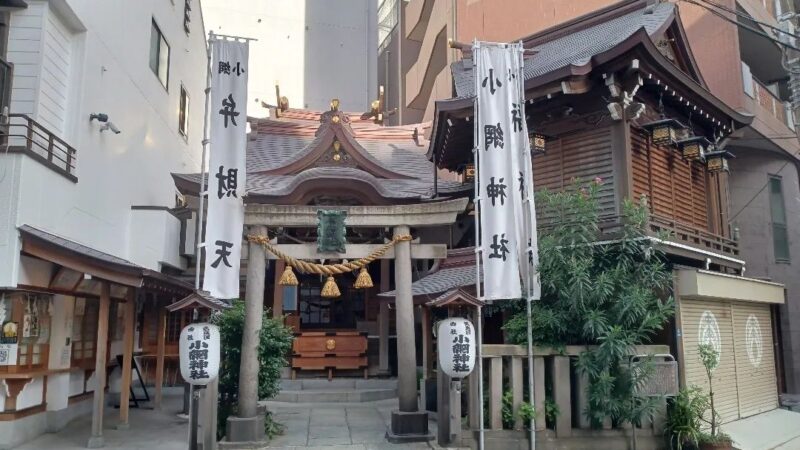
The current shrine building of Sugimori Shrine was rebuilt in 1931 (Showa 6) after being destroyed in the Great Kanto Earthquake. This shrine building is registered as a tangible cultural property of Chuo Ward and retains many characteristics of shrine architecture from the early Showa period.
While the shrine building is based on the Gongen-zukuri style, it also utilizes concrete construction, which was an advanced architectural technique at the time. As a valuable example of shrine architecture during the post-earthquake reconstruction period, it holds significant architectural historical value.
Tomizuka (Stone Monument for Lottery Prayers)
As mentioned above, there is a Tomizuka (Fortune Mound) on the shrine grounds commemorating the lottery business. Many worshippers pray for lottery winnings in front of this monument, and it is especially crowded during the year-end Jumbo Lottery and Summer Jumbo Lottery periods.
The Tomizuka is inscribed with the words “Site of the Fortune Lottery Office,” illustrating how grand the lottery business was during the Edo period.
Fox Statues and Traces of Inari Worship
Several fox statues are enshrined on the shrine grounds, indicating that Sugimori Shrine has the characteristics of a shrine of Inari worship. These fox statues carry on the tradition of the silver fox statue said to have been dedicated by Fujiwara no Hidesato.
History of Dedicated Flower Sumo Wrestling
During the Edo period, “Dedicated Flower Sumo Wrestling” was held on the grounds of Sugimori Shrine. Hana-sumo refers to sumo wrestling performances held outside of official tournaments, often offered as a dedication during shrine festivals and other events. Along with lottery performances, Hana-sumo was a popular form of entertainment for the citizens of Edo.
Although Hana-sumo is no longer held, this history is an important indicator of Sugimori Shrine’s status as one of the centers of Edo culture.
Goshuin Information
Regular Goshuin
Sugimori Shrine offers regular goshuin (shrine stamps). The goshuin features the calligraphy of “Sugimori Shrine” and the shrine’s seal. Its simple yet powerful brushwork is a characteristic feature, making it popular among many goshuin enthusiasts.
Nihonbashi Seven Lucky Gods Goshuin
During the Nihonbashi Seven Lucky Gods pilgrimage period (usually during the New Year period), the Ebisu goshuin is also available. Bringing a special Shikishi (decorative paper board) or a dedicated goshuin notebook will entitle you to a special goshuin stamped with the Ebisu seal.
Goshuin (Shrine Seal) Reception Hours and Location
Goshuin are given out at the shrine office. However, since Sugimori Shrine is a small shrine, the shrine office is not always open. If you want to be sure to receive a goshuin, it is recommended to check the opening hours in advance.
General reception hours:
- Weekdays: Approximately 9:00 AM to 4:00 PM (irregular)
- Weekends and holidays: Generally longer hours
- New Year period: Special arrangements available
Access and Surrounding Information
Location
Address: 1-10-2 Nihonbashi Horidomecho, Chuo-ku, Tokyo
Nearest Station and Access Methods
Sugimori Shrine is accessible from multiple train lines.
From Tokyo Metro Hibiya Line “Ningyocho Station”
- Approximately 5 minutes on foot from Exit A2
- Head north along Ningyocho Street, then turn west at Horidomecho Intersection
From Tokyo Metro Hibiya Line “Kodemmacho Station”
- Approximately 5 minutes on foot from Exit 4
- Head south along Edo Street towards Horidomecho
From Toei Asakusa Line “Ningyocho Station”
- Approximately 7 minutes on foot from Exit A3
From Tokyo Metro Hanzomon Line “Suitengumae Station”
- Approximately 8 minutes on foot from Exit 7
Nearby Shrines and Temples
Significant shrines and temples in the Nihonbashi area are scattered around Sugimori Shrine.
Koami Shrine (approx. 5-minute walk)
- Famous as a shrine for good fortune and protection from evil
- Benzaiten, one of the Seven Lucky Gods of Nihonbashi
Suitengu Shrine (approx. 10-minute walk)
- Shrine for safe childbirth and fertility
- Bustling with many worshippers
Takada Ebisu Shrine (approx. 7-minute walk)
- Known for the Bettara Market
- Benefits for business prosperity
Matsushima Shrine (approx. 8-minute walk)
- Daikokuten, one of the Seven Lucky Gods of Nihonbashi
- Benefits for successful relationships
Nearby Tourist Spots
Ningyocho Shopping Street
- Lined with long-established restaurants and Japanese confectionery shops
- A streetscape that evokes the atmosphere of the Edo period
Nihonbashi
- The starting point of the Five Highways of the Edo period
- A bridge designated as an Important Cultural Property
Mitsukoshi Main Store/Takashimaya Nihonbashi Store
- A historic department store
- High architectural value
Annual Events of Sugimori Shrine
Annual Grand Festival
The annual grand festival of Sugimori Shrine is held every May. This festival features a procession of the portable shrine (mikoshi), and is an important event that strengthens the bonds among the local parishioners centered around the shrine.
Nihonbashi Seven Lucky Gods Pilgrimage (New Year’s)
Every New Year’s, the shrine welcomes many visitors as one of the shrines on the Nihonbashi Seven Lucky Gods Pilgrimage. It is especially crowded from January 1st to around January 7th, with many people seeking the Ebisu (goshuin) stamp.
Monthly Festival
Monthly festivals are held on the 1st and 15th of each month, where prayers are offered for the safety and prosperity of the parishioners and worshippers.
Manners and Etiquette for Visiting the Shrine
Basic Visiting Etiquette
When visiting Sugimori Shrine, please observe the following etiquette.
- Bow before passing through the torii gate
- An expression of respect before entering the sacred area.
- Purify yourself at the water basin
- Purify your left hand, then your right hand, and rinse your mouth.
- Avoid walking in the center of the approach to the shrine
- The center is considered the path of the gods.
- Worship in front of the main hall
- Follow the ritual of two bows, two claps, and one bow.
- Quietly observe the shrine grounds
- Respect cultural assets such as the Tomizuka (Tomizuka)
Etiquette for praying for lottery winnings
The basic worship etiquette is the same even when praying for lottery winnings in front of the Tomizuka. However, it is recommended to first formally worship at the main hall and then pray again in front of the Tomizuka.
Some people bring their purchased lottery tickets when praying, but it is important to remember to be grateful to the gods and to offer thanks if you win.
Cultural Properties of Sugimori Shrine
Designation as a Chuo Ward Tangible Cultural Property
The shrine building and Tomizuka (lottery mound) of Sugimori Shrine are registered as Chuo Ward Tangible Cultural Properties. This is a system established by Chuo Ward to protect historically and culturally valuable buildings and works of art and crafts in the area.
Registered Cultural Properties:
- Sugimori Shrine Building (Constructed in 1931)
- Tomizuka (Constructed in 1953)
- Complete Set of Construction-Related Materials
These cultural properties are highly valued as valuable materials that convey to the present day the characteristics of shrine architecture during the reconstruction period after the Great Kanto Earthquake and the history of lotteries that have continued since the Edo period.
Construction-Related Materials
Sugimori Shrine preserves detailed materials related to the construction of the shrine building. These materials contain important information for understanding the architectural techniques of the early Showa period and the social conditions of the time, making them valuable resources for architectural history research.
Sugimori Shrine and the History of Edo/Tokyo
The Development of Edo Castle Town and Sugimori Shrine
Nihonbashi Horidome-cho, where Sugimori Shrine is located, was a thriving commercial center during the Edo period. Horidome means the end of a canal, and this area had a boat landing canal, playing an important role as a collection point for goods.
Sugimori Shrine, as the guardian deity of this commercial area, attracted the faith of merchants. In particular, as one of the three Edo shrines and a venue for lottery performances, it was one of the cultural centers of Edo’s common people.
The Great Kanto Earthquake and Reconstruction
In the Great Kanto Earthquake of 1923 (Taisho 12), Sugimori Shrine’s main building was completely destroyed by fire. However, thanks to the efforts of parishioners and devotees, a new shrine building was rebuilt just eight years later, in 1931 (Showa 6).
This rapid reconstruction demonstrates how important Sugimori Shrine was to the local community. Furthermore, the adoption of concrete construction, the latest architectural technology at the time, was a manifestation of the determination to build a stronger shrine, drawing on the lessons learned from the earthquake.
Post-War Development and the Present
Sugimori Shrine, which escaped the destruction of World War II, has remained a central presence in the Nihonbashi community from the post-war period of rapid economic growth to the present day.
In recent years, the popularity of power spots and Goshuin (shrine stamps) has led to an increase in visitors from outside the shrine’s parish. In particular, people from all over the country visiting to pray for big lottery wins have increased the shrine’s recognition more than ever before.
Summary: The Charm of Sugimori Shrine
Sugimori Shrine, with a history of over a thousand years, remains a beloved shrine for many people today. From its founding by Fujiwara no Hidesato in the Heian period, to Ota Dokan’s prayers for rain in the Muromachi period, its prosperity as one of the three Edo shrines during the Edo period’s lottery industry, and its recovery from the Great Kanto Earthquake, it has always walked hand in hand with the local community.
Located in Nihonbashi, the heart of Tokyo, yet nestled on a quiet side street just off the main thoroughfare, Sugimori Shrine offers a perfect escape from the hustle and bustle of the city and a place to find peace of mind. With its Tomizuka (a burial mound) that preserves the popular culture of the Edo period, its valuable early Showa-era shrine building, and its status as Ebisu, one of the Seven Lucky Gods of Nihonbashi, the shrine boasts diverse attractions.
Sugimori Shrine warmly welcomes visitors with various wishes, from lottery winnings and business prosperity to protection from evil and good fortune. Cherishing its history and traditions while continuing to cater to the faith of modern people, Sugimori Shrine is truly one of Tokyo’s representative shrines in Nihonbashi.
When visiting the Nihonbashi area, be sure to stop by Sugimori Shrine and experience its history and tranquil atmosphere. Its convenient location, just a 5-minute walk from Ningyocho and Kodemmacho stations, makes it easy to visit while shopping or sightseeing. In this special space where Edo history and modern Tokyo intersect, a heartfelt prayer is sure to bring good fortune and blessings.