Torigoe Shrine (Taito Ward, Tokyo) Complete Guide | 1370 Years of History and Tokyo’s Largest Thousand-Kan Mikoshi
Located in Torigoe, Taito Ward, Tokyo, Torigoe Shrine is one of Tokyo’s oldest shrines, said to have been founded in 651 AD (Hakuchi 2). It enshrines Yamato Takeru as its main deity, and the annual Torigoe Festival, held in June, features a spectacular procession of Tokyo’s largest Thousand-Kan Mikoshi (portable shrine) through the streets, attracting hundreds of thousands of visitors. This article provides a detailed overview of Torigoe Shrine, including its history, enshrined deities, highlights, annual festival, and access information.
History and Origins of Torigoe Shrine
An Ancient Shrine Founded in 651 AD (Hakuchi 2)
Torigoe Shrine is said to have been founded in 651 AD (Hakuchi 2), making it one of Tokyo’s oldest shrines with a history of over 1370 years as of 2025. The shrine’s origins date back to the reign of Emperor Kōtoku, when villagers founded the Shiratori Shrine in this area, where legends of Yamato Takeru no Mikoto remain.
Yamato Takeru no Mikoto is said to have visited this area during his eastern expedition, and it has long been revered as a god of martial prowess and pioneering. Initially known as “Shiratori Shrine” or “Shiratori Myōjin,” it was worshipped as the guardian deity of the region.
The Origin of Minamoto no Yoshiie and “Torigoe”
The current name “Torigoe Shrine” originates from the Former Nine Years’ War (1051-1062). Legend says that when Minamoto no Yoriyoshi and his son Minamoto no Yoshiie were crossing the Sumida River in this area on their way to conquer Ōshū, a white bird flew up and showed them the location of a shallow area.
Minamoto no Yoshiie, also known as Hachiman Tarō Yoshiie, is said to have dedicated the shrine with the name “Torigoe Daimyōjin” in gratitude for the white bird’s guidance that allowed his troops to cross safely. From this story, both the shrine and the place came to be called “Torigoe.”
From the Edo Period to the Present
During the Edo period, it developed as the guardian shrine of the surrounding areas such as Torigoe, Misuji, and Kojima, and attained the status of a local shrine. Located in its current location facing Kuramaebashi Street, it has been cherished by many as a center of faith in the downtown area.
Even after the separation of Shinto and Buddhism in the Meiji era, and through the Showa, Heisei, and Reiwa eras, it continues to attract unwavering devotion as the local guardian deity. In particular, the annual grand festival in June has become an important annual event in Taito Ward.
Deities and Divine Virtues
Main Deity: Yamato Takeru no Mikoto
The main deity of Torigoe Shrine is Yamato Takeru no Mikoto. A legendary hero appearing in the Kojiki and Nihon Shoki as the son of Emperor Keiko (the 12th emperor), he is known for numerous military achievements, including the pacification of eastern Japan and the subjugation of the Kumaso people.
Divine Virtues:
- Long-lasting military fortune and improved luck in battle
- Protection from evil and good fortune
- Business prosperity
- Family safety
- Traffic safety
Enshrined Deities
Along with Yamato Takeru, the following two deities are enshrined as enshrined deities:
Amenokoyane-no-Mikoto
Known as the ancestral deity of the Fujiwara clan, this deity recited prayers when Amaterasu Omikami hid in the Heavenly Rock Cave. He is revered as the god of learning, wisdom, and words.
Toshogu-ko
This refers to Tokugawa Ieyasu. Tokugawa Ieyasu, who founded the Edo Shogunate, was deified as Toshodai Gongen for his contributions to the development and peace of Edo, and is enshrined in various places.
Highlights of Torigoe Shrine
The Largest Mikoshi in Tokyo: A Thousand-Kan Mikoshi
The biggest highlight of Torigoe Shrine is the “Thousand-Kan Mikoshi,” which is carried in procession during the annual festival. Weighing approximately 4 tons (some sources say 1,000 kan = approximately 3.75 tons), it is known as the largest and heaviest mikoshi in Tokyo.
Normally, it is housed within the shrine grounds, allowing visitors to see its magnificent form up close. The luxurious decoration, featuring black lacquer and gold leaf, is a testament to the finest Edo-period craftsmanship.
Shrine Buildings and Grounds
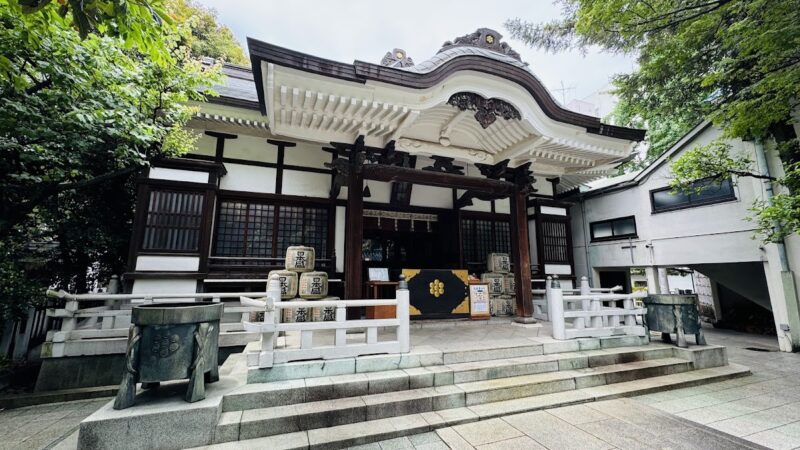
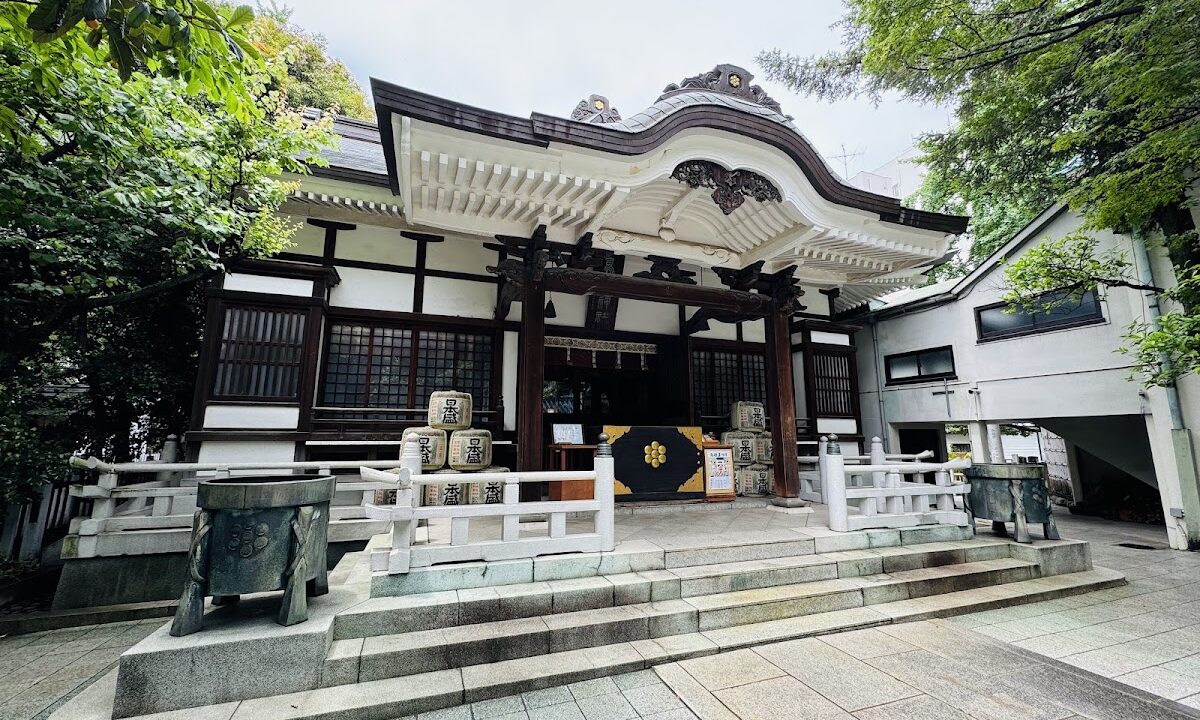
The shrine buildings of Torigoe Shrine preserve the traditional style of shrine architecture. Despite its location facing Kuramaebashi Street, stepping into the grounds envelops you in a tranquil atmosphere.
Within the grounds are a purification fountain, worship hall, main shrine, and shrine office, where you can receive Goshuin (shrine stamps) and various prayers. While relatively compact for a shrine in the city center, the neatly maintained grounds warmly welcome visitors.
Stone Monuments and Memorials
Throughout the grounds are stone monuments and memorials that tell the story of Torigoe Shrine’s long history. These include a monument commemorating the 1350th anniversary of the shrine’s founding, serving as valuable historical materials that convey the shrine’s origins to the present day.
Torigoe Festival (Annual Grand Festival) – A June Tradition
Overview of the Torigoe Festival
The Torigoe Shrine’s annual grand festival, the “Torigoe Festival,” is a representative festival of downtown Tokyo, held annually on the Saturday and Sunday closest to June 9th. As a June tradition in Kuramae, it attracts hundreds of thousands of spectators each year.
Procession of the Thousand-Kan Mikoshi
The highlight of the festival is the procession of the thousand-kan mikoshi (portable shrine), one of the largest in Tokyo. Hundreds of bearers carry a massive portable shrine weighing approximately 4 tons through the parish neighborhoods, chanting “Wasshoi, Wasshoi!”
While the daytime procession is impressive, the nighttime procession into the shrine grounds is particularly breathtaking. The sight of the shrine, illuminated by lanterns, moving through the night streets is majestic and fantastical, a unique highlight of the Torigoe Festival.
Neighborhood Shrines and Stalls
In addition to the large shrine, numerous portable shrines from each neighborhood association also participate, immersing the entire town in the festival atmosphere. Many stalls line the shrine grounds and surrounding areas, further enhancing the festive mood.
Festival Dates and Times
The annual grand festival is held on a Saturday and Sunday in early June. Specific dates vary each year, so it is recommended to check the official shrine information or the Taito Ward tourist guide before visiting.
The procession to the shrine takes place at night, and the best time to see the portable shrine illuminated by lanterns is after sunset.
Other Annual Events
Tondo-yaki (January 8th)
Held annually on January 8th, Tondo-yaki is a traditional event where New Year’s decorations and old amulets are burned. Many worshippers visit to pray for good health and a bountiful harvest.
Monthly Festivals and New Year’s Day Festivals
Various festivals are held throughout the year, including monthly festivals and the New Year’s Day festival. As the guardian deity of the region, prayers are offered throughout the seasons.
Goshuin (Shrine Seals) and Gifts
Goshuin (Shrine Seals)
Torigoe Shrine offers regular goshuin. The shrine office is open from 9:00 to 17:00. Many people receive a Goshuin (temple/shrine stamp) as a memento of their visit or as part of their Goshuin pilgrimage.
During the annual festival, special Goshuin are sometimes offered, so those collecting Goshuin are advised to visit during the festival period.
Amulets and Offerings
Various amulets, talismans, and votive tablets are available. As befits a shrine dedicated to Yamato Takeru, amulets for victory and protection against evil are popular.
Access and Visiting Information
Location
Address: 2-4-1 Torigoe, Taito-ku, Tokyo
Phone: 03-3851-5033
Access by Train
Toei Asakusa Line “Kuramae Station”
Approximately 6 minutes on foot from Exit A3
Toei Oedo Line “Kuramae Station”
Approximately 6 minutes on foot from Exit A7
JR Sobu Line “Asakusabashi Station”
Approximately 8 minutes on foot from the West Exit
Tokyo Metro Ginza Line “Tawaramachi Station”
Approximately 10 minutes on foot from Exit 3
Kuramae Station is the nearest station, and since it is located along Kuramaebashi Street, it is relatively easy to access by walking along the street.
Visiting Hours
Shrine Grounds: Open 24 hours (gates may be closed at night)
Shrine Office: 9:00 AM – 5:00 PM
Parking
There is no dedicated parking lot. We recommend using public transportation. If you are visiting by car, please use nearby coin-operated parking lots.
Nearby Tourist Attractions
Kuramae Area
The Kuramae area, where Torigoe Shrine is located, is a historic area that was lined with rice warehouses during the Edo period. In recent years, it has become a popular area with an increase in stylish cafes, general stores, and leather goods workshops, and is sometimes called “Tokyo’s Brooklyn.”
Asakusa
The Asakusa area, famous for Senso-ji Temple and Nakamise Street, is within walking distance. You can enjoy sightseeing in Tokyo’s downtown area in conjunction with your visit to Torigoe Shrine.
Ryogoku/Skytree Area
Across the Sumida River is the Ryogoku Kokugikan (sumo arena), and Tokyo Skytree is also relatively close. It’s recommended to include these in your downtown sightseeing route. ## Points and Manners for Visiting a Shrine
Proper Way to Visit a Shrine
- Bow before passing through the torii gate
- Cleanse your hands and mouth at the water basin (temizuya)
- Bow twice, clap twice, and bow once in front of the main hall (haiden)
- Bow again at the torii gate after praying
Photography
Photography is generally permitted on the shrine grounds, but please be considerate of those performing rituals or other visitors. Photography inside the shrine buildings may be prohibited.
Attire
There are no specific dress code requirements, but it is desirable to dress appropriately for a sacred place like a shrine. If you are receiving prayers, avoid overly casual attire such as jeans or sandals.
Summary of the Charms of Torigoe Shrine
Torigoe Shrine is one of Tokyo’s oldest shrines, boasting a history of over 1370 years. It is also a vibrant shrine, with the Torigoe Festival held every June, where one of Tokyo’s largest portable shrines, weighing 1,000 kan (approximately 3,000 kg), parades through the streets.
This shrine, dedicated to Yamato Takeru and boasting historical ties to Minamoto no Yoshiie, is a precious place that conveys the history and culture of Tokyo’s downtown area. Despite its central location on Kuramaebashi Street, a tranquil atmosphere permeates the grounds, making it a peaceful place for worship.
The annual festival in June, in particular, is one of the largest festivals in Tokyo’s downtown area, attracting hundreds of thousands of visitors. The sight of the portable shrine illuminated by lanterns during the nighttime procession into the shrine is well worth seeing. Even outside of festival season, it’s a popular spot visited by many as part of a pilgrimage for collecting Goshuin (shrine stamps) or a stroll through the downtown area.
When visiting downtown areas like Asakusa, Kuramae, and Ryogoku, be sure to stop by Torigoe Shrine. You’ll experience its long history and tradition, and the thriving faith of the community.
Its convenient location, just a 6-minute walk from Kuramae Station, is another attractive feature. Why not take some time to quietly worship at this historic shrine and experience traditional Japanese culture during your Tokyo sightseeing trip?