Hanazono Inari Shrine (Tokyo) Complete Guide | History, Goshuin (Shrine Seals), Access, and Benefits Explained in Detail
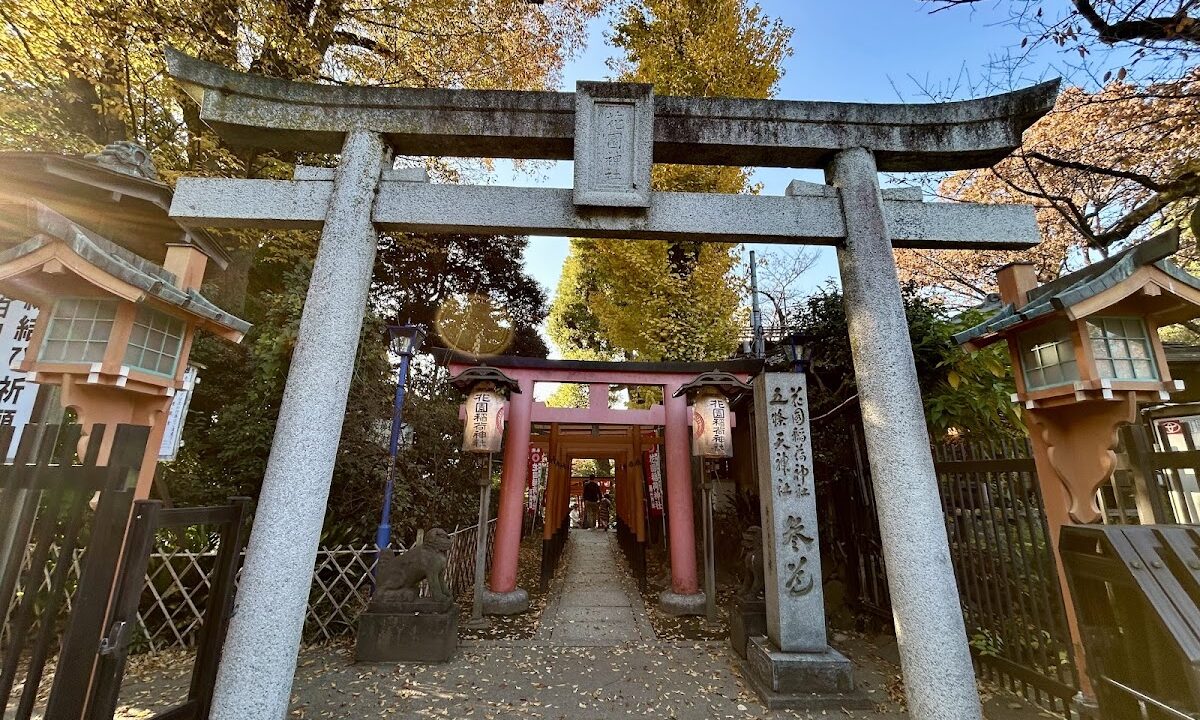
Hanazono Inari Shrine, located within Ueno Park in Taito Ward, Tokyo, is a historic shrine known for its beautiful approach lined with vermilion torii gates. Formerly known as “Shinobuoka Inari” or “Ana Inari,” it has been cherished by the local community as the guardian deity of Ueno Hill. This article provides a detailed explanation of everything you need to know before visiting Hanazono Inari Shrine, including its history, enshrined deities, benefits, goshuin (shrine seals), and access methods.
Basic Information about Hanazono Inari Shrine
Location and Contact Information
Address: 4-17 Ueno Park, Taito-ku, Tokyo 110-0007
Phone Number: 03-3823-2034
Opening Hours:
- Gate Opening Hours: 6:00 AM – 5:00 PM
- Shrine Office Hours: 9:00 AM – 4:00 PM
Access Method
Hanazono Inari Shrine is easily accessible via multiple train lines.
Access by Train:
- Approximately 3 minutes on foot from the Park Exit of JR Ueno Station
- Approximately 3 minutes on foot from Tokyo Metro Ginza Line/Hibiya Line Ueno Station
- Approximately 5 minutes on foot from Keisei Electric Railway Keisei Ueno Station
Entering Ueno Park from Ueno Station and heading towards Kiyomizu Kannon-do Temple and the Benten Gate of Ueno Zoo, you will find Hanazono Inari Shrine adjacent to Gojo Tenjin Shrine. The vermilion torii gate serves as a landmark, so you should be able to arrive without getting lost.
Access by Car:
There are several coin-operated parking lots around Ueno Park, but they get crowded on weekends, so we recommend using public transportation.
History and Origins of Hanazono Inari Shrine
Origin of Founding
The founding date of Hanazono Inari Shrine is unknown, but it has long been known as a local guardian deity enshrined in Ueno. In 1654 (Shoo 3), Abbot Kōkai of Honkakuin Temple had a spiritual dream and rebuilt the dilapidated shrine, which came to be revered as the guardian deity of Ueno Sacred Mountain.
History as “Ana Inari”
During the Edo period, Hanazono Inari Shrine was widely known as “Ana Inari” (Cave Inari). This name originates from the fact that the shrine was built on top of a cave (grave). Even today, the cave remains on the shrine grounds and is maintained as “Ana Inari.” This unique structure is one of the major characteristics of Hanazono Inari Shrine.
Relationship with Kan’ei-ji Temple
In 1625 (Kanei 2), Abbot Tenkai founded Kan’ei-ji Temple in Ueno. Hanazono Inari Shrine was positioned as the guardian shrine of Kan’ei-ji Temple and played an important role in protecting the entire Ueno area.
The Battle of Ueno and Hanazono Inari Shrine
During the Boshin War of 1868 (Keio 4), Ueno became the site of fierce fighting between the Shogitai and the new government forces. The “Ana Inari Gate” near Hanazono Inari Shrine is known as the site of the Shogitai’s final fierce battle. This historical event is remembered as an important part of Hanazono Inari Shrine’s history.
Reconstruction after the Meiji Restoration
After the Meiji Restoration, Kan’ei-ji Temple was reduced in size due to the separation of Shinto and Buddhism, but Hanazono Inari Shrine continued to exist as an independent shrine. In 1873 (Meiji 6), the shrine building was rebuilt through the efforts of Kazuma Iwahori and Ihei Ito, laying the foundation for its current form.
Former Shrine Rank
Hanazono Inari Shrine’s former shrine rank was Village Shrine. As a shrine deeply rooted in the community, it has attracted the faith of the people of Taito Ward for many years.
Deity and Blessings
Deity: Ukanomitama-no-Mikoto
The deity enshrined at Hanazono Inari Shrine is Ukanomitama-no-Mikoto. This deity is widely known as the principal deity of Inari shrines and is revered as the god of abundant harvests, business prosperity, and family safety.
In Japanese mythology, Ukanomitama-no-Mikoto is the god who presides over food, and “Uka” means “food (uke).” From the time when agriculture was central to people’s lives, this deity has been worshipped as an important god supporting people’s lives.
Main Benefits
Hanazono Inari Shrine is believed to offer the following benefits:
1. Matchmaking
Hanazono Inari Shrine has long been known as a shrine for matchmaking. It is believed to grant blessings not only for romantic relationships, but also for business success, employment, and all kinds of good fortune, attracting many visitors.
2. Business Prosperity
Business prosperity is a representative benefit of Inari shrines. Many business owners and sole proprietors visit the shrine praying for business success and successful business deals.
3. Protection of Clothing, Food, and Shelter
As Ukanomitama-no-Mikoto is the god who protects all aspects of life, the shrine is believed to grant blessings for wishes related to clothing, food, and shelter.
4. Family Safety
As the god who protects the health and peace of families, many visitors come to pray for family safety.
5. Abundant Harvest
As a deity of agriculture, the shrine also carries on a tradition of praying for abundant harvests and prosperity.
Highlights of Hanazono Inari Shrine
The Path Lined with Vermilion Torii Gates
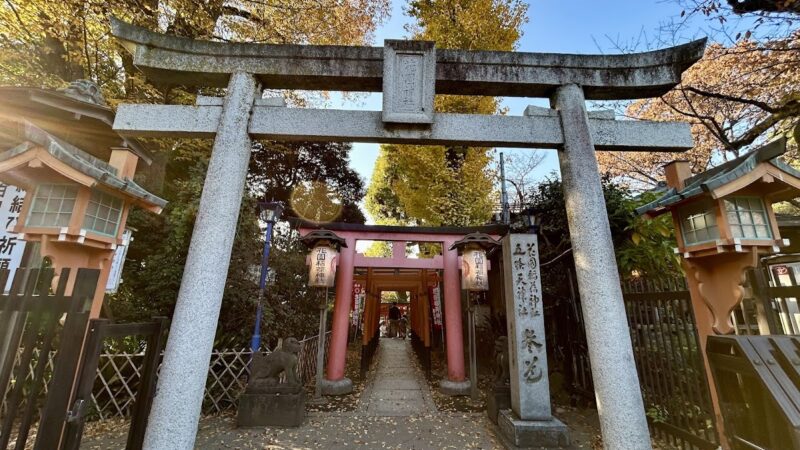
The greatest highlight of Hanazono Inari Shrine is undoubtedly the beautiful path lined with vermilion torii gates. Multiple torii gates line the eastern path, and the experience of passing through this vermilion tunnel to worship leaves a deep impression on visitors.
Especially on sunny days, the contrast between the blue sky and the vermilion is beautiful, making it a popular photo spot. Many foreign tourists also visit, appreciating it as a quintessential Japanese landscape.
Ana Inari (Cave)
Within the shrine grounds, a cave known as “Ana Inari” since the Edo period still remains. This cave utilizes the natural terrain, and an Inari deity is enshrined inside.
The unique structure of the shrine, built atop a cave, is a feature rarely seen in other Inari shrines. This mystical atmosphere is one of the charms of Hanazono Inari Shrine.
Shrine Building
The current shrine building was rebuilt after the Meiji era. The wooden main hall is in the style of traditional shrine architecture and stands quietly amidst the greenery of Ueno Park.
Shared Grounds with Gojo Tenjin Shrine
Hanazono Inari Shrine shares its grounds with the adjacent Gojo Tenjin Shrine. Gojo Tenjin Shrine is known as the ancestral deity of medicine, and many worshippers visit to pray for good health and recovery from illness. Sugawara no Michizane is also enshrined there, offering blessings for academic success.
The arrangement is convenient for worshippers seeking diverse blessings, as both shrines can be visited at once.
Annual Festival and Events
Annual Festival Date
The annual festival of Hanazono Inari Shrine is held every year on April 11th. The annual festival is the most important ceremony for the shrine, where gratitude is offered to the enshrined deity and prayers are made for the prosperity of the parishioners and the local community.
Other Annual Events
Hanazono Inari Shrine holds various festivals and events throughout the year. During the New Year’s visit period, the shrine is bustling with many worshippers who come to pray for safety and prosperity in the new year.
Goshuin (Shrine Seal) Information
Goshuin Reception
Hanazono Inari Shrine offers goshuin (shrine seals). Goshuin are popular among worshippers as proof of their visit and as a memento of their shrine pilgrimage.
Reception Hours: 9:00 AM – 4:00 PM (at the reception area)
Offering Fee: Usually around 300-500 yen (subject to change)
Features of the Goshuin
The goshuin at Hanazono Inari Shrine features the shrine’s name and the date of visit written in ink, and stamped with a red seal. It is characterized by its simple yet powerful brushstrokes.
You can bring your own goshuincho (stamp book) or purchase one on the spot. Please politely request a goshuin at the reception area after your visit.
Manners for Receiving a Goshuin
- First, complete your prayers before requesting a goshuin.
- Handing over your goshuincho with it open will allow the shrine staff to process your request more smoothly.
- You may have to wait during busy times, so please visit with plenty of time to spare.
- Remember that a goshuin is proof of your visit, not a stamp rally.
Manners and Etiquette for Visiting a Shrine
Basic Etiquette for Visiting a Shrine
When visiting Hanazono Inari Shrine, please observe the following basic etiquette.
1. Bow Before Passing Through the Torii Gate
The torii gate is the entrance to the sacred area. Bow slightly before passing through to show respect to the deity.
2. How to Walk Along the Approach
The center of the approach is considered the path of the gods, so it is polite to walk along the side. 3. Purifying at the Water Basin
Before praying, purify your hands and mouth at the water basin.
- Hold the ladle in your right hand and purify your left hand.
- Switch the ladle to your left hand and purify your right hand.
- Switch the ladle back to your right hand, receive water in your left hand, and rinse your mouth.
- Finally, stand the ladle upright and purify the handle.
4. Praying at the Main Hall (Two Bows, Two Claps, One Bow)
- Quietly place your offering in the offering box.
- Ring the bell if there is one.
- Bow deeply twice.
- Clap twice.
- Pray sincerely.
- Finally, bow deeply once.
5. When Leaving
After leaving the torii gate, turn around and bow once.
Photography Etiquette
The beautiful torii gate and grounds of Hanazono Inari Shrine are popular photography spots, but please note the following points.
- Do not take photos in areas where photography is prohibited, such as inside the main shrine.
- Be considerate of other worshippers.
- Refrain from taking photos during festivals.
- Avoid using tripods during crowded times.
Nearby Tourist Attractions
Hanazono Inari Shrine is located within Ueno Park, so there are many tourist attractions nearby.
Gojo Tenjin Shrine
This shrine shares its grounds with Hanazono Inari Shrine. Known as the ancestral deity of medicine, it attracts many worshippers praying for good health. Visiting both shrines together is said to bring a wider range of blessings.
Ueno Toshogu Shrine
A magnificent shrine dedicated to Tokugawa Ieyasu. The shrine building, known as the Golden Hall, is a valuable cultural asset that preserves the architectural style of the early Edo period.
Kan’ei-ji Kiyomizu Kannon-do Hall
A Kannon-do hall modeled after Kiyomizu-dera Temple in Kyoto. The stage-like structure and the “Moon Pine” are highlights.
Ueno Zoo
Japan’s oldest zoo. You can see many animals, including giant pandas. The Benten Gate is close to Hanazono Inari Shrine, making it easily accessible.
National Museum of Western Art
A museum designed by Le Corbusier and registered as a World Cultural Heritage site. It houses numerous masterpieces of Western art.
Tokyo National Museum
Japan’s oldest museum. It exhibits art and archaeological artifacts from East Asia, primarily Japan.
Shinobazu Pond
A natural pond located on the south side of Ueno Park. The scenery with the Bentendo temple floating on the pond conveys the atmosphere of Edo.
Ameya Yokocho
A shopping street stretching from Ueno Station to Okachimachi Station. A variety of shops selling food, clothing, and general goods line the street, creating a lively atmosphere.
Hanazono Inari Shrine Reviews and Reputation
Visitor Feedback
The following are some comments from people who have visited Hanazono Inari Shrine.
“Beautiful Vermilion Torii Gates”
Many visitors have expressed their awe at the beauty of the rows of vermilion torii gates. Foreign tourists, in particular, highly appreciate it as a quintessentially Japanese landscape.
“Quiet and Peaceful Atmosphere”
Despite its location within Ueno Park, the shrine grounds are praised for their quiet and peaceful atmosphere. It’s a popular spot for those seeking solace away from the hustle and bustle of the city.
“Mystical Ana-Inari Shrine”
The unique structure of the shrine, built atop a cave, is a distinctive feature that attracts the interest of many visitors.
“Convenient Visit to Gojo Tenjin Shrine”
The convenience of being able to visit it together with the adjacent Gojo Tenjin Shrine is also appreciated.
“Easy Access”
Its excellent location, just a few minutes’ walk from Ueno Station, is highly valued by many visitors.
Points to Note
Some reviews have also pointed out the following:
- Ueno Park is crowded on holidays, so weekdays or early mornings are recommended for a leisurely visit.
- Parking is limited, so using public transportation is convenient.
- The reception desk closes at 4 PM, so please be mindful of the time if you wish to receive a Goshuin (temple/shrine stamp).
Seasonal Highlights
Spring (March-May)
Ueno Park is known as a famous cherry blossom viewing spot, and is bustling with many visitors in spring. You can also enjoy cherry blossoms around Hanazono Inari Shrine, and the contrast between the vermilion torii gate and the blossoms is beautiful.
The annual festival on April 11th is also held in spring.
Summer (June-August)
A beautiful season of fresh greenery. Hanazono Inari Shrine, surrounded by the greenery of Ueno Park, offers a refreshing atmosphere. The lotus flowers in Shinobazu Pond are also in full bloom.
Autumn (September-November)
During the autumn foliage season, Ueno Park is colored, and Hanazono Inari Shrine also takes on its autumnal appearance. The collaboration of the vermilion torii gate and the autumn leaves is magnificent.
Winter (December to February)
Many worshippers visit during the New Year’s pilgrimage season. Visiting the shrine in the crisp winter air will be a purifying experience for both mind and body.
Prayers and Sorrows at Hanazono Inari Shrine
Types of Prayers
Hanazono Inari Shrine accepts various types of prayers.
- Business Prosperity
- Family Safety
- Matchmaking
- Job Success
- Traffic Safety
- Other
How to Apply for a Prayer
If you wish to request a prayer, it is recommended that you inquire by phone in advance.
Contact Information: 03-3823-2034
On the day of your visit, please visit the shrine office during reception hours and fill out the application form. The offering fee varies depending on the content of the prayer, so please check in advance.
The History of Hanazono Inari Shrine and Taito Ward
Taito Ward, where Hanazono Inari Shrine is located, has been a center of downtown culture since the Edo period. Ueno developed as a temple town for Kan’ei-ji Temple and was a place of worship where many temples and shrines gathered.
After the Meiji era, Ueno Park was developed, becoming a cultural hub with a concentration of cultural facilities such as museums, art galleries, and a zoo. Hanazono Inari Shrine has watched over the history and cultural changes of Ueno.
Even today, Taito Ward is an attractive area where tradition and innovation coexist, drawing many people. Hanazono Inari Shrine is one of the important spots where you can experience the history and culture of Taito Ward.
Summary: The Charm of Hanazono Inari Shrine
Hanazono Inari Shrine is a historical shrine located within Ueno Park in Taito Ward, Tokyo. The beautiful approach lined with vermilion torii gates, the “Ana Inari” cave dating back to the Edo period, and the venerable faith centered around Ukanomitama-no-Mikoto are major attractions of this shrine.
It is believed to offer a variety of blessings, including matchmaking, business prosperity, and protection of clothing, food, and shelter, attracting not only locals but also many tourists and foreign visitors. Its excellent accessibility, just a 3-minute walk from Ueno Station, is another reason why it’s so easy to visit.
When you visit Ueno Park, be sure to stop by Hanazono Inari Shrine and experience its history and atmosphere. Visiting it along with the adjacent Gojo Tenjin Shrine will make your Ueno stroll even more fulfilling.
Passing through the vermilion torii gates and spending time in the tranquil grounds praying will be a precious experience that allows you to forget the hustle and bustle of the city. We hope that Hanazono Inari Shrine will be a place where you can forge good fortune.