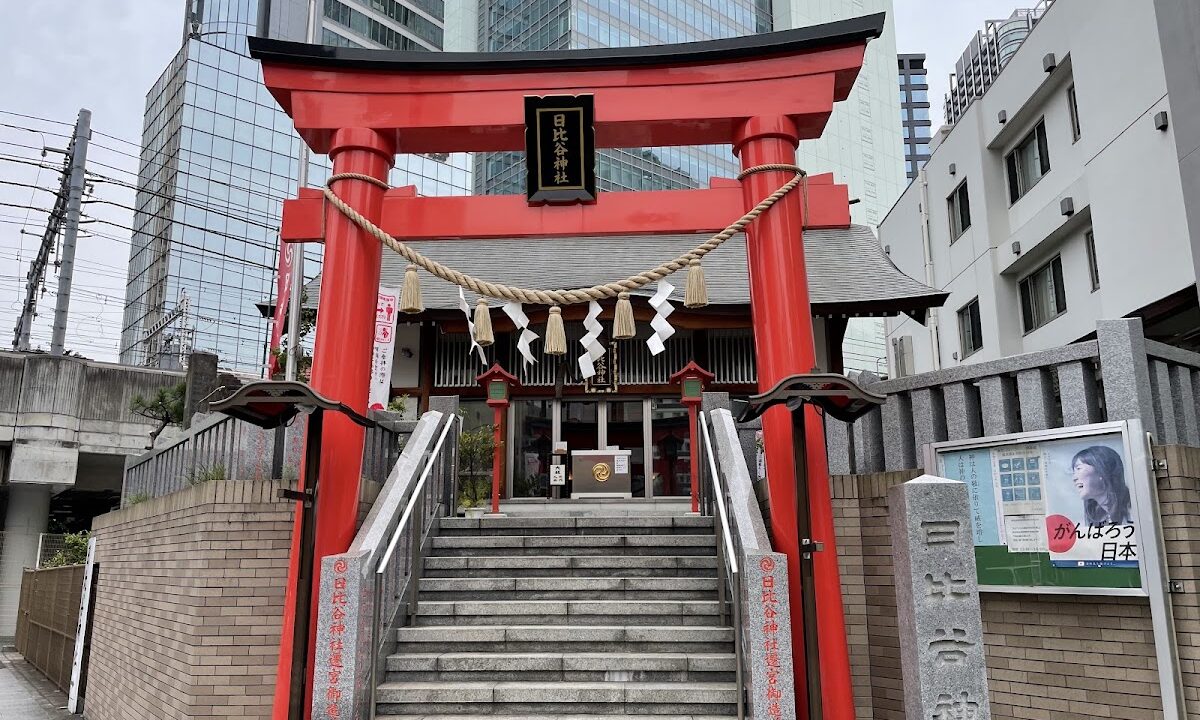
Hibiya Shrine (Minato Ward, Tokyo) Complete Guide | History, Goshuin (Shrine Seals), Access, and the Origin of Saba Inari (Mackerel Inari)
Hibiya Shrine, located in Higashi-Shinbashi, Minato Ward, Tokyo, is a historic shrine with a history dating back to the Edo period. Originally founded on the site of Hibiya Park, and having been relocated several times with the construction of Edo Castle, Hibiya Shrine is now a beloved guardian shrine overlooking the Shiodome business district. Also known as “Saba Inari” (Mackerel Inari), it has attracted a unique devotion.
This article provides detailed information you should know before visiting Hibiya Shrine, including its history, enshrined deities, the origin of Saba Inari, goshuin information, and access methods.
Overview of Hibiya Shrine
Hibiya Shrine is an Inari shrine located in Higashi-Shinbashi 2-chome, Minato Ward, Tokyo, with Toyouke-no-Okami as its main deity. Formerly known as “Hibiya Inari Myojin” and “Saba Inari Myojin,” it boasts a history dating back to the Edo period.
Basic Information
- Location: 2-1-1 Higashi-Shinbashi, Minato-ku, Tokyo
- Deities Enshrined: Toyouke-no-Okami (Inari God), Harai-do Shibashira Okami (Seoritsuhime-no-Okami, Hayakitsuhime-no-Okami, Ibukido-no-Okami, Hayasasurahime-no-Okami)
- Former Names: Hibiya Inari Myojin, Saba Inari Myojin
- Other Names: Saba Inari
- Parish Area: Higashi-Shinbashi 1-chome and 2-chome, including the Shiodome area
- Annual Festival Date: Mid-September every year
The current shrine building is new, constructed in 2009, but the history of the shrine itself is ancient, dating back to before the Edo period.
History and Origins of Hibiya Shrine
From Founding to the Edo Period
The exact founding date of Hibiya Shrine is unknown, but it is said that in ancient times it was located in a place called “Otsukayama” within what is now Hibiya Park in Chiyoda Ward. At that time, it was called “Hibiya Inari Myojin” or “Tabihaku Inari Myojin” and was revered as the guardian deity of the area.
Relocation during the Keicho Era (First Relocation)
In 1606 (Keicho 11), the Tokugawa Shogunate carried out expansion work on Edo Castle, and the construction of the Hibiya Gate was decided. Consequently, Hibiya Shrine, along with its parishioners, was relocated to the area near present-day Higashi-Shinbashi (then known as Shibaguchi).
Even after this relocation, the town name remained “Hibiya-cho,” and the shrine’s name was also inherited as “Hibiya Shrine.” Throughout the Edo period, it continued to attract the faith of the local people in this location.
History of Hibiya Shrine according to the Tokyo Metropolitan Shrine Directory
The Tokyo Metropolitan Shrine Directory describes Hibiya Shrine as follows: “Originally, it was located on Otsukayama in the former Kojimachi Ward’s Hibiya Park and was called Hibiya Inari Myojin Tabihaku Inari Myojin. During the Keicho era, when the Hibiya Gate of Edo Castle was constructed, the shrine moved to Shibaguchi (near present-day Higashi-Shinbashi) along with its parishioners, and the town name remained Hibiya.”
History of Hibiya Shrine according to the Shiba Ward History
The “Shiba Ward History” records that Hibiya Shrine was widely known as “Saba Inari” during the Edo period. It is clear that it was particularly revered among common people for its efficacy in curing toothaches and warding off insects.
From Meiji to Showa
Even after the Meiji era, Hibiya Shrine continued to exist as the guardian shrine of the region, but the wave of modernization also affected the shrine. In particular, with the progress of railway construction, it was forced to relocate again due to the construction of the JR line. However, the shrine continued to be preserved thanks to the efforts of the local people.
Relocation in the Heisei Era (Second Relocation)
In the Heisei era, the construction plan for the Circular Route 2, a city planning road in Tokyo, was advanced. This plan revealed that the former site of Hibiya Shrine was located within the planned road construction area.
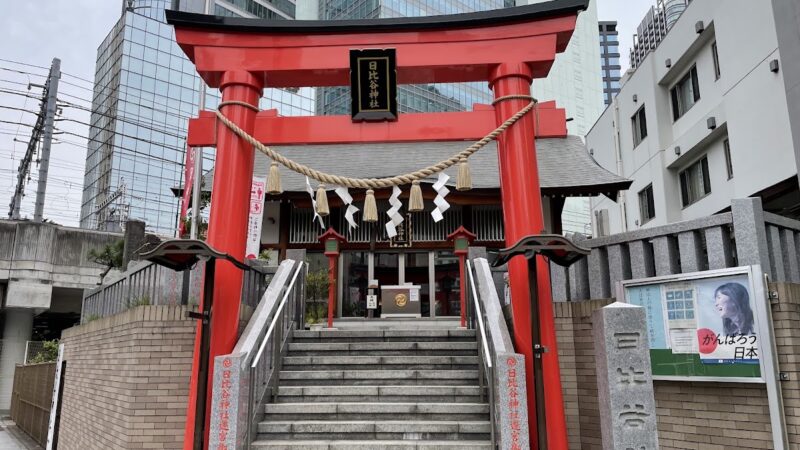
On July 31, 2009 (Heisei 21), Hibiya Shrine relocated to its current location at 1-1, Higashi-Shinbashi 2-chome. Despite being surrounded by modern buildings, the shrine maintains a solemn atmosphere, creating a Tokyo-esque landscape where tradition and modernity harmonize.
Deities Enshrined at Hibiya Shrine
Toyouke-no-Okami
Toyouke-no-Okami, the principal deity, is the god of food and grains, enshrined at the Outer Shrine of Ise Grand Shrine. Widely worshipped as Inari-no-Kami, she is believed to bestow blessings of abundant harvests, business prosperity, and industrial development.
Hibiya Shrine has long been revered as an Inari shrine because it enshrines Toyouke-no-Ōkami. During the Edo period, it attracted the faith of merchants and craftsmen, and even today, many worshippers visit it as the guardian deity of the business district.
Haraedo Yohashira-no-Ōkami
Hibiya Shrine enshrines both Toyouke-no-Ōkami and the Haraedo Yohashira-no-Ōkami.
- Seoritsuhime no Okami: The goddess who washes away sins and impurities from rivers into the sea.
- Hayaakitsuhime no Okami: The goddess who swallows sins and impurities at the bottom of the sea.
- Ibukidonushi no Okami: The goddess who blows away sins and impurities to the underworld.
- Hayasasurahime no Okami: The goddess who makes sins and impurities disappear in the underworld.
These gods are believed to preside over purification and cleansing, and are thought to bestow divine blessings of purifying the mind and body of worshippers, warding off evil, and bringing good fortune.
The Origin and Beliefs of Saba Inari
Hibiya Shrine is widely known by the alternative name “Saba Inari.” There are several theories about the origin of this unique name.
Origin of the Name Saba Inari
The most plausible theory is that it originated from “Saba Inari” (旅泊稲荷). It is believed that the shrine was worshipped as a god protecting travelers, and the word “saba” (旅泊) was used, which later changed to the kanji character “鯖” (mackerel).
Another theory suggests that it came to be called “Saba Inari” because of the Edo period custom of abstaining from mackerel as a way of making a wish.
Belief in Protection Against Tooth Decay and Insects
During the Edo period, Hibiya Shrine (Saba Inari) was deeply revered among common people for its miraculous powers in protecting against tooth decay and insects in children. Records of this belief are also found in the “Shiba-ku Shi” (Shiba Ward History).
At that time, when medical care was not well-developed, tooth decay was a serious illness. Also, a condition called “kan no mushi” (疳の虫) in children was a source of worry for parents. Hibiya Shrine was visited by many people as a place where these problems could be solved.
Even today, this traditional faith is carried on, and people visit to pray for things like preventing tooth decay and the health of their children.
Guide to Hibiya Shrine Grounds
Shrine Building
The current shrine building, constructed in 2009, maintains the style of traditional shrine architecture despite being located in the heart of the city surrounded by modern buildings. Its compact yet dignified appearance provides visitors with a tranquil space.
Guardian lion-dogs are placed in front of the shrine building, welcoming visitors. Despite the limited space in the city center, the atmosphere of a sacred area is firmly maintained.
History of Hibiya Shrine as Posted on Grounds
A bulletin board detailing the history of Hibiya Shrine is installed on the grounds, allowing visitors to learn about the shrine’s history. This notice concisely summarizes the shrine’s relocation from Otsukayama, its connection to the construction of Edo Castle, and its worship as a Saba Inari (mackerel inari) shrine.
Goshuin (Shrine Seal) Information
Hibiya Shrine offers goshuin.
Goshuin Issuance Hours
Goshuin are generally issued from morning to afternoon on weekdays, but may not be available when the shrine priests are absent. To ensure you receive a goshuin, it is recommended to check the Hibiya Shrine official website or inquire by phone beforehand.
Goshuin Features
Hibiya Shrine’s goshuin features the calligraphy and red seal of “Hibiya Shrine.” Its simple yet powerful brushstrokes make it popular among many goshuin collectors.
Amulets and Souvenirs
Hibiya Shrine offers a variety of amulets and souvenirs.
Miracle Amulet
Hibiya Shrine’s unique “Miracle Amulet” is a particularly popular amulet. As befits a shrine located in a business district, it is bestowed upon people praying for improved career prospects and business prosperity.
Other Amulets
- Business Prosperity Amulet: Benefiting from the divine virtues of Toyouke-no-Okami
- Exorcism Amulet: Receiving the purifying power of the Four Pillars of Harai-do Okami
- Health Amulet: Continuing the tradition of preventing tooth decay
- Traffic Safety Amulet: Receiving the divine virtues of Tabihaku Inari, protecting travelers safely
Annual Events
Grand Festival
The Grand Festival is held annually in mid-September. It is the most important festival, praying for the prosperity of the parish area and the peace and well-being of worshippers. Due to its location in the city center, large-scale portable shrine processions are not held, but a solemn ceremony is conducted.
New Year’s Visit
Many worshippers visit the shrine for their first shrine visit of the new year. Especially due to its proximity to the business district, many office workers can be seen visiting to coincide with the start of the work year.
Monthly Festival
A monthly festival is held regularly each month to pray for the safety and prosperity of the parish area.
Parish Area
The parish area of Hibiya Shrine mainly includes Higashi-Shinbashi 1-chome and 2-chome, as well as the Shiodome area. Having protected the former Shibaguchi area, Hibiya Shrine now serves as the guardian shrine of one of Japan’s leading business districts and media centers, watching over many companies and working people.
While the Shiodome area has been redeveloped into a modern cityscape with towering skyscrapers, Hibiya Shrine, standing amidst it, remains a valuable presence that conveys history and tradition to the present day.
Transportation Access
Access to Hibiya Shrine is very convenient, with multiple train lines available.
Access by Train
Toei Oedo Line
- Approximately 3 minutes’ walk from Shiodome Station (nearest station)
Yurikamome Line
- Approximately 3 minutes’ walk from Shiodome Station
JR Line
- Approximately 7 minutes’ walk from Shimbashi Station
Tokyo Metro Ginza Line
- Approximately 7 minutes’ walk from Shimbashi Station
Toei Asakusa Line
- Approximately 7 minutes’ walk from Shimbashi Station
Directions from the Nearest Station
Shiodome Station is the closest, and Hibiya Shrine is located right outside the station. It’s also within walking distance from Shimbashi Station; simply walk towards Shiodome to reach it. Since there are many high-rise buildings in the area, using a map app is recommended.
Access by Car
Hibiya Shrine does not have its own parking lot. If you are visiting by car, you will need to use a nearby coin-operated parking lot. There are several paid parking lots in the Shiodome area, but they are often crowded on weekdays, so using public transportation is recommended.
Nearby Attractions
Karasumori Shrine
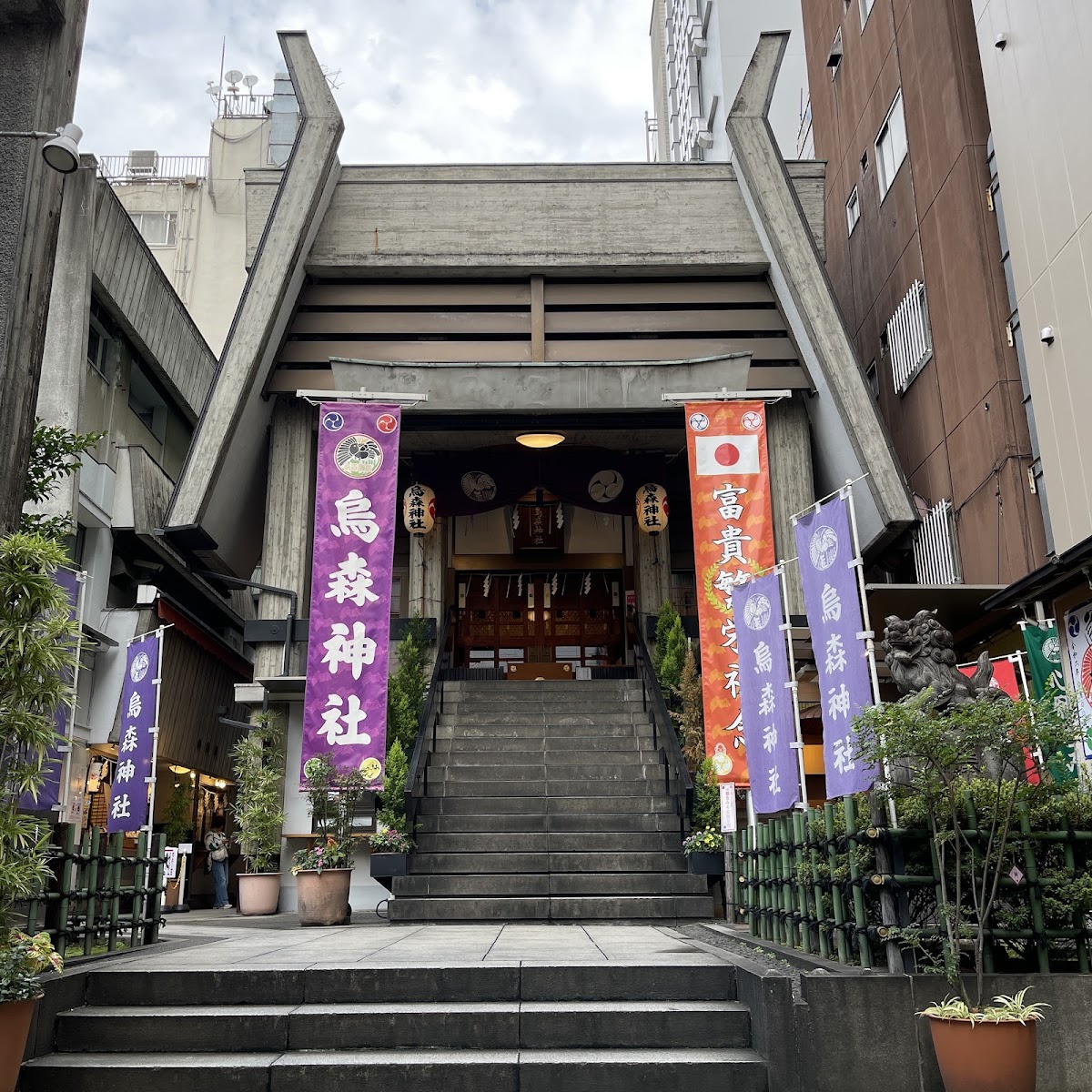
Located within walking distance of Hibiya Shrine, Karasumori Shrine is famous for its colorful goshuin (shrine stamps). It’s situated near Shimbashi Station, and many people visit both shrines together.
Shiodome Siosite
Around Hibiya Shrine lies the Shiodome Siosite redevelopment area. Within the cluster of high-rise buildings are shopping facilities, restaurants, and art museums, offering entertainment options in addition to your shrine visit.
Former Shimbashi Station
This museum is built on the site of Shimbashi Station, Japan’s first railway station. Here you can learn about the history of railways in the Meiji era and trace the footsteps of Tokyo’s modernization, which overlaps with the history of Hibiya Shrine.
Hamarikyu Gardens
A 15-minute walk away, this Edo-period daimyo garden offers a vast Japanese garden experience in the heart of the city, allowing you to enjoy the changing seasons.
Manners and Points for Visiting a Shrine
Basic Worship Etiquette
- Bow before passing through the torii gate: As a sign of respect before entering the sacred area.
- Purify yourself at the water basin: Purify your left hand, right hand, and mouth in that order.
- Worship: Two bows, two claps, and one bow is the basic procedure.
Points for Visiting Hibiya Shrine
- Weekday mornings are recommended: Although there are worshippers even on weekdays due to its location in a business district, it is relatively quiet in the mornings.
- Check in advance regarding Goshuin (shrine stamps): Since priests may not always be present, check in advance if you want to be sure to receive a Goshuin.
- Combine with exploring the surrounding area: Visiting Hibiya Shrine in conjunction with exploring the Shiodome area or visiting nearby shrines is also recommended.
The Charm of Hibiya Shrine
The greatest charm of Hibiya Shrine lies in the beautiful harmony between its history dating back to the Edo period and its modern urban environment. Despite its location surrounded by skyscrapers, stepping into the shrine grounds reveals a tranquil space that allows you to forget the hustle and bustle of the city.
Hibiya Shrine possesses unique characteristics not found in other shrines, such as its distinctive alternative name “Saba Inari” (Mackerel Inari), its unusual belief in protection against tooth decay, and its history of relocation due to the construction of Edo Castle.
Furthermore, as the guardian shrine of the business district, it continues to watch over the work and lives of people living in modern times, which is another unique feature of Hibiya Shrine. Many business people can be seen visiting the shrine before heading to work in the morning, continuing to fulfill its role as a shrine in the heart of the city.
Summary
Hibiya Shrine is a historic shrine located in Higashi-Shinbashi, Minato-ku, Tokyo. While the exact founding date is unknown, the shrine originated on Otsukayama Hill in Hibiya Park. It was relocated to Shibaguchi in 1606 during the construction of the Hibiya Gate of Edo Castle, and then moved again in 2009 due to the construction of the Loop Road No. 2. Despite these changes in location over time, it has continued to attract the faith of the local people.
The shrine enshrines Toyouke-no-Okami and the Four Deities of Harai-do, and is believed to bestow blessings for business prosperity, protection from evil, and good health. It is particularly known by its nickname “Saba Inari” (Mackerel Inari), and the belief in its protection against tooth decay and insects dates back to the Edo period.
Conveniently located about a 3-minute walk from Shiodome Station on the Toei Oedo Line and Yurikamome Line, it welcomes many visitors in the heart of the business district. Its goshuin (shrine stamps) and unique “miracle amulets” are also popular, making it an essential spot for anyone visiting shrines in central Tokyo.
In Shiodome, where history and modernity intersect, Hibiya Shrine continues to quietly watch over people today. When you’re sightseeing in Tokyo or visiting shrines, be sure to stop by Hibiya Shrine.