Complete Guide to Meiji Jingu Shrine (Tokyo): History, Highlights, and Visiting Information
Nestled within a deep forest in the heart of Shibuya Ward, Tokyo, Meiji Jingu Shrine is one of Japan’s most representative shrines, dedicated to Emperor Meiji and Empress Shoken. Since its founding in 1920, it has consistently recorded the highest number of New Year’s visitors in Japan, and is known as one of Japan’s leading power spots, attracting many visitors from both within Japan and internationally.
History and Background of Meiji Jingu Shrine’s Founding
From Emperor Meiji’s Death to Founding
Meiji Jingu Shrine was founded to enshrine Emperor Meiji, who passed away on July 30, 1912, and Empress Shoken, who passed away on April 11, 1914. Emperor Meiji was the 122nd Emperor of Japan, who spearheaded Japan’s modernization from the latter half of the 19th century, leading Japan to become a modern nation.
For its founding, approximately 100,000 trees were donated from all over Japan, and the magnificent forest we see today was constructed through the labor of over 110,000 young people from across the country. On November 1, 1920 (Taisho 9), Meiji Jingu Shrine was officially established, and its former rank was Kanpei Taisha (Grand Imperial Shrine), and it was further designated as an Chokusaisha (Imperial Shrine).
From Artificial Forest to Eternal Forest
At the time of its founding, the Meiji Jingu forest was a barren wasteland. In the landscaping plan that began in 1916 (Taisho 5), under the guidance of forestry expert Dr. Seiroku Honda and others, a grand vision was developed, looking 100 and 150 years into the future. 234 species of trees, primarily evergreen trees such as oak and chestnut donated from all over Japan, were planted, and today it has become a vast forest covering approximately 700,000 square meters (about 15 times the size of Tokyo Dome).
Originally created as an artificial forest, the grove has, over 100 years, developed into a rich ecosystem so remarkable that it could easily be mistaken for a natural forest. This “Eternal Grove,” despite being in the heart of the city, is a valuable green space home to diverse flora and fauna, serving as a place of relaxation for the nation.
Post-War Reconstruction and 100th Anniversary
On April 14, 1945, during World War II, the main buildings, including the shrine, were destroyed by air raids. However, through post-war reconstruction efforts, the current shrine was rebuilt in November 1958.
On November 1, 2020, the shrine celebrated its 100th anniversary, a significant milestone, with commemorative events held. Even 100 years after its founding, Meiji Jingu Shrine continues to attract the faith of many people as a center of Japanese spiritual culture.
Guide to Meiji Jingu Shrine Grounds and Main Facilities
Three Approaches and Torii Gates
Meiji Jingu Shrine has three approaches: the South Approach (Harajuku Entrance), the North Approach (Yoyogi Entrance), and the West Approach (Sangubashi Entrance), each with its own large torii gate.
The large torii gate on the South Approach is one of the largest wooden torii gates in Japan, standing 12 meters tall, with a 9.1-meter span between pillars and a pillar diameter of 1.2 meters. It was constructed from cypress trees over 1500 years old from Taiwan and rebuilt in 1975.
Each approach is designed for a walk of approximately 10 minutes through the forest, offering a time to tranquilize away from the hustle and bustle of the city. Walking along the gravel paths, you can feel the changing seasons and experience a special space.
The Main Shrine and Worship Hall
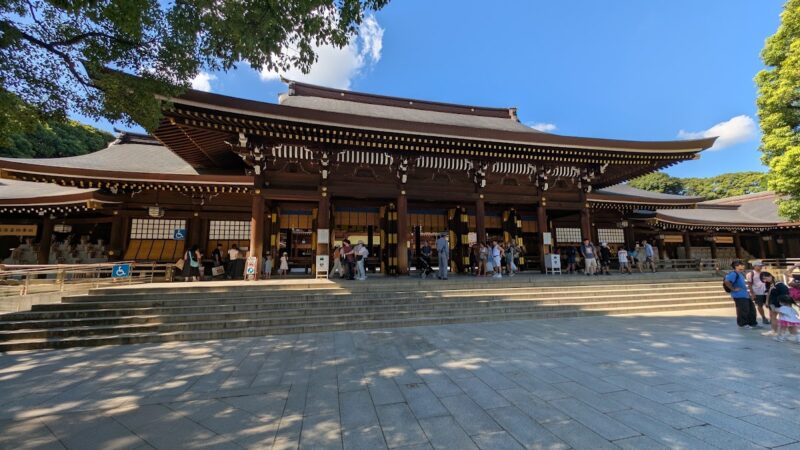
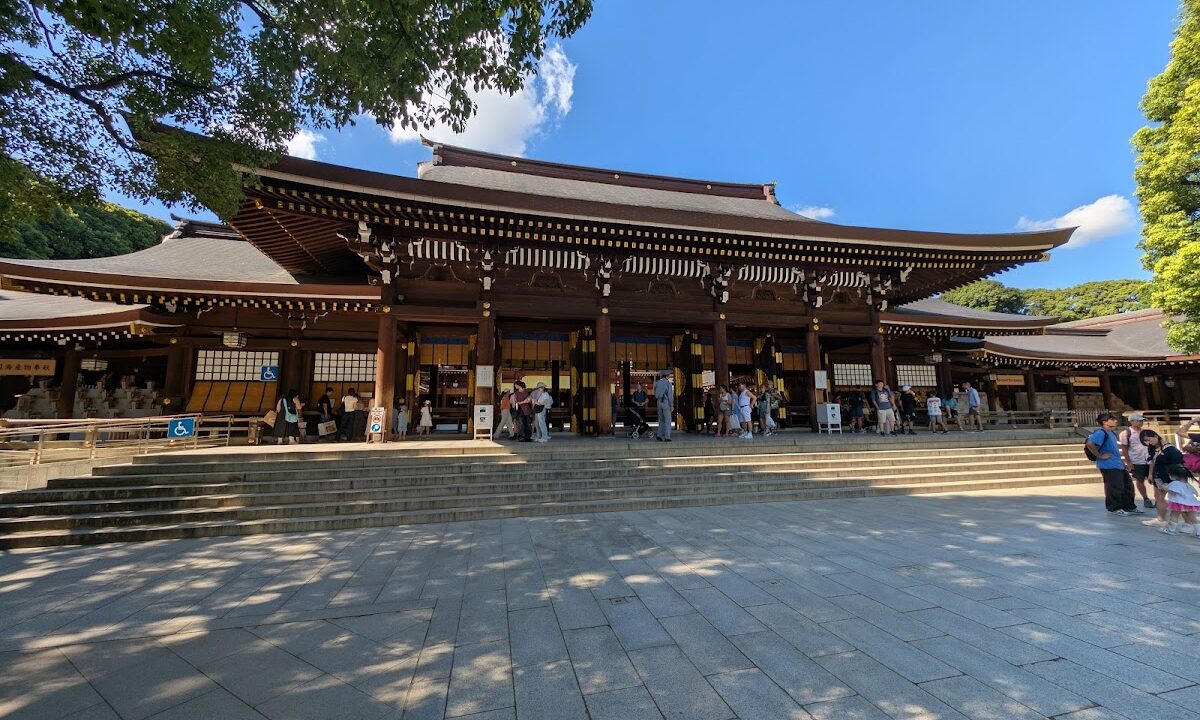
Located almost in the center of the shrine grounds, the main shrine is built in a unique architectural style called “Meiji-zukuri,” a blend of the Nagare-zukuri and Shinmei-zukuri styles. The majestic cypress wood shrine welcomes worshippers with its simple yet dignified presence.
The plaza in front of the worship hall is filled with millions of worshippers during the first three days of the New Year. For regular worship, the proper procedure is two bows, two claps, and one bow.
Meiji Jingu Garden
Located to the east of the main shrine, the Meiji Jingu Garden was the garden of the Kato and Ii families’ secondary residences in the early Edo period. In the Meiji era, it became imperial property, and was a place frequently visited by Emperor Meiji and Empress Shoken.
Maintenance Contribution: 500 yen (adults)
Within the Imperial Garden, there is an iris field said to have been planted by Emperor Meiji for Empress Shoken, where approximately 150 varieties and 1500 irises are in full bloom in June. There is also the Kakun-tei pavilion, where you can enjoy flowers of all seasons, and the popular power spot, “Kiyomasa’s Well.”
Kiyomasa’s Well
Kiyomasa’s Well, located within the Meiji Jingu Imperial Garden, is a spring-fed well said to have been dug by Kato Kiyomasa. The water temperature remains at approximately 15 degrees Celsius throughout the year, and 60 liters of clear water gush out every minute.
In recent years, it has attracted attention as a power spot, and a rumor has spread that setting it as your mobile phone’s wallpaper will improve your luck, leading to a large influx of visitors. Visiting during the quiet early morning hours is especially recommended.
Treasure Hall and Treasure Exhibition Room
The Treasure Hall is a reinforced concrete building in the style of a log-cabin style, constructed in 1921 (Taisho 10), and is designated as an Important Cultural Property. It houses approximately 3,000 items related to Emperor Meiji and Empress Shoken, displaying imperial possessions and relics.
Opening Hours: Open only on Saturdays, Sundays, and national holidays (usually only the exterior can be viewed).
On the other hand, the Treasure Exhibition Room is a modern building constructed in 1973 (Showa 48), and permanently displays items related to the enshrined deities.
Kagura Hall
The Kagura Hall is a facility where Shinto wedding ceremonies and prayer rituals are held. Meiji Jingu Shrine is known as the “birthplace of Shinto wedding ceremonies,” and it is said that the wedding ceremony of Emperor Taisho served as a model for the spread of Shinto wedding ceremonies to the general public.
Even today, many couples hold traditional Shinto wedding ceremonies on weekends, and you can see brides in white kimonos and grooms in formal attire.
Forest Terrace Meiji Jingu
This complex opened in 2020 and includes the “Forest Terrace” cafe, the “Forest Exhibition Room” cultural center, and a museum shop. It’s an ideal place to relax after visiting the shrine or to learn about the history of Meiji Jingu.
The cafe offers original menus inspired by the Meiji Jingu forest and dishes made with local ingredients.
Meiji Jingu Gaien Area
Meiji Jingu consists of the Inner Garden, where the main shrine is located, and the Outer Garden, which stretches along Aoyama Street.
Major Facilities in Meiji Jingu Gaien
The Meiji Memorial Picture Gallery is an art museum built to pass on the virtues of Emperor Meiji to future generations and is designated as an Important Cultural Property. Eighty murals depicting important events from the birth to the death of Emperor Meiji are on display, allowing visitors to visually learn about modern Japanese history.
Jingu Stadium is a professional baseball stadium known as the home ground of the Tokyo Yakult Swallows. Completed in 1926 (Showa 1), it has greatly contributed to the development of Japanese baseball culture.
Meiji Jingu Gaien Ice Skating Rink is a valuable ice skating rink in the heart of Tokyo that is open year-round. It is a popular facility enjoyed by everyone from beginners to advanced skaters.
Ginkgo Tree-lined Avenue
The Ginkgo Tree-lined Avenue, a symbol of Meiji Jingu Gaien, is an approximately 300-meter-long avenue stretching from Aoyama Street to the Meiji Memorial Picture Gallery. 146 ginkgo trees are planted there, and the scenery, which turns golden from mid-November to early December, attracts many tourists as one of Tokyo’s representative autumn foliage spots.
Annual Events and Festivals at Meiji Jingu Shrine
New Year’s Visit (Hatsumode)
Meiji Jingu Shrine boasts the highest number of visitors in Japan, with over 3 million people visiting for Hatsumode every year. It is especially crowded during the first three days of the New Year, and overnight visits are possible from New Year’s Eve to New Year’s Day.
If you wish to avoid crowds, it is recommended to visit early in the morning, in the evening, or after the first three days of the New Year.
Major Festivals
- Spring Grand Festival (April 29th – May 3rd): A festival held around Showa Day, the birthday of Emperor Meiji.
- Autumn Grand Festival (November 1st – 3rd): The most important festival commemorating the founding of Meiji Jingu Shrine.
- Annual Festival (November 3rd): The most important festival of the year, held on Culture Day.
- New Year’s Festival (January 1st): A festival celebrating the New Year.
- National Foundation Day Festival (February 11th): A festival held on National Foundation Day.
These festivals feature performances of Kagura and Bugaku (traditional dance and music), martial arts competitions, and other events, allowing visitors to experience traditional Japanese culture.
How to Visit and Etiquette at Meiji Jingu Shrine
Basic Worship Etiquette
- Bow Before Passing Through the Torii Gate: Before entering the approach to the shrine, bow before the torii gate.
- Avoid Walking in the Center of the Approach: The center of the approach is considered the path of the gods, so walk along the edge.
- Purify at the Water Basin: Hold the ladle in your right hand and purify your left hand, then switch to your left hand and purify your right hand, switch back to your right hand, receive water in your left hand, rinse your mouth, and finally purify the handle by holding the ladle upright.
- Worship at the Main Hall: Worship using the two bows, two claps, and one bow ritual.
Goshuin (Shrine Seals) and Amulets
At Meiji Jingu Shrine, you can receive several types of goshuin. The goshuin office is located near the shrine building, and the offering fee is 500 yen each.
Amulets are available in various types, including those for family safety, traffic safety, academic success, and matchmaking. Particularly popular are the wooden amulets called “Kodama,” made from wood grown in the Meiji Jingu Shrine’s grove.
Fortune Slips
The fortune slips at Meiji Jingu Shrine are not the typical good or bad fortune slips, but rather unique “Omigokoro” slips, inscribed with waka poems composed by Emperor Meiji and Empress Shoken. It is believed that deciphering the meaning of these poems can provide guidance for life.
Access and Basic Information
Access by Train
Meiji Jingu Shrine is located in the heart of Tokyo, yet is accessible from multiple train stations.
- JR Yamanote Line “Harajuku Station”: 1 minute walk from the West Exit (South Approach)
- Tokyo Metro Chiyoda Line/Fukutoshin Line “Meiji-jingumae (Harajuku) Station”: 1 minute walk from Exit 2 (South Approach)
- JR Yamanote Line “Yoyogi Station”: 5 minute walk from the West Exit (North Approach)
- Toei Subway Oedo Line “Yoyogi Station”: 5 minute walk from Exit A1 (North Approach)
- Tokyo Metro Fukutoshin Line “Kita-Sando Station”: 5 minute walk from Exit 1 (North Approach)
- Odakyu Line “Sangubashi Station”: 3 minute walk from the West Exit (West Approach)
Since the main shrine is located almost in the center of the grounds, it takes approximately 10 minutes to reach the main shrine from each entrance.
Access by Car and Parking
Address: 1-1 Yoyogi Kamizono-cho, Shibuya-ku, Tokyo
Parking is available near the entrances to the South, North, and West approaches, but it gets very crowded on weekends, holidays, and during the New Year’s period. For easier navigation, entering “Yoyogi 1-1-2” will help guide you to the correct location.
Parking Fee: Standard cars: 500 yen for the first hour, 100 yen for every 30 minutes thereafter.
We recommend using public transportation such as trains whenever possible.
Visiting Hours
Meiji Jingu Shrine’s opening hours vary monthly, depending on sunrise and sunset times.
- January: 6:40 AM – 4:20 PM
- February: 6:20 AM – 4:50 PM
- March: 5:40 AM – 5:20 PM
- April & May: 5:10 AM – 6:10 PM
- June: 5:00 AM – 6:30 PM
- July & August: 5:00 AM – 6:20 PM
- September: 5:20 AM – 5:40 PM
- October: 5:40 AM – 5:00 PM
- November: 6:10 AM – 4:30 PM
- December: 6:40 AM – 4:00 PM
*Opening hours may differ on special days such as the first three days of the New Year.
Admission Fee
Admission to the shrine grounds is free. However, a 500 yen maintenance fee is required for the Meiji Jingu Imperial Garden.
Recommended Spots Around Meiji Jingu Shrine
Harajuku/Omotesando Area
Located just a short walk from the south exit of Meiji Jingu Shrine, the Harajuku/Omotesando area is world-renowned as a hub of fashion and culture.
Takeshita Street is known as the center of youth culture, lined with unique shops and cafes. Street food like crepes and tapioca drinks are also popular.
Omotesando is a sophisticated shopping street lined with beautiful zelkova trees, featuring high-end brand stores, unique select shops, and stylish cafes. Commercial facilities such as Omotesando Hills and Tokyu Plaza Omotesando Harajuku are also abundant.
Yoyogi Park
Located next to Meiji Jingu Shrine, Yoyogi Park is one of the largest urban parks in central Tokyo. The vast lawn area hosts flea markets and events on weekends, attracting many visitors. It is also known as a famous cherry blossom viewing spot in spring.
Shinjuku Gyoen National Garden
Located within walking distance of Meiji Jingu Shrine, Shinjuku Gyoen National Garden is a beautiful garden that harmoniously blends Japanese, French formal, and English landscape garden styles. Visitors can enjoy flowers throughout the seasons, and it is especially bustling with tourists during the cherry blossom season in spring and the autumn foliage season.
Recommended Restaurants After Visiting Meiji Jingu Shrine
Harajuku Area
This area boasts numerous Instagrammable cafes, including “bills” and “Eggs ‘n Things,” famous for their rainbow pancakes and fluffy pancakes.
AFURI is a ramen restaurant famous for its yuzu salt ramen, popular with women for its light flavor.
Omotesando Area
Aoyama Flower Market TEA HOUSE is a cafe operated by a flower shop, where you can enjoy meals and tea in a space surrounded by flowers.
This area has many street-level cafes, offering a relaxed atmosphere perfect for adults.
Yoyogi Area
Around Yoyogi Hachimangu Shrine, you’ll find many hidden gem cafes and bakeries. A key characteristic is the abundance of tranquil establishments beloved by locals.
Points to Note When Visiting Meiji Jingu Shrine
Recommended Time of Visit
If you want to avoid crowds, early morning visits are highly recommended. Immediately after opening, there are fewer visitors, allowing for a peaceful and serene visit amidst the tranquil forest. Especially in summer, it’s cool and refreshing, making for a pleasant stroll.
Seasonal Highlights
- Spring (March-May): Beautiful fresh greenery, and irises in the Imperial Garden are in full bloom.
- Summer (June-August): The deep green forest is cool and refreshing, making it an ideal oasis in the heart of the city.
- Autumn (September-November): Beautiful autumn foliage, especially the ginkgo tree-lined avenue in the outer garden.
- Winter (December-February): Enjoy a dignified atmosphere for worship in the crisp air. It’s the busiest place to visit for New Year’s.
Estimated Time Required
- Worship Only: Approximately 1 hour
- Stroll Including the Imperial Garden: 2-3 hours
- Visiting the Treasure Hall and Surrounding Facilities: Approximately half a day
Summary
Meiji Jingu Shrine, located in the heart of Tokyo’s Shibuya Ward, is one of Japan’s leading shrines, enveloped in a vast 700,000 square meter forest. Since its founding in 1920, Meiji Jingu Shrine has enshrined Emperor Meiji and Empress Shoken, and every year it records the highest number of visitors for Hatsumode (first shrine visit of the New Year) in Japan.
The artificial forest, created with approximately 100,000 trees donated from all over Japan, has, after more than 100 years, become a precious green space in the heart of the city, known as the “Eternal Forest,” providing relaxation and tranquility to many people.
Besides visiting the main shrine, there are many attractions, including the irises and Kiyomasa Well in the Meiji Jingu Garden, the Treasure Hall (a nationally important cultural property), and the Kagura Hall, the birthplace of Shinto wedding ceremonies. Furthermore, including the Meiji Jingu Gaien (outer garden), the Meiji Memorial Picture Gallery, the ginkgo tree-lined avenue, and Jingu Stadium, it is a comprehensive cultural complex that can be enjoyed for a whole day.
Its excellent accessibility, just a one-minute walk from Harajuku Station, is also a major draw, allowing visitors to enjoy shopping and dining in the Harajuku and Omotesando area after their visit. Meiji Jingu Shrine, where you can experience traditional Japanese culture and abundant nature right in the heart of the city, is an essential spot for Tokyo sightseeing.
Why not take some time to quietly pray amidst the beauty of the Meiji Jingu forest, which changes with the seasons, and reflect on Japan’s history and culture?