Complete Guide to Nakameguro Hachiman Shrine (Tokyo) | History, Goshuin (Shrine Seals), Access, and Highlights
Nakameguro Hachiman Shrine, located in Nakameguro, Meguro-ku, Tokyo, is a historic shrine that has been cherished by the local community as the guardian shrine of the former Nakameguro Village. Despite its central location within walking distance of Nakameguro Station, the shrine grounds are lush with greenery and still retain pre-war shrine buildings, offering numerous points of interest such as the Sazareishi (small stones) and the sacred spring. This article provides a detailed explanation of Nakameguro Hachiman Shrine’s history, enshrined deities, highlights for worshippers, goshuin information, and access methods.
Basic Information on Nakameguro Hachiman Shrine
Nakameguro Hachiman Shrine is located at 3-10-5 Nakameguro, Meguro-ku, Tokyo. Its official name is “Hachiman Shrine.” To distinguish it from other Hachiman Shrines, it is commonly known as “Nakameguro Hachiman Shrine” or “Nakameguro no Hachiman-sama.”
Location and Access Information
Address: 3-10-5 Nakameguro, Meguro-ku, Tokyo 153-0061
Nearest Station:
- Approximately 8 minutes on foot (approx. 620m) from the East Exit of Nakameguro Station on the Tokyu Toyoko Line and Tokyo Metro Hibiya Line
Access Method:
Exit the ticket gate on the Yamate-dori side of Nakameguro Station, turn right, and cross the pedestrian crossing with traffic lights on Komazawa-dori. Continue towards Gotanda and you will see a pedestrian overpass. It is within walking distance from the station and is located in a quiet environment in the residential area of Nakameguro.
History and Founding of Nakameguro Hachiman Shrine
The Mystery of the Founding Date
The exact founding date of Nakameguro Hachiman Shrine is unknown due to the loss of records and documents in several fires. However, it is mentioned as “Nakameguro Chinju Hachimangu” in the “Shinpen Musashi Fudoki” (New Compilation of the Topography of Musashi Province), indicating that it has existed as a local guardian shrine since ancient times. According to the traditions of the elders, it is said that in the past, village headmen took turns worshipping the sacred object. Furthermore, judging from the age of the trees on the shrine grounds, it is estimated that the shrine was already established in the early Edo period.
Hachiman Faith and Founding Theories in the Edo Period
One theory suggests that the shrine was founded during the Kanbun era (around the 1660s), when the Edo shogunate sought to deepen harmony and unity with farmers through Hachiman faith, the guardian deity of the Minamoto clan, and encouraged the construction of Hachiman shrines in rural areas. This period was a time when the Edo shogunate sought to govern the people through Hachiman faith, and Hachiman shrines were built throughout the country.
Current Shrine Building
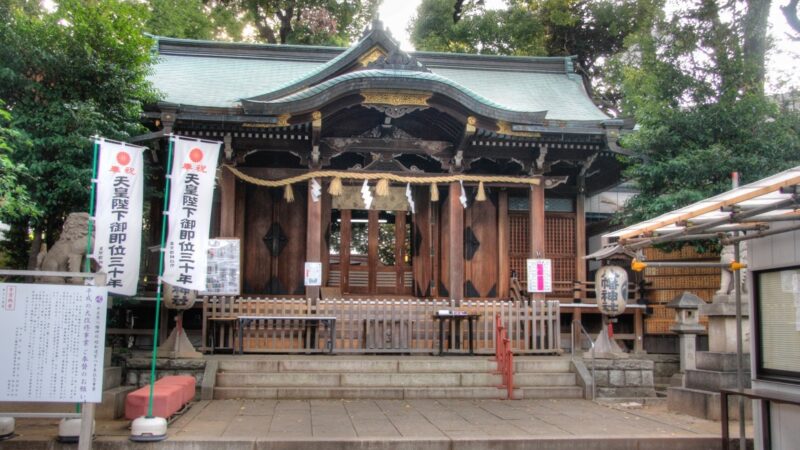
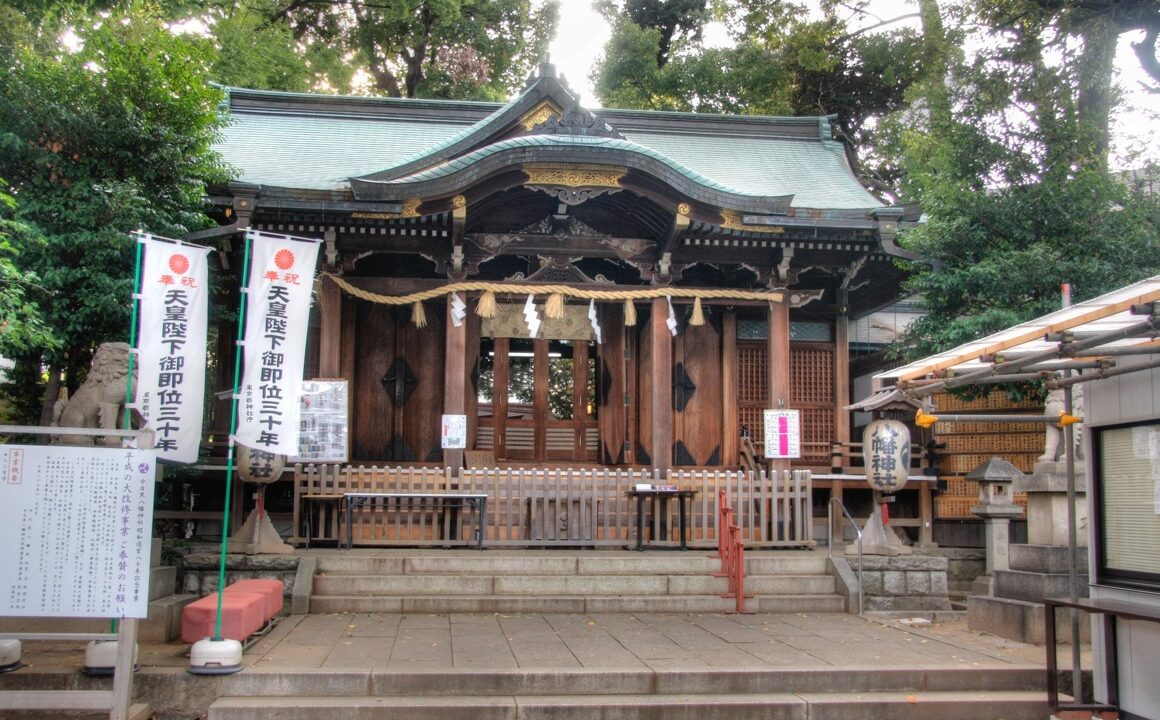
The current shrine building was completed in September 1936 (Showa 11) and boasts a magnificent eight-building architectural style. It is a valuable pre-war building and possesses important cultural value, conveying the history of Nakameguro to the present day.
Deities and Benefits
Main Deity: Hondawake-no-Mikoto (Emperor Ojin)
The main deity of Nakameguro Hachiman Shrine is Hondawake-no-Mikoto, also known as Emperor Ojin. Widely known as Hachiman-Okami, he is revered as the god of military fortune and victory. He is also famous as the guardian deity of the Minamoto clan, and has attracted widespread devotion from samurai to commoners.
Enshrined Deity: Amaterasu-Omikami
Amaterasu-Omikami is enshrined alongside the main deity. Amaterasu-Omikami is the supreme deity in Japanese mythology and is worshipped as the ancestral deity of the Imperial Family.
Expected Benefits
- Good Fortune and Victory: Hachiman-sama is known as the god of military fortune, and many worshippers visit to pray for success in competitions, exams, and business.
- Protection from Evil and Good Fortune: As the guardian deity of the region, it is deeply revered as a local guardian shrine and is suitable for prayers for protection from evil and family safety.
- National Peace and Abundant Harvest: Through the divine virtues of Amaterasu-sama, you can pray for national peace and a bountiful harvest.
Highlights of the Shrine Grounds
Sazareishi Stone
The most noteworthy feature of the Nakameguro Hachiman Shrine grounds is the Sazareishi Stone. It is such a symbolic presence that the shrine is sometimes called “the shrine of the Sazareishi Stone.” Sazareishi stones are the stones sung about in the national anthem “Kimigayo,” and are formed from small stones that have hardened over a long period of time to become large rocks. They are revered as auspicious stones.
Sacred Spring (Natural Water)
Within the shrine grounds, there is a place where a spring gushes forth, and the water from this sacred spring is drinkable. It is rare to find a spring still existing in a shrine in the heart of Tokyo, and the pure water is cherished by visitors. It has been treasured since ancient times as water with miraculous powers.
Hachiman Shrine Origin Monument
Within the shrine grounds stands a stone monument inscribed with the origins of Hachiman Shrine, allowing visitors to learn about the shrine’s history and origins. Please be sure to read it during your visit.
Subsidiary Shrine: Mitsumine Shrine
Within the grounds of Nakameguro Hachiman Shrine, Mitsumine Shrine is enshrined as a subsidiary shrine. This shrine was established by inviting a deity from the head shrine of Mitsumine Shrine in Okuchichibu, and it holds a belief in the Japanese wolf as a messenger of the gods.
Interestingly, Nakameguro Hachiman Shrine is known for its deep devotion to both Hachiman and Mitsumine faiths, with groups of worshippers annually traveling to Mitsumine Shrine in Chichibu. The coexistence of these two faiths is one of Nakameguro Hachiman Shrine’s distinctive features.
Lush Green Grounds
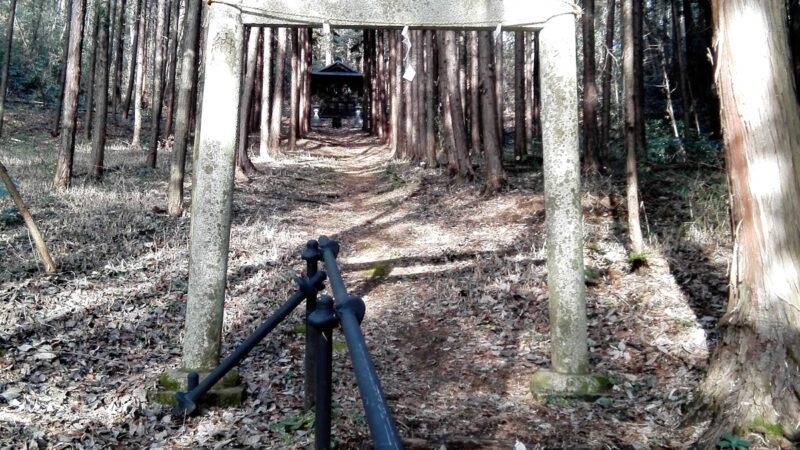
Despite being in the heart of the city, the shrine grounds retain much of their greenery, creating a tranquil atmosphere. Ancient trees welcome visitors, creating a sacred space that allows one to forget the hustle and bustle of the city.
Annual Festival and Twelve-Seat Kagura
Annual Festival Schedule
Nakameguro Hachiman Shrine’s annual festival is held every year on the fourth Saturday and Sunday of September. As an important annual event in the region, it attracts many parishioners and worshippers.
Traditional Twelve-Seat Kagura
Nakameguro Hachiman Shrine has long been famous for its performance of the Twelve-Seat Kagura. This Kagura is a traditional performing art that has continued since the Edo period, and even today, twelve Kagura performances are held annually at the grand festival in September.
Kagura is a sacred dance and music offered to the gods, and is of high value as a regional cultural asset. During the grand festival, visitors can enjoy this traditional Kagura, which is a valuable experience.
Goshuin (Shrine Seal) Information
Issuance of Goshuin
Nakameguro Hachiman Shrine offers Goshuin (shrine seals). Many visitors receive them as a memento of their visit or as part of a Goshuin pilgrimage.
Issuance Hours
We recommend checking the Goshuin issuance hours at the shrine office upon your visit. Generally, it is from 9:00 AM to around 4:00 PM, similar to most shrines, but this may change due to religious ceremonies or events.
Goshuincho (Shrine Seal Book)
Please check with the shrine office upon your visit to see if Nakameguro Hachiman Shrine has its own original Goshuincho.
Annual Events and Festivals
New Year’s Visit
Nakameguro Hachiman Shrine is known as a popular spot for New Year’s visits, attracting many worshippers during the New Year period. As the local guardian shrine, it is bustling with people praying for safety and prosperity in the new year. Its convenient location within walking distance of Nakameguro Station is one reason for the large number of New Year’s visitors.
Other Annual Events
- New Year’s Day Festival: January 1st
- Setsubun Festival: Around February 3rd
- Annual Grand Festival: Fourth Saturday and Sunday of September
- Shichi-Go-San Festival: Mid-November
For details on each festival, please contact the shrine directly.
Manners and Etiquette for Visiting a Shrine
Basic Etiquette for Visiting a Shrine
- Bow Before Passing Through the Torii Gate: Bow before entering the sacred area, in front of the torii gate.
- Purify Yourself at the Water Basin: Purify your left hand, right hand, and mouth in that order.
- Worship at the Main Hall: The basic procedure is two bows, two claps, and one bow.
- Bow deeply twice.
- Clap your hands twice.
- Bow deeply once.
- Visiting Shrines Within the Precincts: Don’t forget to visit shrines within the precincts, such as Mitsumine Shrine.
Attire for Visiting a Shrine
There are no particularly strict dress code regulations, but it is desirable to wear clothing that is respectful of the sacred nature of the place. Avoid revealing or overly flashy clothing.
Nearby Attractions and Spots
Nakameguro Streetscape
The Nakameguro area, where Nakameguro Hachiman Shrine is located, is a popular neighborhood lined with stylish cafes, restaurants, and select shops. Enjoying a stroll through Nakameguro before or after visiting the shrine is highly recommended.
Meguro River
The Meguro River, which flows around Nakameguro Station, is famous as a cherry blossom viewing spot in spring. Approximately 800 cherry trees line the river for about 4km, attracting many visitors.
Yutenji Temple
Yutenji Temple, within walking distance of Nakameguro, is a Jodo sect temple founded in the mid-Edo period. It boasts a vast precinct and retains many historical buildings.
The Charm of Nakameguro Hachiman Shrine
A Quiet Sanctuary in the Heart of the City
Despite being located in the popular central Tokyo area of Nakameguro, the shrine grounds are enveloped in a tranquil and sacred atmosphere. The lush green environment provides a precious space to forget the hustle and bustle of the city.
A Guardian Shrine Rooted in the Community
As the guardian shrine of the entire former Nakameguro Village, it has long been revered by the local people. It continues to fulfill its role as the tutelary deity and remains a central figure in the local community.
Preservation of History and Tradition
Valuable cultural heritage is preserved, including a history potentially dating back to the Edo period, a shrine building from the early Showa period, and traditional Twelve-Seat Kagura dance. Visiting the shrine allows you to experience its history and tradition.
A Complex Belief
The coexistence of Hachiman and Mitsumine beliefs is also interesting, offering a glimpse into the diversity of Japanese folk beliefs.
Visitor Feedback and Reputation
Visitors to Nakameguro Hachiman Shrine have shared the following comments:
- “Convenient access, within walking distance of Nakameguro Station”
- “Quiet and peaceful atmosphere despite being in the city center”
- “The ‘sazareishi’ (small pebbles) are impressive, making the lyrics of the national anthem feel real”
- “It’s nice to be able to drink the spring water on the shrine grounds”
- “The Kagura (sacred dance) at the annual festival is wonderful”
- “The pre-war shrine building is magnificent and gives a sense of history”
It is a beloved local shrine and a popular spot for worship when visiting Nakameguro.
Points to Note When Visiting
Visiting Hours
While the shrine grounds are generally open for worship during the day, the shrine office has limited opening hours. It is recommended to check in advance if you wish to receive a Goshuin (shrine stamp) or prayers.
Parking
In advance, please check the shrine’s dedicated parking lot. There are coin-operated parking lots around Nakameguro Station, but they can be crowded on holidays. Using public transportation is recommended. ### Photography
Photography is generally permitted on the shrine grounds, but please be considerate and avoid disturbing worshippers or religious ceremonies. Photography inside the shrine buildings may be prohibited.
Summary: Visiting Nakameguro Hachiman Shrine
Nakameguro Hachiman Shrine is a historic shrine located in Nakameguro, a central area of Tokyo’s Meguro Ward, yet surrounded by lush greenery and a tranquil atmosphere. It enshrines Emperor Ojin (Homudawake-no-Mikoto) as its main deity and is known for its blessings of good fortune and protection from evil.
With a history potentially dating back to the Edo period, a magnificent shrine building from the early Showa era, points of interest such as the Sazareishi rock and sacred spring, and the traditional Twelve-Seat Kagura dance, this shrine is full of charm. Its convenient location, approximately an 8-minute walk from Nakameguro Station, makes it easy to stop by while shopping or dining in Nakameguro.
Cherished by its parishioners as the guardian shrine of the region, Nakameguro Hachiman Shrine warmly welcomes tourists and those collecting Goshuin (shrine stamps). If you’re ever in Nakameguro, be sure to visit this shrine. You’ll find a peaceful sanctuary in the heart of the city where you can find a moment of calm and tranquility.