Tomioka Hachimangu Shrine (Koto Ward, Tokyo) Complete Guide | History, Blessings, Access, and the Fukagawa Hachiman Festival: A Thorough Explanation
Located in Koto Ward, Tokyo, Tomioka Hachimangu Shrine is the largest Hachimangu shrine in Edo (present-day Tokyo), affectionately known as “Fukagawa’s Hachiman-sama” by locals. Since its founding in 1627, it has been revered as the guardian deity of the Fukagawa area for approximately 400 years, receiving generous protection from the Tokugawa shogunate. Known for its connection to the Fukagawa Hachiman Festival (one of Edo’s three major festivals), its deep ties to sumo wrestling, and its blessings for success in competitions and business prosperity, this shrine remains a popular power spot in Tokyo, attracting many visitors.
This article comprehensively covers everything you need to know before visiting Tomioka Hachimangu Shrine, from its history and highlights to its blessings, access information, and recommended nearby spots.
History and Origins of Tomioka Hachimangu Shrine
Founding during the Kan’ei Era and Chosei Hoin
The founding of Tomioka Hachimangu Shrine dates back to the 4th year of the Kan’ei era (1627). At that time, on Eitaijima (present-day Fukagawa area), which was a sandbar and wetland, a monk named Chosei Hoin, having received a divine oracle, invited the Hachiman deity and built a shrine. Chosei Hoin reclaimed the sandy beach and founded Eitaijima Hachimangu Shrine together with the affiliated temple, Eitaiji Temple.
From its inception, it attracted the faith of the common people as “Hachiman-sama of Fukagawa,” and its influence expanded along with the development of Edo. Hachiman-sama is known as the tutelary deity of the Minamoto clan and was a god revered by the samurai class, so it received special protection from the Tokugawa shogunate, which established the Edo shogunate.
Deep Relationship with the Tokugawa Shogunate
Shortly after its founding, Tomioka Hachimangu Shrine received generous protection from the Tokugawa shogunate. For the Tokugawa family, who were said to be descended from the Minamoto clan, Hachiman-sama held a special place as their tutelary deity. Successive shoguns positioned Tomioka Hachiman-gu Shrine as an important guardian deity of Edo, supporting it through land donations and the repair of shrine buildings.
Thanks to this patronage of the shogunate, Tomioka Hachiman-gu Shrine developed into “Edo’s largest Hachiman-gu Shrine,” establishing its position as the guardian shrine of the entire Fukagawa area.
Prosperity in the Edo Period and After the Meiji Restoration
Throughout the Edo period, Tomioka Hachiman-gu Shrine prospered as a central shrine in the Fukagawa area. Monthly festivals were held on the 1st, 15th, and 28th of each month, attracting many worshippers. Furthermore, in 1684, the first fundraising sumo tournament was held on the shrine grounds, establishing a deep connection with sumo wrestling.
After the Meiji Restoration and the separation of Shinto and Buddhism, Eitai-ji Temple, which had been the shrine’s supervising temple, was abolished. However, Tomioka Hachiman-gu Shrine continued as a shrine and remained a center of local faith. The shrine was destroyed in the Tokyo air raids of 1945, but it was rebuilt in 1956 and stands in its current form. In 2017, it celebrated its 390th anniversary, and even now, in the Reiwa era, it continues to attract the faith of many people as the guardian deity of the Fukagawa area.
Main Deity and Benefits of Tomioka Hachimangu Shrine
Main Deity: Emperor Ōjin (Hachiman-sama)
The main deity of Tomioka Hachimangu Shrine is Emperor Ōjin. Emperor Ōjin was the 15th Emperor of Japan and is worshipped as Hachiman-sama at Hachiman shrines throughout Japan. Known as a god of war and victory, he has been deeply revered by samurai families as the tutelary deity of the Minamoto clan.
Hachiman-sama is known as the god of military fortune, victory, and career advancement, and in modern times, many worshippers visit to pray for success in their careers and businesses.
Expected Benefits
Tomioka Hachimangu Shrine is believed to offer the following benefits:
Luck in Competition and Career Because the main deity, Emperor Ojin, is a god of war, the shrine is believed to bring good fortune in all kinds of competitions, success in work, and career advancement. Many business people and students preparing for exams visit the shrine.
Business Prosperity With a history of attracting the faith of merchants since the Edo period, the shrine is also known for its blessings of business prosperity. Many business owners visit to pray for the success and prosperity of their businesses.
Traffic Safety Traffic safety amulets are available on the shrine grounds, and car blessings are also performed.
Fertility and Safe Childbirth Empress Jingu, the mother of Emperor Ojin, is also enshrined here, so blessings for fertility and safe childbirth are also expected.
Finding a Good Match The shrine is also believed to bring blessings for finding a good match, and visitors seeking a good partner come to pray.
Tomioka Hachimangu Shrine as a Power Spot
Tomioka Hachimangu Shrine is known as one of Tokyo’s leading power spots. The energy of faith accumulated over approximately 400 years of history, its connection to the Tokugawa shogunate, and its status as the largest Hachimangu shrine in Edo (present-day Tokyo) all contribute to its reputation as a powerful power spot.
In particular, many visitors seeking good fortune in competitions and careers report positive results after visiting the shrine.
Highlights of Tomioka Hachimangu Shrine
The Grand Vermilion Torii Gate
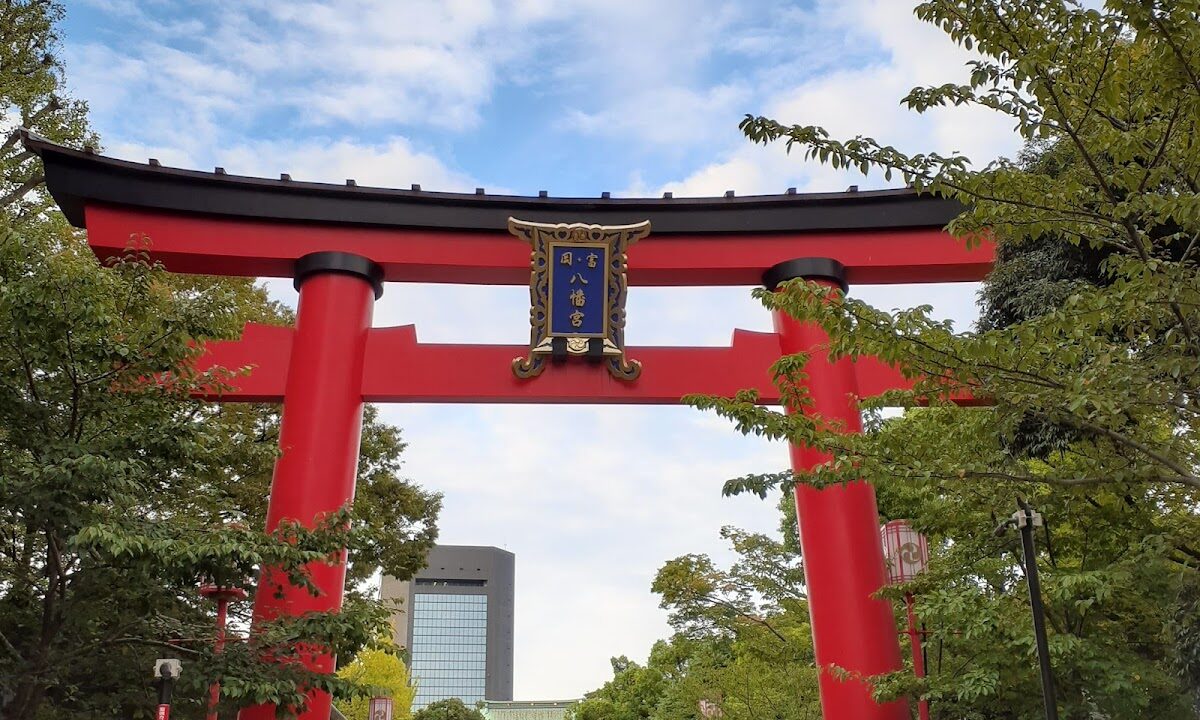
The first thing you see when visiting Tomioka Hachimangu Shrine is the imposing vermilion torii gate standing at the entrance to the grounds. This gate is a symbol of Tomioka Hachimangu Shrine and a beloved landmark in the Fukagawa area.
Passing through the torii gate, the path leads to the shrine buildings, and a solemn atmosphere welcomes visitors.
Shrine Building
The current shrine building was rebuilt in 1956 (Showa 31), and it still conveys the beauty of traditional shrine architecture. While inheriting the grandeur of the old shrine building that was destroyed in the war, it is a magnificent structure that also possesses modern durability.
In front of the shrine building, many worshippers clasp their hands together and offer prayers, each with their own wishes.
Yokozuna Sumo Wrestler Monument
One of the most famous sights on the grounds of Tomioka Hachimangu Shrine is the “Yokozuna Sumo Wrestler Monument.” Since the first fundraising sumo tournament was held on the grounds of Tomioka Hachimangu Shrine in 1684 (Jokyo 1), this shrine has had a deep connection with sumo.
The Yokozuna Sumo Wrestler Monument is inscribed with the ring names of successive Yokozuna, from the first Yokozuna, Akashi Shiganosuke, to the current Yokozuna. It is a must-see spot for sumo fans and a valuable historical site where you can feel the history of sumo.
When a new Yokozuna (grand champion) is born, their ring name is added, so there are new discoveries every time you visit.
Ozeki (second-highest rank) and Sumo Wrestler Monuments
In addition to the Yokozuna monument, there are also monuments to Ozeki (second-highest rank) wrestlers and other sumo wrestlers on the grounds, telling the story of Tomioka Hachimangu Shrine’s history as a sacred place for sumo. Those interested in sumo are encouraged to visit these monuments and reflect on the history of sumo.
Ino Tadataka Statue
Within the grounds stands a bronze statue of Ino Tadataka, who surveyed all of Japan and created an accurate map of the country. Ino Tadataka lived in Fukagawa, and it is said that he always visited Tomioka Hachimangu Shrine before embarking on his surveying journeys.
Many visitors come to pray for success in achieving their goals and overcoming challenges, inspired by Ino Tadataka’s accomplishment of such a difficult task as surveying.
Benten Pond and Benzaiten Shrine
Within the grounds is Benten Pond, and on its bank is a small shrine dedicated to Benzaiten. Benzaiten, the goddess of water, is known for her blessings related to performing arts and financial fortune, making this a peaceful and healing spot for worship.
Fukagawa Hachiman Festival (Fukagawa Festival)
One of the Three Great Edo Festivals
The largest event at Tomioka Hachimangu Shrine is the “Fukagawa Hachiman Festival” (Fukagawa Festival), held annually around August 15th. Along with the Kanda Festival and the Sanno Festival, it is considered one of the “Three Great Edo Festivals” and is nationally known as a representative festival of Tokyo.
The Fukagawa Hachiman Festival is also known as the “Water-Splashing Festival,” famous for its magnificent spectacle of people along the route splashing purifying water on the mikoshi (portable shrine) bearers. Because it takes place during the hottest part of summer, the water also serves a practical purpose, providing relief from the heat.
Main Festival and Off-Festival
The Fukagawa Hachiman Festival consists of a main festival held every three years and an off-festival held in the years in between. During the main festival, more than 50 mikoshi of various sizes parade through the streets of Fukagawa, creating a spectacular and breathtaking spectacle. Especially during the main festival year, many tourists from all over Japan visit, and the entire Fukagawa area is enveloped in the festival’s excitement.
Festival Highlights
The biggest highlight of the Fukagawa Hachiman Festival is undoubtedly the spectacular water-throwing from the streets. Large quantities of water are drenched the mikoshi (portable shrine) bearers with buckets and hoses, and the bearers bravely carry the mikoshi while shouting “Wasshoi! Wasshoi!”
The splashing water, glistening in the summer sun, is a powerful sight that truly conveys the tradition of Edo-era festivals.
Basic Information and Access to Tomioka Hachimangu Shrine
Location and Contact Information
Address
1-20-3 Tomioka, Koto-ku, Tokyo 135-0047
Telephone Number
TEL: 03-3642-1315
FAX: 03-3642-5580
Opening Hours and Visiting Hours
Visiting Hours
The shrine grounds are open 24 hours a day. However, due to limited lighting at night, daytime visits are recommended.
Shrine Office Reception Hours
9:00 AM – 5:00 PM
Prayer Request Reception Hours
9:00 AM – 4:30 PM
Monthly Festival
Monthly festivals are held on the 1st, 15th, and 28th of each month, creating a lively atmosphere.
Access Information
Access by Train
- Tokyo Metro Tozai Line “Monzen-Nakacho Station”
3-minute walk from Exit 1 (nearest station)
- Toei Oedo Line “Monzen-Nakacho Station”
5-minute walk from Exit 6
The shrine is very close to Monzen-Nakacho Station, making access extremely convenient. The route from the station to Tomioka Hachimangu Shrine includes a shopping street that retains the atmosphere of old Fukagawa, allowing you to enjoy a stroll while visiting the shrine.
Access by Car
Approximately 5 minutes from the “Kiba Exit” or “Fukuzumi Exit” of the Metropolitan Expressway Route 9 Fukagawa Line
Parking
There is a parking lot for visitors on the shrine grounds. However, it gets very crowded during New Year’s and festival seasons, so we recommend using public transportation. There are also several coin-operated parking lots in the surrounding area.
Admission Fee
Admission is free. If you wish to receive prayers, you must apply at the shrine office (a donation is required). ## Information on Amulets and Goshuin (Shrine Seals)
Popular Amulets
Tomioka Hachimangu Shrine offers a variety of amulets:
- Victory Amulet: An amulet for improving luck in competitions
- Work Amulet: An amulet for improving luck in work and career advancement
- Business Prosperity Amulet: An amulet for praying for business prosperity
- Traffic Safety Amulet: An amulet for traffic safety
- Safe Childbirth Amulet: An amulet for praying for safe childbirth
- Matchmaking Amulet: An amulet for achieving a good match
Each amulet can be obtained at the shrine office.
Goshuin (Shrine Seals)
Goshuin (shrine seals) can be obtained at Tomioka Hachimangu Shrine. If you bring your goshuincho (seal book) during the shrine office’s reception hours (9:00 AM to 5:00 PM), it will be written on the spot.
The offering fee is usually around 300 yen. Original goshuincho (stamp books) are also sold, and many visitors purchase them as souvenirs of their visit to Tomioka Hachimangu Shrine.
Recommended Spots Around Tomioka Hachimangu Shrine
Fukagawa Fudodo (Naritasan Tokyo Branch Temple)
Located a 2-minute walk from Tomioka Hachimangu Shrine, Fukagawa Fudodo is the Tokyo branch temple of Naritasan Shinshoji Temple. Known as one of the two major temples in the Fukagawa area, along with Tomioka Hachimangu Shrine, it attracts many visitors who come to both.
On the 1st, 15th, and 28th of each month, the temple’s festival days, stalls line the path leading from Monzen-Nakacho Station to Fukagawa Fudodo and Tomioka Hachimangu Shrine, allowing visitors to enjoy the atmosphere of old Tokyo.
Fukagawa Edo Museum
This museum recreates the townscape of Fukagawa during the Edo period and is located about a 15-minute walk from Tomioka Hachimangu Shrine. It’s a valuable facility where you can experience the lives of ordinary people during the Edo period and is also helpful in understanding the historical background of Tomioka Hachimangu Shrine.
Kiyosumi Garden
A strolling garden with a pond and trees, built during the Meiji era, about a 10-minute walk from Tomioka Hachimangu Shrine. Enjoy the beautiful scenery of the four seasons in this lovely Japanese garden, making it a perfect spot for a stroll after visiting the shrine.
Kiba Park
A vast metropolitan park, created on the site of a former timber yard. About a 15-minute walk from Tomioka Hachimangu Shrine, it offers a refreshing green environment.
Recommended Restaurants near Tomioka Hachimangu Shrine
Fukagawa Meshi
Fukagawa Meshi, a specialty dish of the Fukagawa area, is a fisherman’s dish consisting of clams, cockles, and other shellfish simmered in miso with green onions, served over rice. Many restaurants around Monzen-Nakacho serve Fukagawa Meshi, making it a recommended lunch after visiting the shrine.
Long-established Japanese Confectionery Shops in Monzen-Nakacho
Kikaku Senbei
A long-established senbei (rice cracker) shop located near the approach to Tomioka Hachimangu Shrine. Hand-baked rice crackers are fragrant and make a perfect souvenir.
Baikatei
A long-loved Japanese confectionery shop in the Fukagawa area. Seasonal Japanese sweets and mochi confections are popular.
Edo Fukagawa Coffee Honpo
A cafe where you can feel the history and culture of Fukagawa. Perfect for a break after visiting the shrine, you can enjoy the atmosphere of Fukagawa with their carefully selected coffee.
Izakayas and Restaurants in Fukagawa
Around Monzen-Nakacho Station, there are many izakayas and restaurants with a downtown atmosphere. You can enjoy a variety of gourmet food, from dishes using fresh seafood to traditional set meals.
Hotels and Accommodations Around Tomioka Hachimangu Shrine
There are various accommodations around Tomioka Hachimangu Shrine, from business hotels to tourist hotels.
Hotels in the Monzen-Nakacho/Kiyosumi-Shirakawa Area
- Business Hotels: There are several business hotels near the station, offering reasonably priced accommodations.
- Guest Houses: The number of guest houses where you can enjoy the downtown atmosphere is also increasing.
- Luxury Hotels: With easy access to Tokyo Station and the Ginza area, staying at a luxury hotel in the city center is also convenient.
Due to crowds during New Year’s Day and the Fukagawa Hachiman Festival, early reservations are recommended.
Annual Events at Tomioka Hachimangu Shrine
Tomioka Hachimangu Shrine holds various festivals and events throughout the year:
January
- New Year’s Day Festival (January 1st)
- First Shrine Visit Period (January 1st-3rd)
February
- Setsubun Festival (around February 3rd)
March
- Spring Grand Festival
May
- Children’s Day Festival
August
- Fukagawa Hachiman Festival (around August 15th)
November
- Shichi-Go-San Festival (mid-November)
December
- Great Purification Ceremony (December 31st)
- New Year’s Eve Festival (December 31st)
The dates of these events may vary from year to year, so it is recommended to check the official website.
Manners and Points for Visiting a Shrine
Basic Shrine Etiquette
- Bow before passing through the torii gate: Before entering the shrine grounds, bow before the torii gate.
- Purify yourself at the water basin: Purify your left hand, then your right hand, then your mouth, and finally the handle of the ladle.
- Walk along the edge of the path: The center of the path is considered the path of the gods.
- Offer your donation: Quietly place your donation in the offering box.
- Two bows, two claps, one bow: Bow deeply twice, clap twice, and finally bow once.
Photography
Photography is generally permitted within the shrine grounds, but photography inside the shrine buildings or during prayers is prohibited. Please be considerate of other visitors.
Attire
While casual attire is acceptable for visiting the shrine, if you are receiving a prayer, somewhat formal attire is recommended.
Summary: The Charms of Tomioka Hachimangu Shrine
Tomioka Hachimangu Shrine is a representative shrine of Koto Ward, Tokyo, with a history of approximately 400 years. Loved by locals as “Fukagawa’s Hachiman-sama,” it developed as the largest Hachimangu shrine in Edo, under the protection of the Tokugawa shogunate.
With its blessings for success in competitions and business prosperity, the Fukagawa Hachiman Festival (one of Edo’s three major festivals), and the Yokozuna Rikishi Monument (showing its deep connection to sumo wrestling), it is a shrine rich in history and tradition.
Its excellent accessibility, just a 3-minute walk from Monzen-Nakacho Station, is also a major draw. Visiting it along with other nearby tourist spots such as Fukagawa Fudodo Temple allows for a deeper understanding of the history and culture of the Fukagawa area.
Tomioka Hachimangu Shrine can be visited for various purposes, including New Year’s visits, Shichi-Go-San (a traditional rite of passage for children), protection from evil, and prayers for success in competitions. Be sure to visit it during your Tokyo sightseeing trip. If you visit the shrine with a sincere heart, while feeling the atmosphere of old Fukagawa and the weight of its history, you will surely receive good fortune.