Tabata Hachiman Shrine (Kita Ward, Tokyo) Complete Guide | History, Goshuin (Shrine Seal), and Access Information for this Ancient Shrine Associated with Minamoto no Yoritomo
Tabata Hachiman Shrine, located in Tabata, Kita Ward, Tokyo, is a venerable shrine boasting a history of over 800 years. With a historical background dating back to its founding by Minamoto no Yoritomo, it has been cherished by the local people as the guardian shrine of Tabata. This article comprehensively introduces information you should know before visiting Tabata Hachiman Shrine, including its history, enshrined deities, goshuin (shrine seal), annual festival, and access methods.
History and Origins of Tabata Hachiman Shrine
Circumstances of its Founding by Minamoto no Yoritomo
The founding of Tabata Hachiman Shrine dates back to Bunji 5 (1189). In that year, Minamoto no Yoritomo, along with the local powerful Toshima clan, set out to conquer Oshu in order to pacify the Fujiwara clan of Oshu. On his return journey after defeating Fujiwara no Yasuhira and pacifying Oshu, Minamoto no Yoritomo stopped in Tabata. At that time, to commemorate the success of the conquest of Oshu and as a symbol of the ties with the local powerful Toshima clan, the Tabata Hachiman Shrine was founded by inviting the deity from Tsurugaoka Hachimangu Shrine (Kamakura Hachimangu Shrine) in Kamakura. Since then, rituals have continued as the guardian shrine of the region, and it has been revered as the guardian deity of Tabata Village.
From the Edo Period to the Present
During the Edo period, it served as the guardian shrine of Tabata Village and was the center of faith for the villagers. In a region where agriculture was the main industry, it is said to have been bustling with people praying for abundant harvests and family safety.
Even after the Meiji Restoration’s separation of Shinto and Buddhism, it continued to attract unwavering devotion as the local tutelary deity. Currently, it belongs to the Tokyo Metropolitan Shrine Association and, as an important shrine that conveys the history and culture of Tabata in Kita Ward, it is visited by many worshippers as well as local residents.
Deities and Benefits
Main Deity: Hondawake-no-Mikoto (Emperor Ojin)
The deity enshrined at Tabata Hachiman Shrine is Hondawake-no-Mikoto, also known as Emperor Ojin. Emperor Ojin was the 15th Emperor of Japan and is worshipped as Hachiman-shin at Hachiman shrines throughout Japan.
Hachiman-shin has a strong character as a god of war and is believed to bring benefits such as long-lasting military fortune, success in competitions, and protection from evil. Furthermore, since Emperor Ojin is also said to have contributed to the development of culture, benefits such as academic success and improvement in skills can also be expected.
Expected Benefits
The main benefits you can expect at Tabata Hachiman Shrine are as follows:
- Long-lasting military fortune and improved luck in competitions: As a shrine associated with Minamoto no Yoritomo, many worshippers visit to pray for success in competitions and at important milestones in life.
- Protection from evil and disaster: The powerful protective power of Hachiman-sama offers protection from various calamities.
- Family safety and prosperity: As the guardian shrine of the region, it protects the health and happiness of families.
- Business prosperity: It is also worshipped by those praying for business success and prosperity.
- Academic success: As Emperor Ojin contributed to the development of culture, you can also expect benefits in academics.
Highlights of the Shrine Grounds
Main Hall and Worship Hall
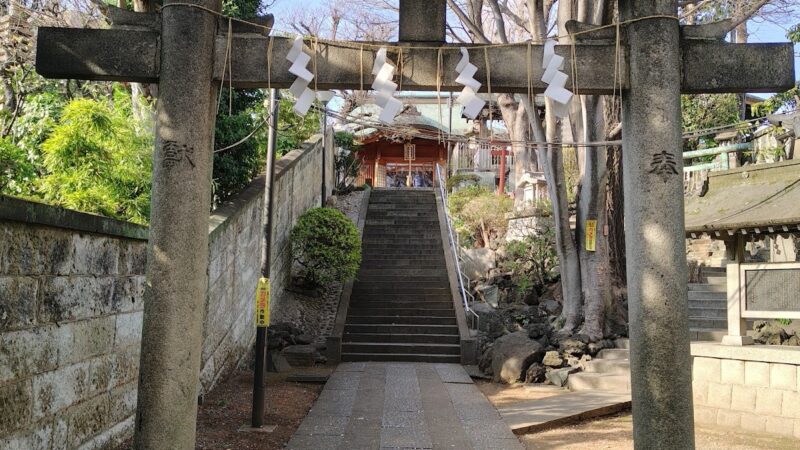
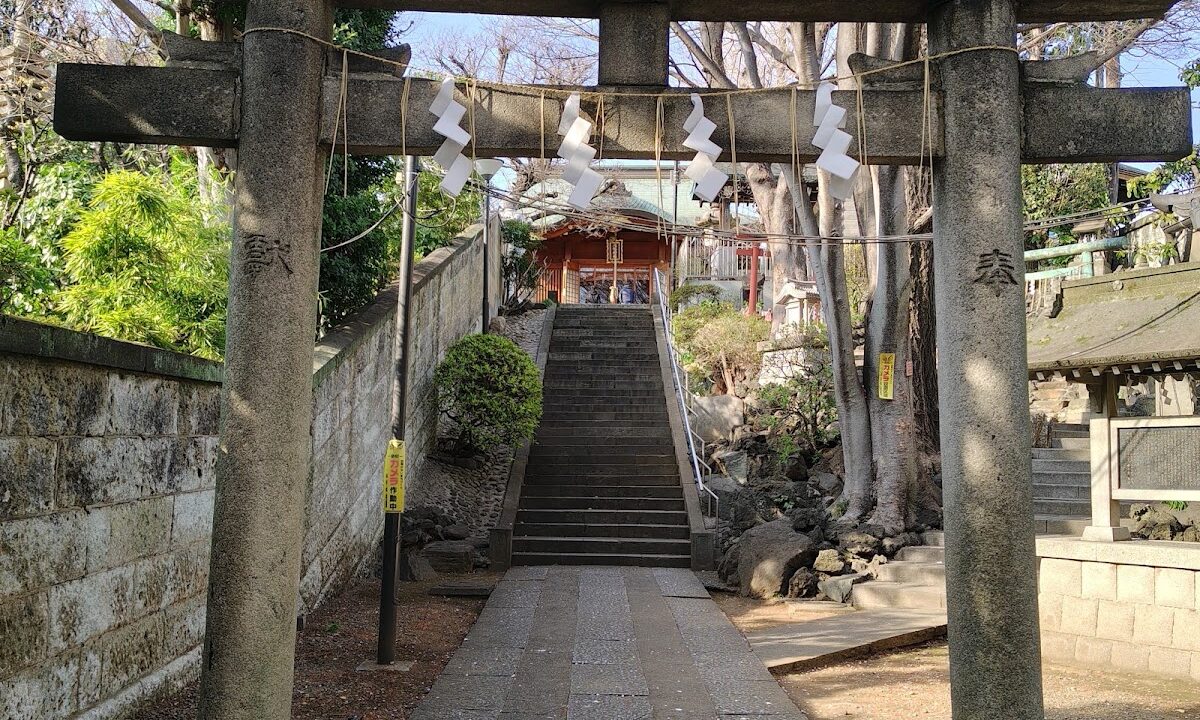
The main hall of Tabata Hachiman Shrine maintains the style of traditional shrine architecture. The worship hall has a warm atmosphere that welcomes worshippers, giving it the feel of a sacred power spot. Despite being in the heart of the city, the shrine grounds are enveloped in a tranquil atmosphere, providing a peaceful environment for worship.
Mikoshi Storage
A distinctive feature of Tabata Hachiman Shrine is the row of mikoshi (portable shrine) storage buildings. The mikoshi used in the annual festival are carefully stored here, symbolizing the continuation of the region’s festival culture. During the festival, these mikoshi parade through the town, creating a lively atmosphere.
Atmosphere of the Shrine Grounds
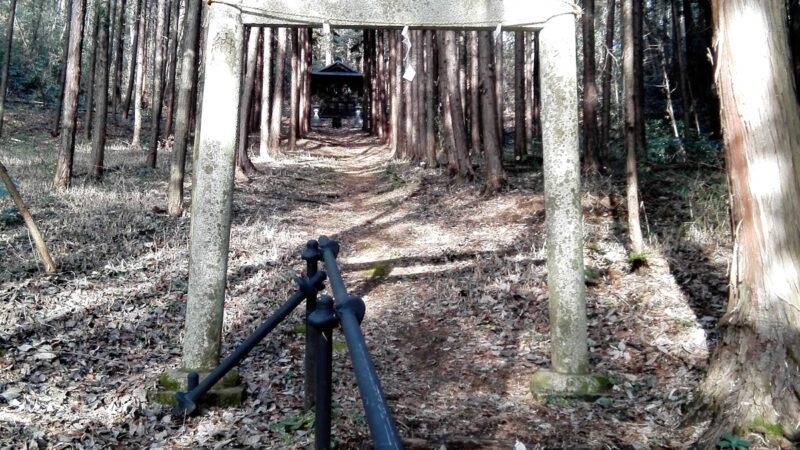
Although Tabata Hachiman Shrine is located in a residential area, stepping inside feels like entering another world of tranquility. Surrounded by trees, the grounds offer a healing space that allows you to forget the hustle and bustle of the city. Many visitors comment that it has a “sacred, power spot-like atmosphere.”
Goshuin (Shrine Seal) Information
About the Issuance of Goshuin
Tabata Hachiman Shrine offers goshuin. A Goshuin (temple/shrine stamp) is an important token of your visit and a way to forge a connection with the shrine.
The Goshuin features the calligraphy of “Tabata Hachiman Shrine” and the shrine’s seal. Its simple yet powerful brushstrokes give it a dignified feel, befitting a shrine associated with Minamoto no Yoritomo.
Manners for Receiving a Goshuin
When receiving a Goshuin, please observe the following manners:
- Complete your prayers first: Since the Goshuin is proof of your visit, always pray first.
- Prepare your Goshuincho (stamp book): Open your Goshuincho and specify the page you would like the stamp on.
- Request politely: Request politely by saying, “I would like a Goshuin, please.”
- Prepare the offering: Generally, this is around 300 to 500 yen. It is good manners to prepare the exact amount of money so that no change is needed.
- Expressing Gratitude: When you receive a Goshuin (temple/shrine stamp), say “Thank you very much.”
Annual Festival and Events
Tabata Hachiman Shrine Annual Festival
The most important festival of Tabata Hachiman Shrine is the annual festival, held in mid-August every year. This festival is a summer tradition in the Tabata area and is bustling with many local residents and worshippers.
During the annual festival, a portable shrine procession takes place, with the shrine parading through the town. The portable shrine, carried with energetic shouts, is a scene that symbolizes community unity and the continuation of traditional culture. Stalls line the streets, further enhancing the festive atmosphere.
Other Annual Events
Besides the annual festival, Tabata Hachiman Shrine holds various festivals throughout the year:
- New Year’s Day Festival (January 1st): Prayers for happiness and peace in the new year
- Setsubun Festival (around February 3rd): Bean-throwing to ward off evil and invite good fortune
- Summer Purification Ceremony (June 30th): Purification of impurities accumulated over the past six months
- Year-End Purification Ceremony (December 31st): Purification of impurities accumulated over the past year and preparation for the new year
These festivals are important opportunities to deepen the bonds of the local community.
Access Information
Access by Train
The nearest station to Tabata Hachiman Shrine is Tabata Station on the JR Yamanote Line and Keihin-Tohoku Line.
Access from Tabata Station:
- Approximately 5 minutes on foot from the north exit of Tabata Station
- Head west from the station and you will arrive at the shrine after passing through the residential area.
Tabata Station is a convenient station served by the Yamanote Line and Keihin-Tohoku Line, making it easily accessible from various parts of central Tokyo. Because it’s close to the station, even first-time visitors can easily find their way to the shrine.
Location and Map
Address: 2-7-2 Tabata, Kita-ku, Tokyo
Tabata Hachiman Shrine is located west of Tabata Station, in a residential area. There are other temples and shrines nearby, such as Togaku-ji Temple, making it a recommended addition to a Kita-ku sightseeing route.
Access by Car and Parking
While the shrine is accessible by car via the Metropolitan Expressway and Meiji-dori, there is no dedicated parking lot on the grounds. We recommend using nearby coin-operated parking lots or public transportation.
Manners and Etiquette for Visiting a Shrine
Basic Etiquette for Visiting a Shrine
When visiting Tabata Hachiman Shrine, please observe the following basic etiquette:
- Bow before passing through the torii gate: As a sign of respect before entering the sacred area, bow before the torii gate.
- Purify yourself at the water basin:
- Hold the ladle in your right hand and purify your left hand.
- Switch the ladle to your left hand and purify your right hand.
- Switch the ladle back to your right hand, receive water in your left hand, and rinse your mouth.
- Finally, stand the ladle upright and purify the handle.
- Worship at the main hall:
- Quietly place your offering in the offering box.
- Ring the bell if there is one.
- Perform the two bows, two claps, one bow (bow deeply twice, clap twice, bow deeply once).
- Bow upon leaving: When leaving the shrine grounds, turn around and bow after passing through the torii gate.
Attire and Items to Bring When Visiting
There are no specific dress code requirements, but it is desirable to dress appropriately and respectfully, keeping in mind that this is a sacred place. Even in summer, avoid excessive exposure and aim for clean and presentable clothing.
Items to bring include an offering (hatsuho-ryo) and, if you wish to receive a goshuin (temple stamp), bring your goshuincho (stamp book). If taking photographs, please be considerate of other visitors.
Nearby Attractions
Togaku-ji Temple
Togaku-ji Temple, located within walking distance of Tabata Hachiman Shrine, is a Shingon-shu Buzan-ha temple, also known as Hakuryuzan Jumyoin. It is known for its “Red Paper Nio” statues, and it is said that applying red paper to the affected part of the body will bring healing. Visiting both Tabata Hachiman Shrine and Togaku-ji Temple will enhance your exploration of Kita Ward.
Tabata Literary Village Memorial Museum
Tabata is known as the “Tabata Literary Village,” where many writers and artists, including Ryunosuke Akutagawa, Saisei Muroo, and Sakutaro Hagiwara, resided from the Taisho to the early Showa period. The Tabata Literary Village Memorial Museum features exhibits that convey the cultural atmosphere of that time, making it a recommended spot for literature fans.
Exploring the Area Around Tabata Station
The area around Tabata Station is a relatively quiet residential area for a Yamanote Line station, but it’s a charming area where history and culture thrive. Besides visiting shrines and temples, there are also traditional shopping streets and restaurants scattered throughout, making it a great place for a leisurely stroll.
Tabata Hachiman Shrine Reviews and Reputation
Visitor Feedback
Visitors who have visited Tabata Hachiman Shrine have shared the following comments:
History and Atmosphere:
- “As a shrine associated with Minamoto no Yoritomo, you can feel the weight of history.”
- “Despite being located in a residential area, the grounds are quiet and have a sacred, power-spot-like atmosphere.”
- “It’s small, but it’s meticulously maintained, which is very appealing.”
Access and Convenience:
- “It’s only about a 5-minute walk from Tabata Station, making it very accessible.”
- “It’s conveniently located for a stop during a stroll around Kita Ward.”
- “With Tokaku-ji Temple and other temples nearby, it’s perfect for a temple and shrine tour.”
Festivals:
- “The procession of the portable shrines during the annual festival is a valuable opportunity to experience local traditions.”
- “The sight of the rows of portable shrine storage buildings is impressive, and you can really feel the continuation of festival culture.”
Photo Spots
The following photo spots are popular at Tabata Hachiman Shrine:
- Front View of the Main Hall: A photograph capturing the traditional shrine architecture from the front.
- Torii Gate and Approach: Expressing the atmosphere of the shrine entrance.
- Mikoshi Storage: A unique sight of the mikoshi (portable shrines) used in the annual festival lined up.
- Trees in the Shrine Grounds: The natural beauty that changes with the seasons.
When taking photographs, please be considerate of other worshippers and act with moderation, remembering that this is a sacred place.
Trivia about Tabata Hachiman Shrine
Relationship with the Toshima Clan
The Toshima clan, a powerful family involved in the founding of Tabata Hachiman Shrine, was a powerful samurai group that ruled Toshima County in Musashi Province. They ruled a vast area encompassing present-day Kita Ward, Toshima Ward, Itabashi Ward, and Nerima Ward in Tokyo, and also assisted Minamoto no Yoritomo in his conquest of Oshu.
The Toshima clan wielded considerable power from the Kamakura period to the Muromachi period, but declined after being defeated in a battle against Ota Dokan during the Sengoku period. Tabata Hachiman Shrine is a valuable historical heritage site that conveys the glory of the Toshima clan to this day.
Connection to Tsurugaoka Hachimangu Shrine
Tabata Hachiman Shrine is a shrine that was established by inviting a deity from Tsurugaoka Hachimangu Shrine in Kamakura. Tsurugaoka Hachimangu Shrine is an important shrine that served as the spiritual pillar of the Kamakura Shogunate as the tutelary shrine of the Minamoto clan. As Minamoto no Yoritomo spread Hachiman worship throughout Japan, he enshrined a分霊 (bunrei, a divided spirit) of Tsurugaoka Hachimangu Shrine in Tabata, which marked the beginning of Tabata Hachiman Shrine.
This connection is historical evidence of the relationship between the samurai government and local powerful families during the Kamakura period, and the spread of Hachiman worship.
Origin of the Place Name “Tabata”
The place name “Tabata” is thought to literally mean “the edge of the rice fields.” This area was once an agricultural region, with rice fields stretching as far as the eye could see. It is believed that the name originated from the fact that the settlement was located at the edge of these rice fields.
Tabata Hachiman Shrine has been a guardian shrine of the region since the days of rural agriculture, watching over the lives of the people.
Planning Your Visit
Recommended Time to Visit
Tabata Hachiman Shrine is open year-round, but the following times are particularly recommended:
New Year’s Visit (January 1st-3rd):
Praying for happiness in the new year is a fitting opportunity to visit the shrine at the start of the year. However, crowds are expected, so please allow ample time for your visit.
Annual Grand Festival (Mid-August):
The annual grand festival, the largest festival at Tabata Hachiman Shrine, is a time to fully enjoy the festival atmosphere, including the portable shrine procession and stalls. It is a valuable opportunity to experience the traditional culture of the region.
Spring and Autumn Excursion Seasons:
Spring and autumn, with their mild climates, are ideal for leisurely visits and strolls around the shrine. The trees on the shrine grounds also display beautiful scenery during the seasons of fresh greenery and autumn leaves.
Estimated Time Required for Visiting
While visiting Tabata Hachiman Shrine itself can be completed in about 15-20 minutes, if you plan to receive a Goshuin (shrine stamp) or stroll around the grounds at a leisurely pace, it’s best to allow 30 minutes to an hour.
If you also plan to visit nearby Togaku-ji Temple and the Tabata Literary Village Memorial Museum, allocating about half a day will allow you to enjoy a fulfilling exploration of Kita Ward.
How to Plan Your Trip
Example Plan for a Walk Through Kita Ward Including Tabata Hachiman Shrine:
Morning:
- 10:00 Arrive at Tabata Station
- 10:10 Visit Tabata Hachiman Shrine
- 10:40 Visit Tokaku-ji Temple
- 11:30 Visit Tabata Literary Village Memorial Museum
Afternoon:
- 12:30 Lunch near Tabata Station
- 14:00 Stroll through the surrounding shopping streets
- 15:00 Break at a cafe
- 16:00 Depart from Tabata Station for your next destination
As you can see, starting from Tabata Hachiman Shrine, you can enjoy a fulfilling day experiencing history and culture.
Summary: The Charm of Tabata Hachiman Shrine
Tabata Hachiman Shrine is a historic shrine with over 800 years of history, founded in 1189 (Bunji 5) by Minamoto no Yoritomo, who invited the deity from Kamakura Hachiman Shrine. As the guardian shrine of Tabata in Kita Ward, Tokyo, it has long been a place of worship for the local people.
The main deity, Hachiman-sama (Emperor Ojin), is believed to bring various blessings, including military success, good fortune in competitions, protection from evil, and family safety. Despite its convenient location, just a 5-minute walk from Tabata Station, the shrine grounds exude a tranquil and sacred atmosphere, making it a powerful spiritual spot.
The annual grand festival, held in mid-August, is the largest festival in the area, featuring a portable shrine procession and offering a valuable opportunity to experience the continuation of traditional culture. Goshuin (shrine stamps) are also available, and many visitors enjoy collecting them as a memento of their visit.
Nearby, there are numerous historical and cultural sites such as Togaku-ji Temple and the Tabata Literary Village Memorial Museum, making it an ideal addition to a Kita Ward sightseeing tour.
Why not visit this historic shrine, associated with Minamoto no Yoritomo, and receive its spiritual power in a peaceful setting? Tabata Hachiman Shrine awaits you as a precious healing space to escape the hustle and bustle of the city and find peace of mind.
Frequently Asked Questions (FAQ)
Q1: Can I get a Goshuin (shrine stamp) at Tabata Hachiman Shrine anytime?
A1: Tabata Hachiman Shrine does offer Goshuin, but the shrine office may be unattended. If you want to be sure to get a Goshuin, we recommend contacting the shrine in advance or visiting during events such as the annual festival. The general offering fee is around 300 to 500 yen.
Q2: Is there parking at Tabata Hachiman Shrine?
A2: Tabata Hachiman Shrine does not have its own parking lot. If you are visiting by car, you will need to use a nearby coin-operated parking lot. However, it is conveniently accessible by public transport, being about a 5-minute walk from Tabata Station, so we recommend visiting by train.
Q3: When is the annual festival at Tabata Hachiman Shrine held?
A3: The annual festival of Tabata Hachiman Shrine is held in mid-August every year. The specific date may vary from year to year, so please contact the shrine directly or check the official information from Kita Ward for details. The festival includes a portable shrine procession, allowing you to experience the local traditional culture.
Q4: Are there any recommended tourist spots around Tabata Hachiman Shrine?
A4: Around Tabata Hachiman Shrine, we recommend Higashikaku-ji Temple, known for its red paper Nio statues, and the Tabata Literary Village Memorial Museum, where you can trace the footsteps of writers and artists from the Taisho and early Showa periods. All are within walking distance, allowing you to enjoy a fulfilling half-day stroll through Kita Ward. It’s an area where you can feel history and culture.
Q5: What are the blessings of Tabata Hachiman Shrine?
A5: The enshrined deity of Tabata Hachiman Shrine, Hachiman-sama (Emperor Ojin), is believed to grant blessings for long-lasting military fortune, improved luck in competitions, protection from evil, and protection from disaster. Furthermore, as the guardian shrine of the region, it is believed to bring blessings for household safety, family prosperity, business success, and academic achievement. As a shrine associated with Minamoto no Yoritomo, it attracts many visitors who pray for success at important milestones in their lives.