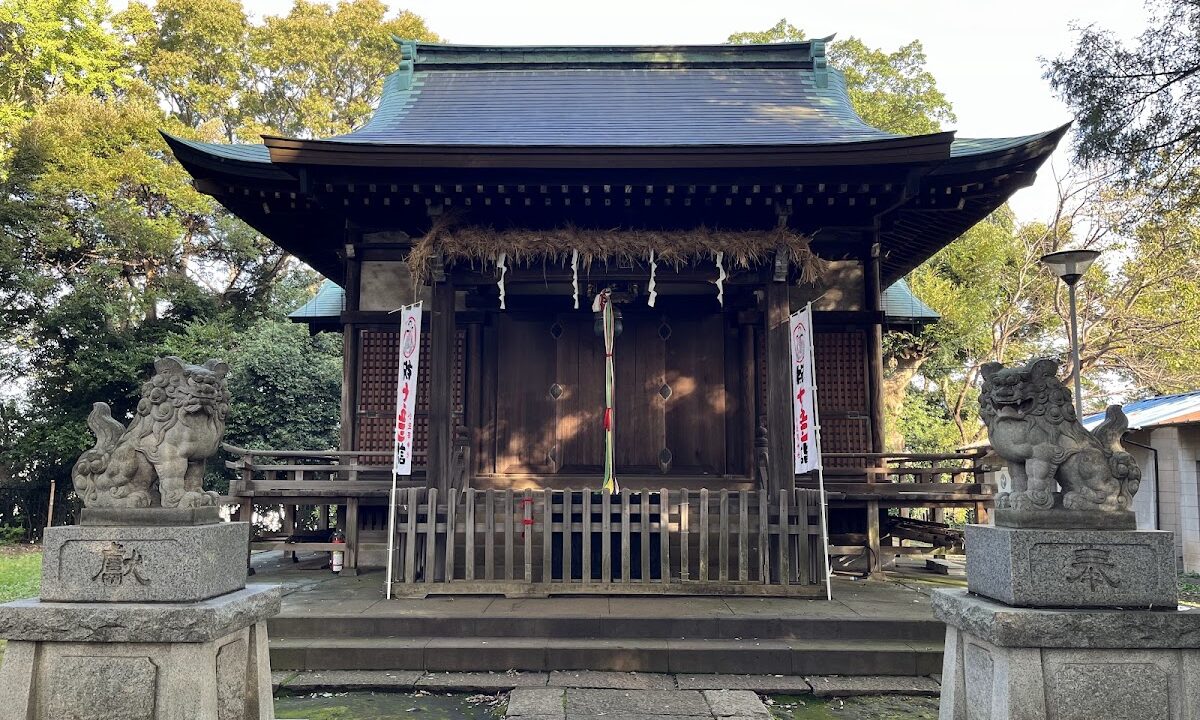
Azusawa Shrine (Itabashi Ward, Tokyo) Complete Guide | History, Deities, Access, and Goshuin Information
Azusawa Shrine is a historic shrine located in Azusawa, Itabashi Ward, Tokyo. It is known for its many attractions, including its unusual shrine building built on top of an ancient burial mound, its connection to Minamoto no Yoshiie, and the local legend of Taira no Masakado. This article provides detailed information useful for your visit, including the history of Azusawa Shrine, its enshrined deities, highlights of the grounds, access methods, and Goshuin information.
Basic Information about Azusawa Shrine
Azusawa Shrine is a local guardian shrine located in a residential area of Itabashi Ward, Tokyo. It is within walking distance of Shimura-Sakaue Station on the Toei Mita Line and is popular with local residents.
Location: 4-16-5 Azusawa, Itabashi-ku, Tokyo
Phone Number: 03-3965-6097
Nearest Station: Approximately 8 minutes on foot (approx. 600m) from Shimura-Sakaue Station on the Toei Mita Line
Postal Code: 〒174-0051
The place name “Azusawa” of Azusawa Shrine is said to originate from a legend concerning Taira no Masakado. A legend remains that a ship loaded with red beans as tribute to Taira no Masakado sank in this area, and this is believed to be the origin of the place name.
History and Origins of Azusawa Shrine
Founding and Enshrinement by Minamoto no Yoshiie
The exact founding date of Azusawa Shrine is unknown, but one theory suggests that it was enshrined by Minamoto no Yoshiie during the Kohei era (1058-1065). Minamoto no Yoshiie was a military commander of the late Heian period, known as “Hachiman Taro,” and played an active role in the Former Nine Years’ War and the Later Three Years’ War.
The Kohei era coincides with the period when Minamoto no Yoshiie was active in eastern Japan, and since there are several shrines associated with the Minamoto clan in this region, it is believed that Azukizawa Shrine was founded as one of them. It is a historical fact that Minamoto no Yoshiie invited deities to various places during his pacification of eastern Japan, and Azukizawa Shrine plays a part in that history.
Legend of Taira no Masakado and the Origin of the Place Name
An interesting legend related to Taira no Masakado remains in the place name Azukizawa. According to legend, a ship loaded with red beans as tribute to Taira no Masakado, who ruled the entire Kanto region during the mid-Heian period, sank in this area, and this is said to be the origin of the place name “Azukizawa.”
This legend is deeply rooted in the region and is an indispensable element in telling the history of Azukizawa Shrine. Taira no Masakado is a figure who left behind many legends in the Kanto region, and many traces of him can be found around Itabashi Ward.
Shimura Kofun Cluster and Azusawa Kannon-zuka Kofun
The most distinctive feature of Azusawa Shrine is that its main hall is built on top of a burial mound called “Azusawa Kannon-zuka Kofun.” This burial mound is one of the Shimura Kofun Cluster, indicating that this area was an important location from ancient times.
The Shimura Kofun Cluster is a group of Kofun period ruins scattered throughout Itabashi Ward, telling the story of how this region was once under the control of powerful clans. The fact that the shrine was built on top of the Azusawa Kannon-zuka Kofun indicates that it inherited the sacredness of the burial mound and functioned as a center of local faith.
Examples of shrines built on top of burial mounds are rare nationwide, making this a historically and culturally valuable site.
Deities and Divine Virtues
Main Deity: Kuninotokotachi-no-Kami
The main deity of Azusawa Shrine is Kuninotokotachi-no-Kami. In Japanese mythology, Kuninotokotachi-no-Kami is considered one of the first gods to appear at the creation of heaven and earth, and is a fundamental deity appearing in the “Kojiki” and “Nihon Shoki.”
Kuninotokotachi-no-Kami is revered as the god who governs the foundation of the land, and is believed to bestow the divine virtues of national peace and security. Furthermore, as the god who is the source of all things, he is also worshipped for his blessings of vitality, health, and longevity.
Enshrined Deities
In addition to Kuninotokotachi-no-Kami, Azusawa Shrine enshrines a total of 17 other deities. These deities have been enshrined together throughout the history of the region, and the shrine attracts worshippers with its diverse divine virtues.
By enshrining multiple deities, this shrine is cherished by local residents as a place where a wide range of wishes can be granted, including family safety, business prosperity, academic success, and good health.
Benefits
The main benefits that can be prayed for at Azusawa Shrine are as follows:
- National Peace and Security: The divine virtue of the main deity, Kuninotokotachi-no-Mikoto
- Health and Longevity: Benefits from the deity who governs the source of life
- Family Safety: Protection as the local guardian deity
- Exorcism and Good Fortune: Exorcism through the spiritual power and divine authority of the ancient burial mound
- Fulfillment of Wishes: Prayers for the fulfillment of all wishes
Highlights of the Shrine Grounds
Shrine Building
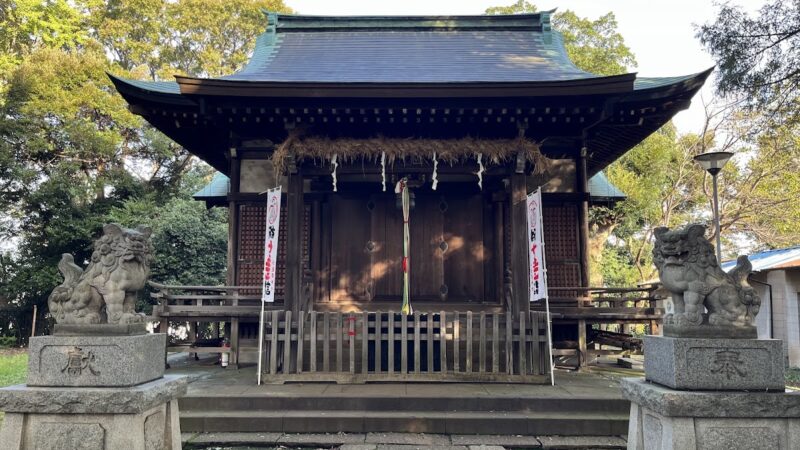
The shrine building of Azusawa Shrine stands on top of an ancient burial mound, located on a hill reached by climbing stone steps. Because it is situated on a higher level than the surrounding residential area, the shrine grounds offer panoramic views of the surrounding area.
The shrine building is a wooden structure, preserving the traditional style of Shinto shrine architecture. Its unique location on top of a burial mound gives it a distinctive atmosphere, leaving a deep impression on visitors.
Stone Steps and Approach
The stone steps leading to the shrine grounds are built along the shape of the burial mound, and visitors ascend these steps as they enter the sacred area. The act of climbing the steps itself symbolizes the transition from everyday life to a sacred space, and is an important element of worship.
Atmosphere of the Shrine Grounds
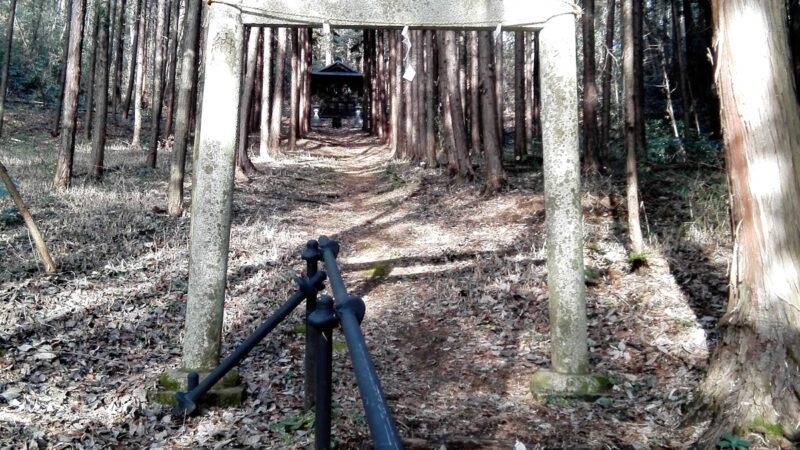
Despite being located in a residential area, the grounds of Azusawa Shrine maintain a tranquil atmosphere. Built on a historical site—a burial mound—it evokes a unique sense of sacredness and historical weight.
Trees are planted within the grounds, serving as a small green oasis in the city. It is also a popular walking route and place of relaxation for local residents.
Annual Festivals and Events
Mochi-making Festival (June 15th)
A distinctive event at Azusawa Shrine is the “Mochi-making Festival,” held annually on June 15th. This festival is a traditional local event, known for its connection to “azuki” (red beans), the origin of the shrine’s name.
At the Mochi-making Festival, worshippers and local residents gather to pound mochi (rice cakes) using traditional methods and offer them to the gods. Freshly made mochi is sometimes distributed to worshippers, playing an important role in strengthening the local community.
This festival is unique to Azusawa Shrine and provides a valuable opportunity to pass on the region’s history and traditions to future generations.
Other Annual Events
At Azusawa Shrine, the following annual events are held, similar to those of most shrines:
- Hatsumode (January 1st-3rd): New Year’s visit
- Setsubun Festival (around February 3rd): Bean-throwing and exorcism
- Reitaisai (Grand Autumn Festival): Autumn Grand Festival
- Shichi-Go-San (November): Celebrating children’s growth
- Yoshikoshi Oharae (December 31st): Purification of the year’s impurities
Goshuin Information
Goshuin (shrine stamps) are available at Azusawa Shrine. Goshuin are important as proof of shrine visits and as a way to connect with the gods.
Goshuin Reception
Those wishing to receive a goshuin can request one at the shrine office. However, the shrine office may not always be open, so it is recommended to call ahead to confirm availability if you wish to receive a goshuin.
Phone Number: 03-3965-6097
Goshuincho (Stamp Book)
Please contact the shrine directly to inquire about the availability of an original Goshuincho at Azusawa Shrine. If you have a standard Goshuincho, you can have it stamped.
Access
The most convenient way to access Azusawa Shrine is by public transportation. Located in a residential area of Itabashi Ward, Tokyo, it is accessible on foot from the nearest station.
Access by Train
From Shimura-Sakaue Station on the Toei Mita Line
- Approximately 8 minutes on foot (approx. 600m) from Exit A2 of Shimura-Sakaue Station
- Exit the station and head northwest, passing through the residential area to arrive.
Shimura-Sakaue Station is on the Toei Mita Line and offers good access from central Tokyo. The Mita Line connects Meguro Station to Nishi-Takashimadaira Station, passing through major stations such as Otemachi and Hibiya.
Access by Car
If you are visiting by car, the nearest interchanges are the Nakadai IC or Itabashi Honcho IC on the Metropolitan Expressway Route 5 Ikebukuro Line. However, it is necessary to check in advance regarding the shrine’s dedicated parking lot. Because it is located in a residential area, the surrounding roads may be narrow.
Access by Foot or Bicycle
Residents of the surrounding area can also access the shrine on foot or by bicycle. The Azusawa area of Itabashi Ward has a relatively flat terrain, making it easy to get around by bicycle.
Nearby Shrines and Temples
There are several other historical temples and shrines scattered around Azusawa Shrine. When visiting Azusawa Shrine, it is recommended to also visit these temples and shrines.
Enmei-ji Temple
Enmei-ji Temple is a temple located near Azusawa Shrine and has functioned as a center of Buddhist faith in the area. The temple’s name, Enmei-ji, signifies the benefit of longevity, and it is visited by worshippers praying for good health.
Enmei-ji Temple ### Daionji Temple
Daionji Temple is also located in the vicinity of Azusawa and is deeply connected to the history of the region. It is believed to have had a relationship with Azusawa Shrine during the era of syncretism of Shinto and Buddhism.
Visiting these temples, among others, allows for a deeper understanding of the history of faith in the Azusawa area of Itabashi Ward.
History and Culture of the Azusawa Area
Azusawa is located in the northwestern part of Itabashi Ward, near the Arakawa River. It developed as an agricultural area from ancient times and flourished as the surrounding area of Itabashi-juku, a post town on the Nakasendo road, during the Edo period.
Shimura Kofun Cluster and Ancient Azusawa
The Shimura Kofun Cluster is distributed around Azusawa, indicating the presence of powerful local clans during the Kofun period. The Azusawa Kannon-zuka Kofun is one of them, indicating that it was a political and cultural center at the time.
Development Since the Modern Era
Since the Meiji era, with the expansion of Tokyo’s urban area, the Azusawa area has gradually become urbanized. Although it has developed into a residential area, historical heritage sites such as Azusawa Shrine remain, preserving the region’s identity.
Manners and Etiquette for Visiting Shrines
When visiting Azusawa Shrine, please observe basic shrine visiting manners.
Basic Etiquette for Visiting Shrines
- Bow before passing through the torii gate: This is a courtesy when entering the sacred area.
- Purify yourself at the water basin: If there is a water basin, purify your hands and mouth.
- Walk along the edge of the path: The center is considered the path of the gods.
- Etiquette in front of the main hall: Two bows, two claps, and one bow are the basics.
- Bow upon leaving: When leaving through the torii gate, turn around and bow.
Photography
Photography is generally permitted within the shrine grounds, but photography inside the shrine buildings and in sacred areas should be refrained from. Also, please be considerate of other visitors.
A Summary of the Charms of Azusawa Shrine
Azusawa Shrine, located in the heart of Tokyo’s Itabashi Ward, is a precious shrine that preserves ancient history. Its unique location—built on top of a burial mound—is rare nationwide, its connections to historical figures such as Minamoto no Yoshiie and Taira no Masakado, and its deeply rooted local faith and traditional events all contribute to its many attractions.
Its convenient location, within walking distance of Shimura-Sakaue Station, is another appealing feature, making it easily accessible for Tokyo residents. It can be enjoyed in various ways, from daily visits to pray for health and family safety to historical exploration.
The legend behind the name Azusawa, the annual mochi-making festival on June 15th, and the shrine building built on a historical burial mound—all of these elements contribute to the unique character of Azusawa Shrine, making it a shrine well worth a visit.
If you have the opportunity to visit Itabashi Ward, be sure to stop by Azusawa Shrine. You’ll be able to escape the hustle and bustle of the city and enjoy a peaceful time surrounded by history and tradition.