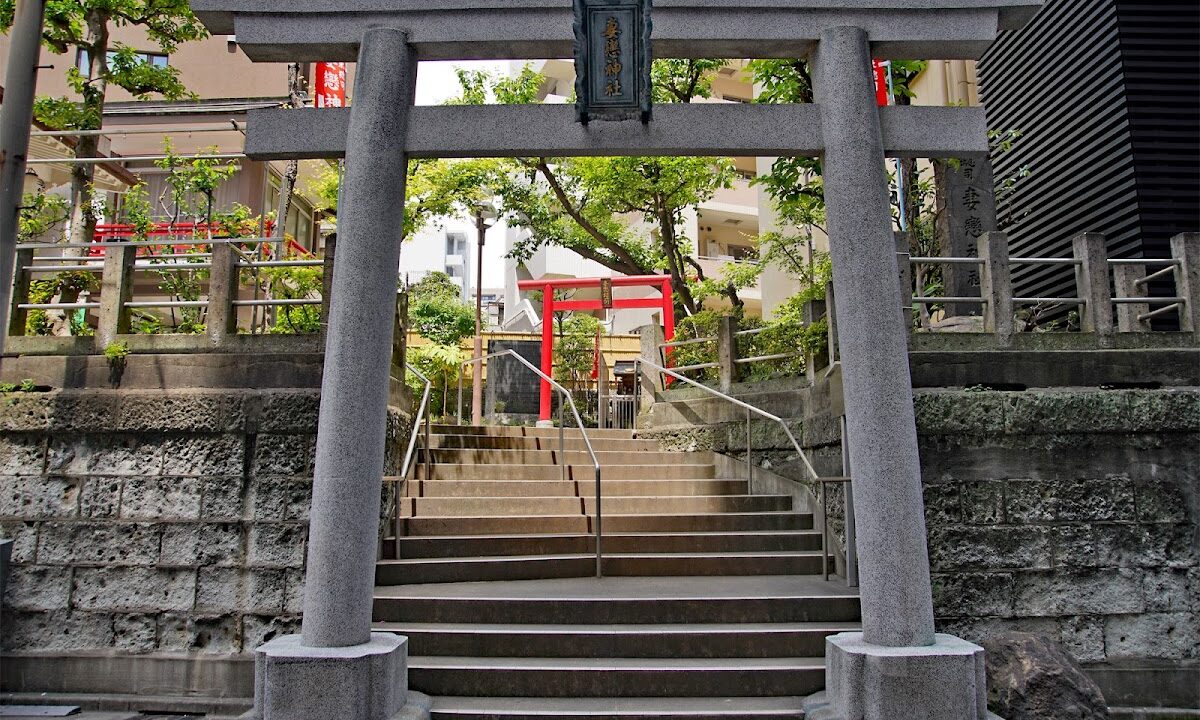
Tsumakoi Shrine (Bunkyo Ward, Tokyo) Complete Guide | History, Goshuin (Shrine Seal), and Access Information
Tsumakoi Shrine, located in Yushima 3-chome, Bunkyo Ward, Tokyo, is a historic shrine known for the tragic love legend of Yamato Takeru and Ototachibana-hime. During the Edo period, it was a central figure in Inari worship, known as “Kanto Soji Tsumakoi Shrine,” and was counted as one of the seven major Inari shrines in Japan. This article comprehensively explains everything you need to know before visiting Tsumakoi Shrine, including its history, enshrined deities, highlights, goshuin information, and access methods.
Basic Information about Tsumakoi Shrine
Location: 3-2-6 Yushima, Bunkyo-ku, Tokyo
Main Deities:
- Ukanomitama-no-Mikoto
- Yamato Takeru-no-Mikoto
- Ototachibana-hime-no-Mikoto
Former Shrine Rank: Village Shrine
Shrine Emblem: Cypress fan with the character “御” (go)
Alternate Names: Kanto Soji Tsumakoi Shrine, Kanto Soji Inari Shrine, Tsumakoi Inari
Tsumakoi Shrine is a tranquil shrine nestled in a quiet residential area, despite its proximity to famous shrines such as Yushima Tenmangu and Kanda Myojin. While not large in scale, its history and origins are among the finest in Tokyo.
History of Tsumakoi Shrine
Founding and Ancient Legends
Tsumakoi Shrine’s founding is rooted in the legend of Yamato Takeru’s eastern expedition. According to the Kojiki and Nihon Shoki, during Yamato Takeru’s expedition to eastern Japan, he encountered a great storm while attempting to cross from the Miura Peninsula to the Boso Peninsula. At this time, his consort, Ototachibana-hime, in order to appease the wrath of the sea god, composed a death poem: “On the plains of Sagami, amidst the burning fire, I asked you, my lord…” and threw herself into the sea, saving Yamato Takeru and his party.
After safely reaching the Boso Peninsula, Yamato Takeru stayed in what is now Yushima. It is said that the local people, pitying Yamato Takeru’s deep longing for his deceased wife, built a shrine to him and Ototachibana-hime, which is considered the origin of Tsumakoi Shrine. The name “Tsumakoi” (meaning “longing for one’s wife”) directly derives from this story of Yamato Takeru’s longing for his wife.
Connection to Inari Worship
In addition to its ancient founding legends, Tsumakoi Shrine also developed as a center of Inari worship. During the Edo period, it is said to have held the position of “Kanto Soji Inari Shrine,” overseeing Inari worship in the Kanto region. It enshrines Ukanomitama-no-Mikoto as its principal deity and was widely worshipped as a god of abundant harvests and business prosperity.
Its high status is evident from its inclusion as one of the Seven Inari Shrines of Japan (the Seven Great Inari Shrines of Japan). While there are various theories regarding the Seven Inari Shrines of Japan, Tsumakoi Shrine has been positioned as a representative Inari shrine of the Kanto region.
Development during the Edo Period
During the Edo period, Tsumakoi Shrine became deeply rooted in the community as the guardian shrine of the Yushima and Sotokanda area. In 1660 (Manji 3), it was relocated from the former Yushima Tenjin-cho to its current location on the north side of the slope. This relocation led to the slope in front of the shrine being called “Tsumakoi-zaka,” a name that remains to this day.
Amidst the flourishing townspeople culture of Edo, Tsumakoi Shrine attracted the faith of ordinary people, and was particularly revered by merchants and craftsmen as a god of business prosperity. Furthermore, because it enshrines the married couple Yamato Takeru and Ototachibana-hime, it also came to be sought after for blessings of marital harmony and matchmaking.
Changes Since the Modern Era
Under the Meiji era’s shrine ranking system, it was ranked as a village shrine and officially recognized as the guardian shrine of the region. Despite experiencing the Great Kanto Earthquake and the damage of World War II, the shrine buildings were maintained and rebuilt through the efforts of the local people.
Even today, Tsumakoi Shrine welcomes many worshippers as the guardian deity of its parish areas, including Yushima 3-chome, 4-chome, and Sotokanda, and as a historical shrine in Tokyo.
Deities and Blessings
Ukanomitama-no-Mikoto
Ukanomitama-no-Mikoto, known as Inari-sama, is the god of abundant harvests, business prosperity, and industrial development. “Kura” refers to a warehouse for storing grain, and “Inadama” means the spiritual power of rice. This deity has been worshipped since ancient times as a god who brings stability to food and life. The reason Tsumakoi Shrine is revered as the Kanto region’s chief Inari shrine is because this god is enshrined as its principal deity.
Yamato Takeru no Mikoto
A prince of Emperor Keiko, the 12th emperor, and a representative hero in Japanese mythology. He is depicted as a brave warrior who achieved numerous military feats in his western and eastern campaigns, as well as a deeply loving figure who cherished his deceased wife. He is believed to bring good fortune in battle, protection from evil, and success in competitions.
Ototachibana-hime no Mikoto
The consort of Yamato Takeru no Mikoto, a devoted woman who threw herself into the sea to save her husband. Due to her deep love and self-sacrificing spirit, she is worshipped as a goddess of marital harmony, successful relationships, and protection for women. Numerous shrines dedicated to Ototachibana-hime exist around Tokyo Bay, and Tsumakoi Shrine holds a significant position among them.
Main Benefits of Tsumakoi Shrine
- Business Prosperity and Success: Benefits as an Inari deity
- Abundant Harvest and Family Safety: Stability and prosperity in life
- Marital Harmony and Matchmaking: Benefits as a divine couple, Yamato Takeru and Ototachibana-hime
- Good Fortune, Protection from Evil, and Long-Lasting Military Fortune: Yamato Takeru’s aspect as a god of war
- Safety at Sea: From the legend of Ototachibana-hime appeasing the sea god
Highlights of the Shrine Grounds
Shrine Building and Worship Hall
The shrine building of Tsumakoi Shrine stands quietly amidst a residential area, offering a tranquil atmosphere. While not large in scale, the meticulously maintained grounds reflect a history of being cherished by the local community. Instead of guardian lions, a stone statue of a fox, a symbol of Inari shrines, sits in front of the worship hall.
The shrine’s crest, “A cypress fan with the character ‘御’ (go),” signifies its high status and can be seen throughout the worship hall and other shrine buildings.
Torii Gate and Approach
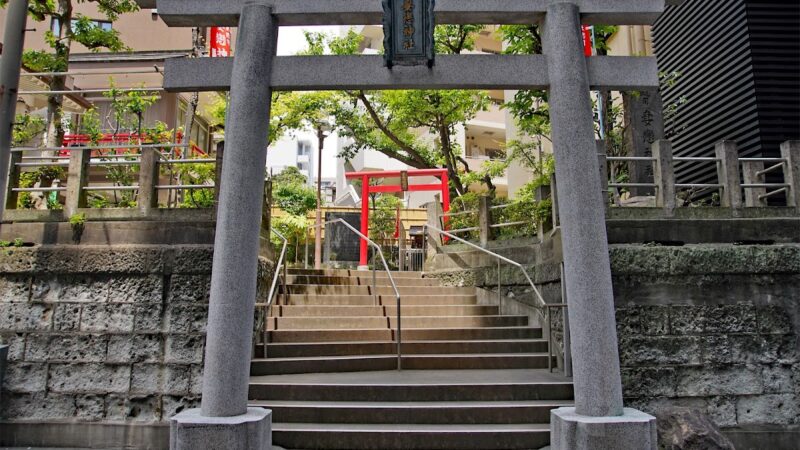
The approach leading from the torii gate facing Tsumakoi-zaka slope to the shrine grounds creates a tranquil space, separated from the hustle and bustle of the city. Upon passing through the torii gate, neatly arranged plants on either side welcome visitors.
Subsidiary Shrines and Stone Monuments
Besides the main shrine, the grounds are dotted with small subsidiary shrines and monuments. These are valuable cultural assets that convey the history of faith from the Edo period to the modern era.
Tsumakoi-zaka Slope
Tsumakoi-zaka slope, named after Tsumakoi Shrine, is a slope leading south from the shrine towards Yushima Tenmangu Shrine. It has been called by this name since the shrine’s relocation in 1660. An information board explaining the origin of the slope’s name is installed along the way, making it a point of interest for historical walks.
The area around Tsumakoi-zaka retains the atmosphere of the Edo period, and historical buildings such as Kanda Myojin Shrine, Yushima Tenmangu Shrine, and Nikolai Cathedral are within walking distance, making it a popular walking course for experiencing Tokyo’s history.
Goshuin (Shrine Seal) Information
Goshuin Design
At Tsumakoi Shrine, you can receive a goshuin as a memento of your visit. The goshuin features the shrine’s name, “Tsumakoi Shrine” or “Tsumakoi Jinja,” written in ink, and stamped with the shrine’s seal. It is characterized by a simple yet powerful brushstroke, conveying the history and prestige of the shrine.
Goshuin Reception Hours and Location
Goshuin are received at the shrine office, but since there may not always be a resident priest, it is recommended to check in advance if you want to be sure to receive a goshuin. While general visiting hours are during the day, it is best to avoid visiting at night due to the size of the shrine.
Goshuin Notebook
Please check upon your visit regarding the availability of original goshuin notebooks. The nearby Kanda Myojin Shrine and Yushima Tenmangu Shrine also offer unique goshuincho (stamp books), so visiting them all is another enjoyable experience.
Parishioner Area and Surrounding Environment
Parishioner Area
The parishioner area of Tsumakoi Shrine mainly includes Yushima 3-chome and 4-chome in Bunkyo Ward, and Sotokanda in Chiyoda Ward. As a local guardian shrine since the Edo period, the shrine is still supported by a local parishioner organization.
Throughout the year, festivals are held to pray for the safety and prosperity of the community, playing a central role in the local community.
Major Nearby Spots
Yushima Tenmangu Shrine (Yushima Tenjin)
Approximately a 5-minute walk from Tsumakoi Shrine. One of Tokyo’s leading Tenmangu shrines, dedicated to Sugawara no Michizane, the god of learning, it is bustling with worshippers during exam season.
Kanda Myojin Shrine (Kanda Shrine)
Approximately a 10-minute walk. This grand shrine, known as the guardian shrine of Edo (present-day Tokyo), is famous for its blessings of business prosperity and matchmaking. The shrine grounds also house a museum where you can learn about Edo history.
Nikolai-do (Tokyo Resurrection Cathedral)
Approximately 8 minutes on foot. A cathedral of the Japanese Orthodox Church, characterized by its beautiful Byzantine architecture. It is designated as a National Important Cultural Property.
Akihabara Electric Town
Approximately 10 minutes on foot. A world-famous electronics district and mecca of otaku culture, attracting tourists from all over the world seeking the latest electronics and anime goods.
Ochanomizu/Jimbocho
Within walking distance. Ochanomizu, known as a student town, and Jimbocho, famous for its used bookstores, are areas rich in cultural appeal.
Access Methods
Access by Train
Tokyo Metro Ginza Line “Suehirocho Station”
- Approximately 5 minutes on foot from Exit 3
- The closest station, offering convenient access.
Tokyo Metro Chiyoda Line “Yushima Station”
- Approximately 7 minutes on foot from Exit 3
- Convenient access from the Yushima Tenmangu Shrine area.
JR Chuo Line/Sobu Line “Ochanomizu Station”
- Approximately 10 minutes on foot from the Hijiribashi Exit
- Convenient when visiting Kanda Myojin Shrine and Nikolai Cathedral together.
Tokyo Metro Marunouchi Line “Ochanomizu Station”
- Approximately 10 minutes on foot from Exit 1.
Toei Subway Oedo Line “Ueno-Okachimachi Station”
- Approximately 8 minutes on foot from Exit A1.
Access by Bus
Approximately 3 minutes on foot from the Toei Bus/Toei Bus “Kanda Myojin-mae” bus stop. Multiple bus lines stop here, making bus access convenient.
Access by Car and Parking
Tsumakoi Shrine does not have its own parking lot. There are several coin-operated parking lots nearby, but spaces are limited, so we recommend using public transportation.
It is approximately a 10-minute drive from the “Kandabashi Exit” or “Nishi-Kanda Exit” of the Metropolitan Expressway Inner Circular Route.
Walking Route
Tsumakoi Shrine is within walking distance of Yushima Tenmangu Shrine, Kanda Myojin Shrine, and Nikolai-do Cathedral, making it a recommended historical walking route.
Recommended Walking Route Example:
- Start at JR Ochanomizu Station
- Nikolai-do Cathedral (5-minute walk)
- Kanda Myojin Shrine (5-minute walk)
- Tsumakoi Shrine (10-minute walk)
- Yushima Tenmangu Shrine (5-minute walk)
- Goal: Tokyo Metro Yushima Station
The estimated time required, including time spent at the shrine, is approximately 2-3 hours.
Annual Events and Festivals
Grand Festival
The Grand Festival of Tsumakoi Shrine is an important annual event in the region. It includes a procession of the portable shrine and the dedication of sacred dances, with people from the local community gathering to enliven the shrine. The specific date may vary from year to year, so it is recommended to check before visiting.
New Year’s Visit
The shrine is bustling with worshippers praying for safety and prosperity throughout the year during the New Year’s visit. While not as crowded as Yushima Tenmangu Shrine or Kanda Myojin Shrine, many worshippers, mainly from the local area, visit.
Other Annual Events
Traditional annual events of the shrine, such as the Setsubun Festival and the Summer Purification Ceremony, are also held.
Manners and Etiquette for Visiting a Shrine
Basic Worship Etiquette
- When passing through the torii gate: Bow before entering the shrine grounds.
- Purification at the water basin: Purify your left hand, right hand, and mouth in that order.
- Worship at the main hall: Two bows, two claps, and one bow are the basic rituals.
- Behavior within the shrine grounds: Worship quietly and with reverence.
Regarding Photography
Photography is generally permitted within the shrine grounds, but it is considered good manners to refrain from taking pictures inside the main hall or in sacred areas. Please be considerate of other visitors.
Regarding Attire
There are no specific dress code regulations, but it is desirable to wear clothing that reflects the sacred nature of a shrine. Avoid overly revealing or unkempt clothing.
The Charm and Value of Visiting Tsumakoi Shrine
Layers of History
The greatest charm of Tsumakoi Shrine lies in its layered history. Beginning with the ancient legend of Yamato Takeru, and developing as a center of Inari worship, its history as a local guardian shrine during the Edo period embodies the evolution of Japanese religious culture.
Tranquility in the City
Despite its proximity to bustling areas like Akihabara and Ochanomizu, the shrine grounds maintain a quiet and peaceful atmosphere. It is cherished by locals as a place to escape the hustle and bustle of the city and find peace of mind.
The Story of Yamato Takeru and Ototachibana-hime
The story of Ototachibana-hime, who sacrificed her life to save her husband, and Yamato Takeru, who deeply longed for his deceased wife, resonates with people across generations. Tsumakoi Shrine, which tells this tragic love story, continues to attract many as a symbol of love and devotion.
Combination with Surroundings
With numerous historical and cultural spots within walking distance, such as Yushima Tenmangu Shrine, Kanda Myojin Shrine, and Nikolai Cathedral, this shrine is well worth visiting as part of a historical exploration of Tokyo.
Points to Note When Visiting
Opening Hours of the Shrine Office
If you wish to receive a Goshuin (shrine stamp) or other items, it is recommended to check the opening hours of the shrine office in advance. As it is a small shrine, it may not be open all the time.
Consideration for Neighbors
Located in a residential area, please refrain from loud conversations and noise, and be considerate of the nearby residents.
Seasonal Precautions
In summer, there is little shade, so it is recommended to bring a hat and drinks to prevent heatstroke. In winter, the slopes may freeze, so please be careful of your footing.
Summary
Tsumakoi Shrine is a historic shrine in Yushima, Bunkyo-ku, Tokyo, with three aspects: the tragic love legend of Yamato Takeru and Ototachibana-hime, its history as the chief Inari shrine of the Kanto region, and its role as a guardian shrine of the area.
Although not large in scale, its history and prestige are among the finest in Tokyo, and its quiet grounds offer a precious space to forget the hustle and bustle of the city. Visiting Tsumakoi Shrine along with Yushima Tenmangu Shrine and Kanda Myojin Shrine will allow you to gain a deeper understanding of Tokyo’s history and culture.
Conveniently located within walking distance of Ochanomizu Station and Suehirocho Station, Tsumakoi Shrine is a must-visit during your Tokyo sightseeing or historical walk. The time spent quietly offering prayers while reflecting on the ancient story of Yamato Takeru longing for his wife will surely be a memorable experience.