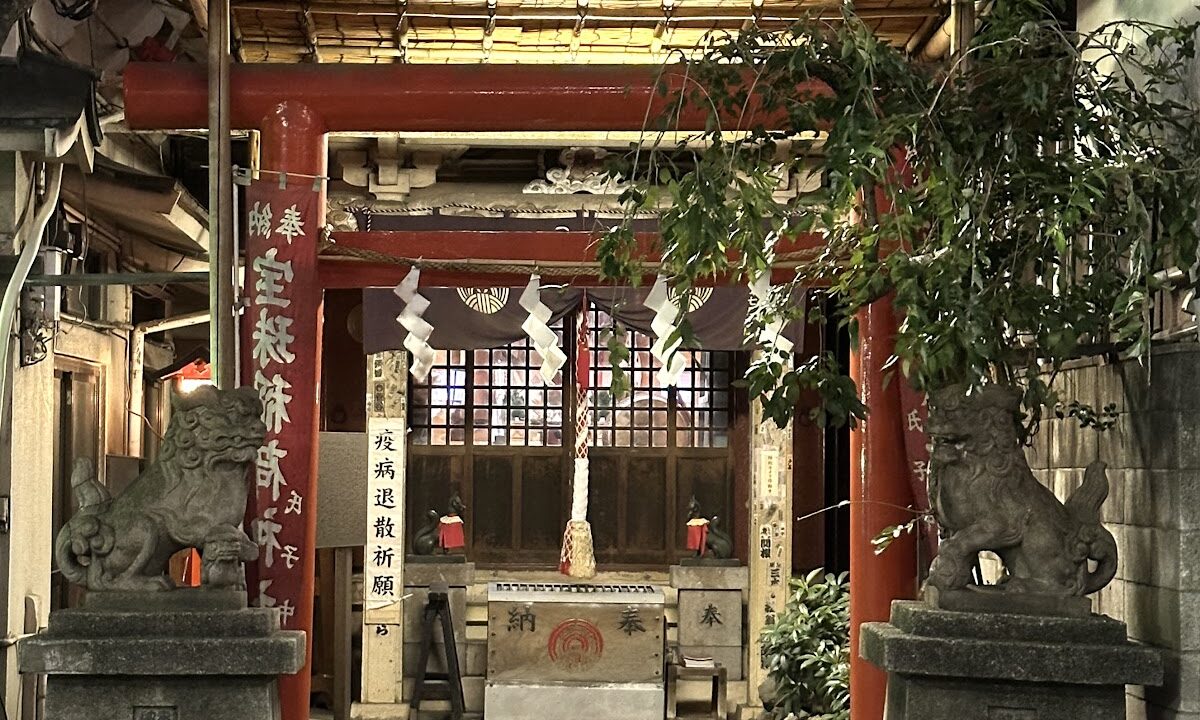
Hoju Inari Shrine (Chuo Ward, Tokyo) Complete Guide | History, Blessings, Access, and Visiting Information
Near a corner of the bustling Ginza district in Chuo Ward, Tokyo, stands the Hoju Inari Shrine, a shrine with a history of over 400 years. Having watched over the area since the early Edo period, this shrine is known for its blessings of family safety and fire prevention, and has been deeply revered by local people. This article comprehensively introduces all the information you need to know before visiting Hoju Inari Shrine, including its detailed history, enshrined deities, blessings, access methods, and points to consider when visiting.
Basic Information on Hoju Inari Shrine
Hoju Inari Shrine is located in Ginza 3-chome, Chuo Ward, Tokyo. Situated along Kobikicho Street, it maintains a tranquil atmosphere despite being amidst the hustle and bustle of Ginza.
Location: 3-14-15 Ginza, Chuo-ku, Tokyo
Main Deity: Ukanomitama-no-kami
Founded: Genna 1 (1615)
Former Name: Kobikicho 3-chome Inari
While many small Inari shrines are scattered throughout Ginza, Hoju Inari Shrine is particularly old and a valuable shrine with a history as the guardian deity of samurai residences. Although currently situated on a small plot of land between buildings, its presence and historical weight leave a strong impression on visitors.
History of Hoju Inari Shrine
Founded in the Early Edo Period
The history of Hoju Inari Shrine dates back to Genna 1 (1615), shortly after the establishment of the Edo Shogunate. This year marked the end of the Summer Siege of Osaka and the establishment of the Tokugawa Shogunate’s rule, a crucial period.
The shrine originated as a household deity enshrined within the Edo residence of Itakura Shigemasa, the lord of the Fukamizo Domain in Mikawa Province. Itakura Shigemasa was a samurai who distinguished himself in the Winter and Summer Sieges of Osaka, and is known as a historical figure who later died in battle suppressing the Shimabara Rebellion.
Initially, the shrine was revered as a guardian deity for household safety and fire prevention. In Edo-period cities, where wooden buildings were densely concentrated, fire was one of the most feared disasters. Especially in samurai residences, protecting family and property from fire was a crucial issue, and Inari worship as a god of fire prevention was prevalent.
Changes in the Residence and the Succession of the Shrine
The residence where Hoju Inari Shrine was enshrined underwent several changes of ownership throughout the Edo period.
During the Hōreki era (1751-1764), the residence was transferred to the Kamei family, lords of Tsuwano Castle in Iwami Province (present-day Shimane Prefecture). The Kamei family was a prestigious family that ruled the Tsuwano Domain throughout the Edo period as an outside daimyo. During this time, the shrine continued to be carefully preserved as the guardian deity of the residence.
In Taisho 7 (1918), the residence was sold to the Okazaki family of Okayama. However, this marked a significant turning point. The Okazaki family, the new owners of the residence, donated the land of the Hōju Inari Shrine to the parishioners of Kobiki-cho 3-chome. This transformed the shrine from a private guardian deity of a samurai family to a local guardian deity protected by the community.
From Modern to Contemporary Times
In Showa 25 (1950), a group of parishioners purchased adjacent land and constructed a new shrine building and office. During the post-war reconstruction period, the fact that local people pooled their funds to renovate the shrine speaks volumes about their deep faith in Hoju Inari Shrine.
Later, as Ginza developed and high-rise buildings rose to prominence, the shrine remained in the same location. Even today, local parishioners, people working in Ginza, and tourists visit the shrine, continuing the history of faith that spans over 400 years.
Deities and Benefits
Main Deity: Ukanomitama-no-kami
The main deity of Hoju Inari Shrine is Ukanomitama-no-kami. This deity is a god of grain and food appearing in Japanese mythology and is widely worshipped at Inari shrines throughout Japan.
In the Kojiki, Ukanomitama-no-kami is said to be a god born between Susanoo-no-Mikoto and Kamu-Oichihime. “Uka” is an archaic word meaning grain or food, and Inari has been worshipped since ancient times as a god of abundant harvests, business prosperity, and industrial development.
Inari worship spread during the Heian period, centered around Fushimi Inari Taisha in Kyoto, and during the Edo period, it permeated a wide range of people, from samurai to commoners. In particular, in Ginza, a commercial center, Inari worship as a god of business prosperity remains strong even today.
Benefits
Hoju Inari Shrine is said to offer the following benefits:
Family Safety: With a history of protecting family safety as a household god since its founding, it is a place where people can pray for peace and prosperity in their homes.
Fire Protection: Worshipped as a god of fire prevention since the Edo period, it is believed to protect against fire disasters.
Business Prosperity: As a representative benefit of Inari, many worshippers visit the shrine to pray for business development and success.
Abundant Harvest: As the original divine nature of Ukanomitama-no-kami, one can pray for abundant harvests and food safety.
Good Fortune and Prosperity: It is believed to bring general good fortune and happiness.
Many business owners and professionals working in Ginza visit the shrine to pray for success in their work, and the faith remains deeply rooted in the community even today.
Highlights of the Shrine Grounds
Torii Gate and Shrine Building
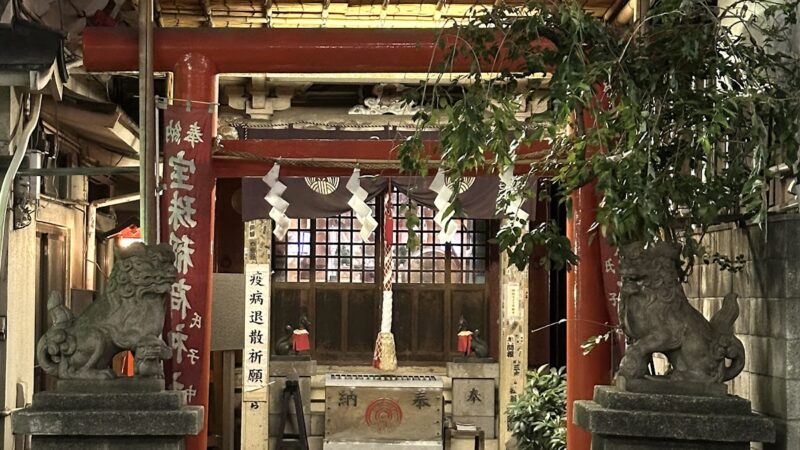
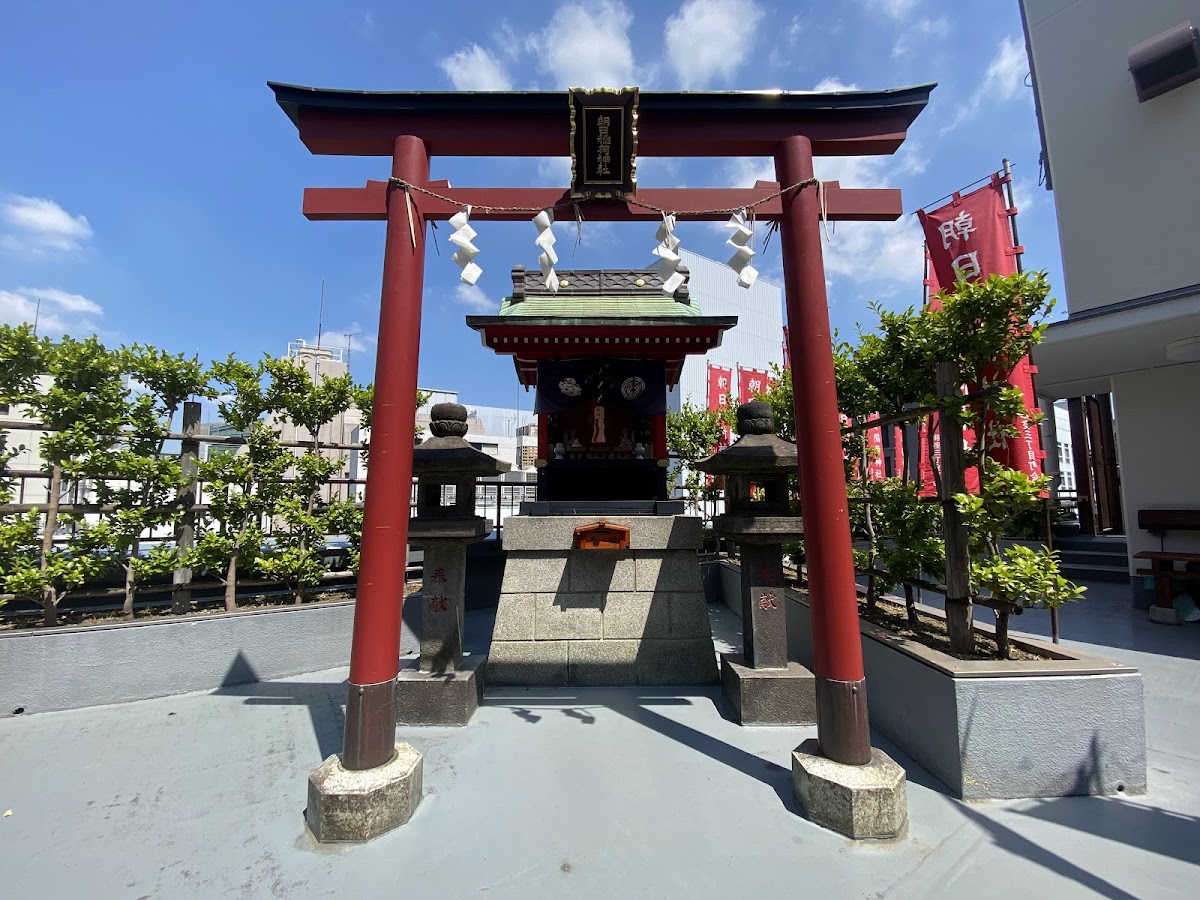
The grounds of Hoju Inari Shrine are enveloped in a quiet and peaceful atmosphere, unexpected for a shrine located in the bustling Ginza district. Stepping off Kobikicho Street, one finds a small yet dignified shrine space.
The torii gate is painted in the characteristic vermilion color of Inari shrines, making it a striking presence in the urban landscape. Passing through the torii gate, a purified path leads to the shrine building.
The shrine building, constructed in 1950, is compact yet meticulously maintained. Its unique location, surrounded by high-rise buildings, creates a distinctly Tokyo landscape where a historical shrine coexists with the modern Ginza cityscape.
Atmosphere of the Shrine Grounds
Although the grounds are not particularly large, the carefully maintained grounds exude cleanliness and a warm, welcoming atmosphere for visitors. Its location nestled between older buildings gives it a down-to-earth and approachable feel.
Due to its Ginza location, during weekday afternoons, it can be seen with people working nearby stopping by for prayer during their work breaks. On weekends, tourists and those enjoying shrine visits also come, making it a quiet yet constantly visited shrine.
Access and Transportation Information
Access by Train
Hoju Inari Shrine is accessible on foot from several train stations.
Tokyo Metro Hibiya Line “Higashi-Ginza Station”
- Nearest Station (Most Recommended)
- Approximately 2 minutes on foot from Exit A7
- Located along Kobikicho Street, making it very easily accessible
Tokyo Metro Ginza Line, Marunouchi Line, Hibiya Line “Ginza Station”
- Approximately 5 minutes on foot from Exit A12
- Within walking distance from the heart of Ginza
Toei Asakusa Line “Higashi-Ginza Station”
- Approximately 2 minutes on foot from Exit A7
- Convenient transfer as it’s the same station as the Hibiya Line
Tokyo Metro Yurakucho Line “Ginza-Itchome Station”
- Approximately 7 minutes on foot
- Convenient access from the Yurakucho area
All stations are within walking distance, making it an easy place to stop by while strolling around Ginza.
Address and Landmark
Address: 3-14-15 Ginza, Chuo-ku, Tokyo
Landmark: Located along Kobikicho Street, approximately 5 minutes on foot north from the Kabuki-za Theatre. Located in the commercial area of Ginza 3-chome, surrounded by restaurants and office buildings.
Visiting Hours
Hoju Inari Shrine is generally open for worship throughout the day, but the shrine office’s operating hours may be limited. If you wish to receive a Goshuin (shrine stamp) or other items, it is recommended to check in advance.
Generally, daytime visits are recommended. Early mornings and evenings offer a quieter and more peaceful atmosphere for worship.
Manners and Points for Worship
Basic Worship Etiquette
There are basic manners for visiting a shrine. When visiting Hoju Inari Shrine, please follow these steps:
- Bow before the Torii Gate: Before entering the shrine grounds, bow slightly before the Torii gate.
- Purify at the Water Basin: If there is a water basin, scoop water with the ladle, purify your left hand, then your right hand, and finally rinse your mouth.
- Walking the Path: The center of the path is considered the path of the gods, so it is polite to walk along the sides.
- Offering a Coin: Quietly place your offering in the offering box.
- Two Bows, Two Claps, One Bow: Bow deeply twice, clap your hands twice, offer your prayer, and then bow deeply once more.
- Bow When Leaving the Shrine Grounds: When passing through the torii gate and leaving the shrine grounds, turn around and bow once.
Photography Etiquette
Photography is generally permitted, but please note the following:
- Be considerate of other worshippers.
- Refrain from taking photos inside the shrine building.
- Avoid using flash.
- When posting on social media, remember to show respect to the shrine.
Recommended Time to Visit
Weekday Mornings: There are fewer people, allowing for a peaceful visit. Visiting before starting work in Ginza is also recommended.
Weekend afternoons: Suitable for visiting in conjunction with a stroll through Ginza. However, it may be somewhat crowded.
Evenings: Many locals stop by on their way home from work, allowing you to see the shrine as part of everyday life.
Nearby Attractions and Tourist Spots
There are many Ginza-specific tourist spots around Hoju Inari Shrine. Visiting them in conjunction with your shrine visit will allow you to enjoy a more fulfilling Ginza sightseeing experience.
Kabuki-za Theatre
Located about a 5-minute walk from the shrine, this is Japan’s leading Kabuki theatre. Even on days without performances, you can learn about the history and culture of Kabuki at the Kabuki-za Gallery. The rooftop garden offers a panoramic view of the Ginza cityscape.
Other Shrines in Ginza
Toyoiwa Inari Shrine: An Inari shrine located in Ginza 1-chome, many people visit it in conjunction with Hoju Inari Shrine.
Asahi Inari Shrine: Another Inari shrine located in Ginza 3-chome, offering a chance to enjoy shrine hopping.
Ginza’s Commercial Facilities
Ginza Mitsukoshi, Matsuya Ginza, GINZA SIX, and other high-end department stores and shopping facilities are all within walking distance. You can enjoy shopping and dining after visiting the shrine.
Tsukiji Outer Market
Located about a 10-minute walk from Higashi-Ginza Station, you can enjoy fresh seafood and other ingredients. It’s especially lively from morning to midday.
The Role of Inari Faith in Ginza and Hoju Inari Shrine
Many Inari shrines are scattered throughout the Ginza area besides Hoju Inari Shrine. This is a remnant of Inari faith that has continued since the Edo period, and it tells the story of Ginza’s history as a commercial district.
Inari faith is known for its blessings of business prosperity, and it was particularly popular in Ginza, where many merchants and artisans gathered. Each neighborhood and shop has independently established its own Inari shrine, praying for business success and the safety of the community.
Hoju Inari Shrine, in particular, has a special origin as the guardian deity of a samurai residence and boasts a prestigious history of over 400 years. Even today, it is carefully preserved by local parishioners and remains an important presence that conveys the history and culture of Ginza.
Annual Events and Festivals
Hoju Inari Shrine holds various Shinto rituals and festivals throughout the year. Despite being a small shrine, its traditions are preserved by the local people.
Hatsuumasai (First Horse Day Festival): One of the most important festivals at the Inari Shrine, held on the first Horse Day of February. It is bustling with worshippers praying for business prosperity and a bountiful harvest.
Reitaisai (Grand Annual Festival): A grand annual festival where parishioners and local people gather to celebrate the history of the shrine.
Monthly Festival: This is a regular monthly festival held to pray for the maintenance of the shrine and the safety of the community.
For specific dates and details, please check during your visit or find information on local bulletin boards.
Cultural Value of Hoju Inari Shrine
Hoju Inari Shrine is not merely a religious facility, but also a valuable cultural asset that conveys the history and culture of Ginza.
Historical Value
With a history of over 400 years dating back to the early Edo period, it is a living witness to the changes in the Ginza area. From the era of samurai residences, through the Meiji Restoration, war damage, post-war reconstruction, and the period of rapid economic growth, it has witnessed the changes of the times up to the present day.
Value in Urban Planning
In Ginza, where skyscrapers line the streets, the presence of this historic shrine adds depth and cultural richness to the urban landscape. It embodies the characteristics of Tokyo’s urban culture: the coexistence of modernization and tradition.
Value as a Community Core
Protected by local parishioners, the shrine plays a vital role in maintaining connections and a sense of community, even in the business district of Ginza.
Visitor Voices and Experiences
Many visitors to Hoju Inari Shrine feel its unique atmosphere and the weight of its history.
Many comments include, “I was surprised to find such a quiet and peaceful space amidst the hustle and bustle of Ginza,” and “Although small, it is carefully maintained, and you can feel the love of the local people.”
In particular, the unique atmosphere created by its location between buildings is appreciated as an “oasis in the city” and “a place where modernity and history intersect.”
Many photography enthusiasts capture the contrast between the torii gate and the buildings, making it a popular spot on social media.
Summary
Hoju Inari Shrine is a venerable shrine with over 400 years of history, located in Ginza 3-chome, Chuo-ku, Tokyo. Founded in 1615 as the guardian shrine of Itakura Shigemasa’s residence, the shrine later changed hands between the Kamei and Okazaki families. Ultimately, it was donated to local parishioners and has been carefully preserved as the guardian deity of the region to this day.
The main deity, Ukanomitama-no-kami, is known for granting blessings of family safety, fire prevention, and business prosperity, attracting daily visits from people working in Ginza and tourists alike. Despite its convenient location just a two-minute walk from Higashi-Ginza Station, it maintains a quiet and peaceful atmosphere, offering a tranquil respite in the heart of the city.
When strolling through Ginza, be sure to visit Hoju Inari Shrine and experience its history and faith that dates back to the Edo period. Though small, the shrine grounds are imbued with the prayers of people passed down for over 400 years and the memories of Ginza.