Juban Inari Shrine (Minato Ward, Tokyo) Complete Guide | Goshuin (Shrine Seal), Frog Legend, and Access Information
Nearby nestled in the urban landscape of Azabu Juban, Minato Ward, Tokyo, Juban Inari Shrine boasts a history dating back to the Edo period and a unique faith. Despite its excellent accessibility—just a one-minute walk from Azabu Juban Station—it’s a popular destination for many visitors, offering numerous attractions such as the “Gama Pond Legend,” the stone statue of “Kaeru-san” (frog), and the treasure ship of the Minato Seven Lucky Gods.
This article comprehensively covers everything you need to know before visiting Juban Inari Shrine, including its history, blessings, goshuin information, highlights within the grounds, and access methods.
Basic Information about Juban Inari Shrine
Shrine Name: Juban Inari Shrine
Address: 1-4-6 Azabu Juban, Minato-ku, Tokyo
Phone Number: 03-3583-6250
Opening Hours: 9:00 AM – 5:00 PM
Goshuin (Shrine Stamp) Reception Hours: 10:00 AM – 12:00 PM, 1:00 PM – 4:30 PM (Regular Season)
Closed Days: Open Every Day
Admission Fee: Free
Nearest Station:
- 0-minute walk from Exit 7 of Azabu Juban Station on the Tokyo Metro Namboku Line
- 0-minute walk from Exit 7 of Azabu Juban Station on the Toei Oedo Line
History and Origins of Juban Inari Shrine
Born from the Merger of Two Shrines
Juban Inari Shrine is a relatively new shrine, established in 1950 (Showa 25), but its origins date back to the Edo period. This shrine was formed by the merger of two historical shrines that were destroyed in the war.
Suehiro Shrine and Takecho Inari Shrine were destroyed in the Tokyo air raids of 1945 (Showa 20). Following the post-war reconstruction and land readjustment project, the grounds of both shrines were relocated to their current location and designated as adjacent. In June 1950 (Showa 25), the two shrines merged to form “Juban Inari Shrine,” starting anew.
History of Suehiro Shrine
Suehiro Shrine was originally called “Sakashita Inari” and had been a place of worship in Azabu since the Edo period. It was a shrine cherished by the local people as a god of business prosperity and family safety.
History of Takenaga Inari Shrine
Takenaga Inari Shrine was famous for the “Gama Pond Legend,” which will be discussed later. Within the shrine grounds was a pond called “Gama Pond,” known as one of the “Seven Wonders of Azabu” during the Edo period. This legend is the origin of the “frog worship” that is a characteristic feature of the current Juban Inari Shrine.
Modern Shrine Building
The current shrine building was rebuilt in 1997. With the opening of Azabu Juban Station on the Tokyo Metro Namboku Line and the Toei Oedo Line, it was rebuilt as a modern reinforced concrete structure. Despite its limited space in the heart of the city, it maintains a solemn atmosphere while being easily accessible to modern visitors.
Deities and Blessings
Main Deities
The following five deities are enshrined at Juban Inari Shrine:
Ukanomitama-no-Mikoto
A representative deity of Inari, widely worshipped as the god of abundant harvests, business prosperity, and industrial development.
Yamato Takeru-no-Mikoto
A hero of Japanese mythology, revered as the god of long-lasting military fortune, good luck, and protection from evil.
Ichikishima-hime-no-Mikoto
One of the three Munakata goddesses, revered as the goddess of maritime safety, traffic safety, and improvement in performing arts.
Tagori-hime-no-Mikoto
One of the three Munakata goddesses, the goddess of maritime safety and traffic safety.
Tagitsu-hime-no-Mikoto
One of the three Munakata goddesses, the goddess of maritime safety and traffic safety.
Expected Benefits
At Juban Inari Shrine, you can expect the following benefits:
- Business Prosperity: Business success through the divine virtues of Inari-sama
- Fire Prevention: Protection from fire based on the legend of Gama Pond
- Rejuvenation: From a wordplay on “rejuvenation”
- Finding Lost Items: The benefit of “lost items returning”
- Increased Financial Fortune: Improved financial fortune through Inari-sama and the belief in treasure ships
- Good Fortune and Prosperity: As one of the seven gods of fortune in Minato
- Traffic Safety: Divine virtues of the three Munakata goddesses
- Exorcism: Divine virtues of Yamato Takeru
The Legend of Gama Pond and the “Frog” Belief
The Legend of Gama Pond, one of the Seven Wonders of Azabu
The most distinctive feature of Juban Inari Shrine is the “Legend of Gama Pond,” which has been passed down since the Edo period. This is known as one of the “Seven Wonders of Azabu.”
According to the legend, there was once a pond called “Gama Pond” within the grounds of Takenaga Inari Shrine. There is a legend that a large toad that once lived in this pond protected people’s homes from a fire. It is said that the toad either extinguished the fire by spraying water, or warned people of the fire.
From this legend, toads came to be worshipped as “guardians of fire prevention,” and this belief is still carried on at the current Juban Inari Shrine.
The “Frog” Stone Statue in the Shrine Grounds
To the right of the torii gate in the shrine grounds is a stone statue of a frog, affectionately known as “Kaeru-san” (Frog-san) by the locals. This statue is a symbolic representation of the legend of the toad pond.
Many worshippers can be seen touching this frog while making wishes. In particular, people constantly visit seeking various blessings, such as “rejuvenation,” “returning lost items,” and “returning safely,” due to the wordplay associated with the frog.
Minato Seven Lucky Gods: “The Treasure Ship Shrine”
One of the Shrines on the Minato Seven Lucky Gods Pilgrimage
Juban Inari Shrine holds a special position as one of the shrines and temples on the “Minato Seven Lucky Gods Pilgrimage,” which visits shrines and temples within Minato Ward, as it enshrines a treasure ship.
The Minato Seven Lucky Gods Pilgrimage is a popular pilgrimage route that attracts many visitors from New Year’s Day to mid-January. By visiting the temples and shrines that enshrine each of the seven lucky gods, people pray for good fortune and prosperity throughout the year.
The Treasure Ship on the Shrine Grounds
To the left of the torii gate at the front of the shrine grounds, there is a magnificent statue of a “treasure ship.” All seven lucky gods are depicted aboard this treasure ship, which is a magnificent sculpture with intricate details.
The treasure ship has long been worshipped as an auspicious symbol that brings good fortune. Especially during the New Year, many visitors take pictures in front of this treasure ship and pray for happiness throughout the year.
The statue depicting all seven gods of fortune riding on a single treasure ship is rare and is one of the major highlights of Juban Inari Shrine.
Goshuin (Shrine Seal) and Goshuincho (Shrine Seal Book) Information
Types of Goshuin and Reception Hours
At Juban Inari Shrine, you can receive beautiful goshuin.
Normal Reception Hours: 10:00 AM – 12:00 PM, 1:00 PM – 4:30 PM
Offering Fee: 500 yen (General Market Rate)
Goshuin can be written directly at the shrine office. During busy periods, pre-written goshuin may be available.
Special Goshuin
In addition to the regular goshuin, Juban Inari Shrine sometimes offers the following special goshuin.
- Annual Grand Festival Limited Goshuin: A special goshuin available only during the annual grand festival in September.
- Tori-no-Ichi Limited Goshuin: A limited goshuin available only during the Tori-no-Ichi market in November.
- New Year’s Limited Goshuin: A special goshuin for visitors during the New Year.
Goshuincho (Goshuin Stamp Book)
The Juban Inari Shrine also offers its own original goshuincho. Featuring designs of frogs and treasure ships, this unique goshuincho is a popular souvenir of your visit.
If you collect goshuin stamps, why not take this opportunity to get your hands on the Juban Inari Shrine’s original goshuincho?
Items Offered (Amulets and Fortune Slips)
Frog Amulet
The most popular item offered at Juban Inari Shrine is the “Frog Amulet.”
- Youthful Charm: Blessings of health, longevity, and rejuvenation
- Safe Return Charm: Blessings of safe travels and safe traffic
- Good Fortune Charm: Blessings of increased wealth and good fortune
- Lost and Found Charm: Blessings of finding lost items
These charms feature adorable frog designs and are popular as souvenirs.
Pure Gold Charm
Juban Inari Shrine also offers a rare “pure gold charm.” This is a popular item for those wishing for business prosperity and increased wealth, and many people keep it carefully in their wallets or safes.
Other Items Offered
- Business Prosperity Charm: Popular with business owners wishing for business success
- Fire Prevention Charm: A fire-prevention charm based on the legend of Gamaike Pond
- Academic Success Charm: For students and those taking exams
- Matchmaking Charm: For those wishing for a good relationship
- Fortune Slips: In addition to regular fortune slips, there are also frog-themed fortune slips
Highlights of the Shrine Grounds
Steep Stone Steps
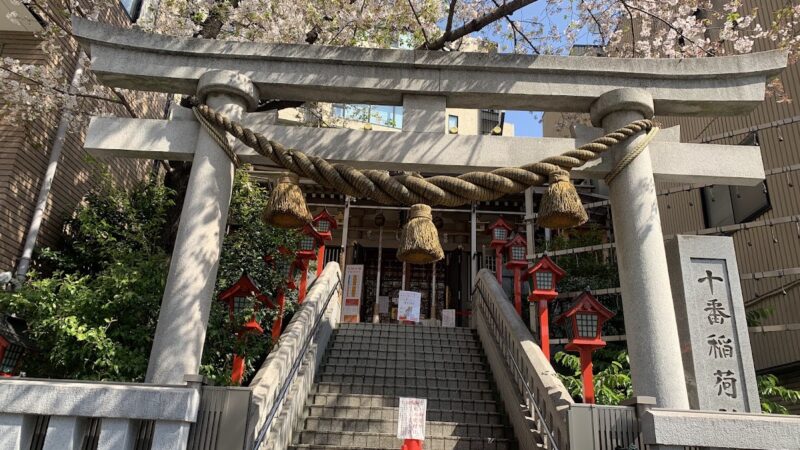
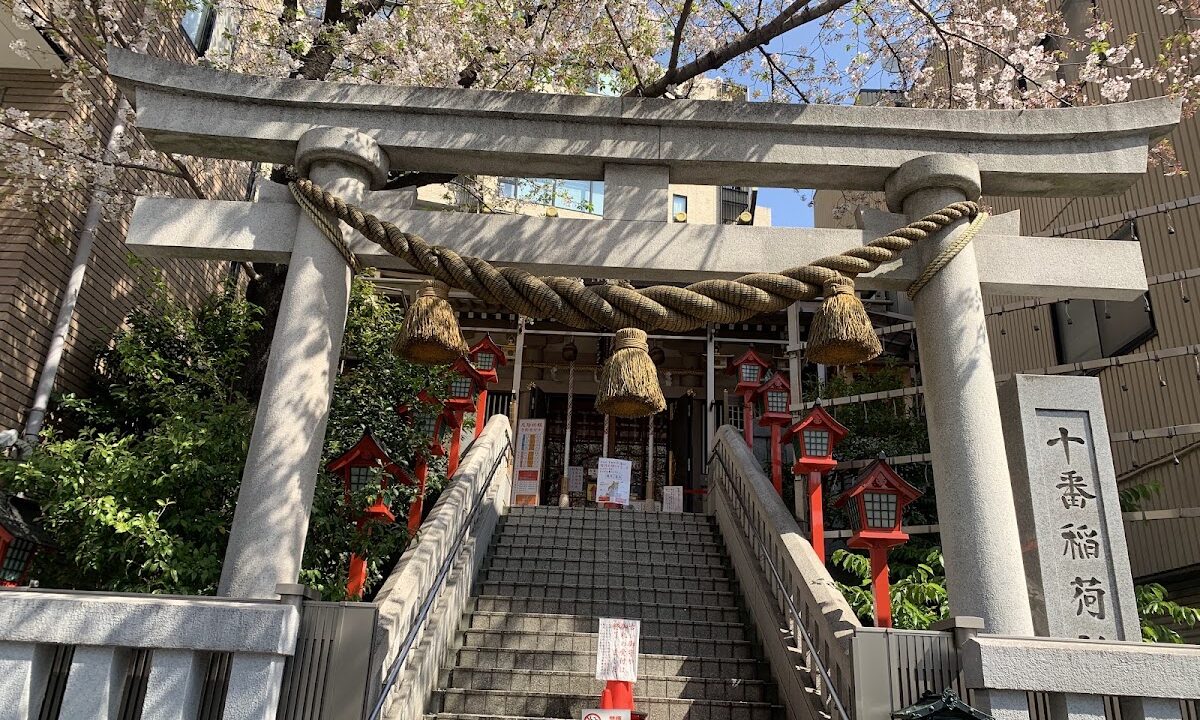
Juban Inari Shrine is located in the heart of Azabu-Juban, but after passing through the torii gate, you’ll encounter steep stone steps. Climbing these steps leads to a quiet space away from the hustle and bustle of the city, enveloped in a solemn atmosphere.
The steps are relatively steep, but handrails are installed, so climbing slowly should be fine.
Main Hall
The main hall, rebuilt in 1997, is a reinforced concrete structure, yet it incorporates traditional shrine architectural styles, resulting in a beautiful design.
Despite its limited grounds, the shrine is designed to allow visitors to pray in peace and tranquility, offering a peaceful experience even in the heart of the city.
Shrine Office
The shrine office, located next to the main hall, offers Goshuin (shrine stamps) and various amulets. The shrine priests are very helpful and will gladly answer any questions you may have.
A City Shrine Surrounded by Buildings
One of the distinguishing features of Juban Inari Shrine is its location surrounded by high-rise buildings. The contrast between the shrine’s sudden appearance amidst the urban landscape of Azabu Juban creates a unique atmosphere.
This location could be said to symbolize the role of shrines in modern Tokyo.
Annual Festivals, Rituals, and Events
Grand Festival (September 16th and 17th)
The most important festival of Juban Inari Shrine is the Grand Festival, held annually on September 16th and 17th.
During this period, the entire Azabu Juban area is enveloped in a festive atmosphere as portable shrines are paraded and various Shinto rituals are performed. Many local parishioners and devotees participate, ensuring the continuation of the traditional festival.
During the annual festival, special goshuin (temple/shrine seals) different from the usual are sometimes given out, attracting many worshippers from far away.
Tori-no-ichi Market (November)
Juban Inari Shrine is known as the only shrine in Minato Ward that holds a “Tori-no-ichi Market”.
The Tori-no-ichi Market is a traditional festival held on the Day of the Rooster in November, where people pray for business prosperity. Stalls selling lucky charms such as kumade (bamboo rakes) line the shrine grounds, and it is bustling with many worshippers.
As a rare opportunity to experience the Tori-no-ichi Market in Minato Ward, it is a popular event not only for locals but also for nearby business people and tourists.
First Shrine Visit of the Year (First Three Days of January)
During the first three days of the New Year, many visitors come to pray for good fortune and prosperity in the new year. Especially as one of the shrines on the Minato Seven Lucky Gods pilgrimage, it attracts many worshippers from New Year’s Day onwards.
Many worshippers can be seen taking commemorative photos in front of the treasure ship, making it a popular place for bringing good luck in the new year.
Other Shinto Rituals
- Monthly Festival: 1st and 15th of each month
- Shichi-Go-San Ceremony: Accepted throughout the year, mainly in November
- First Shrine Visit for Newborns: Accepted year-round
- Exorcism Prayer: Accepted year-round
Access and Parking Information
Access by Train
Public transportation is very convenient for accessing Juban Inari Shrine.
Nearest Stations:
- 0-minute walk (immediately) from Exit 7 of Azabu-Juban Station on the Tokyo Metro Namboku Line
- 0-minute walk (immediately) from Exit 7 of Azabu-Juban Station on the Toei Oedo Line
Upon exiting from Exit 7, you will see the torii gate of Juban Inari Shrine right in front of you. It’s very close to the station, so even first-time visitors won’t get lost.
Other Nearest Stations
- Approximately 10-minute walk from Shirokane-Takanawa Station on the Toei Mita Line
- Approximately 15-minute walk from Roppongi Station on the Tokyo Metro Hibiya Line
Access by Bus
1-minute walk from the Azabu-Juban Station bus stop (Toei Bus)
Access by Car and Parking
Parking: No dedicated parking available
Juban Inari Shrine does not have its own parking lot, so if you are visiting by car, you will need to use a nearby coin-operated parking lot.
There are several coin-operated parking lots around Azabu-Juban, but they are expected to be crowded on weekends and during festivals. We recommend using public transportation.
Access from major nearby spots
- From Tokyo Tower: Approximately 20 minutes on foot, approximately 5 minutes by taxi
- From Roppongi Hills: Approximately 15 minutes on foot
- From Zojoji Temple: Approximately 15 minutes on foot
Nearby attractions and sights
Azabu Juban Shopping Street
Located very close to Juban Inari Shrine is the Azabu Juban Shopping Street, where traditional shops and new shops coexist. It’s perfect for a stroll after visiting the shrine, with its long-established Japanese confectionery shops, famous taiyaki shops, and stylish cafes.
Nearby shrines and temples
Zenpukuji Temple: Approximately 10 minutes on foot. One of the seven lucky gods of Minato, it houses the oldest wooden building in Tokyo.
Daihoji Temple: Approximately 5 minutes on foot. A historic temple in Azabu.
Sakurada Shrine: Approximately 15 minutes on foot. This is a historic shrine in Minato Ward.
Azabu Juban Onsen
Azabu Juban Onsen, where you can enjoy natural hot springs in the heart of the city, is within walking distance. It’s perfect for relaxing after your visit to the shrine.
Manners and Precautions When Visiting a Shrine
Basic Manners When Visiting a Shrine
- Bow before passing through the torii gate: This is a courtesy before entering the sacred area.
- Purify yourself at the water basin: Purify your left hand, right hand, and mouth in that order.
- Avoid walking in the center of the approach to the shrine: The center is considered the path of the gods.
- Etiquette at the main hall: The basic procedure is two bows, two claps, and one bow.
Regarding Photography
Photography is generally permitted on the shrine grounds, but please note the following points.
- Please be considerate of other worshippers.
- Please refrain from taking photographs inside the shrine.
- Please speak to a Shinto priest if you need to confirm something.
Busy Periods
The following periods are expected to be particularly crowded:
- The first three days of the New Year (Hatsumode)
- The Grand Festival period (September 16th and 17th)
- Tori-no-ichi Market (Rooster Day in November)
- Weekend mornings
For those who wish to visit at a leisurely pace, weekday afternoons are recommended.
Reviews and Reputation of Juban Inari Shrine
Visitor Feedback
“It’s conveniently located right near the station. The frog statues were adorable and very soothing.” (Woman in her 30s)
“Although it’s a shrine in the middle of the city, the grounds were quiet and peaceful, allowing for a peaceful visit.” (Man in his 40s)
“The goshuin (shrine stamp) was beautiful, and the goshuincho (stamp book) had a lovely design.” (Woman in her 20s)
“The atmosphere of the Tori-no-ichi (Rooster Market) is wonderful, and I visit every year.” (Man in his 50s)
“The treasure ship statue is magnificent, making it the perfect shrine for a New Year’s visit.” (Woman in her 60s)
Social Media Reputation
Many photos of the frog statues and treasure ship are posted on social media platforms like Instagram and Twitter. Searching with hashtags such as “#JubanInariShrine,” “#frogs,” and “#AzabuJuban” will reveal many visitor records.
Summary: The Charm of Juban Inari Shrine
Located in Azabu Juban, Minato-ku, Tokyo, Juban Inari Shrine is a precious shrine that, despite being in the heart of the city, preserves a history and tradition that dates back to the Edo period.
Main Attractions of Juban Inari Shrine:
- Excellent Access: Right next to Exit 7 of Azabu-Juban Station
- The Legend of Gama Pond: Preserving one of the Seven Wonders of Azabu
- Frog Worship: Unique blessings and adorable stone statues
- Treasure Ship of the Minato Seven Lucky Gods: A symbol of good fortune and prosperity
- Minato Ward’s Only Tori-no-Ichi Market: Experience a traditional festival
- Beautiful Goshuin (Shrine Seal): Popular with Goshuin collectors
- Blessings for Business Prosperity: The divine virtues of Inari-sama
- Harmony of Urban Life and Tradition: The role of a shrine in modern Tokyo
When shopping or dining in Azabu-Juban, be sure to stop by Juban Inari Shrine. Touch the frogs, receive various blessings related to “frogs,” and pray for good fortune and prosperity in front of the treasure ship—good things are sure to come your way.
For those looking for an easily accessible shrine in the Kanto/Tokyo area, those collecting Goshuin (shrine stamps), those praying for business prosperity or increased wealth, and everyone visiting the Azabu-Juban area, we recommend visiting Juban Inari Shrine.
This shrine, which offers free admission and has officially released information, is sure to attract increasing attention as a new must-visit spot for Tokyo sightseeing.